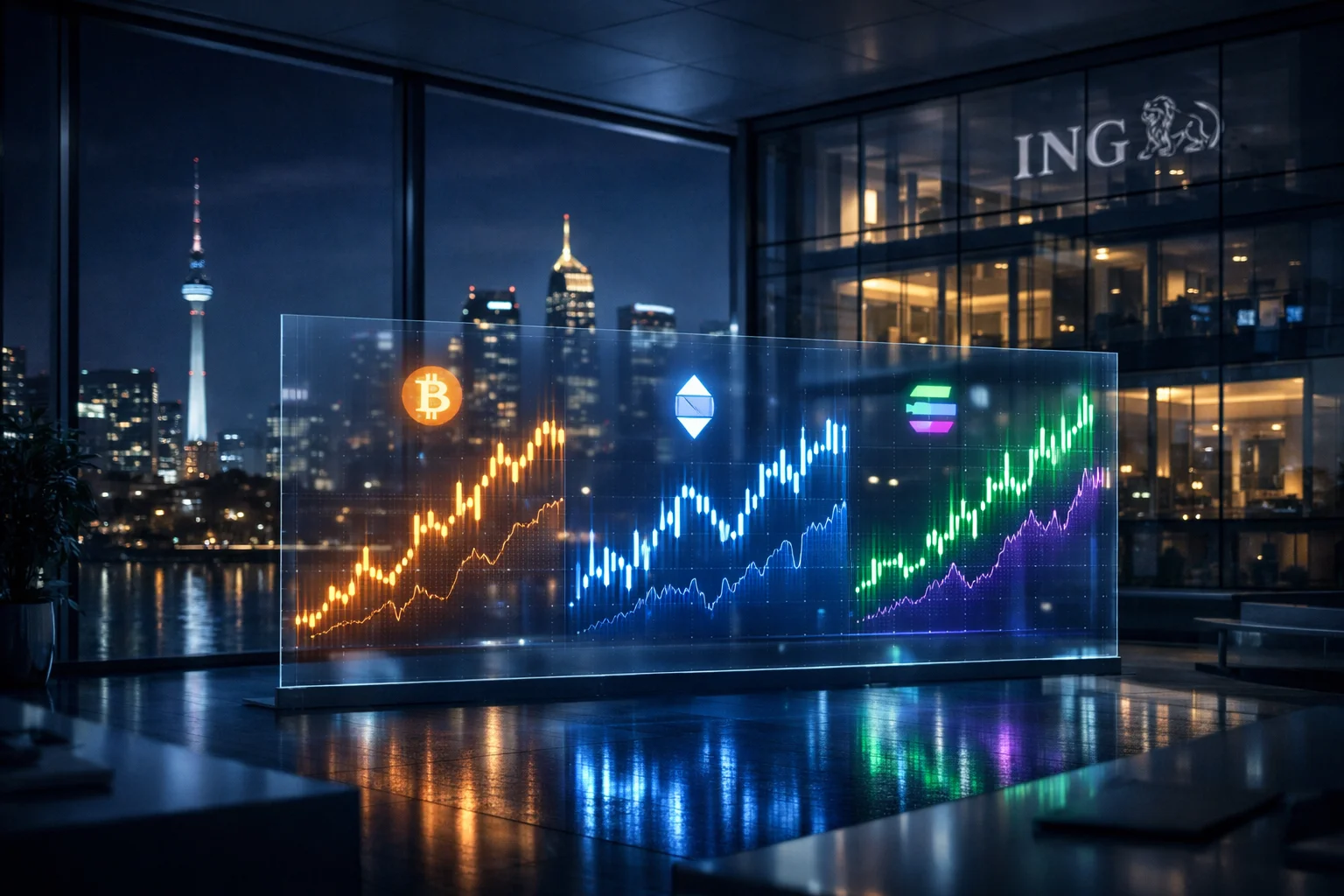
ING Deutschland, one of Germany's leading retail banks, now allows its clients to invest in exchange-traded products (ETPs) and exchange-traded notes (ETNs) linked to popular cryptocurrencies such as Bitcoin, Ethereum, and Solana. This represents a significant step by the bank to make the crypto market more accessible to individual investors using traditional financial infrastructure. According to information on the bank's website, the products offered are physically backed by well-known issuers such as 21Shares, Bitwise, and VanEck, and each product directly tracks the performance of a specific crypto asset. These products can be bought and sold on regulated exchanges via ING's Direct Depot investment platform, just like stock transactions. With this new move, ING aims to reduce the technical challenges associated with crypto investments. The bank states that clients can invest in crypto products without having to deal with third-party wallet systems or manage their private keys. VanEck Europe CEO Martijn Rozemuller also stated, “Many investors are looking for solutions that are compatible with their existing portfolio structures, reliable, and have transparent costs. This collaboration brings crypto access exactly where investors want it to be: securities accounts.”
The issue of taxation is also noteworthy for investors. According to German regulations, investments in these ETPs are treated similarly to direct crypto asset purchases. This can mean exemption from capital gains tax for positions held for more than one year.
“Cryptocurrencies have no intrinsic value” warning
However, ING also strongly emphasizes the risks of the investment. In its statement, the bank stresses that crypto-related products carry high volatility, that the entire investment can be lost in the event of the issuer's bankruptcy, and that liquidity problems, market manipulation, and regulatory uncertainties also pose serious risks for investors. ING's information page on crypto assets states the following:
“Cryptocurrencies are speculative products with no intrinsic value. Their prices are largely based on investor psychology, and the same effects are decisive on the values of crypto products traded on exchanges.”
ING, the giant Dutch bank with roots dating back to the 18th century, has taken various steps in the field of digital assets in recent years. Last September, ING formed a consortium with eight European banks to develop a euro-based stablecoin. With this initiative, the bank aims to create a “reliable digital payment standard” across Europe.