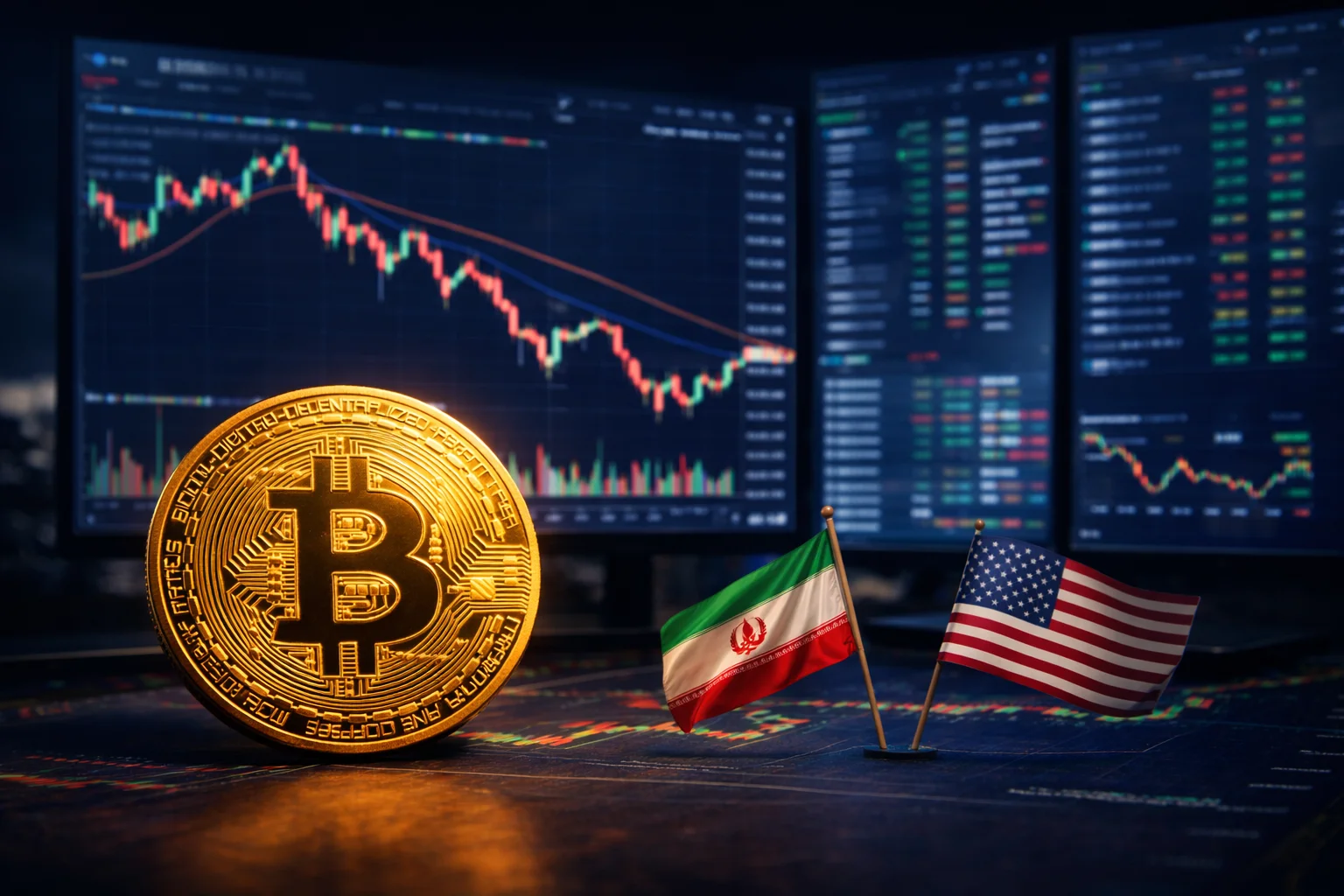
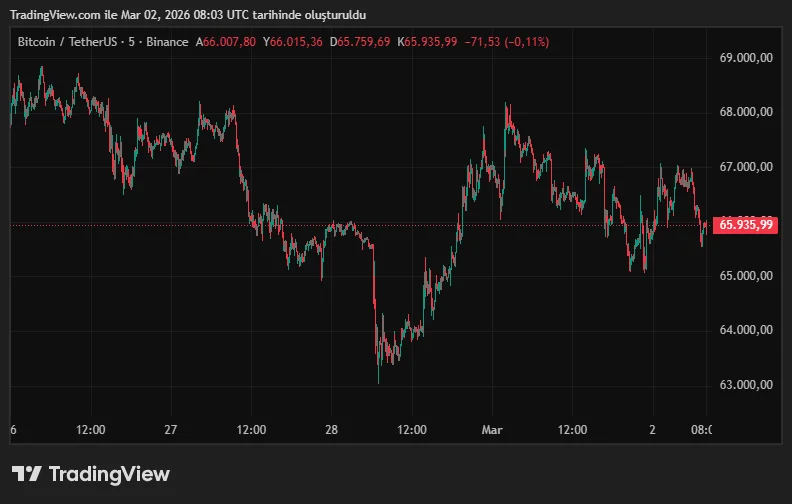
The armed conflict that erupted between the US and Iran over the weekend deeply shook global markets; cryptocurrencies also felt the impact. Bitcoin, trading around $65,500 as of March 2, 2026, briefly rose above $67,000 during the Asian session before falling back. Ethereum, meanwhile, dropped 2.2%, falling below $1,971. The events were triggered by a joint US-Israeli airstrike against Iran, in which, according to reports, Iran's Supreme Leader Ali Khamenei was killed. The rest of the weekend saw significant market turmoil; Bitcoin fluctuated between $63,000 and $66,000. However, because cryptocurrency markets remained open while traditional exchanges were closed, they were the first to reflect investors' risk-aversion tendencies.
As the crisis continued to escalate, Iran expanded the scope of its retaliation in the region. According to open-source intelligence accounts, Tehran launched missile attacks on American assets in Bahrain, Kuwait, and the UAE. Furthermore, it was reported that Saudi Aramco's Ras Tanura refinery, the world's largest oil producer, was also targeted. Meanwhile, Israel continued its airstrikes against Hezbollah positions in Lebanon. Gulf states stated they reserved the right to retaliate, while US President Donald Trump announced on his Truth Social account that "revenge will be taken" for the American soldiers who lost their lives. Oil prices, meanwhile, surged sharply. Brent crude was trading above $78 per barrel at the time of writing, up seven percent. Gold also rose 1.9 percent to $5,381 per ounce. According to analysts, oil remains the most critical transmission channel for geopolitical shocks to impact cryptocurrency markets. According to Rick Maeda of Presto Research, if crude oil finds a sustained foothold above $90, inflation expectations will climb, the dollar will strengthen, and global liquidity will tighten. In this environment, Bitcoin is expected to behave like a macro asset with a high beta.
BTSE COO Jeff Mei pointed out that markets are particularly sensitive to security risks in the Strait of Hormuz, which carries about a fifth of global oil flow. At least three ships have reportedly been attacked near the strait. This development increases shipping insurance costs and forces cargo ships to reroute; it is assessed that this could lead to inflationary pressures that could directly affect central bank interest rate decisions.
21Shares macro director Stephen Coltman summarized Iran's strategy with these words: "Tehran aims to increase the cost of the conflict to the US by disrupting the flow of oil and liquefied natural gas through the Strait of Hormuz. Wars generally have an inflationary effect; they inflate commodity prices and budget deficits together." Coltman also indicated that this scenario could hold the potential for long-term value appreciation for assets that stand out as store of value, such as Bitcoin.
Despite all this chaos, the crypto markets have not shown any signs of serious systemic pressure in terms of on-chain and derivative indicators. Analysts emphasized that perpetually open futures exchanges, such as Hyperliquid, which allow for real-time price discovery through sharp price movements in oil and metal-linked contracts, may have absorbed some of the macro shock. Dominick John, an analyst at Kronos Research, said, "Crypto came under selling pressure with the liquidation of risk assets following the US-Israeli attack on Iran; however, prices quickly recovered. This once again proved the 24/7 liquidity and resilience of the crypto markets." John added that the markets will maintain high volatility until a clearer direction is determined.
What's next?
In the coming period, Bitcoin's trajectory seems to depend on where oil prices stabilize, the direction of US real yields and the dollar, and, most critically, whether the Iran crisis escalates into widespread financial tightening. Analysts are currently closely watching whether this weekend will remain a geopolitical headline shock or evolve into a long-term process that will reshape global macroeconomic balances.