
Yield farming is one way to earn returns on crypto assets. Users who deploy their assets in decentralized finance applications may earn interest, a share of trading fees, or token rewards. However, high advertised returns do not guarantee profits. The protocol, asset prices, reward sources, and transaction costs all influence the outcome. Understanding yield farming requires looking at how returns are generated and which risks are involved, alongside the potential earnings.
What Does Yield Farming Mean?
Yield farming is a broad term for strategies that aim to generate returns by using crypto assets in DeFi protocols. Depositing assets into lending pools, providing liquidity to decentralized exchanges, and reinvesting rewards can all fall within this category.
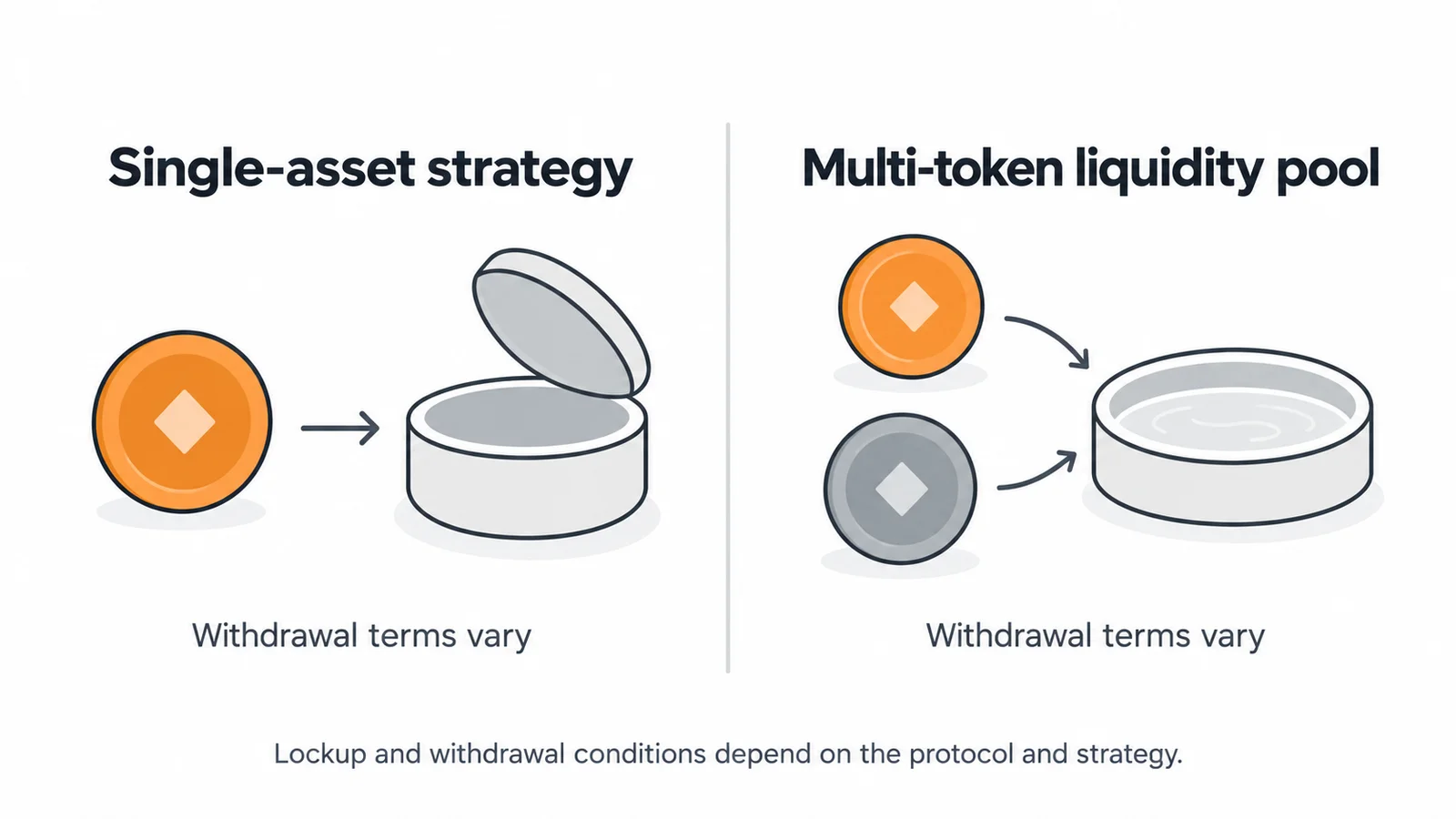
Strategies work in different ways. Some involve depositing a single asset, while others require contributing two or more tokens to a liquidity pool. A fixed lockup period is not a universal feature of yield farming. Withdrawal conditions depend on the contract and strategy involved.
Where does the yield come from?
The fact that a platform distributes rewards does not explain their economic source. Yield farming returns generally fall into three categories:
- Interest paid by borrowers.
- Trading fees paid by users making swaps.
- Incentive tokens distributed by a protocol to encourage participation.
These sources can overlap within the same strategy. For example, a liquidity provider may receive a share of swap fees alongside governance tokens. The distinction matters for sustainability. Revenue generated by user fees differs from incentives funded through new token distributions.
If the reward token’s price falls, the monetary value of the yield can decline even as the number of tokens earned increases.
The difference between staking and yield farming
On Proof of Stake networks, staking involves using assets under the protocol’s rules to help secure the network. Yield farming covers a range of return-generating strategies within DeFi.
A “stake” button on a platform does not always mean you are participating in network validation. Depositing a token that represents your liquidity position into a rewards contract may also be described as staking.
Look at the underlying mechanism before relying on the label. Determine whether your assets support network security, are made available to borrowers, or provide liquidity for swaps.
Its role in the DeFi ecosystem
Yield farming attracted greater attention as liquidity mining programs became widespread in 2020. Protocols used token incentives to attract users and liquidity. When assessing an application’s size, you may encounter total value locked, or TVL. This figure does not measure revenue, user numbers, or security.
Rising asset prices can also increase TVL. Comparisons become more complicated when the same underlying economic value appears across different layers of interconnected protocols.
How Does Yield Farming Work?
Smart contracts manage how assets are used and how rewards are distributed in yield farming. Users connect their wallets to an application and approve the transactions required by their chosen strategy.
Connecting a wallet and depositing assets are separate actions. Token spending permissions, deposits, and reward claims may require separate approvals.
The relationship between liquidity pools and liquidity providers
On a decentralized exchange, a liquidity pool is a smart contract structure that holds assets for users to trade against. Someone who contributes assets to that pool is called a liquidity provider, or LP.
In automated market maker models, swaps follow the pool’s rules. Users supply one token to the pool and receive another in return.
These transactions can also change the quantities of tokens held within liquidity providers’ positions.
In exchange for contributing assets, a user may receive a token or position record representing their share of the pool. In some systems, this record takes the form of an NFT.
The share of fees earned depends on the liquidity supplied, trading volume, price range, and protocol rules.
Lending and automated strategies
In lending protocols, users supply assets to borrowing markets. Interest paid by borrowers is one of the main sources of returns for suppliers. For example, Aave’s supply rates vary with pool utilization and protocol parameters. Rates can change as users borrow, repay, or deposit assets.
The rate displayed at the start may therefore change throughout the year. Yield aggregators automate some of these processes. Yearn’s vaults, for example, can manage how funds are deployed and rebalanced according to a particular strategy. Automation can make the process more convenient, but it does not remove the risks of the underlying protocols.
| Method | Main source of returns | Key consideration |
Lending assets | Borrowing interest | Variable rates and withdrawal liquidity |
Providing liquidity to a DEX | Swap fees | Price changes and impermanent loss |
Liquidity mining | Distributed incentive tokens | Reward prices and program duration |
Using an automated vault | Revenue from the underlying strategy | Fees and protocol dependencies |
Understanding the process before participating
When evaluating a yield farming strategy, look beyond the deposit process. Understand how you can withdraw your assets before committing funds.
A general checklist might include:
- Verify the protocol’s official website and supported network.
- Check the contract address of the asset you plan to use.
- Identify the sources of the advertised yield.
- Review spending permissions and deposit conditions.
- Calculate withdrawal times, potential deductions, and network fees.
- Monitor the position and changing conditions after depositing.
Testing with a small amount can help you understand the process. However, a successful test does not prove that a contract is secure.
What Is APY, and How Is It Calculated?
APY stands for annual percentage yield and accounts for compounding. Reinvesting earned rewards can increase the amount generating returns in subsequent periods. The APY displayed in a yield farming application is usually an annualized estimate based on certain assumptions. Strong returns over a short period may not continue throughout the year.
The difference between APR and APY
APR expresses an annual rate without accounting for compounding. APY includes the effect of reinvesting returns.
Assuming a fixed APR and regular reinvestment, the calculation is:
APY = (1 + APR / n)ⁿ − 1
Here, “n” is the number of times returns are reinvested per year.
Consider a hypothetical strategy offering a 12% APR. If returns are reinvested every month:
| Calculation component | Value |
Initial amount | $1,000 |
APR | 12% |
Reinvestments per year | 12 |
Calculated APY | Approximately 12.68% |
Theoretical year-end amount | Approximately $1,126.83 |
This example assumes that rates, asset prices, and reinvestment conditions remain unchanged. Transaction fees, taxes, and other deductions are excluded.
Why high APY can be misleading
A pool’s rate may rise because of a temporary incentive campaign. As more users participate, the same rewards are spread across a larger amount of liquidity, potentially reducing returns per participant.
Rewards may also be paid in a different token from the asset deposited. If the displayed calculation uses the reward token’s current price, a price decline reduces the returns actually realized.
Check the following details:
- Which components are included: interest, trading fees, or incentives?
- Are rewards reinvested automatically?
- Does claiming rewards require a separate transaction?
- What period of data is used in the calculation?
- Have protocol fees been deducted from the displayed rate?
Understand the assumptions behind a high rate before evaluating its appeal.
Can You Yield Farm with Bitcoin?
Bitcoin holders can participate in some DeFi strategies through tokens that represent BTC’s value. Wrapped Bitcoin, or WBTC, is a well-known example. WBTC on Ethereum is a token designed to be backed by Bitcoin reserves and used in compatible applications. Holding WBTC carries a different set of risks from holding BTC directly at an address on the Bitcoin network.
What changes when using Wrapped Bitcoin?
WBTC can be used for lending or liquidity provision in markets that support it. Alongside changes in Bitcoin’s price, users face custody, smart contract, and peg-related risks. Moving assets to another network through a bridge may introduce additional bridge risk.
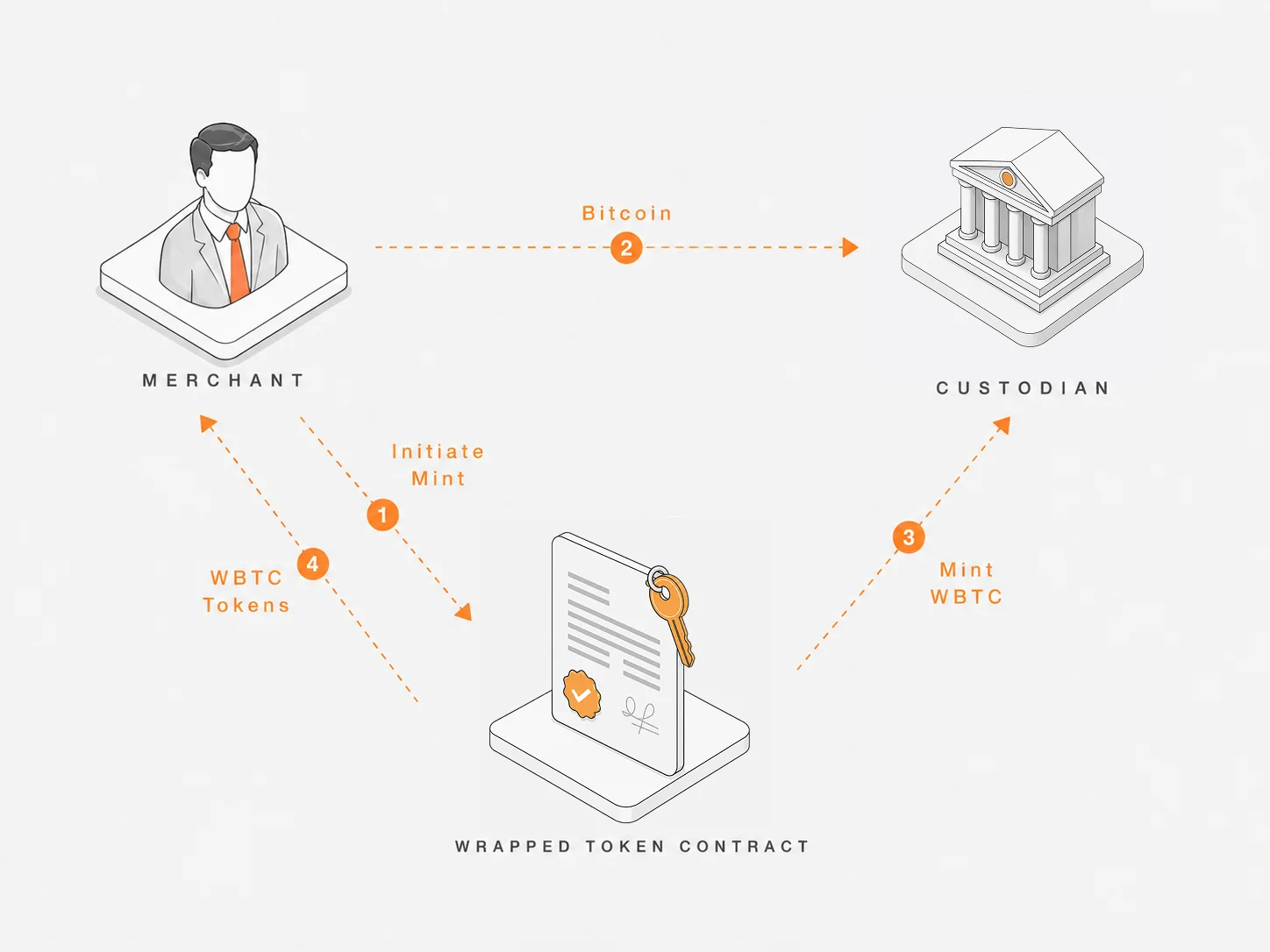
WBTC’s transparency tools allow users to inspect reserve addresses, token supply, and minting and burning activity. These records support verification, but they do not eliminate all operational risks. Bitcoin itself uses Proof of Work as its consensus mechanism. When you encounter phrases such as “Bitcoin staking” or “BTC yield,” investigate which system actually generates the returns.
What Are the Risks of Yield Farming?
Yield farming risks extend beyond a decline in the price of the deposited token. The strategy’s structure, its contracts, and withdrawal conditions can also lead to losses.
How impermanent loss occurs
Impermanent loss describes a liquidity pool position underperforming the alternative of holding the same initial assets in a wallet. It typically arises when the relative prices of the assets in the pool change.
The pool’s swap mechanism changes the quantities of tokens within the position.
Consider a simplified example: when ETH trades at $2,000, a user deposits 1 ETH and 2,000 USDC into a standard, equal-value pool covering the full price range. The initial value is $4,000.
If ETH rises to $4,000, holding the assets in a wallet would produce a total value of $6,000. In a constant-product model without fees or rewards, the pool position would be worth approximately $5,657.
The difference is approximately 5.72% compared with holding the assets. A position can increase in value from its starting point while still underperforming the alternative. Earned fees may or may not offset this difference.
The word “impermanent” does not mean that the loss will necessarily reverse. With concentrated liquidity strategies, results vary depending on the chosen price range. The percentage in this example should not be applied to every pool.
Smart contract, rug pull, and approval risks
Coding errors, attacks, or misuse of administrative privileges can lead to lost funds. Strategies that use multiple protocols can expose users to interconnected risks.
A security audit provides useful information, but it is not a guarantee. Its date, scope, and whether the audited contracts match the version being used all matter.
Rug pulls may involve developers withdrawing liquidity or using their privileges to harm users. A project’s visibility or popularity on social media does not provide sufficient assurance.
Review token spending permissions as well. Disconnecting a wallet from a website does not automatically revoke permissions previously granted.
Stablecoin, liquidation, and withdrawal risks
Stablecoins aim to limit price volatility, but they can deviate from their target value. Even a pool containing two stablecoins linked to a similar value can carry impermanent loss and depeg risks.
Strategies expanded through borrowing also introduce liquidation risk. If collateral values fall or debt grows, a position may be liquidated under the protocol’s rules.
Simply supplying assets and using borrowing to create leverage have different risk profiles.
Consider withdrawal access too. Lockup periods, insufficient liquidity, withdrawal queues, or emergency protocol measures can delay access to funds.
How Should You Evaluate Yield Farming Returns?
The number of tokens distributed is not enough to measure profitability. Assess the portfolio’s starting and ending values alongside costs and risks.
The difference between gross returns and net results
Hypothetically, an 8% annual gross return on a $1,000 position amounts to $80. If depositing, claiming rewards, and withdrawing cost a total of $30, the remaining return is $50 before other factors are considered.
A decline in asset prices or impermanent loss can change the result further. Transaction costs can consume a significant share of expected returns, particularly for smaller positions.
The main items to include in the calculation are:
- Network and token approval fees.
- Swap costs and slippage.
- Management or performance fees.
- Bridge and withdrawal fees, where applicable.
- Changes in reward token prices.
- Tax obligations that may arise from the activity.
Questions to ask before choosing a strategy
When researching yield farming, seek clear answers to the following questions:
- Who economically funds the returns?
- How will the strategy operate once incentives end?
- Who holds permissions over the contracts, and what can they do?
- Which other protocols receive the assets?
- What conditions must be met to withdraw funds?
- How would falling prices or network congestion affect the outcome?
Products found through searches for “passive crypto income” may require regular monitoring. Even an automated strategy does not assess risk on the user’s behalf.
Frequently Asked Questions (FAQ)
Below are answers to some common questions about yield farming:
- Is yield farming legal?: Its legal status depends on your country, the service used, and the nature of the activity. Using a decentralized application does not automatically place transactions outside regulatory or tax requirements. Check your local obligations separately.
- Is yield farming suitable for everyone?: No. It requires an understanding of wallet permissions, smart contract risks, and potential losses. It may be unsuitable for funds you will need soon or cannot afford to lose.
- What is the difference between liquidity mining and yield farming?: Yield farming covers a range of strategies for generating returns. Liquidity mining refers to mechanisms that distribute additional token incentives to participants who provide liquidity.
- Which assets are safer to use for yield farming?: No asset can be considered safe under every circumstance. Although stablecoins aim to limit price volatility, they may carry depeg, issuer, and smart contract risks. Evaluate the strategy alongside the asset.
- How can impermanent loss be prevented?: It may not be possible to eliminate it when providing liquidity for assets whose relative prices change. Assets with similar price movements may reduce the risk in some circumstances. However, neither fee income offsetting the loss nor prices returning to previous levels is guaranteed.
- Does a higher APY mean I will earn more?: Not necessarily. Rates can change, reward tokens can lose value, and costs can reduce returns. The final outcome depends on the portfolio’s value after all expenses and price changes.
Follow JrKripto’s guides to explore DeFi in greater depth and make informed decisions when managing your crypto assets.

