
The Lightning Network is a technology designed to speed up Bitcoin payments and reduce the cost of small transfers. This second layer operates on top of Bitcoin, processing payments through interconnected channels. Users can therefore send Bitcoin without waiting for a new block confirmation for every payment. It offers an alternative for everyday purchases, small transfers, and digital services. However, the experience depends on the wallet type, channel liquidity, and service provider’s terms. This guide answers the questions “What is the Lightning Network?” and “How does the Lightning Network work?” We also cover wallet selection, transaction fees, practical steps, and potential risks.
What Is the Lightning Network, and Why Does It Matter for Bitcoin?
The Lightning Network is a second-layer payment network built on Bitcoin. It allows users to make payments without recording every transfer individually on the Bitcoin blockchain. It achieves this through payment channels between participants.
Bitcoin’s base layer builds a shared transaction history by including transactions in blocks. Lightning processes many payments by updating channel balances. Operations such as opening and closing channels connect this activity to the underlying Bitcoin network.
This structure aims to increase payment capacity without changing Bitcoin’s fundamental rules. Under suitable conditions, users can complete transfers quickly and at low cost. However, Lightning’s speed and cost advantages vary between transactions.
Why Do Bitcoin Transactions Need an Additional Layer?
Bitcoin blocks hold a limited amount of transaction data. When network demand rises, users offer fees to secure space in blocks. Transactions offering higher fee rates generally have an advantage when miners select transactions.
Bitcoin targets an average block interval of approximately ten minutes. However, this does not mean every transaction receives confirmation within ten minutes. Transaction fees, network congestion, and block timing affect the wait.
This can create difficulties for small payments. Paying a high transfer fee for inexpensive digital content, for example, may be uneconomical. Waiting for block confirmations can also slow down the checkout experience.
The Lightning Network offers an alternative payment layer for these transactions. Users can rely on existing channels, reducing the need to wait for a new block with every payment.
Is the Lightning Network a Separate Coin?
The Lightning Network is a network and protocol framework for Bitcoin payments. You do not need to purchase a separate “Lightning coin” to use it. Bitcoin payment amounts are expressed in BTC or its smaller unit, the satoshi.
One Bitcoin equals 100 million satoshis. Wallets commonly display small payment amounts as “sat” or “sats.” This makes amounts easier to read without using numerous decimal places.
Receiving Bitcoin through Lightning does not mean purchasing a different investment token. However, the service’s custody model matters. A balance in a centralized application may represent Bitcoin the provider manages on your behalf.
How Does the Lightning Network Work?
The Lightning Network works by connecting payment channels. Participants update their balances to reflect payments within those channels. Each update does not need to become a separate base-layer transaction.
Bitcoin transaction rules, digital signatures, and conditional payment mechanisms underpin this model. Although the user interface may look simple, channel management operates behind the scenes. Some wallets automate much of this technical work.
Payment Channels and Balance Updates
A payment channel allows two participants to manage Bitcoin balances between them. In a conventional channel opening, one or both parties provide funds. The opening transaction goes to the Bitcoin base layer and establishes the channel’s funding.
Once the channel becomes usable, participants can make payments that update their respective balances. For example, imagine one side of a channel holds 100,000 satoshis. If that participant sends 10,000 satoshis, the balances shift by that amount, excluding fees.
There is no need to reopen the channel for every payment. The same channel can carry many payments as long as its capacity and balance distribution allow. This spreads the opening cost across multiple uses.
When the channel closes, closing transactions settle the participants’ respective balances on the base layer. The type of closure affects fees and the time required for funds to become available.
Routing and Interconnected Channels
Lightning users do not need a direct channel with every recipient. The network can find a payment route to the recipient through suitable channels. This process is known as payment routing.
For example, imagine Ayşe has a channel with Bora, who has another channel with Cem. With suitable balances and connectivity, Ayşe can send a payment to Cem through Bora. Bora’s node may charge a fee for routing the payment.
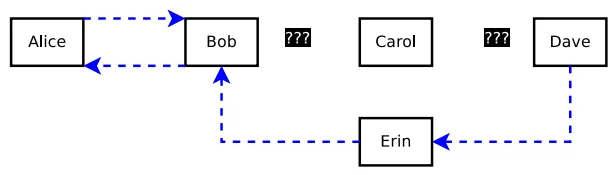
Conditional payment mechanisms link the settlement of transfers along the route. A common mechanism uses contracts called HTLCs, which combine time limits and cryptographic conditions. When payments fail, releasing the funds may require these conditions to resolve.
Finding a payment route depends on more than connections between nodes. The channels along the route must also have sufficient liquidity in the correct direction.
Channel Capacity and Liquidity
Channel capacity refers to the total amount of Bitcoin held in a channel. Liquidity describes the direction in which those funds can support payments. These concepts are not interchangeable.
A channel may have a high total capacity. However, if the balance sits on the other side, you may be unable to send a large payment. Similarly, receiving payments requires funds that can move from the other side toward you.
The basic distinction is:
- Outbound liquidity: The amount you can send through your channels.
- Inbound liquidity: The payment capacity available for funds to reach you through your channels.
- Channel capacity: The total funds held across both sides of the channel.
Having a wallet balance therefore does not guarantee that a payment of any size will succeed. Liquidity management by your wallet or service provider directly affects everyday use.
How Do You Use the Lightning Network?
Using the Lightning Network requires a wallet or service that supports this payment method. Not every wallet capable of holding Bitcoin supports Lightning payments. The sender and recipient need compatible payment methods.
The steps vary depending on the application’s custody and channel management model. Some services handle channels behind the scenes and provide a simple payment screen. Others offer greater control over channel opening and liquidity management.
Choosing a Lightning Wallet
When choosing a Lightning wallet, first check who controls the private keys. With custodial services, the provider manages funds and payment infrastructure on the user’s behalf. With non-custodial solutions, the user retains control of the relevant keys.
Custodial applications can offer convenience. However, withdrawals, account access, and service continuity may depend on the provider. Non-custodial use places more responsibility for backups and security on the user.
Compare the following when selecting a wallet:
- Custody model and private key control.
- Channel opening, liquidity, and payment fees.
- Options for sending and receiving Bitcoin on the base layer.
- Recovery procedures and required backups.
- Payment limits and supported payment formats.
- Update history and official support documentation.
A simple interface does not mean every operation behind the scenes is free. Pay particular attention to initial funding costs and transactions requiring additional liquidity.
Sending and Receiving Bitcoin Through Lightning
A common Lightning payment method uses a payment request created by the recipient. This request is called an invoice. Wallets typically display it as a QR code or text that users can copy.
BOLT 11 invoices include payment information, an expiration time, and relevant technical details. Some invoices specify the amount in advance. In other cases, the sender enters the payment amount.
The basic sending process is:
- Obtain a current Lightning invoice from the recipient.
- Scan the QR code or paste the invoice into your wallet.
- Check the amount, description, and estimated fee.
- Confirm the payment and wait for the result.
- Verify through the application that the recipient received the payment.
To receive a payment, select Lightning in your wallet’s “Receive” section. If necessary, enter an amount and description to create a new invoice. Then share it with the sender.
Some applications support more convenient payment identifiers, such as Lightning Address. However, support varies by wallet. A standard Bitcoin address and a Lightning invoice are different payment formats.
What Should You Do if a Payment Fails?
A Lightning payment can fail when no suitable route exists or liquidity is insufficient. An expired invoice can also prevent payment. Availability problems with the recipient’s service may be another cause.
First, read the transaction status shown by your wallet. Do not assume a “pending” or “processing” payment has failed and immediately repeat it. Paying a new invoice before the original status becomes clear could result in a duplicate payment.
Once failure is confirmed, you can request a new invoice from the recipient. You can also check the amount, fee limit, and wallet warnings. If the problem continues, follow the guidance in the official support documentation.
Lightning Network Benefits, Fees, and Risks
Lightning’s most prominent use case is fast, small Bitcoin payments. However, assessing its benefits also requires considering total costs and technical requirements. Bitcoin’s base layer and Lightning serve different needs.
Fast Payments and Micropayments
Under suitable conditions, Lightning payments can complete within seconds. Users do not need to wait for a new Bitcoin block with every payment. This matters for businesses that want immediate payment confirmation.
Small transfers can also become more practical. Examples include small contributions to content creators and pay-per-use services. However, their feasibility depends on the service’s fees and infrastructure.
Key Lightning use cases include:
- Paying with Bitcoin for everyday purchases.
- Sending tips and donations to content creators.
- Making small payments for digital services.
- Transferring Bitcoin between supporting services.
- Payment models based on usage.
Lightning does not eliminate Bitcoin’s price volatility. The lira or dollar value of a payment can change with Bitcoin’s price. Businesses should assess pricing and conversion costs separately.
Lightning Network Transaction Fees
Lightning Network transaction fees depend on the payment route and the service used. Intermediary nodes may charge a fixed base fee and an amount-based fee. Wallets or service providers may add further charges.
Opening and closing channels can require Bitcoin base-layer transaction fees. Acquiring additional inbound liquidity or converting between payment layers can also incur costs. Looking only at the routing fee on the payment screen may therefore be insufficient.
The following comparison summarizes the main differences:
| Feature | Bitcoin Base Layer | Lightning Network |
Transaction structure | Transfers appear on the blockchain | Payments update channel balances |
Confirmation process | Depends on blocks and required confirmations | Can complete within seconds under suitable conditions |
Fees | Transaction data size and demand for block space matter | Route, amount, and service terms matter |
Capacity requirements | Requires spendable funds and transaction fees | Requires funds and sufficient directional liquidity |
Usage | On-chain Bitcoin transfers | Suitable for frequent, small payments |
For example, imagine you regularly shop at a café that accepts Bitcoin. Sending an on-chain payment for every purchase can generate separate transaction fees. Lightning lets you make repeated payments through available channels.
However, this convenience does not mean every user faces identical costs. Someone with an existing Lightning balance may pay different fees from a first-time wallet user. Initial use may involve channel opening, service, or liquidity fees.
Do not assess costs based on a single payment alone. Consider the entire process, from funding your wallet to withdrawing the remaining balance. Fixed service fees can represent a significant share of the total, particularly for small amounts.
The following questions can help when choosing a payment method:
- Does the recipient or business support Lightning?
- Does my wallet already have a usable Lightning balance?
- Will I make this payment once or regularly?
- Does the payment require a new channel or additional liquidity?
- How much will moving the remaining balance to the base layer cost?
Route capacity and liquidity can become more significant for larger transfers. Some wallets may attempt to complete a payment by splitting it across multiple routes. However, this feature does not guarantee that every amount will arrive successfully under all conditions.
An on-chain transfer removes the need to manage channel liquidity. In return, users must account for block confirmations and current transaction fees. The choice depends on the transfer amount, frequency, and the recipient’s supported methods.
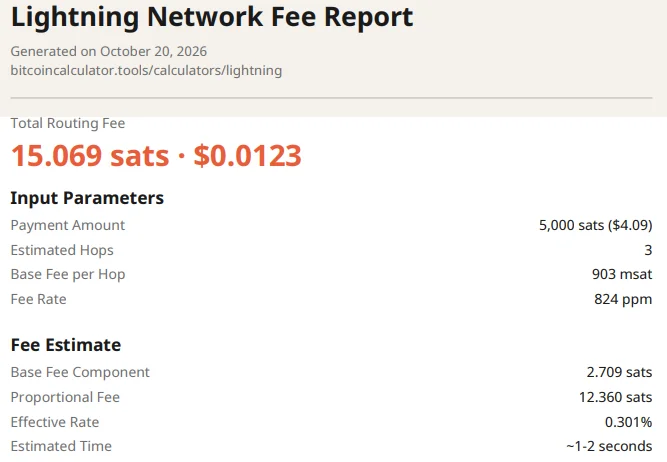
Making a small test payment can help you understand the interface and fees. You can then review the amount sent and charges incurred in your transaction history. This provides a more realistic cost expectation for future payments.
Security, Backups, and Service Provider Risks
Lightning security relies on Bitcoin’s underlying transaction rules. However, channel management, software, and custody models introduce additional responsibilities. Your chosen wallet determines how those responsibilities are distributed.
Protecting channel state information matters in non-custodial use. Some applications require channel backups or other recovery mechanisms alongside recovery phrases. Do not assume that writing down the recovery words is sufficient in every case.
Keep node software updated and follow official backup instructions. Some systems use watchtowers to monitor malicious closures involving outdated channel states. However, these services do not eliminate every security risk.
A unilateral channel closure can delay access to funds. Timelocks and base-layer fees can affect the exit process. Fast Lightning payments and fast channel exits are therefore different things.
With custodial services, the provider’s security and continued operation matter. Account restrictions, withdrawal problems, or a service shutdown can affect access to your funds. Using Lightning does not remove these counterparty risks.
Frequently Asked Questions (FAQ)
Below are brief answers to common questions about the Lightning Network:
- What is the Lightning Network? The Lightning Network is a second-layer payment network built on Bitcoin. Payment channels allow users to send Bitcoin without recording every transfer individually on the blockchain.
- Do I need to buy a separate coin to use the Lightning Network? You do not need a separate token called Lightning for Bitcoin payments. Wallets may display amounts in BTC or satoshis.
- Is sending Bitcoin through Lightning free? Not every payment is free. Routing, wallet services, liquidity, and channel operations can generate different fees. Check the total cost before confirming a transaction.
- Does every Bitcoin wallet support Lightning? No, the wallet must support Lightning payments. Sending to a standard Bitcoin address and paying a Lightning invoice are different processes.
- Can I cancel a Lightning payment? You cannot reverse a completed payment yourself. If you send a payment by mistake, you need to request a refund from the recipient. For pending payments, monitor the status shown by your wallet.
- Do I need to run my own node to use Lightning? Not every user needs to set up a separate node. Wallets and service providers can manage much of the technical work. However, review the custody, fee, and security conditions that come with that convenience.
Explore Bitcoin payment technologies with JrKripto guides. Compare wallets and transfer methods to find a solution that fits your needs.

