
What Is Sentient (SENT)?
Artificial intelligence is no longer just a tool developed by technology companies. It is becoming one of the main forces shaping the future of the internet, finance, and digital production. Yet the question of who controls this power, how models are trained, and who receives a share of the economic value they create is becoming more important. Sentient (SENT) is a project positioned directly within this debate. It aims to support open-source artificial intelligence with a blockchain-based economic model, making AI development more transparent, participatory, and sustainable.
Sentient’s main goal is to offer an alternative to the current structure in which artificial intelligence develops under the control of a few large technology companies. The project aims to build an open AI network where developers, researchers, data providers, and community members can contribute. SENT, the native token of this network, is used for payments within the ecosystem, rewarding contributions, and governance processes.
Sentient is a decentralized AI protocol that aims to bring AI models, data sources, tools, and developer contributions together within the same network. The project positions itself as an open-source artificial general intelligence platform against closed AI systems. This structure brings data, models, and computing power together through a system called Sentient GRID.
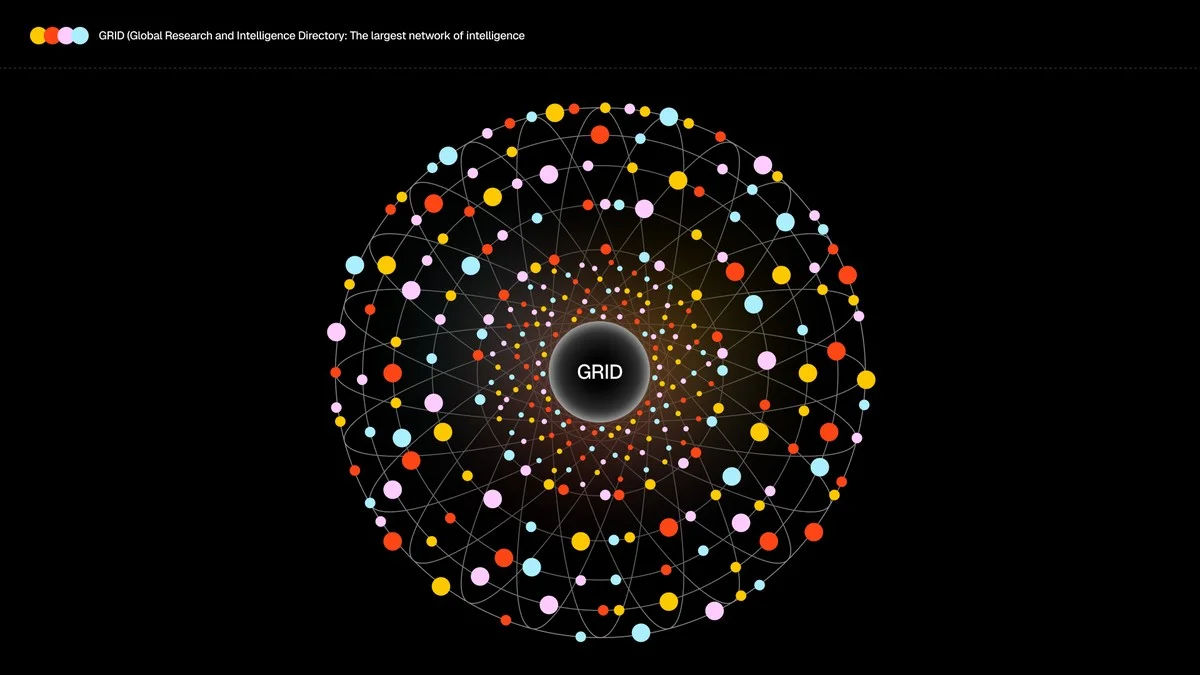
In the traditional AI field, the most powerful models are often controlled by large companies. These companies can decide how a model is trained, which data it uses, how users can access the system, and in which direction the technology will evolve. Sentient offers a more open, participatory, and sharing-focused model in response to this structure.
The project aims to make the contributions of AI researchers, developers, data providers, and community members more visible. It also allows these contributions to create economic value. As a result, open-source AI can move beyond a field driven only by voluntary work and become a more sustainable structure where contributors can also generate income.
Sentient Foundation also defines the project as an effort to develop open-source AI that is aligned with humanity and not controlled by a single institution. The foundation aims to bring researchers, developers, and communities together around an open artificial general intelligence ecosystem.
Sentient’s Origins and Main Purpose
Sentient was born out of the concentration of power in the AI industry. Today, advanced AI models often operate within closed systems. Users can benefit from these models, but they usually cannot see how they are trained, what limitations they have, or how the revenue they generate is shared.
Open-source AI offers a strong alternative to this picture. However, it also creates another problem. Researchers and teams that develop open-source models cannot always clearly determine how their contributions will be protected in the long term or how they will generate revenue. Once a model becomes publicly available, different people and institutions can create value from that work, while the original developers may not receive a fair share of that value.
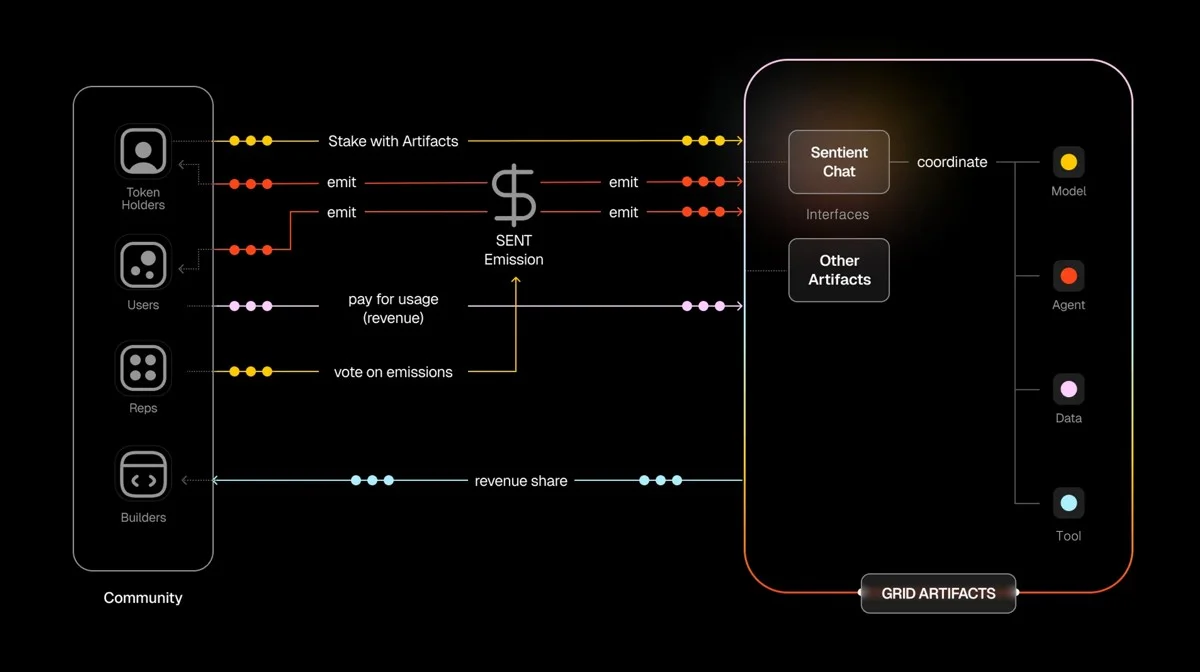
Sentient aims to solve both problems at the same time. The project wants AI models to remain open while also ensuring that the developers behind these models are economically rewarded. To do this, it uses a structure that brings together blockchain, cryptography, and artificial intelligence techniques.
At the center of this approach is the concept of OML. OML stands for open, monetizable, and loyal AI. Here, “loyal” refers to the idea that the model remains connected to the intentions, rules, and economic rights of the community that developed it. The academic study on OML also proposes an interdisciplinary framework that allows open-source AI models to be community-owned, monetizable, and managed in a more open way.
Sentient History: Key Milestones
The Sentient project became more visible to the public in 2024. The project was developed in 2024 to support open-source AI development processes and was created by Sentient Foundation.
2024 was also the year when the OML approach became more widely discussed. The study titled “OML: Open, Monetizable, and Loyal AI” proposed a new model for making open-source AI models both accessible and economically sustainable.
In 2025, Sentient’s research focused on open AI and community ownership gained more visibility. The academic study titled “Training AI to be Loyal” examined the concept of community-loyal AI through model ownership, alignment, and control. This approach shows that Sentient focuses not only on technical infrastructure but also on community governance.
In 2026, the SENT token entered the broader crypto market agenda. Binance listed SENT on January 22, 2026, with USDT, USDC, and TRY trading pairs. This listing became an important milestone in helping the project reach a wider user base.
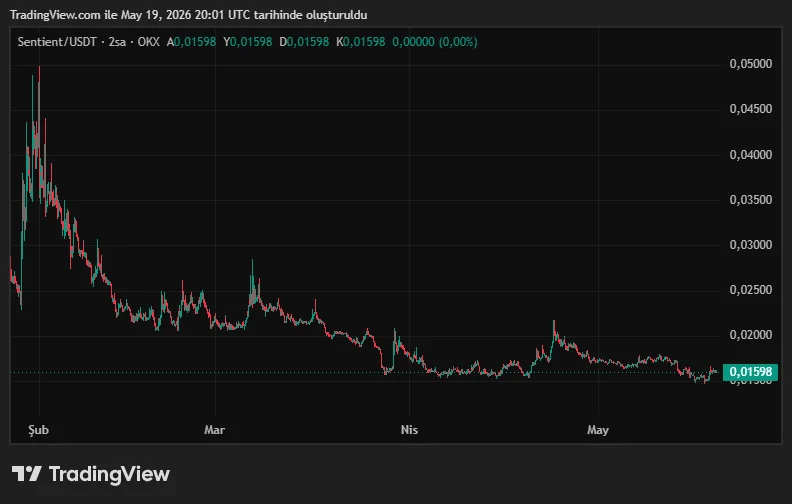
As of May 2026, SENT coin price is trading around the $0.015 level.
Why Is Sentient Important?
What makes Sentient important is its proposal for a more open and sharing-focused model for AI development. Today, advanced AI systems largely progress under the control of technology companies. These companies can determine how models are developed, who can access them, and how the economic value they generate is distributed. Sentient aims to build a more participatory structure where developers, researchers, and community members can contribute.
This approach is especially notable for open-source AI. Open-source models offer a strong foundation in terms of transparency and accessibility. However, their revenue model often remains weak. When a model becomes publicly available, different people and institutions can create value from that work; yet the teams that developed the model may not always receive a fair share.
Sentient seeks to solve this issue with a blockchain-based ownership and reward system. Model developers, data providers, infrastructure contributors, and those who improve tools within the network can receive economic incentives based on their contributions. This can help open-source AI move beyond a field based only on voluntary labor and become more sustainable.
Another key aspect of the project is its focus on transparency. Sentient proposes a more verifiable, traceable, and community-driven architecture instead of AI development progressing under the control of a single center.
How Does Sentient Work?
Sentient uses a modular structure that brings different AI components together within the same network. These components can include models, data sources, tools, AI agents, and research outputs. The goal is to create a broader network made up of many interconnected parts rather than a single large AI system.
At the center of this network is Sentient GRID. GRID can be seen as the main layer that allows different AI resources to be discovered, used together, and gain economic value. GRID is described as a structure that coordinates data sources, AI models, and computing power.
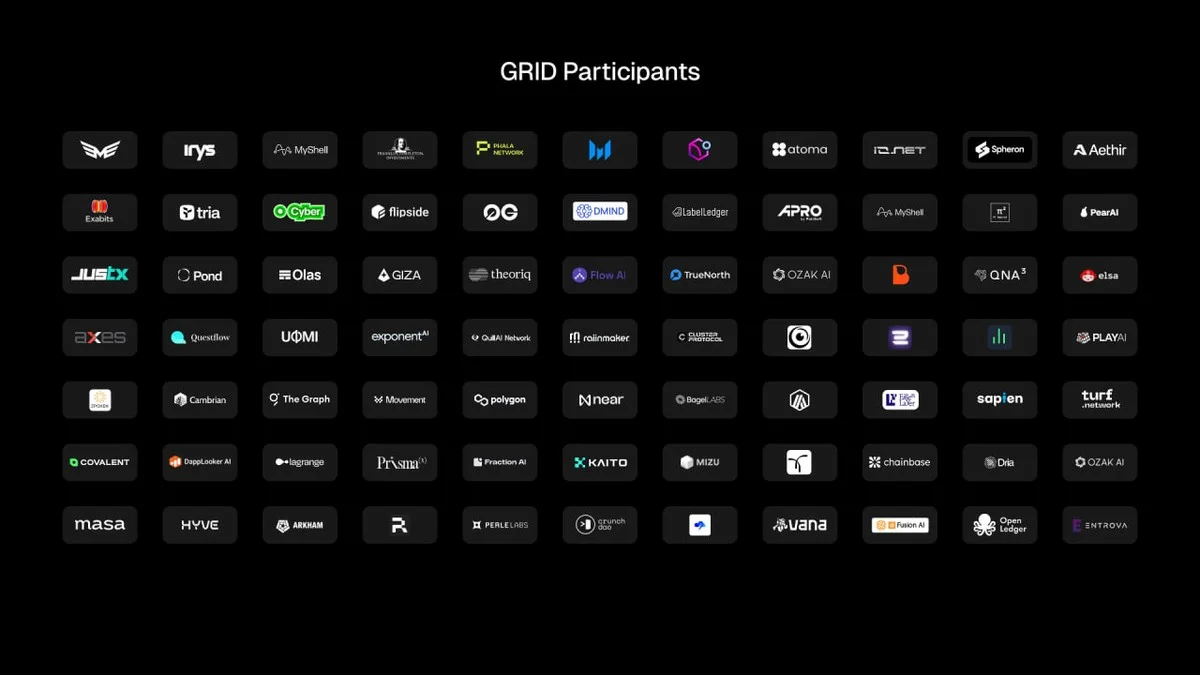
When a user or developer sends a request to the Sentient network, the system can bring together AI components suitable for that need. For example, a research process may use a data search tool, a summarization model, and an AI agent that performs analysis within the same workflow. During this use, the parties that contribute to the network can be economically rewarded.
This model aims to increase collaboration in AI development. Small teams or independent developers may struggle to compete with large technology companies on their own. However, within a network like GRID, they can add their models, tools, or data sources to the system and become part of a larger structure.
What Is OML?
OML is one of Sentient’s most important technical and economic concepts. It stands for open, monetizable, and loyal AI. This concept aims to keep AI models accessible while also protecting model ownership and revenue sharing.
The “open” part means that the model can be accessed and examined by the community. This is close to the tradition of open-source AI. Users and developers can better understand the model, improve it, and adapt it to different use cases.
The “monetizable” part aims to make the model generate value as it is used and transfer that value to contributors. In this way, people who develop open-source AI models can receive not only reputation or visibility, but also economic income for their work.
The “loyal” part is about the model remaining connected to the rules and purpose set by its developer community. In Sentient’s approach, an AI model is seen not only as a technical product, but also as a digital asset connected to the community that created it.
On the technical side, OML involves model ownership, usage tracking, verification mechanisms, and cryptographic methods. Academic studies state that this framework brings together AI, blockchain, and cryptography. For the end user, the main idea is simpler: open-source AI development is tied to an economic model that protects contributors.
What Is SENT Token Used For?
SENT is the native crypto asset of the Sentient ecosystem. A large part of the economic activity within the network is built around SENT. The token’s main role is connected to the use of AI components, developer contributions, reward distribution, and governance processes.
When an AI model, data source, or tool is used in the Sentient network, this use can create economic value. SENT acts as the payment tool that allows this value to move within the network. In this model, developers can generate revenue as the AI components they create are used.
SENT can also be used in staking processes. Staking allows users or network participants to lock a certain amount of tokens into the system as a signal of trust, access, or contribution. This structure can be used to support the quality and reliability of resources in the network.
Governance is another important use case for the SENT token. Token holders can vote on decisions about the future of the network. These decisions may relate to protocol updates, reward mechanisms, ecosystem incentives, or network rules.
For this reason, SENT is not only seen as a crypto asset traded on exchanges. The token is positioned as one of the key tools that allows Sentient’s open AI economy to function.
SENT Tokenomics
SENT tokenomics is built around the idea of rewarding contributions to open-source AI. Model developers, data providers, infrastructure providers, and participants who increase network usage are all part of this economy. The goal is to make the labor behind AI development more visible and measurable.
According to Sentient’s official statement, the total supply of SENT is 34,359,738,368. This number equals 2³⁵, and the project team specifically stated that the supply was chosen this way.
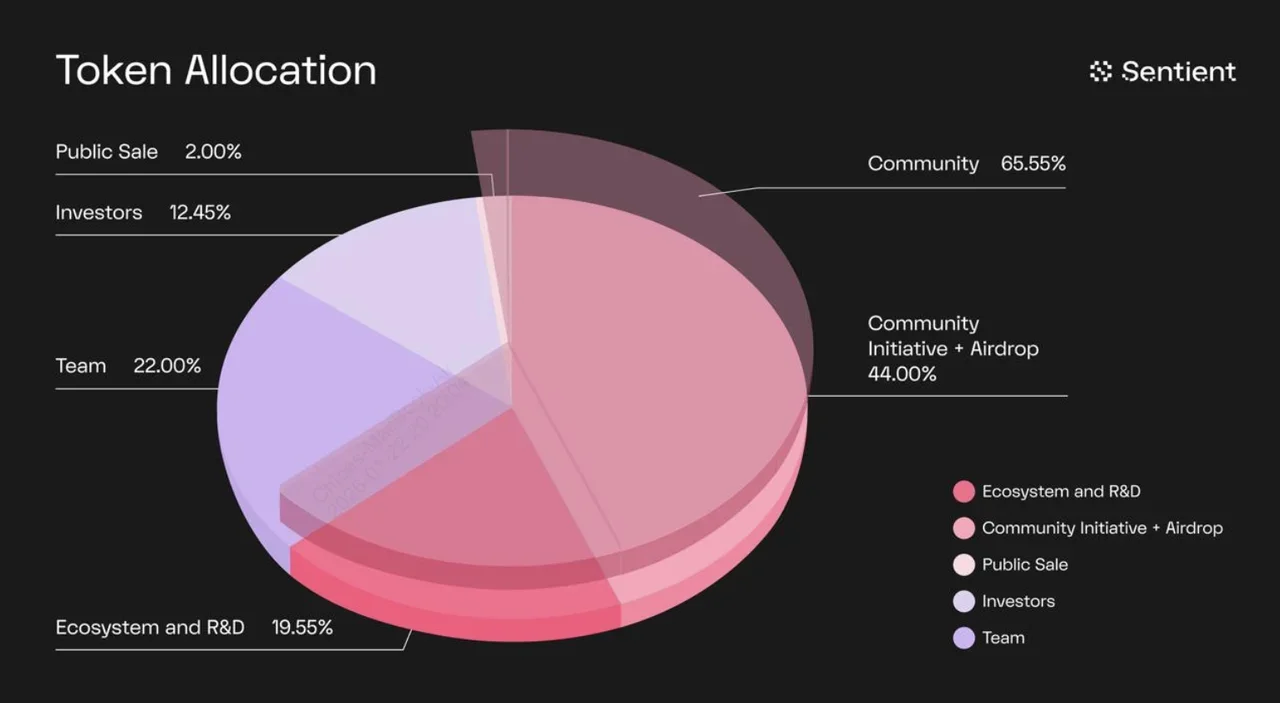
According to Binance data from May 2026, SENT’s circulating supply is around 7.2 billion. The same page updates SENT price, market capitalization, 24-hour trading volume, and fully diluted valuation in real time. Therefore, investors should check live data providers for current market information.
The main point to watch in tokenomics is how the supply will be distributed over time. The difference between circulating supply and total supply may mean that new tokens could enter the market in the future through unlocks or ecosystem incentives. For this reason, SENT should be analyzed not only through price movements, but also through its supply schedule and use cases.
Sentient’s long-term success does not depend only on the token being traded on exchanges. The real use of SENT within the network, the creation of revenue from AI components, and contributors receiving regular value from this structure may be more decisive.
Sentient Ecosystem and Use Cases
The Sentient ecosystem is not limited to AI models. The network can include data sources, research tools, AI agents, developer contributions, and user applications. This structure aims to make different parts work together in a compatible way.
AI agents are an important part of this ecosystem. Agents can be thought of as software-based AI components that can perform specific tasks. An agent can conduct research, classify data, analyze user requests, or use other tools to produce results.
Sentient GRID makes it easier to discover these agents and models. Developers can add their own tools to the network. Users can then benefit from these tools according to their needs. As usage grows, payment and reward mechanisms within the network come into play.
This structure may be especially important for open-source AI initiatives. Small teams can make their products visible outside large platforms. Researchers can generate economic value from the models they develop. Users can also use different AI resources without depending on a single closed system.
Sentient’s use cases may include research, data processing, AI-supported applications, developer tools, model marketplaces, and community-driven AI development. As the project matures, these use cases are expected to turn into more concrete products.
The Future of Sentient
Sentient’s future will depend on two major trends in AI and crypto. On one side, AI models are becoming more powerful. On the other, users, developers, and communities are increasingly questioning who controls this technology.
Sentient stands out as one of the projects born from this discussion. It aims to bring open-source AI, decentralized ownership, and token economics into the same structure. If this approach succeeds, a new market model may emerge, one that rewards the labor of AI developers more directly.
However, for this goal to become reality, the technical architecture needs to generate real use. More models, agents, data sources, and applications need to operate on GRID. Users need to use these tools not only in theory, but also in their daily workflows.
A similar point applies to the SENT token. The long-term value narrative of the token depends on stronger use within the Sentient network. If AI components in the network generate revenue, developers receive a share of this revenue, and community governance works actively, SENT may become a more meaningful ecosystem asset.
For this reason, Sentient’s future does not depend only on the AI narrative. To become a lasting project, it needs to grow open-source contributions, economic incentives, and real user demand at the same time.
Frequently Asked Questions
Below, you can find answers to the most frequently asked questions about Sentient.
- What is Sentient (SENT)?: Sentient is a decentralized AI protocol that supports open-source AI development with a blockchain-based economic model. The project aims to allow AI models, data sources, and tools to work together through Sentient GRID.
- What is SENT token used for?: SENT is the native token of the Sentient ecosystem. It is used for payments within the network, staking processes, developer rewards, and governance decisions. The token allows the economic value created by AI components to be shared within the network.
- What problem does Sentient aim to solve?: Sentient aims to solve the issue of centralized control in AI and the difficulty of generating revenue from open-source models. The project seeks to protect the contributions of AI developers and help them create economic value from those contributions.
- What is Sentient GRID?: Sentient GRID is the core structure that brings AI models, data sources, tools, and agents together within the same network. This system allows different AI components to be discovered, used together, and monetized.
- What does OML mean?: OML stands for open, monetizable, and loyal AI. Sentient’s OML approach aims to keep open-source AI models accessible while also protecting the economic rights of their developers.
- Why is Sentient important in the AI field?: Sentient aims to move AI development from closed company systems toward a more open and community-based structure. In this sense, the project highlights transparency, ownership, and revenue sharing in the AI development process.
- What is the total supply of SENT?: According to the official statement, SENT’s total supply is 34,359,738,368. According to Binance data from May 2026, the circulating supply is around 7.2 billion SENT.
Sentient like artificial intelligence-focused crypto projects more closely to know, you can explore the latest guides on JrKripto.

