
One of the biggest challenges in Web3 gaming is that each game tends to operate with its own token and closed economy. Power Protocol (POWER) is trying to bring this fragmented structure together under a shared economic infrastructure. Starting with Fableborne, the ecosystem aims to connect games, consumer applications, developers, and new Web3 projects around POWER.
Definition and Origins of Power Protocol
Power Protocol is a shared infrastructure and economic layer developed for blockchain-based entertainment applications. The project focuses particularly on reducing the need for games to independently build features such as user rewards, staking, in-app economies, and on-chain value transfer.
POWER is the token at the center of this structure. The project’s whitepaper divides the token into three core roles: a gaming token, an infrastructure token, and a source of ecosystem value for Power Labs. Fableborne stands out as the first major application to use POWER.
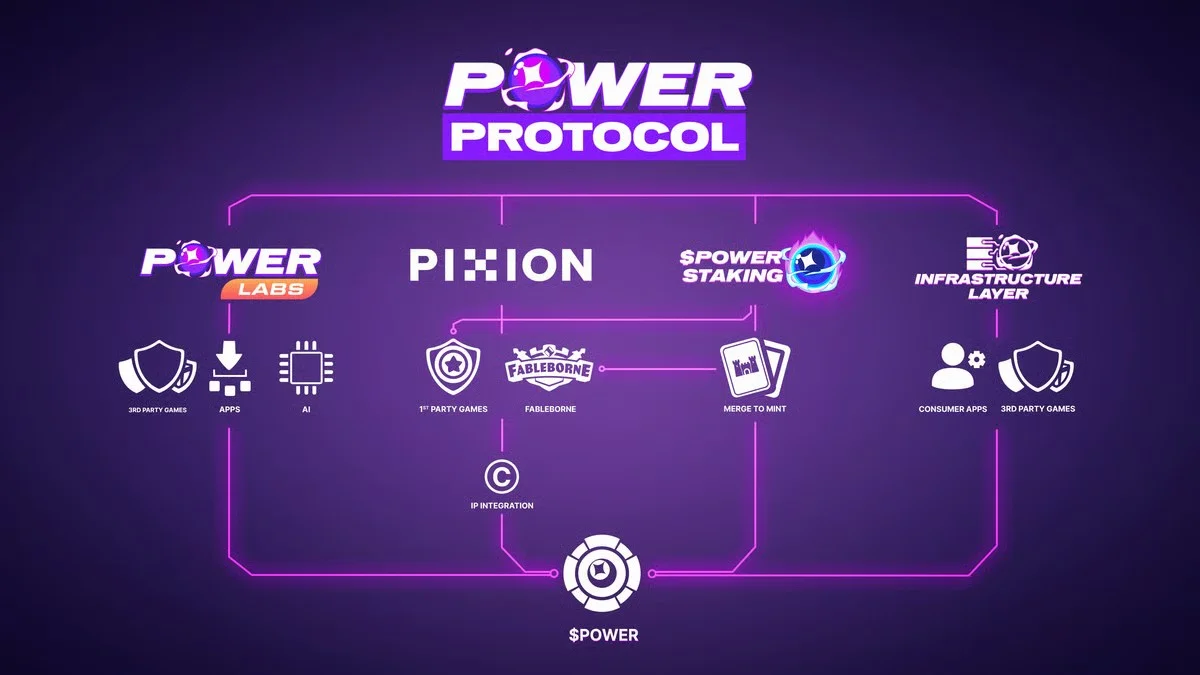
For this reason, Power Protocol is focused on more than launching another GameFi token. Its broader goal is to connect different games and consumer applications to the same economic infrastructure.
The system plans to provide developers with tools for reward mechanisms, staking, user progression, and bringing in-app activity on-chain. This is intended to concentrate economic activity generated across different products around POWER.
The first major use case for Power Protocol is Fableborne. Developed by Pixion Games, the mobile-focused action RPG combines base-building mechanics with asynchronous PvP. Pixion Games announced in September 2025 that POWER would be used in Fableborne and in other games the studio develops in the future.
Which networks does Power Protocol operate on?
Power Protocol is not tied to a single blockchain network. POWER token contracts are available on Ethereum, BNB Smart Chain, and Ronin.
According to the official tokenomics documentation, POWER uses the contract address 0x9dC44ae5BE187ECA9e2A67e33f27A4c91cEA1223 on Ethereum and BNB Smart Chain. On Ronin, the token contract address is 0x394cEF8bDd737EE24DBc9f43d0d5D2ab83136054.
This multi-chain structure is closely connected to the project’s gaming-focused approach. Ethereum provides access to a broad Web3 ecosystem, while BNB Smart Chain offers lower transaction costs and a large user base.
Ronin, meanwhile, is known for infrastructure developed specifically for blockchain games. The connection between Fableborne’s NFT and gaming mechanics and Ronin also makes POWER’s presence on the network significant.
POWER does not replace the native gas tokens of networks such as Ethereum or BNB Chain. Its main role is to connect applications, reward mechanisms, and economic activity within Power Protocol.
A shared infrastructure for blockchain entertainment
The core idea behind Power Protocol is to reduce the fragmented nature of Web3 gaming economies. Many blockchain games build their own token, reward system, and user economy from scratch.
This model can create technical and economic challenges, especially for smaller developers. Token distribution, user rewards, liquidity, staking, in-app spending, and long-term economic management all need to be planned at the same time.
Power Protocol aims to address this by creating a shared economic layer. The project’s documentation highlights use cases including managing live-ops economies, creating token-based incentives, onboarding users who pay through traditional methods, and directing a portion of application revenue into an on-chain economy.
The project’s scope is also gradually expanding beyond gaming. The latest whitepaper includes user acquisition and advertising technology among the potential use cases for Power Protocol.
The system is working on rewarding behaviors such as social sharing, referrals, continued application usage, in-game achievements, and content creation. The project describes this model as redirecting part of traditional advertising budgets directly toward user incentives.
A significant portion of these goals still depends on the project’s development roadmap. It is therefore important to distinguish between long-term use cases described in the whitepaper and features that are already active today.
History of Power Protocol: Key Milestones
Pixion Games holds an important place in the development of Power Protocol. The London-based gaming studio adopted an approach that expands the gaming economy created around Fableborne into a broader Web3 infrastructure.
Pixion Games publicly announced its partnership with Power Protocol on September 25, 2025. The announcement stated that POWER would be integrated into Fableborne and future games developed by the studio.
Fableborne therefore became one of the first real use cases for Power Protocol. POWER was designed to connect with webshop spending, staking mechanisms, certain rewards, and on-chain gaming features.
According to the Fableborne litepaper, POWER is also planned to serve as the ecosystem currency for future Pixion games. Third-party games are expected to be able to connect to the protocol as well.
Power Protocol’s official roadmap identified the fourth quarter of 2025 as the period when the protocol and POWER liquidity would launch. Initial staking infrastructure, token utility mechanisms, and partner trials were also planned to go live during this period.
The 2026 roadmap sets out a broader objective. The first quarter focused on expanding developer tools and reward infrastructure, the second quarter on onboarding new projects through Power Labs, and the third quarter on expanding into consumer applications outside gaming.
The roadmap is described as a living document. For this reason, the listed dates should not be treated as guaranteed delivery deadlines.
POWER token launch and listings
One of the key dates in POWER’s market debut was December 5, 2025. Bitget listed the token in its Innovation and GameFi categories with the POWER/USDT trading pair.
According to Bitget’s announcement, trading began on December 5, 2025, at 12:00 UTC. The exchange also published POWER’s Ethereum contract address in the listing announcement.
MEXC opened POWER/USDT trading in its Innovation Zone on the same day. The exchange also launched a campaign offering POWER rewards alongside the listing.
The token later expanded to additional trading platforms. According to CoinGecko data, POWER trading pairs are available on Bitget, MEXC, LBank, BingX, and several decentralized exchanges. PancakeSwap and Katana on Ronin are also among the DEX markets tracked for the token.
KuCoin added POWER to its KuCoin Alpha section on February 11, 2026. Trading was offered through the POWER/USDT pair on BNB Smart Chain. An Alpha listing is not the same as a standard listing on KuCoin’s main spot market.
On Binance, POWER also became one of the assets available through Binance Alpha. Binance Wallet ran a two-stage Alpha trading campaign for POWER in August 2026.
It is also important to note that the POWER ticker is used by other crypto projects. For example, Powerloom also uses POWER as its token ticker. Trading based only on the ticker without checking the project name and contract address can increase the risk of interacting with the wrong token.
Current status of Power Protocol
As of September 2026, Power Protocol continues to appear as an actively developed ecosystem. Fableborne remains the project’s most prominent product, while Power Labs and third-party application integrations form part of its broader expansion strategy.
According to CoinGecko data from September 8, 2026, POWER is trading at around $0.087. Its circulating supply is approximately 210 million POWER, with a market capitalization of around $18.3 million. The maximum supply is listed as 1 billion POWER.
The token’s price history has been highly volatile. Market data shows that POWER reached an all-time high of $2.46 on March 2, 2026. It later fell to around $0.056 in June 2026. At the time of writing, the POWER coin price is around $0.08.
This shows that POWER is currently trading far below its peak. During the sharp decline in March, various claims surrounding large token transfers also circulated in the market. However, descriptions such as “team-linked wallet” found in third-party sources should not be treated as independently or officially verified facts.
Development on the project continues. Recent documentation shows that Power Protocol is expanding its scope from gaming infrastructure into social incentives, user acquisition, and AI-powered advertising technologies.
POWER’s future level of utility will depend heavily on whether applications beyond Fableborne join the ecosystem. The protocol’s shared economy thesis can only be tested on a broader scale if different products generate real economic activity around POWER.
How Does the POWER Token Work?
POWER’s first major use case appears on the gaming side. Within Fableborne, POWER acts as a shared economic asset for various on-chain features.
According to Fableborne documentation, the token can be used for webshop purchases. POWER is also connected to gaming systems such as Kingdom staking, Merge-to-Mint, POWER Chest, and Key. Players can earn POWER through certain premium events.
The staking model is designed to be more gaming-focused than a traditional token-locking mechanism. Its first staking integration works together with the Fableborne Kingdoms NFT collection.
Users can stake POWER through Kingdom NFTs to participate in seasonal rewards. The official whitepaper states that 4% of the total POWER supply is allocated to Kingdom staking rewards.
The token’s second role is connected to the broader Power Protocol infrastructure. POWER is intended to serve as a common unit for rewards and economic activity across different applications.
Its third role appears through Power Labs. Power Labs is an incubation system created to support projects focused on gaming, AI, blockchain, and consumer applications.
Projects participating in the program are expected to establish a connection with Power Protocol. This connection may take the form of POWER-denominated transactions, token buybacks, token swaps, or other economic mechanisms.
Power Protocol is also developing a value-accrual model. Some in-app revenue generated by Fableborne may be directed toward POWER buybacks, while certain spending can be routed to the treasury or used for token burns.
A portion of fees generated through NFT transactions is also planned to flow into the POWER economy. These mechanisms are part of the protocol’s design, although their real economic impact depends directly on user activity and transaction volume.
POWER supply, distribution, and token economy
POWER has a maximum supply of 1 billion tokens. The project’s official token economy documentation divides this supply into six main categories.
The largest allocation, 37.2%, goes to community rewards and emissions. The ecosystem fund receives 28% of the total supply.
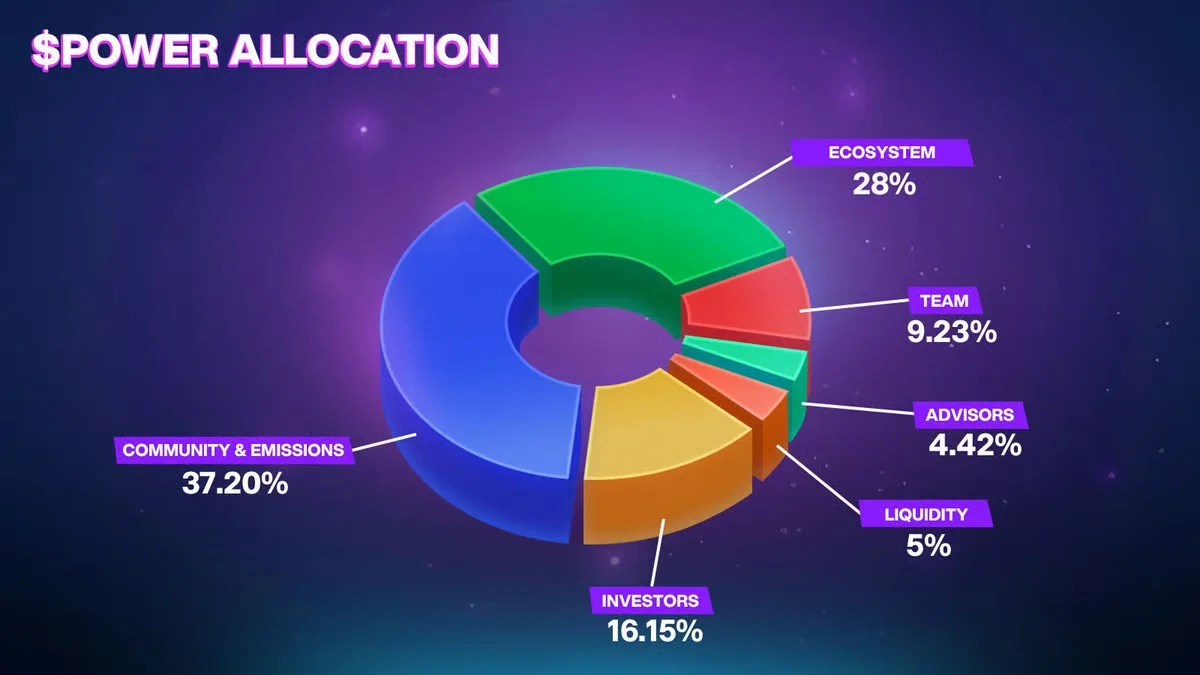
Investors are allocated 16.15% of the supply. The team receives 9.23%, liquidity receives 5%, and advisors receive 4.42%.
Not all tokens enter circulation from the first day. Of the supply allocated to community rewards, 13.2% was unlocked at the Token Generation Event, while the remaining distribution is scheduled over a 48-month period.
Team and advisor tokens had no initial unlock at the TGE. These allocations are subject to a 12-month cliff followed by a 36-month vesting period.
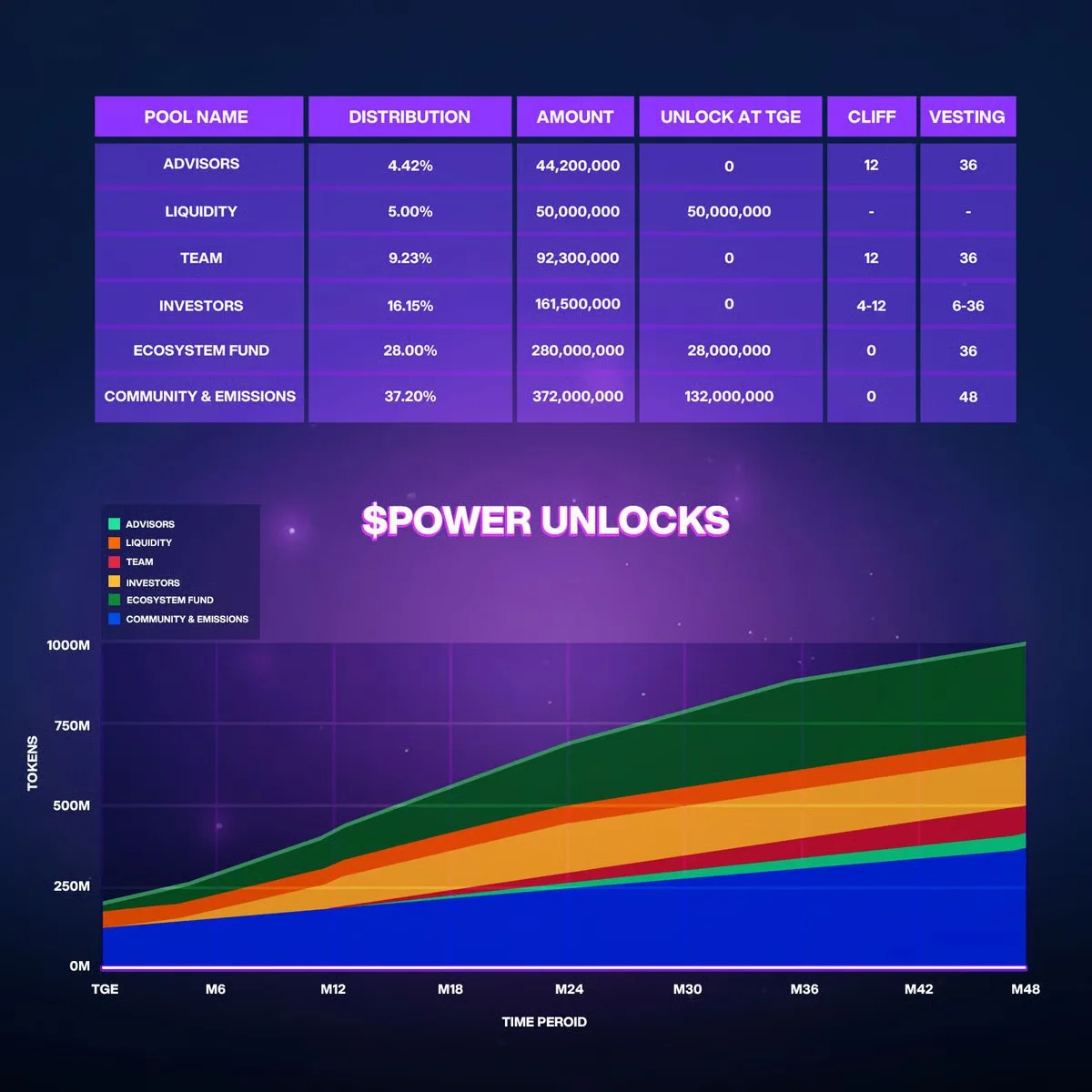
Investor allocations have cliff periods ranging from four to 12 months. Vesting durations vary between six and 36 months depending on the investor group.
The 5% allocated to liquidity was unlocked at the TGE. Meanwhile, 2.8% of the ecosystem fund became accessible initially, with the remainder scheduled to unlock over 36 months.
This distribution is an important factor to monitor when evaluating POWER’s market structure. As of September 2026, roughly 210 million of the 1 billion maximum supply is in circulation. Additional tokens may therefore enter the market as vesting schedules progress.
An increase in supply does not automatically mean the price will decline. However, token unlocks can create additional selling pressure if demand does not grow at a similar pace.
The project’s model includes buybacks, staking, and token-burning mechanisms to counterbalance this dynamic. The whitepaper aims to return economic activity generated by different games and applications to the ecosystem through POWER buybacks, treasury growth, and expanded token utility.
Network, transactions, and security structure
POWER does not operate on its own independent Layer-1 blockchain. The token uses the infrastructure of existing networks including Ethereum, BNB Smart Chain, and Ronin.
This means its security model also depends on the underlying networks. Transactions on Ethereum rely on Ethereum’s security system, BNB Smart Chain transactions use BNB Chain infrastructure, and Ronin transactions depend on the Ronin network.
While a multi-chain structure can improve accessibility, it can also create additional risks. Users need to check which network they are using when sending the token.
Selecting the wrong network, transferring to an unsupported address, or interacting with a fake contract can result in loss of funds. This is particularly important for tokens such as POWER, where multiple crypto projects use the same ticker.
Power Protocol also plans to develop APIs and infrastructure tools for application developers. Its roadmap includes reward infrastructure, cross-application identity systems, and tools designed to connect different applications to shared economic systems.
For this reason, the protocol’s technical success depends on more than token contract security. The usability of its developer tools, third-party integrations, and the ability of applications to attract active users will also play an important role.
Why Is Power Protocol Important?
The sustainability of token economies has long been a major challenge in the blockchain gaming sector. Models where player rewards are funded through high token emissions can face economic pressure when the flow of new users slows.
Power Protocol is trying to address this through a broader shared economy. Instead of each game creating its own closed economy, the project aims to bring certain economic mechanisms together around POWER.
In theory, this approach could reduce the need for new projects to build token economies from scratch. Developers may be able to use Power Protocol infrastructure for rewards, staking, user progression, and on-chain transactions.
The project also aims to allow Web2 users to participate without directly dealing with blockchain technology. Fableborne’s approach of keeping on-chain features largely in the background for players is one example of this strategy.
More recent Power Protocol technical documentation extends this model into user acquisition. The project aims to reward behaviors such as social sharing, referrals, and in-app engagement, while redirecting part of advertising spending toward users.
This model has not yet been proven at scale. Its success will depend on applications beyond Fableborne adopting the protocol and maintaining economic activity over time.
Fableborne, Power Labs, and their role in the ecosystem
The Power Protocol ecosystem has four main components: the protocol infrastructure, Power Labs, the POWER token, and Fableborne. The project’s whitepaper positions all four as parts of the same economic structure.
Fableborne acts as the starting point. It gives the protocol an environment where concepts such as user rewards and gaming economies can be tested with a real product.
Power Labs represents a second growth channel. The incubator aims to add new products to Power Protocol by supporting both early-stage projects and teams that have already acquired users.
The project’s long-term vision is not limited to gaming. Global intellectual property projects, AI-based applications, and broader consumer products are also among the areas being targeted.
The key metric here will be the number of real integrations. Having several planned use cases does not automatically mean those areas will generate users or revenue.
Fableborne remains the most concrete use case within the current Power Protocol structure. Successfully adding third-party projects could strengthen POWER’s thesis as a shared ecosystem token rather than one tied primarily to a single game.
Risks and volatility of POWER
POWER is a relatively new crypto asset with high volatility. The difference between the peak it reached in March 2026 and its subsequent price action clearly reflects this risk.
According to CoinGecko data, POWER’s all-time high is $2.46. The token later fell to around $0.056 within a matter of months.
Its supply structure is another factor worth monitoring. Only part of the maximum 1 billion-token supply is currently in circulation, meaning additional POWER will enter the market as vesting schedules progress.
Unlocks involving team, advisor, and investor allocations are particularly important. Users should consider not only total supply, but also circulating supply and future unlock schedules.
The project also carries product risk. POWER’s long-term utility depends on Fableborne’s performance, the addition of new games, and whether applications coming through Power Labs can attract users.
Another risk comes from the token’s presence across multiple networks. Bridging, contract interactions, and network selection can increase the possibility of technical mistakes for users.
Liquidity should also be considered. POWER markets may offer less depth compared with larger crypto assets. During periods of lower liquidity, large buy or sell orders can have a stronger impact on price.
Power Protocol Community and Ecosystem
Power Protocol has a close relationship with Pixion Games on the development side. The team section of the project’s official whitepaper directly highlights members of the Pixion Games team.
Kam Punia is the founder and CEO of Pixion Games. Punia previously worked at Konami and has extensive experience in the gaming industry.
The team also includes Director of Operations Tamara Slavskaya, Technical Director Sëmen Samusev, and Product Director Maria Gillies. Pixion states that its team includes professionals with experience at companies such as Konami, Blizzard, Riot, King, Sony, Ubisoft, and NCSOFT.
An important distinction should be made here. Official documentation clearly describes the relationship between Pixion Games and Power Protocol and lists Kam Punia as Founder & CEO in the team section. However, this title is used in the context of Pixion Games, so Power Protocol should not automatically be described as a completely separate corporate entity with the same founder structure.
Fableborne is the flagship product of this team. The mobile-focused game serves as the first major environment where Power Protocol’s economic mechanisms are being tested with real users.
Community, staking, and ecosystem participation
Power Protocol builds much of its community participation around gaming and reward mechanisms. Fableborne players can earn POWER, use the token for certain in-game products, and participate in staking systems.
The Kingdom NFT system is an important example of this approach. Users can stake POWER through specific NFTs and gain access to seasonal rewards.
Community rewards also represent a significant portion of the token supply. A total of 37.2% of the POWER supply is allocated to community rewards and emissions.
However, the official documentation does not describe a traditional DAO model that gives POWER holders broad protocol governance rights. For this reason, it would not currently be accurate to describe POWER directly as a governance token.
The token instead functions primarily through gaming, staking, infrastructure, and the wider ecosystem economy. This structure could change if governance mechanisms are expanded in the future.
Partners, games, and new use cases
Pixion Games is Power Protocol’s most important partner. Fableborne is the ecosystem’s first major product, and future Pixion games are also expected to support POWER.
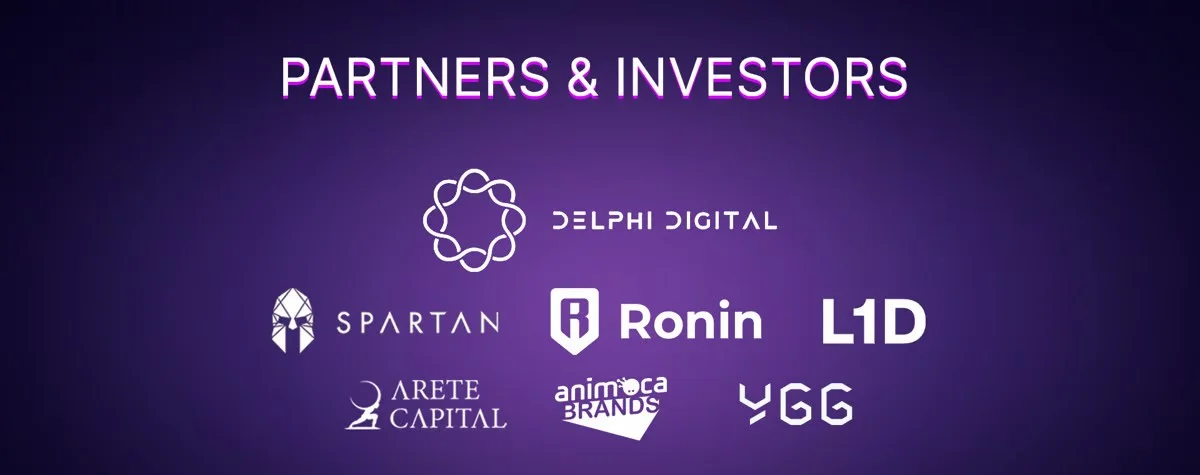
Project information lists Delphi Digital, Spartan Group, Ronin, L1D, Arete Capital, Animoca Brands, and Yield Guild Games among the investors and organizations supporting the Power Protocol ecosystem.
Power Labs is used to bring new projects into the ecosystem. The program aims to support teams building products in gaming, blockchain, AI, and consumer technology.
Frequently Asked Questions (FAQ)
Below are some of the most frequently asked questions about Power Protocol:
- What is Power Protocol and when was it launched?: Power Protocol is a project that aims to build a shared blockchain economy and infrastructure for games and consumer applications. The partnership between Pixion Games and Power Protocol was announced in September 2025, while POWER’s first major exchange trading began on Bitget and MEXC on December 5, 2025.
- What is the POWER token used for?: POWER is used as the shared economic token within Fableborne and the wider Power Protocol ecosystem. Its main use cases include in-game spending, staking, rewards, and protocol infrastructure. Projects participating in Power Labs are also expected to connect with the POWER economy through different mechanisms.
- Which network does Power Protocol operate on?: POWER is available on Ethereum, BNB Smart Chain, and Ronin. Ethereum and BNB Smart Chain use the same EVM contract address, while Ronin has a separate contract.
- Who founded Power Protocol?: Power Protocol is being developed in close connection with Pixion Games. The official whitepaper lists Pixion Games founder and CEO Kam Punia as a leading figure in the team section. However, the official documentation does not provide detailed information about a completely separate corporate founder structure for Power Protocol outside Pixion.
- What is the POWER supply?: POWER has a maximum supply of 1 billion tokens. According to CoinGecko data from September 8, 2026, around 210 million POWER are in circulation. A total of 37.2% of the supply is allocated to community rewards and emissions, while 28% is reserved for the ecosystem fund.
- Is Power Protocol suitable for investment?: This depends on the investor’s individual risk profile and research. POWER is a relatively new token with a low market capitalization and a history of sharp price movements. Future token unlocks, Fableborne’s performance, new application integrations, and liquidity levels are among the factors that should be considered when evaluating the asset.
Follow the JR Kripto Guide series to keep up with new developments around POWER and the Power Protocol ecosystem, from Fableborne to Power Labs.

