
A small calf from an animated film finding its way onto crypto exchanges may sound unusual, but that is exactly how Niu Lai’s story begins. As clips from the Chinese film spread across social media, its name connected with the crypto community’s hopes for a bull market and inspired a meme coin on BNB Chain. Niu Lai (牛来) shows how humor, a shared story, and investor interest can come together around a token. Understanding the project means looking at its supply, trading venues, and community, alongside the curiosity surrounding the film.
Niu Lai’s Definition and Origins
Niu Lai is the romanized form of the Chinese expression “牛来.” The name roughly means “the bull is coming,” echoing the bull symbol associated with rising financial markets.
This association plays an important role in the token’s identity. In Chinese-speaking crypto communities, the name evokes the arrival of a bull market, connecting a reference from the film with an expectation investors already recognize.
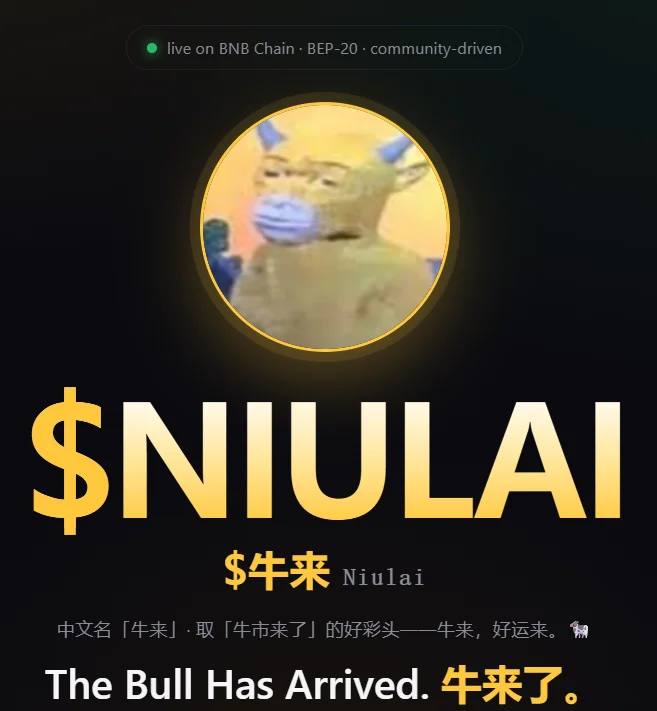
For meme coins, a memorable name that is easy to share can help a project gain recognition. Niu Lai’s short name and bull imagery give it an accessible starting point.
However, the name’s bullish connotations carry no promise about the token’s price. The optimism of the story and actual trading conditions need to be considered separately.
From Animated Film to Meme Coin
The token draws inspiration from the Chinese animated film Niu Lai, which follows a calf’s growth and dreams. Created over approximately five years by director Xin Yumeng and his mother, Sun Lifang, the film attracted attention on social media for its unusual visuals and storytelling.
Scenes from the film found a new audience as internet users shared clips and added their own commentary. The initially mocking attention helped the film build an audience and reach a wider public.
The project’s introduction also connects the token’s origins with the film and the name’s association with a bull market. Niu Lai became another example of an internet joke inspired by cinema finding an audience in crypto.
Its Structure on BNB Chain
Niu Lai is a BEP-20 token on BNB Smart Chain. Transfers and wallet balances operate through its smart contract on that network; the project does not have a separate blockchain.
BNB Smart Chain provides infrastructure compatible with the Ethereum Virtual Machine. This allows users to hold tokens in compatible wallets and interact with supported applications.
Network fees for on-chain transactions are paid in BNB. Users holding Niu Lai in a personal wallet therefore need enough BNB on the same network to cover transfer or swap fees.
Because token names and logos can be copied, the contract address is essential when identifying an asset. Searching only for “Niu Lai,” particularly on decentralized exchanges, may return unrelated tokens with the same name.
Using tokens held on a centralized exchange also differs from using them in a personal wallet. The exchange handles orders placed through an exchange account, while users authorize swaps from a personal wallet themselves.
For example, someone sending Niu Lai from an exchange to a wallet selects the supported network and enters the recipient’s address on the withdrawal screen. The receiving wallet must support the same network; if the token does not appear automatically, users can add it as a custom token using the correct contract address.
Displaying a wallet balance and granting an application permission to spend tokens are separate actions. An approval requested during a swap may allow an application to use a specified amount of tokens, making both the allowance and the application’s address important.
Niu Lai’s History and Key Milestones
Niu Lai began attracting attention in the crypto market in August 2026, around the same time interest in the film was growing. Community members launched the token through Flap, a platform in the BNB Chain ecosystem.
Flap starts a token’s early trading through a bonding curve. Under this model, trades change the price and accumulated liquidity according to predefined rules; once the necessary conditions are met, the token can migrate to a decentralized exchange.
This type of launch can create different entry costs for early participants and later buyers. An investor entering after the token reaches a wider audience may encounter prices far removed from those available during its earliest trades.
The token’s launch date and an exchange listing date therefore need to be distinguished. The day an exchange opens trading marks the token’s availability on that platform, rather than its first transaction on the blockchain.
Exchange Listings and Community Growth
KuCoin announced that Niu Lai spot trading would open on August 19, 2026. The listing covered the 牛来/USDT pair and transfers through the BSC-BEP20 network.
BingX subsequently announced a trading schedule for 牛来/USDT on August 21, 2026. These listings added new ways to access the token through centralized exchange accounts.
KuCoin then announced a Niu Lai perpetual futures contract with up to 10x leverage, scheduled to launch on August 31. This expanded the token’s market presence to derivatives alongside spot trading.
Binance also plays an important role in Niu Lai’s listing history. The token joined Binance Alpha on August 18, 2026, making it available through the platform before its KuCoin and BingX listings.
Binance Futures launched a USDT-margined Niu Lai perpetual contract on August 30, 2026. Offering up to 10x leverage at launch, the 牛来USDT contract allowed traders to take positions on either rising or falling prices.
Binance subsequently opened spot trading for 牛来/USDT and 牛来/USDC on September 9, 2026, with the Seed Tag applied. The spot listing ended Niu Lai’s display on Alpha and allowed users to move their tokens into spot accounts, extending its Binance journey across Alpha, futures, and spot markets.
Spot and futures markets serve different purposes. A spot purchase gives the user the token, while a futures trade creates a position tied to price movements; leverage magnifies both gains and losses.
A listing can put a token in front of more people. However, a growing number of exchanges does not, by itself, show that the community is expanding at the same pace or that the price will rise sustainably.
Price History and Notable Movements
Niu Lai’s price history includes movements across a wide range within a short period. Market data shows a tracked all-time high of $0.1624 and an all-time low of $0.01055.
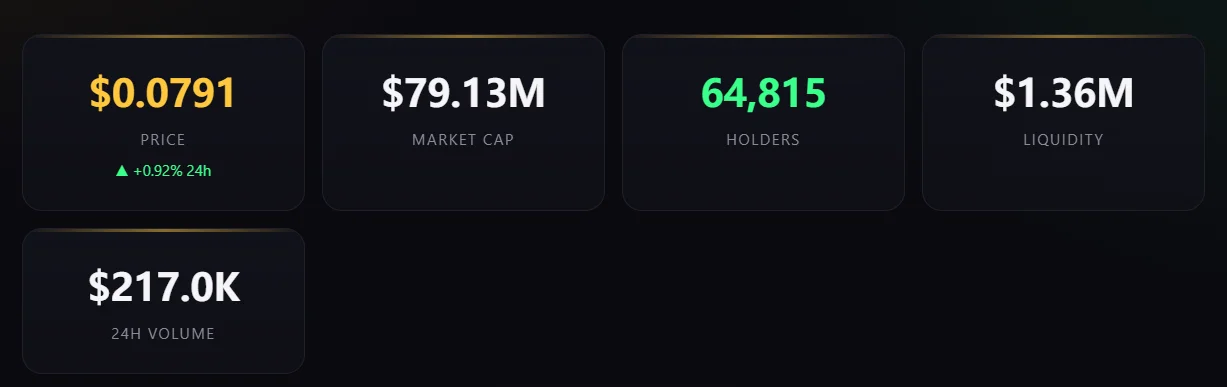
A token trading below its peak is not necessarily undervalued. The previous high reflects demand at that time; returning to the same level requires sufficient buying interest and liquidity.
When tracking Niu Lai’s price, trading volume, the bid-ask spread, and market depth therefore matter together.
What Is Niu Lai Used For?
Trading and the community culture surrounding the film sit at the center of Niu Lai’s use. The project describes itself as a meme coin, with the film’s recognition contributing to that identity.
Holding a token like this can be a way to participate in a shared joke or community identity. Some people connect with the visuals and story, while others focus on how growing attention might affect its price.
These motivations do not always move in the same direction. A character can attract widespread discussion on social media while demand for the token remains limited; rising prices can also draw people who are interested only in short-term trading.
For that reason, social media activity should not be treated as a substitute for market demand. A widely viewed video alone does not show that new wallets are appearing or that existing investors continue to hold their tokens.
Part of Niu Lai’s appeal lies in how a cultural story is reinterpreted around a financial asset. For the project’s staying power, what matters is how that story develops after the initial wave of curiosity.
Token Supply and Distribution
CoinGecko lists Niu Lai’s total, maximum, and circulating supply at 1 billion tokens. This indicates that the entire tracked supply is in circulation.
The project’s introduction states that there was no presale or team allocation. It also specifies a 1% tax on purchases and a 1% tax on sales, which can affect the cost of on-chain transactions.
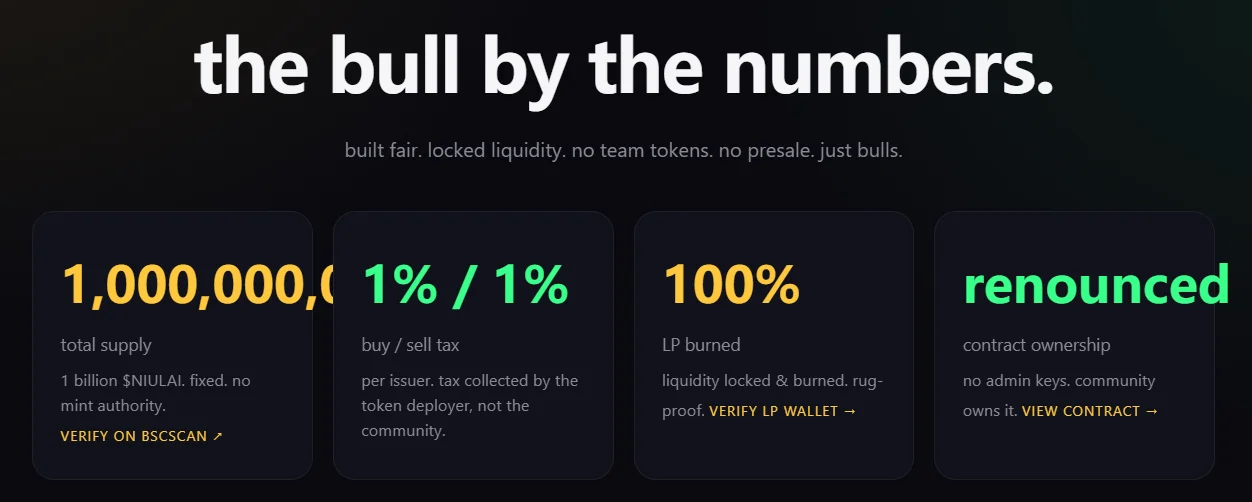
Circulating supply, however, does not show how evenly tokens are distributed among investors. Even if all 1 billion tokens are in circulation, a large share could be concentrated in a small number of wallets.
Likewise, having no initial team allocation does not prevent particular individuals from later buying substantial amounts on the market. Understanding distribution requires examining the largest wallets and what those addresses represent.
Exchange wallets need particular attention here. Treating one exchange address holding assets for many customers as a single investor’s personal account can create a misleading impression of concentration.
It also helps to consider supply alongside price. With 1 billion tokens, a price of $0.10 implies a market capitalization of approximately $100 million; a low price per token does not necessarily mean a low valuation.
Uses and Investment Risks
Buying Niu Lai provides no entitlement to film revenue or ownership in the production company. The community website also makes no official connection between the token and the film studio’s financial activities.
A central consideration when assessing the token is how long buyer interest lasts. As online conversations move on, attention to the same story can fade, potentially leading to selling pressure and thinner liquidity.
Liquidity becomes particularly important during rapid price movements. Even if an investor sees a particular price on screen, part of a sale may execute at lower prices when the order exceeds the available bids.
Pool size also matters for swaps on decentralized exchanges. The same sale can have a larger price impact in a smaller pool, while transaction taxes and network fees affect the amount the seller ultimately receives.
Leveraged trading adds another layer of risk. Even if the price later recovers, a brief move against a position can leave insufficient margin and trigger liquidation.
Assessing Niu Lai as an investment therefore requires more than looking at its popularity. A user’s tolerance for volatility, position size, and ability to exit under prevailing market conditions all matter.
Niu Lai’s Developers and Community
Niu Lai was started by community members whose identities have not been publicly disclosed. The film’s director and production team are not part of the token’s founding team.
This distinction is necessary to understand the project’s origins. A crypto community formed around a cultural work’s name and characters may represent a separate organization from the people who created that work.
With an anonymous team, evaluating experience, responsibilities, and long-term commitments becomes more difficult. The contract’s operation and consistency of public communication consequently take on greater importance.
A social media account’s large following does not verify the developers’ identities. Statements made on behalf of the project should also align with exchange announcements and the relevant contract address.
Social Media and Community Participation
Participation in meme coin communities often takes the form of images, short videos, comments, and shared slogans. Niu Lai’s film connection provides recognizable characters and an origin story for this type of content.
Follower counts alone offer a limited view of community strength. The quality of replies, contributions from different users, and continued communication during price declines can provide a more meaningful picture.
Repeated copies of the same message differ from people discussing a project and creating new material. Assessing organic participation requires looking beyond the community’s behavior during market rallies.
A community focus does not automatically give token holders governance rights. Without a formal voting mechanism, expressing an opinion on social media and participating in binding project decisions remain separate activities.
Claims that a project is “community-run” therefore need to be considered alongside actual authority. Who manages communication channels, how decisions are announced, and who can implement changes all help define the limits of participation.
Expectations for the Project’s Future
The roadmap on Niu Lai’s website uses humor to describe community visibility and listings. It does not provide a comprehensive technical development schedule tied to specific dates.
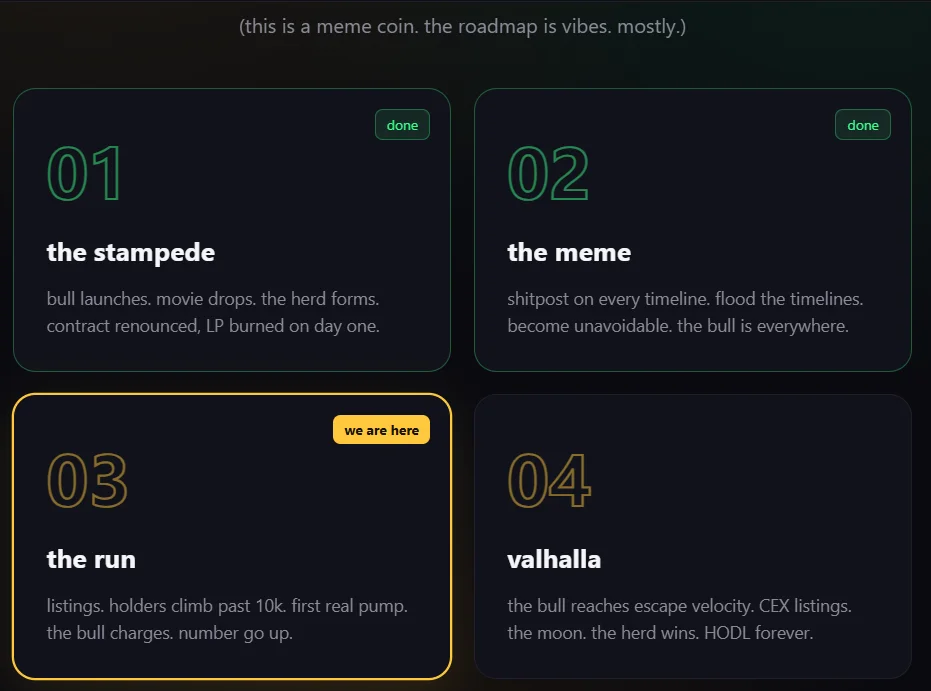
Assessing the project’s future therefore requires separating stated ambitions from completed developments. Opening a new trading venue is a concrete event, while an anticipated listing circulating within the community does not yet carry the same weight.
Over the longer term, the participation that remains after the initial curiosity surrounding the film matters. New content, active users, and accessible markets are among the factors to watch together.
Price gains cannot replace those indicators. A strong short-term rally does not prove lasting community commitment, just as a quieter period alone does not show that all interest has disappeared.
Niu Lai’s story illustrates how quickly internet culture can find an audience in crypto. Its future will depend on the persistence of that interest, token distribution, and trading conditions.
Frequently Asked Questions (FAQ)
Below are some frequently asked questions about Niu Lai and their answers.
- What is Niu Lai (牛来)?: Niu Lai is a meme token on BNB Smart Chain inspired by the Chinese animated film of the same name. Its identity combines internet culture surrounding the film with associations of an approaching bull market.
- When did Niu Lai launch?: Niu Lai began attracting attention in the crypto market in August 2026. KuCoin announced August 19, 2026, as the start date for spot trading; this date refers to its exchange listing.
- Who developed Niu Lai?: Anonymous community members launched the token. The people behind the film are not the token’s founders.
- Which network does Niu Lai use?: Niu Lai uses the BEP-20 standard on BNB Smart Chain. Network fees for on-chain transactions from personal wallets are paid in BNB.
- Where can you buy Niu Lai?: Niu Lai is listed on centralized exchanges including Binance, KuCoin, and BingX. Before trading, users should check whether the relevant pair is active, whether access is available in their region, and which deposit network is supported.
- What are the risks of investing in Niu Lai?: Major risks include sharp price fluctuations, declining community interest, sales by large holders, and limited liquidity. Using leverage can also lead to liquidation during brief adverse price movements.
Follow the JR Kripto Guide series to explore Niu Lai’s journey from film to crypto and learn more about other meme coins on BNB Chain.

