
You may encounter smart contracts when swapping cryptocurrencies, buying NFTs, or depositing assets into a DeFi application. These programs run predefined rules on a blockchain, allowing software to handle many transactions. Understanding what a smart contract is helps you see how applications manage your money. However, automation does not guarantee security; the code, administrator privileges, and permissions you grant also matter.
What Is a Smart Contract, and What Does It Do?
A smart contract is a computer program that runs on a blockchain and applies specific rules. When a user or another contract calls the program, its code checks the relevant conditions and executes the defined operations.
For example, a program may allow users to withdraw their tokens after a particular date. Another may manage swaps between two different tokens. The outcome depends on the contract’s rules and the data available on the blockchain at that moment.
The basic logic behind smart contracts
A vending machine offers a simple way to understand smart contracts. You select a product, pay the required amount, and wait for the machine to dispense it. The machine acts according to predefined conditions.
Smart contracts evaluate inputs in a similar way. However, they can manage token balances, access rights, or application records instead of physical products.
For example, a hypothetical digital ticketing application could follow these rules:
- The user pays the required ticket price.
- The contract checks whether the sale is open.
- If tickets remain available, it creates a digital ticket for the user.
- It updates the number of available tickets.
- If the transaction conditions are not met, it rejects the purchase.
The rules written into the program determine the outcome. An incorrectly defined rule can also produce unexpected results.
How they differ from traditional contracts
A traditional contract describes the parties’ obligations in writing. A smart contract executes programmable operations through code. In this context, the word “contract” primarily describes a technical mechanism.
Not every smart contract represents an agreement signed between two people. A program that manages a token’s transfer rules also falls into this category.
| Feature | Traditional contract | Smart contract |
How rules are expressed | Written text and statements by the parties | Programming code |
Operation | Actions by the parties and relevant institutions | A program triggered by transaction calls |
Verification | Documents, records, and reviews | Code, transaction history, and blockchain data |
Changes | Relevant procedures and decisions by the parties | Depends on the program’s design and permissions |
Main challenges | Differences in interpretation and delays in implementation | Code errors and incorrect authorization |
Smart contracts are particularly useful for digital transactions with clearly defined rules. However, situations requiring judgment, such as delivery quality, may need additional mechanisms. Their core purpose involves automating processes that depend on specific conditions.
How Do Smart Contracts Work?
Understanding how smart contracts work involves several stages. First, a developer writes the rules and deploys the program to the relevant network. Users then interact with it through wallets or applications.
However, blockchains do not all share the same technical structure. The transaction and fee examples in this guide mainly follow the Ethereum model.
Writing and deploying the code
The developer determines which operations the application will perform. This stage establishes who can withdraw funds, when transfers can occur, and who holds administrative privileges.
Solidity is one of the programming languages used to develop smart contracts in the Ethereum ecosystem. Developers compile their code into a format the network can execute.
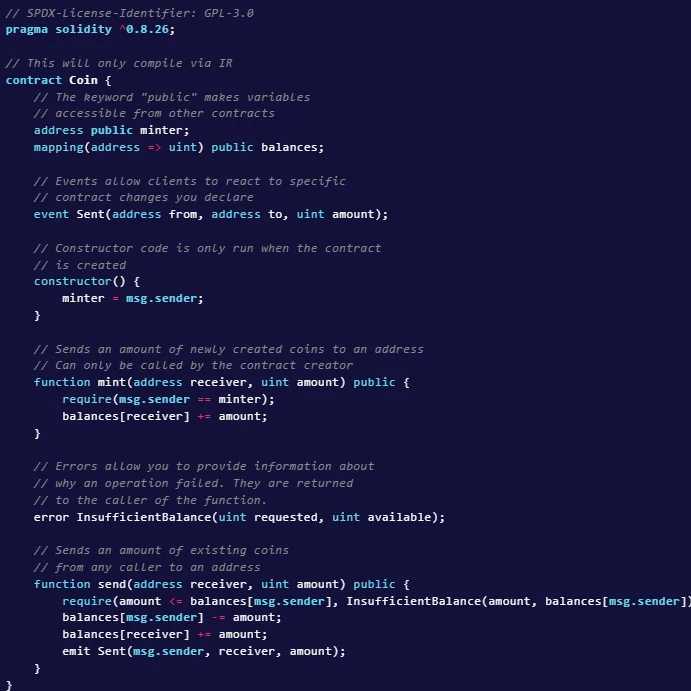
The preparation process generally includes these steps:
- Define the application’s rules and access permissions.
- Write the contract code.
- Test normal operations and failure scenarios.
- Conduct security reviews.
- Deploy the contract to the target network.
- Monitor the system during use.
Test networks provide an environment where developers can experiment with test assets that carry no real economic value. However, successful tests do not guarantee that problems will never arise in actual use.
A deployed contract has an address. Users can check this address to confirm that they are interacting with the correct program. Fake applications may use the same name, so relying on a project’s name alone is insufficient.
Starting a transaction and paying gas fees
Imagine making a transaction through a token swap application. The interface prepares a transaction request using your selected tokens and amount. Your wallet then displays the request for approval.
A simplified version of the process looks like this:
- The user selects the desired operation.
- The wallet displays the relevant transaction details.
- The user signs the transaction and sends it to the network.
- The network executes the transaction according to the contract’s rules.
- A successful transaction updates the relevant balances or records.
On Ethereum, these computational operations consume gas. Your fee depends on the computation required and the network’s fee conditions. A complex transaction may require more computation than a simple transfer.
A transaction that the network processes but then reverts because of an error can still incur fees. The network may have already spent computational resources attempting it. Therefore, a “transaction failed” message does not necessarily mean you paid no fee.
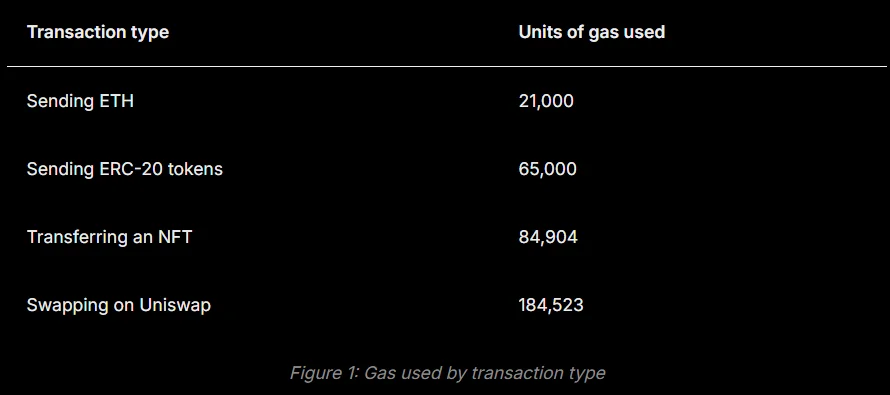
Simply reading data from a contract works differently. For example, displaying an existing balance does not, by itself, require a new blockchain record. On Ethereum, users normally pay no network fee for these read-only calls.
Oracles and external data
Smart contracts cannot independently read information from websites. Data such as exchange rates, weather conditions, or flight delays requires an additional connection. Oracle systems provide information from outside the blockchain in a format smart contracts can use.
Consider a hypothetical flight insurance application. Its contract could provide a payout when a delay exceeds a specified duration. However, the flight data provider must first submit the delay information to the blockchain.
This introduces another dependency. If the data source supplies incorrect information, the contract may produce an incorrect outcome despite following its rules correctly. Security assessments of oracle-based applications therefore also consider data sources and update mechanisms.
Smart Contract Use Cases
Smart contract use cases extend beyond cryptocurrency transfers. Financial applications, digital assets, and shared fund management can all use this technology.
Applications also differ in their degree of decentralization. Particular companies may retain control over the interface, data sources, or administrative privileges.
DeFi, token swaps, and lending
Decentralized finance is a prominent area of smart contract use. These applications handle token swaps, collateral management, and borrowing through programmable rules.
On a decentralized exchange, contracts can manage swap conditions and asset movements. In a lending application, they can track collateral ratios, debt records, and liquidation conditions.
For example, a user may deposit collateral into a protocol and borrow another asset against it. If the collateral loses value, the position approaches the application’s risk threshold. When liquidation conditions apply, the relevant mechanism may sell part of the collateral.
The user faces risks beyond price movements. Contract errors, data source problems, and the application’s economic design can also affect the outcome.
Different protocols can also use one another’s contracts. This makes developing new services easier while creating dependencies between applications. A problem in one component may affect other services that rely on it.
Tokens, NFTs, and digital rights
Token contracts help manage balances and transfer rules. Depending on their design, they may include functions for creating tokens, burning tokens, or restricting transfers.
Consequently, two tokens on the same network may have different characteristics. One may have a fixed supply, while another allows an authorized account to create more tokens. For users, this distinction goes beyond a technical detail.
NFT contracts can also track which address owns a particular token and how transfers occur. They additionally manage authorization and related metadata operations.
For example, a membership application may require a particular NFT in your wallet to grant access. However, the continued availability of its content is a separate matter. Holding the token does not guarantee that the service provider will operate indefinitely.
Shared funds and conditional payments
Smart contracts can also help manage funds that multiple people use. For example, a community may require approval from several authorized individuals before making certain payments.
A hypothetical project fund could use the following structure:
- Participants deposit assets into the fund’s contract.
- The project team creates a payment request.
- Authorized individuals review the request.
- The payment proceeds once it receives enough approvals.
- Participants can examine the transaction history.
Similar systems can support payments in stages. However, the design must establish how the program will determine whether the work is complete. If human approval or external data is necessary, those elements become part of the system’s trust model.
These examples show why defining the scope of automation matters. A blockchain payment and the quality of a real-world service require different assessments.
Smart Contract Benefits and Risks
Smart contract benefits include automation, traceability, and the ability for different applications to work together. However, these same features can create risks when design flaws or malicious activity come into play.
Evaluating an application requires looking beyond its functionality. Its code security, governance structure, and requested permissions also deserve attention.
Automation and transparency
Smart contracts make it easier to execute repetitive operations under consistent rules. This can reduce manual checks and recordkeeping in some processes.
On public networks, users can examine transaction history. For contracts with verified source code, developers can assess whether the published code matches the program on the blockchain.
The main benefits include:
- Applying rules through software.
- Making transaction history traceable.
- Allowing digital assets to work across applications.
- Automating repetitive processes.
- Reducing manual intervention where the design supports it.
However, transparency does not mean everyone can easily understand the code. Public access to a program also does not replace a security review. Clear explanations and understandable transaction screens therefore matter.
Code errors and security audits
Like other software, smart contracts can contain errors. Incorrect access controls, unexpected contract interactions, or calculation problems can cause asset losses.
Attackers do not have to exploit a vulnerability in a single function. They may also exploit relationships between multiple operations or applications. Security assessments should therefore cover the economic design alongside the code.
Independent audits help identify potential problems. However, an audit report does not guarantee that vulnerabilities will never emerge. The code version it covers and whether the team addressed its findings both matter.
The following questions can guide your review of a project:
- Is the audit report publicly available?
- Do the audited contracts match the version currently in use?
- Has the team addressed critical findings?
- Does the project provide a channel for reporting vulnerabilities?
- Has the team explained its emergency procedures?
These checks do not eliminate risk. However, they provide more information than relying solely on an “audited” label.
Administrator privileges and upgradeability
A common description of smart contracts is that their code cannot change. However, some applications use special architectures to update their behavior.
In structures known as proxies, users can continue interacting with the same address. An authorized mechanism can change the implementation that this address points to. This allows developers to introduce fixes or new features.
This flexibility raises additional questions about who holds authority. A single account, several signers, or a community vote may control upgrades.
Some contracts also include powers to pause operations, change fees, or restrict certain transactions. Therefore, saying an application “uses smart contracts” does not mean it operates without administrative control.
How to Use Smart Contracts
You do not need to write code to use a smart contract. Most users interact through an application’s interface and a compatible wallet. Nevertheless, a seemingly simple approval screen may involve extensive permissions.
Before starting, check which network the application uses. Also ensure that your wallet supports that network and holds the balance required for transaction fees.
What to check before a transaction
Starting with a small amount can help you understand the transaction process. However, a successful test does not prove that the contract is secure.
You can make the following checks part of your routine:
- Access the application through its official link.
- Verify the network and token you intend to use.
- Compare the contract address with the official documentation.
- Review the transaction’s total cost and expected outcome.
- Check the token approval and spending limit.
- Stop if you do not understand a signature request.
- Verify the result through a blockchain explorer after the transaction.
If your wallet offers transaction simulation, review the expected asset movements. Simulations can help, but do not assume they reveal every risk.
Token approvals and disconnecting
Connecting to an application and granting token spending permission are different actions. A spending approval may allow a particular contract to use the relevant tokens within a specified limit.
For example, you might grant unlimited approval when you only intend to make a small swap. The permission may then extend beyond the amount you plan to use immediately. Where possible, set the spending limit according to your needs.
Disconnecting your wallet from a website does not automatically remove previously granted token approvals. Review unused approvals separately and revoke them when necessary. Revoking an approval generally requires a transaction and a network fee on the relevant blockchain.
Frequently Asked Questions (FAQ)
Below are some frequently asked questions about smart contracts:
- Do smart contracts only run on Ethereum?: No. Ethereum is a major platform for this technology, but it is not the only option. Different blockchains may use different programming languages and execution models.
- Do smart contracts run on their own?: They generally require a transaction or a call from another contract. Reaching a particular date does not cause an Ethereum contract to initiate a transaction independently. Scheduled operations can use automation systems that submit external calls.
- Does using a smart contract cost money?: Transactions that change the blockchain’s state generally require network fees. Some applications may cover these fees on the user’s behalf. However, the network transaction still has a cost.
- Are smart contracts secure?: Security depends on the contract’s code and the systems it relies on. Audits and testing help reduce risks. Nevertheless, code errors, misuse of privileges, or incorrect user approvals can cause losses.
- Can funds sent to a smart contract be recovered?: That depends on the contract’s rules. If the program offers a withdrawal or refund function, you must meet its conditions. Since not every contract provides a recovery option, check the withdrawal rules before sending funds.
Explore JrKripto’s DeFi, DEX, and crypto wallet guides to learn more about everyday smart contract use.

