
Cryptocurrency mining requires hardware to use its computing power according to a network’s rules. Systems known as mining rigs handle this work; however, choosing a device also requires evaluating electricity consumption, cooling, and operating costs alongside performance.
What Is a Mining Rig, and What Does It Do?
A mining rig is a hardware system configured for cryptocurrency mining. Although the term commonly refers to setups containing multiple graphics cards, its broader use covers different mining systems.
These devices participate in block production on networks that use the Proof of Work consensus mechanism. In doing so, they help extend the transaction record and contribute to network security.
The role of hardware in mining
In Bitcoin mining, software sends data related to a candidate block to the hardware. The hardware repeatedly performs calculations to find a hash that meets the network’s target.
People often describe this process as “solving complex mathematical problems.” A more accurate description is performing numerous cryptographic attempts with different inputs.
The miner that finds a valid result broadcasts the block to the network. Network nodes independently verify its transactions and compliance with the rules.
Does every cryptocurrency require a mining rig?
Not every blockchain network uses mining. On Proof of Stake networks, block production depends on staked assets and the protocol’s validator rules.
Ethereum switched to Proof of Stake in 2022. As a result, mining ETH with graphics cards on the Ethereum mainnet is no longer possible.
Before buying hardware, check the target network’s current algorithm. A device’s previous use for a particular asset does not mean it remains suitable today.
GPU and ASIC Mining Systems
The main distinction when choosing mining hardware involves flexibility and performance on a specific algorithm. GPU-based systems and ASIC devices serve different needs.
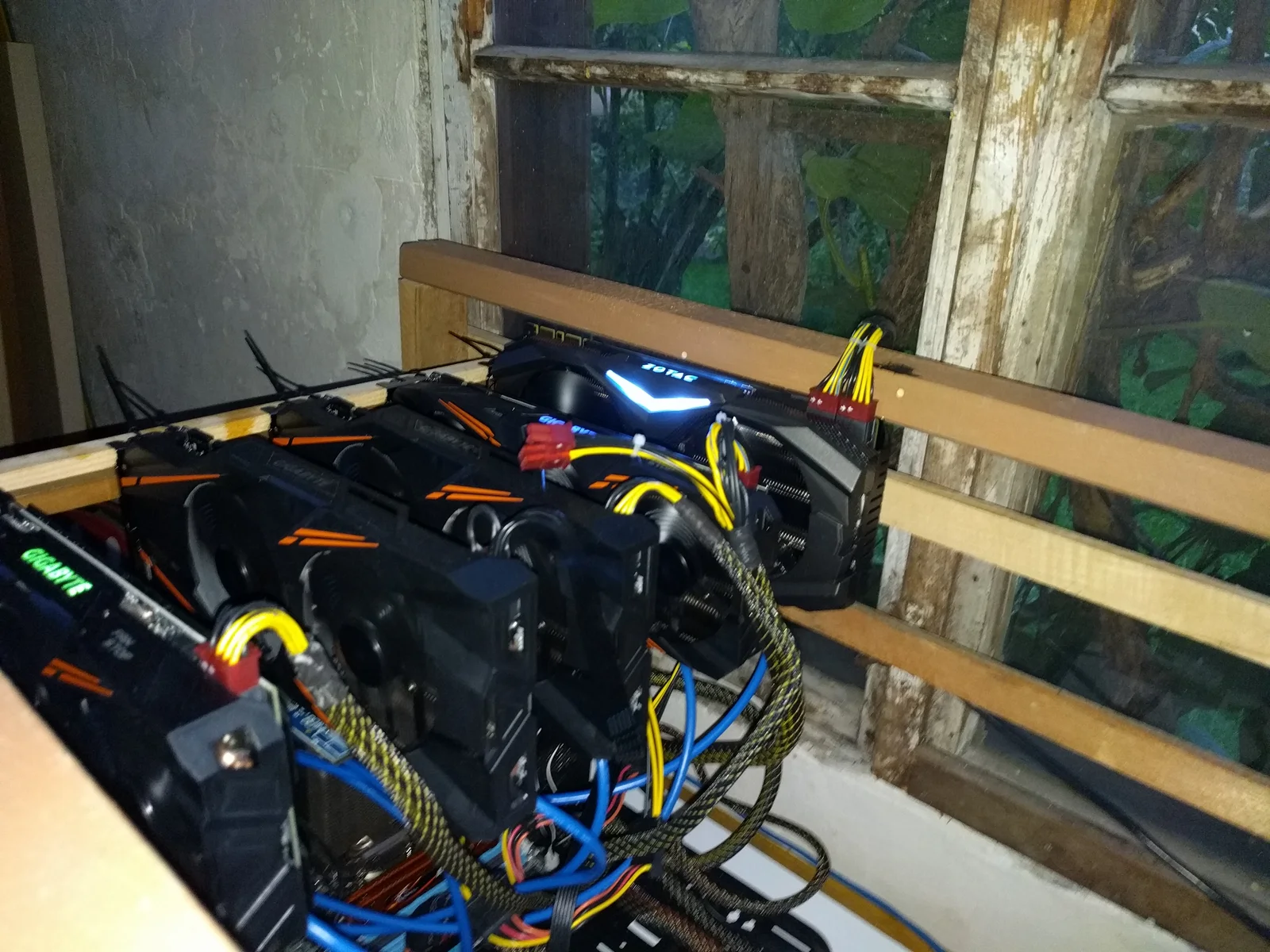
How is a GPU mining rig built?
GPU mining uses the processing power of graphics cards to perform calculations. Running several cards within the same system requires compatible components.
| Component | Role in the system |
Graphics card | Performs mining calculations |
Motherboard and processor | Manage the system and communication between components |
RAM | Provides working memory for the operating system and software |
Storage device | Holds the operating system and mining software |
Power supply | Supplies sufficient electrical power suitable for the components |
Riser connections | Help connect graphics cards in compatible setups |
Frame and fans | Support the components and promote airflow |
GPU systems may allow switching between different supported algorithms. However, graphics card memory, software support, and network competition limit this flexibility.
What is an ASIC miner used for?
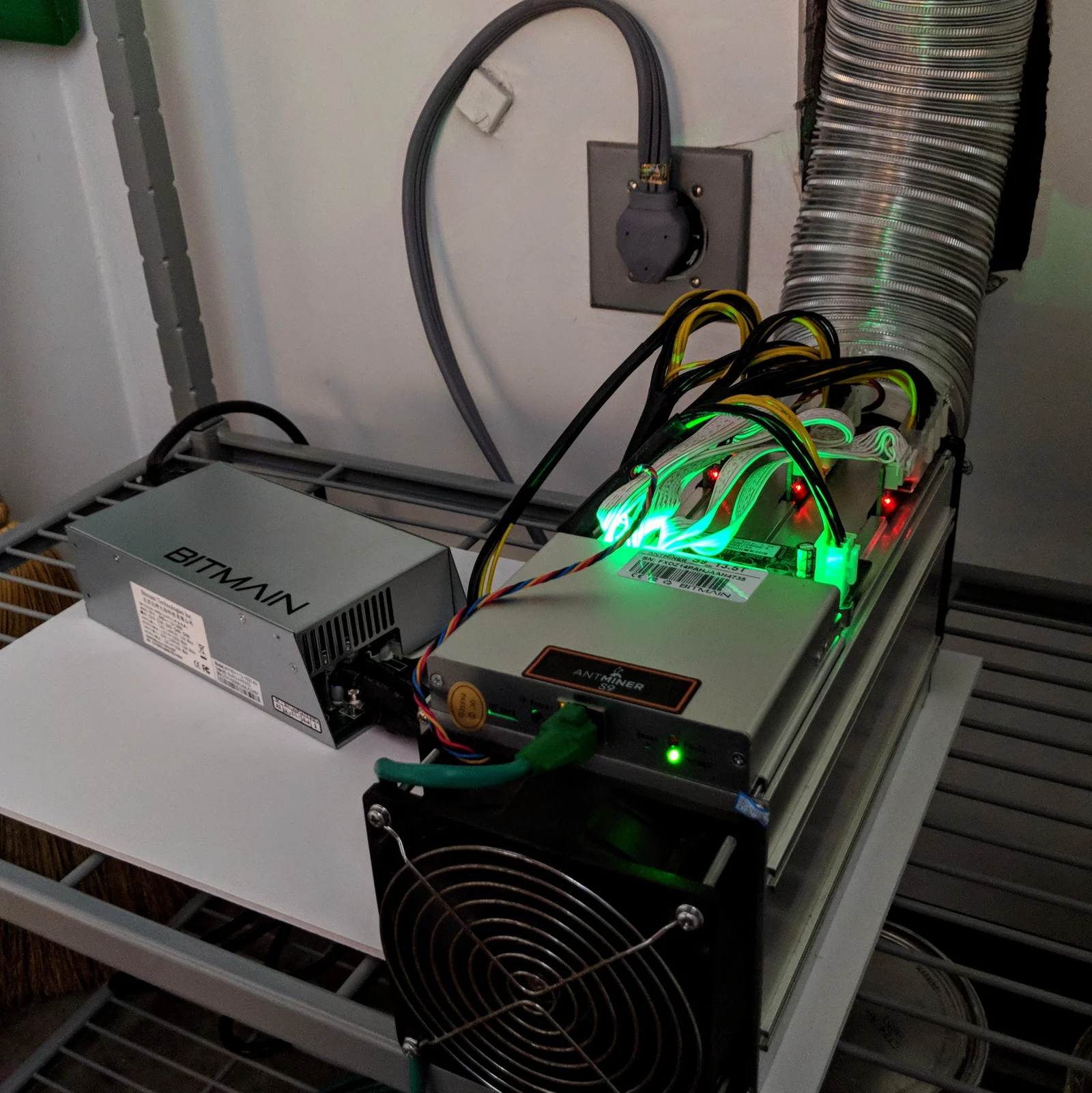
ASIC stands for application-specific integrated circuit, a chip designed for a particular task. An ASIC miner operates on the mining algorithm it supports.
For example, Bitcoin mining uses ASIC devices designed for SHA-256. You cannot redirect such a device to an arbitrary cryptocurrency that uses a different algorithm.
ASIC systems generally include hash boards, a controller, and cooling hardware. Whether the package includes a power supply, along with its electrical requirements, varies by model.
| Feature | GPU-based rig | ASIC miner |
Flexibility | Can switch between supported algorithms | Limited to a specific algorithm |
Setup | May require assembling individual components | Usually an integrated device |
Performance | Depends on the algorithm and graphics card | Specialized for its designated algorithm |
Alternative uses | Graphics cards can serve other purposes | Limited alternative uses |
Cost | Depends on the number of cards and components | Depends on the model, efficiency, and market conditions |
ASIC devices are not always more expensive, and GPU systems are not always more economical. Compare them based on the total setup cost and target algorithm.
How Does a Mining Rig Work?
A working mining setup requires hardware, software, and network connectivity to operate together. Buying high-performance equipment alone does not ensure a steady income.
Software, mining pools, and rewards
Mining software determines which work the device performs and where it sends the results. When using a pool, you configure the connection address, device identifier, and payment settings.
Mining pools combine participants’ computing power in a shared effort. Each pool evaluates contributions and distributes earnings according to its payment model.
With solo mining, the intervals between finding blocks can be extremely long. Using a pool can reduce payment variability, but it also introduces fees, payout thresholds, and service provider risk.
Hash rate and energy efficiency
Hash rate measures the number of hash calculations hardware performs per second. Common units include MH/s, GH/s, and TH/s.
However, you cannot directly compare hash rates across different algorithms. A higher figure on one algorithm does not prove that a device operates more efficiently than hardware running another.
When evaluating performance on the same algorithm, also consider energy consumption. One common metric for Bitcoin ASIC devices is J/TH, which measures the energy consumed per terahash.
A lower value means less energy is required for the same amount of computational work. Still, actual power consumption can vary with temperature and operating settings.
How Is Mining Profitability Calculated?
Mining profitability requires a broader calculation than the value of the cryptocurrency earned. Electricity expenses, maintenance, pool fees, and hardware depreciation all affect the outcome.
An example of calculating electricity costs
Consider a system drawing an average of 1,000 watts from the wall. Running for 24 hours a day, it consumes 24 kWh of electricity daily.
For this hypothetical example, assume a total electricity cost of 4 Turkish lira per kWh:
| Calculation | Result |
Daily consumption: 1 kW × 24 hours | 24 kWh |
Daily electricity cost: 24 × 4 lira | 96 lira |
Consumption over 30 days | 720 kWh |
Electricity cost over 30 days | 2,880 lira |
This example does not represent a current electricity tariff. Add the consumption of external cooling systems and other equipment separately.
Factors that change earnings
The same device’s earnings can change over time. Consider the following variables together when calculating profitability:
- The price of the asset being mined.
- Network difficulty and competing miners’ computing power.
- The block subsidy and transaction fees.
- Pool fees and payment methods.
- Device downtime.
- Electricity, maintenance, and cooling expenses.
Bitcoin halving cuts the block subsidy in half. Calculating a fixed payback period using today’s daily revenue can therefore be misleading.
Dividing the hardware cost by daily net earnings provides only an initial estimate. Calculate adverse scenarios separately, including falling prices and rising electricity costs.
Setup, Maintenance, and Home Use
When choosing mining equipment, plan the environment in which it will operate. A sustained load directly affects electrical infrastructure and room temperature.
A checklist before installation
Complete the following steps before starting the installation:
- Verify the target network’s algorithm and hardware compatibility.
- Determine the total power demand and connection requirements.
- Have a qualified electrician check whether the electrical circuit can handle a continuous load.
- Prepare an area where hot air can escape.
- Obtain software and device updates from official sources.
- Carefully configure the pool address and payout wallet.
- Monitor temperatures, power consumption, and error rates during initial operation.
Disconnect power before making hardware connections, and follow the manufacturer’s cabling instructions. Unsuitable power strips or connections can create an overheating risk.
Heat, noise, and hardware lifespan
Most of the electricity the device consumes eventually becomes heat. Fans help remove this heat, but they can generate substantial noise, particularly in powerful systems.
Dust buildup and insufficient airflow make cooling more difficult. During maintenance, check fans, connections, and operating temperatures according to the manufacturer’s instructions.
Physical lifespan and economic lifespan can also differ. An older device may continue functioning while becoming uneconomical if its earnings no longer cover electricity costs.
Frequently Asked Questions (FAQ)
Below are answers to some frequently asked questions about mining rigs:
- Which cryptocurrencies can you mine with a mining rig?: The algorithm supported by the hardware determines the options. Bitcoin mining uses SHA-256 ASIC devices; check the relevant network’s current documentation for GPU mining options.
- Does setting up a mining rig at home make sense?: Electricity tariffs, ventilation, noise, and upfront costs determine the outcome. Evaluate these conditions together before purchasing a device.
- How much energy do mining rigs consume?: Consumption depends on the model and operating settings. Base your actual cost calculations on the power the entire system draws from the wall.
- What is the main difference between an ASIC miner and a GPU-based mining rig?: An ASIC specializes in a specific algorithm. GPU systems may offer greater flexibility across the algorithms they support.
- How long do mining rigs last?: There is no fixed lifespan. Temperature, maintenance, component quality, and operating conditions affect physical lifespan; revenue and costs determine economic lifespan.
- Is cryptocurrency mining legal?: Rules vary by country and the scope of the activity. Before setting up a rig, check local regulations, tax obligations, and electricity usage conditions.
Explore JrKripto’s Bitcoin mining guide to learn more about hardware’s role in the network. You can also discover how block production and rewards work through our Proof of Work and Bitcoin halving guides.

