
You do not always need to deposit funds into a centralized exchange to swap crypto assets. Decentralized exchanges allow you to perform many transactions through your own wallet.
Known as DEXs, these applications are key components of the DeFi ecosystem. However, control over your assets also brings responsibility for assessing transaction costs, smart contract risks, and token security.
What Is a DEX?
DEX stands for “decentralized exchange.” It enables crypto assets to be traded through blockchain-based protocols rather than the conventional account systems of a central organization.
On many DEXs, you connect your wallet, select the assets you want to swap, and sign the transaction. Smart contracts or the relevant network’s protocol rules govern execution.
How does it differ from a centralized exchange?
On centralized exchanges, or CEXs, the platform generally manages custody of deposited assets. Trades usually take place within the exchange’s internal records; each trade does not create a separate blockchain transfer.
With a DEX, you can access the protocol through your personal wallet. However, providing liquidity or using certain products may require depositing assets into contracts.
The statement that “assets always remain in your wallet” therefore does not accurately describe every DEX activity. Controlling your keys and transferring assets into a contract are separate matters.
| Feature | Centralized exchange (CEX) | Decentralized exchange (DEX) |
Access | Through a platform account | Usually through a crypto wallet |
Custody | Generally managed by the platform | Depends on the wallet and protocol structure |
Execution | Within the platform’s systems | Through smart contracts or network rules |
Transaction costs | Trading and other service fees | Swap, network, and potential interface fees |
Support | Institutional customer service | Limited ability to reverse mistakes |
Token access | Depends on platform listing decisions | Depends on pools, markets, and interface conditions |
What does trading without intermediaries mean?
A DEX shifts some intermediary functions into software. Developers, web interfaces, data providers, and network infrastructure still play important roles.
Some protocols include permissions to upgrade contracts or pause operations. When assessing decentralization, examine how authority is distributed alongside the platform’s branding.
How Do Decentralized Exchanges Work?
DEXs use different trading models. Some rely on liquidity pools, while others match buy and sell orders.
The role of smart contracts
Smart contracts can manage swap conditions and asset transfers. When a user signs a transaction, the contract performs the relevant checks and executes the swap if the conditions are met.
Granting a token spending allowance and executing a swap may involve separate steps. The allowance lets a specific contract use your tokens within a defined limit.
Connecting your wallet to a website does not execute a swap on its own. Check which permissions each signature or approval request asks you to grant.
AMMs and liquidity pools
An automated market maker, or AMM, uses mathematical rules to determine pricing. Users trade against a pool instead of waiting for another user to place a matching order.
Liquidity providers supply the assets in the pool. As swaps occur, the pool’s token balances and prices can change.
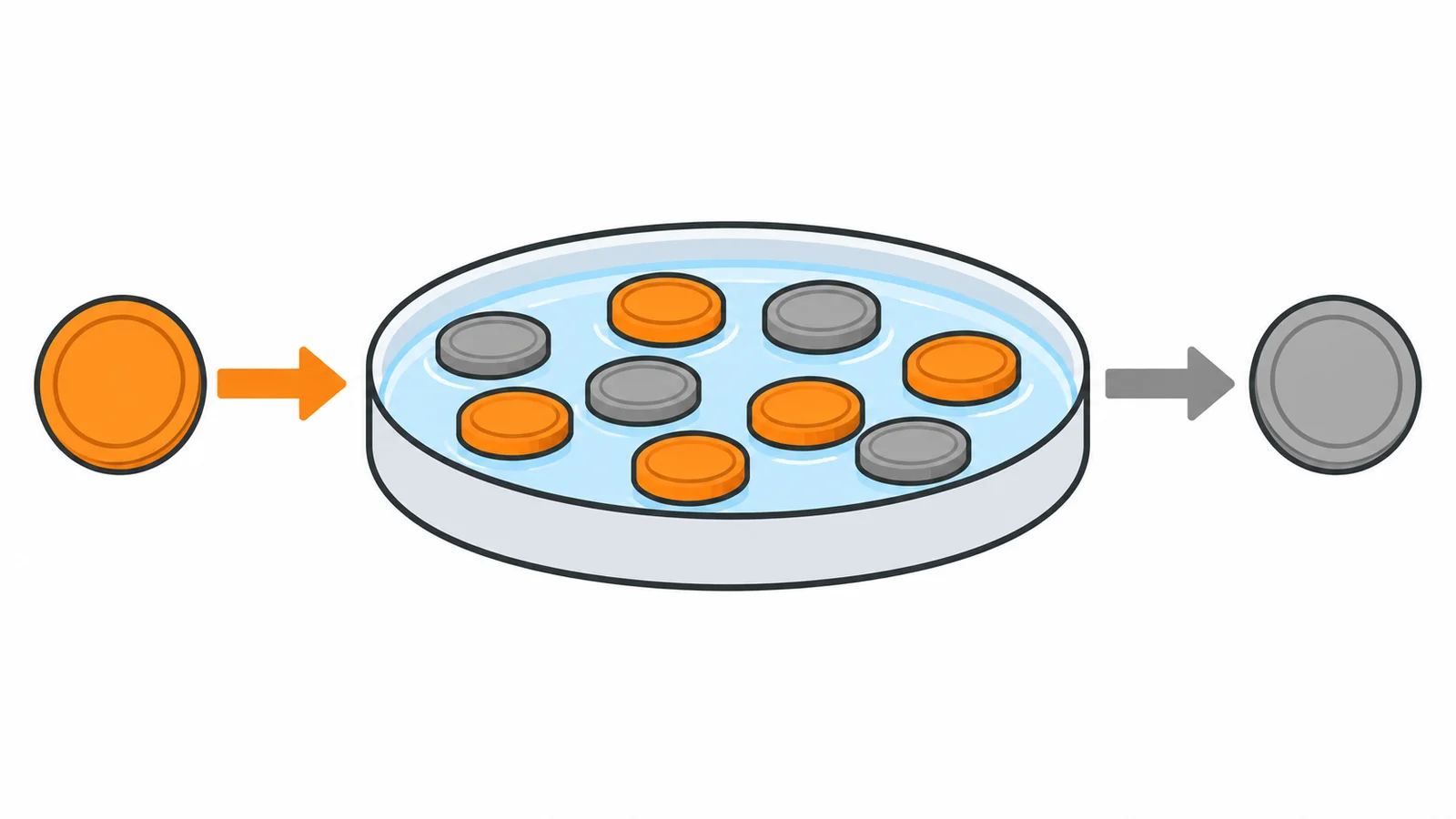
Some AMM models allocate liquidity to specific price ranges. This can concentrate the use of capital, but it may also require closer monitoring of the position.
Order books and off-chain activity
On order book DEXs, buy and sell orders are organized by price and quantity. Different architectures can handle order creation, transmission, and matching.
Some systems keep certain orders off-chain while recording completed trades on-chain. For example, short-term orders on dYdX Chain can remain in nodes’ memory, with matches finalized through block processing.
Using a DEX therefore does not mean that every click is recorded on a blockchain. Which stages occur on-chain affects performance and the system’s trust assumptions.
What Are the Benefits of Using a DEX?
Decentralized exchanges offer different ways to access digital asset trading. Their main potential benefits include:
- Accessing many applications through a personal wallet.
- Swapping without first depositing funds into a centralized exchange.
- Inspecting on-chain transactions and pool activity.
- Performing transactions connected to other DeFi applications.
- Accessing token markets that are not yet available on centralized exchanges.
Permissionless protocols can make market creation more open. However, access to a new token does not mean that the token has been reviewed or is trustworthy.
Resistance to censorship also depends on the protocol and network design. Web interfaces may impose access restrictions; technical access does not remove legal obligations.
How Should You Evaluate Slippage and Transaction Costs?
Swap fees alone do not capture the full cost of using a DEX. Liquidity, trade size, and confirmation time influence the amount you receive.
The difference between price impact and slippage
Price impact is the change your own trade causes in a pool’s price. This effect can increase as the trade becomes larger relative to available liquidity.
Slippage describes the difference between the expected and actual execution outcome. Changes in the market or pool while a transaction is pending can create that difference.
Suppose a swap preview shows that you will receive 100 tokens. With other conditions unchanged, a 1% slippage tolerance may correspond to a minimum output of approximately 99 tokens.
This does not mean that 1% is automatically deducted. If conditions move beyond the limit, the transaction may fail; failed transactions processed on-chain can still incur network fees.
Network fees and total costs
The total cost varies by network and transaction route. Consider these components together:
- The transaction fee required to approve token spending.
- The network fee for the swap.
- The pool’s or protocol’s swap fee.
- Any interface or routing fee.
- Price impact and realized slippage.
A low swap fee does not always produce the best overall result. Network fees can account for a significant share of the cost, particularly for smaller trades.
What Are the Risks of Using a DEX?
When using a decentralized exchange, assess both the protocol and the token being traded. A risky token market can exist on a reputable protocol.
Contract vulnerabilities and fraudulent tokens
Smart contract errors or abused administrative privileges can cause losses. Audit reports provide useful information, but they do not guarantee security.
Token names and logos are easy to imitate. Some tokens include selling restrictions, high transfer fees, or rules that can be changed later.
Verify the token’s contract address through official sources. The existence of a pool does not guarantee that the token can be freely sold.
Transaction ordering and MEV
On some networks, other participants can see pending transactions before execution. Bots may use this information to place their own trades immediately before and after a user’s swap.
Known as “sandwiching,” this behavior can cause the user to trade at a worse price. Ethereum’s technical documentation also explains that these forms of MEV can increase slippage.
Raising slippage tolerance unnecessarily widens the range of unfavorable prices you accept. Check the transaction conditions even when using an interface with protective features.
Providing liquidity and impermanent loss
Swapping and becoming a liquidity provider are different activities. A liquidity provider deposits assets into a pool to earn a share of fees.
If the relative prices of the pool’s assets change, the position may underperform the alternative of holding the same assets in a wallet. This difference is called impermanent loss.
There is no guarantee that earned fees will cover the difference. The word “impermanent” does not mean that the difference will necessarily disappear.
DEX Types and Well-Known Examples
Comparing decentralized exchanges by name alone is insufficient. The trading model, supported network, and specific pool all matter.
| Example | Core approach | What to examine |
Uniswap | AMM-based swaps and liquidity pools | Pool version, fees, and active liquidity |
PancakeSwap | AMM-based swaps and liquidity products | Network, pool, and transaction route |
Curve | Pool models suited to different asset relationships | Pool asset composition and price risk |
dYdX | Order book-based derivatives trading | Collateral, leverage, and liquidation conditions |
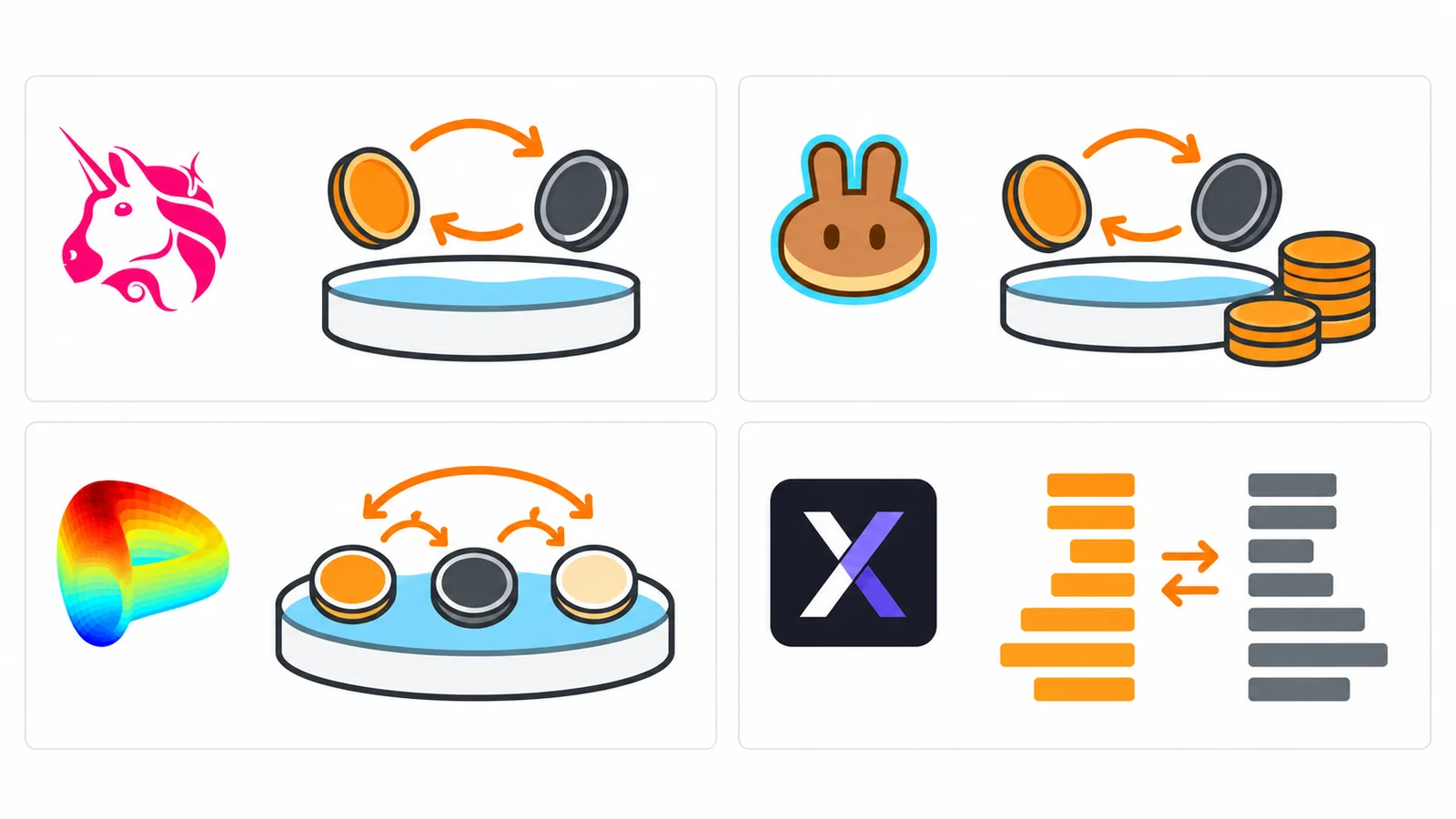
Curve’s StableSwap model is designed for assets whose prices are expected to remain close to one another. The protocol also offers other pool types for more volatile assets.
DEX aggregators can compare quotes from different liquidity sources and split a trade across multiple routes. A better displayed price does not guarantee a lower total network cost.
A Checklist Before Using a DEX
Complete the following checks before approving a transaction:
- Verify the application’s official website.
- Check that your wallet is connected to the correct network.
- Inspect the token’s contract address.
- Keep enough funds available to cover network fees.
- Review the spending allowance and the contract receiving permission.
- Evaluate the minimum amount received, price impact, and total cost.
- Check your wallet balance and the on-chain record after execution.
Review unused spending permissions separately. Disconnecting from a website does not automatically revoke token allowances you previously granted.
The Place of Decentralized Exchanges in the Market
DEXs can make it easier to create new token markets and connect DeFi applications. Open protocols also allow developers to build different products on existing liquidity infrastructure.
Greater access brings more responsibility for due diligence. Liquidity fragmented across networks, fraudulent tokens, and complex transactions can make the user experience more challenging.
Centralized and decentralized exchanges may therefore serve different needs. When evaluating a platform, consider its custody model, costs, liquidity, and product risks together.
Frequently Asked Questions (FAQ)
Below are answers to some common questions about decentralized exchanges:
- Is using a DEX safe?: Security depends on the protocol’s code, administrative permissions, token features, and the transactions a user approves. Using a personal wallet does not eliminate every risk.
- Are DEXs legal?: Their legal status varies by country, product, and the nature of the activity. Check local regulations, tax obligations, and access conditions.
- What is the main difference between a DEX and a CEX?: The main distinction lies in custody and execution. Institutional systems manage CEX transactions, while protocols and blockchain infrastructure govern DEX activity.
- Which cryptocurrencies can I trade on a DEX?: You can trade assets available on a supported network with suitable liquidity. Remember that tokens sharing the same symbol may have different contract addresses.
- What does it mean to be a liquidity provider?: It means supplying assets to a pool to support swaps. Fee income is possible, but price risk, impermanent loss, and contract risk remain.
- Will DEXs replace centralized exchanges?: There is no certain outcome. Custody preferences, user experience, liquidity, and regulation will continue to influence the use of both models.
When trading on decentralized exchanges, assess liquidity, permissions, and total costs alongside the token’s price. Follow JrKripto’s guides to explore DEXs and DeFi in greater depth.

