Politics
Trang này tổng hợp Politics và phân tích thị trường mới nhất. Xem bài viết, nhận định chuyên gia và cập nhật trong danh mục này trên JrKripto. Luôn nắm bắt xu hướng và diễn biến tiền điện tử qua các nội dung chuyên sâu.
Tin tức
Tin tức chính trị
Tin tức chính trị
Xem tất cả bài viết và tin tức liên quan đến chính trị. Tin tức, phân tích và nhận định mới nhất về chính trị.
Iran-US Ceasefire Boosts Bitcoin and Altcoins
The temporary ceasefire announced between the US and Iran quickly led to a sharp reversal in the crypto markets. The two-week "bilateral ceasefire" announced by US President Donald Trump reversed the bearish expectations that had intensified in recent days, causing Bitcoin to rapidly rise to $72,700. This sudden movement also triggered a significant short squeeze in the markets. According to data shared by the crypto data platform CoinGlass, a total of $595 million worth of positions were liquidated, with the majority being short positions. The liquidation of approximately $427 million worth of short positions clearly demonstrates the intensity of bearish expectations in the market. In particular, in recent weeks, geopolitical risks and increasing uncertainty had led a large portion of investors to take bearish positions. This sharp rise was not limited to Bitcoin. Ethereum gained approximately 6% on the same day, while XRP rose 5% and Solana 5.5%. The overall crypto market recorded a daily increase of around 4%. On the other hand, the majority of liquidations occurred in a relatively short period. Approximately $508 million of the total $595 million liquidation took place in just 12 hours, with $398 million of that coming from short positions. This marked the most aggressive short squeeze since the beginning of March. The largest single liquidation occurred on Binance. Approximately $11.79 million worth of BTC-USDT short positions were liquidated in a single transaction, with Bitcoin leading the list with a total liquidation of $245 million. Ethereum came in second with $126 million, while altcoins like Solana, ZEC, and XRP also felt the effects of this wave. The impact of the ceasefire decision was not limited to cryptocurrencies. Oil prices also saw a sharp decline. Brent oil fell to around $99, and WTI to $95, indicating a rapid normalization in energy markets that had previously risen due to the war-related "risk premium." This situation also led to significant liquidations in tokenized commodity contracts. The agreement is valid for two weeksFrom a market sentiment perspective, one of the key factors behind the rise was overly pessimistic positioning. While the "fear and greed index" remained in single digits during the war, negative expectations dominated social media. The ceasefire news broke this one-sided expectation, sharply reversing the market. However, experts are cautious about whether this rise will be permanent. According to analysts, a two-week temporary ceasefire is not enough to start a long-term bull market. For a sustained rise, not only is a reduction in geopolitical risks needed, but also an improvement in global liquidity conditions, a strengthening of expectations for interest rate cuts, and continued corporate capital inflows are required.

Inflation Week Begins: Bitcoin at a Critical Threshold
As global markets once again turn their attention to inflation data, the critical macroeconomic indicators set to be released this week are expected to be decisive for crypto markets. Data coming from the United States in particular could reshape expectations around monetary policy, directly influencing the direction of risk assets — Bitcoin chief among them.Watch Thursday and FridayAmong the week's most important agenda items are February's core PCE (Personal Consumption Expenditures) data, due Thursday, and March's CPI (Consumer Price Index) figures, due Friday. These two releases could send strong signals about the path the Federal Reserve may take on interest rate cuts. While markets at the start of the year were treating rate cuts as near-certain, recent developments have significantly shifted that outlook.Looking at prediction markets, the probability of a rate cut has fallen sharply. According to Polymarket data in particular, the likelihood of no rate cuts at all throughout 2026 has climbed from below 3% in mid-January to above 35% more recently, a shift that signals investors are beginning to take a more cautious stance.Meanwhile, comments from André Dragosch, research director at Bitwise Europe, are also drawing attention. According to Dragosch, Bitcoin may have already begun pricing in a US recession. In his view, the leading cryptocurrency has been reacting ahead of financial conditions and forward-looking indicators, behaving like a "canary in a coal mine", a metaphor suggesting Bitcoin is sending an early signal of a potential economic contraction.The most recently released data, however, complicates that picture. March's ISM Manufacturing Index came in above expectations, pointing to the resilience of the US economy. The fact that economic activity has remained strong despite rising oil prices weakens the recession outlook. Indeed, market-based recession probabilities have pulled back from 37% to 28%.Bitcoin price: Where things standThese conflicting signals are making it difficult to determine direction in the crypto market. On one hand, Bitcoin is thought to have already priced in a potential economic slowdown; on the other, strong macro data could reignite risk appetite. On this point, Dragosch argues that the current setup offers a favorable risk-reward balance for Bitcoin on the upside.Bitcoin's price action is meanwhile flashing short-term recovery signals. According to the latest data, BTC is trading near the $69,600 level, having gained roughly 4% over the past 24 hours. Even so, the chart has yet to confirm a definitive break of the downtrend that has been in place since the start of the year. Unless a sustained move above the $70,000 level materializes, upward momentum may remain limited. Geopolitical risks continue to be a significant part of the picture as well. Any escalation in the Middle East in particular could turn risk scenarios that are already priced into markets into reality, a development that could trigger fresh selling pressure across both traditional finance and crypto assets.

Bitcoin Jumps on Hopes of Truce: Short Positions Liquidated
Bitcoin started the week with a strong rally. The reopening of the market after the holiday and relatively positive news flow from the geopolitical front increased risk appetite in crypto assets, albeit briefly. The leading cryptocurrency gained approximately 3% in the last 24 hours, rising to the $69,000 level and reaching its highest point in over a week.Nearly $200 million in short positions liquidated in the marketThis rise was driven not only by spot purchases but also by a sharp "short squeeze" effect triggered by the excessive accumulation of short positions in the market. According to JrKripto data, a total of over $254 million in liquidations occurred in the last 24 hours, with approximately $206 million of this coming from short positions. The amount of liquidation in long positions remained around $48 million. This difference indicates that the expectation of a market decline is quite high. The largest single liquidation transaction was an ETH-USDT short position exceeding $10 million on Binance. Bitcoin's intraday price range also highlighted the extent of this squeeze. The price moved within a wide band of approximately $2,700, ranging from $66,600 to $69,300.The rise was not limited to Bitcoin alone. Ethereum recorded its strongest daily performance of the week, rising 3.7% to reach $2,130. Solana rose 2%, while XRP gained 2.2% and Dogecoin 1.7%. This broad-based movement allowed the total cryptocurrency market capitalization to climb back above $2.5 trillion.Possible ceasefire expectationThe main trigger for this sudden market recovery was news of a possible ceasefire agreement between the US and Iran. According to a report by Axios, the parties are holding talks on the possibility of a 45-day temporary ceasefire. This development, particularly with reduced concerns about commercial ship traffic through the Strait of Hormuz, supported demand for risky assets in the short term. However, geopolitical uncertainty has not completely disappeared. Harsh statements and potential military threats from the US are causing the market to remain cautious. Therefore, questions remain about the sustainability of the current rise. On the other hand, data from derivative markets shows that investors are still cautious. The probability of a ceasefire in the forecast markets has decreased in recent days. This is because recent statements from the field have weakened ceasefire expectations. A high-ranking Iranian official confirmed that the proposal conveyed through Pakistan is being evaluated, but emphasized that Tehran will not accept any time pressure. The official also stated that reopening the Strait of Hormuz in exchange for a temporary ceasefire is out of the question, and that it is believed the US is not ready for a permanent ceasefire. In short, the ceasefire news that triggered short-term optimism in the markets has not yet turned into a concrete agreement.

US Data Came in Strong, Bitcoin Remained Unchanged
The latest employment data from the US has triggered a renewed macroeconomic-focused pricing process in global markets, while the cryptocurrency market has remained relatively calm. The data released for March revealed that the economy is showing a stronger-than-expected recovery.According to the report published by the US Bureau of Labor Statistics, non-farm employment in the country increased by 178,000 people in March. Market expectations were around 60,000. From this perspective, the data came in significantly above expectations, indicating that economic activity has not slowed down. Considering the 133,000 job losses recorded in the previous month, this increase points to a remarkable recovery.A similar improvement was seen in the unemployment rate. The rate, which was at 4.4% in February, fell to 4.3% with the March data. This level was also below market expectations. This decrease in the data shows that the labor market still has a resilient structure.On the other hand, the downward revision made in the February data was also among the factors that partially affected the picture. The downward revision of the previously announced 92,000 figure contributed to a more pronounced recovery in March. This strong macroeconomic outlook is critically important, particularly in terms of expectations regarding the Federal Reserve's (Fed) monetary policy path. Employment data is among the most important indicators closely monitored by the Fed in its interest rate decisions. Strong data could put pressure on the Fed to keep interest rates high or raise them again, as it seeks to prevent the economy from overheating. In recent weeks, market expectations have been shaped not only by domestic economic data but also by geopolitical developments. Tensions in the Middle East and the rapid rise in oil prices are among the main factors pushing inflation expectations upward. This situation recently strengthened expectations in the markets that the Fed might raise interest rates again. However, recent statements by Fed Chairman Jerome Powell have somewhat balanced these expectations. Powell noted that while the sudden rise in oil prices may push inflation up in the short term, it could also suppress economic activity. Therefore, the message was given that the Fed might not take a rapid tightening step based solely on fluctuations in energy prices.How did Bitcoin react?Despite all these developments, there was no significant volatility in Bitcoin. BTC, which was trading around $67,000 before the data was released, fell to around $66,500 after the data. It then recovered to $66,750. In US stock futures, a slightly negative outlook prevailed. The Nasdaq 100 futures index fell by approximately 0.2%, while the US 10-year Treasury yield rose by four basis points to 4.36%. The rise in bond yields is considered a signal supporting the expectation that interest rates may remain high for a longer period.
Trump’s Signal Boosts Markets: Bitcoin Above $70K
U.S. President Donald Trump’s softer tone on the Middle East triggered a strong rebound across the cryptocurrency market in a short period. Bitcoin climbed rapidly from around $68,500 during the day to above $71,000. Signals suggesting a potential, even temporary, easing of geopolitical tensions pushed investors back toward risk assets. Trump statements take center stageIn his remarks, Trump said the United States and Iran had held “very good and productive conversations.” He also noted that planned military operations targeting Iran’s energy infrastructure had been postponed for five days. The decision was said to be contingent on progress in ongoing diplomatic talks. Markets interpreted the development as a sign that tensions could ease in the near term. Following the announcement, Bitcoin gained more than 4%, rising to as high as $71,500 before stabilizing around the $70,000 level. Ethereum saw a similar move, climbing from just above $2,000 to $2,190 and holding near the $2,150 range. Overall, a broad-based recovery was observed across digital assets.However, the drivers behind this rally are not limited to crypto. Global markets continue to be shaped by macroeconomic uncertainty, particularly through energy prices and interest rate expectations. Concerns that a potential conflict in the Middle East could disrupt global energy supply via the Strait of Hormuz had recently triggered sharp sell-offs. As a result, any signal of de-escalation is prompting swift reactions across asset classes.On the macro side, volatility in U.S. Treasury markets has increased, with investors frequently repricing rate expectations. In some scenarios, the possibility of further rate hikes this year has even re-entered the conversation. A stronger U.S. dollar and rising bond yields have put pressure on traditional safe-haven assets like gold, while also weighing on equities.Within this environment, crypto continues to play a dual role as both a risk asset and an alternative store of value. According to analysts, Bitcoin’s latest move appears to be driven more by traditional risk appetite dynamics rather than acting as a geopolitical hedge. This suggests that prices are likely to remain highly sensitive to macro developments in the near term.Meanwhile, significant liquidations were recorded in derivatives markets during the rally. Data shows that approximately $791 million in leveraged positions were wiped out, with a large portion consisting of long positions. This highlights the elevated volatility in the market and the strong impact sudden price swings can have on traders.Oil reboundsEnergy markets also experienced notable fluctuations. Brent crude fell from above $113 to as low as $98 before recovering, while U.S. crude (WTI) dropped more than 10% before stabilizing. Gold initially declined sharply but later showed signs of recovery. These movements underline how strongly geopolitical risks continue to influence global markets.Update: Despite the U.S. emphasizing diplomacy, Iran said there are currently no negotiations taking place, according to FARS and Tasnim news agencies, and described Trump’s statements as “psychological warfare.” Officials also stressed that the Strait of Hormuz will not return to pre-conflict conditions unless tensions fully subside.

Pullback Ahead of FED Decision: Bitcoin Under Pressure
A cautious wait prevails in global markets ahead of the Federal Reserve's (FED) critical interest rate decision. The decision, to be announced on Wednesday, March 18th, is expected to be released at 9:00 PM Turkish time (GMT+3), with FED Chairman Jerome Powell scheduled to speak at 9:30 PM GMT+3. While markets are pricing in the almost certain scenario of keeping interest rates unchanged, the main focus is on forward-looking messages and projections. Current expectations suggest the FED will keep its policy rate stable between 3.50% and 3.75%. However, recent geopolitical developments in the Middle East, leading to rising energy prices and increased inflation expectations, have heightened sensitivity to the decision text and Powell's tone. According to experts, a "hawkish" stance by the FED, meaning a reluctance to cut interest rates, could put pressure on risky assets. Conversely, an emphasis on inflation being temporary could trigger relief and upward movement in the markets. The scenarios in the markets are quite clearly defined. If projections for the policy interest rate point below 3.75%, this could strengthen expectations of an early rate cut and increase risk appetite, leading to a sharp rise in the markets. While a more limited reaction is expected if the rate remains at this level, a projection above 3.75% could increase selling pressure, particularly in the crypto and stock markets.Bitcoin's current situationBitcoin's performance before this critical decision is also noteworthy. The leading cryptocurrency has managed to stay above $70,000, moving in a horizontal band around $71,000. Analysts note that the price being stuck in a narrow range in recent days indicates that the market is waiting for macroeconomic developments to determine its direction. It is stated that the $75,000 level has become a strong resistance, and the difficulty in overcoming this level reveals the market's indecisive nature. Although institutional demand and ETF inflows continue to support Bitcoin, macroeconomic uncertainties are limiting this rise. According to QCP Capital analysts, Bitcoin is struggling to generate new momentum despite maintaining the price range established after the recent surge. They emphasize that market dynamics are increasingly dependent on macroeconomic factors rather than crypto-specific developments.On the other hand, on-chain data is also generating noteworthy signals. On March 18th, approximately $2.2 billion worth of USDT flowed into Binance. This was the largest single-day stablecoin inflow since November 2025. This increase in liquidity could act as a buffer to limit potential declines. However, some analysts believe this rise is largely due to speculative positioning and may not signify a sustained increase in demand.Increased positions in the futures market also raise the risk of volatility. Weakening whale activity and fluctuating ETF flows raise questions about the sustainability of the current rally.

US PPI Data Surprises: How Did Bitcoin React?
February Producer Price Index (PPI) data from the US signaled a stronger-than-expected inflation trend, increasing volatility in risky assets. The higher-than-expected figures, in particular, triggered short-term selling pressure in both traditional markets and the cryptocurrency sector. According to the data, the US PPI rose 0.7% month-on-month in February. This significantly exceeded the market expectation of 0.3% and indicated an acceleration compared to the previous month's 0.5% increase. On an annual basis, the PPI rose to 3.4%, surpassing the 2.9% expectation. This picture reveals that the increase in production costs remains strong and inflationary pressures have not completely disappeared.A similar picture was observed in the core PPI. The monthly core data rose 0.5%, exceeding the expectation of 0.3%, while the annual rate reached 3.9%, surpassing market forecasts. The upward trend in previous data indicates that cost-driven inflation remains resilient in the US economy. The Producer Price Index (PPI) is an inflation indicator that measures price changes in goods and services during the production phase; that is, it shows what happens on the cost side before products reach the consumer. This data is seen as a leading signal for future consumer inflation (CPI) because as production costs increase, this increase is often reflected in final prices. Therefore, a PPI above expectations increases concerns that inflation may be persistent and may lead central banks to postpone interest rate cuts. From a market perspective, high PPI data generally puts pressure on risky assets because it strengthens expectations of tighter monetary policy, which can lead to sell-offs in assets such as stocks and cryptocurrencies.How did the markets react?Markets, which followed a calmer course before the data release, saw sharp price movements after the announcement. Gold fell by 2.3% after the data, dropping below the $4,900 level to around $4,891. This movement is attributed to strong inflation data raising interest rate expectations and increasing demand for the dollar. A similar reaction was observed in the cryptocurrency market. Bitcoin, in particular, exhibited a more sideways trend before the data release, but experienced a sharp downward break after the PPI exceeded expectations. As seen in the chart below, the price quickly retreated and selling pressure intensified. This short-term reaction from Bitcoin indicates that investors are repricing their expectations regarding interest rate policies. Higher-than-expected inflation data strengthens the view that the US Federal Reserve (Fed) may postpone its easing measures. This situation can trigger sell-offs in risky assets, causing short-term investors to reduce their positions.

PCE Data Sends Bitcoin Soaring: BTC Approaches $73,000
Inflation data from the US, closely followed by global markets, triggered activity in the cryptocurrency market. The Personal Consumption Expenditures (PCE) data, one of the Federal Reserve's (Fed) most important inflation indicators, came in below expectations, helping Bitcoin regain upward momentum. Following the release of the data, the leading cryptocurrency, Bitcoin (BTC), quickly approached the $73,000 level, attracting attention.According to data published by the US Bureau of Economic Analysis (BEA), PCE inflation in February was 2.8% year-on-year. Market expectations were at 2.9%. Thus, the inflation data came in slightly below expectations. On a monthly basis, the PCE index increased by 0.3%, presenting a picture in line with expectations.On the other hand, core PCE data, which excludes volatile items such as energy and food, was announced at 3.1% year-on-year. This data aligned with market expectations and remained close to its highest levels in the last two years. Core PCE's monthly increase was also in line with expectations at 0.4 percent. The data shows that headline inflation has decreased somewhat, but core inflationary pressure remains strong.The decrease in headline PCE from 2.9 percent in January to 2.8 percent in February is considered a positive development, albeit limited, for the Fed's fight against inflation. However, the fact that core PCE continues to remain above 3 percent reveals that the Fed is still quite far from its 2 percent inflation target.These data are an important signal for the markets before the Federal Open Market Committee (FOMC) meeting next week. Analysts believe that it is highly likely that the Fed will keep the policy interest rate unchanged in light of the current data. US President Donald Trump's calls for an urgent interest rate cut are not seen as a decisive factor in the central bank's policies at this stage.Bitcoin experienced a riseFollowing the release of the inflation data, there was a rapid price movement in the cryptocurrency market. Bitcoin accelerated its rise following the data release, climbing to the $73,000 level. Having surpassed $72,000 during the day, BTC saw an increase of approximately 3% following the announcement. Analysts note that this rise in Bitcoin was not limited to the inflation data alone, but was also supported by strong buying in derivative markets. In particular, increased positions in futures markets are said to have strengthened BTC's upward movement. In addition, inflows into spot Bitcoin ETFs are among the factors increasing optimism in the market. According to the latest data, approximately $54 million in new investments were made into Bitcoin ETFs in just one day. The continued interest of institutional investors plays a significant role in supporting the Bitcoin price. However, geopolitical risks on the cryptocurrency market have not completely disappeared. The ongoing tension and possibility of war between the US and Iran continue to create uncertainty in global markets. According to analysts, the tension between the two countries is pushing oil prices higher, and this could create new pressure on inflation through energy costs. The possibility that rising oil prices could fuel inflation again may lead the Fed to maintain tight monetary policy for a longer period. This is considered one of the factors that could create temporary pressure on cryptocurrencies, which are seen as risky assets.

The Crypto Market Holds Its Breath: Awaiting the Huge Option Expiration Date and US Inflation Data
The crypto market is in a cautious waiting period ahead of today's large options expiration and critical inflation data from the US. Approximately $2.2-2.3 billion worth of options contracts linked to Bitcoin (BTC), Ethereum (ETH), and XRP expire today, while investors are also closely watching the direction the US PCE (Personal Consumption Expenditures) inflation data will give to the market.Options Market: Large Amounts of Bitcoin and ETH ExpirationSuch large-scale expirations in the options market can usually lead to increased volatility in the short term. However, analysts note that this week's expiration is relatively smaller compared to previous periods and may not have a dramatic impact on spot markets.According to Deribit data, approximately 27,000 Bitcoin options contracts will expire today. The total nominal value of these contracts is approximately $1.9 billion. The put/call ratio of 0.97 in Bitcoin options indicates that expectations for both bullish and bearish movements in the market are quite balanced.On the Bitcoin side, the "max pain" level, where options would cause the most losses for investors, is estimated at approximately $69,000. This level is slightly below Bitcoin's current price. The majority of open options positions are concentrated in put contracts between $55,000 and $60,000, while call contracts are concentrated in the $75,000-$80,000 range. However, options data indicates that there is approximately an 86% chance that Bitcoin will close above $71,000. On the Ethereum side, approximately 185,000 to 186,000 option contracts will expire today. The total value of these contracts is over $380 million. The put/call ratio in Ethereum options is around 1.2, indicating that bearish positions are somewhat more prevalent. The calculated max pain level for ETH is around $2,000. Despite this, options data reveals that there is over a 70% chance that the price will close above $2,100. On the XRP side, the total value of expiring options is estimated at approximately $8.8 million. The put/call ratio is at a very low level of 0.13, indicating that investors are predominantly taking long positions. The maximum pain level for XRP is around $1.40. The fact that the current price is slightly above this level suggests that investors expect a move towards the $1.50 level in the short term.US Inflation Data in the SpotlightAnother development closely followed in the crypto market, as much as option expiry, is the PCE inflation data to be released in the US. This data will be released at 15:30 Turkish time. The data, published by the Bureau of Economic Analysis of the US Department of Commerce, is considered an important indicator, especially for the Federal Reserve's monetary policy.According to economists' expectations, core PCE inflation is expected to come in at 0.4 percent on a monthly basis and 3.1 percent on an annual basis. Headline PCE is expected to increase by 0.3 percent monthly and remain around 2.9 percent on an annual basis. These data may indicate that inflation remains relatively stable despite rising energy prices. On the other hand, US President Donald Trump has called on Fed Chairman Jerome Powell to cut interest rates ahead of next week's FOMC meeting. Trump argued that an urgent rate cut is necessary, citing increased inflation risks, particularly due to rising oil prices. However, CME FedWatch data shows that a large portion of the market expects the Fed to keep rates unchanged at its next meeting. The tool prices the probability of rates remaining unchanged at 99%. Goldman Sachs also updated its forecasts, suggesting the first rate cut could come in September, followed by a second in December. In addition to macroeconomic developments, geopolitical factors continue to impact the crypto market. The US granting a 30-day sanctions exemption to some countries to purchase Russian oil created a sense of relief in global energy markets. Following this development, Bitcoin briefly reacted upwards, approaching the $72,000 level.

US Inflation Data Met Expectations: How Did Bitcoin React?
February inflation data released in the US did not create a major surprise in the markets, as both headline and core indicators perfectly matched economists' expectations. The data, which came in line with expectations, presented a relatively calm picture for financial markets, which have been moving in the shadow of increasing geopolitical tensions in recent weeks.According to data released by the US Bureau of Labor Statistics, the consumer price index (CPI) increased by 2.4 percent year-on-year in February. This rate was completely in line with economists' estimates of 2.4 percent. Similarly, monthly inflation increased by 0.3 percent, in line with expectations.The picture did not change in core inflation, which excludes more volatile items such as energy and food. Core CPI recorded a 2.5 percent increase year-on-year, again at the same level as market expectations. Monthly core inflation increased by 0.2 percent, confirming economists' predictions.Geopolitical tensions reignite inflation debatesDespite the data matching expectations, uncertainty in global markets has not completely disappeared. The escalating military tensions, particularly between the US and Iran, have caused significant volatility in energy markets. Rising oil prices have raised concerns that this could put renewed upward pressure on inflation.Analysts say that the increase in energy prices could challenge the Federal Reserve's (Fed) long-standing 2% inflation target. Therefore, it is being discussed that the Fed may act more cautiously in its monetary policy decisions in the coming period.According to some market commentators, if a sustained rise in oil prices is seen, the Fed may even pause interest rate cuts or adopt a tighter policy against inflation risk. This situation has the potential to increase volatility, especially in risky asset classes.Bitcoin struggles around $70,000The cryptocurrency market is also exhibiting a cautious outlook in the shadow of macroeconomic developments and geopolitical risks. The leading cryptocurrency, Bitcoin (BTC), has been fluctuating around the $70,000 level in recent days. According to market data, while Bitcoin's price has experienced sharp fluctuations throughout the day, it generally continues to trade in the $69,000-$70,000 range. Looking at intraday price movements, BTC approached the $70,000 level in the morning before experiencing a gradual pullback. The most striking point in the chart is the sudden selling pressure experienced in the middle of the day. Although Bitcoin briefly dropped below the $69,000 level, it quickly recovered above $69,000 with subsequent buying activity. At the time of writing, the BTC price is trading around $69,200. Macroeconomic data continues to be decisive for the crypto marketIn recent years, the cryptocurrency market has increasingly moved in line with macroeconomic developments. In particular, US inflation data, the Fed's interest rate policy, and geopolitical risks play a significant role in the pricing of digital assets, especially Bitcoin.While the February inflation data coming in line with expectations may not create a major shock in the markets in the short term, rising energy prices and global geopolitical developments indicate that volatility may remain high in the coming period. Therefore, investors are expected to continue closely monitoring both the Fed's messages and global developments in the coming weeks. Bitcoin's struggle around $70,000 continues to unfold against the backdrop of this macroeconomic agenda.

US Justice Department Investigates Binance: Iran-Linked Transactions Under Scrutiny
Binance, one of the world's largest cryptocurrency exchanges, has once again come under legal scrutiny in the US. The US Department of Justice (DOJ) is reportedly investigating whether certain transactions linked to Iran violated American sanctions. According to the Wall Street Journal, the investigation focuses on high-volume transfers made through Binance by individuals and entities linked to Iran.Allegations of transfers exceeding $1 billion trigger a new investigation in WashingtonThe investigation is based on internal company documents indicating that between March 2024 and August 2025, over $1 billion in cryptocurrency was transferred through the Binance platform to Iranian-linked networks. These transactions are alleged to be connected to networks that could contribute to the financing of certain organizations supported by Iran. US authorities are conducting a comprehensive investigation to determine whether these transfers constitute a violation of sanctions.According to the report, US investigators have contacted and requested interviews with individuals believed to have knowledge of the Iranian-linked transactions. Authorities are reportedly trying to understand how these transfers occurred and Binance's role in the process. However, the Wall Street Journal reports that it is not yet clear whether the Justice Department is directly targeting Binance or only its customers who use the platform.The investigation may also be linked to the termination of an internal review previously initiated by Binance. This internal review allegedly covered data on Iran-related transactions and analyzed transfer flows totaling over $1 billion. However, it is claimed that this investigation was halted in its later stages.The issue has also been raised in US political circles. Eleven Democratic senators sent a letter to US Attorney General Pam Bondi and Treasury Secretary Scott Bessent requesting a comprehensive review of Binance's sanctions compliance. In the letter, the senators specifically requested a swift and detailed assessment of Iran-related transactions. The officials were given until March 13 to respond.On the other hand, Binance strongly denied the allegations. The company argued that the reports published by the Wall Street Journal and Fortune were "false and defamatory." Binance officials stated that the platform's compliance and oversight mechanisms are among the most advanced in the industry. For the crypto exchange, this investigation represents renewed pressure following major legal processes in recent years. In 2023, Binance pleaded guilty to anti-money laundering (AML) and sanctions violations in the US and agreed to pay approximately $4.3 billion in fines. The company also agreed to operate under the supervision of US authorities. During this process, Binance founder and former CEO Changpeng Zhao also pleaded guilty in a related case and received a four-month prison sentence. It is reported that Zhao was later pardoned by US President Donald Trump in October. Another key aspect of the investigation is the compliance auditor appointed by the US Treasury Department. This independent observer, who oversees Binance's compliance program, has sent requests for additional information to the company regarding transfers linked to Iran. These requests reportedly include details about a business partner who allegedly facilitated large-scale fund transfers. From a cryptocurrency perspective, the possibility of a new investigation into Binance shows that the sector continues to face regulatory pressure. In recent years, US regulators have been scrutinizing the enforcement, anti-money laundering, and financial crime policies of major crypto platforms in particular.

Critical Data Released from the US: How Did Bitcoin React?
The latest employment data from the US has presented a striking picture for global markets. The data released for February deviated significantly from economists' expectations, indicating an unexpected weakening in the US labor market. While an increase in non-farm payrolls was expected, the negative data came as a surprise to the markets.According to data released by the US Bureau of Labor Statistics (BLS), non-farm employment decreased by 92,000 people in February. Market expectations were for an increase of approximately 55,000 people. The previous month's data showed an increase of 130,000 jobs. Thus, the strong performance seen in the US labor market in recent months has given way to a weaker picture than expected.The unemployment rate also rose above expectations. From 4.3% in January, the unemployment rate increased to 4.4% in February. Economists had expected unemployment to remain at the same level. This increase is interpreted as a signal that a gradual cooling has begun in the labor market. However, the upward trend in wages continues. Average annual earnings rose to 3.8%, slightly exceeding expectations. Market expectations were at 3.7%. The fact that wage increases continue to exceed inflation indicates that the US economy is still resilient in some areas.Surprise drop in employment surprised marketsThe US labor market had performed stronger than expected in recent months. The 130,000 increase in employment announced in January had temporarily pushed expectations of an economic slowdown into the background. This data led to interpretations that the US Federal Reserve might be more cautious about cutting interest rates. However, the February data could change this picture. The negative non-farm payrolls figure brought the possibility of a slowdown in economic activity back to the forefront. Analysts note that the strong data, especially at the beginning of the year, may have been due to seasonal factors.It was thought that temporary factors such as the holiday season and warmer weather increasing construction activity played a role in the stronger-than-expected employment increase in January. With these effects disappearing in February, a more realistic picture of the labor market may have emerged.Short-term fluctuations were observed in the cryptocurrency market following the weak employment data from the US. Minutes before the data release, the Bitcoin price fell from around $70,600 to the $69,800 range. Although a limited recovery was seen afterwards, a cautious outlook prevailed in the market. At the time of writing, Bitcoin is trading at around $70,593, showing a loss of approximately 2.79% in the last 24 hours. On the intraday chart, it is noteworthy that selling pressure increased after the data, and a rapid drop below the psychological level of $70,000 was observed. Critical Signals for Fed PolicyThis weakening in the US labor market may also affect investors' expectations regarding the Federal Reserve's (Fed) monetary policy. Slower employment growth can be interpreted as the Fed being closer to interest rate cuts.Fed officials have long emphasized that a strong labor market keeps inflationary pressures alive. Therefore, a significant cooling in the employment market is considered an important development that could increase the likelihood of monetary policy easing.However, wage increases exceeding expectations presents a complex picture for the Fed. The continued rapid rise in wages has not completely eliminated concerns that inflation may be persistent.Crypto markets were cautious before the data release.The US employment data is considered an important indicator not only for traditional financial markets but also for cryptocurrency markets. This is because the Fed's interest rate policy can directly affect the price movements of crypto assets.Before the data was released, a cautious outlook prevailed in the crypto market. Bitcoin was trading around $70,900, having lost more than 1% in the last 24 hours. Similarly, limited pullbacks were seen in major altcoins such as Ethereum, XRP, and Solana.Analysts believe that weaker-than-expected employment data could create a positive catalyst for crypto markets in the medium term. A weaker labor market could increase the likelihood of the Fed moving towards interest rate cuts, which could be supportive for risky assets. However, the initial market reaction is expected to be quite volatile. Data that deviates from expectations can often lead to sharp short-term price movements in both traditional markets and crypto assets.
US Producer Price Index Exceeds Expectations: How Did Bitcoin React?
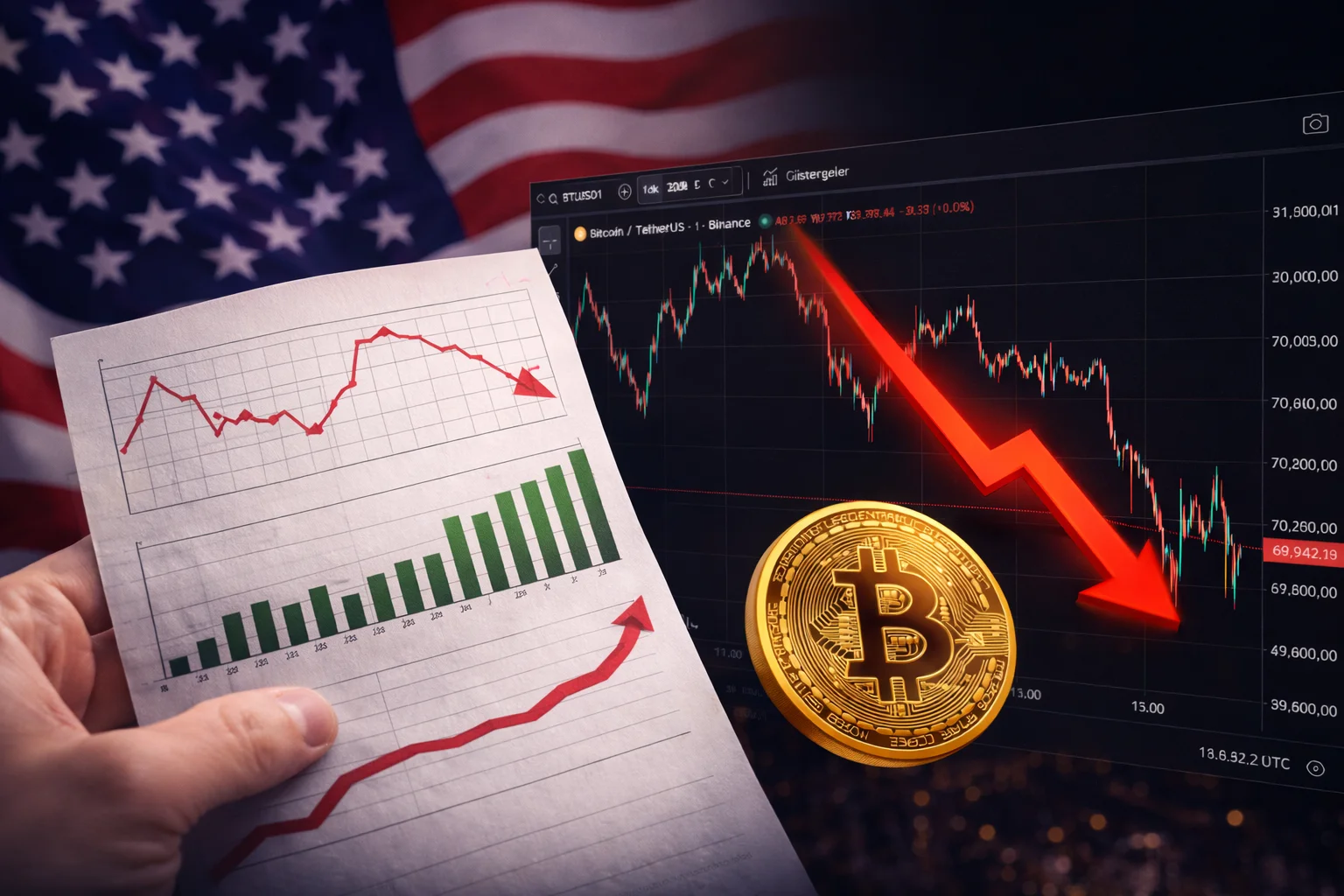
The US Producer Price Index (PPI) data, which dominated global markets, was released, and the figures significantly exceeded market expectations. This indicator, closely monitored by the Federal Reserve (FED) in its fight against inflation, also resonated in the cryptocurrency markets; the leading cryptocurrency, Bitcoin, faced very slight selling pressure after the data release. What do the PPI data say?The PPI report released by the US Bureau of Statistics (BLS) on Friday revealed that producer inflation was stronger than expected. The data released are as follows:Producer Price Index (Monthly): Announced 0.5% – Expectation 0.3% – Previous 0.4%Producer Price Index (Annual): Announced 2.9% – Expectation 2.6% – Previous 3.0%Core PPI (Monthly): Announced 0.8% – Expectation 0.3% – Previous 0.7%Core PPI (Annual): Announced 3.6% – Expectation 3.0% – Previous 3.3%The 0.5% monthly increase in PPI was almost double the 0.3% figure predicted by analysts. On an annual basis, although inflation decreased from 3.0% to 2.9% compared to the previous month, it remained significantly above the market expectation of 2.6%. In particular, the core PPI, which excludes food and energy prices, exceeding expectations by 3.6% annually, reignited inflation concerns. A picture that makes things difficult for the FedThese data came in an environment where investors expect two interest rate cuts from the Fed this year. However, producer inflation, which is higher than expected, strengthens the possibility that the central bank may postpone interest rate cuts or proceed with a more cautious approach. As is known, the increase in producer prices can eventually be reflected in consumer prices, creating upward pressure on the CPI; this could pave the way for the Fed to continue its monetary tightening policy for a longer period.Indeed, after the data, the US Dollar Index (DXY) started the day with a flat trend, but continued to hold in the slightly positive region at the 97.82 level.What is the situation with the Bitcoin price?The picture reflected in the market data was clearly felt in the Bitcoin camp as well. When the visual is examined, it is noteworthy that the BTC/USDT pair tried to hold around $68,500 in the first hours of the day, but later experienced a sharp downward movement to the $65,500-$65,750 range. As of 16:50 Turkish time, Bitcoin is trading at $66,198.28, with a 24-hour change of -1.92%. The daily trading range is between $66,642 and $68,617, and the fact that the price is currently close to the lower end of this range indicates that selling pressure, albeit slight, remains. The limited 1-hour change of -0.01% suggests that a strong recovery signal has not yet been generated in the short term. In other words, the higher-than-expected PPI data has pushed expectations of a Fed interest rate cut into the background, weakening risk appetite. Bitcoin's sharp loss once again highlights investors' tendency to avoid risky assets in this environment. Markets will continue to closely monitor statements from Fed officials and upcoming inflation data.

Critical US Data Released: Initial Reaction from Bitcoin
In the US, Personal Consumption Expenditures (PCE) inflation data, which is critical for the Fed's monetary policy, came in above expectations. The significant slowdown in growth during the same period triggered a complex pricing process in the markets. According to the December data, core PCE inflation increased by 0.4% on a monthly basis. Market expectations were at 0.3%. The previous month's monthly increase was recorded at 0.2%. Annual core PCE rose to 3.0%, compared to an expected 2.9%. The previous data was 2.8%. A similar picture emerged in headline PCE. Annual PCE came in slightly above expectations at 2.9%, while the monthly increase was 0.4%. Thus, the gradual slowdown trend observed in recent months was interrupted. The continued price pressure, especially in services, indicates that inflation has not yet settled on a path consistent with the Fed's 2% target. According to the Kobeissi Letter, core PCE inflation has reached its highest level since November 2023. This development reveals that the disinflation process is not linear and that price pressures can occasionally regain strength.The growth data released on the same day as the upward surprise in inflation indicated a loss of momentum in the economy. The US economy grew by only 1.4% in the fourth quarter, compared to an expected growth of 2.8%. This sharp slowdown, following the strong 4.4% performance recorded in the previous quarter, reflects the impact of weakening domestic demand and government spending.While the resulting picture does not present a classic stagflation scenario, it points to a difficult balance for policymakers. Growth is slowing, but inflation is accelerating again. This situation represents a combination that could weaken the Fed's hand regarding interest rate cuts.The market has recently been pricing in expectations of two interest rate cuts within 2026. The expectation of a June easing was particularly prominent. However, the monthly PCE increase of 0.4% and the annual level of 3.0% indicate that the "wait-and-see" period may be extended. An early interest rate cut may become more difficult without a sustained and strong decline in inflation.Geopolitical risks are also affecting pricing in global markets. The escalation of tensions between the US and Iran is suppressing risk appetite, while US President Donald Trump stated that the process could be clarified within 10 days. These statements have made the already fragile market psychology even more sensitive.How was the Bitcoin price affected?The cryptocurrency market is also exhibiting a volatile appearance due to the influence of both macroeconomic data and geopolitical developments. Following the release of the PCE data, Bitcoin saw sharp movements and a search for direction.In the initial price movements after the data, Bitcoin retreated from above the $68,000 level. As of the time of the news, the BTC price is trading at $66,554. During the day, the lowest level tested was $65,734 and the highest was $68,226. There has been a decline of approximately 0.67% in value over the last 24 hours. The higher-than-expected inflation data paved the way for a short-term strengthening of the dollar while putting pressure on risky assets. The pullback in Bitcoin reflected this macroeconomic pressure. On the other hand, the sharp slowdown in growth has not completely eliminated the pressure on the Fed to ease monetary policy in the medium term.

US Inflation Data Released: How Bitcoin React?
While global markets continue to search for direction, macroeconomic data is further complicating the process. The latest inflation data released in the US added to this uncertain picture, reshaping pricing across a wide range of markets, from stocks and bonds to commodities and cryptocurrencies.US Inflation Data ReleasedUS Consumer Price Index (CPI) data for January came in slightly below expectations. Annual CPI was 2.4%, slightly below the expected 2.5%, while the monthly increase was 0.2%. On the core CPI side, the annual rate came in at 2.5%, in line with expectations, while the monthly increase was 0.3%. In particular, the fact that core inflation fell to its lowest level since March 2021 brought the possibility of interest rate cuts back to the forefront in the markets.On the other hand, the previously released non-farm payroll data in the US came in above expectations, indicating that the labor market remains resilient. The concentration of job growth primarily in the healthcare sector and the limited recovery in manufacturing have not completely eliminated questions about the quality of economic growth. This situation has led to a cautious stance regarding expectations for the US Federal Reserve's (Fed) interest rate path.Looking at pricing in money markets, the expectation that the Fed will keep its policy rate unchanged in March remains strong. The probability of a possible rate cut in June has decreased somewhat compared to previous weeks. Analysts state that despite the slowdown in inflation data, the Fed may not act hastily, and that developments in the labor market will be closely monitored.As a result of these developments, the US 10-year Treasury yield fell to 4.09%, testing its lowest level in recent weeks. The dollar index remained relatively stable around 96.9. Driven by safe-haven demand, the price of gold recovered from the previous day's sharp drop to $4,965 per ounce, while silver also recouped some of its losses. On the technology stock side, fragility was noticeable. The reported delay in Apple's Siri update and accounting allegations concerning Meta increased selling pressure in the technology sector, already overshadowed by "high valuation" discussions. Apple shares closed the day down nearly 5%, while leading companies such as Meta, Nvidia, and Palantir also saw losses. These developments led to significant declines in the S&P 500 and Nasdaq indices.How did the cryptocurrency markets react?The cryptocurrency market also felt the effects of this global volatility. Bitcoin (BTC), which had stabilized around $67,000, rose to $67,700 shortly before the data release. Immediately after the data was released, it fell back to $66,000. While the lower-than-expected inflation data supported risk appetite in the short term, investors' cautious stance caused volatility to continue.