Altcoin
Esta página reúne as últimas notícias e análises de mercado sobre Altcoin. Confira artigos, opiniões de especialistas e atualizações desta categoria no JrKripto. Fique bem informado com uma cobertura aprofundada das tendências e novidades do mercado de criptomoedas.
Notícias
Notícias de altcoins
Notícias de altcoins
Veja todos os artigos e notícias sobre altcoins. As últimas notícias, análises e insights sobre altcoins.
What is ether.fi (ETHFI)?
Following Ethereum’s transition to proof of stake (PoS), ETH holders gained the ability to stake their tokens, contribute to network security, and earn rewards. However, staked ETH often remained locked and unavailable for other uses.ether.fi emerged as one of the projects addressing this issue through liquid staking and restaking. Today, alongside its position as one of Ethereum’s largest staking protocols, the project is working to become a crypto neobank through its card and banking-like services. At the center of the ecosystem is the ETHFI token, which serves several functions, from governance to rewards.What Is ether.fi, and How Did It Start?ether.fi is a decentralized liquid restaking protocol that allows users to stake ETH, earn a share of network rewards, and maintain liquidity. When users deposit ETH, they receive eETH tokens representing their staked assets. These tokens can be traded or used as collateral in DeFi applications.One of the project’s defining features is its decentralized structure, which aims to give users control over their validator keys. ether.fi distributes staked ETH across 14 node operators and seeks to reduce reliance on any single operator through solutions such as distributed validator technology (DVT).ETHFI is the governance token of the ether.fi ecosystem. It is used to vote on protocol decisions, receive a share of protocol revenue through staking, and participate in the Cash card’s rewards system.What Is Liquid Restaking?Liquid staking involves issuing a freely usable token that represents a staked asset. Users can stake their ETH while continuing to transact in DeFi with the token they receive.Restaking involves reusing staked ETH to secure additional protocols, a model pioneered by EigenLayer. ether.fi stakes users’ ETH on Ethereum and directs it to restaking protocols such as EigenLayer to generate additional rewards. Liquid restaking combines these two models.The Difference Between eETH and weETHether.fi has two primary tokens:eETH: A rebasing token representing staked ETH, with a balance that automatically increases as rewards accrue.weETH: The wrapped version of eETH. Its balance remains fixed while its value relative to ETH increases over time.weETH is widely preferred because it is easier to use across DeFi protocols and different blockchains. Lending platforms such as Aave and numerous Layer 2 networks accept weETH as collateral. As of November 6, 2026, ether.fi’s Earn page shows an annual yield of 2.48% for weETH and 4.72% for its automated USD strategy. The platform states that yields are variable and are not guaranteed. Users can select “Start Earning” to open the application and initiate a staking or vault transaction.ether.fi’s TVL and Revenue DataAccording to DefiLlama, the total value locked (TVL) across ether.fi’s products stood at approximately $4.62 billion as of November 6, 2026. The protocol generated $12.32 million in fees and $3.84 million in revenue over the previous 30 days. The blue line in the chart represents TVL, while the green bars show daily fees. ether.fi’s TVL grew rapidly throughout 2024 and exceeded $12 billion in the summer of 2025. It declined throughout 2026, falling into a range of $4 billion to $6 billion.ether.fi’s History: Key Milestonesether.fi was founded by Mike Silagadze, the founder of education technology company Top Hat. The project launched on Ethereum in 2023 as a decentralized liquid staking protocol and became one of the leading players in restaking as EigenLayer gained traction.The company raised $4 million in seed funding in late 2023. On February 28, 2024, it completed a $23 million Series A funding round led by Bullish Capital and CoinFund. At the time, the protocol’s TVL stood at approximately $1.64 billion.The ETHFI Launch and AirdropThe ETHFI token launched in March 2024. ether.fi allocated 60 million ETHFI to its first airdrop season and planned to distribute another 50 million ETHFI following the second season. A further 20 million ETHFI was distributed to users participating in Binance’s token distribution program.The token began trading at $4.13 on March 18, 2024, with an initial circulating supply of 115.2 million ETHFI. Following community criticism during the first phase of the airdrop, ether.fi revised its token distribution. ETHFI reached an all-time high of $8.53 in late March 2024.The Cash Card and the Transition to a NeobankIn 2025, ether.fi announced a strategy to expand beyond staking and become a crypto neobank. The company launched the ether.fi Cash card in the United States in April 2025. The card allows users to spend against their crypto holdings as collateral without selling them.The “Summer” update, announced on August 13, 2026, added trading in tokenized stocks and precious metals through xStocks. Users can also borrow against their entire portfolios through an Aave market on Optimism.The update supports more than 30 currencies and payment methods and offers up to 3% cashback on Cash card purchases. According to CEO Mike Silagadze, ether.fi has approximately 500,000 users and 150,000 cards.According to Chainspect, total spending through the Cash card has reached approximately $918 million since launch. The card recorded its highest weekly spending volume on November 1, 2026, at approximately $31.7 million.The Buyback Program and Recent Developmentsether.fi launched a $50 million ETHFI buyback program on October 31, 2025. In September 2026, it introduced substantial changes to its tokenomics. Cash card cashback payments switched from USDC to ETHFI, and the ETHFI staking requirements for membership tiers increased.In October 2026, the company partnered with MoonPay to bring crypto trading and virtual bank accounts into a single infrastructure. Payment Tags, a feature enabling payments through usernames, also went live that month. ether.fi also applied for a MiCA license to operate in Europe.How Does the ETHFI Token Work?ETHFI has three main functions within the ether.fi ecosystem:Governance: ETHFI holders can vote on proposals concerning protocol development, treasury spending, and new products.Staking: Users stake their ETHFI to receive sETHFI and earn a share of the buyback program.Membership and rewards: Staking ETHFI is required to access higher Cash card membership tiers. Cashback on card purchases is also paid in ETHFI.The Buyback and Burn MechanismSince September 2026, ether.fi has used protocol revenue to purchase ETHFI on the market through automated, contract-based transactions. Some of the purchased tokens are burned, while others are distributed to sETHFI holders. Cash card cashback rewards are also funded through these buybacks.This model links demand for ETHFI to the protocol’s actual revenue. However, buybacks shrink when revenue declines. According to DefiLlama, approximately $78.1 million worth of ETHFI was staked as of November 6, 2026, equivalent to approximately 13.4% of its market capitalization.ETHFI Supply and TokenomicsETHFI’s total and maximum supply was set at 1 billion tokens. All tokens were minted at launch, and no new tokens are being created. According to JR Kripto, approximately 965.4 million ETHFI was in circulation as of November 6, 2026, representing 96.5% of the total supply.The allocation outlined in the official governance documentation is as follows:GroupAllocationInvestors33.74%Treasury (Ecosystem Fund)21.62%Core team21.47%User airdrops19.27%Partnerships and liquidity3.9%Investor tokens unlock gradually over two years, while core team tokens unlock over three years. All locked allocations were subject to a one-year cliff. One percent of the partnership and liquidity allocation was set aside for Protocol Guild, which supports Ethereum core developers.With approximately 96.5% of the supply already circulating, the remaining unlocks are expected to have a limited impact on price. Going forward, protocol revenue, buyback volumes, and Cash card usage will be the main factors shaping the token’s price.ETHFI Coin Price and Market DataAs of November 6, 2026, ETHFI is trading at $0.5814 and ranks 79th by market capitalization. The token gained 9.23% over the previous 24 hours but declined 18.50% over the previous 30 days.MetricValueCurrent price$0.5814Market capitalization$561.3 millionFully diluted valuation$580.9 million24-hour trading volume$41.8 millionCirculating supply965.4 million ETHFIAll-time high$8.53All-time low$0.2665 The all-time chart shows that ETHFI reached its record high of $8.53 shortly after its March 2024 launch. The token fell to around $1.50 by the summer of 2024 and tested the $3 level again during the December 2024 rally.ETHFI fluctuated between $0.50 and $2 throughout 2025 and continued to decline in 2026. Following the September 2026 tokenomics changes, it recovered above $0.70 but gave back some of those gains in recent weeks.The current price is approximately 93% below its all-time high and around 118% above its all-time low. Trends in Cash card spending and the size of buybacks are among the main developments that could influence the price in the coming period.Why Does ether.fi Matter?ether.fi stands out as one of the largest decentralized protocols in Ethereum staking and restaking. weETH is among the most widely used liquid restaking tokens in DeFi and is accepted as collateral on numerous lending platforms.The project is also working to bridge the gap between DeFi and everyday finance. Its Cash card allows users to spend without selling their crypto assets. Trading in tokenized stocks and metals, alongside portfolio-backed borrowing, brings ether.fi closer to the structure of a traditional neobank.On the tokenomics side, ETHFI’s connection to protocol revenue is a key feature. Buybacks, burns, and staking rewards offer a model designed to give token holders a direct share in the protocol’s growth.Where Can You Buy ETHFI?ETHFI trades on all four major exchanges accessible to users in Türkiye: Binance, Binance TR, BtcTurk, and Paribu. Paribu offers an ETHFI/TRY pair. OKX, Bybit, MEXC, and WhiteBIT are among the other exchanges offering ETHFI trading.ETHFI is an ERC-20 token on Ethereum and is also available on certain Layer 2 networks, such as Arbitrum. When withdrawing from an exchange, users should ensure that the selected network matches a network supported by the destination wallet.The ether.fi Cash card and certain products are not available in every country. Tokenized stock trading, in particular, is unavailable in some markets, including the United States.ether.fi’s Team and Investorsether.fi’s founder and CEO is Mike Silagadze. He previously founded Top Hat, an education technology company focused on higher education.Bullish Capital and CoinFund led the company’s $23 million Series A funding round in February 2024. The protocol’s node infrastructure is operated by the 14 node operators listed in ether.fi’s “Operator Atlas” report.Smart Contract, Restaking, and Regulatory RisksSmart contract vulnerabilities are one of ether.fi’s primary risks. A flaw in the code of the protocol or its connected restaking platforms could result in the loss of staked assets.Restaking introduces additional risks. Using staked ETH to secure additional protocols increases exposure to slashing in the event of validator errors or malicious behavior. The market prices of eETH and weETH can also fall below the value of their underlying ETH during periods of heavy withdrawal demand.The neobank strategy increases regulatory exposure. Card, payment, and tokenized stock services face licensing requirements across different countries. The outcome and timing of ether.fi’s MiCA application remain uncertain.On the competitive side, liquid staking and restaking protocols such as Lido, Renzo, and Kelp compete for the same users, alongside other crypto card providers. ETHFI’s 93% decline from its all-time high shows that TVL and user growth alone have not been enough to support the token’s price.Frequently Asked Questions (FAQ)Below are some frequently asked questions and answers about ether.fi (ETHFI):What is ether.fi, and when did it launch? ether.fi is a decentralized liquid restaking protocol and crypto neobank application built on Ethereum. The protocol launched in 2023, while the ETHFI token began trading on March 18, 2024.What is ETHFI coin used for? ETHFI is used in governance voting, staking that provides a share of buybacks, and the Cash card’s membership tiers and cashback system.What is the difference between eETH and weETH? eETH is a token whose balance automatically increases with staking rewards. weETH is the wrapped version of eETH; its balance remains fixed while its value relative to ETH increases.What is the ether.fi Cash card? The Cash card is a payment card that allows users to spend against their crypto assets as collateral. It offers up to 3% cashback, depending on the membership tier.What is ETHFI’s supply? ETHFI has a total and maximum supply of 1 billion tokens. Approximately 965.4 million ETHFI was in circulation as of November 6, 2026.Which Turkish exchanges list ETHFI? ETHFI trades on Binance TR, BtcTurk, and Paribu. The global Binance platform also offers an ETHFI/USDT trading pair.Is ether.fi a suitable investment? ETHFI’s suitability depends on an individual’s risk profile and research. Revenue-funded buybacks, Cash card growth, and the high proportion of circulating supply are among the potentially positive factors to monitor. Smart contract risks, regulatory uncertainty, and competition should also be considered.Follow the JR Kripto Guide series for the latest updates on the ether.fi ecosystem and Cash card.
What is Dash (DASH)?
Bitcoin emerged as a decentralized digital currency, but its use in everyday shopping remained limited because of transaction times and fees. Dash is one of the first projects built to answer that problem with a payments-focused design. Named after the phrase "digital cash," the network was built on fast payments, optional privacy and a self-funding governance model. At the center of this structure sits DASH, which serves both as a means of payment and as collateral for network security.Definition and Origins of DashDash is a cryptocurrency network derived from Bitcoin's codebase and focused on everyday payments. Evan Duffield launched the project in January 2014 under the name "XCoin." It was soon renamed "Darkcoin" and adopted the Dash name in March 2015.What sets Dash apart from Bitcoin is its two-tier network structure. The first tier consists of miners who produce blocks, as in Bitcoin. The second tier consists of masternodes, which lock up a set amount of DASH as collateral. Masternodes run additional services such as fast payments, privacy and governance.DASH is the network's native cryptocurrency. It is used for payments, masternode collateral and governance processes.What is a masternode?A masternode is a special node that provides extra services to the network and receives a share of the block reward in return. Running a standard masternode on Dash requires locking 1,000 DASH as collateral. Evonodes, introduced in 2023, require 4,000 DASH in collateral and run Dash Platform in addition to the standard services.Masternodes handle four core tasks:InstantSend: Locks transactions within roughly one to two seconds to prevent double spending. The recipient can be confident the payment is final without waiting for block confirmations.ChainLocks: Locks blocks produced by miners through a masternode majority, protecting the chain against attempts to rewrite it.CoinJoin: Offers an optional privacy feature that mixes the transactions of several users to make the origin of funds harder to trace.Governance: Votes on projects to be funded from the treasury.As of November 6, 2026, collateral is locked for 370 Evonodes on the network, and 362 of them are actively running. The red line in the chart shows the number of Evonodes with 4,000 DASH in locked collateral, while the green line shows Evonodes that are running and therefore eligible for rewards. The Evonode count rose quickly with the Platform launch in 2024 and has held between 330 and 370 since 2025.What is Dash Platform (Evolution)?Dash Platform, also known as Evolution, is a second layer built on top of Dash Core, Dash's payments network. The platform makes it possible to pay by username, store data in a decentralized way and build applications. Instead of long wallet addresses, users can send money using usernames they register through the Dash Platform Name Service (DPNS).Only Evonodes run the Platform. In addition to rewards from Dash Core, Evonodes earn rewards for the blocks they produce on the Platform.Differences between Dash and BitcoinAlthough Dash was derived from Bitcoin's codebase, the two networks developed with different priorities. Bitcoin gradually positioned itself as a store of value, while Dash aimed to highlight speed and cost advantages in everyday payments. That difference is reflected directly in the technical choices of the two networks.The clearest difference shows up in transaction time. Bitcoin produces a block roughly every 10 minutes, and large transfers usually wait for several confirmations. Dash produces blocks roughly every 2.5 minutes, and InstantSend finalizes transactions within seconds.The network structure is also different. On Bitcoin, security is provided by miners alone. On Dash, masternodes that lock collateral work alongside miners, and ChainLocks gives the chain an additional layer of protection.The funding model is another point that separates the two networks. Bitcoin's development is sustained largely by donations and corporate support. Dash, by contrast, sets aside 20 percent of the block reward for the treasury and funds development directly through the protocol.The two networks also use different supply models. Bitcoin's supply is capped at 21 million, and its block reward halves roughly every four years. Dash's maximum supply is about 18.92 million, and its reward falls by about 7 percent each year.On privacy, Dash offers optional features through CoinJoin and the shielded pool on Evolution. On Bitcoin, such features are not part of the protocol; users mostly turn to third-party wallets and tools for privacy.History of Dash: Key MilestonesEvan Duffield launched XCoin, derived from Bitcoin's codebase, on January 18, 2014. The project used X11, a proof-of-work (PoW) algorithm that runs eleven different hash functions in sequence. A bug in the first days after launch caused far more coins than expected to be produced in a short time. As a result, supply became concentrated in the hands of a small group early on, and the project was dogged by "instamine" criticism for years.The project was soon renamed Darkcoin. After criticism that its privacy focus evoked the dark web, it switched in March 2015 to the name Dash, derived from "digital cash." A treasury and governance system was added to the network the same year.During the 2017 crypto rally, Dash rose into the ranks of the largest projects by market capitalization and reached its all-time high of $1,493.59 in December 2017. In 2019, it became the most popular cryptocurrency in Venezuela among users seeking protection from hyperinflation.ChainLocks and EvolutionDash introduced ChainLocks in 2019. The feature lets masternodes sign and lock blocks, creating an additional layer of protection against 51 percent attacks.The project's long-awaited Evolution vision began to take shape with the activation of Evonodes in July 2023. On July 29, 2024, Dash Core Group released Evolution v1.0, the first mainnet version of Dash Platform. This release opened up user identities, usernames, data contracts and basic NFT support.Zcash Orchard integrationIn 2026, Dash took an important step in its privacy infrastructure. The project integrated Zcash's Orchard protocol, which is based on zero-knowledge proofs, into the Evolution layer. This lets users move funds into a shielded pool and make transactions that hide the sender, recipient and amount.The shielded pool is optional. Funds entering and leaving the pool remain visible, and standard transactions on Dash Core continue to be transparent. Wallet and application support is still needed for the feature to reach everyday use.Dash Core Group released Evolution Platform v5 on October 29, 2026. The release brought a framework for shielded tokens and reworked data contracts. No date has been announced for when shielded tokens will go live on the network.How Does DASH Work?DASH has three core functions on the network:Payments: DASH was designed for low-cost, fast transfers. InstantSend finalizes transactions within seconds.Collateral: Running a masternode or an Evonode requires locking 1,000 and 4,000 DASH, respectively. The collateral gives node operators a stake in the network's healthy operation.Governance: Masternode owners vote on projects to be funded from the treasury. Evonodes carry four times the voting weight, in proportion to their collateral.How is the block reward distributed?Dash produces a new block roughly every 2.5 minutes. Twenty percent of the block reward is set aside for the treasury. The remaining 80 percent is split between miners and masternodes, with masternodes receiving the larger share.Since an adjustment in August 2024, 37.5 percent of the masternode share has gone to the reward pool for the Evonodes that run the Platform. The remaining 62.5 percent is paid equally to all masternodes and Evonodes through Dash Core.According to mnowatch data, as of November 6, 2026, the estimated annual yield is 6.88 percent for a standard masternode and 8.12 percent for an Evonode. These figures exclude transaction fees and are calculated in DASH; a decline in DASH's dollar value can wipe out this yield entirely.Treasury and governance systemOne of Dash's most distinctive features is a treasury system that funds its own development. The share set aside from block rewards accumulates every month and is distributed to project proposals submitted by community members. For a proposal to receive funding, it needs enough net positive votes from masternodes. According to DashCentral data, as of November 6, 2026, there are 27 active proposals up for a vote. The next budget payment will be made on November 20, and 5,194 DASH of the total 6,828 DASH budget will go to approved proposals. Users can click on each proposal on the page to review the requested amount, the payment period and the masternode votes.Core development teams such as Dash Core Group also cover most of their costs from this treasury. The model aims to let the project develop without depending on outside investors or a company.DASH supply and emission modelDASH's maximum supply is estimated at about 18.92 million. According to JR Kripto data, as of November 6, 2026, about 12.89 million DASH are in circulation. That equals roughly 68 percent of the maximum supply.Instead of Bitcoin's halving every four years, Dash uses a more gradual model. The block reward falls by 7.14 percent every 210,240 blocks, or roughly every 383 days. This model makes new supply decline more smoothly from year to year rather than in sudden drops.Dash has no locked tokens set aside for investors or the team. All new DASH enters circulation through mining and masternode rewards.DASH Coin Price and Market DataAs of November 6, 2026, DASH coin price is at $47.79 and ranks 78th by market capitalization. The token gained 8.54 percent over the past 24 hours but is down 10.26 percent over the past 30 days.MetricValueCurrent price$47.79Market capitalization$616.1 millionFully diluted valuation$617.8 million24-hour trading volume$66.4 millionCirculating supply12.89 million DASHMaximum supply18.92 million DASHAll-time high$1,493.59All-time low$0.214 The chart data begins in late 2018, when the DASH/USDT pair opened on OKX. As a result, DASH's all-time high of $1,493.59 in December 2017 and its all-time low of $0.214 in 2014 do not appear on the chart.The chart shows that after the 2018 bear market, DASH fluctuated between $50 and $200 through 2019 and 2020. The token climbed above $450 during the rally in the first half of 2021. After the sharp decline in 2022, it stayed mostly between $25 and $75.In 2026, DASH posted several sharp rallies amid growing interest in privacy coins. The current price is about 97 percent below its all-time high.Why Does Dash Matter?Dash stands out as one of the first projects aimed at using cryptocurrency as an everyday means of payment. Transactions that finalize within seconds through InstantSend, combined with low fees, make DASH notable for use cases that require fast payments.The masternode model also left a lasting mark on the crypto ecosystem. The structure of nodes that lock collateral, serve the network and earn rewards in return later inspired the staking and validator systems of many projects.The treasury system, meanwhile, is one of the earliest and longest-running examples of blockchain governance. For nearly a decade, Dash has funded development, marketing and integration work through community votes.Where to Buy DASH?DASH trades on major global exchanges such as Binance, KuCoin, WhiteBIT, Poloniex and LBank. The most common trading pair is DASH/USDT, and some exchanges also offer DASH/BTC pairs.Because DASH runs on its own blockchain, withdrawals from an exchange require selecting the Dash network and using a Dash-compatible wallet. The official Dash Wallet mobile app, developed by Dash Core Group, supports features such as CoinJoin and paying by username. Some exchanges may restrict withdrawals or deposits of privacy-enabled coins because of regulatory requirements.Dash's Team and CommunityDash's founder is Evan Duffield. Duffield led development in the project's early years but later stepped back from an active role.Today, development of Dash Core and Dash Platform is largely carried out by Dash Core Group. The team covers its costs through proposals it submits to the treasury. Dash has no initial allocation tied to a company or a venture capital fund; the project is developed by independent teams funded through community votes.Regulatory, competition and adoption risksOne of Dash's biggest risks lies on the regulatory side. CoinJoin and Orchard-based shielded transactions expose Dash to the risk of being classified as a privacy coin in some countries. Restrictions on privacy coins, including the European Union's anti-money laundering rules, could lead to exchange delistings.Competition in payments is another serious risk. Stablecoins such as USDT and USDC offer fast transfers without price volatility, so they are often preferred for everyday payments. Litecoin, Bitcoin Cash and Bitcoin's Lightning Network also compete with Dash in the same use case.The masternode structure also draws criticism over centralization. The high collateral requirement can concentrate governance power in the hands of a small group holding large amounts of DASH. The supply concentration that emerged early on because of the distribution bug at launch reinforces these criticisms.Price history also shows the scale of the risk. DASH's 97 percent decline from its all-time high may suggest that technical progress alone has not been enough to support the price.Frequently Asked Questions (FAQ)Below are some frequently asked questions and answers about Dash (DASH):What is Dash, and when did it launch?: Dash is a cryptocurrency network focused on everyday payments. The project launched as XCoin on January 18, 2014, was then renamed Darkcoin and adopted the Dash name in March 2015.What is DASH coin used for?: DASH is used for payments, masternode collateral and treasury governance votes.What is a Dash masternode?: A masternode is a node that locks 1,000 DASH as collateral and provides InstantSend, ChainLocks, CoinJoin and governance services to the network. Evonodes, with 4,000 DASH in collateral, also run Dash Platform.Is Dash a privacy coin?: Dash offers optional privacy through CoinJoin and the shielded pool on Evolution. Standard Dash transactions remain transparently visible on the blockchain.What is DASH's supply?: DASH's maximum supply is about 18.92 million. As of November 6, 2026, about 12.89 million DASH are in circulation.Which exchanges list DASH?: DASH trades on global exchanges including Binance, KuCoin, WhiteBIT, Poloniex and LBank, mostly against USDT.Is Dash a good investment?: Whether DASH is suitable as an investment depends on each person's risk profile and research. The absence of locked tokens, the gradual emission model and developments on Evolution are among the positives worth watching. Regulatory risks, stablecoin competition and price history should also be factored in.Follow the JR Kripto Guide series for the latest on developments in the Dash ecosystem and Evolution updates.
Russia Opens Retail Access to 3 Cryptocurrencies
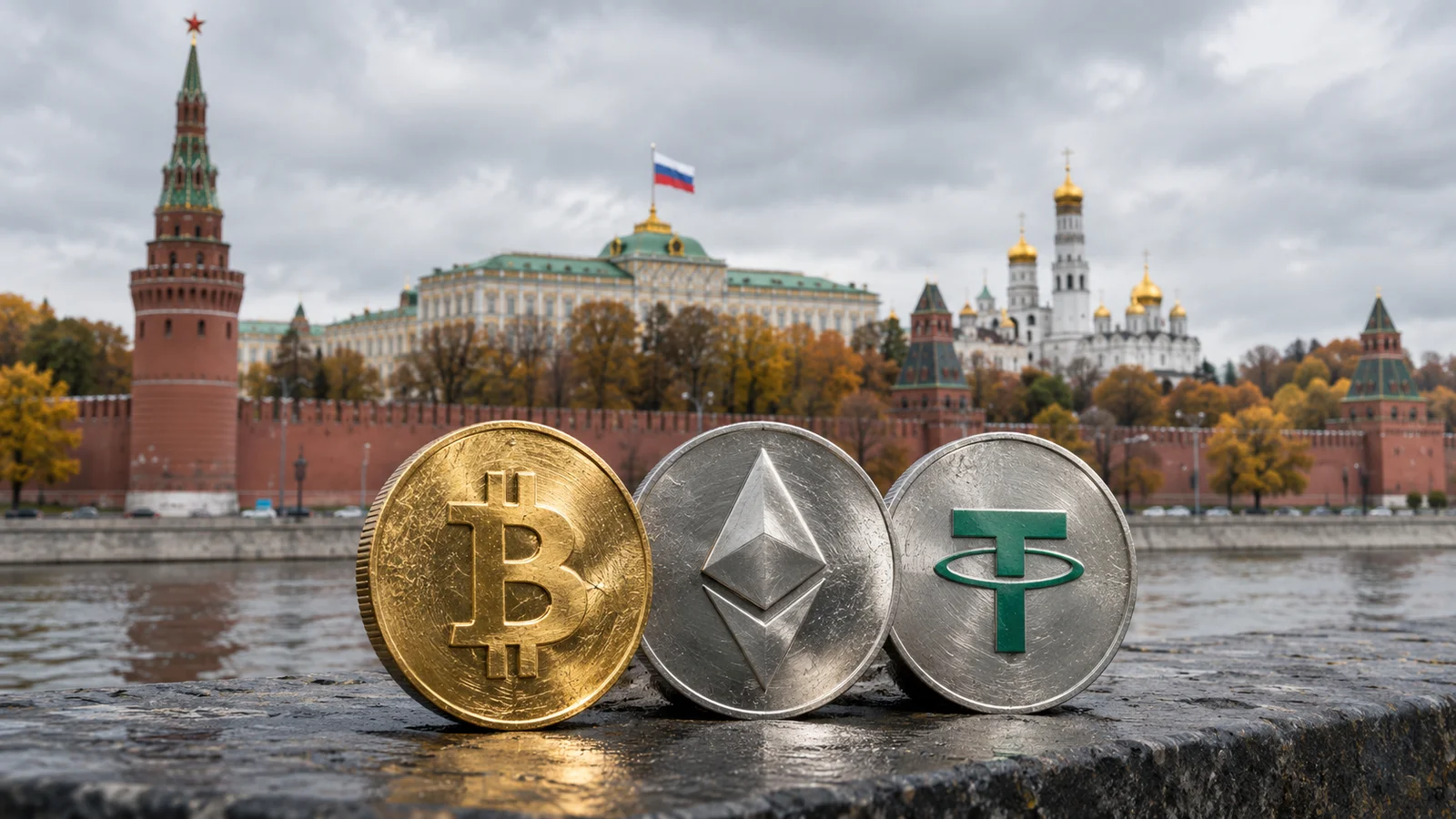
The Bank of Russia has identified the cryptocurrencies available for purchase by individuals without qualified investor status. According to the bank’s November 6 announcement, the list includes Bitcoin, Ethereum and Tether’s USDT. The rules will take effect on November 17, allowing retail investors to purchase up to 300,000 rubles worth of crypto annually through each intermediary.Access opens for Bitcoin, Ethereum and USDTThe new rules clarify the conditions for retail participation in Russia’s crypto market. Exchanges will be able to admit the three assets to public trading starting November 17.Investors will be able to make purchases through brokers, asset managers or crypto exchange businesses. The rules cover both exchange-based and over-the-counter transactions.The central bank considered market capitalization, average daily trading volume and price history on foreign platforms when compiling the list. Eligibility criteria include at least five years of price history. By focusing on highly liquid assets, the regulator aims to reduce the risks facing retail investors.Annual purchase cap applies separately to each intermediaryIndividuals without qualified investor status will face an annual purchase limit of 300,000 rubles through a single intermediary. The cap will therefore apply to purchases made through that particular provider.Before trading, investors will need to pass a test and familiarize themselves with the risks of crypto investments. This requirement will also apply to qualified investors.Qualified investors, however, will not face the same restrictions on asset types or purchase amounts. The central bank’s framework gives this group broader access to crypto trading.August proposal moves toward implementationThe central bank released its draft rules for retail crypto purchases for public consultation on August 11. The proposal also included Bitcoin, Ethereum and USDT, alongside an annual purchase cap of 300,000 rubles per intermediary.The regulator accepted comments and suggestions on the draft until August 24. Today’s announcement confirmed when the previously announced list will take effect. This marks another step in the implementation timetable for market participants.The broader regulatory framework rests on the cryptocurrency law that took effect in September. It provides for crypto exchange businesses and digital depositories to operate alongside existing financial institutions.The Bank of Russia had previously stated that crypto transactions could take place through brokers and management companies. The ban on using cryptocurrencies as a means of payment within Russia remains in place.Moscow Exchange plans to launch trading in DecemberAs the regulatory timetable progresses, Moscow Exchange is preparing to introduce crypto trading. The exchange plans to launch Bitcoin, Ethereum and USDT trading on December 1. According to the report, trading will run from 6:50 a.m. to 11:50 p.m. Moscow time.The National Clearing Centre will handle clearing. Both same-day and next-day settlement options will be available.The November 17 regulatory effective date therefore differs from Moscow Exchange’s planned trading launch. The first date allows the assets to be admitted to trading, while the exchange’s own schedule points to December.The market’s institutional infrastructure is also expanding. On October 6, the central bank announced that it had added the first five digital depositories and four crypto exchange businesses to the relevant registers.Digital depositories will be able to record and transfer rights to the assets. Crypto exchange businesses will be able to trade on their own account outside organized exchanges.
Bitcoin ETFs Shed $430 Million Following Market Selloff
U.S.-listed spot Bitcoin ETFs recorded $430.2 million in net outflows on Thursday, November 5. Fidelity and BlackRock funds accounted for most of the withdrawals, according to SoSoValue data. Selling regained momentum after Wednesday’s modest inflows, bringing total net outflows for the first four days of the week to $869.8 million.Steep losses in technology stocks also weakened risk appetite across the crypto market. Bitcoin retested $76,000 on Friday after falling below that level on Thursday.Fidelity and BlackRock led Bitcoin ETF outflowsFidelity’s spot Bitcoin fund, FBTC, recorded Thursday’s largest outflow. Investors withdrew a net $199.9 million from the fund, while BlackRock’s IBIT registered $105 million in outflows.Combined withdrawals from the two funds reached $304.9 million. Fidelity and BlackRock therefore accounted for approximately 71% of the day’s total net outflows.Spot Bitcoin ETFs had attracted $74.6 million in net inflows on Wednesday. However, Thursday’s outflows were roughly 5.8 times that amount, suggesting the previous day’s recovery had failed to translate into sustained demand for the funds.Total net outflows for the week through Thursday rose to $869.8 million. This figure excludes Friday’s session, meaning the final weekly balance will depend on flows during the last trading day.Alongside Bitcoin’s price movements, ETF flows provide a useful gauge of investor demand in the U.S. market. Wednesday’s limited inflows, followed by substantially larger withdrawals, highlight the fragility of the recovery.Tech selloff weighed on fund demandThe ETF outflows coincided with a session of heavy losses on Wall Street. The Nasdaq fell 5.5% on Thursday, while the S&P 500 declined approximately 4.3%.FalconX and GSR analysts linked the selloff to concerns that Democrats’ midterm election gains could slow AI data-center construction. Questions over the returns on large infrastructure investments added to the pressure on technology stocks.Against this backdrop, Bitcoin erased Wednesday’s post-election gains. Despite returning to the $76,000 level on Friday, it remained down more than 5.3% over the preceding 24 hours at the time of writing.U.S. demand remained weak during the recoveryDerivatives activity and price differences between exchanges also painted a cautious picture during Wednesday’s rally. Open interest in Bitcoin futures remained broadly flat despite the recovery.Meanwhile, Bitcoin traded at a discount on Coinbase relative to Binance. This sign of subdued U.S. buying demand, alongside limited ETF inflows, suggested the rally lacked strong demand support.Liquidations of leveraged positions accelerated the decline. According to CoinGlass, $1.26 billion in crypto positions were liquidated over the past 24 hours, including approximately $1.12 billion in long positions, or bets on higher prices.Simon-Peter Massabni, head of business development at XS.com, said the stock-market selloff had increased pressure to reduce portfolio leverage. According to Massabni, asset managers were also liquidating alternative investments to meet margin calls.Despite Bitcoin’s recovery toward $76,000, ETF flows have yet to signal a sustained turnaround in demand.
Bitcoin Falls Below $76,000 as Crypto Liquidations Hit $1.26 Billion
Bitcoin fell below $76,000 as a sharp sell-off in Wall Street technology and chip stocks spread to the crypto market. Concerns about a potential slowdown in artificial intelligence investment weakened risk appetite, while unease over the security incident at Binance persisted. Over the past 24 hours, $1.26 billion in leveraged crypto positions were liquidated; long positions betting on higher prices accounted for 88.33% of the total. Long liquidations exceeded $1.1 billionAccording to the data, total liquidations over the past 24 hours reached $1,263,408,512. Approximately $1.116 billion came from long positions, while short positions accounted for $147.38 million.The value of liquidated positions betting on higher prices was roughly 7.6 times that of positions betting on a decline. The breakdown showed that long positions bore most of the liquidation losses over the day.The heavy concentration in long positions highlighted the impact of downward price movements on leveraged trades. Liquidations reached $221.86 million over the past 12 hoursLong positions also accounted for the majority of liquidations over shorter periods. According to the summary figures at the top of the dashboard, total liquidations reached $221.86 million over the past 12 hours.During that period, long liquidations amounted to $175.54 million, compared with $46.32 million in short liquidations. Long positions represented 79.12% of the total.The 12-hour liquidation figure accounted for approximately 17.6% of the daily total. This breakdown suggested that most of the liquidations within the 24-hour window occurred before the most recent 12 hours.Over the past four hours, total liquidations stood at $30.56 million. Long positions accounted for $20.62 million, while short positions made up $9.94 million.The share of long positions in total liquidations therefore fell to approximately 67.5% over the four-hour period. Compared with the daily figures, the gap between the two sides narrowed over shorter time frames.Short liquidations dominated the past hourThe one-hour figures showed a different pattern from the daily breakdown. Total liquidations reached $6.65 million during this period, with short positions accounting for the largest share at $5.40 million.Long liquidations stood at approximately $1.25 million. Positions betting on falling prices therefore accounted for around 81.2% of total liquidations over the past hour.The dominance of short liquidations suggests that upward price movements during this period put pressure on leveraged bearish positions. However, a single hour’s breakdown is insufficient to establish that a sustained recovery has begun across the market.Taken together, the figures show that long liquidations dominated the daily total. The shift toward short liquidations in the past hour indicates that leveraged traders were affected by price movements in both directions.Liquidation totals do not represent cash leaving the marketLiquidation occurs when a leveraged position is forcibly closed because its collateral is no longer sufficient to keep it open. The $1.26 billion total therefore does not mean that the same amount of cash was withdrawn from the crypto market.The figure reflects the value of positions liquidated during the specified period. The 24-hour, 12-hour, four-hour and one-hour figures also cover overlapping periods, so adding them together would incorrectly inflate the total.
Kraken’s Parent Company and Its Clients Buy AAVE
Payward, the parent company of crypto exchange Kraken, and its asset management clients have purchased AAVE tokens as part of their decentralized finance investments. According to CoinDesk’s report citing a November 5 announcement, the purchases took place on the secondary market. The company did not disclose the size of the investment and said it may make further purchases.Size of AAVE purchases remains undisclosedThe purchases involved Digital Asset Special Investments I, LP, a Payward-affiliated fund, and the company’s asset management clients. Payward and Aave are also exploring opportunities for future collaboration, although the scope of those efforts remains unclear.Gurpreet Oberoi, Payward’s vice president of asset management and institutional, linked the investment to the company’s long-term confidence in onchain credit markets. Oberoi also highlighted growing client demand for exposure to projects building financial infrastructure.The secondary-market purchases involved existing tokens changing hands. The amount spent therefore cannot be considered direct funding provided to Aave.Kraken and Aave already have product tiesThe token investment builds on existing product connections between the two sides. According to Aave’s official announcement dated January 26, 2026, Kraken launched DeFi Earn to give its users access to DeFi yields.Under the model described by Aave, users can deposit cash or stablecoins. The system converts these assets into USDC when necessary and transfers them to a vault on the Ink network; the vault then supplies liquidity to lending protocols such as Aave.Interest paid by borrowers increases the value of shares in the vault. Users can track the process through Kraken’s interface and withdraw their assets when liquidity is available.This setup allows exchange clients to access DeFi services without manually signing each transaction through a separate wallet. The AAVE purchase adds a token investment to that existing product relationship.Another part of the relationship involves Ink, the Ethereum Layer 2 network developed by Kraken. According to a case study published by Aave in May, Ink’s native lending protocol, Tydro, uses Aave V3 infrastructure under a commercial agreement.Launched in October 2025, Tydro allows users in the Ink ecosystem to deposit crypto assets and borrow against collateral. Aave’s risk teams also supported the protocol’s maintenance, risk management and initial optimization efforts.Token investment does not establish equity ownershipTalks reported in June had included shares in Aave Group alongside a potential token purchase. The latest announcement covers only token purchases and does not confirm an equity transaction.AAVE’s role is tied to the protocol’s governance structure. According to Aave’s official documentation, token holders can participate in proposals and votes on protocol changes through established procedures.These processes cover decisions ranging from adding new assets to upgrading the protocol. Holding AAVE therefore differs from owning equity in a company.Payward’s own corporate description also shows that its activities extend beyond crypto trading. The company behind brands such as Kraken, NinjaTrader, xStocks and CF Benchmarks develops custody, payments, yield and lending services on shared infrastructure.In this context, the AAVE investment can be viewed as a step that strengthens Payward’s ties to onchain financial services. Existing product integrations provide the practical connection, while the token purchase increases the company’s and its investment clients’ financial exposure to the Aave ecosystem.
Bitcoin and Altcoins Rebound After US Midterm Elections
Bitcoin traded above $80,000 on Thursday, November 5, as global markets recovered. After Democrats won majorities in both chambers of the US Congress, hopes for an end to the Iran conflict and lower oil prices supported risk appetite. Zcash stood out among major cryptocurrencies with a 6% gain.According to market data, Bitcoin rose 3% over the past 24 hours to approximately $80,606. Ethereum gained 5% to $2,427, while XRP climbed 3% to $1.31. Solana advanced 3.7% to $96, and BNB rose 2% to around $715. Bitcoin recovers its election-night lossesThe crypto market’s initial reaction was a selloff. As election results came in, Bitcoin fell to around $75,700 early Wednesday. Buyers then returned, pushing the price back above the $80,000 threshold.Jeff Mei, chief operating officer at crypto exchange BTSE, linked the recovery to gains in equities. According to Mei, investors believe the election outcome increases the likelihood of an end to the Iran conflict and high oil prices.Brent crude fell more than 8% on Wednesday, while the S&P 500 gained 1.6%. The dollar also weakened. Expectations that lower energy costs could ease inflationary pressure and reduce business expenses supported buying across markets.Asian equities, however, did not move uniformly. Samsung Electronics and SK Hynix fell more than 6% on Thursday amid expectations of tighter scrutiny of data centers. Chinese internet companies Tencent and Alibaba gained more than 5%.Zcash rises as time runs out for $16 million in remaining fundsZcash rose nearly 7% over the past 24 hours to approximately $1,323. Trading volume reached $1.2 billion during the same period. Alongside the price movement, the NU7 upgrade is also in focus for the network, which supports payments that conceal the sender, recipient and transaction amount.A key issue ahead of the upgrade concerns funds remaining in Sprout, the network’s oldest privacy pool. According to figures shared Thursday morning, the pool held approximately 12,226 ZEC. At $1,300 per ZEC, that amounts to roughly $16 million.A week earlier, the pool’s balance stood at around 22,263 ZEC. Most of the outflows occurred on Sunday, when approximately 9,094 ZEC moved out. Only around 40 ZEC left the pool on Wednesday.Sprout is an older privacy system that has been in use since Zcash launched in October 2016. Later network upgrades introduced newer pools. These pools can be understood as separate balance compartments that use different generations of privacy technology.The ZIP 2003 technical specification proposes disabling version 4 transactions with NU7. Because this is the only transaction format capable of spending Sprout funds, any assets remaining in the pool will become unspendable once the change takes effect. Holding the private keys alone will not allow users to bypass this restriction.The change does not affect all ZEC holders; it concerns users with funds in the Sprout pool. The pool’s total balance also does not reveal who owns the assets or how much belongs to wallets whose keys have been lost.NU7 targets activation at block 3,543,405NU7 is scheduled to activate at block 3,543,405. The block height reported Thursday morning and the current target block time of 75 seconds suggest activation could occur around Friday morning in Türkiye. The exact timing may vary depending on how quickly miners find blocks.The upgrade also aims to reduce the target block time from 75 seconds to 25 seconds. This is expected to speed up transaction confirmations. For example, if an exchange continues to require three confirmations, the theoretical waiting time could fall from approximately 225 seconds to 75 seconds.Funds remaining in Sprout will continue to count toward Zcash’s issued supply. ZIP 2003 leaves open the possibility of restoring access through a future upgrade, while also warning that spending may never be re-enabled.Uncertainty over crypto regulation persistsDespite the market rally, Mei believes the election outcome could complicate the crypto industry’s legislative ambitions. He considers the CLARITY Act, which aims to establish rules for US crypto markets, unlikely to pass in its current form. He also remains cautious about the prospects for interest rate cuts.The new congressional majorities will take office on January 3. Proposed amendments to the bill and whether Congress pursues crypto-related investigations will be among the sector’s main points of focus in the coming months.
$1.1 Trillion Schroders Unveils Its First Solana Product
London-based asset manager Schroders is giving investors access to its emerging markets bond fund through Solana. The firm announced the project on Wednesday, November 4, in partnership with tokenization platform Centrifuge. Centrifuge lists a minimum investment of $100,000 for SISF, Schroders’ first product on Solana.Schroders managed about $1.1 trillion in assets at the end of June and has invested in emerging markets debt for more than 50 years. Its team of more than 40 investment professionals covers bonds issued by governments and companies across emerging economies.What does the Solana token represent?Investors who buy the SISF token hold shares in a feeder fund that invests in Schroders’ emerging markets bond fund. Solana records ownership of the feeder fund shares. The underlying Schroders fund holds the bonds in its portfolio.This structure determines how changes in bond prices affect the token’s value. As the bonds in the underlying portfolio gain or lose value, those changes feed through to the feeder fund’s net asset value and, in turn, to the value of each investor’s shares. Centrifuge provides the infrastructure to issue and manage those shares on Solana.According to Centrifuge, SISF held roughly $200,000 in assets at the time of writing. That figure reflects the size of the product available on Solana. The $1.1 trillion figure covers the assets Schroders manages across all its investment strategies.Credit and currency risks shape bond returnsShort-term U.S. Treasuries and money market funds dominated the early years of tokenization. At the time of writing, these products accounted for about $14 billion of the $39 billion tokenized real-world asset market, according to RWA.xyz. That puts their combined share at just over one-third of the market.Economic conditions across several countries influence returns on Schroders’ strategy. A corporate bond, for example, can lose value if investors grow concerned about the issuer’s ability to repay its debt. Exchange rate movements can also affect portfolio returns.Anil Sood, chief strategy and growth officer at Centrifuge, said emerging markets bonds offer onchain investors a different risk and return profile from short-term government securities.Schroders started with a money market fundThe Solana project marks Schroders’ second major step into tokenization. In August, the Central Bank of Ireland approved a tokenized share class for one of the firm’s U.S. dollar money market funds. Schroders worked with JPMorgan’s Kinexys platform on the share class, called Schroders Onchain Active Returns (SOAR).Centrifuge’s product lineup shows the range of bond strategies asset managers are bringing onchain. New York Life’s investment management arm offers a fund focused on U.S. high-yield corporate bonds through the platform. Schroders uses the same infrastructure to give investors access to government and corporate debt across emerging markets.
What is The Sandbox (SAND)?
The metaverse became one of the most talked-about topics in crypto in 2021. Brands bought virtual land, celebrities hosted events in digital worlds, and The Sandbox emerged as one of the best-known projects of the period. Its users can build and own games and interactive experiences, while its SAND token lets them buy assets and vote on decisions about the platform.What Is The Sandbox, and How Did It Begin?The Sandbox is a metaverse platform where users can create games, experiences, and digital assets in a blockchain-based virtual world. Virtual land, characters, and items take the form of non-fungible tokens (NFTs). Users can own what they create, sell it, rent it out, or trade it with others.The Sandbox follows a “create-to-earn” model that gives players a role in shaping the game alongside its developers. Warner Music, Atari, Ubisoft, and The Walking Dead have also built experiences of their own on the platform.SAND is the ecosystem’s ERC-20 utility and governance token. Holders can use it to make purchases, stake their tokens, and vote on proposals that affect the platform.What Is LAND?The Sandbox’s virtual world consists of 166,464 plots of LAND. Each plot is an NFT on Ethereum and represents a distinct piece of virtual real estate. Owners can build games or experiences on their plots, rent them out, or sell them on NFT marketplaces. Owners can combine several plots into a larger property called an ESTATE. A number of brands and organizations have bought adjacent plots to create their own districts on the map.The official metaverse map shows who owns each plot and which plots host playable experiences. Filters in the left-hand menu let users browse experiences by category, theme, and game mode. Logos for Warner Music, Atari, and The Walking Dead mark those brands’ properties.How Does The Sandbox Work?For much of its history, The Sandbox relied on three main tools.VoxEdit let users design 3D characters, items, and other objects using small building blocks called voxels.Game Maker let creators build games and experiences without writing code.The Marketplace gave creators a place to sell assets they designed in VoxEdit as NFTs.The company reworked this setup in 2026. The Sandbox Studio, announced in June, brings the game engine, editor, AI assistant, monetization tools, and publishing process together on one platform. According to the company, Studio’s AI tools help creators build multiplayer games from written prompts. Creators can download Studio for macOS and Windows through the Creator Hub. Its getting-started guide walks users through four steps. They download Studio, create a project, test the game, and publish it on The Sandbox Marketplace. The same page includes release notes for engine updates.During Studio’s closed test, more than 100 creators developed over 100 games. The Sandbox partnered with Xsolla to handle payments. It plans to take a small share of the revenue that games earn from players and incorporate SAND into that payment model.The History of The SandboxThe Sandbox began as a mobile game developed in 2011 by Pixowl, the company founded by Arthur Madrid and Sébastien Borget. The game attracted millions of downloads on mobile devices. In 2018, Animoca Brands acquired Pixowl and began turning The Sandbox into a blockchain-based metaverse platform.SAND launched on August 13, 2020, through a Binance Launchpad token sale at $0.0083 per token. The platform opened its first playable season, Alpha Season 1, in November 2021. That same month, SAND reached an all-time high of $8.40 at the height of the metaverse boom, and the project raised $93 million in a funding round led by SoftBank Vision Fund 2.The platform continued to launch new seasons in the years that followed. Each season gives players the opportunity to earn SAND and NFT rewards by completing selected experiences. The seventh season was scheduled to begin on February 25, 2026.Restructuring Under Animoca BrandsThe Sandbox underwent a major restructuring in August 2025. Its main shareholder, Animoca Brands, laid off more than half of the company’s roughly 250 employees. Reports identified Türkiye as one of the countries hardest hit by the cuts.The co-founders also changed roles. Arthur Madrid moved from CEO to chairman of the board, while Sébastien Borget stepped down as COO to become a global ambassador. Animoca Brands CEO Robby Yung took over as CEO of The Sandbox.The company said that AI had made it possible to operate with a smaller team and cited this as one reason for the cuts. It also said it remained committed to its original mission.SANDchainIn September 2025, The Sandbox announced SANDchain, its own Ethereum Layer 2 network for content creators. Built with the ZK Stack, the network will use SAND as its native token for transaction fees. The testnet went live in October 2025.SANDchain aims to help creators manage their communities and earn revenue from their personal brands. The network has three layers, covering loyalty points, creator points, and tokens tied to individual creators’ brands.The August 2026 Bridge AttackOn August 21, 2026, an attacker targeted The Sandbox’s cross-chain bridge. The attacker minted unbacked SAND on Base and BNB Chain and withdrew approximately 14.7 million SAND from the bridge vault on Ethereum. The tokens were worth roughly $700,000 at the time.South Korean exchanges Upbit and Bithumb temporarily suspended SAND transfers after the attack. The Sandbox agreed to compensate users who held bridged SAND on Base or BNB Chain before the attack, offering one Ethereum-based SAND for each affected token. The company covered the compensation from its treasury without minting new tokens.How Does the SAND Token Work?SAND is the main means of payment in The Sandbox economy. It has four main uses.Purchases. Users can buy LAND, avatars, items, and other NFTs with SAND. Some games and experiences also charge an entry fee in SAND.Staking. Holders can stake SAND to earn SAND rewards, as well as GEM and CATALYST tokens used to create assets.Governance. SAND holders can vote on platform proposals through The Sandbox DAO or delegate their voting rights.Content creation. The platform plans to integrate SAND into Studio’s revenue model and use it as the native token for transaction fees on SANDchain.The Sandbox also allocates part of its platform transaction fees to the Foundation and the staking pool. The Foundation uses its share to fund grants for creators and incentives for the wider ecosystem.SAND Supply and TokenomicsSAND has a total and maximum supply of 3 billion tokens. According to JR Kripto, approximately 2.94 billion SAND were in circulation as of November 4, 2026, equivalent to 98% of the total supply.The original token allocation was as follows.GroupShareCompany reserve25.82%Team19%Seed sale17.18%Binance Launchpad12%Foundation12%Advisors10%Strategic sale4%SAND’s token unlock schedule ended in 2025. With no further major unlocks expected, SAND faces less supply pressure from scheduled releases than tokens such as STRK or ZRO, whose unlocks are still underway. With nearly all SAND already in circulation, demand for the token and use of the platform are now the main drivers of its price.The company reserve, team, advisors, and Foundation together received roughly two-thirds of the supply, based on the original allocation figures above. SAND holders can track when these groups use their tokens and for what purpose.SAND Coin Price and Market DataSAND coin price traded at $0.0459 on November 4, 2026, ranking 156th by market capitalization. The token gained 2.99% over the previous 24 hours but fell 39.38% over the previous 30 days.MetricValueCurrent price$0.0459Market capitalization$134.8 millionFully diluted valuation$137.6 million24-hour trading volume$15.8 millionCirculating supply2.94 billion SANDAll-time high$8.40All-time low$0.0290 The all-time price chart shows how SAND climbed from below $1 to $8.40 in November 2021 as interest in the metaverse surged. The token fell sharply throughout 2022 and ended the year below $1. A brief recovery brought it close to $1 again in late 2024, before the decline resumed through 2025 and 2026.As of November 4, SAND traded approximately 99.5% below its all-time high and 58% above its all-time low. On October 23, 2026, Binance tightened its collateral terms for SAND, reducing the amount users could borrow against the token. Adoption of Sandbox Studio and the launch of the SANDchain mainnet are among the developments that could influence future demand.You can track SAND’s live price, technical analysis, and available trading pairs on JR Kripto’s The Sandbox page.Why Does The Sandbox Matter?One of The Sandbox’s distinguishing features is that NFTs let users own the assets they create. In traditional games, purchased items typically remain on the game company’s servers. In The Sandbox, users hold LAND and other assets in their own wallets and can trade them on external marketplaces.The platform also became a popular entry point for brands exploring Web3. Warner Music, Atari, Ubisoft, and Gemini all own land on its map.With Sandbox Studio, the project aims to expand into AI-assisted game development. SANDchain has a related goal of giving creators more control over their communities and how they earn revenue.Where Can You Buy SAND?SAND trades on four major exchanges accessible to users in Türkiye, including Binance, Binance TR, BtcTurk, and Paribu. Other exchanges offering SAND trading include Upbit, HTX, and WhiteBIT.In addition to Ethereum, SAND is available on networks such as Polygon, Base, and BNB Chain. Following the August 2026 bridge attack, users withdrawing SAND from an exchange should check the withdrawal network and verify the official contract address for that network. Available trading pairs and withdrawal networks vary by exchange.The Sandbox Team and InvestorsArthur Madrid and Sébastien Borget founded The Sandbox. Madrid served as CEO for many years, while Borget oversaw the platform’s expansion as COO. Since the August 2025 restructuring, Madrid has served as chairman of the board and Borget as a global ambassador. Animoca Brands CEO Robby Yung now also leads The Sandbox.Animoca Brands is the company’s main shareholder. The project’s largest funding round was its $93 million Series B, led by SoftBank Vision Fund 2 in November 2021.Adoption, Security, and Competition RisksOne of the biggest risks for The Sandbox is whether it can sustain user interest. Enthusiasm for the metaverse has faded considerably since 2022, and SAND has lost more than 99% of its value from its all-time high. Whether Sandbox Studio can bring players and creators back remains uncertain.The restructuring also bears watching. Layoffs affecting more than half the workforce and the founders’ departure from executive roles raised questions about the company’s development capacity and the project’s direction.The August 2026 bridge attack exposed the security risks of cross-chain infrastructure. Although the company covered losses from its treasury, a similar incident could undermine user confidence and put pressure on the token’s price.The Sandbox also faces competition from Roblox and Fortnite, which give users tools to create games and already reach much larger audiences. Within Web3, Decentraland and other metaverse projects compete for the same players and brands.Frequently Asked Questions (FAQ)Here are some frequently asked questions about The Sandbox (SAND), along with their answers.What is The Sandbox, and when did it launch? The Sandbox is a metaverse platform where users can create games and interactive experiences on the blockchain. The SAND token launched in August 2020, and the first playable season opened in November 2021.What is SAND used for? Users can spend SAND on LAND and other NFTs, stake it, vote on governance proposals, and make payments within the platform. SANDchain also plans to use SAND for transaction fees.What is LAND? Each LAND is an NFT that represents a plot of virtual land on The Sandbox map. The map contains 166,464 plots in total.What is Sandbox Studio? Sandbox Studio is an AI-assisted game development platform that The Sandbox introduced in 2026. Creators can download it for macOS and Windows through the Creator Hub.How many SAND tokens are there? SAND has a total and maximum supply of 3 billion tokens. Approximately 2.94 billion SAND were in circulation as of November 4, 2026. The token unlock schedule is complete.Which Turkish exchanges list SAND? SAND trades on Binance TR, BtcTurk, and Paribu. Binance’s global platform also offers the SAND/USDT trading pair.Is SAND a suitable investment? Whether SAND is suitable depends on the investor’s risk tolerance and research. Factors to consider include adoption of Sandbox Studio, progress on SANDchain, and the completion of the token unlock schedule. Declining interest in the metaverse, the company’s restructuring, and security risks also warrant consideration.
Binance Reopens Withdrawals for 56 Tokens on Ethereum and Solana
Binance has expanded the list of crypto assets available for withdrawal on the Ethereum and Solana networks. According to the exchange’s November 3 update, users can now withdraw tokens including LINK, SHIB, ENA and ONDO on Ethereum, alongside PUMP, RENDER, BONK and TRUMP on Solana. The company said it would gradually restore withdrawals for additional assets and networks as security checks are completed.The latest list forms part of the phased reopening following the security incident. Withdrawal availability depends on the specific combination of token and network.Which assets are available for withdrawal on Ethereum and Solana?According to Binance’s official announcement, withdrawals have resumed for the following tokens on Ethereum: ENA, USDE, PENDLE, WLD, QNT, SHIB, ZRO, FET, NIL, ONDO, ALT, SKY, LINK, ETHFI, REZ, JASMY, PUNDIX, BTC, BAT, STRK, POL, ANIME, LSK, RE, BREV, RLC, AMP, PLUME, BLUR, WBETH, ZBT, ENSO, AVA and TUSD.The Solana list includes USD1, PUMP, FDUSD, BMT, RENDER, RAY, TRUMP, MET, PENGU, JUP, PYTH, BONK, KMNO, BNSOL, ORCA, WIF, W, HUMA, JTO, IO, 2Z and BOME.In the same update, the exchange noted that withdrawals for RLUSD, USD1, TUSD, FDUSD and XUSD on Ethereum had already resumed. Since TUSD appears in both Ethereum lists, not every token in the latest announcement represents a newly restored withdrawal option.The update confirms withdrawal availability for each token on the network listed. A token becoming available for withdrawal on Ethereum does not establish whether withdrawals are also available on another network.Withdrawals reopen as security checks are completedIn its sixth recovery announcement, Binance said the next phase would begin on November 3 at 04:00 UTC. The company noted that the listed assets would not all become available simultaneously. Each network and asset combination would undergo separate security and operational readiness checks.The exchange said it had set priorities based on user demand over the previous week. The latest Ethereum and Solana announcement clarified which parts of that plan had been implemented.The broader plan also includes BNB Smart Chain, XRP Ledger, Sui, Arbitrum, Optimism, Tron and Base. However, withdrawal availability has not been separately confirmed for every asset included in the plan.Binance advises users to check the relevant asset’s withdrawal screen or the network status page before initiating a transaction. The company said heavy traffic could cause temporary delays and longer processing times. Users can retry unsuccessful withdrawal requests after a short wait.Deposits remain available and are unaffected by the phased reopening of withdrawals.The initial reopening began on November 1Binance launched the first phase of its withdrawal restoration process on November 1. The initial list included BTC on the Bitcoin network; ETH, USDT and USDC on Ethereum; and SOL, USDT and USDC on Solana.The company said it had assessed the affected infrastructure, conducted security reviews and checked operational readiness before restoring services. The latest update expands withdrawal options beyond the core assets included in the initial reopening.Binance plans to expand reserve verificationIn its November 2 statement, the exchange said it had covered approximately 95% of the affected amount using its own resources. The remaining portion consists of less liquid tokens. Binance said acquiring these assets in the required quantities was taking longer.The same statement announced the completion of the zero-knowledge proof for the October 31 reserve snapshot covering BTC, ETH, USDT, BNB, SOL, USDC, XRP, USD1, RLUSD and ZEC. Users can independently verify that their balances in these ten assets are backed at least one-to-one.The exchange scheduled its next reserve snapshot for November 4 and plans to include additional tokens. It estimates that generating the new proof will take approximately 30–40 hours.
North Korea Denies Involvement in $6 Billion Binance Hack
North Korea has denied allegations that it was behind the Binance attack, the largest cryptocurrency theft on record. Blockchain analytics firms and the FBI had attributed the attack, which involved more than $6 billion, to North Korean hackers.According to Yonhap News Agency, citing state news agency KCNA, Kim Yo-jong, the sister of North Korean leader Kim Jong-un, criticized the FBI’s attribution of the attack to the TraderTraitor group. Kim called the accusation a “serious political provocation” and accused Washington of misleading international opinion by portraying cybercrimes worldwide as the work of North Korea.Kim said the FBI was attempting to brand her country a “cybercriminal state.” She recalled that the United States had also attributed last year’s Bybit hack to North Korea, dismissing the allegations as absurd and a repetition of earlier claims.North Korea also conducted a strategic cruise missile test following the statement.The attack lasted approximately 20 minutesAccording to TRM Labs, the attacker drained approximately $6.36 billion from Binance wallets across 10 blockchains in around 20 minutes on October 29. The amount was roughly four times the $1.5 billion stolen in the February 2025 Bybit hack.TRM said preparations began at least 36 hours before the attack and that the operator’s wallet received funding through Tornado Cash. The attacker first tested the malicious code on three wallets.On Ethereum, the attacker used the EIP-7702 standard to turn a Binance hot wallet into a sweeper wallet under their control. To do so, the attacker prepared 50 signed authorizations in advance.Following the attack, Tether froze approximately $1.77 billion in USDT, while Circle froze around $825 million in USDC.FBI lists more than 600 addressesThree firms, including TRM Labs, linked the attack to North Korea. Over the weekend, the FBI also confirmed that North Korea was behind the theft.The FBI said the state-sponsored TraderTraitor group, active since at least 2020, had converted the stolen assets primarily into Ether. Its advisory listed 608 Ethereum addresses, 19 Bitcoin addresses and one Solana address.The FBI urged a wide range of services, from THORChain node operators to DeFi platforms, to block transactions linked to these addresses. According to analyst SomaXBT, the hackers laundered approximately $242 million through the Tron network in the first two days.The FBI had also attributed the February 2025 Bybit attack to TraderTraitor.Binance replaces 95% of affected assetsBinance published its first proof-of-reserves report following the attack on Monday. The exchange said it had replaced approximately 95% of the affected assets using its own funds.Binance also announced that it would gradually reopen withdrawals for additional assets and networks.
Crypto This Week: 46 Events in Focus as the US Election Take Center Stage
Bitcoin started the week of November 2–8 at around $78,000. Ether traded near $2,280, while last week’s Binance hack continued to weigh on market risk appetite. Binance customers withdrew a net $3.64 billion after the exchange came back online. The company said it had replenished 95% of the $6.3 billion in stolen assets and was sourcing the remaining low-liquidity tokens from the market.The US midterm elections and Friday’s employment report lead the week’s macroeconomic agenda. Central banks in Australia, Sweden, Norway and the United Kingdom will also announce interest-rate decisions.US elections could shape the direction of crypto regulationThe US midterm elections will take place on Tuesday, November 3. Voters will decide all 435 seats in the House of Representatives and approximately one-third of the Senate.The new balance of power in Congress will directly affect the digital asset market. The Senate failed to secure the 60 votes required to advance the CLARITY Act in September.The crypto industry spent approximately $176 million across more than 100 races during the election cycle. Groups backed by Coinbase, Ripple and Andreessen Horowitz want the new Congress to reconsider the market structure bill.A change of majority in either chamber could reshape debates over SEC and CFTC authority, stablecoin interest payments and crypto companies’ access to banking services.US employment report will test Fed expectationsThe US Bureau of Labor Statistics will publish September’s JOLTS job openings data on Tuesday, November 3, at 6:00 p.m. Türkiye time. Markets expect approximately 7.1 million openings, following the previous reading of 7.08 million.The ADP private-sector employment report will arrive on Wednesday, November 4, at 4:15 p.m. Türkiye time. The market expects an increase of 75,000 jobs.The ISM services PMI will follow at 6:00 p.m. on the same day. Economists expect a reading of around 54.8, compared with 54.9 previously.The week’s main data release will be the US employment report on Friday, November 6, at 4:30 p.m. Türkiye time. The report will cover October employment, unemployment and wage changes.Markets expect nonfarm payrolls to increase by approximately 63,000–65,000. Employment rose by 29,000 in September, while the unemployment rate stood at 4.2%.Strong employment and wage results could support expectations that the Fed will maintain tight monetary policy for longer. A weak report could lower the dollar and Treasury yields, giving Bitcoin short-term room to recover.Four central banks will announce interest-rate decisionsThe Reserve Bank of Australia will announce its decision on Tuesday, November 3, at 6:30 a.m. Türkiye time. Its press conference will begin at 7:30 a.m.Markets expect the RBA to raise its policy rate by 25 basis points to 4.85%. The bank is assessing the risk that higher oil prices could become embedded in inflation expectations.Sweden’s Riksbank will publish its decision and monetary policy update on Wednesday, November 4, at 11:30 a.m. Türkiye time. Markets expect the bank to raise its rate from 1.75% to 2%.Norges Bank will announce its decision on Thursday, November 5, at noon Türkiye time. The bank could leave its current policy rate unchanged at 4.50%.The Bank of England’s decision will arrive at 3:00 p.m. on the same day. According to Reuters, economists expect the BoE to raise its rate from 3.75% to 4%.Governor Andrew Bailey’s press conference will begin at 3:30 p.m. New inflation projections and guidance for 2027 could influence sterling and global risk appetite.Euro-area inflation may have accelerated againEurostat will publish its flash inflation estimate for October on Wednesday, November 4, at 1:00 p.m. Türkiye time. Annual inflation stood at 3.8% in September.Market forecasts suggest the rate could rise to between 3.9% and 4%. Economists expect core inflation to remain near 2.5%.Higher energy costs are complicating the European Central Bank’s interest-rate outlook. A result above expectations could support the euro and place upward pressure on global bond yields.Strait of Hormuz risks keep oil prices elevatedBrent crude remained near $110 despite falling more than 3% on Monday. West Texas Intermediate traded at approximately $101.Iranian and Qatari officials are continuing talks aimed at ending the US-Iran conflict. The Strait of Hormuz could reopen within two days if the parties accept the proposal under discussion.A breakdown in talks could increase the geopolitical risk premium in oil prices. Energy costs could also affect Bitcoin and altcoins through central banks’ interest-rate decisions.Base will upgrade as Horizen L3 shuts downBase will activate its Denim mainnet upgrade on Thursday, November 5, at 9:00 p.m. Türkiye time. The network is expected to remain operational during the upgrade.Node operators must upgrade to base/base v1.5.1. Denim will reduce Base’s block time to 200 milliseconds.The change will make Horizen L3, which settles on Base, incompatible with the network. Horizen will therefore shut down its L3 permanently.Users must move their assets to Base by 4:00 p.m. Türkiye time on November 4. USDC.e balances are not covered by the automatic return process, making it important for users to bridge these tokens before the deadline.Initia started the week by bringing its L1 and rollups back online. The project deployed an audited MoveVM patch and restored the reserves backing AUSD0, USDC.n and WETH following last month’s exploit.Some calendars list Zcash NU7 as an event for this week. Zcash’s official page shows that the mainnet activation height has not been set, so NU7 has been excluded from this calendar.Coinbase will complete a token migrationCoinbase will conduct its AERO and VELO migration between November 2 and 4. Existing AERO balances will convert to the new AERO token at a one-to-one ratio.VELO balances will convert at approximately 0.044 AERO per token. Coinbase will temporarily disable AERO and VELO transfers during the migration.KuCoin will list five tokenized assets representing shares in Amazon, Coinbase, Intel, Meta and Nvidia on November 2. The first three pairs will open at 1:00 p.m. Türkiye time, followed by INTCX and NVDAX at 2:00 p.m.KuCoin and Bitget will conduct extensive delistingsKuCoin will remove 23 tokens from its spot market on November 5 at 11:00 a.m. Türkiye time. The list includes ANOME, ATA, BCUT, BULLA, CESS, COMMON, D, DOLO, ECHO, ES, EYWA, GAIA, ION, LADYS, NOON, PIGGY, SAROS, HIPPO, SUNDOG, SUP, U2U, VAYLA and XTER.The exchange plans to keep withdrawals open until December 7 at 11:00 a.m. Türkiye time. KuCoin says it may bring this deadline forward if the affected networks stop operating.Bitget will remove CHILLGUY, ZIG, BRETT, FOGO, WEMIX and AL spot pairs on Friday, November 6, at 1:00 p.m. Türkiye time. The decision covers spot trading through unified accounts.Bybit will end transfer support for several stablecoin networks at 11:00 a.m. on the same day. The exchange will stop USDC deposits and withdrawals through Sei and Hedera, along with USDT transfers through Berachain, Kava and Kaia.OKX will end withdrawal support for GODS, PRCL and DUCK on Saturday, November 7, at 11:00 a.m. Türkiye time. The exchange removed these tokens from its spot market in August, so this development does not represent a new delisting decision.ENS governance vote will concludeThe ENS community’s Governor Nexus Update vote will end on Tuesday, November 3, at 9:15 p.m. Türkiye time. The proposal aims to prepare a new governance contract based on OpenZeppelin v5.6.1 for an external audit.The Arbitrum community is also discussing a system that would allow new Stylus contracts to activate after passing a limited security audit. The current stage does not create binding onchain execution.Approval would not allow new contracts to activate on the same day. Arbitrum would first need to complete contract development, an independent audit and a final onchain vote.HYPE’s theoretical unlock value exceeds $866 millionBitway will unlock approximately 101.6 million BTW on November 2. Based on a preparation-time price of $1.01, the unlock is worth approximately $102.6 million.Momentum’s schedule shows 252.7 million MMT unlocking on November 4. The estimated $31.6 million value is based on a projected schedule and exceeds the amount of MMT currently in circulation.Hyperliquid’s theoretical schedule shows approximately 9.92 million HYPE for November 6. At the current price, this creates an upper limit of roughly $866.5 million.A significant difference exists between HYPE tokens becoming eligible and the amount holders actually claim. Tokenomist currently tracks approximately $15.8 million as committed, meaning the full theoretical amount may not enter the market.The schedule lists 888.89 million STABLE worth approximately $23.9 million. Tracking platforms place the release between late November 7 and November 8, creating some uncertainty over the exact time.Avalanche will release approximately 1.67 million AVAX allocated to the foundation on November 8. At the current price of $8.60, the unlock is worth around $14.4 million.Circle and Bitcoin miners will report earningsCipher Digital will publish its third-quarter results before the US market opens on Monday, November 2. Its conference call will begin at 4:00 p.m. Türkiye time.Circle will discuss its third-quarter results on Wednesday, November 4, at 4:00 p.m. Türkiye time. USDC circulation, reserve income and payments to distribution partners will be among the key figures to watch.Hut 8 will review its results at 4:30 p.m. on the same day. Investors will focus on Bitcoin production, the company’s energy portfolio and investments in AI data centers.Core Scientific will hold its earnings call on November 5 at 4:30 p.m. Türkiye time. TeraWulf will follow on November 6 at 4:00 p.m.Mining operations and high-density data center contracts will stand out in both companies’ results.Devcon will begin in MumbaiThe Ethereum Foundation will hold Devcon 8 in Mumbai from November 3 to 6. The program will focus on protocol engineering, privacy, governance and decentralized applications.ETHGlobal Mumbai will take place in the same city from November 5 to 7. The hackathon will give developers an opportunity to build new Ethereum applications during Devcon week.Bitcoin Amsterdam will take place at the SugarFactory on November 5–6. The program will bring together capital allocators, Bitcoin developers and European policymakers.Hong Kong FinTech Week will run from November 2 to 6. Cosmoverse’s Hong Kong Digital Asset Summit will also take place on November 5–6, focusing on institutional digital assets and tokenization.This week’s 46-event crypto calendarAll times are Türkiye time, UTC+3.November 2, 1:00 p.m.: AMZNX, COINX and METAX trading begins on KuCoin.November 2, 2:00 p.m.: INTCX and NVDAX trading begins on KuCoin.November 2, 4:00 p.m.: Cipher Digital’s third-quarter earnings call.November 2, 6:00 p.m.: US ISM manufacturing PMI; forecast 54.7, previous 54.5.November 2: Approximately $102.6 million in BTW unlocks.November 2–4: Coinbase’s AERO and VELO migration.November 2–6: Hong Kong FinTech Week.November 3, 6:30 a.m.: Reserve Bank of Australia interest-rate decision.November 3, 7:30 a.m.: RBA press conference.November 3, 11:00 a.m.: KuCoin closes deposits for 23 tokens.November 3, 6:00 p.m.: US JOLTS job openings for September.November 3: US midterm elections.November 3, 9:15 p.m.: ENS Governor Nexus Update vote concludes.November 3–6: Devcon 8 Mumbai.Around November 3: Binance’s estimated publication date for its complete zero-knowledge proof of reserves.November 4, 11:30 a.m.: Riksbank interest-rate decision.November 4, 1:00 p.m.: Riksbank press conference.November 4, 1:00 p.m.: Flash euro-area inflation for October.November 4, 4:00 p.m.: Circle’s third-quarter earnings call.November 4, 4:00 p.m.: Horizen L3 bridge closes.November 4, 4:15 p.m.: US ADP private-sector employment report.November 4, 4:30 p.m.: Hut 8’s third-quarter earnings call.November 4, 4:30 p.m.: US trade balance for September.November 4, 6:00 p.m.: US ISM services PMI.November 4: Estimated $31.6 million MMT unlock.November 5, 11:00 a.m.: KuCoin removes 23 tokens from its spot market.November 5, noon: Norges Bank interest-rate decision.November 5, 3:00 p.m.: Bank of England interest-rate decision.November 5, 3:30 p.m.: BoE Governor Andrew Bailey’s press conference.November 5, 4:30 p.m.: US weekly initial jobless claims.November 5, 4:30 p.m.: US third-quarter productivity and labor costs.November 5, 4:30 p.m.: Core Scientific’s third-quarter earnings call.November 5, 9:00 p.m.: Base Denim mainnet upgrade.After 9:00 p.m. on November 5: Horizen L3 stops processing transactions.November 5–6: Bitcoin Amsterdam.November 5–6: Hong Kong Digital Asset Summit.November 5–7: ETHGlobal Mumbai.November 6, 11:00 a.m.: Bybit ends support for selected USDC and USDT networks.November 6, 1:00 p.m.: Bitget removes six spot pairs.November 6, 4:00 p.m.: TeraWulf’s third-quarter earnings call.November 6, 4:30 p.m.: US nonfarm payrolls, unemployment and wage data.November 6, 6:00 p.m.: Preliminary University of Michigan consumer sentiment.November 6: Monthly eligibility date for HYPE allocated to core contributors.November 7, 11:00 a.m.: OKX ends withdrawals for GODS, PRCL and DUCK.Late November 7–November 8: Approximately $23.9 million STABLE supply event.November 8: Approximately $14.4 million AVAX unlock.The US election results, Friday’s employment report and central banks’ response to energy-driven inflation could determine the market’s direction. Binance withdrawal activity and its reserve replenishment process will remain the most important crypto-specific confidence indicators.
What Is Starknet (STRK)?
Ethereum remains the most widely used smart contract network thanks to its security and decentralization. However, rising transaction fees during busy periods and limited capacity push users toward faster, cheaper alternatives. Starknet is one of the Layer 2 networks addressing this problem through zero-knowledge proofs. At the center of the network is STRK, a token used for transaction fees, staking, and governance.Starknet’s Definition and OriginsStarknet is a Layer 2 network built on Ethereum. It processes transactions outside the mainnet and submits their results to Ethereum alongside cryptographic proofs. This structure is known as a “ZK rollup.” Users benefit from Ethereum’s security while paying significantly lower fees.StarkWare, the company developing the network, uses its STARK (Scalable Transparent Argument of Knowledge) proof system to verify transactions. STARKs can demonstrate that thousands of transactions were processed correctly through a single compact proof. Ethereum only needs to verify that proof, without executing each transaction again.STRK is Starknet’s native token. It pays transaction fees, supports network security through staking, and enables participation in governance decisions.How Does Starknet Work?A component called the “sequencer” first orders transactions submitted by users and packages them into blocks. The “prover” then generates a STARK proof demonstrating that these blocks were processed correctly. The proof and state updates are submitted to a verifier smart contract on Ethereum.Once the contract accepts the proof, Starknet’s transactions become finalized under Ethereum’s security.This model differs significantly from optimistic rollups. Networks such as Arbitrum and Optimism assume transactions are valid by default and provide a challenge window of approximately seven days. ZK rollups establish validity through mathematical proofs, eliminating the need for this challenge period.Another distinctive feature is Starknet’s programming language. Smart contracts on the network are written in Cairo, which StarkWare developed for provable computation.Starknet also supports account abstraction natively. Every wallet is a smart contract account, enabling features such as multisignature authorization, social recovery, and fee payments in different tokens directly at the wallet level.How Can You Transfer Assets to Starknet?Users can transfer assets from Ethereum to Starknet through the official StarkGate bridge. In the StarkGate interface, they select Ethereum as the source network and Starknet as the destination, then enter the token and amount they want to transfer. Withdrawals from Starknet to Ethereum are completed after the proof is verified on Ethereum. The announcement at the top of StarkGate indicates that the strkBTC bridge, used to bring Bitcoin to Starknet, is also live. Assets transferred to Starknet can be held in compatible wallets such as Ready, formerly Argent, and Braavos. MetaMask users can connect to the network through the Starknet Snap extension.Starknet’s History: Key MilestonesEli Ben-Sasson, Uri Kolodny, Alessandro Chiesa, and Michael Riabzev founded StarkWare in Israel in 2018. Ben-Sasson is among the researchers who established the academic foundations of the STARK proof system. The company’s first product was StarkEx, which provides application-specific scaling.Projects such as dYdX, Immutable X, and Sorare used StarkEx infrastructure in its early years.StarkWare developed Starknet to create an open, general-purpose network. Starknet Alpha launched on Ethereum mainnet in November 2021. The company reached a $2 billion valuation in its Series C round that same month.In May 2022, StarkWare completed a $100 million Series D funding round at an $8 billion valuation.STRK’s Launch and AirdropSTRK entered circulation on February 20, 2024. In the initial phase, the Starknet Foundation distributed more than 700 million STRK to approximately 1.3 million wallets. The distribution program aims to deliver a total of 1.8 billion STRK to users and community members over the longer term.The airdrop extended beyond Starknet users. Early users of StarkEx applications, Ethereum stakers, Protocol Guild members, and authors of Ethereum Improvement Proposals (EIPs) were also included. The claiming process attracted strong interest within its first few minutes.After launch, the unlock schedule for investor and team tokens sparked debate. Following community criticism, StarkWare spread the first major unlock across monthly installments.Staking and Bitcoin IntegrationStarknet launched the first phase of STRK staking in November 2024. With the second phase, introduced in June 2025, validators began actively participating in network operations.In August 2025, the community approved the SNIP-31 proposal with 93.6% support. The proposal paved the way for Bitcoin to participate in Starknet’s consensus process. Approved BTC assets, including Wrapped Bitcoin, Liquid Bitcoin, tBTC, and SolvBTC, can be staked alongside STRK.In early October 2026, Starknet announced new incentives for its Bitcoin-pegged asset, strkBTC. These included covering bridge fees for the first 100 BTC and offering STRK staking rewards.Privacy and the Layer 1 DebateIn 2026, StarkWare introduced STRK20, a privacy framework enabling confidential transfers and shielded token balances. “Shadow Accounts,” a feature working with STRK20 pools, launched in late October 2026. It allows users to conduct DeFi transactions without directly linking them to their main wallets.However, balances and transactions remain visible on-chain; the privacy provided is limited to the identity level.One of the most significant recent developments is the Layer 1 debate. On October 8, 2026, StarkWare CEO Eli Ben-Sasson announced that the company was considering turning Starknet into a Layer 1 network independent of Ethereum. Ben-Sasson argues that Ethereum’s 2029 target for addressing quantum computing threats is too late and has set 2027 as Starknet’s target for quantum resistance.In a community vote held between October 15 and 22, more than 93.5% of voting power supported launching a research process. This vote covered only research into the transition. STRK holders would need to vote again before an actual transition could proceed.The Starknet Foundation stated that STRK would remain the native token regardless of the outcome and that no new token would be issued.How Does the STRK Token Work?STRK has three primary functions on Starknet:Transaction fees: Gas fees on Starknet are paid in STRK.Staking: Validators stake STRK to help secure the network. Token holders can also earn rewards by delegating to validators.Governance: STRK holders vote on protocol upgrades and improvement proposals known as SNIPs.How Does STRK Staking Work?Becoming a validator on Starknet requires locking at least 20,000 STRK and running a synchronized full node. Validators submit an attestation during each epoch to confirm network activity. A validator that fails to submit this attestation receives no rewards for that epoch.Users who do not want to operate infrastructure can delegate STRK or approved BTC assets to a validator of their choice. Validators charge a commission on delegation rewards at a rate they set. Withdrawing staked tokens on mainnet requires a seven-day waiting period, during which no rewards accrue.STRK accounts for 75% of the network’s consensus weight, while BTC accounts for 25%. This cap aims to preserve STRK’s central role while allowing Bitcoin to contribute to network security. Staking rewards are paid in newly minted STRK, with the issuance rate varying according to the proportion of supply staked. According to the Voyager staking dashboard, approximately 1.79 billion STRK and 640.68 BTC were staked on the network as of November 2, 2026. A total of 136 validators and 63,769 delegators were participating in network security.The dashboard showed a maximum annual yield of 7.10% for STRK staking and 3.63% for BTC staking. Returns vary depending on the validator, commission rate, and total amount staked.Users can connect their wallets to Voyager to compare validators by commission rate and staked amount, as well as track their own stakes and rewards.STRK Supply and TokenomicsSTRK’s initial supply was set at 10 billion tokens. Because staking rewards are paid through new token issuance, supply increases over time. According to market data, total supply stood at approximately 10.18 billion STRK as of November 2, 2026, with 7.66 billion STRK in circulation.The initial allocation was as follows:GroupAllocationEarly contributors20.04%Investors18.17%Grants and development partners12.93%StarkWare10.76%Foundation strategic reserves10%Community provisions (airdrop)9%Community rebates9%Foundation treasury8.10%Donations2%Tokens allocated to investors and early contributors unlock gradually. Between April 2024 and March 2025, 64 million STRK unlocked each month. The monthly amount increased to 127 million STRK in April 2025, with this schedule set to continue until March 15, 2027.These tokens enter circulation on the 15th of each month. They could put pressure on the price if demand fails to grow at the same pace.During the lockup period, these tokens cannot be transferred, sold, or used as collateral. However, their holders can delegate their voting power in governance processes.STRK Coin Price and Market DataSTRK was trading at $0.0427 as of November 2, 2026, ranking 100th by market capitalization. The token declined 3.18% over the preceding 24 hours and 6.08% over the previous seven days.MetricValueCurrent price$0.0427Market capitalization$327.5 millionFully diluted valuation$434.8 million24-hour trading volume$31.7 millionCirculating supply7.66 billion STRKAll-time high$4.41All-time low$0.0222 The all-time chart shows that STRK reached its record high of $4.41 on its launch day in February 2024 before entering a prolonged downtrend. The token briefly recovered above $0.70 in late 2024. It then gradually declined throughout 2025, falling below $0.10.After reaching an all-time low of $0.0222 in 2026, STRK experienced a brief, sharp rally in October amid strkBTC incentives and the Layer 1 debate. The token subsequently surrendered a substantial portion of those gains. Its current price is approximately 99% below its all-time high and around 92% above its all-time low.Monthly unlocks of 127 million STRK and further votes concerning the Layer 1 transition are among the main developments that could influence the price in the coming period.Why Does Starknet Matter?Starknet stands out as one of the first projects to use zero-knowledge proofs in a general-purpose network. STARK proofs do not require a trusted setup ceremony. Because they rely on hash functions, they are considered more resistant to quantum computers than other proof systems.Native account abstraction also provides an important advantage for the user experience. Features such as social recovery, session keys, and batched transactions, which are not yet widespread on Ethereum, are available by default in Starknet wallets.Bitcoin staking, strkBTC, and the STRK20 privacy framework represent efforts to expand Starknet’s role. Alongside scaling Ethereum, the network aims to provide infrastructure for Bitcoin liquidity and privacy-focused applications.Where Can You Buy STRK?STRK trades on all four major exchanges accessible to users in Türkiye: Binance, Binance TR, BtcTurk, and Paribu. OKX, Bybit, Coinbase, and Gate are among the other major exchanges offering STRK trading.STRK is available on both Starknet and Ethereum. When withdrawing from an exchange, make sure the selected network matches a network supported by the destination wallet. Withdrawals to Starknet require a compatible wallet such as Ready or Braavos.Starknet’s Team and CommunityEli Ben-Sasson is StarkWare’s CEO and co-founder. Before StarkWare, he worked as a computer science professor at the Technion, Israel Institute of Technology, and co-authored the Zerocash paper that laid the foundations for Zcash. Uri Kolodny, Alessandro Chiesa, and Michael Riabzev are also members of the founding team.StarkWare develops the network, while the independent Starknet Foundation oversees token distribution, ecosystem grants, and governance processes.Paradigm led StarkWare’s $30 million Series A round in 2018 and its $75 million Series B round in 2021. Sequoia Capital, Pantera Capital, Intel Capital, and Coinbase Ventures were also among its early investors. The Series D round, led by Greenoaks Capital and Coatue, brought the company’s total funding to $262 million.Token Unlock, Competition, and Transition RisksSTRK’s biggest risk lies on the supply side. A total of 127 million STRK enters circulation each month until March 2027. Newly minted staking rewards also increase the total supply.The token’s 99% decline from its all-time high indicates that this supply pressure has been reflected in its price.The Layer 2 market is also highly competitive. Arbitrum, Base, Optimism, ZKsync, and Linea compete directly with Starknet for users and liquidity. Fewer developers are familiar with Cairo than with Ethereum’s Solidity, which is seen as a factor limiting the ecosystem’s growth.Centralization is another important issue. Starknet’s sequencer and prover components are still largely operated by StarkWare. The gradual development of the staking system aims to decentralize this structure.The Layer 1 debate presents both opportunities and uncertainty. Moving to an independent network could change the security assumptions Starknet inherits from Ethereum. The scope, timing, and technical details of any decision remain unclear.Frequently Asked Questions (FAQ)Below are answers to some frequently asked questions about Starknet (STRK).What is Starknet, and when did it launch? Starknet is an Ethereum Layer 2 network that uses STARK proofs. It launched on Ethereum mainnet in November 2021. The STRK token entered circulation on February 20, 2024.What is STRK coin used for? STRK pays transaction fees on Starknet, supports network security through staking, and enables participation in governance votes.What is a ZK rollup? A ZK rollup is a scaling solution that processes transactions outside the mainnet and submits zero-knowledge proofs to establish their validity on the mainnet. Starknet is one of the networks using this model.How can you stake STRK? STRK holders can delegate their tokens to a validator through the Voyager staking dashboard or wallet applications. Withdrawing staked tokens requires a seven-day waiting period.What is STRK’s supply? STRK’s initial supply was 10 billion tokens. Because staking rewards are paid through new issuance, total supply reached approximately 10.18 billion STRK as of November 2, 2026. Circulating supply stood at 7.66 billion STRK.Will Starknet become a Layer 1? In October 2026, the Starknet community approved research into a transition to an independent Layer 1. No decision has been made on the transition itself, and another vote would be required.Which Turkish exchanges list STRK? STRK trades on Binance TR, BtcTurk, and Paribu. Binance’s global platform also offers the STRK/USDT trading pair.Is Starknet a suitable investment? Whether STRK is a suitable investment depends on your risk profile and research. Bitcoin staking, privacy solutions, and work on quantum resistance are potential positive developments to monitor. Monthly token unlocks, Layer 2 competition, and uncertainty surrounding the Layer 1 proposal should also form part of your assessment.Follow the JR Kripto Guide series for updates on the Starknet ecosystem and the Layer 1 research process.
What Is LayerZero (ZRO)?
What Is LayerZero (ZRO)?Blockchains operated like disconnected islands for a long time. An application on Ethereum could not read data on Solana, while a token on BNB Chain could only move to Arbitrum through bridges. LayerZero provides infrastructure that carries messages between these networks, allowing applications on different chains to communicate. At the center of its ecosystem is ZRO, a token with roles ranging from governance to securing the upcoming Zero network.LayerZero’s Definition and OriginsLayerZero is an interoperability protocol that enables data and value transfers between different blockchains. Applications built on LayerZero allow developers to send messages from a smart contract on one chain to a contract on another.These messages carry more than tokens. They can contain transfer instructions, voting results, price data, or any other contract call. For this reason, LayerZero describes itself as a cross-chain messaging layer.ZRO is the native token of the LayerZero ecosystem. It supports protocol governance and will serve staking, transaction fee, and governance functions on the Zero blockchain, whose mainnet is scheduled to launch on November 30, 2026.What Problem Does LayerZero Solve?The crypto ecosystem did not grow on a single network. Liquidity, users, and applications spread across dozens of chains. This fragmentation often forces users to use multiple bridges, wallets, and transactions to move their assets between networks.Bridges have also been among the most frequently targeted infrastructure components in crypto. Many relied on a single validator group or a centralized key structure, creating a single point of failure. LayerZero aims to distribute this risk by allowing each application to configure its own verification process.How Does LayerZero Work?LayerZero’s core architecture consists of smart contracts called endpoints, deployed on each chain. When an application wants to send a message, it submits it to the endpoint on the source chain. Two separate roles handle verification and execution before the message completes its journey:DVN (Decentralized Verifier Network): Independent verifier networks that confirm a message originated on the source chain. Each application selects which DVNs it uses and how many must approve a message.Executor: The component that executes the verified message on the destination chain and covers the gas fee.This modular structure launched with LayerZero V2 in January 2024. Applications can combine DVNs operated by organizations such as Google Cloud, Polyhedra, and Nethermind. Because security depends on these choices, the model also introduces configuration risks. The KelpDAO attack in April 2026 provided a concrete example.Every message sent through LayerZero can be tracked using the protocol’s official explorer, LayerZero Scan. Users can check the status of a bridge transaction by entering a transaction hash or wallet address. According to LayerZero Scan, the protocol had processed more than 163.4 million messages and transferred $319.4 billion in total value as of October 31, 2026. It operates across 181 active chains, with more than 852 applications and over 1,076 omnichain tokens using its infrastructure.What Is an Omnichain Fungible Token (OFT)?OFT, short for Omnichain Fungible Token, is LayerZero’s token standard. Traditional bridges lock a token on the source chain and mint a wrapped version on the destination chain. Under the OFT model, tokens are burned on the source chain and minted again on the destination chain. This keeps the total supply consistent and avoids creating separate wrapped versions of the same token across networks.Tether’s multichain USDT0, Ethena’s USDe, and many project tokens use this standard. On LayerZero Scan, USDT0 ranks immediately behind Stargate among the applications generating the most messages.LayerZero’s History: Key MilestonesBryan Pellegrino, Ryan Zarick, and Caleb Banister founded LayerZero Labs in 2021. The protocol launched its mainnet in March 2022. Its first major application, the cross-chain liquidity bridge Stargate, went live that same month.The company completed a $135 million funding round in 2022, followed by a $120 million round at a $3 billion valuation in April 2023. Investors included Andreessen Horowitz (a16z) and Sequoia Capital. LayerZero V2, released in January 2024, introduced its modular, DVN-based security architecture.ZRO’s Launch and the Proof-of-Donation AirdropZRO launched on June 20, 2024. The LayerZero Foundation allocated 85 million ZRO, equivalent to 8.5% of the total supply, to the first airdrop. Approximately 1.28 million wallets qualified.The airdrop’s most controversial feature was its “proof of donation” model. Users had to donate $0.10 for every ZRO they claimed. Donations went to Protocol Guild, which supports Ethereum core developers, and the LayerZero Foundation pledged to match contributions up to $10 million.Before the airdrop, the team also invited users to self-report sybil wallets as part of its efforts to identify them. The process drew mixed reactions from the community.ZRO began trading on major centralized exchanges, including Binance, at launch.The Stargate AcquisitionThe LayerZero Foundation submitted a proposal to acquire Stargate in the summer of 2025. Despite last-minute interest from Wormhole, Axelar, and Across, the proposal passed a Stargate DAO vote in August 2025 with approximately 95% support. The deal was valued at between $110 million and $120 million at the time.Under the agreement, Stargate DAO was dissolved, and STG holders became eligible to exchange their tokens at a rate of 1 STG = 0.08634 ZRO. For the first six months, Stargate revenue was split between veSTG holders and ZRO buybacks. According to LayerZero, all Stargate revenue has gone toward ZRO buybacks since April 2026.Stargate is the application generating the most messages on LayerZero Scan. Through its interface, users can select source and destination networks and move assets such as USDC, USDT, and ETH between chains. The Zero Blockchain and ATLASLayerZero announced its own Layer 1 blockchain, Zero, on February 10, 2026. The company claims the network’s heterogeneous architecture can scale to as many as 2 million transactions per second. This remains a pre-mainnet claim; actual performance will only become clear after launch.The list of collaborators attracted particular attention. Citadel Securities, U.S. clearing and settlement organization DTCC, NYSE parent company Intercontinental Exchange (ICE), and Google Cloud are working with LayerZero to explore how Zero could support traditional market infrastructure. Citadel Securities and Ark Invest also made strategic investments by purchasing ZRO, while Tether announced an investment in LayerZero Labs on the same day.On October 20, 2026, LayerZero announced that Zero’s mainnet and its first application, ATLAS, would launch on November 30. ATLAS is designed as “headless exchange” infrastructure without its own user interface. It combines order matching, clearing, settlement, and risk management in a single engine, leaving the interface to third-party trading platforms.Initially, Open ATLAS, which targets crypto applications, is expected to support more than ten trading platforms.How Does the ZRO Token Work?ZRO’s primary use today is governance. Token holders can vote in referendums on important issues, including protocol fees. Its role will expand with the launch of the Zero mainnet.According to LayerZero, ZRO will serve three functions on Zero:Staking: Users will stake ZRO to help secure the network.Transaction fees: ZRO will pay gas fees for transactions on Zero.Governance: ZRO holders will vote on network parameters and protocol decisions.The token also has a direct role in ATLAS. Trading platforms will be eligible for fee rebates ranging from 20% to 65%, depending on the amount of ZRO they stake and their trading volumes. After rebates, 75% of the remaining fees will go toward ZRO buybacks and burns, while 25% will go to market creators.ZRO Supply and TokenomicsZRO has a total and maximum supply of 1 billion tokens. According to market data, approximately 405.2 million ZRO were in circulation as of October 31, 2026. This represents slightly more than 40% of the total supply.The allocation announced at launch was as follows:GroupAllocationCommunity (LayerZero Foundation)38.3%Strategic partners32.2%Core contributors25.5%Repurchased tokens4%The distribution has changed over time. In September 2025, the LayerZero Foundation repurchased 50 million ZRO from strategic partners. These tokens, together with the Foundation’s other remaining locked tokens, were locked again until the Zero mainnet launch. The Foundation also announced that it had no plans for another airdrop from its token allocation.According to Tokenomist, the community’s share of the current distribution has risen to 43.3%, while the strategic partners’ share has fallen to 27.2%. Locked tokens are entering circulation through monthly unlocks until 2027.The most recent unlock took place on October 20, 2026, releasing approximately 23.6 million ZRO. The next unlock, scheduled for November 20, 2026, is expected to release around 23.3 million ZRO. These monthly additions to circulating supply could put pressure on the price if demand fails to grow at a similar pace.The Fee Switch and Buyback MechanismOne of the most widely discussed aspects of LayerZero’s tokenomics is its “fee switch” voting process. If activated, the protocol would charge a fee on every message sent, using the revenue to buy back and burn ZRO.Three referendums have taken place so far, in December 2024, June 2025, and December 2025. More than 96% of participants voted in favor each time. However, turnout reached only 10.96%, 13.01%, and 3.71%, respectively.Since the second referendum, a dynamic quorum with a minimum threshold of 20% has applied. Low participation has prevented the mechanism from being activated.Meanwhile, two separate sources have supported ZRO buybacks. All Stargate revenue has gone toward ZRO buybacks since April 2026. LayerZero Labs also announced that it had purchased $10 million worth of ZRO on the market, although it has not provided a fixed schedule for future purchases.ZRO Coin Price and Market DataAccording to JR Kripto, ZRO was trading at $1.71 as of October 31, 2026, ranking 77th by market capitalization. The token gained 4.62% over the preceding 24 hours.MetricValueCurrent price$1.71Market capitalization$693.8 millionFully diluted valuation$1.71 billion24-hour trading volume$193.9 millionCirculating supply405.2 million ZROAll-time high$7.47All-time low$0.707 The all-time price chart shows that ZRO fluctuated between $3 and $5 after launch. The token reached an all-time high of $7.47 in December 2024 before gradually declining throughout 2025. After falling below $1 in mid-2026, the price recovered toward $1.70 in recent weeks.The current price sits approximately 77% below its all-time high and around 142% above its all-time low. Monthly token unlocks and the Zero launch on November 30 are among the main developments that could influence its price in the coming period.You can track ZRO’s live price, technical analysis, and exchange trading pairs on JR Kripto’s LayerZero page.Why Does LayerZero Matter?LayerZero turns cross-chain communication into general-purpose infrastructure on which developers can build applications. Stablecoin issuers, DeFi protocols, and gaming projects can use the same messaging layer to circulate their tokens across dozens of networks while maintaining a unified supply.The OFT standard plays an important role here. Its burn-and-mint model reduces the need for users to distinguish between separate wrapped versions of the same token on different networks.With Zero, the project is expanding from connecting other blockchains to operating its own network. Its work with traditional financial institutions such as Citadel Securities, DTCC, and ICE shows that LayerZero is also seeking a role in tokenized assets and around-the-clock trading infrastructure.Where Can You Buy ZRO?ZRO trades on all four major exchanges accessible to users in Türkiye: Binance, Binance TR, BtcTurk, and Paribu. According to market data, Binance’s ZRO/USDT pair has the highest trading volume. Gate, Bybit, OKX, and Coinbase are among the other major exchanges offering ZRO trading.Because ZRO is designed as an OFT, it can exist across multiple networks, including Ethereum, Arbitrum, Base, and BNB Chain. When withdrawing from an exchange, make sure the selected network matches a network supported by the destination wallet. Available trading pairs and withdrawal networks can vary by exchange.LayerZero’s Team and InvestorsBryan Pellegrino is the CEO of LayerZero Labs, while Ryan Zarick serves as CTO. The third co-founder, Caleb Banister, also contributed to the development of its technical infrastructure. The project operates through two separate entities: LayerZero Labs, which develops the protocol, and the LayerZero Foundation, which oversees the token and ecosystem.Andreessen Horowitz and Sequoia Capital were among its early investors. In 2026, Citadel Securities and Ark Invest joined by purchasing ZRO, while Tether invested in LayerZero Labs.Security, Token Unlock, and Competition RisksLayerZero’s biggest risk lies in its security configuration. The protocol allows applications to choose their own verifiers. Misusing this flexibility can result in substantial losses.On April 18, 2026, KelpDAO’s rsETH bridge suffered an attack involving approximately $292 million. Kelp’s LayerZero configuration relied on a single DVN, operated by LayerZero Labs, to approve messages. Attackers manipulated the RPC nodes used by that DVN and succeeded in getting a fraudulent message approved.Following the incident, LayerZero stopped signing messages for single-verifier, or 1-of-1, configurations and introduced a requirement for multiple independent DVNs in its default settings.Monthly token unlocks are another factor to monitor closely. Approximately 23 million ZRO entering circulation each month could create selling pressure during periods when buyback programs remain limited.Competition is also a significant risk. Wormhole, Axelar, Chainlink CCIP, and Circle’s CCTP infrastructure operate in the same market. KelpDAO’s decision to move rsETH to Chainlink infrastructure after the attack demonstrated how competitors can gain users during a crisis.Zero, meanwhile, has yet to launch its mainnet. Performance targets such as 2 million transactions per second, along with the commercial results of its work with traditional financial institutions, will need to be assessed after launch.Frequently Asked Questions (FAQ)Below are answers to some frequently asked questions about LayerZero (ZRO):What is LayerZero, and when did it launch? LayerZero is an interoperability protocol that enables messages and value to move between different blockchains. Its mainnet launched in March 2022. The ZRO token launched on June 20, 2024.What is ZRO coin used for? ZRO currently serves as LayerZero’s governance token. It will support staking, gas payments, and governance on the Zero network, which is scheduled to launch on November 30, 2026.Is LayerZero a bridge? LayerZero describes itself as a cross-chain messaging layer. Bridge applications such as Stargate operate on top of LayerZero’s infrastructure.What is the Zero blockchain? Zero is the Layer 1 blockchain announced by LayerZero in February 2026. Its mainnet and first application, ATLAS, are scheduled to launch on November 30, 2026.What is ZRO’s supply? ZRO has a total and maximum supply of 1 billion tokens. Approximately 405.2 million ZRO were in circulation as of October 31, 2026. The remaining tokens are entering circulation through monthly unlocks until 2027.Which Turkish exchanges list ZRO? ZRO trades on Binance TR, BtcTurk, and Paribu. Binance’s global platform also offers the ZRO/USDT trading pair.Is LayerZero a suitable investment? Whether ZRO is a suitable investment depends on your risk profile and research. The Zero launch, ATLAS fee model, and buybacks are potential positive developments to monitor. Monthly token unlocks, security risks, and competition should also form part of your assessment.Follow the JR Kripto Guide series for updates on the LayerZero ecosystem and the Zero launch.#what is layerzero #zro coin #layerzero zro #zro coin price #zero blockchain #omnichain token #stargate #cross-chain bridge
Binance Sets Aside $6.34 Billion to Cover Losses After Hack
Binance said it has allocated more than $6.34 billion in company funds to cover losses caused by the security breach. According to the exchange’s update on Friday, October 30, that amount excludes approximately $3 billion in assets frozen with help from industry partners.The company estimates the total impact of the October 29 attack at around $6.3 billion. While the funds set aside exceed that estimate, purchases of some of the tokens needed to cover the losses are still underway.Binance is buying the remaining tokensAccording to Binance, approximately $5 billion of the allocated funds is already held in the same tokens affected by the attack. The company is acquiring the remaining roughly $1.3 billion through market purchases and over-the-counter transactions.Low liquidity in some tokens could slow those purchases. Settlement times for over-the-counter trades could also cause delays.Setting aside sufficient funds therefore does not mean that Binance has finished acquiring all the necessary tokens. The exchange continues to make purchases to cover users’ holdings in the same assets.The $3 billion in frozen assets is being treated separatelyFollowing the attack, asset issuers and industry partners moved to freeze funds linked to suspicious transfers. Binance said these efforts resulted in approximately $3 billion in frozen assets.According to the statements shared, Tether froze more than $1.57 billion in USDT. Circle took similar action involving over $800 million in USDC.Binance Co-CEO Yi He said Ripple also acted quickly to freeze approximately $200 million in associated funds. World Liberty Financial said it worked with BitGo and other partners to freeze around $27 million in stablecoins and $2 million in its own tokens.Freezing restricts the movement of those assets, but it does not mean the recovery process is complete. Binance is excluding these funds from its allocated reserves while working with law enforcement and industry partners to trace and recover the assets.Initial findings pointed to a DevOps engineer’s laptopBinance Co-CEO Richard Teng said the initial investigation pointed to a compromised laptop belonging to a DevOps engineer. According to Teng, the attacker used that access to reach a service container and submit unauthorized withdrawal transactions.However, Teng stressed that the attack involved a more complex process than simply using one employee’s permissions. He also said the investigation had not attributed responsibility to any individual.In a subsequent update, the exchange said investigators had uncovered additional points of breach. The compromised laptop therefore remains an initial finding concerning how the attack may have started; the full technical causes have yet to be established.Teng also said investigators had so far found no evidence that wallet private keys had been leaked. The company plans to publish a detailed technical report once the investigation is complete and the findings have been verified.Withdrawals remain on holdAccording to Binance’s statements, deposits continue to operate, while withdrawals remain suspended during security work. The company is working on security improvements to its withdrawal service and related addresses.Assessments of who was behind the attack are also ongoing. Blockchain intelligence firm TRM Labs said the incident shares similarities with attacks linked to North Korea, while Binance has not attributed it to a specific group.The exchange said it would publicly verify user assets through its Proof of Reserves system. The funds allocated to cover losses, the completion of token purchases and the recovery of frozen assets remain key developments to track as the process continues.