Altcoin
Deze pagina toont het laatste nieuws en de nieuwste marktanalyses rond Altcoin. Bekijk artikelen, inzichten van experts en updates in deze categorie op JrKripto. Blijf op de hoogte met diepgaande verslaggeving over cryptotrends en -ontwikkelingen.
Nieuws
Altcoin-nieuws
Altcoin-nieuws
Bekijk alle artikelen en nieuws over altcoins. Het laatste nieuws, analyses en inzichten over altcoins.
LINK Commentary and Price Analysis - March 24, 2026
LINK Technical AnalysisWhile crypto funds have seen outflows on the Ethereum side, it is notable that there have been limited inflows into LINK. A weekly inflow of 1.2 million dollars shows that Chainlink continues to be one of the selectively favored coins in the market. In other words, capital is not fully leaving the market, it is just being distributed more cautiously and selectively. This makes the LINK chart worth watching more closely, especially under current market pressure. Rising Channel Chart On the technical side, LINK price has been moving within an upward sloping channel for a while. Lows are consistently moving higher, showing that buyers step in at certain levels. However, selling pressure appears on the upper side each time, so the movement remains balanced.Currently, the price is around 9.20–9.30, close to the middle of the channel. This area usually acts as a decision zone. It means price may either move toward the upper band or pull back again toward the lower band.On the downside, the 8.60–8.80 range is important. Price recently dropped to this area and then recovered upward. This zone corresponds to the lower boundary of the channel, so it is the first level to watch in a downward move. If this area is lost, the channel structure weakens and price may drift toward 8.20.On the upside, the 9.90–10.20 range stands out. Price struggled and pulled back each time it reached this area before. If it moves there again, the reaction will be important. If price manages to hold above this region, space opens toward the upper band of the channel.These analyses do not provide investment advice and focus on support and resistance levels that are considered to offer short- and medium-term trading opportunities depending on market conditions. However, responsibility for execution and risk management lies entirely with the user. In addition, the use of stop loss is strongly recommended.

Balancer Labs Closes After $128 Million Hack
A significant turning point is occurring in Balancer, one of the prominent projects in the decentralized finance (DeFi) ecosystem. Balancer Labs, the corporate structure behind the protocol, has decided to cease operations due to security issues and financial pressures. However, this development does not mean that the Balancer protocol will completely shut down; on the contrary, the team aims to continue with a "leaner" model. The main reason behind the decision is the attack that occurred on November 3, 2025, which resulted in a loss of approximately $128 million. This exploit, affecting Balancer v2 pools, is said to have stemmed from a rounding error in the swap mechanism and was exploited by attackers. Fernando Martinelli, the protocol's co-founder, emphasizes that this event created not only technical but also serious legal liabilities. According to Martinelli, Balancer Labs has become more of a burden than an advantage for the protocol. A company structure that does not generate revenue continuing to bear the responsibility for past security vulnerabilities does not offer a sustainable model. Therefore, the team wants to end the corporate structure and transform the protocol into a more flexible structure that operates through DAOs, foundations, and service providers.The protocol is not closing, it's restructuringAlthough Balancer Labs is closing, the protocol's operations will continue. Martinelli states that they seriously considered the option of completely shutting down, but the current revenue generation led them to abandon this decision. Balancer's recent annual transaction fee generation of over $1 million is considered sufficient for a smaller and more efficient structure. However, looking at the project's past performance, a significant decline is noticeable. Balancer, which reached approximately $3.5 billion in total value locked (TVL) in 2021, has fallen to approximately $157 million today. This represents a drop of nearly 95%. Similarly, the market value and price of the BAL token have also weakened significantly.Martinelli states that the root cause of what happened is not a technological failure, but the unsustainability of the economic model. In particular, the loss of trust caused by security vulnerabilities and the costly token incentive structure negatively affected the protocol's growth.New Model: Lower Costs, Clearer FocusThe restructuring plan involves quite radical steps. Accordingly, BAL token distributions will be completely stopped and the current incentive system will end. In addition, the veBAL governance model is planned to be phased out. This model is thought to weaken real user representation, especially by being affected by external protocols and incentive mechanisms.In the new structure, 100% of protocol revenues will be transferred directly to the DAO treasury. This rate was considerably lower in the current system. In addition, the aim is to attract more organic liquidity by reducing the v3 protocol share to 25%.The team also plans to launch a buyback program to offer BAL token holders the opportunity to exit. In this way, it is aimed to fairly exit the system for investors who do not trust the new model.On the technical side, the focus is narrowed. Development work will concentrate on specific areas such as reCLAMM pools, liquidity launch pools, stablecoin and liquid staking token (LST) pools, and weighted pools. Operational efficiency will be increased by operating in fewer chains. A portion of the Balancer Labs team is expected to move to the newly formed Balancer OpCo structure, subject to governance voting. Martinelli, while stepping down from his official duties, states that he may continue to support the project externally.

ETH Outflow from Crypto Funds: Inflow into BTC and 4 Altcoins
Digital asset investment products saw inflows slow to $230 million last week. Compared to previous weeks, this marked a clear deceleration, with market sentiment shaped largely by the “hawkish pause” interpretation following the latest U.S. Federal Reserve (Fed) meeting. While inflows were strong at the beginning of the week, they reversed sharply after the FOMC decision, resulting in $405 million in outflows; this pressure eased somewhat toward the end of the week.Looking at the broader weekly trend, inflows totaled $635 million across Monday and Tuesday, signaling strong early demand. However, the Fed’s more cautious and tighter stance on its rate path weakened risk appetite and prompted investors to scale back positions. This shift emerged as the main reason behind the relatively modest weekly net inflows.Bitcoin, Ethereum, and altcoins: latest trendsOn an asset level, Bitcoin maintained its clear dominance. With $219.2 million in weekly inflows, it accounted for the majority of total flows, continuing to be seen as a relatively safer option in a period of uncertainty. At the same time, short-Bitcoin products recorded $6 million in inflows, highlighting ongoing divergence in market sentiment. Ethereum, on the other hand, reversed course. After three consecutive weeks of inflows, it recorded $27.5 million in outflows last week, signaling a decline in short-term investor interest. Multi-asset products also saw $2.2 million in outflows, with the category showing a negative trend on a monthly basis.The altcoin landscape presented a more mixed picture. Solana stood out with $17 million in weekly inflows, marking its seventh consecutive week of gains and bringing total inflows over that period to $136 million. This underscores Solana’s growing popularity among investors. XRP recorded a modest $2.9 million in weekly inflows, though it still showed a significant $129.7 million in monthly outflows. Chainlink saw $4.6 million in inflows, Sui $1.5 million, and the “other” category added $8.6 million.Litecoin showed no notable weekly movement, though it posted a modest $0.6 million in monthly outflows. No meaningful flows were observed for Zcash.Among investment product providers, iShares led with $257 million in weekly inflows. In contrast, Fidelity saw $105 million in outflows, Grayscale $26 million, and ARK 21Shares $28 million. Bitwise and CoinShares also recorded smaller outflows.Regionally, all major markets recorded net inflows on a weekly basis, which is considered a positive signal. The United States led with $153.6 million, followed by Germany with $30.2 million and Switzerland with $27.5 million. Smaller inflows were also seen in Canada, Brazil, and Australia. However, monthly data still shows ongoing outflows in some regions, particularly in Sweden and Germany.
Hacked Stablecoin Crashes: Two Exchanges Issue Monitoring Orders
The cryptocurrency market has once again experienced a severe shock due to a security vulnerability. The USR stablecoin, belonging to the Resolv protocol, collapsed rapidly after a critical flaw in its minting contract was exploited.The attack began in the early hours of Sunday. According to on-chain data, the attacker managed to mint approximately 50 million USR by depositing only 100,000 USDC. A second transaction resulted in a total of approximately 80 million unbacked tokens, hundreds of times exceeding the system's limits.These minted tokens were quickly converted to USDC and USDT on decentralized exchanges, and then to Ethereum. It has been determined that wallets controlled by the attacker currently hold approximately 11,409 ETH, worth around $23.7 million at current prices. Additionally, approximately $1.1 million worth of wrapped USR is held at a different address. Stablecoin Collapses in MinutesUSR was theoretically designed as a stablecoin pegged to $1. However, this balance was rapidly disrupted after the attack. In the most liquid pool on Curve, the price dropped to $0.025 in just 17 minutes. This was recorded as one of the harshest examples of the "depeg" scenario, one of the most critical risks for stablecoins. Although the price later recovered to $0.85, it could not regain its peg. According to the latest data, USR is still trading at a significant discount. This situation caused token holders to experience instant and serious losses.Resolv Labs stated in its announcement that all transactions on the protocol have been halted and the collateral pool is "completely intact." However, analysts emphasize that the problem here is not a direct loss of assets but rather a supply inflation. In other words, although the collateral in the system remained in place, the unbacked tokens released into the market diluted the existing supply, causing the price to collapse.The source of the problem: A single key, unlimited authorityOn-chain analysis revealed serious design flaws at the heart of the attack. The most striking point was that the privileged role (SERVICE_ROLE) managing mint transactions was controlled by only one external account (EOA). This account lacked any multisignature (multisig) protection. In addition, the contract was found to be missing basic security mechanisms such as oracle control, quantity verification, and maximum minting limit. This allowed the attacker to produce tokens almost without limit in the system.According to experts, such vulnerabilities show how great a risk keys that do not directly hold funds but have critical authority over the system pose. A significant portion of recent attacks target precisely these "invisible vulnerabilities." Chain reaction to the DeFi ecosystemThe decline did not only affect USR investors. Significant fluctuations were also seen in DeFi platforms where the token is used as collateral. It is particularly noted that some users may have bought USR at a low price and used this asset, which is still valued at $1 in the system, as collateral to obtain loans. This situation may have led to liquidity drains in the relevant pools. On the other hand, it is being discussed that the RLP pool, which acts as the insurance layer of the Resolv ecosystem, may also have been damaged. Positions held by large investors here could open the door to additional losses. Exchange warning: Delisting risk is on the tableFollowing these developments, South Korea's leading cryptocurrency exchanges Upbit and Bithumb announced that they have added the RESOLV token to their watchlist. This decision shows that uncertainties about the future of the asset have increased. While being added to the watchlist does not directly mean delisting, it means that issues such as liquidity, transparency, technical infrastructure, and investor security will be re-evaluated. The delisting of the token from exchanges is also among the possibilities at the end of the process.
SOL Commentary and Price Analysis - March 23, 2026
SOL Technical AnalysisOn the Solana side, network congestion and outage discussions have recently come back into focus. Especially with increasing transaction volume, periods of slowdown and performance issues have raised questions about the network’s scalability. Despite this, high activity continues on the DeFi and meme coin side within the Solana ecosystem. This shows that usage remains strong while the infrastructure is under pressure. Therefore, it is important to observe how this increasing usage and pressure are reflected in price action on the technical chart. Rising Wedge Formation On the technical side, SOL price has been moving within a rising wedge structure for a while. Lows are rising, but the upper side is not expanding much. In other words, price is moving upward but is getting compressed into a narrower range. This usually indicates that the uptrend is struggling.Currently, the price is around 86–87 dollars and has pulled back toward the lower band of the wedge. This area is important in the short term because reactions have come from here before. Buyers usually step in around this trendline.On the upside, the 90–94 dollar range stands out. Each time price approaches this area, it faces selling pressure. If another upward attempt comes, this region needs to be broken. If price manages to hold above it, the 97 dollar area comes back into focus.However, the sensitive point is on the downside. If price drops below the lower trendline, this structure starts to fail. In that case, the move may accelerate downward, and 84 dollars, followed by the 81–77 dollar range, may come back into discussion.Looking at the overall picture, price is still within an upward sloping structure, but the movement is not comfortable. Lows are rising, but the upper side constantly faces pressure. For this reason, in structures like this, the risk of a downside breakout is always present. Whether the lower trendline holds will be decisive.These analyses do not provide investment advice and focus on support and resistance levels that are considered to offer short- and medium-term trading opportunities depending on market conditions. However, responsibility for execution and risk management lies entirely with the user. In addition, the use of stop loss is strongly recommended.

ETHFI Commentary and Price Analysis - March 23, 2026
ETHFI Technical Outlook Rising Channel Structure On the ETHFI side, price has been moving within an upward sloping range for a while. Lows are rising, but on each new attempt, the upper side responds faster. In other words, there is an uptrend, but it is not comfortable, and pressure is felt.The 0.52–0.53 range acts like the lower boundary of this structure. Price has recovered from this area several times before. Currently, price is again just above this zone. For this reason, holding this area is important for the continuation of the structure.On the upside, the 0.57–0.58 range is the first area encountered. When it is not broken, price pulls back. Above that, 0.60 stands as a stronger resistance. If price moves toward these levels again, how it reacts there will be decisive.On the downside, if price drops below 0.52, this upward sloping structure starts to weaken. In that case, a pullback toward 0.50 and then 0.48 may come into play.In summary, price is still moving within an upward structure, but the movement is more cautious. As long as the 0.52–0.53 range holds, upward attempts can continue. If this area is lost, the downside may start to gain more weight.These analyses do not provide investment advice and focus on support and resistance levels that are considered to offer short- and medium-term trading opportunities depending on market conditions. However, responsibility for execution and risk management lies entirely with the user. In addition, the use of stop loss is strongly recommended.

TRX Commentary and Price Analysis - March 22, 2026
TRX/USDT Technical AnalysisOn the Tron (TRX) side, the most notable recent development has been a security-related fraud incident. The FBI issued a warning about a new phishing attack carried out on the Tron network by sending fake “FBI tokens,” and it was reported that at least 728 wallets were targeted using this method.In these attacks, users are sent fake messages to create panic and are redirected to fraudulent websites where their wallet information is attempted to be stolen.This development has brought security risks in the Tron ecosystem back into focus. Therefore, it is important to observe how such news flow is reflected in price action on the technical chart. Resistance Zone On the technical side, TRX price has been stuck around the 0.32 level for a long time. In every attempt, it faces selling pressure there and pulls back. This shows that the level is acting as a strong resistance.Currently, the price is around 0.31 and is again moving close to the same level. There are upward attempts, but price has not yet been able to establish itself above that region. For this reason, movements are progressing in a more controlled manner.On the downside, the 0.27–0.28 range stands out. Every time the price pulls back, it reacts from this area. This means buyers continue to defend this level. This situation creates upward pressure on the chart with rising lows.If the price moves above 0.32 and holds there, upward movement can continue more comfortably, and the 0.34–0.35 range comes into focus.However, if selling pressure appears again at the top, the price may move downward once more. In this case, a move below 0.30 would be the first sign of weakness. The more critical breakdown would come below 0.28. If that level is lost, the downward move is likely to continue.Overall, the price is moving between two key levels: 0.32 on the upside and 0.28 on the downside. Once price breaks out of this range, the direction becomes more clear.These analyses do not provide investment advice and focus on support and resistance levels that are considered to offer short- and medium-term trading opportunities depending on market conditions. However, responsibility for execution and risk management lies entirely with the user. In addition, the use of stop loss is strongly recommended.

RENDER Commentary and Price Analysis - March 22, 2026
RENDER Technical Analysis Falling Channel Structure On the RENDER side, the structure has not changed. The descending channel on the daily chart continues, and the price is still moving within this channel. The overall direction is still downward, with only occasional relief rallies in between.Currently, the price is around 1.62$, and with the latest reaction, it made an attempt toward the 1.74 – 1.91$ range, but failed to hold there. This shows that selling pressure on the upper side is still active. Especially the 1.74$ level continues to act as an important short-term threshold.On the downside, the 1.33$ area had worked several times before. Price reacted upward from there again, but now there is a risk of revisiting that zone. If this area is tested again and breaks this time, the 1.01$ and 0.92$ levels will come back into focus. There is open space toward the lower band of the channel.On the upside, there is no major change in the scenario. Without closures above 1.74$, it is difficult to say that the price has stabilized. If this level is broken, the next targets would be 1.91$ and then the upper band of the channel. However, as long as that upper band is not broken, upward moves remain as reactions.These analyses do not provide investment advice and focus on support and resistance levels that are considered to offer short- and medium-term trading opportunities depending on market conditions. However, responsibility for execution and risk management lies entirely with the user. In addition, the use of stop loss is strongly recommended.

FBI Issues Warning About Tron Network: 728 Wallets Scammed
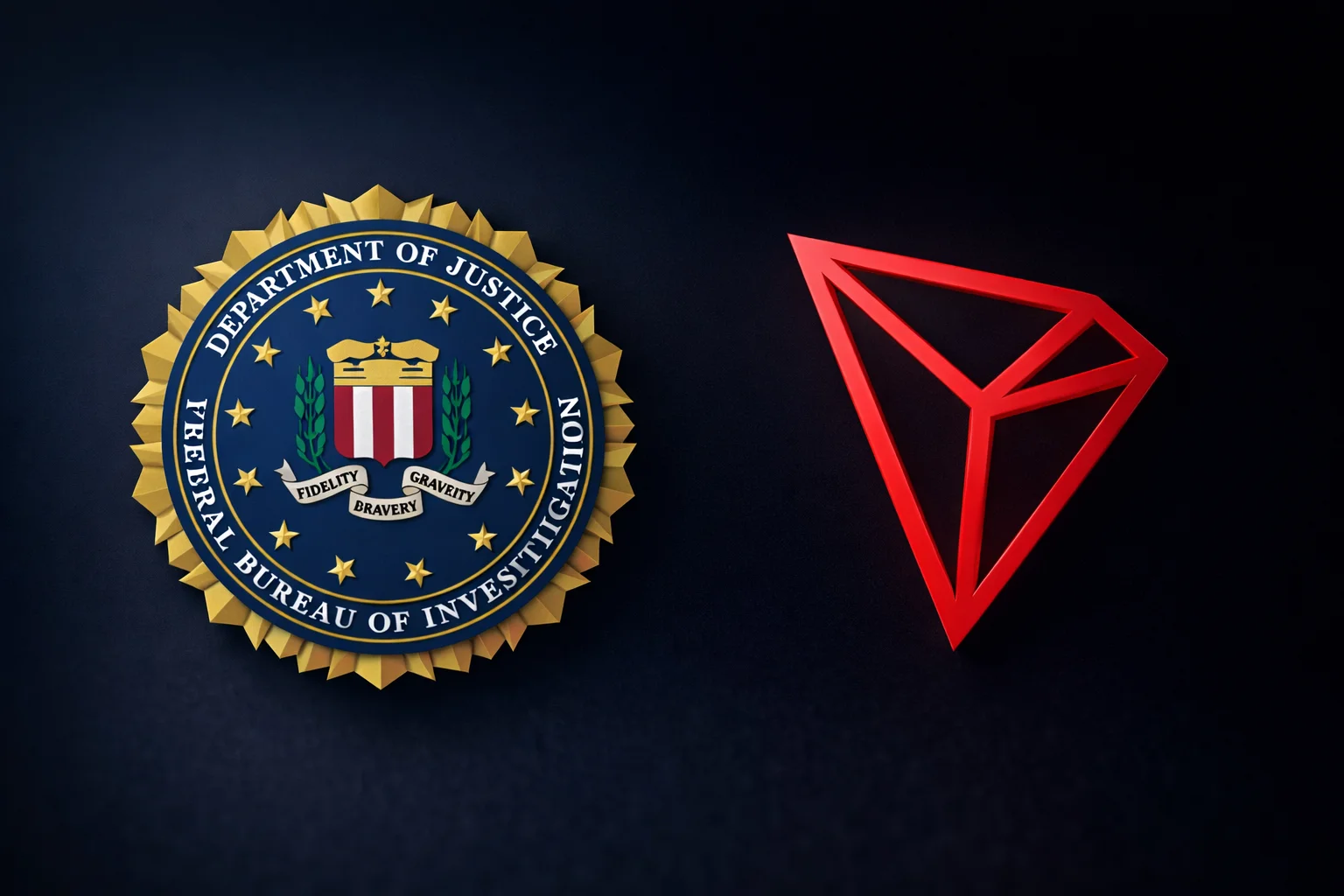
The U.S. Federal Bureau of Investigation (FBI) has warned of a new scam targeting cryptocurrency users. These attacks, particularly spread through fake tokens on the Tron network, aim to deceive users into giving away their personal information and wallet access. The FBI's New York office emphasized that users should absolutely not trust any token claiming to be affiliated with the agency. While technically simple, this scam is notable for its elements of psychological manipulation. In the first stage of the attack, fake "FBI tokens" are sent to users' wallets, even though they haven't made any transactions. These tokens, using the TRC-20 standard, appear as completely legitimate assets on Tron wallet interfaces and blockchain explorers. This can initially cause users to become suspiciousThe real danger begins in the second stage. The transaction data or description fields accompanying the token claim that users' wallets are under investigation for anti-money laundering (AML) violations. These messages typically threaten users with having their assets frozen if they fail to complete a specific verification process. The links provided in the messages redirect users to fake websites. These sites operate as phishing platforms designed to steal login credentials and wallet access data. According to information shared by the FBI, this fraud campaign has reached at least 728 different wallets. Moreover, the fact that the targeted wallets include high-balance addresses containing over $1 million in USDT indicates that the attack targets not only small investors but also large portfolio holders. This suggests that the attackers are employing a widespread and random distribution strategy. Authorities state that this type of fraud has increased significantly in recent years. In particular, attacks involving corporate identity impersonation are projected to increase by 1400% annually by 2025. The use of government agency names creates a perception of strong authority among users, triggering panic and hasty decision-making. The use of a highly reputable institution like the FBI further amplifies this effect. The FBI, in its statement, draws a very clear line: the institution does not issue any tokens and does not request identity verification via blockchain. Therefore, any token claiming to be FBI-linked should be considered outright fraud. This clarity is critical in mitigating the impact of the attack, as fraud largely thrives on uncertainty. Recommendations for users are also quite clear. First, it is crucial not to interact with such tokens received in the wallet. It is extremely important not to click on links associated with the token, and not to share any personal information or wallet data. Furthermore, users are asked to report suspicious activity through the FBI's Internet Crime Complaint Center (IC3). Experts particularly emphasize that an unauthorized token sent to a wallet alone does not constitute a security vulnerability. The real risk arises when users interact with these tokens. Therefore, the safest approach is to completely ignore such assets.
Giant Company Invests in Avalanche: Forms a Partnership
Animoca Brands announced a significant move towards the Avalanche ecosystem by investing in the AVAX token and forming a strategic partnership with Ava Labs, the network's developer. This step aims to accelerate Avalanche's global adoption and provide direct support to projects developed within the ecosystem. The company did not disclose the size or financial details of the investment in its statement. However, the scope of the partnership was quite broad. Accordingly, Animoca Brands will provide capital support to projects built on Avalanche, as well as product integrations and strategic consulting services. This approach represents a multi-layered support model for the long-term growth of the ecosystem, going beyond just financial contribution.The partnership will focus on Asia and the Middle EastThe initial focus of the partnership is on Asia and the Middle East. Animoca Brands emphasizes that it already has a strong infrastructure and corporate relationships in these regions. This aims to enable Avalanche-based projects to be commercially launched more quickly and find real-world use cases. It is stated that Animoca's experience will play a critical role, especially in regional collaborations and regulatory compliance processes.Key topics within the scope of the collaboration include the tokenization of real-world assets (RWA), digital identity solutions, and entertainment-focused applications. These areas are among the fastest-growing segments in terms of corporate adoption of blockchain technology in recent times. Animoca Brands official Omar Elassar stated that Avalanche offers a suitable infrastructure, especially for governments and large institutions, thanks to its scalable subnet architecture and Ethereum Virtual Machine (EVM) compatibility. Elassar said that identity solutions and RWA tokenization are among the short-term priorities, but in the long term, the goal is to support developers and the overall growth of the ecosystem.The subnet structure, one of Avalanche's prominent technical features, is at the heart of this partnership. Subnets operate as independent networks that can determine their own rules and token economy. This structure allows institutions or projects to create custom blockchains. Avalanche also provides high transaction speed and fast finality thanks to its consensus mechanism. These features offer critical advantages, especially for financial applications and enterprise solutions. Despite this, the Avalanche ecosystem still lags behind leading blockchains in terms of total value locked (TVL). According to current data, the total TVL on Avalanche is below $1 billion, while Ethereum is approximately $57 billion and Solana is over $7 billion. This difference shows that Avalanche maintains its growth potential, but the competition is quite intense. AVAX is trading at approximately $9.44 at the time of writing. The token, which gained 3.19% in the last 24 hours, moved between $9.49 and $9.82 during the day. Avalanche's market capitalization is $4.09 billion, while its 24-hour trading volume exceeded $359 million. The circulating supply of AVAX is recorded at 431.7 million, while the total supply stands at 463.4 million. Although the token continues to trade well below its all-time high of $144.96, the current price action shows signs of a short-term recovery.
New Payment Wave from FTX: $2.2 Billion to be Distributed
FTX, which made headlines in crypto history with its bankruptcy proceedings, is entering a new phase in its repayment plan for creditors. The FTX Recovery Trust, which manages the company's bankruptcy proceedings, plans to disburse a total of $2.2 billion in a new distribution round starting at the end of March.Eyes on March 31stAccording to the announcement, payments will begin on March 31st, and eligible creditors will receive their funds within 1 to 3 business days. Distributions will be made through service providers such as BitGo, Kraken, and Payoneer. However, users must complete identity verification (KYC) processes, submit necessary tax documents, and register with their chosen payment provider to receive these payments.This new payment round will be the fourth major distribution the company has ever undertaken. Since the beginning of the bankruptcy process, over $6 billion has been repaid in total. The latest planned $2.2 billion distribution will contribute significantly to compensating many creditors for their losses.Creditors are categorized into different classes under the repayment plan. The group referred to as the "convenience class" generally includes individual investors and smaller creditors. A significant portion of users in this group are expected to receive repayments of up to 120% of their asset value at the time of the 2022 crash. This rate presents a rare scenario in bankruptcy proceedings.There are also notable increases in the "non-convenience" classes, which cover larger and more complex claims. For example, the repayment rate for the Class 5A group, which includes international users, has been increased to 96%. In the Class 5B group, which includes US users, the repayment rate has reached 100%. Similarly, the Class 6A and 6B groups, which cover general unsecured claims and digital asset loans, have also been brought to the 100% repayment level.FTX management emphasizes that with this distribution plan, many creditors will be considered "fully satisfied." This is seen as a significant sign of recovery after the FTX crash, which created a long period of uncertainty in the crypto sector. On the other hand, one of the most controversial aspects of the process is that repayments are made in US dollars rather than directly in crypto assets. Some users argue that this method is unfair, especially since the price of assets like Bitcoin has increased significantly since the crash. Right now, around $70,000. As a reminder, the price of Bitcoin fell to around $15,700 when FTX filed for bankruptcy. Today, prices are at much higher levels, leading to criticism that some investors have missed opportunities. FTX founder Sam Bankman-Fried continues to criticize the bankruptcy process in statements made from prison. Bankman-Fried claims that the company did not actually have to go bankrupt and that mismanagement decisions triggered this process. In addition, the high fees paid to consultants during the bankruptcy process and the low valuations of some asset sales continue to be a subject of debate.
SEC and CFTC Take Historic Step: XRP and 15 Altcoins Recognized as "Commodities"
A significant milestone has been reached in the long-awaited regulatory clarity for the cryptocurrency market in the US. The Securities and Exchange Commission (SEC), in coordination with the Commodity Futures Commission (CFTC), published 68 pages of interpretive guidance categorizing crypto assets into five distinct categories. Within this framework, XRP was explicitly listed as an example of a “digital commodity”; the same list also included Aptos (APT), Avalanche (AVAX), Bitcoin (BTC), Bitcoin Cash (BCH), Cardano (ADA), Chainlink (LINK), Dogecoin (DOGE), Ethereum (ETH), Hedera (HBAR), Litecoin (LTC), Polkadot (DOT), Shiba Inu (SHIB), Solana (SOL), Stellar (XLM), and Tezos (XTZ). According to the SEC, digital commodities are not considered securities in themselves, but certain forms of presentation and sale may fall under the scope of investment contracts. The new guidance classifies crypto assets as digital commodities, digital collectibles, digital instruments, stablecoins, and digital securities. In the SEC text, digital commodities are defined as assets whose value derives not from the managerial effort of a team, but from the programmatic operation of a functional crypto system and the dynamics of supply and demand. The agency emphasizes that tokens in this category do not possess classic securities characteristics such as passive income, corporate profit, income rights, or ownership over a business. The inclusion of XRP under this heading is seen as one of the most significant developments in recent years regarding the asset's legal status in the US. The guidance is noteworthy not only for mentioning XRP. The SEC states that it hasn't completely abandoned the Howey test, which has been central to crypto debates for years, but that the new interpretation clarifies how this test applies to crypto assets. In other words, instead of discarding the old approach, the agency is trying to make the framework more readable. According to Reuters, SEC Chairman Paul Atkins also presented this change as a step toward providing the clarity that has been lacking for years, saying that more enforceable rules should be introduced to the market. This change is particularly significant for XRP. Because the token has long been at the center of regulatory debates in the US, and the question of whether it is a security has created significant uncertainty for both exchanges and institutional players. The fact that the SEC's latest guidance includes XRP among examples of digital commodities indicates that, at least in the institution's current interpretation, XRP is not considered a security in itself. The practical result of this could be a stronger legal basis for exchange listings, institutional use cases, and payment-focused integrations. However, it is too early to say that all risks have been completely eliminated, as the guidance explicitly states that certain transactions may be considered investment contracts depending on the context. Other topics in the crypto space were also included in the guidanceOn the other hand, the document is not limited to classification alone. The SEC and CFTC are also trying to clarify how federal securities laws will be applied to mining, staking, airdrops, and some token wrapping transactions. The guidelines state that under certain conditions, protocol staking activities do not constitute the issuance or sale of securities.
Binance Pulls the Plug on 8 Altcoins: Delisting Decision
Binance, one of the largest cryptocurrency exchanges, has taken a significant step in its listing policies. In its latest announcement, the company stated it will delist eight different altcoins. According to the decision, Arena-Z (A2Z), Ampleforth Governance Token (FORTH), Hooked Protocol (HOOK), IDEX (IDEX), Loopring (LRC), Neutron (NTRN), Radiant Capital (RDNT), and Solar (SXP) will be completely removed from the Binance spot market as of April 1, 2026. Binance emphasizes that such decisions are based on comprehensive review processes conducted regularly. Every asset listed on the platform is examined based on numerous criteria, including the commitment of the project team, the quality of development activities, trading volume, and liquidity. Network security, community communication, level of transparency, and compliance with regulatory developments also play a decisive role in the evaluation process. Projects that fail to meet these criteria or are deemed to pose a risk face delisting. According to the announcement, all spot trading pairs for the relevant tokens will be removed as of April 1, 2026, at 06:00 UTC. Open orders will be automatically cancelled after this time. Users are advised to close trading bots, copy trading, and other automated trading tools in advance to avoid potential losses. Binance also states that copy trading will end on March 25th, after which open positions can be closed at market price. The delisting process affects not only the spot market but also many other products on the platform. On Binance Futures, contracts for the relevant tokens will be closed on March 24th with automatic settlement. Similarly, Simple Earn, Dual Investment, Binance Pool, Loan, and Margin trading will be phased out gradually on the specified dates. It is emphasized that users should close their positions in advance or transfer their assets to spot accounts, especially in margin trading. Significant changes also apply to user accounts. The delisted assets will no longer be displayed in accounts, and new investments in these tokens will not be reflected in accounts starting April 2nd. Withdrawal transactions will continue until June 1st, 2026. After this date, if technically possible, the conversion of assets to stablecoins may be considered; however, Binance specifically states that this is not guaranteed. On the other hand, support for these tokens in services such as Binance Convert, Pay, Gift Card, and Buy & Sell will gradually end. This situation may significantly narrow the use cases of these altcoins within the ecosystem. How did prices react?Market data shows that a weak price structure already prevailed in these altcoins before the delisting decision. Projects such as Hooked Protocol, Ampleforth Governance Token, and Radiant Capital are notable for their long-standing downward trend, with double-digit losses in the last 24 hours. Similarly, Solar and Loopring have seen both short-term pullbacks of over 10% and significant monthly value losses. IDEX and Neutron are among the assets that have experienced the sharpest declines; in some periods, losses exceeding 20% have been recorded. Looking at the overall picture, it can be seen that most of these tokens have been on a downward trend since 2024, and the delisting decision acted as a catalyst, accelerating the already weakening market structure. You can see the price changes of HOOK, FORTH, and RDNT as examples below:
Major Announcement from PayPal: PYUSD Launched in 68 Countries
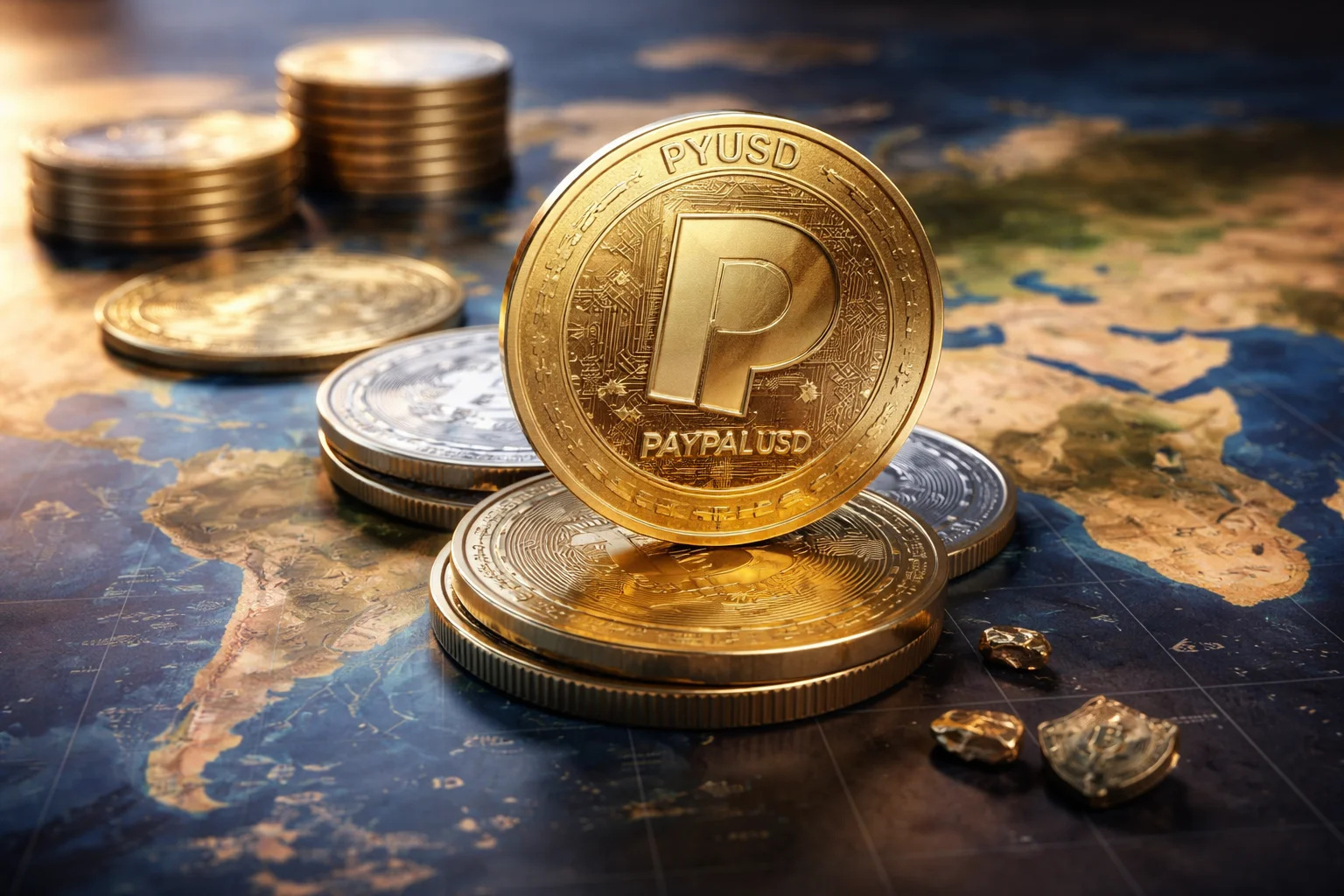
PayPal has taken a significant step towards expanding its own-brand stablecoin, PYUSD. According to May Zabaneh, the company's senior executive in charge of crypto assets, users in 68 countries will be able to hold PYUSD in their PayPal wallets as of this month. Previously only available to users in the US and the UK, this feature now covers many new markets in South America, Africa, and Asia. Countries such as Uganda, Colombia, and Peru are among the notable destinations in this expansion. The final figure is 70.Solution for cross-border paymentsThis step strengthens PayPal's position in the stablecoin space, aiming to provide solutions to the cost and access problems experienced in cross-border payments. According to Zabaneh, making PYUSD available in more countries not only increases accessibility but also has the potential to reduce the high costs of international money transfers. Stablecoins are generally known as digital assets pegged to real assets such as the US dollar. Thanks to their structure, these assets minimize price volatility and have long stood out as lower-cost alternatives, especially in international money transfers. PayPal is positioning PYUSD in line with this vision.With the new system, users will no longer only be able to send and receive PYUSD, but also earn returns on this asset. While an annual return of approximately 4% is offered for existing users in the US, this model is planned to be extended to other countries. Thus, users will have the opportunity to earn passive income from the PYUSD balances they hold in their PayPal accounts.One of the most striking aspects of this development is the transformation it creates in cross-border payments. In the current system, for example, a payment sent from New York to Lima has to be converted to the local currency by the recipient, and both exchange rate differences and transfer fees come into play in this process. With PYUSD transactions, users can hold their funds directly in a dollar-based digital asset. This both reduces costs and makes transactions more efficient. In addition, in some countries, the existing PayPal infrastructure does not allow users to hold their balances within the platform. For example, in Malawi, money sent to a user is transferred directly to their bank account. With the introduction of PYUSD, users will be able to hold these funds in their PayPal wallets. This significantly changes the user experience and encourages the use of digital wallets. PayPal's move with PYUSD is not limited to individual users. The company aims to actively use the stablecoin within its own ecosystem. For example, content creators who receive payments through platforms like YouTube can choose to receive their earnings in PYUSD through PayPal's payment solutions. Similarly, the company is testing this stable asset for international fund transfers between different corporate units. According to data, the market value of PYUSD has increased more than fivefold in the last year, reaching $4.1 billion. First launched in the summer of 2023, this stablecoin initially experienced a brief pause due to regulatory pressures. However, following this period, PayPal began to expand its product globally by making it part of a broader strategy.
Bitcoin Hits $75K, Triggers Short Squeeze Rally
The cryptocurrency market started the week with a strong recovery, with the rise led by Bitcoin being particularly noteworthy. In a market marked by short-lived sharp movements, both the closing of positions in the derivatives market and the relative improvement in the macroeconomic outlook drove prices upwards.Bitcoin gained approximately 4 percent in the last 24 hours, rising to $75,800. However, this level was not sustained, and the price quickly retreated to the $74,300 range. Similarly, Ethereum rose to $2,300, while XRP reached $1.52. Although the overall rise in the market indicates a renewed investor appetite, the dynamics behind the movement are being carefully examined. Short positions liquidatedOne of the most important triggers of this rise was the large-scale liquidation of short positions in the derivatives markets. A total of $609 million in liquidations occurred in the last 24 hours, with $485.6 million of this amount consisting of short positions. This situation created a classic “short squeeze” effect, causing prices to accelerate upwards. A short squeeze occurs when short (bearish) positions are forced to close as the price rises, accelerating buying and strengthening the upward trend. However, some analysts are cautious about the sustainability of such movements. Zeus Research analyst Dominick John notes that rallies driven by short squeezes are generally not long-lasting. According to him, without real and sustainable demand, such price movements tend to subside within a few days to a few weeks.In market sentiment, a limited recovery is observed. The Crypto Fear and Greed Index rose to 28, moving from the “extreme fear” zone to the “fear” level. This change indicates a gradual improvement in investor psychology.On the institutional side, the renewed increase in demand is noteworthy. According to analysts, strong fund inflows into spot Bitcoin ETFs played a significant role in this rise. Last week, a total net inflow of $767.3 million was recorded into spot Bitcoin ETFs in the US, marking the third consecutive weekly positive inflow. During the same period, spot Ethereum ETFs also saw inflows of $160.8 million.Presto Research analyst Rick Maeda notes that Bitcoin's move towards $76,000 was largely supported by these fund flows. Furthermore, the continued purchase of cryptocurrencies for company balance sheets is another factor strengthening demand. CoinEx analyst Jeff Ko similarly states that the dip-buying strategy is strengthening, indicating a healthier market structure.Macro Developments on the AgendaOn the macro front, there is a mixed but beginning to balance out picture. US stock markets started the week higher, while Asian markets also saw a positive trend. However, the renewed rise in oil prices continues to create uncertainty in the markets. Brent oil is approaching the $103 level, while WTI crude oil has risen above $96. In particular, developments in the Strait of Hormuz and concerns about global energy supply are among the factors that could directly affect investors' risk appetite. Analysts say that the crypto market is now driven not only by its internal dynamics but also by... He emphasizes that it is also closely related to macroeconomic indicators such as commodity prices, bond yields, and the dollar index. The direction of the markets in the coming period will largely depend on two main factors: whether corporate fund flows continue and how macroeconomic risks will unfold. Investors are closely monitoring ETF inflows, oil prices, and upcoming economic data. Among these, producer price index (PPI) data and the US Federal Reserve's interest rate decision could be decisive for the short-term direction of the market.