Altcoin
このページでは、Altcoinの最新ニュースと市場分析を掲載しています。JrKriptoでこのカテゴリの記事、専門家の見解、最新情報をご覧ください。暗号資産のトレンドと動向を詳しくお伝えします。
このページでは、Altcoinの最新ニュースと市場分析を掲載しています。JrKriptoでこのカテゴリの記事、専門家の見解、最新情報をご覧ください。暗号資産のトレンドと動向を詳しくお伝えします。
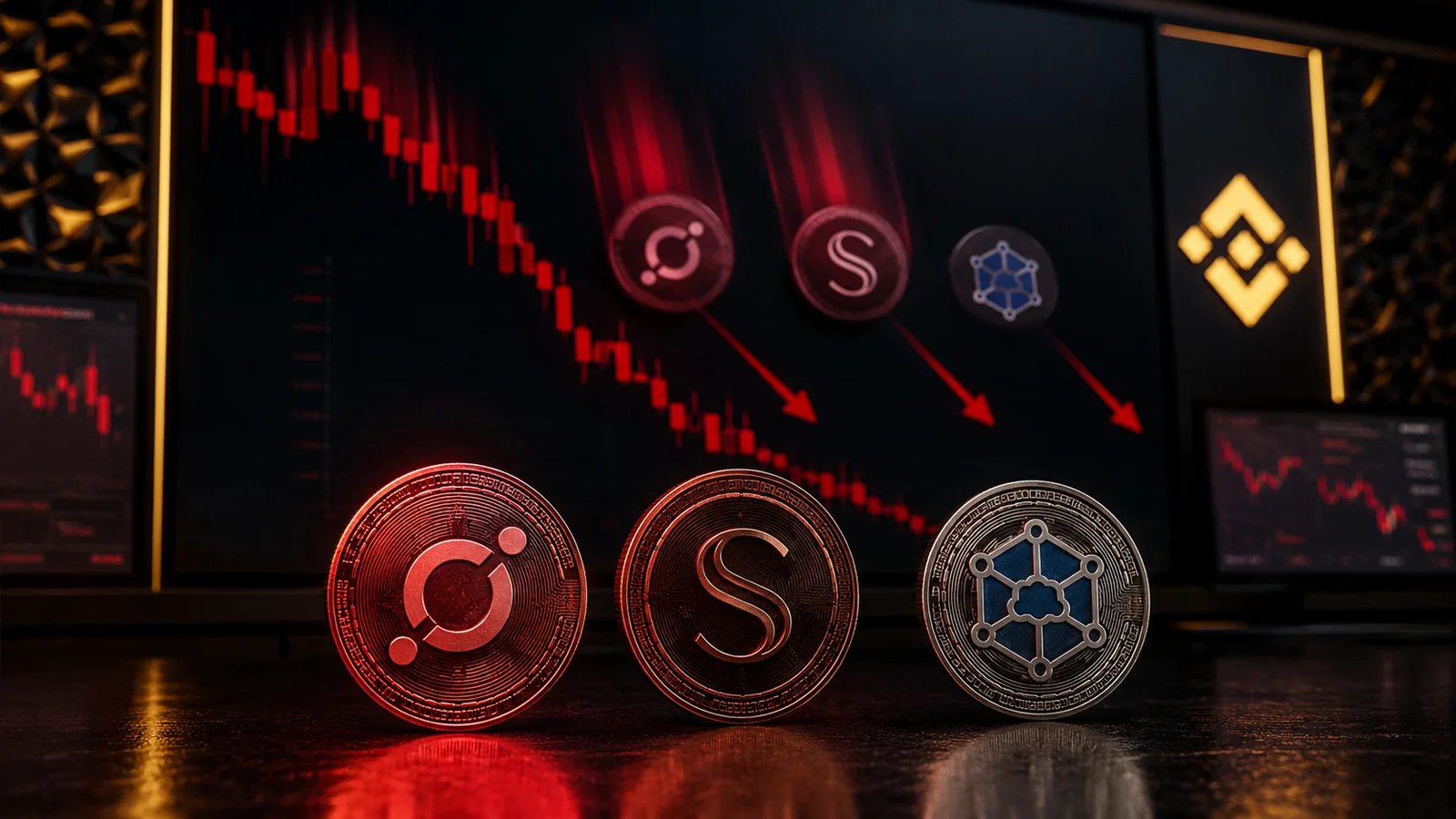
Binance announced that it will end all spot trading for ICON (ICX), Secret (SCRT), and Storj (STORJ). Following the decision, SCRT lost more than 20%, while ICX approached a double-digit decline.According to Binance’s announcement, the three altcoins will be completely removed from the spot market on September 3, 2026, at 6:00 a.m. Türkiye time. Binance will automatically cancel all open orders once trading ends.Why is Binance delisting ICX, SCRT, and STORJ?Binance said it regularly reviews the cryptocurrencies traded on its platform. The exchange evaluates factors such as team commitment, development activity, trading volume, liquidity, and network security.The review also covers the projects’ public communications, their responses to Binance’s information requests, and regulatory developments. Binance considers community sentiment, changes in token supply, and changes in ownership structure as well.Binance did not separately disclose which criteria ICX, SCRT, and STORJ failed to meet. However, the exchange concluded after its latest review that the three assets no longer met its listing standards.Spot trading bots will also stop operating on September 3 at 6:00 a.m. Türkiye time. Binance urged users to update or cancel their active bots before the deadline to avoid potential losses.SCRT price drops 23%The delisting decision hit SCRT the hardest. As of 2:58 p.m. Türkiye time on August 20, the token had fallen 23.5% over the previous 24 hours to $0.0201. SCRT dropped as low as $0.0200 during the day. ICX traded near $0.0159 at the same time, down 9.7%. The token reached a new low of $0.01529.STORJ did not face the same level of selling pressure as the other two altcoins. Its price remained near $0.0406 after falling as low as $0.03749 during the day.Futures trading will end earlierBinance Futures will close positions in futures contracts linked to the three altcoins on August 26 at 12:00 p.m. Türkiye time. The exchange will remove the contracts from its platform after completing the automatic settlement.Users will no longer be able to open new positions after 11:30 a.m. Türkiye time on the same day. Binance advised investors who want to avoid automatic settlement to close their open positions before the deadline.Margin borrowing will stop on August 21 at 9:00 a.m. Türkiye time. Cross, isolated, and portfolio margin trading for ICX, SCRT, and STORJ will end on August 26 at 1:00 p.m.Spot Copy Trading support will end on August 27 at 6:00 a.m. Any assets remaining in portfolios will be sold at market price. Binance will transfer amounts that cannot be sold to users’ spot accounts.Withdrawals will remain available until November 3Binance will stop crediting ICX, SCRT, and STORJ deposits after 6:00 a.m. on September 4. Withdrawals will remain available until 6:00 a.m. on November 3, 2026.The exchange may convert tokens remaining in user accounts into stablecoins after November 4. However, Binance said the conversion is not guaranteed and that it may share further details in a separate announcement.
Bitcoin holders usually have limited options when they want to access liquidity without selling their assets or earn yield on BTC. These options often involve centralized platforms or bridged tokens. Zest Protocol is developing a decentralized alternative by bringing Bitcoin-focused lending markets on-chain.Definition and Origins of Zest ProtocolZest Protocol is a DeFi protocol that allows Bitcoin holders to borrow against their assets or earn yield by providing liquidity to lending markets. The project focuses on putting Bitcoin liquidity to work without relying on centralized intermediaries.ZEST was developed as the native token of this ecosystem. It is connected to community incentives, liquidity programs and a governance mechanism planned for activation at a later stage. The protocol consists of more than a single lending application. Zest Protocol’s official documentation covers several products, including Stacks Market, Stacks Swap, the planned Stacks Vaults and Bitcoin Collateral Vaults.Stacks Market allows users to deposit supported assets or borrow against collateral. Stacks Swap compares liquidity across different decentralized exchanges to find a suitable route for each transaction.Stacks, Bitcoin and the multi-chain architectureZest Protocol’s first operational lending market was built on Stacks. Stacks provides a programming layer that allows smart contracts and decentralized applications to operate around Bitcoin.The protocol’s contracts on Stacks were written in the Clarity language. Users can provide assets such as sBTC, STX and stSTX as collateral and borrow stablecoins such as USDCx and USDh.sBTC is a BTC-backed asset that represents Bitcoin within the Stacks ecosystem on a one-to-one basis. Zest Protocol aims to offer lending, borrowing and yield options to Bitcoin holders through this asset.The ZEST token itself has a multi-chain structure. The project’s documentation lists official ZEST contracts on BNB Chain, Stacks, Ethereum and Base.The BEP-20 version was used for the token’s initial centralized exchange listings. Support for Ethereum and Base was later added through Chainlink’s cross-chain messaging infrastructure, CCIP.The networks supporting the protocol and the token need to be considered separately. Zest Protocol’s lending product primarily operates around Stacks and Bitcoin, while the ZEST token can be transferred across different networks.Why the project was createdBitcoin is one of the largest sources of liquidity in the crypto market, yet running general-purpose DeFi applications directly on its base layer remains difficult. BTC holders therefore often turn to centralized institutions or representations of Bitcoin transferred to other networks.On centralized lending platforms, users send their assets to wallets managed by a company. They face direct counterparty risk if the company becomes insolvent, experiences liquidity problems or mismanages customer funds.Bridged Bitcoin products carry separate risks. The bridge infrastructure, custody model and smart contracts may rely on security assumptions that differ from those of Bitcoin itself.Zest Protocol aims to manage lending through smart contracts. Liquidity supplied by users is made available to borrowers according to defined collateral ratios and risk parameters.One of the project’s long-term goals is to allow BTC to serve as collateral without leaving the Bitcoin mainnet. Bitcoin Collateral Vaults is being developed for this purpose.Under the planned system, users lock BTC in a vault on Bitcoin. They can then borrow stablecoins from a liquidity pool on Ethereum or another EVM network.History of Zest Protocol: Key MilestonesZest Protocol’s history goes back to 2021, when the team joined Trust Machines to work on Bitcoin infrastructure. The team worked on Stacks, sBTC and Bitcoin-based smart contract infrastructure during this period.The project became an independent venture in 2023 after the team’s work at Trust Machines. The founding team includes Tycho Onnasch, Fernando Foy and CTO Emil E.Zest Protocol co-founder and CEO Tycho Onnasch serves as the public face of the project. Fernando Foy worked on smart contract development, while Emil E. focused on the technical infrastructure.One of the protocol’s first products was a Stacks-based lending market. The market initially supported assets in the STX ecosystem before sBTC gained broader adoption.Zest Protocol completed a $3.5 million funding round in May 2024. According to the project’s May 2024 announcement, Draper Associates led the round.Participants included Binance Labs, now known as YZi Labs, Flow Traders, Trust Machines, Asymmetric and Bitcoin Frontier Fund. The team said it would use the funding to expand its Bitcoin-focused lending infrastructure. ZEST launch and exchange listingsZest Protocol continued developing its Stacks market and Bitcoin yield products throughout 2024. During this period, the project also introduced a yield-focused Bitcoin product called BTCz.BTCz was designed as a tokenized asset that users received in exchange for depositing Bitcoin into the system. The project later shifted its focus to sBTC, its new lending market and Bitcoin Collateral Vaults, gradually phasing out BTCz.The protocol launched Stacks Market V2 in 2026. The new version introduced a “risk groups” model that allows different collateral and debt assets to be managed using parameters tailored to their individual risk profiles.The liquidation system also changed with V2. Under the previous model, an entire position could be liquidated at once after crossing the risk threshold. The new structure applies gradual liquidations.The ZEST token generation event took place on May 19, 2026. ZEST/USDT spot trading began on Gate and KuCoin on the same day.The token also began trading on Binance Alpha, accompanied by a distribution for eligible users. A Binance Alpha listing does not carry the same status as a standard listing on Binance’s main spot market.ZEST was later listed on other platforms, including BitMart. KuCoin opened a ZEST perpetual futures contract several days after spot trading began.The listings increased the token’s accessibility while making its early price movements more volatile. A low circulating supply and speculative demand for newly launched tokens created conditions for sharp short-term price swings.Bitcoin L1 expansion and current statusZest Protocol announced Bitcoin Collateral Vaults in May 2026. The product aims to give users access to stablecoin liquidity on EVM networks while keeping their BTC on the Bitcoin mainnet.The first phase is expected to use pre-signed Bitcoin transactions. These transactions limit the conditions and addresses under which the BTC held in a vault can move.The project aims to move the verification process to BitVM in the second phase. BitVM is an approach designed to verify the results of external computations without running general-purpose smart contracts directly on Bitcoin.The project team acknowledges that the BitVM-based version is not yet ready for production. Bitcoin Collateral Vaults is therefore progressing through a phased roadmap.Zest Protocol expanded its products within the Stacks ecosystem during the same period. Stacks Swap launched as a liquidity aggregator that compares transaction routes across decentralized exchanges such as Bitflow, Velar, ALEX and Arkadiko.Stacks Vaults is planned as a separate product that will combine automated yield strategies. As of August 2026, the official documentation still lists it among the upcoming features.At the time of writing, the ZEST coin price is trading at around $0.13. Depending on the data provider, the token has a market capitalization of approximately $19 million to $20 million.How Does the ZEST Token Work?ZEST is the native token of the Zest Protocol ecosystem. Its planned long-term use cases include governance, staking and protocol incentives.However, all these features were not activated when the token entered the market. The project’s documentation says governance and staking will be introduced once the protocol reaches sufficient scale.This distinction matters when assessing ZEST’s current utility. It would be inaccurate to say that token holders can already vote directly on every protocol decision.The planned governance structure may cover supported assets, risk parameters, protocol upgrades and the use of ecosystem resources. Its exact scope will become clearer as the governance modules are activated.ZEST was also designed for user and liquidity incentives. Community programs, airdrop distributions and campaigns intended to increase protocol usage fall under this category.An incentive token can generate lasting demand only if its rewards gain utility beyond short-term trading. High token incentives may create selling pressure if the user base and protocol revenue fail to grow.ZEST supply, allocation and token unlocksThe total ZEST supply is capped at 1 billion tokens. The documentation states that the supply is fixed and that no additional ZEST can be created beyond this amount.A total of 27.83% of the supply was allocated to the community. This share includes early-user distributions, protocol incentives and liquidity programs. The ecosystem development allocation was set at 24.82%. This portion can support liquidity provision, partnerships, marketing, exchange-related processes and product growth.Investors received 22.35% of the total supply. The team allocation stands at 25%.The combined investor and team allocation therefore reaches 47.35%. This makes it important to monitor their token unlocks in the coming periods.Approximately 14.6% of the total supply entered circulation during the token generation event. Most came from the ecosystem development fund, while a smaller portion was used for the initial community distribution.A significant part of the remaining community allocation follows a 24-month linear vesting schedule. The locked portion of the ecosystem development allocation is released gradually over 12 months.Team and investor tokens have a 12-month cliff. Their allocations are then scheduled to unlock linearly over 36 months.The initially low circulation rate creates a wide gap between the fully diluted valuation and the current market capitalization. Approximately 146 million to 150 million tokens were in circulation in August 2026, compared with a total supply of 1 billion.Tokens entering circulation in the future do not automatically lead to a price decline. However, the additional supply could place pressure on the price if market demand does not grow at the same pace.Cross-chain transactions and security structureUsers begin by depositing a supported asset into Zest Protocol’s lending market. The deposited asset can provide liquidity or serve as collateral for a loan.Liquidity providers earn returns from the interest paid by borrowers. Interest rates are variable and change according to the available liquidity in the pool and borrowing demand.Borrowers can withdraw assets only up to a certain percentage of their collateral value. The position’s health factor weakens if the value of the collateral falls or the value of the debt rises.Liquidation can begin when a position reaches the specified risk thresholds. Instead of closing the entire position in a single transaction, the V2 model applies gradual liquidation according to the level of risk.The protocol uses Pyth’s oracle infrastructure for price data. Accurate oracle information is critical for the correct calculation of collateral ratios and liquidations.Each collateral-debt pair can have different parameters under V2. For example, borrowing USDCx against sBTC may have different risk limits from borrowing another asset against STX.Users can also keep their collateral separate from the lending pool. Under this model, the asset remains only as collateral and is not lent to another borrower. The user does not earn interest on this portion.Zest Protocol experienced an attack targeting its smart contracts in April 2024. According to the project, the incident did not result in any loss of user funds.The team later helped establish Clarity Alliance, an auditing group focused on Clarity smart contracts. It also introduced Hypernative infrastructure to monitor suspicious on-chain activity.These measures aim to reduce technical risk, although they cannot eliminate it entirely. Software bugs, oracle problems, governance vulnerabilities and bridge risks can still affect audited protocols.ZEST’s presence on multiple networks also requires users to verify contract addresses. Transactions involving the wrong network or a fake token contract can result in permanent loss of funds.Why Is Zest Protocol Important?A significant share of Bitcoin holders prefer to keep their BTC for the long term. However, they may still need to sell the asset when they require unexpected cash or liquidity for another investment.Bitcoin-backed loans allow users to access stablecoin liquidity without closing their BTC positions. Zest Protocol is working to manage this model through on-chain contracts instead of a centralized lender.Liquidity providers operate on the other side of the system. These users deposit assets into pools and earn variable returns from the interest paid by borrowers.The scope of this model could expand when Bitcoin Collateral Vaults goes live. Keeping BTC on the Bitcoin mainnet without converting it into a wrapped token aims to reduce some bridge and custody risks.However, the first version’s use of pre-signed transactions introduces different trust assumptions. The operation and production performance of the final BitVM-supported model can be assessed once the product launches.Team, investors and ecosystem partnershipsThe Zest Protocol team worked on Stacks and sBTC infrastructure before creating the project. This background demonstrates the team’s technical experience with Bitcoin programming layers.Support from investors such as Draper Associates, YZi Labs, Flow Traders and Trust Machines also gave the project access to funding and industry connections. Investor support alone does not guarantee the protocol’s success.The Stacks ecosystem plays a central role in Zest Protocol’s growth. Potential liquidity in the lending market could expand as the use of assets such as sBTC, STX, stSTX, USDCx and USDh increases.Bringing together liquidity from Bitflow, Velar, ALEX and Arkadiko through Stacks Swap broadens the protocol’s product range. This allows Zest Protocol to seek a share of transaction flow on Stacks alongside its lending market.Connections to Ethereum and Base make it easier to move ZEST across different ecosystems. Stablecoin liquidity on EVM networks could become more directly relevant as Bitcoin Collateral Vaults progresses.The first-season points program and ZEST airdrop stood out on the community side. User incentives can support early liquidity, although lasting growth needs to continue after reward programs end.Smart contract, liquidation and volatility risksZest Protocol is exposed to the fundamental risks of DeFi lending markets. A smart contract vulnerability, incorrect price data or an unexpected network problem could affect user funds.Borrowers also face liquidation risk. If BTC or another collateral asset falls sharply, part or all of a position may be sold to repay the debt.Gradual liquidation aims to reduce the impact of sudden liquidations. Even so, it cannot fully prevent collateral losses during rapid market movements.Limited liquidity creates another potential problem. Interest rates can rise sharply if borrowing demand increases while available assets in the pool decline.One of the most significant risks for the ZEST token is its low circulating supply. Most of the total supply will unlock in the coming years, which means the market may need enough demand to absorb the additional tokens.The fact that the token’s governance and staking functions have not yet been fully activated also limits its current utility. It remains unclear when these features will launch and how much demand they will create for ZEST.Competition in the BTCFi sector is growing. Ethereum-based applications, emerging Bitcoin layers and institutional custody solutions are also being developed for Bitcoin-backed loans.The regulatory environment presents another source of uncertainty. Token incentives, decentralized lending services and stablecoin use may be subject to different rules across jurisdictions.ZEST’s price performance therefore depends on more than the protocol’s technical development. The Bitcoin price, broader market conditions, token unlocks and exchange liquidity can also affect its value.Frequently Asked Questions (FAQ)Below are answers to some frequently asked questions about Zest Protocol (ZEST):What is Zest Protocol, and when was it launched?: Zest Protocol is a Bitcoin-focused on-chain lending and liquidity protocol. The team’s work on Bitcoin infrastructure dates back to 2021, while the project became an independent venture in 2023. Its first products on Stacks began operating in 2024. The ZEST token entered the market on May 19, 2026.What is the ZEST token used for?: ZEST is used for ecosystem incentives, liquidity programs and community distributions. Governance and staking functions are also planned for the token. According to the project’s documentation, these features will be activated when the protocol reaches sufficient scale. Planned functions should therefore be distinguished from the use cases currently available.Which network does Zest Protocol operate on?: The protocol’s active lending market operates on Stacks and supports Bitcoin-focused assets. Bitcoin Collateral Vaults aims to establish a collateral and borrowing connection between the Bitcoin mainnet and EVM networks such as Ethereum. Versions of the ZEST token are available on BNB Chain, Stacks, Ethereum and Base. Users should verify the correct network and official contract address before transferring the token.Who founded Zest Protocol?: Zest Protocol’s founding team includes Tycho Onnasch, Fernando Foy and Emil E. Onnasch serves as CEO, while Emil E. is the CTO. The team previously worked on Stacks and Bitcoin infrastructure at Trust Machines. The project became independent in 2023.What is the ZEST supply?: ZEST has a total and maximum supply of 1 billion tokens. As of August 2026, the circulating supply varies between approximately 146 million and 150 million, depending on the data provider. The community received 27.83% of the total supply, while 24.82% was allocated to ecosystem development. Investors received 22.35%, and the team allocation stands at 25%.Is Zest Protocol suitable for investment?: Zest Protocol has operational products in the Bitcoin-backed lending sector and an experienced development team. However, ZEST is a new token, and most of its total supply has not yet entered circulation. Smart contract vulnerabilities, liquidations, token unlocks and sharp price movements should be considered. Whether ZEST is suitable for any investor depends on their personal risk tolerance, research and portfolio structure. Zest Protocol is building a broad BTCFi ecosystem that aims to make Bitcoin easier to use for lending and stablecoin liquidity. Stacks Market currently forms the operational foundation of the project, while Bitcoin Collateral Vaults, governance and new vault products are among the developments that could shape ZEST’s long-term utility.Follow the JR Kripto Guide series for updates on Zest Protocol’s Bitcoin-backed lending products, the Bitcoin Collateral Vaults roadmap and developments across the ZEST ecosystem.

High yields in the crypto market often come with directional exposure, complex transactions or short-lived token incentives. Solstice is trying to change this equation by turning the yield strategies used by professional funds into accessible assets on Solana. At the center of the protocol are USX, the yield-bearing eUSX and SLX, which provides access to the ecosystem.Definition and origins of SolsticeSolstice Finance is a DeFi protocol that brings institutional-scale yield strategies on-chain. The project describes itself as a “yield layer.” Its goal is to connect different sources of yield to Solana applications through standardized tokens.According to the Solstice whitepaper, the protocol consists of three main layers. USX serves as the settlement and entry-exit asset, YieldVault turns different strategies into on-chain tokens, and Nexus aims to bring yield, credit and payment products together in one consumer application.SLX is the access, utility and governance token within this structure. Users can stake SLX to receive stSLX. The staked token is connected to functions such as priority access to new vaults, certain redemption privileges, planned credit features and governance weight.It is important to distinguish between the tokens in the Solstice ecosystem. USX is designed to track the US dollar and acts as the asset through which capital enters and exits the protocol. eUSX is the yield-bearing token received when USX is deposited into YieldVault, reflecting the performance of the underlying strategy. SLX does not represent the dollar peg or the yield generated by eUSX. UI of Solstice App Which network does Solstice use?Solstice’s core products run on Solana. USX, eUSX, YieldVault and the main SLX contract operate on this network. Solana’s fast settlement, low fees and composability make it easier to use yield tokens in lending markets, decentralized exchanges and payment applications.Solstice does not operate its own blockchain or validator consensus system. Its transactions therefore rely on the underlying security of Solana. Solstice’s smart contracts, custody arrangements, price feeds and off-chain fund structure add further layers of risk on top of the network.Why was the project created?Institutional investment firms can use funding-rate arbitrage, hedged spot and futures positions, credit products and Treasury instruments to generate returns without taking direct market-direction exposure. These operations require substantial capital, professional infrastructure, custody agreements and continuous risk management.Solstice aims to reduce the need for users to manage these strategies individually. An off-chain strategy run by a licensed manager is connected to a transferable on-chain token through YieldVault. Users can then hold the relevant asset in their wallets or use it in supported DeFi applications.This model does not mean that the entire yield system operates on-chain. The whitepaper clearly states that capital moves through regulated off-chain structures. The Solstice Foundation oversees protocol direction and governance, while BVI-licensed Equinox Strategies Ltd manages the strategy of the Equinox Fund backing eUSX. Separate entities handle token issuance for each asset.History of Solstice: Key milestonesSolstice’s institutional strategy track record dates back to 2023. However, Solstice Labs was publicly announced on September 20, 2024, during the Solana Breakpoint event. Deus X Capital introduced the company as a venture intended to expand access to DeFi products for institutional and retail users.Solstice was established and funded by Deus X Capital, which has reported more than $1 billion in assets under management. Ben Nadareski was named co-founder and CEO, Deus X Capital CEO Tim Grant became co-founder and chairman, and Stuart Connolly joined as co-founder and chief investment officer.Nadareski previously served as vice president of trading at Galaxy Digital and director of mergers and acquisitions at SIX Digital Exchange. Grant has more than 25 years of experience across traditional finance and digital asset markets. The team aims to use this background to connect institutional capital with DeFi infrastructure.In December 2024, Solstice Labs acquired assets belonging to the institutional staking operations of Bridgetower Capital GmbH. The operations were placed under Switzerland-based Solstice Staking AG. According to the acquisition announcement, the acquired business serviced more than $1 billion in staked assets, including work carried out with Lido.Launch of USX, YieldVault and SLXSolstice Finance opened USX and YieldVault to the public on September 30, 2025. The protocol reported more than $160 million in total value locked on its first day. Galaxy Digital, Susquehanna Crypto, MEV Capital, Auros, Bitcoin Suisse and Deus X Capital were among the capital providers supporting the launch.Direct minting and redemption of USX are not equally available to all users. According to DeFiLlama’s USX page, these transactions are available to verified institutional participants that deposit collateral such as USDC or USDT. Other users can access USX through the protocol interface or supported decentralized markets.The SLX token generation event took place on May 25, 2026. Trading access opened on platforms including Binance Alpha and Bitget on the same day. SLX was later added to Kraken, Upbit and other exchanges. OKX opened its SLX/USDT spot market on July 10, 2026. Access through Binance is provided via Binance Alpha.Listings and current statusAs of August 20, 2026, data showed approximately 242.85 million SLX in circulation. The SLX coin price was around $0.066, giving the token a market capitalization of about $16 million and a fully diluted valuation of roughly $66 million. These figures change continuously with market conditions. SLX reached an all-time high of approximately $0.66 in June 2026. It later fell to around $0.063 in August 2026.Growth on the protocol side was not limited to SLX listings. Alongside eUSX, Solstice added strcUSX to the YieldVault structure, linking the product’s income to dividends from Strategy’s STRC preferred stock. aiUSX, tbUSX and some phases of Nexus are presented as forward-looking products in the whitepaper. They should not be treated as completed features.DeFiLlama data showed approximately $506 million in total value locked in the protocol on August 20, 2026. TVL measures the market value of assets held within a protocol. On its own, it does not demonstrate revenue, solvency or risk-free operation. How does the SLX token work?The core functions of SLX become available when the token is staked. Users deposit SLX and receive the liquid staking token stSLX. stSLX can be held in a wallet, locked or used as an access key for supported protocol features.The whitepaper outlines four main use cases for stSLX. These include priority access to new YieldVault capacity, faster redemption options for eUSX and other yield tokens, higher borrowing capacity in the Nexus credit market and governance weight. Some of the credit and advanced automation features within Nexus remain under development or in the planning stage.SLX holders should not be assumed to have complete control over the protocol today. Under the current model, the Risk Committee within the Solstice Foundation sets initial parameters, reviews audits and approves new product deployments. The community can signal its views on certain proposals, while binding votes through stSLX are expected to expand in later stages.SLX also does not provide ownership in the company, represent debt or grant rights over protocol revenue. Holding the token does not entitle users to dividends, profit distributions or guaranteed returns. Project documents limit the economic function of SLX to the access and governance features it provides within the ecosystem.SLX supply and tokenomicsAccording to the official tokenomics page, the SLX supply is fixed at 1 billion tokens. Community programs received 37.71% of the supply, while 24% was allocated to the foundation and 20% to the team and advisors. Airdrops received 10%, strategic TVL partners received 8%, and the public sale accounted for 0.29%. Approximately 24% of the total supply entered circulation at the token generation event. Team and advisor tokens are subject to a 12-month cliff followed by a gradual distribution schedule. Tokens allocated to the foundation, community and strategic partners also unlock according to different schedules.The distribution can be assessed from two angles. The community and airdrop categories together account for approximately 47.7% of supply. At the same time, a large share is allocated to the foundation, team and strategic TVL partners. Token unlocks can increase the circulating supply over time.Around one-quarter of the total supply was circulating on August 20, 2026. This creates a notable gap between the market capitalization and fully diluted valuation. If protocol use does not grow at a similar rate, new supply could put pressure on the price. Stronger demand could change the scale of this effect.Transactions and security on SolanaUSX, YieldVault tokens and SLX move on-chain. Some of the positions generating yield rely on off-chain parties, including licensed funds, custodians, prime brokers and centralized trading venues. Users therefore face both smart contract risk and traditional counterparty risk.USX reserves can include audited dollar assets, tokenized Treasury products and hedged positions in major crypto assets. Solstice publishes reserves and liabilities through a proof-of-solvency dashboard verified by Accountable. This transparency makes it easier to monitor the reserve structure. It does not guarantee that the assets will retain their value or that redemptions will always be completed immediately.Project documents state that the USX and YieldVault contracts have undergone independent security reviews. The audit page includes reports prepared by Halborn and other assessments. Audits may reduce code risk, but they cannot eliminate every vulnerability, oracle problem or operational error.The way eUSX works is also important. Users receive eUSX when they deposit USX into YieldVault. Yield is added to the exchange rate between eUSX and USX instead of being distributed as a separate payment. During redemption, eUSX is burned and the user receives USX plus accrued yield, subject to queue and capacity conditions.The underlying delta-neutral strategy generally takes a spot position in an asset while opening an equal-sized futures position in the opposite direction. If the price rises, the spot gain is intended to offset the futures loss. If the price falls, the futures gain is intended to offset the spot loss. A significant part of the yield comes from funding payments in perpetual futures markets.The term “delta-neutral” does not mean risk-free. Funding rates can turn negative, the hedge ratio can break down, positions can close at different prices across different platforms, or a counterparty can face solvency problems. eUSX yield should therefore not be read as a fixed interest rate. The current rate, the period it covers and the risks used to generate it should be assessed together.Why is Solstice important?One of Solstice’s distinctive features is the separation between the yield-generating strategy and the on-chain distribution layer. Licensed managers can run different off-chain portfolios, while YieldVault brings them to Solana through a common token standard. This removes the need to create a separate user and integration model for every new strategy.USX serves as the common unit of account and settlement asset within this structure. Users enter a YieldVault product with USX and later convert the yield token back into USX. eUSX depends on funding rates, while strcUSX offers a different source of yield linked to preferred-share distributions.This architecture allows yield tokens to be used as collateral or liquidity assets in other DeFi applications. Composability also creates new dependencies. Using eUSX as collateral in a lending market can introduce the liquidation and oracle risks of that market alongside the risks associated with Solstice.Team, community and ecosystem relationshipsSolstice was developed with the capital and company-network support of Deus X Capital. Its team includes people with experience in traditional finance, institutional trading, staking and DeFi. This structure may make it easier to work with off-chain funds and professional custodians. It also increases the protocol’s reliance on centralized institutions.USX and eUSX have established connections with platforms including Raydium, Orca, Kamino and Exponent in the Solana ecosystem. Data infrastructure providers such as Pyth and Chainlink are also among the ecosystem relationships announced by the project. The scope of each integration differs. A partnership announcement should not be interpreted as the other party assuming all risks associated with Solstice.Community participation initially developed through the Flares points program and the SLX airdrop. The share of token supply allocated to community programs can be used for liquidity campaigns, integration incentives and ecosystem grants. These distributions may increase user numbers, but the amount of activity that remains after reward periods end should be monitored separately.The project’s long-term plans include Nexus and Yield-as-a-Service. Nexus aims to bring yield optimization, credit, payment cards and AI-supported tools together in one interface. Yield-as-a-Service focuses on allowing fintechs, neobanks, payroll providers and corporate treasury applications to embed Solstice products into their own services.Protocol risks and SLX volatilityOne of the most significant risks for Solstice is the reliance of its on-chain tokens on off-chain strategies and entities. Problems at Equinox Strategies, a custodian, a prime broker or a trading venue could affect performance and redemptions. Segregated accounts and licensed managers are used to manage this exposure, but they do not remove it entirely.USX may lose its dollar peg. If the value, liquidity or accessibility of reserve assets deteriorates, the balance around $1 could come under pressure. Heavy redemption demand could also exceed the protocol buffer and cause repayments to enter a queue.Delta-neutral strategies carry funding-rate, basis, leverage, liquidation, execution and counterparty risks. Theoretical hedging does not mean every trade will close at the same time or at the expected price under real market conditions. Historical yield figures do not guarantee the same results in the future.Smart contracts, price oracles, bridges and the Solana network carry technical risks. On the governance side, the concentration of critical powers within the Risk Committee during the early phase may raise centralization concerns. Emergency pause authority can be useful for security, but users should review who can make which decisions.SLX carries additional risks. Some of the token’s use cases remain in the planning or development stage. The low circulating supply relative to the total supply, future unlocks and a relatively small market capitalization can create conditions for sharp price moves.Frequently asked questions about SolsticeBelow are answers to some of the most common questions about Solstice.What is Solstice and when was it launched?: Solstice is a DeFi protocol that turns institutional yield strategies into tokenized products on Solana. Solstice Labs was introduced in September 2024, while USX and YieldVault opened to the public on September 30, 2025. The SLX token launched on May 25, 2026.What is the SLX token used for?: SLX is the access, utility and governance token of Solstice. Users who stake SLX receive stSLX, which is used for priority access to new vaults, certain redemption options, future credit features and governance processes being introduced in stages.Which network does Solstice use?: Solstice’s core protocol and main SLX contract operate on Solana. CoinGecko also displays a BNB Smart Chain contract for SLX, although Solana remains the central network for USX, eUSX and YieldVault.Who founded Solstice?: The co-founders of Solstice Labs are Ben Nadareski, Tim Grant and Stuart Connolly. Nadareski serves as CEO, while Grant was named chairman. The project was established and funded by Deus X Capital.What is the SLX supply?: SLX has a fixed total and maximum supply of 1 billion tokens. Approximately 242.85 million SLX were in circulation as of August 20, 2026. The circulating amount can change as locked tokens are released.Is Solstice suitable as an investment?: There is no single answer that applies to everyone. SLX carries material risks due to its volatility, token unlock schedule and use cases that are still under development. USX and eUSX also involve reserve, counterparty, redemption, smart contract and strategy risks. Current token distribution, audit reports, the proof-of-solvency dashboard and personal risk tolerance should all be considered before making a decision. Solstice is trying to turn institutional yield strategies into standardized and usable tokens on Solana. The relationship between USX, eUSX, YieldVault and SLX gives the project a broader structure than a standalone governance token. Off-chain counterparties, variable yield sources and the token supply schedule remain areas that require close attention.Follow the JR Kripto Guide series for the latest information on Solstice’s USX, eUSX and YieldVault products, as well as the development of the SLX token within the Solana ecosystem.
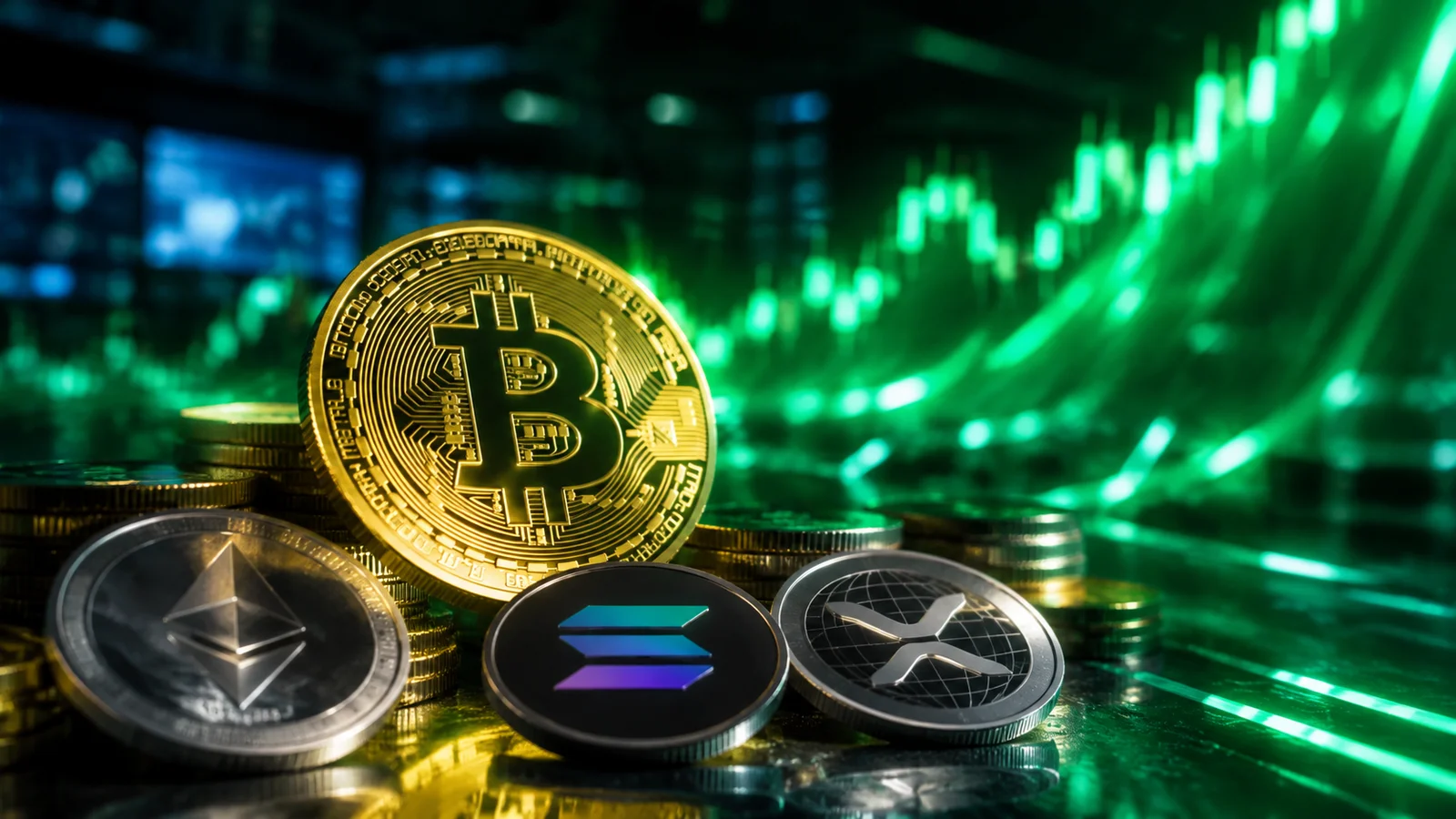
Bitcoin climbed from around $64,300 to $68,700 within approximately one hour. The sudden move caught traders betting on lower prices off guard. More than $70 million in short positions were liquidated during the period.Bitcoin traded near $68,450 as of 6:45 p.m. Türkiye time on August 19. The cryptocurrency reached an intraday high of $68,776. BTC’s 24-hour gain reached 5.6%. However, most of the increase occurred within the previous hour. Bitcoin had traded sideways near $64,000 earlier in the day.Short liquidations exceed $70 million in one hourMarket data showed that leveraged cryptocurrency positions worth $71.99 million were liquidated in the past hour. Short positions accounted for $70.18 million of that amount.Long liquidations remained at just $1.81 million. Therefore, traders betting on lower prices represented approximately 97.5% of all liquidations during the period.Four-hour liquidations climbed to $116.06 million. Short positions accounted for $94.39 million of the total. Over the past 24 hours, exchanges closed $139.52 million in leveraged positions.The liquidations affected 22,260 trader accounts. The largest individual liquidation occurred on OKX and involved a Bitcoin position worth $4.07 million.The automatic closure of short positions can create additional buying pressure. As prices rise, they can reach new liquidation levels and trigger further forced purchases. This process can accelerate a rally within a short period.Ethereum outperforms Bitcoin during the rallyThe Bitcoin rally quickly spread across the altcoin market. Ethereum gained 8.6% and reached $2,082.Solana rose 6.6% to $82.09, while XRP gained 6.5% to trade at $1.068. Dogecoin advanced 4.2%, BNB gained 2.6% and SUI climbed 6.2%.The total cryptocurrency market capitalization reached $2.31 trillion. Market data showed that the figure increased by 4.38% over the past 24 hours.Daily cryptocurrency trading volume also rose 18.3% to $61.5 billion. Bitcoin’s market dominance reached 59.28%.Why did Bitcoin rise?No single confirmed announcement has emerged as the immediate trigger for the sudden rally. The move came as expectations surrounding cryptocurrency regulation in the United States improved.Reuters reported that the White House was hosting executives from the cryptocurrency and prediction market industries on August 19. SEC Chair Paul Atkins, CFTC Chair Michael Selig and White House crypto adviser Patrick Witt were expected to attend.The SEC also published a new regulatory proposal covering token sales. The proposal could exempt certain token offerings from securities registration requirements.Markets will also follow the Federal Reserve minutes scheduled for release at 9:00 p.m. Türkiye time. A more hawkish message on the interest rate outlook could increase volatility following the rally.Whether Bitcoin can remain above $68,000 will be important for its short-term direction. The liquidation-driven rally will require continued spot-market buying volume to sustain its momentum.
Ripple Prime, Ripple’s institutional brokerage arm, raised $275 million through a bond offering. The company will use the proceeds to expand its US operations and strengthen its institutional financial infrastructure.According to the company’s August 18 announcement, Ripple Prime sold senior unsecured notes to institutional investors through a private placement. The company upsized the transaction to $275 million from its original target.Ripple said the offering attracted investors from several major financial markets. However, the company did not disclose the initial target, maturity date or coupon rate.Ripple Prime will use the funds in the USRipple Prime will use the proceeds for working capital and general corporate purposes. The company plans to expand its multi-asset clearing, prime brokerage and financing services in the US.The new capital will also support investments in personnel and technology. Ripple Prime serves institutional investors active in digital assets, foreign exchange, fixed-income securities and derivatives markets.Ripple Prime President Noel Kimmel said the transaction marked the company’s first notes offering. According to Kimmel, the new capital will support the platform’s growth plans and its goal of becoming one of the world’s largest non-bank prime brokers.The notes received a BBB credit ratingCredit rating agency KBRA assigned a BBB rating to Ripple Prime’s notes. This rating places the debt instrument within the investment-grade category.Senior unsecured notes are not backed by specific assets. However, they rank ahead of subordinated debt and company equity if the issuer encounters repayment problems.KBRA’s assessment highlighted Ripple Prime’s expanding balance sheet and its move into profitability in 2025. The agency also viewed financial support from parent company Ripple as an important factor.KBRA said Ripple held nearly $5 billion in cash and more than 40 billion XRP as of the third quarter of 2025. However, the agency identified Ripple’s dependence on digital asset-related revenue as one of the main credit risks.Piper Sandler acted as the lead placement agent for the offering.Borrowing capacity reaches $475 millionIn May, Ripple Prime secured a debt facility of up to $200 million from funds managed by Neuberger Specialty Finance. The company uses the facility to expand client financing and margin capacity.The latest offering brings Ripple Prime’s total borrowing capacity secured within roughly three months to $475 million. The earlier agreement is a credit facility, so it should not be assumed that Ripple Prime has drawn the entire amount.Ripple acquired the platform, previously known as Hidden Road, for $1.25 billion in 2025. It later rebranded the business as Ripple Prime, creating an institutional brokerage arm covering traditional and digital markets.According to Ripple’s May announcement, Ripple Prime’s revenue tripled year over year following the acquisition. The new debt financing gives the company additional resources for its capital-intensive brokerage and client financing operations.XRP price risesThe notes offering does not involve an XRP purchase, token burn or transaction on the XRP Ledger. The financing therefore has no disclosed mechanism that would directly affect the XRP price. Still, XRP traded near $1.04 at the time of writing. The cryptocurrency gained 4% following the announcement.Ripple Prime’s growth could expand Ripple’s institutional financial ecosystem over the long term.

Kraken has started offering eligible customers in the European Economic Area access to more than 7,000 US stocks. Users can manage traditional shares, cryptocurrencies and tokenized xStocks products through the same account.The new service is available only to eligible EEA customers. Turkey is outside this region, so residents of the country should not assume they can access the service.Kraken adds more than 7,000 US stocksAccording to Kraken’s August 18 announcement, investors can directly buy and sell more than 7,000 US stocks. Trading is available through Kraken Pro on desktop and mobile, as well as the standard Kraken app.Payward Europe Digital Solutions (CY) Limited provides the traditional stock service. The company is an authorized investment firm operating under the European Union’s MiFID II framework.Kraken said eligible customers will pay no commission on direct stock trades. However, foreign exchange costs, spreads and other fees may still apply.The platform supports more than 600 crypto assets alongside traditional stocks. Kraken also offers over 700 tokenized stocks and exchange-traded funds under its xStocks brand.Users can therefore access US markets without moving capital from their crypto accounts to another brokerage. For some companies, traditional shares and their tokenized versions will be available side by side.Traditional shares and xStocks provide different rightsAlthough both products may track the same company’s price, their legal structures differ. A traditional share represents a direct ownership interest in a company.xStocks are tokenized representations of real shares. Each token is backed one-to-one by the corresponding share held through custodial institutions.However, xStocks holders do not become direct shareholders of the underlying company. The tokens do not provide voting rights, access to company information or direct ownership claims over the underlying shares.Dividends are also not distributed as conventional cash payments. Their economic value is reflected in the holder’s balance of the same token through a rebasing mechanism.Jersey-based Backed Assets (JE) Limited issues the xStocks products. According to the legal disclosure in Kraken’s announcement, they are offered through Payward Digital Solutions, which is licensed by the Bermuda Monetary Authority.Kraken also states that xStocks are not registered with local securities regulators. The protections available under MiFID II for direct shares should therefore not be treated as identical to those governing xStocks.xStocks extend trading beyond traditional market hoursTraditional shares remain tied to US exchange hours and brokerage infrastructure. xStocks can be traded 24 hours a day, five days a week by eligible EEA customers.The tokenized products can also be withdrawn to compatible self-custody wallets. Users can store them outside Kraken or use them through supported on-chain applications.This flexibility introduces additional risks. Smart contract problems, incompatible wallets, blockchain outages and third-party applications could expose investors to losses.Although xStocks track their underlying shares, liquidity may be lower outside regular market hours. The difference between the token price and the traditional share price could therefore widen temporarily.Kraken said cumulative xStocks transaction volume has exceeded $38 billion since the products launched. The latest integration expands its strategy of combining crypto exchange and traditional brokerage services on one platform.Customers in Turkey are outside the launch areaThe service covers the European Union, Iceland, Liechtenstein and Norway, which together form the European Economic Area. Turkey is not an EEA member.Kraken has yet to confirm whether customers residing in Turkey can access the new selection of more than 7,000 US stocks. Eligibility may depend on a customer’s country of residence and account verification details rather than citizenship alone.Kraken plans to expand its integrated stock offering into additional markets over the coming months. The company has not announced a launch date for Turkey.

The crypto market will focus on the Federal Reserve’s interest-rate debate and the European Union’s transaction ban targeting 14 crypto platforms during the week of August 17–23. Several token unlocks are also scheduled, including ZRO, TRUMP, KAITO and AVAX.Bitcoin started the week trading at around $63,500. Weak US employment and retail sales data have reduced expectations for an interest-rate increase, while rising oil prices continue to keep inflation risks alive. FOMC minutes could revive the rate debateThe week’s most important macroeconomic event will arrive on Wednesday, August 19, when the Federal Reserve publishes the minutes from its July 28–29 FOMC meeting at 9:00 p.m. Türkiye time.The Fed kept its target rate unchanged at 3.50%–3.75% in July. The decision passed by a 9–3 vote, with Beth Hammack, Neel Kashkari and Lorie Logan supporting a 25-basis-point increase.The three dissenting votes have made the minutes more significant. Investors will examine whether support for tighter policy extended beyond those three officials and what conditions might persuade other members to back an increase.US data released since the July meeting have pointed to slower economic activity. In a Reuters poll, 94 of 104 economists expected the Fed to leave rates unchanged at its September meeting.Futures markets have also lowered the probability of a September rate increase to around 30%, down from approximately 50% a week earlier. The minutes will reflect the Fed’s position at the time of the meeting, so investors will weigh them against the weaker data published since then.Oil prices are keeping the rate outlook uncertain. Brent crude gained 6% last week and moved above $89 on Monday. Supply risks in the Middle East could raise energy costs and complicate central banks’ efforts to control inflation.The effect was visible in the week’s first major data release. Canada’s annual inflation rate climbed to 3% in July, driven partly by a 25.7% year-over-year increase in gasoline prices.EU ban targeting 14 crypto platforms takes effectThe European Union’s transaction ban covering 14 crypto service platforms will take effect on Sunday, August 23. The measure forms part of the crypto provisions in the EU’s 21st sanctions package against Russia.According to the Council of the EU, the listed platforms are based in Georgia, Panama, the United Arab Emirates, the Marshall Islands, Kyrgyzstan and Belarus. The bloc says the entities helped Russia circumvent existing financial sanctions.The ban prevents EU operators from conducting direct or indirect transactions with the listed platforms. Its scope is limited to the entities named in the annex to Regulation 2026/1848.The regulation also creates a pathway for broader restrictions on crypto services in countries that systematically help Russia evade sanctions. This mechanism could allow the EU to target crypto services across an entire jurisdiction instead of adding individual companies to its sanctions list.Counterparty screening will become more important for EU-based exchanges and custody providers. Transfers linked to the listed platforms could face additional checks, potentially affecting some users’ deposit and withdrawal transactions.Coinbase and Circle agreement enters renewal periodThe USDC collaboration agreement between Coinbase and Circle will enter its first three-year renewal term on August 18. The agreement governs the distribution of USDC-related revenue and the economic relationship between the two companies.The contract submitted to the SEC took effect on August 18, 2023. Its initial term lasted three years and can renew automatically for additional three-year periods if both parties meet the specified performance requirements.The date marks the continuation of the existing commercial framework. Circle and Coinbase have not announced a separate USDC token launch or network upgrade tied to the renewal.ZRO and TRUMP unlocks enter focusThe week’s token calendar includes several unlocks that are significant in dollar value or as a share of circulating supply. Their dollar values are approximate and will continue to fluctuate with spot prices.August 17: Aster will unlock approximately $28.3 million in ASTER, equivalent to 1.8% of its circulating supply.August 18: Official Trump will release around $40 million in TRUMP, equal to 4.1% of its circulating supply.August 20: LayerZero will unlock approximately $20 million in ZRO, representing 4.4% of its circulating supply.August 20: Kaito will unlock around $12.2 million in KAITO.August 21: Avalanche will unlock approximately $23.1 million in AVAX, equivalent to 0.7% of its circulating supply.August 21: Morpho will release around $22.7 million in MORPHO, representing 3.9% of its circulating supply.August 21: Akedo Games will unlock approximately $14.1 million in AKE.Market data show that the ZRO unlock includes allocations for private investors, founders, team members and the community. Transfers to investors and team members with relatively low cost bases could increase the risk of short-term selling pressure.The same data source reported that DATA Network postponed the unlock for its early backers and core contributors from August 13, 2026, to February 13, 2028. Under the revised schedule, 25% of the allocations will unlock in 2028, while the remainder will be released gradually through February 2031.Token unlocks make previously restricted assets transferable. Their effect on prices will depend on the recipients’ decisions, market liquidity and demand during the same period.Gnosis and THORSwap votes will concludeThe week’s most extensive DAO proposal comes from Gnosis Chain. GnosisDAO is considering transforming the network from a standalone layer-1 blockchain into a rollup settled on Ethereum.The proposal aims to establish synchronous composability between Gnosis Chain and Ethereum. Voting ends on August 19, although approval would not mean the transition takes place immediately.ShapeShift DAO is voting until August 18 on a proposal to move its rFOX staking program from Arbitrum to Ethereum mainnet on October 1. The plan would increase revenue-sharing rewards to 50% for three months to encourage migration.Rocket Pool is considering replacing Snapshot with RocketDash as its official offchain signaling platform. Decentraland is voting on a governance and appeals framework for platform-wide bans. Both votes will end on August 19.Voting on THORSwap’s TIP-19 proposal will continue until August 22. The proposal would migrate THOR tokens to METRO on Ethereum mainnet at a one-to-one ratio.Compound’s Proposals 595 and 596, which covered zeroing rates in deprecated markets and applying layer-2 security upgrades, concluded on August 16. They are therefore excluded from the week’s upcoming events.This week’s macroeconomic calendarAll times are Türkiye time, UTC+3.August 18, 3:30 p.m.: US import and export prices for July.August 18, 4:15 p.m.: US industrial production for July. Monthly growth is expected at 0.3%, following a 0.1% increase.August 19, 9:00 a.m.: UK inflation for July. Headline inflation is expected to rise to 3% from 2.6%.August 19, 12:00 p.m.: Final euro-area inflation data for July. The preliminary estimate showed headline inflation at 2.9% and core inflation at 2.5%.August 19, 9:00 p.m.: FOMC minutes from the Fed’s July 28–29 meeting.August 20, 3:30 p.m.: US initial jobless claims. Economists expect 201,000 applications, compared with 209,000 previously.August 21, 2:30 a.m.: Japan’s July inflation data. Core inflation is expected at 1.8%.August 21, 9:00 a.m.: UK retail sales for July.August 21, 11:00 a.m.: Flash euro-area composite PMI for August. The forecast stands at 51.6.August 21, 4:45 p.m.: Flash US composite PMI for August. The forecast stands at 53.2.Crypto companies will report earningsInvestors will also follow the financial results of three companies connected to Bitcoin mining and blockchain infrastructure. BitFuFu is scheduled to report its second-quarter results on August 17, while Canaan’s results are expected before the US market opens on August 18.Ethereum-focused BTCS is scheduled to report after the market closes on August 18. Mining output, energy costs, crypto asset valuations and cash positions could influence the companies’ share prices.Crypto events begin in Wyoming and BaliThe Wyoming Blockchain Symposium, organized by SALT and Kraken, will take place in Jackson Hole from August 17 to 20. Speakers include Cynthia Lummis, Tim Scott, Michael Novogratz, Denelle Dixon and Kraken co-CEO Arjun Sethi.Coinfest Asia will take place in Bali on August 20–21. Its program will focus on stablecoins, tokenized assets, Asian regulatory frameworks and institutional blockchain adoption.No high-profile token launch has been confirmed for the week. The FOMC minutes, oil prices, EU sanctions and the existing token supply calendar are therefore likely to carry greater influence over the direction of the crypto market.

U.S.-listed spot Bitcoin ETFs recorded approximately $390 million in net outflows last week. The withdrawals reached their highest level in six weeks, while Bitcoin managed to remain above $63,000 on Monday.Bitcoin was trading at around $63,500 at the time of writing. BTC has gained 0.8% since the start of the day, recovering only a small portion of last week’s losses. Bitcoin ETFs posted outflows on four daysAccording to SoSoValue data, U.S. spot Bitcoin ETFs recorded $389.71 million in total net outflows during the week of August 10-14. This marked the products’ largest weekly withdrawal in six weeks.The funds ended four of the five trading sessions with negative flows. Investors withdrew $144.67 million on August 10, $61.16 million on August 12 and $131.13 million on August 13.Another $57.63 million left the funds during the final trading session of the week. Bitcoin ETFs consequently recorded their first three-day outflow streak since the end of July.Fidelity’s FBTC posted the largest outflow among individual funds. Investors withdrew $153.23 million from the product over the week.Grayscale’s GBTC lost $88.3 million, while BlackRock’s IBIT recorded $78.96 million in outflows. ARKB, managed by ARK Invest and 21Shares, shed $70.36 million.Only two funds stood out on the positive side. Grayscale’s BTC fund attracted $75.98 million, while Morgan Stanley’s MSBT received $7.08 million in net inflows.Bitcoin followed the Nasdaq higherBitcoin began the new week with a modest gain despite the ETF outflows. Positive sentiment in U.S. equity markets helped BTC remain above $63,000.Nasdaq 100 futures rose 0.5% on Monday, reaching their highest level since July 2. No clear crypto-specific catalyst appeared to be supporting Bitcoin’s move.The price action suggests that BTC is currently moving alongside technology stocks and broader risk appetite. However, weakness in ETF demand raises doubts about the durability of the recovery.Spot ETFs allow investors to gain exposure to Bitcoin’s price without holding the cryptocurrency directly. Markets closely monitor their flows because sustained withdrawals indicate weaker demand through the ETF channel.Ethereum ETFs were flat as Solana stood outSpot Ethereum ETF activity remained limited compared with the $390 million withdrawn from Bitcoin funds. U.S. Ethereum ETFs ended the week with total net outflows of $2.26 million.BlackRock’s ETHA lost $16.39 million, while investors withdrew $5.6 million from Fidelity’s FETH. A $15.07 million inflow into Grayscale’s ETH fund offset most of those withdrawals.Solana ETFs attracted $10.26 million in net investment over the same period. This represented their strongest weekly inflow since mid-May.The figures show a clear divergence among crypto ETF products. As capital left Bitcoin funds, some investors shifted toward Solana and other altcoin products.Why do Bitcoin ETF outflows matter?Money leaving Bitcoin ETFs does not guarantee an immediate decline in BTC’s price. Bitcoin’s ability to hold above $63,000 indicates that demand elsewhere in the market has absorbed the ETF-related selling pressure so far.Still, the $390 million weekly withdrawal points to weaker short-term institutional demand. Continued outflows during the new week could leave Bitcoin’s support around $63,000 increasingly vulnerable.Alongside ETF data, investors will monitor the Federal Reserve meeting minutes scheduled for release on Wednesday. Signals about the interest-rate outlook could influence risk appetite across both technology stocks and Bitcoin.

Crypto wallet provider SafePal has disclosed that unauthorized parties accessed the order information of approximately 39,798 customers. The exposed data included names, email addresses, phone numbers, shipping addresses and purchase details.The incident did not provide direct access to SafePal wallets or users’ crypto assets. However, the combination of physical addresses and hardware wallet purchase records could help scammers create more convincing attacks against affected customers.SafePal data breach originated in order tracking systemAccording to SafePal’s security notice published on August 16, the incident resulted from an authorization flaw in the order-tracking function of a plug-in connected to customer order information. Under certain conditions, the flaw allowed one customer’s order details to be accessed by another party.The breach affected approximately 39,798 customers who placed orders between March 2, 2025, and April 11, 2026. The compromised records included customer names, email addresses, phone numbers, shipping addresses and information about purchased products.SafePal said it has fixed the vulnerability and introduced additional security measures across its order system. The company is also working with an independent cybersecurity firm to verify the fix and conduct a broader review of its order-processing infrastructure.Affected customers were notified on August 16 through emails. SafePal also created a separate verification page where users can check their status using their order number and shipping country.Seed phrases and private keys were not exposedThe SafePal data breach did not affect the company’s wallet infrastructure or hardware devices. Seed phrases, private keys, wallet passwords and other wallet credentials were not included in the exposed records.Bank account information, payment card numbers and government-issued identification documents were also unaffected. SafePal said it found no evidence that the incident compromised access to customer wallets or funds.Customers whose order information was exposed do not need to replace their hardware wallets or transfer their assets solely because of the incident. Users who entered or shared a seed phrase or private key through a suspicious message or website should treat the wallet as compromised.In that situation, SafePal recommends creating a new wallet through a trusted device or the company’s official application. Any remaining assets should then be transferred to the new wallet immediately.What risks does the exposure of physical addresses create?Attackers can use the leaked data to produce more credible phishing messages. A scammer who knows which product a customer purchased, along with their phone number and delivery address, could impersonate a SafePal employee or shipping company representative.Possible methods include fake product return instructions, refund offers, mandatory firmware update notices and fraudulent customer support calls. Attackers may also send malicious links, physical letters containing QR codes or unexpected hardware packages to customers’ addresses.SafePal said it has already taken down more than 30 fraudulent websites and phishing links connected to scam activity. The company continues to monitor new domains and submit removal requests for threats reported by users.Affected customers should approach unexpected communications by email, phone, text message or post with caution. SafePal employees do not initiate phone calls and will never ask users to disclose their seed phrase, private key or wallet password.The company also recommends typing the SafePal website address directly into a browser instead of following links in emails. Users should avoid scanning QR codes found in unexpected letters and should not use unsolicited hardware devices delivered to their address.Incident follows Trezor customer data breachSafePal’s disclosure came only a few days after Trezor announced a separate incident involving customer information. According to Trezor’s official statement, unauthorized access to systems operated by logistics provider ShipMonk affected approximately 13,689 customers.The Trezor breach also exposed names, email addresses, phone numbers and shipping addresses. The company’s wallets, devices and customer funds remained secure.The two incidents show that hardware wallet security risks extend beyond devices and private keys. E-commerce, order-processing and logistics systems also hold sensitive information that can connect crypto investors with specific physical addresses.SFP price reaction remains limitedSFP, the native token of the SafePal ecosystem, did not experience a sharp sell-off following the disclosure. According to price data, the token was trading at approximately $0.23 at the time of writing. SFP’s 24-hour price movement remained around 1%. The limited reaction suggests that the data breach has not yet triggered a significant loss of confidence in the token market.

StablecoinX shares rose more than 12% at Friday’s open after the company published its first quarterly results as a publicly traded company. The Nasdaq-listed firm, which trades under the ticker USDE, disclosed that it held approximately 3 billion ENA at the end of June.The position represents roughly 20% of the total supply of ENA, the governance token of Ethena. StablecoinX also reported a $34.2 million net loss for the quarter, although most of the loss came from an impairment charge on its ENA holdings.USDE shares climbed as high as $2.94 during the session. The stock later gave back most of its initial gains and returned to around $2.60.StablecoinX holds approximately 3 billion ENAAccording to StablecoinX’s financial results published on Aug. 14, the company’s treasury contained approximately 3.03 billion ENA as of June 30. The Ethena Foundation contributed 284,954,407 of those tokens.The remaining 2.75 billion ENA came from cash and in-kind investments made by PIPE investors. PIPE transactions allow investors to provide capital directly to a publicly traded company.StablecoinX valued its ENA treasury at $218.4 million as of June 30. The company based the calculation on ENA’s closing price of $0.07204 on that date.The position represented approximately $9.09 in ENA value for each of the company’s 24,029,375 outstanding Class A shares. However, this calculation does not independently account for the company’s debts, other liabilities or the discount assigned by the market.Movements in the ENA price directly affect the current value of the treasury. The $218.4 million figure therefore represents a snapshot as of June 30 rather than a fixed valuation. ENA drove the $34.2 million net lossStablecoinX reported a net loss of $34,180,809 for the second quarter. A $36,201,740 impairment charge on the company’s digital assets accounted for most of the reported loss.The charge does not mean StablecoinX sold its ENA or lost the same amount in cash. Instead, the accounting entry reflects the decline in the balance-sheet value of the company’s digital assets following the drop in ENA’s price.StablecoinX reported an adjusted loss of $188,204 after excluding the impairment and fair-value changes associated with its digital assets and warrant liabilities. The difference shows that token prices and related accounting effects drove most of the reported net loss.The company had $232.6 million in total assets at the end of the quarter. The figure included $18.9 million in cash and cash equivalents, along with $212.9 million in digital assets recorded after impairment.Operating revenue remains limitedStablecoinX’s operating business remains at an early stage. The company generated only $62,372 in infrastructure services revenue during the final two weeks of June.Its decentralized verifier node had processed more than $3 billion in cumulative verified cross-chain volume as of Aug. 12. The system also handled more than 10,000 cross-chain messages.The company launched the initial phase of its StablecoinX Harness middleware platform on July 2. Designed to combine enterprise stablecoin integrations through a single API layer, the platform signed its first client on July 10.StablecoinX also plans to launch a Distribution Services segment in 2027. Subject to market and regulatory conditions, the business would provide investors with indirect exposure to the USDe ecosystem.The Nasdaq ticker should not be confused with the stablecoinStablecoinX completed its merger with TLGY Acquisition Corp. on June 25. Its Class A shares and warrants began trading on Nasdaq one day later under the tickers USDE and USDEW, respectively.The USDE ticker refers to StablecoinX shares. Ethena’s dollar-pegged stablecoin is styled USDe, while ENA serves as the ecosystem’s governance token.StablecoinX’s financial position therefore remains highly exposed to ENA’s price. A rally in the token could increase the market value of its treasury, while a sharp decline could produce further impairment charges and weaker reported results.Holding one-fifth of the ENA supply also creates significant concentration risk. StablecoinX shareholders gain substantial exposure to the growth of the Ethena ecosystem, while also assuming the price volatility and project-specific risks associated with a single token.

Leading South Korean cryptocurrency exchanges Upbit and Bithumb will end trading support for Storj (STORJ), ThunderCore (TT), and JasmyCoin (JASMY). The three altcoins will be removed from the platforms on September 14, with TT recording the sharpest price movement following the decision.ThunderCore was trading at approximately $0.000126 at the time of writing. TT’s 24-hour loss reached 42%, leaving the token just above its all-time low. JASMY and STORJ recovered most of the losses triggered by the announcement. As a result, the latest price movements across the three altcoins differ considerably.Upbit and Bithumb will halt trading on September 14According to Bithumb’s official announcement, trading in STORJ, TT, and JASMY will end at 3:00 p.m. KST on September 14, 2026. The deadline corresponds to 9:00 a.m. Turkey time.Upbit will close the STORJ/KRW, STORJ/BTC, JASMY/BTC, JASMY/USDT, TT/KRW, and TT/BTC trading pairs on the same date. The exchanges will automatically cancel all open orders once trading support ends.Both platforms will continue supporting withdrawals until 3:00 p.m. KST on October 14. Bithumb advised users who plan to transfer their assets to another exchange or a personal wallet to complete address verification in advance.The decision only affects trading pairs available on Upbit and Bithumb. The underlying blockchain networks may continue operating, while other exchanges can make their own independent listing decisions.TT’s price loss reaches 42%TT initially fell by approximately 6.6% in the first minutes after the delisting announcements. Selling pressure intensified later in the day, pushing the token’s 24-hour loss to 42%, according to market data.At approximately $0.000126, TT was trading close to its all-time low of $0.000125. The token has lost nearly 65% over the past seven days, while its market capitalization has fallen to around $1.8 million.The 24-hour change also covers the period before the announcements. The entire loss therefore cannot be attributed directly to the delisting decision, although the simultaneous action by two major South Korean exchanges added to the existing selling pressure on TT.JASMY initially dropped 5.25% following the announcements. The token later recovered to approximately $0.00408, bringing its 24-hour performance close to flat.STORJ also declined by around 2% in the initial reaction before recovering its losses. STORJ was trading near $0.0433 at the time of writing, up 1.6% over the previous 24 hours.The three projects were previously placed on watchlistsUpbit and Bithumb placed STORJ under a trading warning on July 28. The move came two days after Storj Labs filed for Chapter 11 bankruptcy protection in the United States on July 26.Storj Labs said its decentralized storage services continued operating despite the restructuring process. Upbit reviewed issues involving the disclosure of material information, the project’s sustainability, and the progress of its operations.The exchanges added TT and JASMY to their warning lists on July 31. For JASMY, they cited insufficient disclosures regarding developments that could materially affect the token’s value, along with shortcomings in the project’s operations and sustainability.The TT review focused on concerns related to the project’s operations, token adoption, issuance structure, and circulating supply. Bithumb said the projects failed to resolve the issues behind their warning designations within the review period.The ThunderCore team previously disputed this assessment. The project maintained that its network and token issuance mechanism were operating normally and said it had informed Upbit and Bithumb about changes to its token economics.The exchanges proceeded with the delisting despite ThunderCore’s response. JASMY had not issued a new official statement regarding the decision at the time of writing.
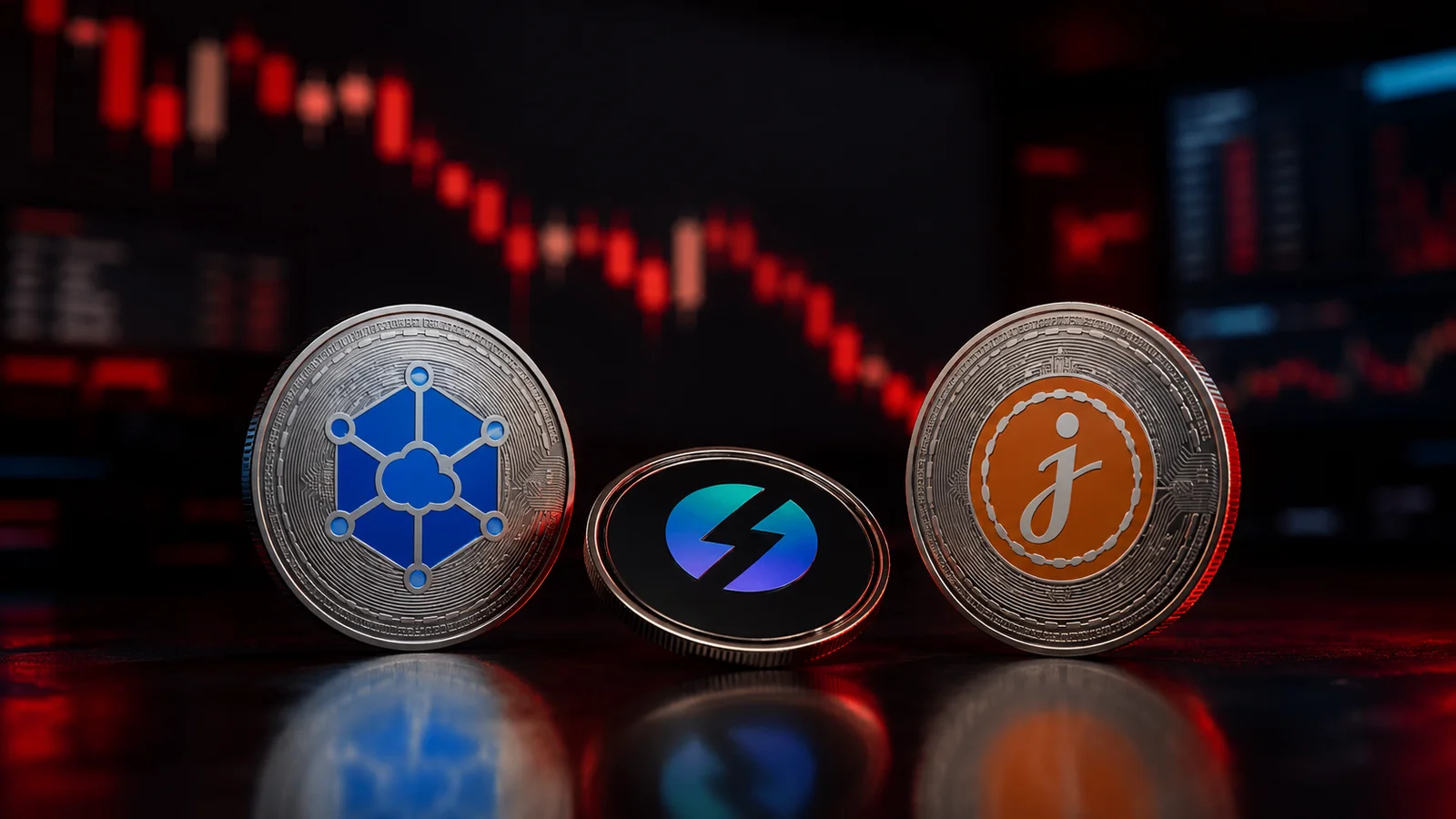
Goldman Sachs is acquiring NEOS Investments, which manages investment products linked to Bitcoin and Ethereum, in a deal worth up to $2.25 billion. Once completed, the transaction will bring three crypto income ETFs onto the Wall Street giant’s asset management platform.According to Goldman Sachs’ August 12 announcement, NEOS manages $30 billion across 19 ETFs. The acquisition will be financed with cash and equity, with the final consideration subject to certain performance and service commitments. The transaction is expected to close in the first quarter of 2027. It remains subject to regulatory approval and other customary closing conditions.NEOS manages three crypto income ETFsThe acquisition includes three ETFs that provide indirect exposure to Bitcoin and Ethereum prices. According to NEOS’ latest fund data, these products manage approximately $1.29 billion in combined assets.The NEOS Bitcoin High Income ETF (BTCI) is the group’s largest crypto product, with approximately $1.10 billion in net assets. Instead of investing directly in Bitcoin, the fund gains exposure through spot Bitcoin ETFs and other Bitcoin-linked exchange-traded products.The NEOS Boosted Bitcoin High Income ETF (XBCI) manages approximately $111.3 million. The fund uses Bitcoin ETPs and options to target notional exposure equal to roughly 150% of the BTCI strategy.On the Ethereum side, the package includes the NEOS Ethereum High Income ETF. Trading under the ticker NEHI, the fund has approximately $79.2 million in net assets.NEHI does not hold Ether directly. It gains indirect price exposure through Ethereum ETPs and related options, meaning the acquisition will not make Goldman Sachs a direct holder of Bitcoin or Ethereum.Funds target income from Bitcoin volatilityNEOS’ crypto ETFs use options strategies to pursue high monthly distributions. The funds seek to generate premium income by selling call options on Bitcoin- and Ethereum-linked products.As of the end of July, BTCI had an annualized distribution rate of 26.73%. The corresponding rate stood at 40.84% for XBCI and 32.93% for NEHI.However, distribution rates do not represent the funds’ total returns. NEOS states that payments may include option premiums, dividends, capital gains, interest income and return of capital.High distributions have also failed to fully offset declines in crypto prices. Based on market price, BTCI posted a one-year total return of negative 40.95% as of June 30.XBCI, which began trading in February 2026, had lost 29.38% since its launch by the same date. NEHI’s market-price total return since inception stood at negative 42.40%.These figures show that options income does not fully protect investors against sharp declines in Bitcoin and Ethereum prices. Selling call options can also limit the funds’ participation in crypto price gains during rising markets.Goldman Sachs’ ETF platform will reach $130 billionThe NEOS acquisition will strengthen Goldman Sachs’ position in the rapidly expanding active ETF market. The addition of NEOS and the previously acquired Innovator Capital Management will bring the bank’s active ETF assets to $80 billion.Goldman Sachs’ global ETF platform will grow to a combined $130 billion. Once the transaction closes, the company will rank among the eight largest active ETF managers in the United States.According to Goldman Sachs, ETFs that use derivatives to generate income now manage approximately $180 billion. The category has recorded a compound annual growth rate of more than 70% since 2021.NEOS co-founders Troy Cates and Garrett Paolella will join Goldman Sachs Asset Management as partners after the acquisition closes. NEOS’ existing employees are also expected to move to Goldman Sachs.Goldman Sachs expands its crypto ETF plansGoldman Sachs filed with the SEC in April for its first crypto ETF, designed to provide exposure to Bitcoin prices while generating income from options. The NEOS acquisition will give the bank three existing products that use similar strategies and are already trading.The crypto funds account for approximately 4.3% of NEOS’ total $30 billion in assets. The broader active ETF and options-income markets remain the primary focus of the acquisition, although the Bitcoin and Ethereum products are among its most notable components.Once the transaction closes, Goldman Sachs will bring income ETFs linked to Bitcoin, Ethereum, U.S. equities, bonds, gold and real estate onto the same platform. The bank will therefore expand its presence in crypto-linked investment products through an established fund lineup managing approximately $1.29 billion in crypto ETF assets.

The U.S. Securities and Exchange Commission’s Division of Investment Management has made it easier for Franklin Templeton’s traditional funds to invest in its blockchain-based money market fund, FOBXX. The decision could expand the institutional use cases of BENJI tokens, which represent shares in the fund holding approximately $726 million in assets.According to the SEC’s letter dated August 12, the agency’s staff will not recommend enforcement action under the custody arrangement proposed by Franklin Templeton. This means mutual funds and ETFs within the Franklin Templeton fund family can add FOBXX shares to their portfolios if they meet the specified conditions.The decision provides an important example of how custody rules designed for physical securities can apply to fund shares represented on a blockchain. However, the letter does not amount to broad SEC approval for BENJI or introduce a new rule covering all investment companies.Franklin Templeton funds can use BENJIThe Franklin OnChain U.S. Government Money Fund operates under the ticker FOBXX as a government money market fund. It invests primarily in U.S. government securities, cash and repurchase agreements fully collateralized by government assets.Each BENJI token represents one share in FOBXX. According to Franklin Templeton’s product page, the fund aims to generate income while preserving capital and liquidity; it also seeks to maintain a stable share price of $1.Under the arrangement submitted to the SEC, Franklin Templeton funds will be able to use FOBXX for cash management. Potential uses also include investing collateral received through securities lending transactions.Features such as hourly net asset value calculations, intraday trading and faster transaction processing could offer operational advantages over conventional money market instruments.Franklin Templeton will retain control of private keysFranklin Templeton Investor Services maintains FOBXX’s official shareholder records. Its system combines the company’s traditional recordkeeping infrastructure with transaction data recorded on public blockchains.Franklin Templeton will create a separate Stellar blockchain wallet for every fund investing in FOBXX. The company will also retain control of the private keys associated with these wallets.The custody system will use multi-signature technology, multi-party computation and offline recovery capabilities. The transfer agent will be able to correct erroneous or unauthorized transactions, freeze or migrate wallet records and restore official ownership records when necessary.SEC staff found the structure sufficiently similar to existing custody arrangements that use electronic book-entry records instead of physical certificates. The agency also required independent accountants to verify the funds’ holdings at least three times per fiscal year, with at least two of those checks conducted without prior notice.What does the SEC decision mean for tokenization?The decision strengthens the connection between Franklin Templeton’s traditional investment products and its tokenized money market fund. The company’s ETFs and mutual funds will be able to allocate part of their cash balances directly to a blockchain-based fund.BENJI was previously added to an off-exchange collateral program for institutional investors on Binance. The tokenized fund shares have also been integrated with the institutional infrastructure of Kraken parent company Payward and MoonPay.The latest SEC letter opens a different use case from BENJI’s role on crypto platforms. Franklin Templeton’s U.S.-registered traditional funds can now invest directly in FOBXX under the specified custody and oversight conditions.Still, the SEC has not issued a general exemption covering all blockchain-based funds. The no-action letter applies only to the structure and commitments presented by Franklin Templeton; it does not constitute legal approval or a binding regulation.

U.S. inflation came in line with expectations in July, prompting only a limited reaction across the crypto market. Bitcoin held near $64,000 following the release but failed to begin a strong rally. Bitcoin was trading at around $63,900 as of 4:30 p.m. Turkish time. BTC was down approximately 0.4% over the previous 24 hours after moving between an intraday low of $63,204 and a high of $64,298.Ethereum hovered near the $1,900 mark. With the U.S. inflation figures matching forecasts, Bitcoin and altcoins avoided a sharp repricing in either direction.U.S. inflation matched expectationsAccording to the U.S. Bureau of Labor Statistics, the Consumer Price Index rose 0.1% month over month in July. Annual inflation eased from 3.5% in June to 3.4%.Market expectations also pointed to a monthly increase of 0.1% and an annual rate of 3.4%. The report therefore did little to change investors’ existing positions on the interest-rate outlook.Core CPI, which excludes volatile food and energy prices, increased 0.2% month over month in July. Annual core inflation slowed from 2.6% to 2.5%.The energy index fell 1.5% during the month, while gasoline prices declined 2.9%. Shelter costs rose 0.1% and accounted for roughly two-thirds of the monthly increase in headline inflation.Despite the slowdown, annual inflation remains above the Fed’s 2% target at 3.4%. This prevented uncertainty surrounding monetary policy from disappearing entirely.Bitcoin remains below $64,000Bitcoin was trading between $63,700 and $64,000 before the inflation report. The price briefly fluctuated following the release but remained within its established trading range.The figures matching expectations contributed to BTC’s muted reaction. A lower-than-expected inflation reading could have reduced the probability of another rate increase more decisively and supported risk appetite across crypto assets.A higher-than-expected result could have pushed U.S. Treasury yields and the dollar higher, placing pressure on Bitcoin. Since the report triggered neither scenario, BTC remained close to $64,000.Bitcoin has traded within a broad range of $62,000 to $66,000 in recent weeks. The inflation report did not provide a strong enough catalyst to push BTC beyond those boundaries.The first resistance levels to watch in the short term are $64,300 and $65,000. If selling pressure increases, attention could return to $63,200, followed by the $62,000 region.Ethereum hovers around $1,900Ethereum traded near $1,900 following the inflation report. ETH moved between $1,855 and $1,919 over the previous 24 hours.Holding above $1,900 will be important for Ethereum’s short-term recovery. If the level is lost, traders could begin watching $1,850 and $1,800 as potential support areas.The broader altcoin market also showed a limited response. Some lower-cap tokens recorded independent gains, but the inflation report did not spark a market-wide wave of buying.Why does the Fed’s decision matter for Bitcoin?Fed funds futures are pricing in an approximately 55% probability that the central bank will leave its policy rate unchanged within the 3.50%–3.75% range at its September 15–16 meeting. That expectation changed only slightly following the inflation report.Keeping rates unchanged could reduce the risk of further monetary tightening for Bitcoin. Higher interest rates and bond yields can draw investors toward yield-bearing traditional assets and weaken liquidity across the crypto market.Expectations of lower interest rates can place pressure on the dollar and Treasury yields, supporting risk assets such as Bitcoin. However, the Fed has yet to signal a rate cut, while inflation remains above its target.The U.S. economy’s loss of 23,000 jobs in July is another factor that could make it harder for the central bank to raise rates. The Fed is now trying to balance elevated inflation against signs of weakness in the labor market.Which data will the crypto market watch next?The next major event for crypto investors will be the U.S. Producer Price Index, due on August 13. Producer inflation can provide information about the cost pressures facing businesses and the possible direction of consumer prices in the coming months.The Fed will also receive August employment and consumer inflation figures before its September meeting. Those reports could shift the balance between a rate increase and another hold.The renewed rise in oil prices is also being closely monitored by the crypto market. If higher energy costs feed into August inflation, concerns about tighter Fed policy could return.Bitcoin’s short-term outlook remains tied to the $62,000–$66,000 range. Although the inflation report helped limit downside risks, a lasting break above $66,000 may be needed before a new upward trend can emerge.

The Bank of Russia has added Bitcoin, Ether and Tether’s USDT stablecoin to the list of crypto assets eligible for public trading on domestic exchanges. Russian investors will be able to buy and sell these assets through the country’s regulated market.Trading will not begin immediately. The decision appears in a draft regulation that remains open for public consultation, while exchanges and intermediaries still need to complete the technical preparations.Bitcoin, Ether and USDT met the requirementsAccording to the Bank of Russia’s August 11 announcement, the regulator selected eligible cryptocurrencies using three main criteria. It considered market capitalization, average daily trading volume and pricing history on foreign platforms.A crypto asset must have at least five years of pricing history on foreign exchanges to qualify. Russia’s new crypto law also requires an average market capitalization above 5 trillion rubles and an average daily trading volume exceeding 1 trillion rubles over the previous two years.Based on these criteria, Bitcoin, Ether and USDT became the three liquid assets available to non-qualified investors. Smaller altcoins were excluded from the initial list.The Bank of Russia may temporarily approve other cryptocurrencies for public trading for periods of up to six months. Qualified investors will be able to purchase any cryptocurrencies offered on exchange or over-the-counter markets without an investment cap.Retail investors face a 300,000-ruble limitThe new rules introduce an annual purchase limit of 300,000 rubles for non-qualified investors. The limit will apply separately to each broker, crypto exchange or asset manager.Investors must pass a knowledge test before making transactions. Intermediaries will also need to inform customers about crypto market volatility and the risk of losing their capital.The regulator aims to restrict retail access to highly volatile tokens with insufficient liquidity. Bitcoin, Ether and the dollar-backed USDT will therefore dominate the market during its initial phase.The draft regulation will remain open for public consultation until August 24. The Bank of Russia will review the submitted feedback before publishing the final rules.Crypto trading could begin in NovemberRussian President Vladimir Putin signed the country’s Digital Currencies and Digital Rights law on August 4. Most of the legislation will take effect on September 1, 2026.The law classifies cryptocurrencies as property and allows investors to defend their ownership rights in court. It also creates a legal framework for crypto trading, custody and authorized cross-border transactions.However, using cryptocurrencies to pay for goods and services within Russia will remain prohibited. The new framework permits crypto assets for investment purposes without recognizing them as legal tender.Bank of Russia First Deputy Governor Vladimir Chistyukhin said regulated crypto transactions could begin in November. The Moscow Exchange also aims to launch Bitcoin, Ether and USDT trading before the end of 2026.Licensing requirements will take effect on July 1, 2027. From that date, brokers, crypto exchanges and digital custody providers will need authorization from the Bank of Russia to operate.Meta Title: Russia Approves Bitcoin, Ether and USDT TradingMeta Description: The Bank of Russia has approved Bitcoin, Ether and USDT for trading on domestic exchanges under its new regulated crypto framework.Keywords: Russia, Bitcoin, Ether, USDT, Bank of Russia, cryptocurrency, Moscow Exchange