Altcoin
このページでは、Altcoinの最新ニュースと市場分析を掲載しています。JrKriptoでこのカテゴリの記事、専門家の見解、最新情報をご覧ください。暗号資産のトレンドと動向を詳しくお伝えします。
このページでは、Altcoinの最新ニュースと市場分析を掲載しています。JrKriptoでこのカテゴリの記事、専門家の見解、最新情報をご覧ください。暗号資産のトレンドと動向を詳しくお伝えします。
Binance, one of the world's largest cryptocurrency exchanges, announced that it will delist certain trading pairs to maintain the quality of trading in the spot market. In an official statement published on February 5, 2026, the company announced that a total of 20 spot trading pairs will cease trading as of 11:00 AM UTC on February 6, 2026. Two cryptocurrency pairs will also be removed from the futures trading platform.Binance Prepares for DelistingIn its statement, Binance emphasized that this decision is a result of periodic liquidity and trading volume analyses conducted on the platform. The company stated that each trading pair is regularly evaluated in terms of market depth, volume stability, and user experience, and pairs that do not meet the criteria are delisted. The following trading pairs will be delisted: AUDIO/BTC, BB/FDUSD, BERA/FDUSD, EIGEN/BTC, FIDA/BTC, HEI/BTC, IOTX/ETH, KERNEL/FDUSD, MANTA/BTC, MTL/BTC, NEAR/FDUSD, PEOPLE/FDUSD, RENDER/FDUSD, RONIN/BTC, SAPIEN/BNB, SCR/BTC, S/ETH, S/FDUSD, SUSHI/BTC, and VANA/FDUSD. Spot trading in these pairs will be completely suspended after the specified date and time. Binance states that such delisting decisions are mostly driven by low trading volume, weak liquidity, and conditions that negatively impact market efficiency. The company says these steps aim to enable users to trade in a fairer, more transparent, and deeper market environment. On the other hand, delisting a spot trading pair does not mean that the token in question is completely removed from the Binance spot market. Users will be able to continue buying and selling the same token through other trading pairs. For example, a token removed from the BTC pair can continue to be traded through the USDT or FDUSD pair.The exchange also announced that the Spot Trading Bots services associated with these trading pairs will also be disabled on the same date and time. Binance warned investors using automated trading bots about potential problems. Users were advised to close their active bots or update the relevant settings before the delisting date to avoid the risk of loss. Otherwise, it was reminded that unexpected positions or losses may arise due to the bots stopping.Two pairs also being delisted from futures tradingIn addition to the spot market delisting decision, Binance announced that it will also delist the RVVUSDT and YALAUSDT USDⓈ-M perpetual contracts from its futures trading platform, Binance Futures; All positions in these contracts will be subject to automatic settlement on February 10, 2026 at 12:00 PM and will then be completely delisted from the platform.Market analysts point out that such delisting announcements can often create selling pressure on the relevant tokens in the short term. Investors, especially those trading in low-volume pairs, warn that price volatility may increase with decreased liquidity. However, according to experts, these adjustments by Binance are paving the way for a more stable, reliable, and sustainable spot market structure across the platform in the long term.Binance has conducted similar assessments regularly in the past and has adhered to dynamic listing policies to adapt to market conditions.
Ripple, a global player in digital asset management, has made a significant breakthrough through its Ripple Prime service platform for institutional investors. The company has achieved its first direct integration in the decentralized finance (DeFi) space with the Hyperliquid platform. This step is seen as a tangible reflection of Ripple Prime's vision to bring together both traditional financial markets and on-chain DeFi products under a single infrastructure. According to a Ripple Prime spokesperson, the Hyperliquid integration provides users with access to on-chain derivatives markets. This allows clients to manage their positions on Hyperliquid alongside other asset classes they trade through Ripple Prime. These assets include cryptocurrency exchanges as well as traditional instruments such as currencies and fixed-income securities. Systemically, Ripple Prime remains the counterparty for its clients. Users transact through Ripple Prime, not directly with Hyperliquid or another exchange. This structure allows for the management of positions in different markets within a single risk and collateral framework. This eliminates the need for users to perform separate collateral or risk calculations for each platform. Processes are becoming simpler and more secure.The path to Institutional DeFiRipple Prime's move coincides with a period when interest in DeFi at the institutional level is rapidly increasing. In a statement, the company's international CEO, Michael Higgins, said, "As Ripple Prime, we continue to lead the way in combining decentralized finance with traditional prime broker services. This strategic expansion will offer our clients broader access to liquidity, higher efficiency, and innovation."Ripple Prime was rebranded following the $1.25 billion acquisition of Hidden Road, completed in October 2025. Hidden Road was known as an unbanked prime broker operating in multiple asset classes. Following the acquisition, the rebranded Ripple Prime currently serves more than 300 institutional clients and, according to Ripple's website, handles over $3 trillion in transaction volume annually.It is stated that Ripple Prime's transaction volume has tripled since the announcement in 2025. The platform offers services including exchange, prime brokerage, and financing operations. Ripple's native digital asset, XRP, along with its stablecoin RLUSD, plays an active role in the solutions offered on this infrastructure.In recent years, Ripple has attracted attention not only for its activities in the field of payment solutions but also for the blockchain-based technologies it integrates into the corporate finance ecosystem. The company aims to revolutionize cross-border payments in terms of speed, cost, and transparency, acting as a bridge currency for banks and financial institutions through the XRP Ledger. In addition, it focuses on developing stable digital asset solutions with its stablecoin called RLUSD.XRP is currently trading around $1.56.

Standard Chartered advises investors to focus on quality blockchain projects, ignoring short-term fluctuations in the crypto market. The bank sees Ethereum and Solana as top layer-1 options due to their scalability, regulatory advantages, and long-term benefit potential. Market downturn creates opportunitiesThe recent sharp sell-off in the crypto market has reshaped the relative values of assets, but according to Geoff Kendrick, Standard Chartered's Head of FX and Digital Assets Research, this is a perfect buying opportunity. Kendrick says, "I'm a buyer in this digital asset downturn. Moreover, this is the beginning of a divergence period where quality projects are starting to come to the fore." The bank urges investors not to get caught up in short-term volatility and to "invest in quality." They predict that Ethereum will surpass Bitcoin, particularly due to its dominance in DeFi, scaling updates, and increasing regulatory clarity.Kendrick, who describes Ethereum as a "quality project," shares the same view for Solana: "Like Ethereum, Solana is also quality. Invest in quality." This approach points to a phase where real gains will be made as the market eliminates the weakest links in its risk-averse mode.Revised price predictions for SolanaStandard Chartered has lowered its end-of-2026 price prediction for Solana (SOL) from $310 to $250. This reduction is attributed to the time required for the network's next major use case to mature: "Solana's new dominant use case will take time." Nevertheless, long-term expectations have been raised; the bank predicts that SOL could reach $400 by the end of 2027, $700 in 2028, $1,200 in 2029, and $2,000 by the end of 2030.This optimism stems from Solana's ultra-low-cost and high-volume architecture. The bank believes that Solana will move away from meme coins and become a leader in micro-payments and stablecoin transactions. While transaction volume in SOL-stablecoin pairs is increasing on Solana's DEXs, the circulation speed of stablecoins is 2-3 times faster than on Ethereum. Kendrick says, "Solana will dominate micro-payments with AI-based applications and stablecoin transactions."The SOL price is around $96.2 as of February 4, 2025. Micro-payments will propel Solana forwardSolana's transaction fees average around $0.0007; this is revolutionary compared to the $0.015 fees of competitors like Base. This advantage makes previously uneconomical micro-payments possible and creates new AI-focused markets. The bank monitors the validity of this thesis by tracking stablecoin transfer volume and circulation speed. If the meme coin discount is lifted, Solana will surpass Bitcoin and approach Ethereum between 2027-2030.Market commentators also support this view. Investor Mike Alfred describes the downturn as a "standard risk-aversion move" and says that quality projects will bounce back. Developer Mike Ippolito, criticizing the overly bearish market commentary for ETH and SOL, describes layer-1s as "the Amazon or Google of our time": with large markets, high barriers to entry, and fee revenue potential.According to Standard Chartered, while Solana will lag behind Ethereum in 2026 and 2027, it will catch up with its scale, utility, and cost advantages. The current volatility is not a warning, but a screening mechanism; those who invest in quality projects will be rewarded. Kendrick's market-to-G metric (similar to P/E for crypto) shows that Solana is no longer trading at a discount.
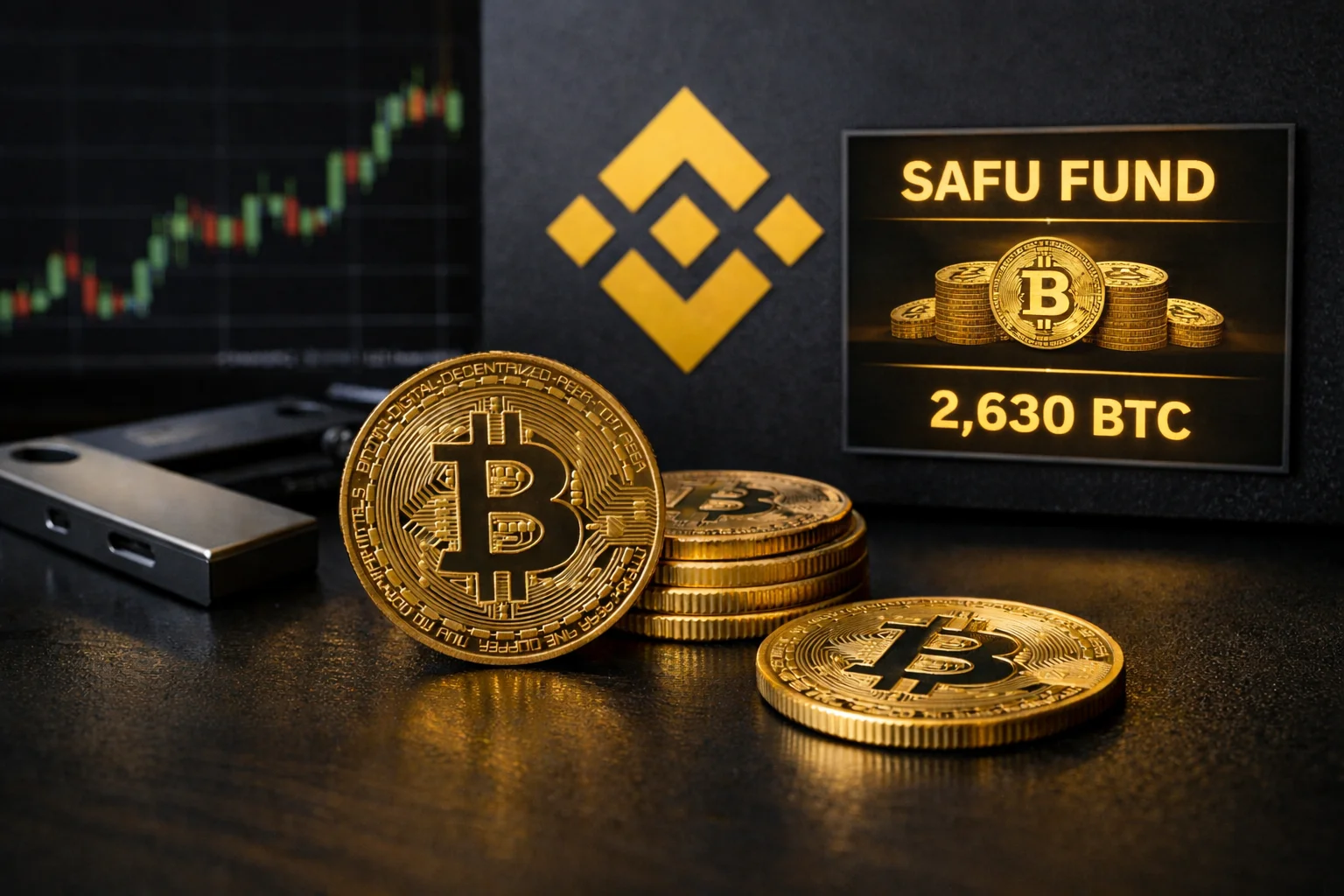
Binance, one of the world's largest cryptocurrency exchanges, announced the completion of its second major Bitcoin (BTC) purchase for its SAFU (Secure Asset Fund for Users) fund, created to protect user funds. The company, which is gradually implementing its plan to convert its stablecoin assets, totaling $1 billion, into Bitcoin, stated that it will purchase additional BTC if the fund's value falls below $800 million. The SAFU fund was initially established in 2018 as an "insurance fund" against market volatility and security vulnerabilities. Its funding comes from small transaction fees deducted from transactions on the Binance platform. The company's latest move marks a significant change in the fund's structure: Binance now prefers to hold fund assets in Bitcoin rather than stablecoins. Recently, an additional 1,315 Bitcoins were added to the fund's wallet, bringing the total Bitcoin balance for SAFU to 2,630. While it was stated that these transfers did not have a direct impact on market prices, the transactions were carried out directly between the company's internal wallets, not via market orders. At the time of the transfer, the price of Bitcoin was hovering around $76,000.Binance plans to convert all $1 billion worth of stablecoins in its SAFU fund to Bitcoin by the end of the month. This is thought to both preserve the long-term value of the fund and reflect optimistic expectations regarding the value of Bitcoin. In the market, this move was interpreted as Binance once again emphasizing its confidence in the cryptocurrency ecosystem.Clear response to bankruptcy rumorsBinance is also dealing with bankruptcy claims that have flared up again in recent weeks. The company stated that it regularly publishes proof of reserves reports supporting user deposits and that these reserves more than cover user balances. It was also explained that the recent short-term withdrawal problems were due to technical reasons and that the issue has been resolved. Binance CEO Changpeng “CZ” Zhao dismissed claims circulating on social media that the exchange was "going bankrupt" as "FUD" (fear, uncertainty, doubt) and warned users against misinformation spread through fake images. On-chain data also shows no significant capital outflow from the exchange. According to CryptoQuant data, the exchange still holds 656,736 BTC in its wallets. Furthermore, the withdrawal of 6,156 BTC from Binance's cold wallets in the last week was reported as part of normal operational activities. Despite market fluctuations, Binance's reserves show no net decrease. Analysts note that increased investments by large investors (whales) indicate continued confidence in the exchange. Binance's native token, BNB, is trading at around $755. The company is also expanding its SAFU fund to guarantee the safety of user assets in the event of potential market crashes or technical glitches.
The Moscow Exchange (MOEX), Russia's largest financial market platform, is preparing to expand its presence in the cryptocurrency market. The exchange plans to offer ruble-denominated cash-settled futures contracts for Solana (SOL), XRP, and Tron (TRX). These new products will be added to the exchange's existing portfolio of futures contracts for Bitcoin (BTC) and Ethereum (ETH). According to MOEX's plan, in the first phase, dedicated indices will be created for these three altcoins. These indices will serve as the underlying assets for future futures contracts. No physical delivery of cryptocurrencies will take place; all transactions will be completed in rubles using a cash settlement method. However, due to Russian regulations, such products will only be accessible to qualified investors. Maria Silkina, Senior Director of the Derivatives Markets Group at the Moscow Stock Exchange, stated in an interview with RBC Radio, a well-known Russian economic publication, “The new indices will provide investors with access to the performance of crypto assets in rubles. This is part of our goal to build a bridge between the traditional financial system and the digital asset world.”Perpetual Futures Contracts on the AgendaMOEX is not only considering altcoin indices. The exchange is also evaluating offering perpetual futures contracts for Bitcoin and Ethereum. Such contracts give investors the flexibility to maintain or change their positions without expiration. These instruments, which are quite popular in crypto exchanges worldwide, are frequently used by professional investors in hedging strategies.Crypto Regulatory Efforts in RussiaRussia has focused on regulating crypto markets in recent months. Under new legislation planned to come into effect by 2027, individual investors' annual crypto purchase limits are expected to be capped at $4,000. In addition, the Russian Central Bank announced that it would create a new framework for crypto investors by 2026.Nevertheless, the country remains under pressure from ongoing geopolitical tensions and sanctions on the crypto sector. BitRiver, Russia's largest mining company, which was sanctioned by the US in 2022, is facing bankruptcy due to financial difficulties in recent months. The arrest of the company's founder on tax evasion charges further increased uncertainty in the sector.The Russian government also declared WhiteBIT, a popular crypto exchange, an "undesirable entity" for allegedly supporting the Ukrainian military. This severely restricts Russian investors' access to international platforms.Russia's influence on the crypto marketMOEX's new products are seen as a significant sign that Russia is repositioning itself in the global crypto market. The Russian financial sector, overshadowed by Western sanctions, is seeking to create a new liquidity channel through digital assets. Ruble-based futures aim to both add depth to the country's capital market and offer a local solution against external financial pressures.
Tether, the world's largest stablecoin company, is making headlines with a new project aimed at making Bitcoin mining more accessible, transparent, and decentralized. The company has taken a significant step in the cryptocurrency mining ecosystem by introducing its open-source operating system called "MiningOS" (MOS). In an announcement made at the Plan ₿ Forum in El Salvador on February 2, 2026, Tether stated that MOS is designed to manage mining operations of all scales, from small home setups to massive industrial enterprises. CEO Paolo Ardoino stated that the project's core goal is to redefine "openness, flexibility, and freedom" in the mining sector.Decentralized architecture, full controlMiningOS features a peer-to-peer architecture that allows miners to manage their operations without needing a central service. This allows users to directly control the performance of their devices without handing over their data to third-party platforms. The system provides complete visibility by integrating hardware management, energy optimization, device health, and facility-level infrastructure elements into a single operational layer.Tether has made the source code for MOS openly available under the Apache 2.0 license. This means the operating system can run independently of any hardware manufacturer. Furthermore, the system is built on Holepunch protocols, creating a completely independent infrastructure.A New Standard in MiningTether CEO Paolo Ardoino emphasized in a statement that MiningOS is not just software, but a holistic operating platform encompassing all mining operations. Ardoino stated, “We want to make Bitcoin mining infrastructure more open, modular, and accessible. This system can work seamlessly at any scale, from individual miners to globally operating industrial facilities.”The company also announced the “Mining SDK,” a software development package that forms the basis of the system. It was stated that this framework will be developed in collaboration with the open-source community in the coming months and made accessible to all users.Tether’s Expanding VisionIn recent years, Tether has stood out not only with its USDT stablecoin but also with its investments in various areas of cryptocurrency infrastructure. The company, which announced a net profit exceeding $10 billion in 2025, operates in a wide range of areas, from mining and payment solutions to tokenized commodities and regional stablecoins.Recently, Tether, which has also come to the fore with a new US-based stablecoin called “USAT” and digital asset projects tied to commodities such as gold, aims to have a say in mining, one of the fundamental building blocks of the crypto industry, with MiningOS.MOS, which stands out with its open-source approach, is seen as revolutionary in a sector where mining software is generally sold in a closed-box format. According to Tether, this system will allow new players to enter the market without high licensing fees or hardware restrictions.Moreover, thanks to MOS's ability to optimize energy usage and monitor device health in real-time, it aims to achieve both increased efficiency and environmental sustainability.This step taken by Tether with MiningOS can make Bitcoin mining fairer and more open, giving communities that want to compete with centralized structures a significant advantage.
ING Deutschland, one of Germany's leading retail banks, now allows its clients to invest in exchange-traded products (ETPs) and exchange-traded notes (ETNs) linked to popular cryptocurrencies such as Bitcoin, Ethereum, and Solana. This represents a significant step by the bank to make the crypto market more accessible to individual investors using traditional financial infrastructure. According to information on the bank's website, the products offered are physically backed by well-known issuers such as 21Shares, Bitwise, and VanEck, and each product directly tracks the performance of a specific crypto asset. These products can be bought and sold on regulated exchanges via ING's Direct Depot investment platform, just like stock transactions. With this new move, ING aims to reduce the technical challenges associated with crypto investments. The bank states that clients can invest in crypto products without having to deal with third-party wallet systems or manage their private keys. VanEck Europe CEO Martijn Rozemuller also stated, “Many investors are looking for solutions that are compatible with their existing portfolio structures, reliable, and have transparent costs. This collaboration brings crypto access exactly where investors want it to be: securities accounts.”The issue of taxation is also noteworthy for investors. According to German regulations, investments in these ETPs are treated similarly to direct crypto asset purchases. This can mean exemption from capital gains tax for positions held for more than one year. “Cryptocurrencies have no intrinsic value” warningHowever, ING also strongly emphasizes the risks of the investment. In its statement, the bank stresses that crypto-related products carry high volatility, that the entire investment can be lost in the event of the issuer's bankruptcy, and that liquidity problems, market manipulation, and regulatory uncertainties also pose serious risks for investors. ING's information page on crypto assets states the following:“Cryptocurrencies are speculative products with no intrinsic value. Their prices are largely based on investor psychology, and the same effects are decisive on the values of crypto products traded on exchanges.”ING, the giant Dutch bank with roots dating back to the 18th century, has taken various steps in the field of digital assets in recent years. Last September, ING formed a consortium with eight European banks to develop a euro-based stablecoin. With this initiative, the bank aims to create a “reliable digital payment standard” across Europe.
Coinbase has announced an update to its asset listing roadmap, stating that it has added DeepBook (DEEP) and Walrus (WAL) tokens to its review process. The update indicates that these assets are not yet open for trading and are only under review. Coinbase explicitly warns investors that DEEP and WAL tokens should not be sent to the exchange before an official listing announcement is made. The exchange stated that two fundamental conditions must be met for a token to be opened for trading: sufficient market-making support and complete technical integration. Coinbase specifically reminded investors that early transfers before these conditions are met could result in permanent asset loss. Therefore, inclusion in the roadmap does not automatically mean listing.Coinbase's roadmap updates are among the early-stage information shared with investors as part of the platform's transparency policy. Adding an asset to this list indicates that it has passed the initial stages of legal compliance, regulatory requirements, and basic technical security checks. However, this process does not mean that a final listing decision has been made. There are previous examples where the listing process for some assets added to the roadmap was extended or completely canceled.DeepBook (DEEP) is positioned as a protocol focusing on decentralized finance infrastructures, specifically aiming to support on-chain liquidity and order book-based transaction models. The project aims to create more transparent and efficient market structures in DeFi applications. Walrus (WAL), on the other hand, offers a structure focused on Web3 and blockchain-based data storage and access solutions; the project aims to provide scalable and low-cost data infrastructure for decentralized applications. Short-term price increaseFollowing the update, a short-term volatility was observed in the price of DeepBook (DEEP). After the continued decline in value in recent weeks, DEEP recorded an increase of approximately 18% in the 24-hour period, trading in the range of $0.03-$0.035. Trading volume also increased during the same period. A similar price reaction was observed in Walrus (WAL). WAL rose approximately 9% to trade around $0.097 following Coinbase's roadmap update. However, the token is showing a weaker performance on the weekly and monthly charts compared to previous periods. Besides DEEP and WAL, Coinbase's updated roadmap includes many other projects developed on different blockchain networks. These include various assets from the Ethereum, Solana, Sui, Hyperliquid, and MegaETH ecosystems. Notable projects include Zama (ZAMA), Tria (TRIA), Infinex (INX), Doodles (DOOD), Moonbirds (BIRB), and Hyperliquid (HYPE).
SOL Technical AnalysisSolana started the new year strong. Whales have continued to accumulate SOL since the beginning of the year, indicating that there is still strong confidence in the market. As transaction volume and the number of users on the network increase, Solana’s steps in areas such as DeFi and prediction markets stand out. As usage grows, network activity remains vibrant. All these developments may support potential moves on the technical side. Solana Turn Zone On the SOL daily chart, a clear double bottom structure stands out. The 93 – 100 band, which previously produced a strong reaction, has worked once again. The same region also perfectly overlaps with the Fibonacci retracement area where a reaction is expected, making the bounce technically meaningful.For this structure to remain valid, the 100 – 104 region is critical. As long as the price stays above this band, the probability of continuation of the reaction remains higher. In this scenario, 123 stands out as the first target. Subsequently, the 151 – 163 band is followed as the main target zone.On the downside risk side, closes below 93 break this double bottom structure. In such a scenario, selling pressure deepens and the 74 region comes back into focus.In summary;Above 100 – 104 → double bottom holds, reaction continuesTargets: 123 → 151 / 163Below 93 → structure breaks, risk increasesThese analyses, which do not provide investment advice, focus on support and resistance levels that are thought to create short- and medium-term trading opportunities depending on market conditions. However, the responsibility for trading and risk management belongs entirely to the user. In addition, it is strongly recommended to use stop loss for the positions shared.
According to CoinShares' weekly report, investor appetite for global cryptocurrency investment products has weakened significantly. Outflows from crypto funds offered by major asset managers such as BlackRock, Grayscale, Fidelity, and Bitwise accelerated for the second consecutive week, with a total net outflow of $1.7 billion recorded last week. This has turned the cumulative flow negative since the beginning of the year, bringing the total outflow to $1 billion by 2026. The strong redemptions seen in the last two weeks have also dragged down total assets under management. According to CoinShares data, assets under management in cryptocurrency investment products have decreased by $73 billion since their peak in October 2025. CoinShares Research Director James Butterfill attributes this deterioration in investor sentiment to a combination of macroeconomic and intra-market factors. According to Butterfill, the appointment of a more hawkish Fed chairman in the US, the continuation of whale selling associated with the cryptocurrency's four-year cycle, and increasing geopolitical uncertainty are among the main factors suppressing risk appetite. The center of outflows is the US, with the bulk of the burden on BitcoinThe regional distribution shows that the selling pressure originated mainly from the US. Last week, $1.65 billion of the global total flowed out of US investment products. Canada and Sweden were also among the countries that recorded net outflows, with $37.3 million and $18.9 million respectively. In contrast, Switzerland ($11 million) and Germany ($4.3 million) were among the rare markets that recorded net inflows, albeit limited. Looking at it on an asset basis, the picture becomes even clearer. The majority of outflows were concentrated in Bitcoin products. Bitcoin-focused funds, especially led by BlackRock's IBIT product, saw a net redemption of $1.32 billion on a weekly basis. Ethereum products saw an outflow of $308 million. The breakdown of altcoins in the table also shows that the selling pressure was not limited to majors. According to CoinShares data, last week there was a net outflow of $43.7 million from XRP products and $31.7 million from Solana products. While a $13.5 million pullback was observed in multi-asset products, it was noted that risk appetite for altcoin baskets weakened significantly. In contrast, some smaller-scale products experienced a limited positive divergence; Chainlink products recorded $0.5 million inflows, and the “Other” category saw $8.6 million inflows. Litecoin and Sui, however, did not show any significant directional movement on a weekly basis.Some “niche” products stand outDespite the negative picture, some products were exceptions. Short Bitcoin products attracted a net inflow of $14.5 million, reflecting investors' search for hedging against the decline. It is stated that the increase in assets under management in this segment has reached 8.1 percent since the beginning of the year. In addition, some thematic products classified as “Hype” by CoinShares also attracted attention with an inflow of $15.5 million. According to the report, this interest was supported by the increased on-chain activity towards tokenized precious metals. The sharp pullback on the price front makes the disruption in fund flows more understandable. In the last week, Bitcoin has lost approximately 12% of its value, while Ethereum has fallen by about 22%. In this environment of weak liquidity, investors' risk-averse movement towards cash is emerging as one of the key dynamics accelerating fund redemptions. The overall picture indicates a cautious stance prevailing in crypto investment products in the short term. CoinShares highlights that investor sentiment has been negatively impacted by macroeconomic uncertainties and market cycles, while noting that some products continue to attract interest, albeit in limited amounts.
Binance announced that it has decided to delist six altcoins as of February 13, 2026. According to the exchange's official statement, Acala (ACA), Tranchess (CHESS), Streamr (DATA), dForce (DF), Aavegotchi (GHST), and NKN (NKN) will be removed from all spot trading pairs. The decision comes at a time when the market is generally weak, and the tokens in question have experienced sharp price movements in a short period. Binance emphasized that it regularly reviews the digital assets it lists and conducts more comprehensive reviews if certain standards are not met. The statement indicated that numerous criteria, including project team commitment, the level and quality of development activities, trading volume and liquidity, network security, community communication, regulatory requirements, and tokenomic changes, influenced delisting decisions. Unethical behavior, transparency issues, and community perception were also highlighted as part of the evaluation process. Spot trading for the tokens to be delisted will be completely stopped as of February 13, 2026 at 03:00 (UTC). After this date, all open orders in the relevant trading pairs will be automatically canceled. Binance will also gradually discontinue services associated with these assets, such as Trading Bots, Spot Copy Trading, and Convert. Specifically regarding Spot Copy Trading, a warning has been issued that the relevant pairs will be removed as of February 6, 2026, and any unsold balances may be compulsorily liquidated at market price. Significant changes are also in place for futures contracts.Binance Futures will close all positions in contracts for these tokens at 09:00 (UTC) on February 6, 2026, and will implement automatic settlement. Users are advised to manually close their open positions before this date. Binance also reminded users that it may take additional protective measures in parameters such as leverage ratios, funding rates, and collateral requirements in cases of extreme volatility. The process is more complex for borrowing, margin, and portfolio margin. The relevant tokens for Cross and Isolated Margin trading will be completely removed on February 6th. During this process, open positions will be automatically closed, collateral will be used to pay off debt, and assets will be sold at market price if necessary. Binance specifically emphasizes that margin users should close their positions in advance to avoid potential liquidations.The timeline is also clear on the wallet side. Deposit transactions for these tokens will not be reflected in accounts after February 14, 2026. Withdrawal transactions will be completely stopped as of April 13, 2026. Binance stated that under certain conditions, the delisted tokens can be converted to stablecoins, but this is not guaranteed; if conversion is not possible, withdrawals may remain open as long as network availability allows.Average 10% pullback in six tokens after the delisting decisionFollowing the delisting news, data shows that declines for ACA, CHESS, DATA, DF, GHST, and NKN were generally concentrated between 5% and 15%. However, it should be kept in mind that there is already an ongoing downward trend in the market as a whole. Here's how some altcoins reacted to their delisting announcements:
ALT5 Sigma Corporation has taken a significant step toward both share buybacks and expanding its digital asset strategy through comprehensive decisions made by its board of directors. The fintech company, traded on the Nasdaq under the ticker symbol ALTS, is preparing to implement an aggressive capital allocation plan, based on the view that the market's valuation of the company is significantly below its true asset value.ALT5 Sigma WLFI to acquireAccording to a company statement, the board of directors approved a buyback program of up to $100 million for shares trading below net asset value (NAV). Under the program, up to 50 million shares can be repurchased. This amount corresponds to approximately 40% of outstanding shares, or 22% on a fully diluted basis. ALT5 management describes this step as a strategic move to create shareholder value by effectively leveraging the company's strong balance sheet.According to ALT5's latest quarterly financial reports, the company's balance sheet size exceeds $1.6 billion. CEO Tony Isaac argues that the company's shares are trading at approximately a 70% discount to their intrinsic value. According to Isaac, a buyback at these levels would represent a direct and significant increase in value for existing shareholders. Therefore, management views the share buyback as "one of the most efficient uses of capital." A key pillar behind this plan is ALT5's strategic partnership with World Liberty Financial (WLFI). As previously announced, WLFI granted ALT5 a waiver under certain conditions to use its digital assets as collateral. Depending on market conditions, the company plans to leverage this flexibility to support its share buyback program through borrowing. In this context, ALT5 announced a $15 million loan agreement with WLFI. This financing is intended to meet working capital needs and serve as an initial source for implementing programs approved by the board. The agreement is expected to be finalized in the coming days. The company's strategy is not limited to share buybacks alone. The board also approved additional $WLFI token purchases from the open market. ALT5 currently holds approximately 7.3 billion $WLFI tokens, valued at around $1.5 billion according to a recent SEC filing. $WLFI is the governance token of the World Liberty Financial ecosystem and is directly linked to USD1, a stablecoin at the heart of the ecosystem.USD1's market capitalization has seen remarkable growth in recent weeks. From $3.4 billion in mid-January, it quickly surpassed $5 billion. ALT5 management expects demand for $WLFI tokens to grow as USD1 adoption increases. The company emphasizes that even small increases in the token price could contribute tens of millions of dollars to its balance sheet due to the size of its current holdings.ALT5 also aims to expand USD1 integrations into its own digital asset payment and settlement infrastructure. This step is expected to broaden institutional use cases, increase transaction volumes, and create long-term revenue opportunities. The company plans to launch its share buyback program soon, in accordance with applicable securities regulations and market conditions. Management argues that these decisions send a clear message to the market: ALT5 strongly believes in its own shares, its strategic roadmap, and its partnership with World Liberty Financial.
ETC Technical AnalysisEthereum Classic has begun 2026 in a quiet but steady way. Price volatility is low, but many investors still trust this old-school Proof-of-Work blockchain. ETC continues to hold a place in some long-term portfolios as it is often seen as the “unchanged version of Ethereum,” For this reason, it can be useful to look beyond short-term price moves and consider the project’s long-term position as well. Falling Channel Structure Analyzing the chart, we see that the coin is clearly moving inside a descending parallel channel, and this structure is still valid. Price is trading close to the lower boundary of the channel, and upside reactions remain weak for now.Current price: around $11.33This level acts as a minor short-term support, but the key support zone is $11.00 - $10.80.This area aligns with the lower boundary of the channel. If broken, the next major support is $10.53.Resistance levels$11.49 – $11.80 zone. This is the first important resistance area. It works as both a horizontal resistance and a short-term reaction zone.A healthy reversal is unlikely unless it holds above it.$12.20 is the next level of resistance. $12.50 – $12.95 zone. This zone is critical as it matches the upper boundary of the descending channel, making it a key trend-changing level.Summary : A short-term bounce remains possible as long as the $11.00 – $10.80 support zone holds; yet, the main trend is still bearish. Unless price breaks above $12.95, the descending channel structure remains technically intact.These analyses, not offering any kind of investment advice, focus on support and resistance levels considered to offer trading opportunities in the short and medium term according to the market conditions. However,traders are responsible for their own actions and risk management. Morover, it is highly recommended to use stop loss (SL) during trades.
PEPE/USDT Technical Analysis Falling Wedge Formation Analyzing the chart, we see that PEPE is currently forming a falling wedge pattern, which often appears near potential trend changes. The current price is around $0.00000495, and price is trying to hold above the $0.00000467 – $0.00000498 zone. This area is a make-or-break level in the short term.Bullish Scenario The upper resistance line of the wedge is located around $0.00000596. If price can break above this level and holds:First targets: $0.00000712 – $0.00000759If this zone is cleared, the next major resistance is $0.00000924In a broader upside scenario, strong resistance levels are found at $0.00001632 and $0.00002836Bearish Scenario If price drops below $0.00000467 and fails to recover:First support to watch: $0.00000384If this level breaks, price may slide toward the lower wedge boundaryNext support levels: $0.00000279, then $0.00000203Summary : As long as the $0.00000467 – $0.00000498 zone holds, focus remains on a potential breakout above $0.00000596. If no breakout occurs, the risk of price being pushed back down from this range remains on the table.These analyses, not offering any kind of investment advice, focus on support and resistance levels considered to offer trading opportunities in the short and medium term according to the market conditions. However,traders are responsible for their own actions and risk management. Morover, it is highly recommended to use stop loss (SL) during trades.
US-based asset management company WisdomTree announced another significant step in its tokenization strategy by migrating all its tokenized fund products based on real-world assets (RWA) to the Solana network. According to the company, this expansion is one of WisdomTree's most comprehensive non-EVM chain integrations to date.WisdomTree has previously integrated with networks such as Arbitrum and AvalancheWisdomTree has offered its tokenized funds primarily on Ethereum, as well as EVM-compatible networks such as Arbitrum, Avalanche, Base, and Optimism, and a non-EVM chain like Stellar. The Solana integration marks a new phase in the company's multichain distribution strategy. With this step, both individual and institutional investors will be able to directly access WisdomTree's tokenized funds focused on money markets, equities, fixed-income securities, alternative investments, and asset allocation on Solana. With this integration, WisdomTree Connect, the company's platform for institutional investors, will support functions such as direct token issuance, fund position management, and custody on Solana. Institutional clients will also be able to interact with native applications and protocols within the Solana ecosystem, subject to applicable risk controls. This structure paves the way for more integrated use of tokenized traditional finance products with decentralized applications. Through the WisdomTree Prime platform, which caters to individual investors, users can purchase tokenized funds without going through traditional banking channels by adding USDC or using conversion services with PayPal's stablecoin PYUSD. Investments can be held in Solana-based self-custody wallets, allowing users to maintain direct control over their assets. Maredith Hannon, Head of Digital Assets Business Development at WisdomTree, stated that the Solana integration reflects the company's focus on regulated real-world assets. According to Hannon, Solana's high transaction speed and low-cost infrastructure make it easier to meet the demands of crypto-familiar investors while also ensuring the regulatory standards expected by institutional investors are maintained.The on-chain tokenization of real-world assets has recently gained increasing interest among traditional asset managers. This approach has the potential to shorten exchange and settlement times, expand investment access, and create new distribution channels for regulated financial products. WisdomTree is among the companies actively involved in this field. According to RWA.xyz data, the company manages over $772 million in tokenized assets within its multi-chain distributions.The Solana ecosystem is also rapidly growing in the tokenization space. According to RWA.xyz data, the total value of real-world assets held on-chain on Solana has exceeded $1.3 billion. This makes the network one of the most popular platforms for tokenized funds and similar financial products. WisdomTree's expansion onto Solana is seen as a development that could further accelerate this growth.