
US nonfarm payrolls rose by 165,000 in October, exceeding expectations of 65,000. As the unemployment rate fell to 4.1%, Bitcoin moved in both directions following the release. After briefly slipping below $75,000 during the day, the price recovered to around $75,475 as of 15:33 UTC.
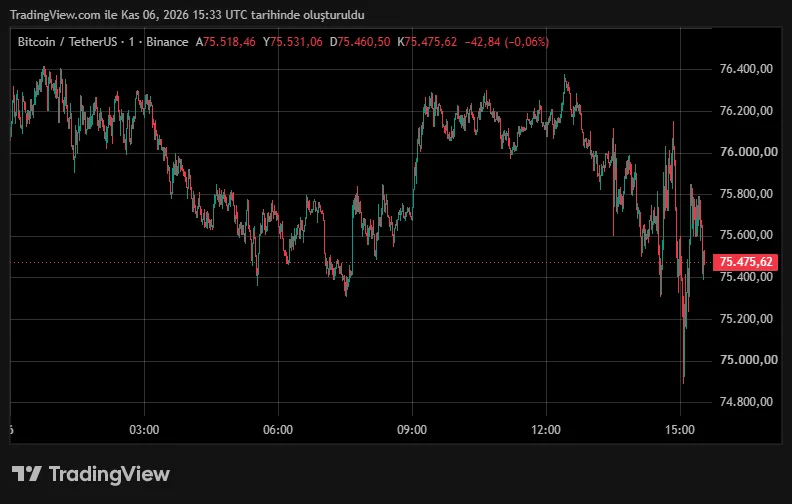
Bitcoin failed to hold its initial gains
The jobs report, released at 13:30 UTC on Friday, November 6, triggered short-term volatility in the crypto market. Bitcoin’s initial move higher did not last. After climbing above $76,100, the price returned to around $75,600.
At approximately 13:58 UTC, Bitcoin traded near $75,780. That was roughly 0.2% below its pre-release level. The initial reaction therefore consisted of a brief rise followed by a modest pullback.
Bitcoin remained below $76,000 in subsequent trading. At 14:35 UTC, the price stood at approximately $75,312. This indicated that the initial recovery following the release had lost momentum.
Prices across these timestamps reflected the market’s search for direction after the data. The early rise and subsequent retreat pointed to choppy trading.
Strong hiring supported expectations of a rate hike
Upward revisions to previous months also stood out in the jobs report. September’s initially reported gain of 29,000 rose to 60,000. The combined upward revision for August and September totaled 84,000 jobs.
The unemployment rate came in at 4.1%, below the 4.2% forecast. Average hourly earnings increased by 0.4% month over month and 3.1% year over year. Both wage measures also exceeded market expectations.
Following the release, the probability of a 25-basis-point rate hike in December rose to around 79%. Before the announcement, that figure stood near 70%. The shift showed that investors associated the strong report with a greater likelihood of tighter monetary policy.
Interest-rate expectations matter for liquidity and risk appetite in the crypto market. Higher rates can make interest-bearing assets more attractive. However, a single employment report does not determine Bitcoin’s direction.
Stronger-than-expected wage growth was another factor investors considered. Together with firmer hiring, it heightened sensitivity to the Fed’s upcoming rate decision.
Bitcoin entered the release in an already weak market
Before the employment announcement, the crypto market was still feeling the effects of Thursday’s technology stock selloff. Bitcoin’s 24-hour decline had reached 5.3% ahead of the data. Ethereum had fallen 7.3% over the same period.
Liquidations of leveraged crypto positions had also exceeded $1 billion in the 24 hours before the announcement. Those losses and liquidations occurred before Friday’s jobs report. The market’s entire daily decline therefore could not be attributed to the newly released figures.
The previous session’s selling provides important context for assessing the reaction to the employment data. While Bitcoin’s initial pullback was modest, the market had yet to recover the previous day’s losses.
The post-release price action and the decline over a broader period therefore presented different pictures. Volatility dominated the first few minutes, while the daily performance continued to reflect earlier selling pressure.
Attention turns to inflation data
US inflation will be one of the next major releases on crypto investors’ calendars. The October Consumer Price Index is due on November 10. The figures will offer further insight into how interest-rate expectations may evolve after the strong employment report.
The dollar and Treasury yields also remain important for Bitcoin during this period. Subsequent trading will show whether the initial volatility following the jobs report develops into a sustained move.