Altcoin
Halaman ini berisi berita Altcoin terbaru dan analisis pasar. Jelajahi artikel, wawasan pakar, dan update di kategori ini di JrKripto. Tetap update dengan liputan mendalam tentang tren dan perkembangan mata uang kripto.
Berita
Berita Altcoin
Berita Altcoin
Jelajahi semua artikel dan berita tentang altcoin. Berita, analisis, dan wawasan terbaru seputar altcoin.
Crypto Week Ahead: 25 Events to Watch as U.S. Jobs Data Takes Center Stage
Bitcoin started the Aug. 31-Sept. 6 week at around $77,900. Expectations that the Federal Reserve could raise interest rates in September and escalating tensions in the Middle East pushed the market into a more cautious mood following last week’s gains. The main focus of the week will be the U.S. employment report due Friday. On the crypto side, Russia’s new law, Mina’s Mesa upgrade, delisting decisions from Binance and BitMEX, and supply developments involving SUI, EIGEN, ENA and HYPE will be closely watched.U.S. employment data could reshape Fed expectationsFed Chair Kevin Warsh’s Jackson Hole speech pushed the probability of a September interest rate hike to around 60%. Warsh said inflation remained high and further tightening could be needed to restore price stability.The first major test of this pricing will arrive on Tuesday, Sept. 1. The U.S. Bureau of Labor Statistics will release July’s JOLTS job openings data at 5:00 p.m. Turkey time.The market expects the number of job openings to remain near 7.4 million. The ISM manufacturing PMI, scheduled for release at the same time, is expected to come in at 55.1.The ADP private-sector employment report will be released on Wednesday, Sept. 2, at 3:15 p.m. Turkey time. ADP’s official calendar confirms the date, while market expectations point to an increase of 45,000 jobs.The Fed will also publish its Beige Book report on Wednesday at 9:00 p.m. Turkey time. The report will offer insight into employment, wages, prices and how businesses assess the economic outlook.Weekly initial jobless claims will be released on Thursday at 3:30 p.m. Turkey time. Economists expect 205,000 applications, compared with the previous reading of 203,000.The ISM services PMI will follow at 5:00 p.m. Turkey time. The index is expected to rise from 54.1 to 54.4.The strongest market reaction of the week could form around Friday’s nonfarm payrolls report, scheduled for 3:30 p.m. Turkey time. According to the BLS calendar, the report will cover employment and wage changes in August.The market expects the U.S. economy to have added 50,000 jobs. Employment declined by 23,000 in July.The unemployment rate is expected to remain at 4.1%. Average hourly earnings are forecast to increase by 0.2% monthly and 3% annually.Strong employment and wage figures could increase the likelihood of a rate hike at the Sept. 15-16 FOMC meeting. A weaker result could strengthen expectations that the Fed will remain on hold despite Warsh’s inflation warnings.Russia’s sweeping crypto law takes effectRussia’s new regulations for the digital currency market will take effect on Sept. 1. According to the Central Bank of Russia, both qualified and non-qualified investors will be able to trade cryptocurrencies through licensed intermediaries.Annual purchases by non-qualified investors will be limited to 300,000 rubles at each intermediary. These users will also have to pass a suitability test before trading.Qualified investors will also be subject to testing, although they will not face limits on assets or transaction amounts. The regulation brings foreign stablecoins under Russia’s cryptocurrency rules as well.Licensed crypto exchanges and digital asset custodians will operate under the new system. The law does not allow cryptocurrencies to be used for payments for goods and services within Russia.Exporters and importers will be able to use cryptocurrencies for cross-border payments. Existing companies have until July 1, 2027, to obtain licenses and bring their operations into compliance with the new rules.Eurozone inflation and oil prices in focusEurostat will release the eurozone’s preliminary August inflation data on Tuesday, Sept. 1, at noon Turkey time. Eurostat’s previous report put July inflation at 2.9%.Market forecasts for August are concentrated between 3.2% and 3.3%. Rising energy costs are expected to be the main factor pushing headline inflation higher.Brent crude rose by more than 2% on Monday, approaching $90.60. U.S. attacks on Iran and Tehran’s response renewed concerns over global supplies.Persistently high oil prices could increase interest rate pressure on the Fed and the European Central Bank. This environment may affect risk assets, including Bitcoin, through the U.S. dollar and government bond yields.The meeting of G20 finance ministers and central bank governors is also taking place in Asheville from Aug. 31 to Sept. 1. According to the U.S. Treasury’s program, the agenda includes global growth, trade imbalances, inflation, public debt and the war with Iran.Mina network to activate Mesa upgradeMina Protocol will conduct its Mesa mainnet upgrade on Thursday, Sept. 3. According to the project’s detailed migration schedule, the network will stop accepting transactions at 1:00 p.m. Turkey time.Block production is expected to pause temporarily at 6:00 p.m. The Mesa package will be released at 7:30 p.m., with the first Mesa block expected at 9:00 p.m.Mesa will increase zkApp capacity and shorten block intervals. The upgrade will also introduce an automatic upgrade mechanism designed to simplify future protocol transitions.Existing zkApps will need to update their verification keys using o1js 3.0. Exchanges may suspend MINA deposits and withdrawals while the network is offline.The Mina team will make its final “proceed or postpone” decision on Aug. 31. If an insufficient number of validators upgrade to the required version, the project may set a new date.Zilliqa is also expected to conduct a block-height-based hard fork on Sept. 2. The estimated activation time is 3:58 p.m. Turkey time, although this could change depending on the speed of block production.The update aims to transfer some older wallet balances frozen due to a security issue in the Ledger application to new addresses. Zilliqa’s incident page shows that transactions on the legacy network have been temporarily suspended.Binance and BitMEX to implement delistingsBitMEX will delist 11 perpetual futures contracts on Wednesday, Sept. 2, at 3:00 p.m. Turkey time. The exchange will close open contracts through early settlement at the same time.BitMEX’s announcement shows that the decision applies only to derivatives contracts. Users should review the automatic settlement conditions and reference price calculations.Binance will end spot trading for ICON, Secret and Storj on Thursday, Sept. 3, at 6:00 a.m. Turkey time. According to the official announcement, all spot pairs involving ICX, SCRT and STORJ will be removed.Open spot orders involving these assets will be canceled at the same time. Binance will stop crediting deposits made after 6:00 a.m. Turkey time on Sept. 4.Withdrawals will remain available until 6:00 a.m. Turkey time on Nov. 3. The exchange said it may convert any remaining tokens into stablecoins after the deadline, although the conversion is not guaranteed.ENA, SUI, EIGEN and HYPE supply set to expandSept. 1 stands out as the busiest day on this week’s token calendar. All dollar figures are approximate because their values will change with spot prices.Sui will unlock approximately 13.53 million SUI on Sept. 1. The increase represents 0.33% of the circulating supply and is worth around $9.6 million at current prices.EigenCloud will release 36.82 million EIGEN on the same day. The tokens are worth approximately $6.9 million and represent 5.48% of the circulating supply.Ethena’s broader tracked supply schedule includes 275 million ENA. According to Tokenomics.com, the allocation is worth around $40.4 million and covers distributions to investors, the team, the community and the foundation.IOTA will make 12.37 million tokens available for circulation on Sept. 2. The current unlock schedule shows that the tokens, worth approximately $500,000, will be distributed among the IOTA DLT Foundation, the IOTA Foundation and the Tangle Ecosystem Association.The week’s largest potential supply event by dollar value will take place on Hyperliquid. Approximately 9.92 million HYPE will be unlocked on Sept. 6 under the monthly allocation schedule for core contributors.Based on a HYPE price of around $80.60, the scheduled amount is worth nearly $800 million. However, the full amount is not expected to be transferred on the same day.In previous months, there was a large gap between the amount of vested HYPE and the number of tokens actually claimed. The amount reaching the market could therefore remain well below the theoretical value of approximately $800 million.NFT.NYC and Solana events to beginNFT.NYC will take place at the Edison Ballroom in New York from Sept. 1 to Sept. 3. According to the event’s official website, the program is divided into 12 categories, including digital art, gaming, infrastructure, brands and on-chain finance.Solana Startup Village will be held in Amsterdam from Aug. 31 to Sept. 5. The first three days of the program will feature workshops focused on DeFi, security and privacy.The Common S3nse conference and hackathon will take place on Sept. 4 and Sept. 5 as part of Cypherpunk Week in Amsterdam. The event will focus on privacy technologies and decentralized infrastructure.There are no confirmed large-scale earnings reports from crypto companies or high-profile token launches scheduled for the week. U.S. economic data, oil prices, Russia’s regulations and the supply schedules of existing tokens will therefore carry greater weight.This week’s 25-event crypto calendarAug. 31-Sept. 1: G20 finance ministers and central bank governors meetingAug. 31-Sept. 5: Solana Startup Village AmsterdamSept. 1: Russia’s sweeping crypto law takes effectSept. 1, 3:00 a.m. Turkey time: SUI token unlockSept. 1: EIGEN token unlockSept. 1: ENA supply eventSept. 1, noon Turkey time: Eurozone preliminary August inflationSept. 1-3: NFT.NYC 2026Sept. 1, 5:00 p.m. Turkey time: U.S. JOLTS job openingsSept. 1, 5:00 p.m. Turkey time: U.S. ISM manufacturing PMISept. 2, 3:15 p.m. Turkey time: U.S. ADP private-sector employmentSept. 2: IOTA token unlockSept. 2, 3:00 p.m. Turkey time: BitMEX delists 11 perpetual futures contractsSept. 2, around 3:58 p.m. Turkey time: Zilliqa hard forkSept. 2, 5:00 p.m. Turkey time: U.S. factory ordersSept. 2, 9:00 p.m. Turkey time: Fed Beige BookSept. 3, 6:00 a.m. Turkey time: Binance ends trading for ICX, SCRT and STORJSept. 3, 1:00-9:00 p.m. Turkey time: Mina Mesa mainnet upgradeSept. 3, 3:30 p.m. Turkey time: U.S. weekly initial jobless claimsSept. 3, 3:30 p.m. Turkey time: U.S. July trade balanceSept. 3, 3:30 p.m. Turkey time: Fed Governor Christopher Waller speaksSept. 3, 5:00 p.m. Turkey time: U.S. ISM services PMISept. 4, 3:30 p.m. Turkey time: U.S. nonfarm payrolls, unemployment and wage dataSept. 4-5: Common S3nse conference and hackathonSept. 6: Planned unlock of approximately 9.92 million HYPE
What is Bitway (BTW)?
What Is Bitway (BTW)?A large share of Bitcoin has limited on-chain financial utility unless its owner decides to sell. Bitway aims to connect this idle liquidity with payments, lending and yield strategies. The project is building its infrastructure around a Bitcoin-compatible Layer 1 network, a stablecoin-focused Earn product and the BTW token.Definition and Origins of BitwayBitway is a blockchain and financial infrastructure project that seeks to create a gateway between on-chain capital and global financial markets. The team describes the project as an “internet capital gateway.”The structure has three main components. Bitway Ledger serves as the project’s independent, Bitcoin-compatible network, while Bitway Earn gives stablecoin holders access to different yield strategies. BTCT and Bitcoin lending products focus on using BTC for transfers and collateral.BTW is the native utility and governance token of the ecosystem. It is used to pay network fees, support validator staking, delegate tokens, participate in governance and fund certain product incentives. Bitway’s official documentation states that BTW connects network security with the ecosystem’s economic incentives.The term “BTW coin” is also widely used in the market. However, the version traded on exchanges exists as a BEP-20 token, while Bitway’s documents position BTW as the native economic asset of Bitway Ledger. Users should therefore verify both the network and contract address before making a transaction.What infrastructure does Bitway Chain use?The project’s independent network is called Bitway Ledger in its official documentation. Some exchange announcements refer to it as Bitway Chain. It is designed as a Bitcoin-compatible Layer 1 network using Proof of Stake consensus.According to Bitway’s open-source repository, the network uses an architecture based on Cosmos SDK and Tendermint. Validators stake BTW to participate in consensus, while token holders can delegate their assets to a validator.The Bitcoin compatibility layer aims to support existing Bitcoin address formats, including Native SegWit and Taproot. Bitway is trying to make its payment and financing products accessible to BTC holders without requiring them to learn an entirely different address structure.The version of BTW most commonly used in the market is available on BNB Smart Chain. Bitget’s initial listing announcement identified its BEP-20 contract address as 0x444045B0EE1ee319A660a5E3d604CA0ffA35ACaA. Verifying the contract is important because unrelated assets can use the same ticker on different networks.Why was Bitway created?Bitway focuses on the fragmentation of on-chain liquidity across different networks and financial products. Bitcoin has a large market value, yet it cannot be used in smart contract-based financial transactions as flexibly as assets on Ethereum and similar networks.The project wants to bring BTC and stablecoin liquidity into lending, collateralized financing, payments and yield strategies. Bitway Earn supports the stablecoin side of this model, while Bitway Ledger and BTCT focus on Bitcoin.Bitway also combines traditional financial strategies with DeFi infrastructure. On-chain records provide transparency, while some yield strategies may use off-chain markets and centralized trading platforms. This hybrid structure can improve efficiency, although it introduces custody, counterparty and strategy risks.History of Bitway: Major MilestonesBitway’s history goes back to the work of Side Protocol and Side Labs. One of its earliest clearly documented milestones was Side Labs’ $1.5 million pre-seed funding round in July 2023. Participants included HashKey Capital, KR1, Continue Capital, Symbolic Capital and Informal Systems.Side Protocol initially focused on the fragmentation of liquidity across blockchains. The project gradually shifted its direction toward Bitcoin-based payment and financing infrastructure. The team introduced the Bitway brand in August 2025 and linked its new identity to a broader on-chain finance vision.YZi Labs provided strategic support through its EASY Residency program during the same month. At this stage, Bitway positioned itself as a Layer 1 network working on Bitcoin address compatibility, gasless BTC transfers and decentralized Bitcoin lending.Another funding round followed in January 2026. Bitway raised $4.444 million in a round led by TRON DAO, with participation from HTX Ventures. Combined with the earlier pre-seed round, its publicly disclosed pre-seed and seed funding reached approximately $5.9 million.BTW launch and exchange listingsThe BTW token generation event took place on March 2, 2026. Around 2.2 billion BTW, equal to 22% of the total supply, entered circulation at the TGE.The token started trading on several platforms on the same day. Bitget opened BTW/USDT spot trading at 09:00 UTC on March 2. MEXC listed the BTW/USDT and BTW/USDC pairs, while HTX introduced BTW/USDT trading.BitMart also opened BTW/USDT trading on March 2. The token received early access and campaign support through Binance Alpha. Binance Wallet also organized a BTW Booster program before the TGE.Exchange support continued to expand during the year. Gate first introduced a derivatives product and later opened BTW/USDT spot trading on August 24, 2026. New markets can improve access, while leveraged products may also amplify short-term price movements.Integrations and current statusThroughout 2026, Bitway focused on bringing its Earn product to different wallet and trading interfaces. Bitway Absolute Return vaults were integrated into OneKey Wallet in August. Users could then direct supported stablecoins into Bitway strategies through the OneKey application.Market data shows that BTW experienced sharp price movements within a short period. The token reached an all-time low of $0.009118 on March 3, 2026. It later climbed to an all-time high of $0.7453 on August 19.Data from August 2026 showed that approximately 2.708 billion BTW were in circulation. Its maximum supply is capped at 10 billion BTW. Future token unlocks will therefore continue to increase the circulating supply.As of August 2026, the BTW price was trading around $0.40. How Does the BTW Token Work?BTW’s first function is to support the security of Bitway Ledger. Validators stake the token to produce blocks and confirm transactions. Users can also delegate their BTW to validators and participate indirectly in the consensus process.The token is used to pay transaction fees on the network. This function seeks to connect demand for applications and transfers on Bitway Ledger with demand for BTW. If network usage remains low, demand generated by transaction fees may also stay limited.Governance is another major use case. BTW holders can participate in proposals concerning network upgrades, economic parameters and the allocation of ecosystem resources. The distribution of voting power depends on token ownership and delegation.Bitway’s documents also state that staking may give users access to certain products, incentive programs or fee benefits. These utilities are not fixed, and the conditions are announced separately for each campaign. Temporary high rewards do not necessarily create lasting demand for the token.Supply distribution and tokenomicsBTW has a total and maximum supply of 10 billion tokens. According to its allocation model, 26.67% of the supply went to the community, 20% to ecosystem development and 20% to the team. Backers received 16.33%, partners received 12% and the liquidity allocation accounted for 5%. At the TGE, 22% of the total supply entered circulation. Unlocked partner and liquidity allocations represented 17% of the total supply. Another 2% came from the community allocation, while 3% came from the ecosystem allocation.The remaining community and ecosystem tokens are unlocking linearly over 41 months. This schedule prevents the entire supply from entering the market at once. It also creates a steady increase in circulating supply over several years.The team allocation has a 12-month lockup followed by 36 months of linear vesting. Backer tokens also have a 12-month lockup, followed by a 24-month linear schedule. March 2027, when team and investor tokens are expected to begin unlocking, will therefore be an important period for supply dynamics.The increase in circulating supply from 2.2 billion to approximately 2.708 billion BTW shows that the community and ecosystem schedules are already progressing. Newly unlocked tokens do not automatically enter the market for sale. However, unlocks can create price pressure if demand fails to grow at a similar pace.Staking, transactions and network securityBitway Ledger operates through PoS validators. Network security depends on the amount of BTW staked and the distribution of power across the validator set. A small number of validators controlling a large share of voting power could create centralization risks. BTCT, which enables Bitcoin to be used inside the network, relies on a FROST-based bridge operated by validators. FROST is a threshold-signature technique that distributes signing authority among several participants. When a user deposits Bitcoin, the system produces BTCT on Bitway, with the asset designed to maintain a one-to-one peg with BTC.This model makes it easier to use BTC in payment and financing applications. However, the stability of the BTCT peg depends on honest signers, properly functioning code and the bridge’s ability to withstand attacks.Bitway Lending uses Discreet Log Contracts, commonly known as DLCs. These contracts apply predetermined conditions and price data to BTC-backed loans. Users can therefore access stablecoin liquidity without selling their Bitcoin.The project has published BlockSec and Salus audit reports for different components. Its official audit page includes reports covering Bitway Chain, FROST, Shuttler, Earn and the token contract. Audits can reduce risks in specific versions of the code, but they do not guarantee protection against economic losses, counterparty failures or future code changes.Why Is Bitway Important?Bitway Earn is an on-chain vault product that connects stablecoin holders with market-neutral yield strategies. Users deposit supported stablecoins and receive yield-bearing tokens representing their share of the vault. The strategies can use methods such as funding-rate arbitrage and differences between spot and futures prices.The product reduces the need for users to manage individual positions. Some returns may be generated through centralized trading platforms or off-chain financial channels. Smart contract security is therefore only one part of the risk profile; exchange, custody, liquidity and operational risks can also affect results.BTCT provides the technical connection that moves Bitcoin liquidity into Bitway Ledger. Bitcoin Lending aims to let users borrow stablecoins against BTC collateral. When these products work together, users can access different financial services without selling their Bitcoin positions. BTCT validators The problem it addresses and its place in the ecosystemBitcoin-focused DeFi often depends on custodians, wrapped tokens or external bridges. Bitway combines Bitcoin address compatibility, FROST-based BTCT and DLC-powered loans within the same infrastructure. The project wants to create a simpler experience for BTC holders.Its approach sits at the intersection of BTCFi, DeFi and real-world financial strategies. This is a broad market where projects such as Babylon, Stacks and Rootstock use different technical architectures. Bitway’s position will depend on its ability to attract real users and liquidity alongside developing its technology.Bitway Earn provides an entry point for users who do not hold Bitcoin. Stablecoin holders can first enter the ecosystem through yield products. As the network develops, Bitway plans to connect this liquidity with payment and lending markets.This structure remains at an early stage. Its ability to scale needs to be measured through product usage and on-chain data.Competition, technical risks and volatilityBitway combines several complex layers in one system. Its PoS network, BTC bridge, price oracles, lending contracts and off-chain yield strategies create different attack surfaces. A problem in one component could affect liquidity across other products.FROST-based threshold signatures reduce reliance on a single custodian. Validator concentration or coordinated action by enough signers could still weaken bridge security. A stablecoin losing its peg could also produce additional losses in Earn and lending pools.Tokenomics creates another risk. Around 27% of the maximum supply was in circulation as of August 2026. The market will need to absorb a larger supply as team, backer, community and ecosystem allocations continue to unlock.The wide gap between BTW’s March low and August high shows how its low starting price and campaign activity have increased volatility. Derivatives listings and reward programs can generate short-term trading volume. Sustainable value will depend on network usage, demand for loans, assets held in vaults and consistent developer activity.The regulatory environment also requires attention. Bitcoin-backed loans, stablecoin yields and real-world financial strategies may face different rules across jurisdictions. Technical access to a product does not mean it is offered under the same legal conditions in every country.Bitway’s Development Team and CommunityThe core organization behind Bitway is referred to as Side Labs and Bitway Labs across different sources. Shane Qiu’s public profile identifies him as the founder of Bitway. Messari and CryptoRank list Qiu as the project’s co-founder and CEO.Qiu previously worked on research and investments at Binance Labs. CTO Dave Hrycyszyn leads the project’s technical development. Hrycyszyn’s background includes privacy and distributed systems projects such as Nym and Chainspace.The team has an open-source history extending back to Side Protocol. Bitway’s GitHub repository makes its network, Bitcoin, lending and API modules publicly available. However, public documents do not provide a detailed list of every team member, their responsibilities or the full corporate structure.Community and governanceThe Bitway community is growing around X, Telegram, wallet campaigns and staking programs. Binance Wallet Booster events and temporary yield campaigns played a significant role in reaching the token’s early user base.Incentives can attract participants quickly. Organic community strength is better measured through users who remain after campaigns end, governance participation and consistent on-chain activity. Follower numbers alone do not provide a complete picture.Under the PoS structure, BTW holders can influence validator selection through delegation. Governance proposals also allow the community to participate in changes to network parameters. If voting power becomes concentrated among large token holders, the influence of smaller participants may remain limited.Partnerships and integrationsBitway’s network of backers expanded over different funding rounds. Side Labs’ 2023 round included HashKey Capital, KR1, Symbolic Capital and Informal Systems. YZi Labs provided strategic support during the Bitway era, while TRON DAO and HTX Ventures participated in the 2026 seed round.Binance Wallet supported BTW’s pre-TGE distribution and campaign process. Bitget, MEXC, HTX and BitMart were among its first trading platforms. The Gate spot listing and OneKey Vault integration expanded access in August 2026.The OneKey integration allows users to access Bitway Absolute Return vaults directly through the wallet. The long-term effect of these integrations will depend on lasting deposits and active users rather than temporary campaign volume.Frequently Asked QuestionsBelow are answers to some of the most frequently asked questions about Bitway.What is Bitway and when was it launched?: Bitway is a Layer 1 and financial infrastructure project that seeks to connect on-chain liquidity with Bitcoin financing and global yield strategies. Its origins go back to Side Protocol, which raised funding in 2023. The Bitway brand was introduced in August 2025, while the BTW token entered circulation on March 2, 2026.What is the BTW token used for?: BTW is used for gas payments, validator staking, delegation and governance on Bitway Ledger. The token may also support temporary rewards, product access and ecosystem incentives. The conditions for these additional utilities vary by campaign.Which network does Bitway use?: Bitway operates an independent Proof of Stake Layer 1 called Bitway Ledger. The network is based on Cosmos SDK and aims to support Bitcoin-compatible addresses. The most widely used exchange version of BTW is available as a BEP-20 token on BNB Smart Chain, while market data platforms also list an Ethereum contract.Who founded Bitway?: Public profiles identify Shane Qiu as Bitway’s co-founder and CEO. Qiu previously worked at Binance Labs. Dave Hrycyszyn leads technical development as CTO, although official documents do not provide a complete team list.What is the BTW supply?: BTW has a total and maximum supply of 10 billion tokens. Around 2.2 billion BTW entered circulation at the TGE. Data showed a circulating supply of approximately 2.708 billion BTW as of August 31, 2026.Is Bitway suitable for investment?: Whether Bitway is suitable depends on an individual’s risk tolerance and research. The project has operating products, open-source code, audit reports and known backers. Its early-stage network usage, bridge and counterparty risks, high price volatility and future token unlocks require careful consideration.Follow the JR Kripto Guide series for the latest information about Bitway and emerging projects across the crypto ecosystem.
What is Starpower (STAR)?
A resource capable of supporting the power grid may be as close as a home air conditioner or an electric vehicle. Starpower aims to bring these scattered devices together within a single energy network and reward contributing users with STAR tokens. The project applies the DePIN model, which combines physical infrastructure with blockchain-based incentives, to virtual power plants.Starpower’s Definition and HistoryStarpower is a decentralized energy network that connects devices capable of consuming, producing or storing electricity. Distributed energy resources such as air conditioners, water heaters, home batteries, solar panels and electric vehicles can join the network through hardware or software.The system collects data from these devices and seeks to coordinate energy use according to specific requirements. Users can earn STAR rewards based on their devices’ connectivity, capacity and response to grid signals. The project is built around the Virtual Power Plant, or VPP, model. Instead of relying on a single physical facility, a VPP uses software to manage smaller energy resources located in different places as one coordinated system.Starpower aims to provide a global communication and coordination layer within this model. Local energy companies or VPP service providers may use the devices aggregated by the network to address regional grid requirements.Why was the project created?Renewable sources such as solar and wind do not produce the same amount of electricity every hour. Periods of high generation can create excess supply, while lower output can leave an energy shortfall. This variability makes it more difficult for power grids to maintain a constant balance between supply and demand.Starpower seeks to combine unused battery capacity and flexible electricity consumption within a shared pool. For example, charging thousands of electric vehicles or home batteries at suitable times can reduce pressure during peak hours. Returning stored electricity to the system may also provide additional grid support.The project’s documents identify the rising electricity demand of artificial intelligence infrastructure as a second major challenge. Starpower therefore describes itself as an “Energy DePIN for AI” and is also working on fast-response battery systems.This approach extends beyond token rewards. The project aims to measure energy data, connect devices from different manufacturers through common standards and expand demand-side participation. Its success will depend on the scale of real device integrations and connections to local energy markets.Major developments and current statusStarpower’s product roadmap places its initial hardware development phase between 2023 and 2025. This phase focused on products such as smart plugs, home energy storage systems and electric vehicle chargers. The 2024-2026 period is allocated to direct API integrations with manufacturers.The project raised $2.5 million in a funding round led by Framework Ventures in January 2025. Solana Ventures and Bitscale Capital also participated. Together with an earlier $1.5 million round led by Alliance DAO, the disclosed funding reached $4 million.According to market records, the STAR token generation event took place on September 6, 2025, through Binance Wallet and PancakeSwap. Binance later made STAR available through its Alpha service and held a trading and deposit campaign for the token in December 2025.Binance Futures launched the STARUSDT perpetual contract with leverage of up to 3x on May 14, 2026. The Binance announcement specifically noted that futures and spot listings are separate. The launch therefore did not mean that STAR had been listed on Binance Spot.KuCoin opened STAR/USDT spot trading on May 27, 2026, and supported deposits through the Solana SPL network. The KuCoin listing announcement also confirmed that Alliance, Framework Ventures and Solana Ventures participated in the project’s previous funding rounds.Starpower’s website states that the project has reached more than one million users and generated over $2 million in revenue. These figures were disclosed by Starpower; a detailed and independently verified current audit of its active users, connected devices and revenue calculation methodology has not been published.As of August 2026, the STAR coin price was trading at around $0.11. How Does the STAR Token Work?STAR is described as the utility token of the Starpower network. Its main intended function is to purchase dispatch and coordination services involving the distributed energy resources aggregated by the network. Energy companies or VPP providers may request that certain devices reduce their consumption or make stored electricity available.The token also underpins the incentives offered to device owners. During the first stage, the system uses a Proof of Connectivity model that rewards devices for remaining connected to the network. Proof of Capacity is introduced in later stages to measure electricity generation, consumption or storage capacity.The final stage is called Proof of Response. Under this model, rewards depend on whether a device responds to a VPP signal in a timely and verifiable way. These “proof” mechanisms do not replace Solana’s consensus system; they describe how contributions and rewards are calculated within Starpower.Connected devices report data every five minutes. Under the reward model, verified connectivity and electricity usage data are calculated over weekly periods. Weekly measurement is intended to reduce the effect of daily fluctuations and differences between weekday and weekend consumption.STAR supply and tokenomicsThe Starpower lite paper limits the total supply to one billion STAR. A 70% share is allocated to “network builders,” referring to device owners and other network participants rather than solely the founders of the company. Investors receive 15%, while another 15% is allocated to the team. Investor tokens remain locked for the first 12 months after the TGE. They are then released linearly over 36 months. The team allocation has a 24-month lock, followed by a 36-month linear vesting schedule.This schedule means that the number of tokens entering the market can increase over time. Market data showed approximately 186.2 million STAR in circulation when this guide was prepared, compared with a maximum supply of one billion.The project’s documents also outline a buyback and burn model. A portion of the revenue from electricity bill payments, device sales, network licences and SaaS services is intended to fund STAR buybacks. However, while the burn mechanism describes the proposed structure, it does not provide a regular and verifiable total for completed burns.Network, transactions and securityStarpower uses Solana infrastructure for its energy device network. The official website and KuCoin announcement identify STARqri3xhy6Pyv1EpgdjkPDVcs9FncKcaEP6527krs as the STAR contract on Solana. The project’s BNB Smart Chain contract is 0x8fce7206E3043DD360F115AFa956EE31b90B787C.STAR can therefore be found across both the Solana and BNB Chain ecosystems. Users should verify the selected network and contract address through the project’s official channels before making a transaction. Unrelated tokens using the same ticker could otherwise be mistaken for the correct asset.Solana provides the token transfer and on-chain record layer. Starpower’s primary technical task is to obtain reliable data from physical devices, verify it and connect it to reward calculations. Smart contracts can protect on-chain transactions, but they cannot independently resolve real-world risks such as faulty sensors, interrupted connections or manipulated device data.The project is working on direct manufacturer integrations and a trusted-chip approach that assigns a unique Solana identity to each device. The integration plan aims to reduce latency and improve data reliability.Why Is Starpower Important?Power grids must keep electricity generation and consumption balanced in real time. As the share of renewable energy grows, weather-dependent production fluctuations become more visible. At the same time, data centres, electric vehicles and electric heating systems are increasing demand.Distributed energy resources can help address part of this problem. Managing small devices across different brands and regions one by one remains costly, however. Starpower seeks to bring large numbers of devices together through a shared communication layer.If the network reaches sufficient scale, home batteries, air conditioners and charging devices could respond collectively to grid requirements. Users may shift consumption to cheaper hours, while VPP operators could access scattered capacity through a single system. Some of VPP operators. Its place in the energy and DePIN ecosystemDePIN projects use token incentives to develop physical infrastructure. While some networks focus on wireless connectivity, mapping or data collection, Starpower directly targets energy devices. This field involves local regulations and physical hardware, making it more complex than crypto projects built entirely around software.Starpower’s product range includes the Starplug smart plug, Starbattery storage system, Starcharger electric vehicle charging solution and a dApp for managing connected devices. The product documents highlight functions such as real-time consumption monitoring, remote control and scheduling around off-peak hours.The project also plans to offer consumer energy SaaS products and demand-response services for power grids. Its revenue model is therefore intended to draw from device sales, software and energy services instead of relying solely on demand for the token.Starpower’s proposed distinction lies in aggregating devices globally while working with regional VPP companies. Energy trading and grid services remain subject to local rules, meaning a global network is unlikely to replace local operations on its own.Risks and volatilityAs an early-stage infrastructure project, Starpower carries considerable execution risk. Scaling the manufacturer integrations, device network and commercial connections with energy companies outlined in its roadmap may take time. The company’s user and revenue figures are not regularly verified through independent reports.Token unlocks also require close attention. Investor and team allocations entering circulation over time may create selling pressure. Planned buybacks and burns can provide a counterweight only if the project generates real revenue and documents implementation transparently.STAR has more limited market depth than major crypto assets. When this guide was prepared, CoinGecko showed that most spot volume was concentrated in a single decentralized trading pair on BNB Chain. Limited liquidity can allow orders to move the price more quickly and contribute to sharp fluctuations.Derivatives may add further volatility. The availability of a STARUSDT contract on Binance does not mean that the token is listed on Binance Spot. Investors should distinguish between Alpha, spot and futures products.Technical risks include smart contracts, bridges, device security and data accuracy. Energy data may reveal sensitive information about users’ consumption habits. Privacy, access controls and hardware security will therefore play an important role in the network’s long-term reliability.Starpower’s Development Team and CommunityPublic sources identify Laser Ding as Starpower’s CEO and co-founder. Darcy Jia is presented as the project’s other co-founder. During a Solana DePIN discussion in 2024, Ding said he had previously worked at HashKey and that the team had been developing Starpower for around two years.The official lite paper divides the organization into two entities. The Starpower Foundation is responsible for network governance and rewards. Starpower Network Ltd. handles the network’s initial development and subsequent operations.The project says it works with manufacturers’ technical teams on battery research. Its documents name WEIHENG/ECACTUS as a research and battery partner. The work focuses on solid-state batteries, lithium-silicon anodes and battery management systems capable of responding within milliseconds. Solid-state batteries and lithium-silicon anodes aim to store more energy in less space while improving safety. A millisecond-response battery management system can quickly detect sudden changes in load and temperature, supporting more balanced energy use in power grids and data centres.Public information about the wider development team, division of responsibilities and open-source contributions remains limited. Alongside the founders, technical team visibility, code updates and completed hardware integrations are important points to monitor when assessing an infrastructure project.Community and governanceStarpower positions users as participants who connect devices to the network, rather than solely as token holders. Its intended audience includes individuals as well as hotels, shopping centres, universities, industrial facilities and large property operators.According to the community and governance plan, technical development and daily operations are intended to become more decentralized as the network matures. This remains a forward-looking objective and does not mean that Starpower is currently governed entirely by its community.One existing participation channel is the Zero Carbon Ambassador program. Local ambassadors conduct community activities related to renewable energy and energy efficiency. The project also plans to provide financial support for eligible initiatives.The governance section does not yet present a detailed system explaining which decisions STAR holders can change or how voting would work. STAR is therefore more accurately described primarily as an incentive and service token, rather than as a fully operational governance token.Partnerships and use casesStarpower’s growth model depends on integrations with hardware manufacturers, VPP operators and energy companies. The project plans to connect third-party devices through APIs and later embed trusted chips directly into hardware.The lite paper lists Tesla, BYD, SolarEdge and FranklinWH as examples of widely used manufacturers the network aims to support. Their inclusion in the document does not mean that completed commercial partnerships exist with each company.Practical use cases begin with household energy monitoring. Commercial buildings may connect lighting and climate-control systems, industrial facilities may add high-power equipment, while electric vehicles and charging stations can participate through the transport sector.At a more advanced stage, these resources may participate in demand-response programs. Reducing consumption for a short period or supplying electricity from a battery during grid congestion can create economic value. STAR aims to distribute this value among device owners, the network and service buyers.Frequently Asked Questions (FAQ)Below are answers to some frequently asked questions about Starpower (STAR):What is Starpower and when was it launched?: Starpower is a DePIN project that brings distributed energy devices together for virtual power plants. Its development roadmap points to a hardware phase beginning in 2023, while the STAR token generation event took place on September 6, 2025.What is the STAR token used for?: STAR rewards users who connect energy devices and make verified contributions to the network. It is also intended to support payments for dispatch and coordination services involving the distributed energy resources aggregated by Starpower.Which network does Starpower use?: Starpower’s core blockchain infrastructure is built around Solana. Alongside the Solana SPL version, STAR also has a verified contract on BNB Smart Chain.Who founded Starpower?: Public sources identify Laser Ding as CEO and co-founder, with Darcy Jia as the other co-founder. The Starpower Foundation and Starpower Network Ltd. hold separate responsibilities in the project’s operations.What is the STAR supply?: The official lite paper sets the total and maximum supply at one billion STAR. Data showed approximately 186.2 million tokens in circulation when this guide was prepared, although the circulating amount may change through unlocks and other distributions.Is Starpower suitable as an investment?: The answer depends on an investor’s risk tolerance, portfolio and independent research. STAR may experience high volatility due to early-stage project risk, limited liquidity, token unlocks, hardware execution and energy-sector regulations. Current supply, contract addresses, liquidity and project developments should be reviewed separately before any transaction.Follow the JR Kripto Guide series to track Starpower’s decentralized energy network, virtual power plant model and the latest STAR token developments.

Trump-Linked Crypto Products Leave Investors $4.7 Billion in Loss
Five crypto products linked to Donald Trump have left investors billions of dollars in the red. Public Citizen estimates combined losses at at least $4.7 billion.The report covers TRUMP, WLFI, Trump NFTs, USD1 and Trump Media. Most of the losses remain unrealized.Therefore, the total does not represent finalized cash losses. Changes in asset prices could increase or reduce the estimated amount.Public Citizen also estimates that Trump earned at least $1.4 billion from crypto activities in 2025. The group based its calculation on Trump’s latest financial disclosure.TRUMP investors face $3.2 billion in lossesAccording to the Public Citizen report, TRUMP memecoin investors suffered the largest losses. Nansen examined decentralized exchange transactions on Solana.Around 1.6 million retail wallets bought TRUMP after its launch. Approximately 1 million of those wallets are underwater at current prices.Their combined losses reached an estimated $3.2 billion. Only about $400 million had been realized through sales. TRUMP launched on Jan. 17, 2025. Its price reached an all-time high of $73.43 within two days.However, the token had fallen to $2.22 during the period covered by the report. The decline generated heavy losses for buyers who entered the market later.Meanwhile, gains were concentrated among a limited number of early investors. Wallets that bought during the first two days captured nearly 90% of total gains.The top 1% of profitable wallets earned $2.7 billion. This represented 80% of all profits generated through TRUMP trading.WLFI losses reach at least $1 billionWLFI, issued by World Liberty Financial, represented the report’s second-largest source of losses. Public Citizen estimated losses of at least $1 billion.A large portion came from Nasdaq-listed AI Financial Corporation. The company acquired around 7.28 billion WLFI in August 2025.According to the company’s SEC filing, the tokens had a cost basis of nearly $1.46 billion. Their fair value had fallen to $421.3 million by late June.The company therefore faced an unrealized loss of approximately $1.04 billion. Public Citizen also examined retail wallets trading on decentralized exchanges.Nansen data showed that 25,000 of 31,000 WLFI wallets were underwater. Their combined losses reached $54 million.The calculation does not cover transactions on centralized exchanges such as Binance. Investor results on these platforms cannot be fully tracked through on-chain data.Trump Media’s Bitcoin loss reaches $450 millionThe report also included Trump Media’s Bitcoin reserve. The company held 9,477 Bitcoin as of June 30.The holdings had a total cost basis of approximately $1.006 billion. Their market value stood at $557 million on the same date.This left Trump Media with an unrealized Bitcoin loss of around $450 million. Public Citizen did not attribute the entire decline in its share price to the crypto strategy.Trump Media’s market value fell by approximately $3.1 billion after the strategy was announced. The report counted only the $450 million difference in the Bitcoin position.NFT investors lose $9.3 millionPublic Citizen estimated losses of at least $9.3 million across Trump Digital Trading Cards collections. Three collections initially generated a combined $12.3 million in sales.The group estimated their current combined value at around $3 million. Series 3 was excluded because of insufficient trading activity.The report assigned no losses to USD1 holders. The stablecoin maintained its one-dollar peg during the period examined.Trump’s crypto income exceeds $1.4 billionPublic Citizen estimated Trump’s 2025 crypto income at no less than $1.4 billion. TRUMP and World Liberty Financial were among the largest sources.According to the report, Trump earned $635 million from TRUMP-related licensing fees. His income from WLFI token sales reached $527 million.Trump also reported $65.6 million from selling an equity stake in World Liberty Financial. Public Citizen said it found no evidence that he invested personal capital in these ventures.However, the $4.7 billion figure does not represent a market-wide net loss. The calculation adds losses among underwater wallets without subtracting profits recorded by winning investors.The White House has previously denied that Trump or his family engaged in conflicts of interest. The administration continues to reject similar allegations.

Upbit, Bithumb and Binance Announce Decisions Affecting 7 Assets
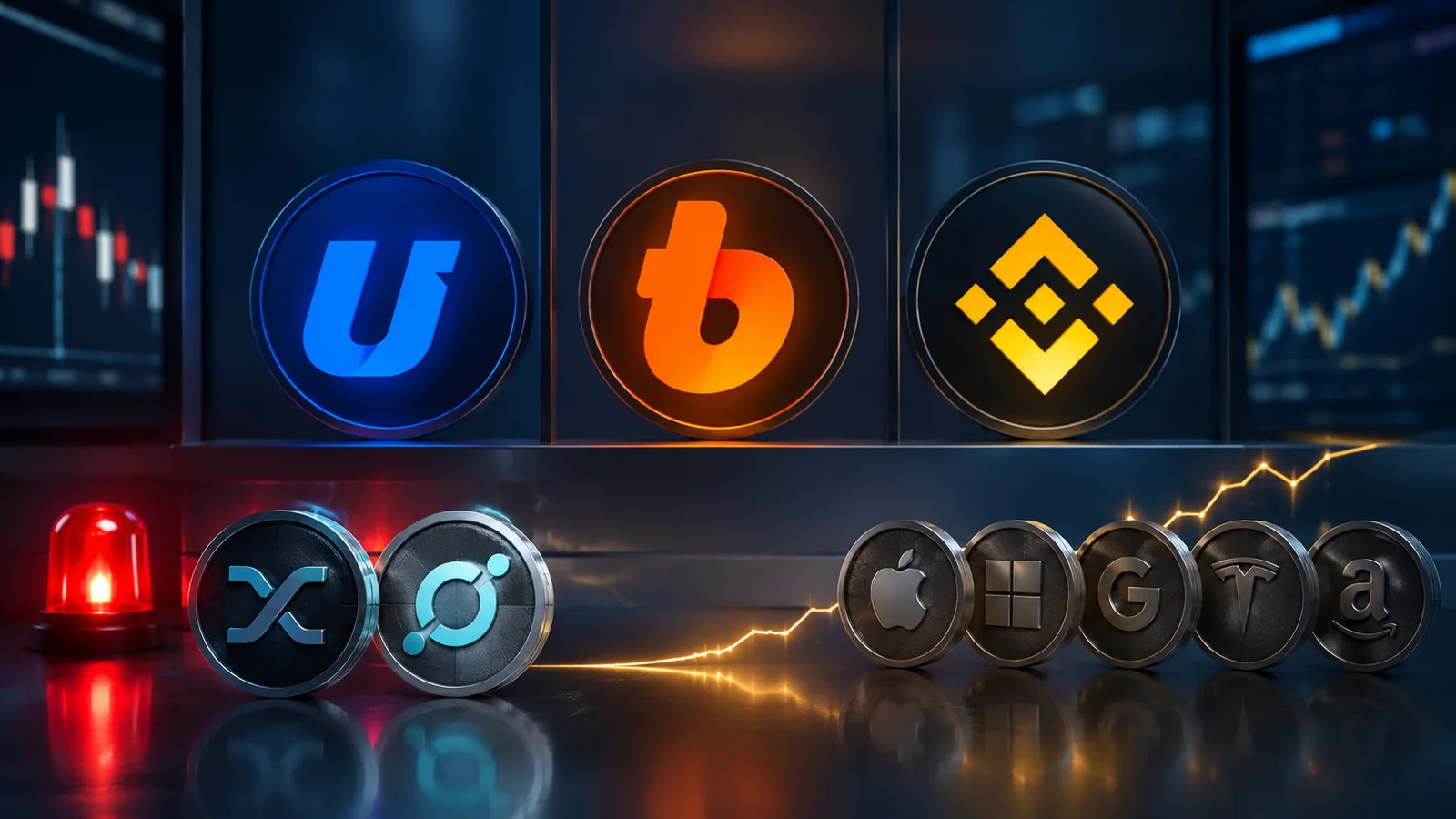
Upbit, Bithumb and Binance announced new trading decisions affecting spot and derivatives markets. The South Korean exchanges tightened restrictions on SNX and ICX.Upbit and Bithumb will delist Synthetix in September. Both exchanges also placed ICON on their investment warning lists.Binance, meanwhile, launched TradFi perpetual contracts linked to five US stocks. The platform offers leverage of up to 20x on the new contracts.Upbit and Bithumb to delist SNXAccording to Upbit’s announcement, the exchange will delist the SNX/BTC pair on September 28. Trading will end at 3:00 p.m. KST, or 9:00 a.m. Turkey time.The exchange reviewed changes to SNX’s total supply and circulation plans. It also examined the project’s activity and long-term sustainability.Upbit concluded that the remaining shortcomings could pose risks to users. The project’s explanations failed to resolve the concerns behind its warning status.Bithumb will also end SNX trading on the same date and at the same time. The exchange said the project team’s explanations did not adequately address its concerns.Both platforms will support SNX withdrawals until October 28. They will cancel all open orders after trading ends.Users may need to register external wallet addresses in advance. Whitelisting reviews can take time, making early preparation important.ICX placed on investment warning listsThe second joint decision from Upbit and Bithumb involved ICON. Both exchanges placed ICX on their investment warning lists on August 28.Upbit will keep the ICX/KRW pair under review until the third week of September. The exchange expects to complete its assessment between September 14 and September 18.The exchanges identified an unresolved security incident involving infrastructure connected to ICX. Their notices pointed to the project’s wallet or distributed ledger systems.Bithumb said the cause of the incident remained unclear. The platform added that the security issue had yet to be fully resolved.Both exchanges suspended ICX deposits and withdrawals. Deposits made during the suspension may not reach user accounts.Neither exchange has issued a final delisting decision for ICX. Following their reviews, they may remove the warning, extend it or end trading support.Binance launches five TradFi contractsBinance Futures launched five USDT-margined TradFi perpetual contracts on August 28. The new products are TEMUSDT, MRKUSDT, IONQUSDT, MARAUSDT and PDDUSDT.The contracts track Tempus AI, Merck, IonQ, MARA Holdings and PDD Holdings. They went live between noon and 12:20 p.m. Turkey time.Binance offers leverage of up to 20x on each contract. The exchange set the minimum order value at 5 USDT.Funding payments settle every eight hours. The upper and lower funding rate limits stand at plus or minus 2%.The TradFi contracts are available around the clock, seven days a week. Binance may adjust leverage and margin requirements according to market conditions.These products are derivatives tied to the price movements of the underlying companies. Buying a contract does not give investors direct ownership of the corresponding shares.The decisions reflect two different directions among major crypto exchanges. Upbit and Bithumb increased their risk controls on selected altcoins.Binance expanded its range of products linked to traditional financial assets. September deadlines remain important for SNX and ICX holders, while the leveraged contracts carry elevated liquidation risk.
Bitcoin Holds Near $80K Ahead of Warsh’s Jackson Hole Speech
Bitcoin is holding near the $80,000 mark ahead of Federal Reserve Chair Kevin Warsh’s first Jackson Hole speech. The altcoin market is also trading higher, led by a strong rally in Solana.Warsh will speak on Friday, August 28, at 10 a.m. ET. Markets will watch his comments on interest rates and the Fed’s approach to the Treasury market.The speech comes after the U.S. Treasury expanded its long-term bond-buyback program. The Fed’s response could affect crypto prices through movements in the dollar and Treasury yields.Why Warsh’s speech matters for BitcoinAccording to the Federal Reserve’s official calendar, Warsh will deliver keynote remarks at the Jackson Hole Economic Policy Symposium. This will be his first Jackson Hole speech since becoming Fed Chair in May.Markets expect Warsh to provide signals about the future path of interest rates. His comments on balance sheet policy and long-term Treasury yields could prove more significant.The U.S. Treasury announced an expansion of its long-term bond buybacks on August 19. The decision came as the 30-year Treasury yield approached its highest level since 2007.According to the Treasury Department, the maximum size of each operation will rise from $2 billion to at least $4 billion. The higher amounts will apply from September 9 through November 4.The program covers nominal coupon securities in the 10-to-20-year and 20-to-30-year maturity sectors. The Treasury aims to improve market liquidity for older and less actively traded securities.Treasury buybacks are separate from QETreasury buybacks do not directly represent quantitative easing. The program does not expand the Fed’s balance sheet or create new central bank reserves.Investors still interpreted the decision as an attempt to limit long-term borrowing costs. Expectations strengthened around the possibility that the Fed could eventually support the bond market.Fidelity Director of Global Macro Jurrien Timmer said markets were beginning to price in the risk of fiscal dominance. He argued that the Treasury may need to expand the program further to keep yields under control.Such a scenario could increase pressure on the Fed to support the operations. Timmer said this development would likely weaken the dollar while supporting gold and Bitcoin.Bitcoin trades close to $80,000Bitcoin was trading at around $79,979 at the time of writing. BTC gained 1.42% over the previous 24 hours and 6.09% over seven days.Bitcoin’s market capitalization exceeded $1.6 trillion. Its daily trading volume stood at approximately $37.9 billion.Demand for spot Bitcoin ETFs also supported the price. Market data showed that U.S. funds recorded $2.8 billion in net inflows across eight consecutive trading sessions.Bitcoin climbed as high as $81,280 during overnight trading. Profit-taking ahead of Warsh’s speech later pulled the price back toward $80,000.Solana leads the altcoin marketSolana recorded the strongest move among major altcoins. SOL gained 6.40% in 24 hours to trade at $107.64.Solana’s seven-day gain reached 19.61%. HYPE traded at $83.31 after rising 14.56% over the same period.XRP advanced 1.52% to $1.43. The token gained 9.59% during the past seven days. BNB traded at $712.65, while Ethereum changed hands near $2,501. BNB gained 6.71% for the week, compared with Ethereum’s 5.67% increase.Dogecoin rose 1.44% to approximately $0.088. Zcash stood out among major altcoins with a weekly gain of 32.51%.Warsh’s remarks could create two market scenariosWarsh could weaken market expectations by describing the Treasury buybacks as routine liquidity operations. A clear statement ruling out Fed participation may push the dollar and long-term yields higher.Under this scenario, profit-taking around Bitcoin’s $80,000 level could accelerate. Altcoins may experience larger price swings because of their higher volatility.Leaving room for possible coordination with the Treasury would create a different outlook. Expectations for lower yields and a weaker dollar could extend Bitcoin’s rally.BNY analysts do not expect Warsh to offer direct forward guidance. They believe his speech may focus on the Fed’s reform agenda and balance sheet policy.

Charles Schwab to Add SOL, AVAX and LINK Trading
Charles Schwab will expand its spot cryptocurrency service with three additional altcoins. The company plans to introduce Solana, Avalanche and Chainlink support in the coming months.Schwab Crypto clients will be able to buy and sell SOL, AVAX and LINK. The platform currently provides direct access to Bitcoin and Ethereum trading.The company did not announce an exact launch date for the three assets. Schwab also plans to expand the number of supported digital assets over time.Once the new assets become available, the platform will support five cryptocurrencies. Clients will view them alongside their existing Schwab investments.Charles Schwab adds three altcoins to its platformAccording to Charles Schwab’s announcement, the additions include Solana, Avalanche and Chainlink. The company selected established assets that align with client demand.Schwab Crypto began its phased rollout to retail clients in May 2026. The initial service supported only Bitcoin and Ethereum.Joe Vietri, Head of Digital Assets at Charles Schwab, said the expansion would give clients more choices. Investors will be able to manage digital assets alongside their other investments.Schwab Crypto is available through Schwab.com, Schwab Mobile and thinkorswim. Clients can view cryptocurrencies and traditional investments on the same platforms.The company charges 0.75% of the dollar value of each cryptocurrency trade. Schwab also offers digital asset research and educational content.Clients can access 24/7 support by phone or online chat. However, Schwab may delay support for any announced asset when necessary.The company could base such a decision on regulatory, operational, market or risk-related developments. Schwab may also modify or withdraw support under the same conditions.Schwab’s banking division holds the crypto assetsSchwab Crypto operates through an account separate from a standard brokerage account. The crypto account links directly to the client’s existing Schwab brokerage account.Charles Schwab Premier Bank acts as the custodian of client digital assets. Paxos provides sub-custody and trade execution services.Paxos operates under the oversight of the US Office of the Comptroller of the Currency. Schwab uses this infrastructure to integrate cryptocurrency trading with its traditional financial platforms.Cryptocurrencies held through the service do not qualify as deposits. They therefore receive no FDIC insurance or SIPC investor protection.Schwab Crypto accounts are available in every US state except New York and Louisiana. The service is unavailable in US territories and international jurisdictions.The company also notes that every client may not qualify for an account. Charles Schwab Premier Bank reviews each application.Schwab serves nearly 40 million brokerage accountsCharles Schwab’s July figures demonstrate the company’s scale. The firm had 39.9 million active brokerage accounts as of July 31.Total client assets reached $13.04 trillion during the same period. This scale could give the new altcoins access to a broad investor base.Schwab previously said its clients held approximately 20% of spot cryptocurrency exchange-traded products. The company has started addressing this demand through direct spot trading.The announcement coincided with gains across all three cryptocurrencies. Market data showed SOL trading near $104.50 at the time of writing.SOL gained approximately 8.5% over the previous 24 hours. LINK climbed 4.7% to reach $11.80.AVAX rose 1.8% and traded near $7.43. The broader cryptocurrency market also remained positive during the same period.
Revolut Rolls Out Its Euro-Backed Stablecoin
Revolut has begun the phased rollout of EURR, its first euro-pegged stablecoin. The initial launch covers selected customers in Denmark, Poland, and Portugal.EURR is designed to maintain a value of one euro. Users will be able to move between euros, cryptocurrencies, and external wallets through the token.The stablecoin currently operates on Ethereum and Polygon. Revolut plans to expand the product to other European Economic Area countries later in 2026.EURR is not issued directly by RevolutAlthough EURR carries Revolut’s branding, Stripe-owned Bridge Building S.A. serves as the token’s legal issuer. Revolut handles the stablecoin’s distribution and app integration.Luxembourg-based Bridge holds an electronic money institution licence from the country’s financial regulator, CSSF. The company also operates as a crypto-asset service provider.Revolut Digital Assets Europe Ltd offers EURR to customers. The company holds a licence in Cyprus under the European Union’s Markets in Crypto-Assets regulation, known as MiCA.According to Revolut’s announcement, EURR will be fully integrated into the company’s retail app. The project also represents the first step in Revolut’s broader stablecoin strategy.The company is developing additional stablecoins pegged to other currencies. These products will follow separate regulatory approval processes.Each EURR will have one euro in reservesBridge will hold one euro or an equivalent amount of euro-denominated assets for every EURR in circulation. The company will keep these reserves in accounts separate from its corporate funds.Bridge’s reserve page showed that only 374 EURR were in circulation as of August 25. The reserves consisted entirely of €374 in cash deposits held at financial institutions.The small amount shows that EURR remains available to a limited group of users. The token has no fixed maximum supply; Bridge can issue additional EURR based on demand.The company said independent accounting firms will review the reserves every month. These reviews will determine whether the reserve value matches or exceeds the number of tokens in circulation.The MiCA document listed August 20 as the official start date of EURR’s public offering. Revolut announced the phased customer rollout on August 26.EURR launches with Ethereum and Polygon supportEURR is currently available on Ethereum and Polygon. Revolut aims to expand the stablecoin to external wallets and additional blockchain networks.The white paper lists Solana, Arbitrum, and Optimism among the planned networks. Avalanche, Injective, TON, and Sui also appear on the support list.However, Revolut has not disclosed when support for these networks will begin. EURR’s liquidity also remains highly limited during the initial rollout.The token will provide a direct bridge between euros and the cryptocurrency market within the Revolut app. Users will therefore be able to access on-chain services without first converting euros into a dollar-backed stablecoin.Revolut also plans to make EURR available on the Revolut X platform. The white paper states that Revolut Digital Assets Europe may add the token to the platform.EURR holders will be able to redeem tokens for eurosEURR holders will be able to redeem their tokens for euros at a one-to-one rate through issuer Bridge. The company will not charge a direct redemption fee.Users must first complete Bridge’s identity and compliance checks. They must also provide a valid IBAN from within the European Economic Area.Bridge says it will transfer approved redemptions to users’ bank accounts within two business days. The company can also freeze addresses linked to sanctions lists or suspicious activity.EURR will not pay interest to holders. Even if Bridge generates income from the reserves, it will not distribute those earnings to token holders.The stablecoin does not qualify as a bank deposit. Deposit guarantee and investor compensation schemes will therefore not cover EURR balances.Revolut will use its distribution reach in the stablecoin marketRevolut has more than 80 million retail customers worldwide. Over 16 million people use the company’s cryptocurrency services.This user base could give EURR a significant distribution channel against existing euro stablecoins. However, the project’s success will depend on broader European availability, on-chain liquidity, and integrations with external platforms.Revolut aims to use EURR for international transfers, business payments, and on-chain settlement. The initial launch across only three countries and a limited customer group shows that the product remains at a pilot scale.Meta Title: Revolut Rolls Out Euro Stablecoin EURRMeta Description: Revolut has rolled out euro-backed stablecoin EURR. The Ethereum and Polygon-based token is issued by Stripe-owned Bridge.Keywords: Revolut, EURR, Revolut Euro, euro stablecoin, Bridge, Stripe, MiCA, Ethereum, Polygon
DeFi Protocol Acquires 5.4% of Centrifuge Supply
Grove, a DeFi protocol within the Sky ecosystem, has made a strategic investment in real-world asset platform Centrifuge. The protocol acquired 37.8 million CFG tokens, securing a significant stake.The holding represents approximately 5.4% of Centrifuge’s total CFG supply. Based on circulating supply, Grove’s share exceeds 6.5%.According to Grove’s official announcement, the investment will strengthen the projects’ long-term partnership. Grove has also deployed more than $1.27 billion through Centrifuge’s infrastructure.The parties did not disclose the purchase price or execution venue. Grove described the 37.8 million CFG holding as an “initial position.”Grove acquires 37.8 million CFGCFG traded at approximately $0.136 at the time of writing. This price values Grove’s token position at roughly $5.2 million. However, this figure does not represent the investment’s actual cost. Grove may have acquired the tokens at different prices or through a private agreement.Centrifuge’s total supply currently stands at approximately 697 million CFG. Its circulating supply sits near 577.1 million tokens.Grove therefore controls around 5.4% of the total supply. The protocol also holds approximately 6.55% of the circulating supply.This position makes Grove one of the significant CFG holders within the Centrifuge ecosystem. The announcement did not provide details about its potential influence on governance.Grove and Centrifuge partnership reaches $1.27 billionThe relationship between Grove and Centrifuge did not begin with this investment. The projects have worked on tokenized credit products since the MakerDAO era.Grove uses Centrifuge infrastructure across several institutional products. These products include Apollo’s ACRDX fund.The JAAA and JTRSY funds managed by Janus Henderson also use Centrifuge infrastructure. Grove directs liquidity from the Sky ecosystem into these products.Grove serves as the Sky ecosystem’s institutional credit allocation layer. The protocol directs USDS liquidity into onchain and traditional credit strategies.Grove’s website currently shows $2.76 billion in total value locked. The protocol also manages 18 active capital allocations.Centrifuge provides infrastructure for tokenizing funds and other real-world assets. Grove brings capital and liquidity to these products.RWA market surpasses $38 billionGrove highlighted the growth of the tokenized asset market when explaining its investment. According to the protocol, the sector stood at $12 billion in June 2025.That figure exceeded $38 billion by August 2026. Centrifuge’s total value locked also increased sharply during the same period.The platform’s TVL climbed from $450 million to $1.64 billion. This growth placed Centrifuge among the leading institutional RWA infrastructure providers.Grove Labs CEO Mark Phillips said the two teams had worked together for years. Phillips added that Centrifuge’s infrastructure had supported Grove since its first capital allocation.Timing of the Centrifuge investment draws attentionThe investment arrived while Centrifuge was discussing changes to its token structure. The project submitted the CP172 governance proposal on August 17.The CP172 proposal would allow eligible CFG holders to acquire company shares. The plan proposes one company share for each CFG token.The proposal does not represent a final decision. The Centrifuge community is evaluating the plan during a 14-day consultation period.Implementation would also require foundation board approval and a community vote. Grove has not said whether it plans to convert its CFG tokens into equity.CFG declined approximately 5% over the past 24 hours. The token’s seven-day loss exceeded 16%.

Lisk DAO to Shut Down: 100 Million LSK to Be Burned
The Lisk team has launched an onchain vote to wind down the Lisk DAO. The proposal calls for burning 100 million LSK and reducing the token’s total supply by 25%.The plan also includes transferring approximately 47 million LSK from the DAO treasury to Lisk Ltd. Meanwhile, the Lisk Chain will shut down completely on October 31, 2026.The Lisk price showed volatility following the announcement. According to market data, the token traded around $0.087 at the time of writing. LSK lost 5.3% over the past 24 hours. However, its weekly gain remained above 11%.Lisk DAO shutdown vote beginsThe Lisk team announced its plan to close the DAO and its related services through a proposal published on the governance forum. The proposal went live for an onchain vote on DeGov the same day.The team will burn the DAO’s annual allocations of 15 million LSK for each year from 2027 to 2032. Another 10 million LSK allocated for 2033 will also stay out of circulation.The total burn will therefore reach 100 million LSK. This will reduce LSK’s total supply from 400 million to 300 million.The team said the supply reduction would limit future token emissions. Project expenses will no longer rely on LSK sales from the DAO treasury.The Onchain Foundation will finance Lisk’s operations. The team expects the change to reduce recurring selling pressure on LSK.Approximately 47 million LSK will go to Lisk LtdThe proposal covers more than the token burn. Lisk Ltd will receive approximately 47 million LSK currently liquid in the DAO treasury or vested through 2026.The team will determine the exact amount when it executes the proposal. The assets will therefore move from the community-governed treasury to the company’s control.Lisk Ltd will also assume control of two liquidity vaults managed by the DAO through Arrakis. These vaults provide LSK-ETH liquidity on Uniswap v4 on Ethereum and Aerodrome on Base.After the transfer, Lisk Ltd will manage liquidity on decentralized exchanges. The team will pause the governance contracts and close the Lisk Governance Forum.Why is Lisk leaving the blockchain business?The Lisk team acknowledged that the Ethereum Layer 2 network failed to generate enough revenue over the past two and a half years. LSK distributions for ecosystem incentives also created selling pressure on the token.The team argued that heavy LSK spending and operational fragmentation made the existing model unsustainable. As a result, the Lisk Chain will shut down on October 31, 2026.Lisk will continue as a financial operations platform for businesses. The new product will bring bank accounts, stablecoin balances, payments and approval processes into a single workspace.LSK will serve as the loyalty token for the new platform. Businesses will eventually be able to earn LSK by using the platform and pay their fees with the token.What should LSK holders do?If the proposal passes, users will be able to unstake their LSK without paying an early-exit penalty. However, a three-day waiting period will still apply before the tokens become available.Users holding LSK on the Lisk Chain must move their assets to Ethereum before October 31. The bridge process takes at least seven days, so the team urged users to act before the deadline approaches.Investors holding LSK on Ethereum or a centralized exchange do not need to take any action. Lisk will position Base as one of the token’s primary networks alongside Ethereum.
Coinbase Lists Two Altcoins, Plans to Delist IOTX
Coinbase made two opposing decisions concerning three altcoins on the same day. The exchange added Basecat and DebtReliefBot, both built on Base, to its spot market while announcing plans to end trading support for IoTeX.The BASECAT-USD and DRB-USD pairs entered a phased launch process. IOTX trading is scheduled to stop at around 9:00 p.m. Turkey time on September 23, 2026.Coinbase launches BASECAT and DRB tradingAccording to Coinbase Markets' announcement, spot trading for Basecat (BASECAT) and DebtReliefBot (DRB) went live on August 24. The exchange created US dollar trading pairs for both assets.Coinbase offers the BASECAT-USD and DRB-USD pairs in supported regions. Users can access the markets through Coinbase Advanced.Institutional clients can trade the assets through Coinbase Exchange.The exchange initially placed the pairs in auction mode. During this stage, investors can submit limit orders and view the indicative opening price.Coinbase uses this process to facilitate price discovery and establish sufficient liquidity in new markets.Both tokens entered Coinbase’s listing roadmap on August 21. Inclusion in the roadmap alone does not mean that trading support has started.The exchange publishes a separate trading announcement once market-maker support and the required technical infrastructure are ready.Both tokens run on BaseCoinbase supports only the Base network versions of BASECAT and DRB. The exchange identified BASECAT’s contract address as 0xb2000000000000000000004c27f6523082f41d01.The contract address provided for DRB is 0x3ec2156D4c0A9CBdAB4a016633b7BcF6a8d68Ea2.Basecat is a memecoin featuring a cartoon cat wearing a blue construction hardhat. Coinbase data shows that the token has a circulating supply of around 1 billion.DebtReliefBot combines memecoin and artificial intelligence themes. The name was proposed by xAI chatbot Grok in March 2025.According to the project’s community portal, a crypto bot called Bankr later created DRB on Base.Base’s official documentation describes the network as an Ethereum Layer 2 solution incubated within Coinbase. The network aims to offer faster and cheaper transactions while maintaining Ethereum compatibility.BASECAT and DRB face selling pressureTrading volumes for both assets increased during the listing process. Selling pressure emerged after the initial price movements.Market data showed BASECAT trading at $0.0292 as of 12:08 p.m. Turkey time on August 25. The token fell 18.5% over 24 hours, while its trading volume approached $19 million.DRB traded at around $0.0001532 at the same time. Its daily loss reached 19.5%, while its weekly gain remained at 469%.This performance indicated stronger profit-taking after the rapid rally that preceded the listing.When will Coinbase suspend IOTX trading?Coinbase took the opposite direction with IoTeX. According to the exchange’s announcement, IOTX trading support will end at around 2:00 p.m. Eastern Time on September 23.This corresponds to 9:00 p.m. in Turkey.The decision covers Simple and Advanced Trade on Coinbase.com. Coinbase Exchange and Coinbase Prime clients will also be unable to trade IOTX after the stated time.The exchange has already moved its IOTX order books to limit-only mode. Users can submit limit orders or cancel existing orders during this period.Trades can continue to match when the required conditions are met.Coinbase said customers would retain access to their balances. Investors will still be able to withdraw IOTX from the platform after trading support ends.The exchange said it reached the decision after a regular asset review. It did not disclose which listing standard IOTX had failed to meet.It therefore remains unclear whether the decision relates to liquidity, technical infrastructure or compliance requirements.The version of IOTX traded on Coinbase operates on Ethereum. Users planning to withdraw their assets need to verify the destination wallet and network.IoTeX’s deposit and withdrawal guidance states that Coinbase accepts only the ERC-20 version. Sending native IOTX directly to an Ethereum deposit address on Coinbase could result in a loss of funds.The delisting announcement did not initially trigger a sharp decline in the global IOTX price. CoinGecko data showed IOTX trading at $0.00282 as of 12:08 p.m. Turkey time, up 0.8% over the previous 24 hours.
Crypto This Week: 24 Events in Focus as PCE and Jackson Hole Take Center Stage
Bitcoin started the week of August 24–30 above $77,000. BTC gained more than 21% last week, while investors shifted their attention to US inflation, the Jackson Hole symposium and comments from Federal Reserve Chair Kevin Warsh. On the crypto calendar, network upgrades for BNB Chain and Zano stand out. New tokens from DGAI, PROPR and TMX will enter the market, while the circulating supplies of SIGN and ZORA will expand.PCE data will shape interest rate expectationsThe week’s most important data will be released simultaneously on Wednesday, August 26, at 3:30 p.m. Türkiye time. The US Bureau of Economic Analysis’ official calendar includes the July personal income and spending report and the second estimate of second-quarter economic growth.The market expects headline PCE inflation, which the Fed closely monitors, to rise 0.1% month over month. The annual rate is forecast to decline from 3.7% to 3.6%.Core PCE is expected to increase 0.2% monthly and 3.3% annually. A higher-than-expected reading could raise the possibility of an interest rate hike in September and push long-term Treasury yields higher.No revision is expected to the initial estimate showing that the US economy grew at an annualized rate of 1.5% in the second quarter. Durable goods orders are forecast to rise 0.5% in July.Jackson Hole’s theme directly concerns the crypto marketThe Kansas City Fed’s annual Jackson Hole Economic Policy Symposium will take place in Wyoming from August 27 to 29. This year’s theme is “Financial Innovation: Implications for Payments and Policy.”The theme matters for stablecoins, tokenized assets, digital payments and central banks’ approach to financial innovation. Central bank officials, economists and policymakers will attend the event.Fed Chair Kevin Warsh will deliver the symposium’s keynote address on Friday, August 28, at 5:00 p.m. Türkiye time. The time of the speech has been confirmed on the Fed’s events calendar.Markets currently assign an approximately 40% probability to an interest rate hike in September. Futures pricing has largely factored in at least one increase by December.Oil prices keep inflation risks alive for cryptoTensions involving Iran and the Strait of Hormuz are increasing the impact of energy costs on central bank decisions. Brent crude fell 1.5% on Monday but remained near $93 per barrel.According to Reuters, investors are awaiting details of new US sanctions against Iran. Iran’s threat to disrupt energy exports from the Gulf is keeping the risk of another increase in oil prices alive.Higher energy prices could fuel PCE inflation and make it more difficult for the Fed to move toward rate cuts. This outlook represents one of the week’s main risks for Bitcoin and altcoins, which remain sensitive to liquidity conditions.Two Asian central banks will announce rate decisionsThe Bank of Thailand will announce its interest rate decision on Wednesday, August 26, at 10:00 a.m. Türkiye time. The bank’s meeting schedule confirms the date, while the current policy rate stands at 1%.The Bank of Korea will announce its decision on Thursday, August 27, at 4:00 a.m. Türkiye time. The bank raised its rate by 25 basis points to 2.75% in July.South Korean policymakers have indicated that further tightening could remain on the agenda due to high inflation and strong economic growth. The decision could affect Asian currencies and regional risk appetite.BNB Chain and Zano networks will receive upgradesBNB Smart Chain’s Pasteur upgrade will activate on the mainnet on Tuesday, August 25, at 5:30 a.m. Türkiye time. According to BNB Chain’s announcement, node operators must upgrade their client software to version v1.7.7 before the activation.Pasteur will strengthen bridge transaction verification and validator key security. Tests on the testnet reportedly increased transaction capacity from 1,237 to 2,324 transactions per second.Privacy-focused network Zano will also activate Hard Fork 6 at block 3,833,000. According to the project, the network is expected to reach this block between August 25 and 27.The upgrade will introduce Gateway Addresses, making it easier for exchanges and cross-chain applications to connect with Zano. Wallet users, mining pools and node operators must update their software before the network reaches the target block height.Three tokens are entering the marketDGrid AI’s DGAI token will begin trading on Bitget on Monday, August 24, at 11:00 a.m. Türkiye time. The exchange confirmed the launch time for the DGAI/USDT pair in its official listing announcement.Propr, a proprietary trading platform built on Hyperliquid, will also launch the PROPR token on August 24. The project’s roadmap places the token generation event and the start of spot trading on the same date, although it does not provide an exact time.Fixed-rate lending protocol TermMax will hold its TMX token generation event on August 25. TMX is designed as the protocol’s governance and utility token.SIGN and ZORA token unlocks will be closely watchedA total of 207.78 million SIGN tokens will enter circulation. The project’s calendar lists the event for August 28 at midnight Beijing time, meaning the unlock will occur on Thursday, August 27, at 7:00 p.m. Türkiye time.At the current price, the SIGN unlock is worth approximately $3.63 million. The value will change alongside movements in the spot price.ZORA will unlock 166.67 million tokens on Sunday, August 30, at 8:30 a.m. Türkiye time. The unlock represents approximately 1.67% of the total supply and is worth around $1.1 million at the current price.Of the unlocked tokens, 72.5 million will go to investors, 52.5 million to the team and 41.67 million to the treasury. The latest distribution figures and approximate dollar value are available on ZORA’s unlock calendar.IREN will report its financial resultsIREN, which is shifting from Bitcoin mining toward artificial intelligence cloud infrastructure, will release its fiscal 2026 results on August 27. Due to the time difference, the company’s conference call will begin on Friday, August 28, at midnight Türkiye time.IREN’s investor announcement shows that the report will cover the fiscal year ending June 30. Mining revenue, energy expenses and investments in artificial intelligence infrastructure will be among the main items to watch.Bitcoin Asia will take place in Hong KongBitcoin Asia 2026 will take place in Hong Kong on August 27 and 28. The organizer’s event page says more than 150 speakers and over 10,000 attendees are expected.The program will focus on Bitcoin infrastructure, institutional capital, adoption across Asia and regulation. CZ, Balaji Srinivasan and Hong Kong Legislative Council member Johnny Ng are among the announced speakers.The full calendar of 24 developments for the week is as follows:August 24: PROPR token generation event.August 24, 11:00 a.m. Türkiye time: DGAI/USDT trading begins on Bitget.August 25, 5:30 a.m. Türkiye time: BNB Smart Chain Pasteur upgrade.August 25: TMX token generation event.August 25–27: Zano Hard Fork 6 activation.August 25, 5:00 p.m. Türkiye time: US July new home sales; forecast 619,000, previous 628,000.August 25, 5:00 p.m. Türkiye time: US consumer confidence; forecast 90.1, previous 90.8.August 26, 4:30 a.m. Türkiye time: Australia’s July inflation data.August 26, 10:00 a.m. Türkiye time: Bank of Thailand interest rate decision.August 26, 3:30 p.m. Türkiye time: US durable goods orders; forecast 0.5%, previous 0.3%.August 26, 3:30 p.m. Türkiye time: Second estimate of US second-quarter growth; forecast 1.5%.August 26, 3:30 p.m. Türkiye time: US July PCE inflation.August 27, 4:00 a.m. Türkiye time: Bank of Korea interest rate decision.August 27, 3:30 p.m. Türkiye time: US weekly jobless claims; forecast and previous reading 206,000.August 27, 7:00 p.m. Türkiye time: SIGN token unlock worth approximately $3.63 million.August 27–29: Jackson Hole Economic Policy Symposium.August 27–28: Bitcoin Asia 2026.August 28, midnight Türkiye time: IREN financial results conference call.August 28, 2:30 a.m. Türkiye time: Japan’s July unemployment rate.August 28, 3:30 p.m. Türkiye time: Canada’s June and second-quarter GDP data.August 28, 4:45 p.m. Türkiye time: Chicago PMI; forecast 57.9, previous 57.6.August 28, 5:00 p.m. Türkiye time: University of Michigan final consumer sentiment reading; forecast 51.August 28, 5:00 p.m. Türkiye time: Fed Chair Kevin Warsh’s Jackson Hole speech.August 30, 8:30 a.m. Türkiye time: ZORA token unlock worth approximately $1.1 million.

Trump’s Remarks Send Hyperliquid to a Record High
Hyperliquid’s native token, HYPE, climbed to an all-time high of $77.55 on Aug. 21. The rally accelerated after U.S. President Donald Trump said efforts were underway to bring the platform into the U.S. market through a legal and compliant framework.The HYPE coin price traded around $76 following the record. The token gained roughly 4% over the past 24 hours and 37.6% over the past week. HYPE’s market capitalization reached $16.9 billion, while its 24-hour trading volume exceeded $1.75 billion. The move placed Hyperliquid among the 10 largest cryptocurrencies by market capitalization.Trump’s Hyperliquid remarks accelerate the rallyThe most significant development behind the HYPE rally came during a White House meeting hosted by Trump on Aug. 19. Executives from companies including Coinbase, Ripple, Kraken, Robinhood and Gemini attended the meeting.During his remarks, Trump said Commodity Futures Trading Commission Chair Michael Selig was working on Hyperliquid. The U.S. president stated that Selig was “working to bring Hyperliquid into the United States in a fully compliant and legal fashion.”The remarks strengthened expectations that Hyperliquid could enter the U.S. market. HYPE was trading at around $66 before Trump’s comments.The token gained more than 17% in two days and reached $77.55. Although its daily increase was more limited, its weekly gain exceeded 35%.Could Hyperliquid operate in the United States?Hyperliquid does not directly offer its services in the United States due to regulatory uncertainty surrounding decentralized exchanges and perpetual futures products. Its terms of service list U.S. users among those in restricted jurisdictions.Trump’s remarks provided one of the strongest political signals that this situation could change. However, neither the White House nor the CFTC has announced a formal license, application process or timeline for Hyperliquid.Earlier in 2026, the CFTC opened a new pathway for registered U.S. exchanges to offer products resembling perpetual futures. Hyperliquid representatives also met with the agency’s Innovation Task Force in July.Trump’s statement therefore does not amount to direct authorization for the platform to operate in the country. It indicates that regulators are working on a potential legal framework for Hyperliquid.Broader crypto rally supports HYPEHYPE reached its record high during a strong rally across the wider cryptocurrency market. Bitcoin gained 7% and approached $77,000, while Ethereum rose 4% to $2,381.XRP posted a daily gain of 18%. The total cryptocurrency market capitalization increased by 5% to $2.66 trillion.The rally triggered large short liquidations across the derivatives market. According to figures based on CoinGlass data, approximately $1.5 billion in positions were liquidated within 24 hours.Short positions accounted for $1.21 billion of that total. Forced buying accelerated gains in Bitcoin and major altcoins, while HYPE also benefited from the broader market momentum.What is Hyperliquid?Hyperliquid is a decentralized trading platform operating on its own Layer 1 network. It offers spot and perpetual futures markets for cryptocurrencies, commodities, foreign exchange and tokenized stocks.Its order book, matching engine and liquidation processes operate onchain. HYPE serves several functions across the network, including staking, governance and transaction fee payments.A potential regulatory opening in the United States could expand Hyperliquid’s user base. However, the legal structure of such a move and the products the platform could offer remain unclear.
MANTRA Security Crisis: All Transactions Halted
MANTRA Chain, an RWA-focused Layer 1 network, completely halted its blockchain after discovering that an attacker had exploited a vulnerability in third-party software. Transactions, validators, public endpoints and some bridge services are currently unavailable.The MANTRA team did not initially disclose details about the incident. However, according to the latest update published on the project’s status page, the attacker exploited a vulnerability in an external dependency used by the network.The team identified the vulnerability and began preparing a patched software release. The full impact of the incident and the status of user funds remain unclear.Why did MANTRA Chain halt transactions?MANTRA Chain stopped block production as a precaution after detecting the incident. As a result, the network cannot process new transactions and no assets can move on-chain.The disruption affects MANTRA Chain validators, public blockchain endpoints, Migrate bridge operations and MANTRA-managed IBC relays. Some cryptocurrency exchanges have also temporarily suspended MANTRA deposits and withdrawals.In its initial statement on X, MANTRA advised users against submitting new transactions. The team said it would not restart the network until it was confident that doing so was safe.The network will require a coordinated restartMANTRA engineers are preparing and testing an update designed to close the identified vulnerability. The project’s own validators will remain offline until this process is complete.Other validators will also need to install the patched release before the network can resume operations. The team will therefore coordinate the restart with the wider validator set.MANTRA also said it was tracing fund movements connected to the attack and communicating with cryptocurrency exchanges. However, no verified information is available on how many assets the attacker accessed or whether users suffered any losses.The team said users do not need to take any action at this stage. It also warned against scammers claiming to offer “recovery” or “support” services related to the incident.MANTRA price falls more than 9%The network halt increased selling pressure on MANTRA. According to market data, MANTRA coin was trading at around $0.00448 when the article was prepared. The price fell approximately 9.5% over the past 24 hours. The token dropped as low as $0.004126 during the day, while its 24-hour trading volume surged by more than 500% to over $25 million.MANTRA replaced the former OM token as part of a transition completed in March 2026. The project distributed 4 MANTRA for every 1 OM and increased the maximum supply to 10 billion tokens.The network remains offline. The MANTRA team will issue another update after testing the patch and completing coordination with validators.
What Is Pharos (PROS)?
Bringing real-world assets onchain requires more than simply turning an asset into a token. Pharos Network aims to combine the speed, compliance tools, and liquidity infrastructure required by institutional finance on a high-performance Layer 1 network.Definition and Origins of PharosPharos is a Layer 1 blockchain network developed for real-world assets, cross-border payments, and institutional finance applications. The project focuses on closing the technical and operational gap between traditional finance and decentralized finance.PROS is the native coin of the Pharos network. Transaction fees on the network are paid in PROS, while the coin also plays a role in staking, validator participation, governance, and ecosystem incentives.It is important to note that the current ticker symbol of the Pharos coin is PROS. PHRS, which was used during the testnet phase, was distributed solely for testing and had no economic value.Other tokens using the PHAROS ticker have been created on different networks. These should not be confused with PROS, the native coin of Pharos Network.The project describes itself as an “inclusive financial Layer 1 for RealFi.” RealFi refers to blockchain infrastructure connecting with real economic activity, institutional assets, and verifiable revenue streams. What network architecture does Pharos use?Pharos operates as an independent Layer 1 network. Its Ethereum Virtual Machine support allows smart contracts and decentralized applications developed for Ethereum to move to Pharos with relatively limited modifications.The network is not limited to EVM support. Pharos uses a dual virtual machine architecture that aims to support WebAssembly-based applications alongside the EVM.This structure allows Ethereum developers using Solidity to retain their existing tools. It also provides a broader development environment for applications written in languages such as Rust, C++, and Go.Pharos is designed to execute transactions in parallel. The network identifies independent transactions and processes them simultaneously, reducing the bottlenecks found in blockchain architectures that wait for each transaction to finish sequentially.According to technical data shared by the project, the network can reach a capacity of up to 30,000 transactions per second. Pharos targets block times below one second and processing capacity of 2 Gigagas per second.These are performance figures reported by Pharos. Results under real-world conditions may vary depending on the number of validators, network activity, application structure, and hardware conditions.Why Pharos was created: its RWA and RealFi focusOne of Pharos’s main goals is to make it easier to issue real-world assets on a blockchain and use them across different financial applications. These assets may include bonds, private credit, commodities, energy projects, real estate, or regulated investment products.RWA tokenization often stops at recording an asset onchain. Additional infrastructure is needed for pricing, legal ownership, revenue distribution, investor eligibility, and secondary-market liquidity.Pharos is working to bring these components together around a single programmable network. Its design includes compliance tools such as digital identity, KYC processes based on zero-knowledge proofs, and programmable anti-money laundering controls.This approach allows users to prove that they meet specific requirements without placing all their personal information publicly onchain. However, these controls do not automatically make every financial product legally compliant.Issuers and application developers must also follow the rules of the countries in which they operate. Pharos provides technical tools for this process, while legal responsibility varies depending on the product and jurisdiction.History of Pharos: Key MilestonesPharos was established in 2024 by former blockchain executives and engineers from Ant Group and AntChain. Alex Zhang and Wish Wu are among the project’s prominent founders.Alex Zhang previously served as a technology executive in Ant Group’s blockchain division and as CEO of ZAN. Wish Wu is a co-founder and CEO of Pharos, leading the project’s strategy of combining institutional finance with blockchain infrastructure.The team also includes people with backgrounds at Ant Financial, Microsoft Research, and PayPal. Its technical staff works on blockchain infrastructure, digital payments, formal verification, and zero-knowledge systems.Pharos completed an $8 million seed funding round in November 2024. Lightspeed Faction and Hack VC led the round, while investors such as SNZ Capital, Reforge, Dispersion Capital, Hash Global, and Chorus One Ventures also participated.During the same period, the project partnered with ZAN, the Web3 brand of Ant Digital Technologies. The partnership was designed to focus on node services, security, hardware acceleration, and blockchain infrastructure.Testnet, mainnet, and the launch of PROSThe Pharos testnet went live in May 2025. Developers deployed applications in this environment, while users tested swaps, liquidity provision, asset transfers, and ecosystem tasks.A test coin called PHRS was used for testnet transactions. PHRS was created only to simulate gas fees and activity in the testing environment; it is not the same asset as PROS.The project entered its AtlanticOcean testnet phase in October 2025. Chainlink CCIP and Chainlink Data Streams integrations were also announced during this period.CCIP supports data and asset transfers between different blockchain networks. Data Streams aims to deliver the low-latency price data required by RWA markets to smart contracts.The genesis mint of PROS took place on December 12, 2025, when Pharos launched its private mainnet. The public Pacific Ocean mainnet went live on April 28, 2026.Pharos distributed PROS and held its token generation event on the same day. Native USDC issued by Circle and Cross-Chain Transfer Protocol support also became active on Pharos with the mainnet launch.CCTP allows USDC to move between supported networks through a burn-and-mint model. The system aims to reduce the need for representative assets held in third-party bridges.Following the mainnet launch, PROS began trading on OKX, Bitget, KuCoin, and several international platforms. Upbit and Bithumb also introduced South Korean won trading pairs for PROS in May 2026.The coin was later added to the market listings of platforms such as Coinbase, Kraken, and HTX. Trading pairs and regional access requirements vary between exchanges.Listings and the current state of the ecosystemPharos announced a $44 million Series A funding round in April 2026. Together with its seed round, the project’s total funding reached $52 million.Sumitomo Corporation’s investment arm, SNZ Capital, and Flow Traders were among the participants. The names of some financial institutions involved in the round were not disclosed.Pharos also launched a $10 million RealFi incubator program. The program aims to support teams building products on Pharos in the areas of RWAs, payments, DeFi, and blockchain infrastructure.Projects such as Centrifuge, Morpho, TermMax, Faroo, AquaFlux, Asseto, and Bitverse are part of the network’s ecosystem. These applications focus on areas including private credit, tokenized funds, institutional lending, and yield products.The RealFi Alliance is working to develop shared standards for issuing, pricing, verifying, and distributing RWA products across different networks. Organizations such as Circle, Chainlink, Centrifuge, Amber Group, LI.FI, Avalon, and Binance Wallet have participated in partnerships surrounding the initiative.Pharos’s scope is not limited to RWAs. The network also aims to support applications in which artificial intelligence agents can make payments, execute financial strategies, and interact with onchain data.At the time of writing, the PROS coin price was around $0.395. The coin had a market capitalization of $53.6 million and a circulating supply of approximately 135.6 million PROS. How Does the PROS Coin Work?PROS is the primary payment asset for transactions on the Pharos network. Users pay the required gas fees in PROS when transferring coins, interacting with smart contracts, or running applications.The collected transaction fees are expected to contribute to validator incentives and the network economy. The project states that part of these fees may be burned as adoption increases, although the scope of this mechanism will depend on future network decisions.Pharos uses a Proof-of-Stake-based security model. Validators stake PROS to participate in block production and transaction validation.Users who do not operate validators directly can delegate their coins to eligible validators. Staking returns vary depending on factors such as the network participation rate, issuance policy, and validator commissions.PROS holders are expected to participate in governance processes concerning network upgrades, technical parameters, and ecosystem initiatives. The rules for submitting proposals and voting may change as the network’s governance structure develops.The coin is also used for ecosystem incentives. PROS may fund developer grants, liquidity programs, rewards for bringing RWA assets to the network, and user campaigns.The project also states that PROS may gain additional RWA-related functions in the future. Possible uses include stablecoin collateral, priority access to financial products, and the use of RWAs in network security; these functions have not yet been finalized.PROS supply, allocation, and unlocksAccording to the tokenomics framework published by Pharos, the genesis supply was set at 1 billion PROS. This amount represents the initial distribution.A total of 35% of the genesis supply was allocated to community and network incentives. This section includes 15% for the ecosystem, 14% for node and liquidity incentives, and 6% for the community airdrop.Another 25% of the supply was allocated to the foundation and project treasuries. The foundation treasury received 16%, while the Pharos Labs-related treasury received 9%. Private investors received 20%, while another 20% was allocated to the core team. The combined share of the team and investors therefore amounts to 40% of the genesis supply.Team and private investor allocations are subject to a 12-month lock-up period. The coins then unlock linearly over 36 months.Some treasury and incentive allocations follow schedules extending from 48 to 60 months. The circulating supply therefore increases gradually over time.Only a limited portion of the total supply entered circulation during the network launch. As of August 2026, approximately 135.6 million PROS was in circulation, representing 13.6% of the genesis supply.The low circulation ratio creates a significant difference between the coin’s market capitalization and fully diluted valuation. Future unlocks may increase selling pressure if market demand does not grow at the same pace.No absolute maximum supply limit has been announced for PROS. This is because new coins may be issued in the future to support network security.According to the official plan, staking inflation remains at 0% for the first six months following the network launch. Annual coin issuance of 5% is expected to begin in the seventh month.The foundation may later adjust this rate based on staking participation, validator incentives, and security requirements. The 1 billion PROS figure therefore represents the genesis supply rather than a fixed maximum supply.AsyncBFT, parallel execution, and the SPN structurePharos combines Proof-of-Stake with an asynchronous Byzantine fault-tolerant consensus approach called AsyncBFT. The system aims to allow validators to reach agreement on transactions even if some network participants behave incorrectly or maliciously.The asynchronous structure relies less on the assumption that messages will always reach every participant within the same amount of time. This feature is important for a global network with validators located across different regions.Pharos’s execution layer uses a scheduler that examines dependencies between transactions. Transactions that do not affect each other can run simultaneously, while transactions accessing the same data are placed in a controlled sequence.Static analysis attempts to predict which data a transaction will access in advance. Speculative execution begins processing transactions believed to be independent in parallel and reruns the required transaction if a conflict emerges.The network also divides block processing into different stages. Consensus ordering, database preparation, transaction execution, Merkle tree updates, and storage writes can progress through different sections of the same pipeline.A storage structure called Pharos Store focuses on reducing the burden of growing blockchain data on nodes. It combines a delta-encoded multi-version Merkle tree with a log-structured page storage system.The project states that this approach can reduce storage overhead by up to 80%. This figure is based on Pharos’s technical measurements, and results may differ under independent network conditions.The Pharos network includes different types of participants, including validators, full nodes, and relayer nodes. Validators participate in consensus, full nodes store blockchain data, and relayers facilitate high-frequency communication between applications and the network.Special Processing Networks, or SPNs, form Pharos’s modular scaling model. These are specialized networks that can be created for a particular payment system, RWA market, privacy application, or computationally intensive task.Each SPN can have its own execution engine, validator group, and governance structure. At the same time, it maintains its data and liquidity connection with the Pharos mainnet.Validators can reuse their staked assets to secure SPNs. The restaking model may improve capital efficiency, although using the same collateral for multiple security obligations can introduce additional slashing and contagion risks.Why Is Pharos Important?The RWA market cannot grow through asset issuance alone. Assets must also be verified, transferred between networks, matched with eligible investors, and used in secondary markets.A significant portion of existing RWA products is held in a limited number of wallets. These assets may have lower transaction velocity than native crypto assets, while liquidity remains fragmented across different networks.Pharos aims to combine asset issuance and circulation within the same financial infrastructure. Native USDC support, Chainlink price data, and CCTP connectivity are among the core components of this model.The network’s sub-second finality target is particularly relevant for payments and real-time finance applications. Slow transaction finality can create a poor user experience in cross-border payments or high-frequency market applications.Protocol-level compliance tools are another feature Pharos uses to distinguish itself from general-purpose Layer 1 networks. Digital identity, zk-KYC, and programmable AML rules may allow only addresses that meet specific conditions to interact with certain assets.This model seeks to establish a balance between open DeFi and regulated finance. The extent to which an application requires permission depends on the rules set by the asset issuer and the regulations of the relevant country.Team, investors, and ecosystem partnershipsThe Pharos team’s background at Ant Group and AntChain gives the project experience with large-scale payment systems. Some members of the team previously worked on Alipay infrastructure and enterprise blockchain services in Asia.This background may make it easier for Pharos to communicate with institutional companies. Previous experience alone, however, does not guarantee network adoption or economic success.Investors including Hack VC, Lightspeed Faction, Sumitomo Corporation, SNZ Capital, and Flow Traders have provided funding to the project. The presence of traditional companies and crypto investors within the same structure is consistent with Pharos’s RealFi approach.The Chainlink integration supports the transfer of RWA price data and cross-chain messages. The Circle integration provides access to native USDC liquidity on the network.Centrifuge is working on the distribution and tokenization of institutional assets on Pharos. Protocols such as Morpho and TermMax provide infrastructure for lending and fixed-yield products.Energy, private credit, and AI-related applications are also being developed within the ecosystem. Pharos’s long-term position will depend on whether these projects can attract real users and capital.Competition, centralization, and volatility risksPharos is an emerging Layer 1 network. Since the mainnet became publicly available in April 2026, there is limited long-term data on security, uninterrupted operation, and performance under heavy usage.The project’s high throughput and low-latency figures are based on controlled tests and technical measurements. The network must maintain this performance across a larger application ecosystem and during periods of high economic activity.Competition in RWA infrastructure is strong. Alongside Ethereum and its Layer 2 networks, platforms such as Avalanche, Solana, Stellar, Plume, and MANTRA also focus on institutional assets and payments.Institutional blockchain selection does not depend solely on transaction speed. Liquidity, developer activity, security history, legal infrastructure, and connections with existing financial systems also influence the decision.Tokenomics creates a separate area of risk. As of August 2026, around 13.6% of the genesis supply was in circulation; team, investor, treasury, and incentive coins will enter the market in the coming years.The introduction of annual staking inflation may also increase the total supply. PROS may face pressure if demand generated by network usage falls behind new issuance and token unlocks.PROS traded around 65% below the peak recorded during the mainnet launch. This movement illustrates the price discovery, limited circulation, and post-listing volatility risks often seen in newly launched coins.Stake distribution should also be monitored on Proof-of-Stake networks. If a small number of validators control a large amount of PROS, the network may become more centralized in its decision-making and block production processes.RWA applications carry real-world counterparty risk in addition to smart contract risk. The value of a tokenized private credit or energy asset may depend on the borrower’s ability to repay, the asset’s legal structure, and its custody arrangements.Rapid transaction finality on a blockchain does not mean the underlying asset is legally sound. Users need to assess the market risk of PROS separately from the specific conditions attached to each RWA product on Pharos.Frequently Asked QuestionsBelow are some frequently asked questions and answers about Pharos (PROS).What is Pharos, and when was it launched? Pharos is an EVM-compatible Layer 1 network developed for real-world assets, payments, and institutional finance applications. The project was founded in 2024, and its testnet went live in May 2025. The private mainnet launched in December 2025, followed by the public Pacific Ocean mainnet on April 28, 2026. PROS entered the market with the public mainnet launch.What is the PROS coin used for? PROS is used to pay transaction fees on the Pharos network. The coin also plays a role in staking, validator participation, delegation, governance, and ecosystem incentives. It may be used as collateral or an access asset in certain RWA products in the future. These additional uses depend on governance decisions and product development.What network does Pharos operate on? Pharos is not a token project built on another blockchain; it is an independent Layer 1 network. Its EVM compatibility allows it to support Ethereum tools and Solidity-based smart contracts. The network also provides WebAssembly support, parallel transaction execution, and application-specific SPNs. PROS transactions take place on the Pharos mainnet.Who founded Pharos? Pharos was founded by former Ant Group and AntChain executives and engineers. Alex Zhang and Wish Wu are among the project’s prominent co-founders. Alex Zhang previously served as CTO of Ant Group’s blockchain division and CEO of ZAN. Wish Wu serves as a co-founder and CEO of Pharos.What is the PROS supply? PROS has a genesis supply of 1 billion coins. This amount is not a fixed maximum supply, as new coins may be issued through staking to support network security. According to the official policy, staking inflation remains at 0% during the first six months. Annual issuance of 5% is planned from the seventh month, although the rate may change depending on network conditions.Is Pharos suitable for investment? Pharos’s RWA focus, experienced team, and institutional partnerships may support interest in the project. However, the network has a short mainnet history, and most of the PROS supply has not yet entered circulation. Investors should monitor the unlock schedule, staking inflation, validator distribution, network usage, and actual liquidity within RWA applications. PROS is a highly volatile crypto asset, so each investor should assess it according to their own risk tolerance.Follow the JR Kripto Guide series for the latest information about Pharos, which is developing RWA and RealFi infrastructure on a high-performance Layer 1, and other emerging projects across the crypto ecosystem.