Altcoin
Halaman ini berisi berita Altcoin terbaru dan analisis pasar. Jelajahi artikel, wawasan pakar, dan update di kategori ini di JrKripto. Tetap update dengan liputan mendalam tentang tren dan perkembangan mata uang kripto.
Berita
Berita Altcoin
Berita Altcoin
Jelajahi semua artikel dan berita tentang altcoin. Berita, analisis, dan wawasan terbaru seputar altcoin.
BIO Commentary and Price Analysis - April 16, 2026
BIO/USDT Technical Analysis Falling Trend Breakage BIO had been under pressure below the descending trend for a long time. That trend was finally broken to the upside, and the breakout came with volume. For this reason, a clear recovery possibility has formed on the chart for the first time.Right now, price is between two important regions. The lower 0.029 - 0.032 band is the most critical support. As long as price stays above this region in the coming period, the current buying appetite remains protected. In possible pullbacks, this is the first area to watch.On the upside, the 0.049 - 0.053 band is a strong resistance area. There was heavy selling here in the past. For this reason, price may struggle as it approaches this region. In the short term, the 0.039 - 0.040 range can also be followed as an intermediate resistance.The current outlook is positive, but what matters most is what comes next. If price does not lose the lower region, this breakout may become permanent. If the upper box is broken, the move may continue more sharply.0.029 - 0.032 main supportAbove this region = positive structure0.039 - 0.040 first intermediate resistance0.049 - 0.053 main resistanceIf broken above, the move may accelerateThe most notable recent development on the BIO side has been the announcement of a new AI-supported biotechnology study. A team supported by the protocol announced that it had developed a new peptide candidate for ADHD treatment, and this news generated serious interest on the DeSci side. During the same period, trading volume increased sharply, showing that short-term interest in the project rose quickly. Whether BIO’s recent move is just a speculative jump or the beginning of a new wave in the DeSci narrative will become clearer in the coming period.These analyses do not provide investment advice and focus on support and resistance levels that are considered to offer short- and medium-term trading opportunities depending on market conditions. However, responsibility for execution and risk management lies entirely with the user. In addition, the use of stop loss is strongly recommended.

ENJ Commentary and Price Analysis - April 16, 2026
ENJ/USDT Technical OutlookOn the ENJ side, the main recent development has been the announcement of the Kallang upgrade. This upgrade aims to make the network more efficient in terms of staking, governance, and developer tools, while preparations for the mainnet transition continue. At the same time, strong activity in gaming and NFTs led to a sharp increase in trading volume, showing that interest in the project has returned. However, since the recent rise came very quickly, the risk of short-term profit-taking has also increased. The key issue now is whether this interest is temporary or the beginning of a more lasting reversal. Falling Trend Theme From a technical perspective, there has been a long-standing descending major trend, and price has now touched this trend region for the third time. This move is important because, after months of pressure, the structure has produced its strongest buying reaction so far. In other words, there is a serious volume signal on the chart.At the moment, the most critical area is the 0.051–0.058 range. This zone is both a strong horizontal support/resistance area and the base that must hold to protect the recent sharp rally. As long as price remains above this area, the probability increases that the recent high-volume move is not just a short-term spike but the beginning of a more sustained recovery.On the upside, the first important level to watch is the 0.083–0.084 range. Price has already tested this region and naturally faced profit-taking. This is quite normal because this area is both a strong horizontal resistance and the zone where the major descending trend passes through. If ENJ can consolidate here and then move higher again, first the 0.12–0.13 range, and later the 0.20 area, may come into focus.However, it is important to note that after such sharp pump moves, pullbacks can also be sharp. Therefore, moves below 0.051 would weaken the momentum and pull price back into its old weak zone.In short, ENJ has shown the first reaction strong enough to potentially break the long-term structure. But for this move to evolve into a real reversal, price must hold above the critical support levels.0.051–0.058 is the most critical support bandAs long as this area holds, the structure remains positive0.083–0.084 is the first strong resistance areaIf price holds above it, 0.12–0.13 becomes the next targetThen the 0.20 area may come into focusBelow 0.051, momentum weakensThese analyses do not provide investment advice and focus on support and resistance levels that are considered to offer short- and medium-term trading opportunities depending on market conditions. However, responsibility for execution and risk management lies entirely with the user. In addition, the use of stop loss is strongly recommended.
Binance Futures Has Added 3 New Assets to Its Platform
Binance Futures will launch three new perpetual futures contracts on April 20, 2026: Microsoft (MSFTUSDT), Broadcom (AVGOUSDT), and Alibaba (BABAUSDT). The exchange has set a maximum leverage of 10x for all three contracts; these USDT-collateralized contracts will be available for trading 24/7. The contracts will launch at short intervals: MSFTUSDT at 16:30, AVGOUSDT at 16:40, and BABAUSDT at 16:50. Technically, all three contracts share a similar structure. The tick size is 0.01; the minimum trade amount is 0.01 lot per asset; and the minimum nominal value is 5 USDT. The funding rate cap is fixed at two percent and will be calculated every eight hours; the interest component is zero. One notable detail in the announcement is that these contracts are exempt from the 8.1 rule, which reduces the range from eight hours to one hour when the funding rate reaches its ceiling or floor. In other words, the funding schedule will not change regardless of how volatile the markets become.Binance is also activating Multi-Assets Mode support. This feature allows users to trade these contracts using different assets as collateral, such as Bitcoin, instead of USDT; however, separate discount (haircut) rates will apply for each asset.The company reserves the right to update contract specifications, including leverage limits, collateral requirements, and tick size, according to market conditions.The selection of the three stocks is no coincidence. Microsoft and Broadcom are two names that most directly reflect corporate interest in artificial intelligence infrastructure. Alibaba, on the other hand, continues to be one of the main representatives of the Chinese technology sector trading on Western platforms; moreover, the company has been rapidly expanding both its AI investments and cloud infrastructure in recent months. Stock-tracking contracts: New popular assetsStock-tracking contracts are no longer unusual in crypto derivatives markets. But it's still surprising to see how fast this trend is growing. Binance's TradFi perpetual volume jumped from $3 billion per day in January 2026 to $8.6 billion in March; a three-month increase of 188 percent. While these contracts accounted for only three per thousand of the total crypto derivatives volume in December 2025, this share reached 1.72 percent in Q1 2026. The numbers may seem small, but the growth rate is not.The process was actually ignited by gold and silver. Binance launched TradFi perpetual contracts with XAUUSDT and XAGUSDT in January 2026, introducing USDT-collateralized 24/7 traditional asset trading. By early March, the total trading volume in this segment exceeded $130 billion; On its busiest day, 6.3 million transactions were recorded, the majority of which were gold and silver contracts. Then came stocks: in early February, MicroStrategy, Amazon, Circle, Coinbase, and Palantir contracts were listed, bringing Binance's range of US stock derivatives to eight.

South Korean Exchanges Delist 4 Altcoins: Prices are Falling
Two major South Korean cryptocurrency exchanges, Bithumb and Upbit, have announced they will delist four tokens under a decision made within the framework of the Digital Asset Exchange Association (DAXA). Bithumb will delist WITCH, TALK, and HVH tokens, while Upbit will delist the Napoli Fan Token (NAP) as of May 18, 2026.Bithumb decides on delisting three tokensAccording to Bithumb's announcement, trading support for WitchToken (WITCH), Talken (TALK), and HVH will end on Monday, May 18, 2026, at 3:00 PM. These three tokens were previously categorized as "trading prudent"; however, the issues that justified this status have not been resolved. Therefore, Bithumb has determined that continuing the listing is incompatible with user protection.Withdrawal support will continue for another month: until June 18, 2026, users will be able to transfer their tokens off-exchange. Bithumb has published a separate guide for withdrawal requests extending beyond this date and warned that technical support may be restricted over time.WITCH and TALK were most affected by this development. WITCH's price experienced a 25% drop. TALK fell by 74% in just 24 hours. HVH experienced a 10% drop.Upbit is delisting NAPThe Napoli football club's fan token, NAP, will also undergo a delisting process indexed to the same date, May 18, 2026. Upbit had placed the token on its precautionary watchlist on January 16, 2026. Having determined that its combined market value performance on domestic and international exchanges was insufficient and posed a potential risk of loss for investors, the exchange announced its decision to end the listing. All pending orders placed before the delist date on the NAP/BTC pair will be automatically canceled. Upbit stated that it will continue processing withdrawals for 32 days after the delist date, until June 18, 2026. Deposits made after this date will not be reflected in the system; resolving erroneous transfers may take a long time. DAXA coordinationThe prominent name in both announcements is DAXA, the Digital Asset Exchange Association. This organization, which includes leading Korean exchanges such as Bithumb, Upbit, Korbit, and Coinone, operates a common monitoring and evaluation protocol. A token being placed on the "prudent watch" list serves as a final warning before the official delisting; it gives projects time to resolve their issues. However, it appears that this time was not used for any of the four tokens. This situation is particularly unfortunate for fan tokens. Because tokens like NAP are so dependent on league developments and club business decisions, it becomes difficult for them to position themselves as long-term investment vehicles. What should users do?Investors holding WITCH, TALK, HVH, or NAP need to note the June 18, 2026 deadline. Exchanges are clear on this: if transfers are not made within the support period, token access may be suspended or even permanently restricted for technical reasons. Support will no longer be provided for technical events such as airdrops, wallet updates, or hard forks. South Korean exchanges usually implement such decisions together and quickly. Given how fragile fan token projects are in terms of market depth and size criteria, it would not be surprising to see similar delisting waves in the near future.

Trump-Backed WLFI Unlocks Begin: Selling Phase Ahead
World Liberty Financial, known for its close ties to the Trump family, has proposed a comprehensive governance model that could fundamentally change the WLFI token economy. The project team proposes a gradual release of the 62.28 billion WLFI tokens, currently locked indefinitely, into circulation according to a specific schedule. Currently, there is no release plan for the tokens; if the proposal is accepted, they will enter the market through a "vesting" model spread over several years. One of the most striking aspects of the plan is the mandatory burn requirement for insiders. It envisions the permanent burning of 4.5 billion tokens, representing 10% of the total 45.2 billion WLFI held by founders, team members, advisors, and business partners. This burn aims to reduce supply and limit potential pressure on the price.The new model will implement a two-year "cliff" period for all participants, meaning no tokens will be released during this time. Following this, a three-year linear distribution will begin for the founders and team members. This means that the tokens of this group will be fully unlocked at the end of five years.The other group, which includes early investors, has a different timeline. For these investors, who hold approximately 17 billion WLFI, the two-year lock-up period is maintained, but a two-year unlocking period is applied afterwards. There is no token burning in this group.The technical details of the proposal have also been clarified. For the vote to be valid, a "quorum" must be provided with at least 1 billion WLFI tokens. A simple majority will be sufficient for the decision to be accepted. The voting process will last seven days, followed by an additional 10-day period for participation in the system.WLFI price at rock bottomThe WLFI token has experienced a significant loss in value since its launch. The asset, launched in September 2025, is trading around $0.08, down approximately 75 percent from its peak of $0.33. Therefore, the new plan is also interpreted as an attempt to rebuild investor confidence.The timing of the proposal is also noteworthy. The project is also in the process of building a broader ecosystem encompassing its stablecoin, USD1, and DeFi features such as lending and borrowing. Governance aims to create a more balanced token economy to support this expansion.Meanwhile, World Liberty Financial has recently been in the news for another development: a public dispute between Tron founder Justin Sun and the project. Sun has leveled harsh criticism against a function in the WLFI smart contract that he claims allows for the blacklisting of specific addresses. Sun alleges that this mechanism allows for the unilateral freezing and restriction of user assets. He claims to have been affected by this, stating that his wallet was frozen after approximately $9 million worth of WLFI transfers.World Liberty Financial has denied these allegations. The project team described Sun's accusations as unfounded and announced that the matter would be taken to court. This development has reignited debates about the project's governance structure and level of centralization.

Société Générale's Stablecoin to be Integrated into MetaMask
Societe Generale-FORGE, the digital asset arm of French banking giant Société Générale, has announced a new collaboration with Web3 infrastructure company Consensys. Under the agreement, the company's MiCA-compliant stablecoin, USD CoinVertible (USDCV), will be integrated into MetaMask, one of the world's most widely used cryptocurrency wallets. This integration adds USDCV to the list of stablecoins supported on both MetaMask's mobile app and web interface. This allows users not only to store assets but also to interact more directly with on-chain transactions, decentralized applications, and financial services. One of the most notable aspects of this new integration is the breadth of the stablecoin's use cases. MetaMask users can now perform fiat transactions, buy and sell crypto assets, and access DeFi protocols using USDCV. Furthermore, thanks to MetaMask's "Gas Station" feature, users can pay transaction fees directly with USDCV, a development that significantly simplifies the user experience. Banks are now closer to Web3Societe Generale-FORGE CEO Jean-Marc Stenger emphasized that this integration is part of a broader financial transformation. According to Stenger, the inclusion of a bank-backed stablecoin in a widely used Web3 wallet combines the advantages of blockchain technology with the security and regulatory framework of traditional finance. Such steps are expected to accelerate the formation of an interoperable financial system.USD CoinVertible is one of two stablecoins launched by Societe Generale-FORGE. The company became one of the first major banks to launch a USD-based stablecoin globally by introducing this dollar-pegged asset in June 2025. The other product, EUR CoinVertible (EURCV), was launched in April 2023 and, with its euro-pegged structure, focuses particularly on European use cases. As of April 15, the USDCV supply was at 26.3 million, while the circulating amount for EURCV reached 105.9 million euros. On the other hand, EURCV had previously been made available in the DeFi space. The Safe Wallet team, known for its multi-signature wallet infrastructure, created a vault structure on Morpho in February that allows earning returns with EURCV. This structure is supported by risk parameters managed by the institutional DeFi consulting company Steakhouse Financial. This development is noteworthy from several perspectives. Firstly, it is significant that a regulated stablecoin issued by a major European bank is directly integrated into a mainstream Web3 wallet. Banks are no longer just observers; they are directly involved in the user experience. Another point is the use case. The ability to perform daily needs such as fiat deposit and withdrawal transactions and gas payments with such assets opens the door for stablecoins to become an actively used payment method. There is also the competition side of things. European-based stablecoins are slowly starting to enter the market. If these kinds of integrations continue, we may start to see more alternatives issued by banks, not just USDC and USDT, in the market.

Tether Introduces Innovation: “People’s Wallet”
Tether has announced tether.wallet, a new product that brings its influence in the cryptocurrency ecosystem directly to the end user. Positioned as a "People's Wallet," this new wallet opens up the global financial infrastructure that Tether has been providing in the background for years, directly to individuals. Operating on its own self-custody logic, the application allows users to manage their assets without the need for intermediary institutions. Tether has long aimed to increase financial inclusion, especially in regions with limited access to the traditional financial system. According to the company, hundreds of millions of people worldwide still lack access to basic financial services. Digital dollar solutions are becoming increasingly critical for individuals living in economies struggling with high inflation. The fact that the number of wallets using Tether infrastructure is expected to exceed 570 million by March 2026 demonstrates how rapidly this demand is growing. Tether infrastructure is being opened directly to the user for the first timeWith the new wallet, Tether has moved beyond being just an infrastructure provider and launched a product that focuses directly on the end-user experience. According to the company's statement, tether.wallet opens up one of the largest digital currency distribution networks ever built for the daily use of individuals.The wallet; It offers support for digital dollar assets such as USD₮ and USA₮, as well as the gold-backed XAU₮ and Bitcoin. These assets can be used across different networks such as Ethereum, Polygon, Arbitrum, and Plasma. Furthermore, Bitcoin transactions can be performed both on-chain and via the Lightning Network. This multi-network support largely eliminates the need for users to switch between different blockchains.One of the standout features of tether.wallet is its ease of use. Users can make transfers using readable usernames in the format [email protected] instead of long and complex wallet addresses. This structure aims to reduce the risk of errors, especially for new users. Also, the fact that transaction fees can be paid directly with the sent asset eliminates the need to hold a separate "gas token".In terms of security, the wallet is entirely user-controlled. All transactions are signed on the device, and private keys remain accessible only to the user. This approach reduces the need for trust in centralized platforms while giving the user complete control.Tether CEO Paolo Ardoino states that the company has achieved significant scale in the area of financial inclusion to date. According to Ardoino, the next step is to make this infrastructure more accessible and practical for everyone. The goal is to reduce technical barriers to cryptocurrency use and transform value transfer into a simple experience for users, like sending a message. tether.wallet is also built on the open-source Wallet Development Kit (WDK) developed by Tether. This technology is designed to allow not only individuals but also machines and artificial intelligence systems to create their own storage wallets. The company envisions a financial ecosystem in the future where billions of people and many more machines can instantly transfer value to each other. While the initial version supports a limited number of networks and assets, Tether plans to add new blockchain integrations in the future. The application keeps the technical details in the background, automatically showing the user which networks and balances are available.

Kraken Crypto Exchange Gains Major Partnership: Deutsche Börse Invests $200 Million
German financial giant Deutsche Börse Group has made a strategic investment of $200 million in Payward, the company behind the cryptocurrency exchange Kraken. This investment both accelerates the integration process between traditional finance and the crypto ecosystem and provides significant support for Kraken's planned initial public offering in the US.Institutional support increases as Kraken moves towards IPOAccording to the statement, Deutsche Börse made this investment by purchasing existing shares through a secondary market transaction. As a result of this transaction, the company obtained a diluted stake of 1.5% in Payward. This percentage reveals that Payward's total valuation is approximately $13.3 billion. Considering that the company received an investment at a valuation of $20 billion in November, this figure indicates a significant pullback.In its assessment, Kraken emphasized that this investment is a natural continuation of the strategic cooperation initiated a few months ago. The two companies had previously formed a partnership aimed at connecting traditional financial infrastructures with crypto asset markets. With this latest step, this collaboration has gone beyond technical integration and transformed into direct capital support.Kraken operates as one of the largest cryptocurrency exchanges globally, while Deutsche Börse is among Europe's leading financial infrastructure providers. Housing major trading platforms like the Frankfurt Stock Exchange, Deutsche Börse also offers a wide network of services in areas such as clearing, custody, and collateral management.The two companies' shared goal is to create an integrated financial infrastructure operating under a single umbrella for institutional investors. This approach aims to move away from the current structure where different systems operate in parallel, creating a more efficient and accessible model. New products are expected to be developed, particularly in areas such as tokenization, custody services, and multi-asset trading infrastructure.The timing of this investment is also noteworthy. Payward filed for a private IPO in the US last year. The company had previously reached a valuation of $20 billion with a $200 million investment from Citadel Securities. This new investment stands out as a step to strengthen the company's financial structure before the IPO. On the other hand, Payward has expanded beyond spot crypto transactions in recent years, focusing on a wider range of financial services. The company announced adjusted revenue of $2.2 billion for 2025. This growth is attributed to the effectiveness of products for institutional clients and alternative revenue models. Deutsche Börse's move suggests a new phase in the approach of traditional financial institutions to the digital asset space. In the sector, not only collaborations but also direct capital investments and infrastructure integrations are becoming prominent. The Kraken and Deutsche Börse partnership is expected to be more discussed in the coming period as a concrete example of this transformation.
Compensation Process Opens in $4 Billion Crypto Fraud Case
The US Department of Justice has taken a significant step regarding OneCoin, considered one of the largest cryptocurrency fraud cases in history. The agency announced the initiation of a formal compensation process for investors affected by the approximately $4 billion scam. According to the statement, over $40 million obtained from seized assets will be distributed to eligible victims.Compensation applications are open until June 30Applications must be made through an authorized compensation administrator, and the deadline is June 30. The process covers individuals who purchased OneCoin between 2014 and 2019 and suffered net losses from these investments. US officials emphasize that while this initiative does not fully compensate victims for their losses, it offers a significant restitution opportunity.When it first emerged, OneCoin positioned itself as an alternative to Bitcoin, even quickly reaching a wide audience with the claim of being the second-largest cryptocurrency by market capitalization. However, over time, it became clear that the project lacked a genuine blockchain infrastructure and was a Ponzi scheme entirely powered by the money of new investors. The scheme, estimated to have affected approximately 3.5 million investors globally, is associated with losses reaching up to $19 billion according to some analyses.According to data released by the US Department of Justice, over $40 million in funds currently ready for distribution consist of assets seized in various criminal cases. These assets were obtained primarily as a result of investigations and lawsuits conducted in the Southern District of New York. The process is being managed by the international consulting firm Kroll. OneCoin founder still a runawayRuja Ignatova, one of the founders of OneCoin, is still a runaway. Ignatova, who disappeared after boarding a flight to Athens in 2017, was added to the FBI's most wanted list in 2022. US authorities are offering a reward of up to $5 million for information that helps in her capture. While Ignatova's fate remains uncertain, the legal process is proceeding with other individuals. Karl Sebastian Greenwood, another co-founder of the project, pleaded guilty to money laundering and fraud in 2022. In 2023, Greenwood was sentenced to 20 years in prison and faced a $300 million fine. Irina Dilkinska, OneCoin's head of legal and compliance, was also tried on similar charges and received a 4-year prison sentence in 2024. Dilkinska also had over $111 million in assets seized. The investigation was not limited to these individuals. In a case opened in Germany, a lawyer accused of transferring millions of euros on behalf of Ignatova from the Cayman Islands to properties in London also faced money laundering charges. In the same case, a couple who allegedly managed OneCoin customer payments and processed approximately €320 million were also tried. Finally, in the US, a case was opened against a man named William Morro. According to the prosecution, Morro made false statements to banks to conceal the source of OneCoin-related funds and orchestrated millions of dollars in transfers. Arrested in April 2024, Morro is being tried on charges of conspiracy to commit bank fraud. Authorities say the initiated compensation process could set a precedent for similar fraud cases.

Sharp Turnaround in Crypto Funds: BTC, ETH, XRP, and LINK Stand Out
Cryptocurrency investment products saw a strong rebound last week. According to CoinShares data, a total of $1.1 billion in inflows were recorded globally. This figure stands out as the strongest weekly performance seen since the beginning of the year.This market recovery was influenced by lower-than-expected inflation data in the US and a relative easing of geopolitical tensions. CoinShares Research Director James Butterfill states that the increase in risk appetite has redirected investors back to crypto assets.While only $224 million in inflows were seen the previous week, the recent data shows a significant increase. Despite this, trading volumes still remain below the year-to-date average. Although weekly volume increased by 13 percent to $21 billion, it is still below the average of $31 billion since the beginning of the year. On the other hand, total assets under management (AUM) have returned to their highest levels since the beginning of February. Bitcoin takes center stage again.The majority of capital inflows were concentrated in Bitcoin-focused products. Bitcoin funds, which recorded weekly inflows of $872 million, have brought their total inflows since the beginning of the year to approximately $2 billion. US-based spot ETF products appear to be particularly decisive in this picture. However, a cautious stance in the market has not completely disappeared. Short Bitcoin funds, or products based on open positions, had their strongest week since November 2024 with inflows of $20.2 million. In other words, investors are maintaining their hedging positions despite the rise. Mixed outlook in altcoinsEthereum experienced a remarkable recovery. Ethereum investment products saw weekly inflows of $196.5 million. However, it is still in net outflow territory for the year as a whole.Looking at other altcoins, the picture is more balanced and sometimes weaker. XRP funds recorded inflows of $19.3 million, while multi-asset products saw a limited increase of $3 million. In contrast, Solana funds saw a noticeable outflow of $2.5 million. Sui experienced outflows of approximately $2.4 million, while Litecoin saw a limited decline. In contrast, Chainlink attracted a small but positive inflow of $1.3 million. Multi-asset products and other categories continued to show low-volume but positive flows. US influence is significantWhen the regional distribution is examined, it is seen that capital inflows largely originated from the US. The US alone accounted for approximately 95% of total flows with $1.065 billion inflows. Thus, we see that a large part of institutional demand is still from the US.On the European side, there is a more limited but positive picture. Germany stands out with $34.6 million inflows, while Canada and Switzerland recorded inflows of $7.8 million and $6.9 million respectively. Inflows remained quite limited in other countries.
US-Iran Tensions Escalate: Bitcoin Pulls Back
The cryptocurrency market entered the weekend under geopolitical pressure. The failure of talks between the US and Iran, followed by military actions, created a cautious atmosphere among investors. As a result of these developments, major crypto assets, especially Bitcoin, saw a decline. The Strait of Hormuz decision triggered sell-offs in the marketThe talks on Sunday lasted approximately 21 hours, but the parties could not reach a common ground. The US side stated that Iran did not approach the conditions offered. Iranian media, on the other hand, wrote that the process was stalled due to US demands. The mutual statements weakened the possibility of an agreement in the short term.Following the talks, US President Donald Trump's order to impose a naval blockade on the Strait of Hormuz accelerated the sell-off in the market. The increase in tension in this region, which is critical for global energy flow, led to an exit from risky assets. The possibility of a wider tension in the Middle East was quickly reflected in pricing.Bitcoin fell by approximately 1.18 percent in the last 24 hours, dropping to $70,776 and approaching the $70,000 mark during the day. Ethereum fell 1.41% to trade around $2,183, while XRP dropped 0.52% to $1.32. Solana declined 0.62% to $81.8, while Dogecoin's loss was limited to 0.30%, stabilizing around $0.09. TRON also saw a slight decrease of 0.09%, remaining at $0.32. Cardano lost 0.88%, falling to $0.23. On the other hand, BNB rose 0.39% to over $597, while Hyperliquid (HYPE) increased 1.58% to $41.4. The sharp rise in oil prices has brought inflation expectations back into focus. Following developments around the Strait of Hormuz, Brent crude rose above $100. This supported the expectation that tight monetary policies may continue for a longer period in global markets. A similar picture was observed in traditional markets. Selling pressure dominated US stock markets at the beginning of the week. The S&P 500 and Dow Jones indices fell by approximately 1 percent, while losses were even higher on the Nasdaq. Investors' risk aversion became more pronounced. Despite this, a lasting sense of weakness has not yet emerged across the entire market. Institutional interest continues. Inflows into spot Bitcoin ETFs, in particular, remain noteworthy. Strong capital flows into these products were observed last week.In the coming days, the course of geopolitical developments will be decisive. Tensions between the US and Iran and volatility in energy markets will continue to shape the direction of the cryptocurrency market.
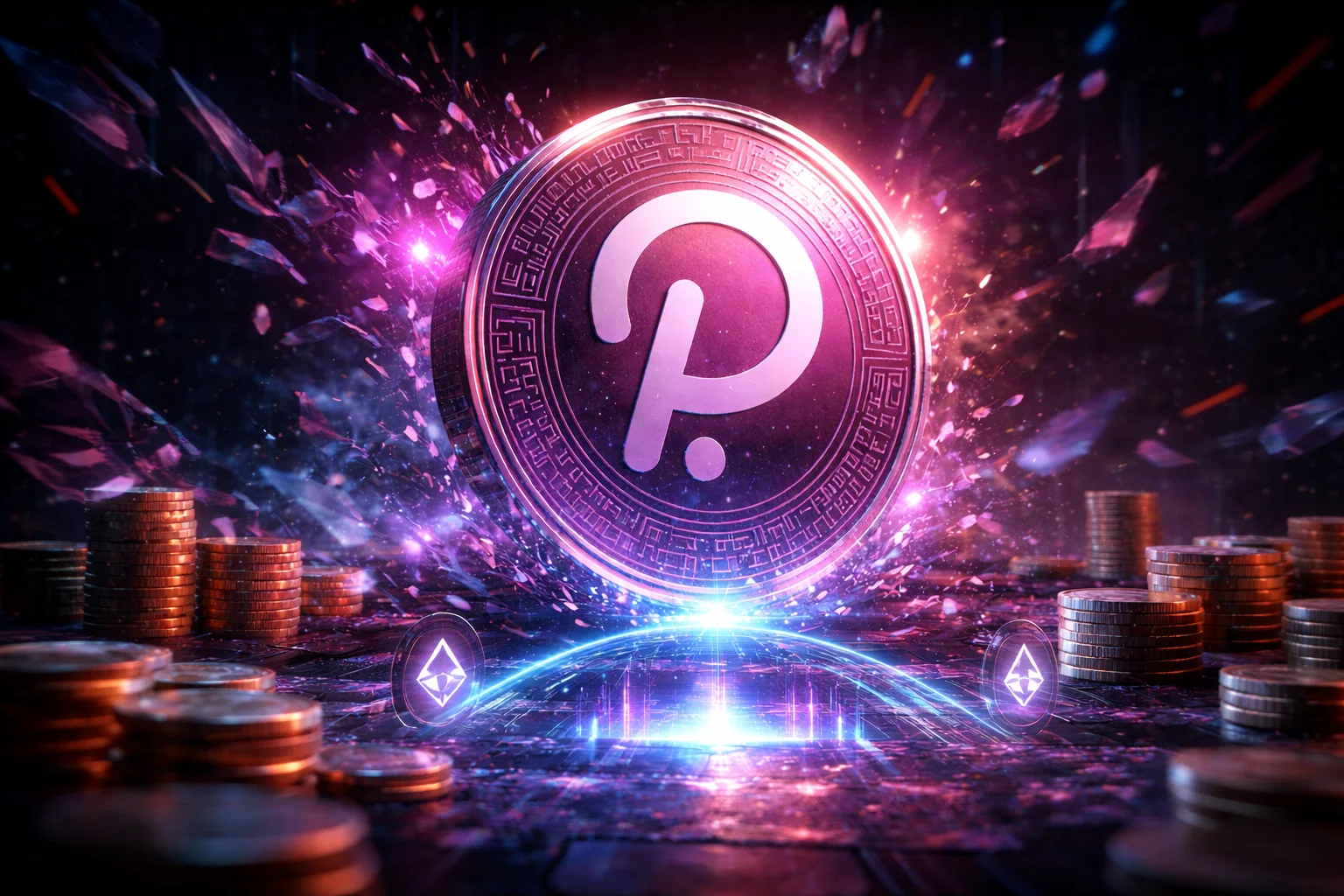
Polkadot-Linked Bridge Hack: 1 Billion DOT Tokens Minted
A security vulnerability in the crypto market has emerged, this time through the Hyperbridge infrastructure. A flaw in the system that enables asset transfers between Ethereum and other blockchains allowed an attacker to generate tokens with a theoretical value of billions of dollars. However, the profit obtained was far below expectations.1 billion DOT generatedIn the incident that occurred on Sunday, the attacker targeted the verification process in Hyperbridge's gateway contract on Ethereum. Thanks to this vulnerability, 1 billion bridged Polkadot (DOT) tokens were generated. Although this amount corresponds to a value of approximately $1.19 billion on paper, the amount the attacker received after the sale was only about $237,000. The attack targeted the bridge mechanism, not the Polkadot network itself. Therefore, Polkadot's mainnet and native DOT token were not affected. The problem arose in the verification phase of cross-chain messages. Normally, the validity of these messages is confirmed with strong cryptographic proofs. However, it was understood that the verification method used here could be bypassed in a specific scenario. Source: CoinDesk According to on-chain data, the attacker sent a forged message via the "dispatchIncoming" function in the system. This message was routed to the TokenGateway contract and processed without passing the necessary checks. Specifically, it was found that a zero-value record was kept in the "receipt" check, which should have verified the message's validity. This indicates that the verification process was either incomplete or completely disabled in a particular call path. With the acceptance of the forged message, the attacker gained administrator privileges in the relevant token contract. From this point, the process proceeded very quickly. 1 billion tokens were minted in a single transaction, and then these assets were released into the market through various transactions. Sales were primarily conducted in the DOT-ETH liquidity pool on Uniswap. As a result of sales in multiple transactions, a total of approximately 108 ETH was obtained.Token price declinedHowever, the most critical part of the attack emerged here. The extremely limited bridged DOT liquidity on Ethereum caused the sales to put severe pressure on the price. The market couldn't handle such a large supply, and the token price plummeted. As a result, the attacker earned a relatively small amount of money despite having the massive amount.Security experts point out that such vulnerabilities pose even greater risks, especially in bridge systems. Because bridges have high authority over token contracts on the target chain, even a single error in the verification mechanism can lead to unlimited token production. The main reason the damage was limited in this case was the lack of liquidity. In other words, a similar vulnerability in deeper markets or assets with higher trading volumes could cause much larger losses. There has been no official statement from Hyperbridge yet. Furthermore, it remains unclear whether other tokens using the same gateway infrastructure pose a similar risk.
PEPE Commentary and Price Analysis - April 12, 2026
PEPE/USDT Technical AnalysisPEPE has been trading within a falling wedge formation for a long time and is currently near the lower band of the structure, pricing close to the bottom region. These types of formations often signal that selling pressure is fading and a potential trend reversal may be preparing. Especially in recent weeks, the fact that selling has been absorbed near the lows shows that buyers are stepping in around this area.At the moment, price is trying to hold within the 0.0000032–0.0000035 range. This zone is the most critical short-term support area. For now, support is holding and price is showing mild recovery signals from the bottom. As long as the wedge structure remains intact, the possibility of an upside reaction stays on the table.On the upside, the first important level to watch is 0.0000038. This is the first short-term resistance. If price can hold above this level, it may recover first toward the 0.0000046–0.0000050 range. The real strong breakout would come once the upper trendline is broken. At that point, momentum in PEPE could accelerate and a broader recovery may begin.On the downside, falling below 0.0000032 becomes risky. If this support is lost, price may first move toward 0.0000028, and then test lower bottom zones. Overall, the structure is still weak, but compression near the lows continues. That is why the key issue for PEPE is whether the wedge’s lower support can hold. Falling Wedge Structure 0.0000032 is the main support levelAs long as this area holds, the chance of a rebound from the bottom remains0.0000038 is the first short-term resistance0.0000046–0.0000050 is the key recovery zoneBelow 0.0000032, the risk of new lows increasesThese analyses do not provide investment advice and focus on support and resistance levels that are considered to offer short- and medium-term trading opportunities depending on market conditions. However, responsibility for execution and risk management lies entirely with the user. In addition, the use of stop loss is strongly recommended.
ETC Commentary and Price Analysis - April 12, 2026
ETC/USDT Technical OutlookOn the ETC side, the main topic recently has been the approach of the final testing phase for the Olympia upgrade. This update aims to improve network stability and increase efficiency on the transaction side. The fact that the process is moving forward as planned with support from major clients stands out as a confidence-boosting detail on the technical side. In addition, ETC has started to gain attention again within the proof-of-work ecosystem after Ethereum. The sustainability of the recent price move will largely depend on how much this technical progress is reflected in market demand. Triangle Formation From a technical perspective, descending trend pressure continues from above, while the 8.00–8.10 dollar range is holding strongly as support. This zone has been tested several times in recent weeks, and buyers have stepped in each time. That shows the lower region is still solid.Currently, price is trading around 8.30, moving in the middle of the triangle. In other words, the market is at a decision point. There is neither strong selling pressure nor a confirmed breakout yet. In these types of areas, direction is usually determined by a clear reaction from either support or resistance.On the upside, the first important level is 8.43. If this level is broken, price can move back toward the upper band resistance at 8.75–8.90. The real breakout would be confirmed with closes above the descending trendline. In that scenario, 9.28 and 9.62 come back into focus.On the downside, the 8.10–8.00 range is critical. If this area is lost, the triangle would break downward, opening room first toward 7.85, and then 7.60. In short, ETC remains balanced for now, but as the squeeze tightens, the probability of a sharper move increases.8.00–8.10 dollars is the main support zone8.43 is the first short-term resistance8.75–8.90 is the upper band and key breakout zoneAbove this area, 9.28 and 9.62 become targetsBelow 8.00, selling pressure increasesThese analyses do not provide investment advice and focus on support and resistance levels that are considered to offer short- and medium-term trading opportunities depending on market conditions. However, responsibility for execution and risk management lies entirely with the user. In addition, the use of stop loss is strongly recommended.
TON Commentary and Price Analysis - April 11, 2026
TON/USDT Technical AnalysisOn the TON side, the key recent development has been the Catchain 2.0 upgrade, which significantly improved network performance. With this update, block production times have been reduced and transaction flow has become faster. TON also continues to expand its use cases through its strong connection with the Telegram ecosystem, especially in mini apps and payments. In other words, the project is supported not only by expectations but also by concrete infrastructure improvements. That is why the strength of buyer interest behind the recent price move should be monitored carefully. Falling Wedge Formation From a technical perspective, the long-standing falling wedge formation has reached its final stage. Price has been moving within this wedge for a while, and over the past two days, strong buying volume has pushed it back toward the upper trendline. This kind of move is often the final preparation phase before a breakout.Currently, price is trading in the 1.35–1.40 range, which is a direct decision zone. The upper trendline passes through this region and has already been tested multiple times, weakening resistance. Because of this, the probability of a breakout is stronger than in previous attempts.For confirmation, it is important to see price hold above this zone. Especially closes above 1.38–1.40 would completely change the structure and signal the end of the downtrend. In that case, the move would no longer be just a relief rally but could evolve into a new uptrend.On the upside, the first target is the 1.58 level. Beyond that, the 1.73–1.81 range becomes relevant, and in the broader picture, the 2 dollar and above area comes into play.On the downside, if a pullback happens before the breakout, the 1.26–1.28 range is the first support zone. Below that, 1.12 stands out as the main support. However, as long as the wedge structure remains intact, these pullbacks tend to act as buying opportunities.The 1.35–1.40 range is the key breakout zoneCloses above 1.38 can start a trend reversalFirst target is 1.58, followed by the 1.73–1.81 rangeMedium-term potential extends toward 2 dollars and above1.26–1.28 is first support, with 1.12 as the main supportThese analyses do not provide investment advice and focus on support and resistance levels that are considered to offer short- and medium-term trading opportunities depending on market conditions. However, responsibility for execution and risk management lies entirely with the user. In addition, the use of stop loss is strongly recommended.