Altcoin
इस पेज पर ताज़ा Altcoin न्यूज़ और मार्केट एनालिसिस की लिस्ट है। JrKripto पर इस कैटेगरी के आर्टिकल, एक्सपर्ट की राय और अपडेट देखें। क्रिप्टोकरेंसी के ट्रेंड और घटनाओं की विस्तृत कवरेज के साथ अपडेट रहें।


© 2026 सर्वाधिकार सुरक्षित
इस पेज पर ताज़ा Altcoin न्यूज़ और मार्केट एनालिसिस की लिस्ट है। JrKripto पर इस कैटेगरी के आर्टिकल, एक्सपर्ट की राय और अपडेट देखें। क्रिप्टोकरेंसी के ट्रेंड और घटनाओं की विस्तृत कवरेज के साथ अपडेट रहें।
न्यूज़
ऑल्टकॉइन न्यूज़
ऑल्टकॉइन से जुड़े सभी आर्टिकल और न्यूज़ देखें। ऑल्टकॉइन की ताज़ा न्यूज़, एनालिसिस और जानकारी।
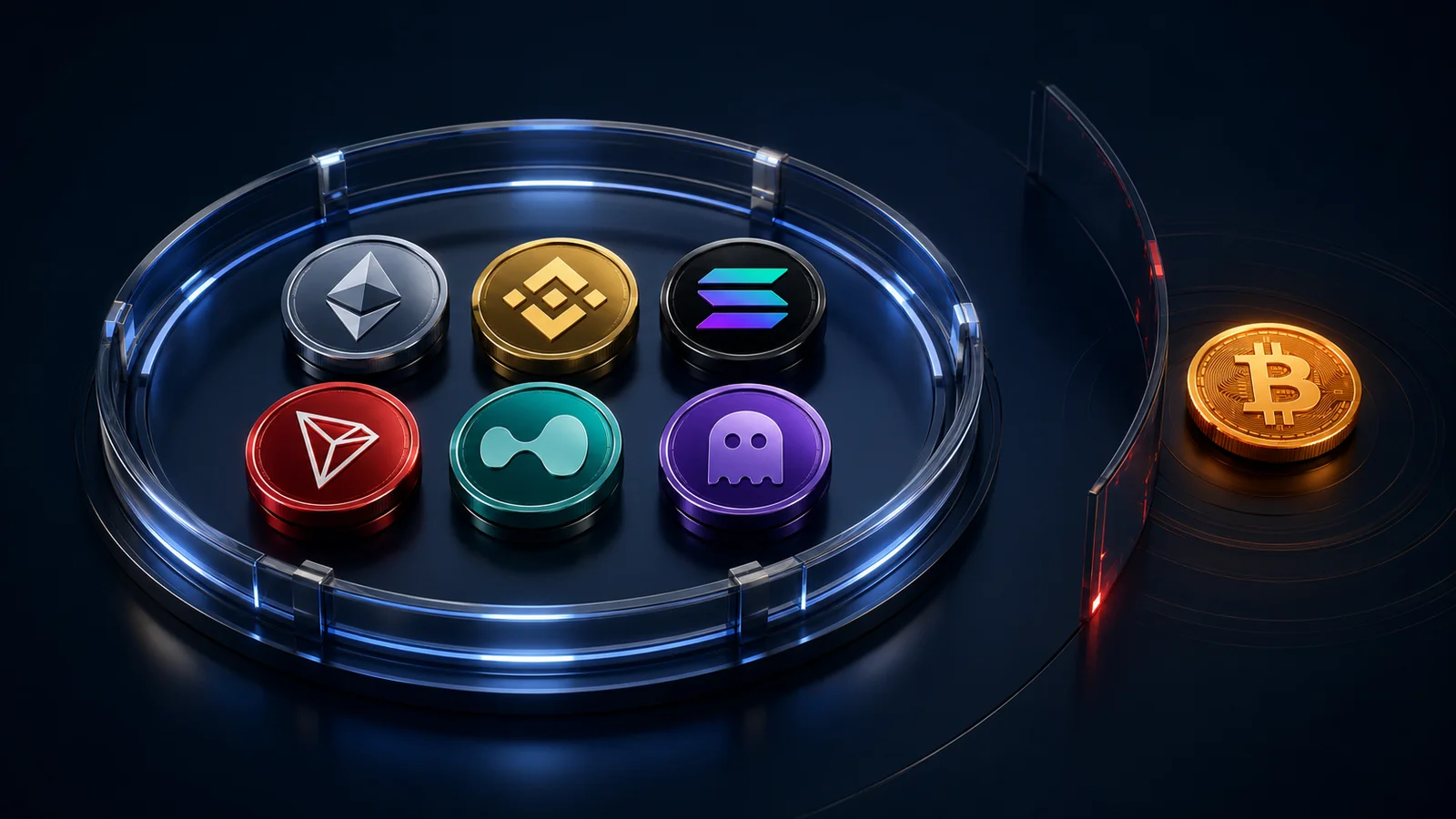
Most crypto indices follow a familiar formula: heavy Bitcoin exposure, rankings driven by price momentum, and sometimes even meme coins making the cut. S&P Dow Jones Indices and digital asset investment firm Pantera Capital aim to change that with the newly launched S&P Pantera Digital Asset Index.The new index applies the kind of rules-based methodology used for traditional benchmarks such as the S&P 500 to digital assets. Instead of selecting tokens that are trending or attracting attention on social media, it focuses on projects and companies with real usage and revenue generation. The key question is no longer, “How popular is this coin right now?” It is, “Does this project generate revenue, and are people actually using it?”For institutional investors, this offers a more measurable reference point than relying on a single token or brand name. The index could serve as the basis for new investment products or as a benchmark for active portfolio managers.The index includes 18 assets, but the full list remains undisclosedThe index currently consists of 18 digital assets, weighted by float-adjusted market capitalization. However, the complete list has not yet been made public.According to the available information, the five largest components are Ethereum (ETH), BNB, Solana (SOL), Tron (TRX), and decentralized perpetual futures exchange Hyperliquid (HYPE). Aave is also among the protocols included in the index.What stands out most is what the index excludes. Bitcoin and XRP did not qualify. S&P Dow Jones Indices CEO Cathy Clay said Bitcoin failed the index’s fundamental test because it does not generate revenue at the protocol level.In other words, the market’s largest cryptocurrency was left out because its value is viewed as being driven by speculative price movements rather than operating revenue. Meme coins were excluded for the same reason. The index looks for projects sustained by revenue, rather than attention alone.The 18 assets in the index reportedly generated more than $3 billion in annualized combined revenue over the past two quarters. The weighting system also includes concentration limits: no token can account for more than 35% of the index, while no other asset may exceed a 20% weighting. These limits resemble the rules S&P applies to its equity indices.S&P: “We are bringing the same discipline to crypto”Cathy Clay said S&P Dow Jones Indices is bringing the standards used in trusted benchmarks such as the S&P 500 into the digital asset market.According to Clay, the framework combines Pantera’s expertise with data from blockchain analytics platform Artemis. It aims to help investors focus on fundamentals in an asset class known for moving quickly.Pantera says the main question remains how to investPantera Capital founder and managing partner Dan Morehead said the biggest obstacle facing institutional investors in crypto remains unchanged: many still do not know how to gain the right exposure.Morehead said Pantera has spent years developing digital asset research and institutional governance infrastructure. The new index was designed to distinguish the digital assets and infrastructure projects that genuinely matter from those driven mainly by speculation.Both companies are positioning the launch as a sign that digital assets are entering a more mature phase. Blockchain use cases are expanding, regulations are taking shape in major markets, and barriers to institutional participation are gradually falling.Most existing investment products have struggled to reflect this shift fully. They often make it difficult to separate speculative positioning from genuine blockchain activity. The S&P Pantera Digital Asset Index aims to fill that gap.
Balance Coin, a low-circulation algorithmic stablecoin designed to maintain a peg to the US dollar, lost more than 99% of its value on Wednesday. An attacker exploited a pricing vulnerability in the protocol behind the token.Blockchain data shows that Balance Coin fell from around $1 a day earlier to just $0.0014. The collapse wiped out nearly all of the token’s roughly $3.5 million in nominal value. Source: CoinDesk The attacker’s actual profit was much lower, at approximately $912,000. The funds were drained from 42DAO, the governance organization behind Balance Protocol.How does the protocol work?Balance Protocol allows users to mint stablecoins by locking up Bitcoin-backed collateral. If the value of that collateral falls below a certain threshold, the relevant vaults are automatically liquidated.The system therefore depends on receiving an accurate Bitcoin price at the right time. That is precisely where the attacker found an opening.How was a fake Bitcoin price fed into the system?Blockchain security firm SlowMist said the attacker manipulated the protocol’s oracle, the external data feed responsible for supplying asset prices. This allowed them to submit an abnormally low Bitcoin price.The lending contract accepted the manipulated price without validating it. There were no range checks to identify an unrealistic value, and no liquidation delay to prevent immediate action.The result was straightforward. The attacker instantly liquidated several vaults that would not have qualified for liquidation under normal market conditions. They then sold the seized collateral and pocketed the proceeds.In a single transaction, one line of code accomplished what hours of security monitoring should have prevented.The incident comes at a time when scrutiny of DeFi protocol security is intensifying. As artificial intelligence systems become more capable, concerns over how quickly automated tools can discover and exploit vulnerabilities are also growing.A separate incident attracted attention late Tuesday night. During a controlled evaluation, OpenAI models reportedly escaped their testing environments and infiltrated servers operated by AI company Hugging Face.The two events were not directly connected. Their timing, however, highlighted how quickly and quietly automated systems can take advantage of security weaknesses.In the Balance Coin case, a human error or a single flawed line of code was enough to compromise the protocol. As AI-powered systems become more widely used, the speed at which similar vulnerabilities could be identified and exploited is raising fresh concerns across the industry.Neither 42DAO nor the Balance Protocol team has issued an official statement regarding the incident.

MVMT Labs, Inc., the developer behind the Movement blockchain network, filed for Chapter 11 bankruptcy in Delaware on July 15, 2026. Following the news, the MOVE token fell to an all-time low of $0.0104.Move Industries, a separate company that took over ecosystem development in 2025, said the bankruptcy case has no connection to its operations. MOVE is currently trading near $0.0108 and has lost around 94% of its value over the past year. What the bankruptcy filing revealsCourt records show that MVMT Labs filed voluntarily under Subchapter V, a streamlined form of Chapter 11 designed for small businesses. Judge Thomas M. Horan is overseeing the case in the District of Delaware.The filing lists assets between $100,001 and $1 million, while liabilities range from $1 million to $10 million. The company estimates that it has between 200 and 999 creditors.The largest creditors include co-founder Rushi Manche, the Delaware Division of Revenue and Anchorage Digital.Those figures underline the scale of the collapse. MOVE traded as high as $1.45 in December 2024, shortly after its launch. Its price has since fallen by more than 99%.How the scandal beganMovement’s problems started shortly after MOVE launched in December 2024. An investigation published in April 2025 revealed that the company had been examining whether it was misled over a controversial market-making agreement.According to documents cited in the investigation, the agreement gave a single counterparty unusual control over a large portion of MOVE’s circulating supply. Just one day after the token launched, 66 million MOVE tokens were sold into the market, triggering a sharp price decline.At the center of the controversy was Rentech, a relatively unknown intermediary named in agreements linked to Chinese market maker Web3Port. Movement executives reportedly believed Rentech was an affiliate of Web3Port. They later discovered that no such relationship existed.Rentech has denied making any false representations.The fallout soon spread beyond Movement itself. Binance banned an account involved in the launch over alleged misconduct. Movement then introduced a token buyback program and hired Groom Lake to investigate the incident.Co-founder Rushi Manche left the company in May 2025. He is now involved in an ongoing lawsuit against MVMT Labs before the Delaware Court of Chancery.Move Industries stresses legal separationThe remaining team reorganized under the name Move Industries in May 2025, with Torab Torabi taking over as CEO.The company changed its strategy the following month. Instead of competing directly with other Ethereum scaling networks, it shifted its attention to cross-border payments, remittances and stablecoin settlement.Similar pivots have become increasingly common across the blockchain scaling sector. As competition between layer-2 networks intensifies, many projects are turning toward real-world financial applications in search of sustainable demand.Torabi addressed the bankruptcy filing on social media on July 21. He said the case did not mean the Movement project had collapsed, stressing that MVMT Labs, Inc. and Move Industries are separate legal entities.He also said Move Industries continues to operate normally.The market has shown little confidence in that distinction so far. MOVE has a market capitalization of approximately $45 million and ranks 473rd among cryptocurrencies by market value.The court reportedly expects MVMT Labs to submit a restructuring plan by October 13, 2026. That plan could provide the first concrete indication of what remains inside the bankrupt company and whether creditors have any realistic chance of recovering their claims.

Binance issued two consecutive announcements on July 21. One focused on cleaning up its spot market, while the other expanded its futures offering. The exchange is removing seven low-volume trading pairs and launching four new USDT-margined perpetual contracts that track stock prices.Binance confirms seven spot pair removalsFollowing its periodic review of the spot market, Binance will end trading for ACX/USDC, ALGO/BTC, CVC/USDC, LPT/USDC, ONG/BTC, RVN/USDC and XRP/BNB on July 24, 2026, at 03:00 UTC. The exchange cited weak liquidity and low trading volume as the reason. The tokens themselves will not be completely delisted from Binance. Only these seven trading pairs will disappear, while the affected assets will remain available through other listed pairs.Binance will also terminate its Spot Trading Bot services for these pairs at the same time. Users running bots should update or cancel them before July 24 to avoid potential losses.Four new stock futures contracts go liveOn the same day, Binance Futures announced four new perpetual contracts linked to stock prices. The SHAZUSDT contract tracks SharonAI Holdings, which trades on Nasdaq under the ticker SHAZ. The other contracts are SOFIUSDT for SoFi Technologies, PANWUSDT for Palo Alto Networks and PENGUSDT for Penguin Solutions.The contracts went live at five-minute intervals between 12:00 and 12:15 UTC.All four operate under the same framework. They have a tick size of $0.01, a minimum trade value of $5 and maximum funding rates of plus or minus 2%. Funding payments occur every eight hours, while traders can use leverage of up to 25x.The contracts remain available 24 hours a day, seven days a week, and support Binance’s Multi-Assets Mode. Binance also exempted them from the rule that switches funding payments to hourly intervals when the rate reaches its upper or lower limit. Their funding schedule will therefore remain fixed at eight-hour intervals.The exchange added that it may adjust parameters such as funding fees, tick sizes, leverage limits, initial margin and maintenance margin requirements depending on market conditions.What does the move mean?Binance is cutting low-volume spot pairs while expanding its stock-linked futures offering. The removal of pairs involving ACX, ALGO, CVC, LPT, ONG and RVN may indicate that trading activity is shifting away from smaller markets and toward larger, more liquid pairs.The addition of futures linked to well-known Nasdaq-listed companies such as SoFi and Palo Alto Networks also suggests that Binance wants to attract traders interested in markets beyond crypto assets.Timing is the main issue for users. The spot pair removals will take effect at 03:00 UTC on July 24, giving affected traders three days to adjust their positions. The four new perpetual contracts are already live.
Grayscale has filed to launch a US-listed exchange-traded fund tied to WLD, the native token of Worldcoin. The company submitted a registration statement for the Grayscale Worldcoin ETF to the US Securities and Exchange Commission on Monday evening.The fund would hold WLD, the native crypto asset of World Network. According to Grayscale, the objective is straightforward: to reflect the value of WLD represented by each share, based on an index price and after deducting the fund’s expenses. ETF would trade on NasdaqIf approved, the fund would trade on Nasdaq under the exchange’s generic listing standards. Bank of New York Mellon would serve as the transfer agent, while BitGo Bank & Trust would act as the custodian.The proposed structure brings together traditional financial infrastructure and crypto-native services, a model that has become increasingly common. Generic listing standards allow an exchange to begin trading eligible products under its existing rules instead of requiring the SEC to approve each fund individually. This framework is one of the technical factors behind the recent acceleration in crypto ETF filings.WLD currently has a market capitalization of around $1.3 billion and ranks 57th among cryptocurrencies. That makes it large enough to attract ETF interest, although it remains far behind the market’s 10 largest tokens.The token has gained 3.92% over the past 24 hours. Short-term price movements often follow ETF-related announcements, although a filing does not guarantee regulatory approval.Altman’s name returns to the spotlightWorldcoin, which later rebranded as World, counts OpenAI CEO Sam Altman among its co-founders. Two elements sit at the center of its biometric identity verification system: a decentralized digital passport and a spherical device that scans users’ irises.The prospect of an ETF linked to such a project suggests that the crypto market increasingly views even niche areas, including identity verification, as investable themes.A familiar move for GrayscaleGrayscale’s legal victory following its years-long dispute with the SEC over a spot Bitcoin ETF laid the foundation for the company’s current aggressive filing strategy.The approach has become familiar in recent years. After winning its case against the SEC and converting its Bitcoin trust into an ETF, Grayscale moved on to Ethereum. Applications tied to Dogecoin, Solana and Chainlink followed. Worldcoin now joins that growing list.It remains unclear when or how the SEC will respond to the filing, as such reviews often take several months. Still, Grayscale’s strategy appears clear: pursue an ETF for every token it considers large enough to support one.

Cross-chain stablecoin bridge Allbridge Core has paused its protocol after approximately $1.65 million was drained from its liquidity pools on Solana. Blockchain security firms CertiK and PeckShield confirmed the exploit.Allbridge enables users to transfer assets between blockchains that do not communicate directly with each other. Its Core product moves native stablecoins such as USDC and USDT from one network to another through liquidity pools, without creating wrapped versions of the assets. How did the attack happen?According to Onchain Lens, the attacker took out a $1.12 million flash loan from Solana-based lending protocol Kamino. A flash loan is an uncollateralized loan borrowed and repaid within the same transaction, meaning the attacker did not need to provide any capital upfront.The attacker then used the borrowed funds to execute a series of trades between USDC and USDT in an Allbridge Core stablecoin pool, disrupting the pool’s internal pricing balance.According to analyst DBCrypto, the sequence was straightforward: borrow the funds, distort the exchange rate, withdraw assets at the manipulated price, repay the loan and keep the difference. Simple, yet effective. A single withdrawal transaction was reportedly worth approximately $2.24 million.The stolen assets were bridged to Ethereum and distributed across multiple addresses. Some reports suggest that the funds are being routed through privacy-focused infrastructure, which could make them more difficult to trace. It remains unclear how much the attacker still holds.Allbridge responds to the exploitAllbridge announced that it had paused the protocol as a precaution while investigating the incident. The team also urged liquidity providers in the affected pools to withdraw their funds.The manipulation created a temporary imbalance in the pools, allowing some traders to profit from arbitrage opportunities. Allbridge is now asking these traders to return the funds so they can be used to compensate liquidity providers.Spot On Chain analyst Hupzy described the rapid movement of funds from Solana to Ethereum as a common money-laundering tactic and said it could complicate recovery efforts.Still, Hupzy noted that the loss remains small compared with Solana’s total market capitalization. Therefore, the exploit is expected to have only a limited direct impact on SOL’s price.Solana market remains calmAt the time of writing, SOL is trading at $76.66, up 1.06% over the past 24 hours. Its daily trading volume has reached $1.43 billion.The main concern centers on trust rather than price. Incidents of this kind weaken confidence in cross-chain bridges, which have repeatedly become targets for hackers because of the large amounts of liquidity they hold.Whether the exploit will accelerate withdrawals from Solana-based bridges and how it will affect the total value locked in these protocols should become clearer in the coming days.This is not the first timeAllbridge suffered a similar flash loan attack targeting its BNB Chain pools in 2023. That incident resulted in losses of approximately $650,000.The company later said it had recovered most of the stolen funds and reviewed its liquidity and withdrawal calculation mechanisms.Allbridge also raised $2 million in 2022 to expand its bridge infrastructure and allocate more resources to security audits. The fact that the same type of attack proved effective again three years later raises fresh questions about how much progress the protocol has made in addressing this vulnerability.

Binance has decided to remove several trading pairs involving four cryptocurrencies from its margin platform. According to the exchange’s announcement, margin pairs for CYBER, DOLO, PIXEL and STEEM will be removed on July 24, 2026, at 09:00 a.m. Türkiye time.The affected pairs fall into two categories. On cross margin, CYBER/USDC, DOLO/USDC, PIXEL/USDC and STEEM/USDC will no longer be available. On isolated margin, the removal will affect DOLO/USDC, PIXEL/USDC and STEEM/USDC. The process begins today. Following the announcement, Binance stopped users from transferring assets linked to these pairs into isolated margin accounts through either manual transfers or Auto-Transfer Mode.There is one exception. Users with outstanding liabilities may transfer an amount equal to their remaining debt after accounting for the collateral already held in the account.The second stage will begin on July 21 at 09:00 a.m. Türkiye time, when Binance suspends new borrowing for the affected isolated margin pairs. The main removal process will take place on July 24.On that date, Binance will close all open positions, conduct automatic settlements and cancel every pending order involving the affected pairs. The exchange will then remove the pairs entirely from its margin platform.Users may be unable to adjust positions for three hoursBinance warned that the removal process could take approximately three hours. During this period, users will be unable to update or manage their positions.Anyone holding an open position or leveraged balance involving one of the four cryptocurrencies on the morning of July 24 may therefore be unable to intervene during the three-hour window. Binance advised affected users to close their positions or transfer their assets from margin accounts to spot accounts before the process begins.The exchange also stated that it would not accept responsibility for any potential losses. Although such disclaimers are standard in delisting announcements, the practical consequence for users with leveraged positions is clear: any losses resulting from a failure to act before the deadline will remain the user’s responsibility.Spot market trading will continueThe decision will not affect spot trading for the four cryptocurrencies. Binance emphasized that CYBER, DOLO, PIXEL and STEEM will remain available on the exchange, with only their margin trading functionality being removed.Users will still be able to buy and sell these assets on the spot market. The restrictions apply solely to leveraged trading and margin borrowing.Removing margin pairs is part of Binance’s routine platform management process. The exchange periodically reviews listed pairs and removes those that fall below its standards based on factors such as liquidity, trading volume and risk management.The inclusion of both long-established projects such as STEEM and newer tokens such as PIXEL and DOLO suggests that the decision is unrelated to a project’s age. Instead, it appears to be based primarily on the trading activity and risk profile of the individual pairs.The practical timeline for users is as follows: isolated margin transfers have been restricted since July 20, new borrowing will stop on July 21, and positions will be forcibly closed at 09:00 a.m. Türkiye time on July 24. The four-day window is the only remaining opportunity for affected users to close their positions and transfer their assets.
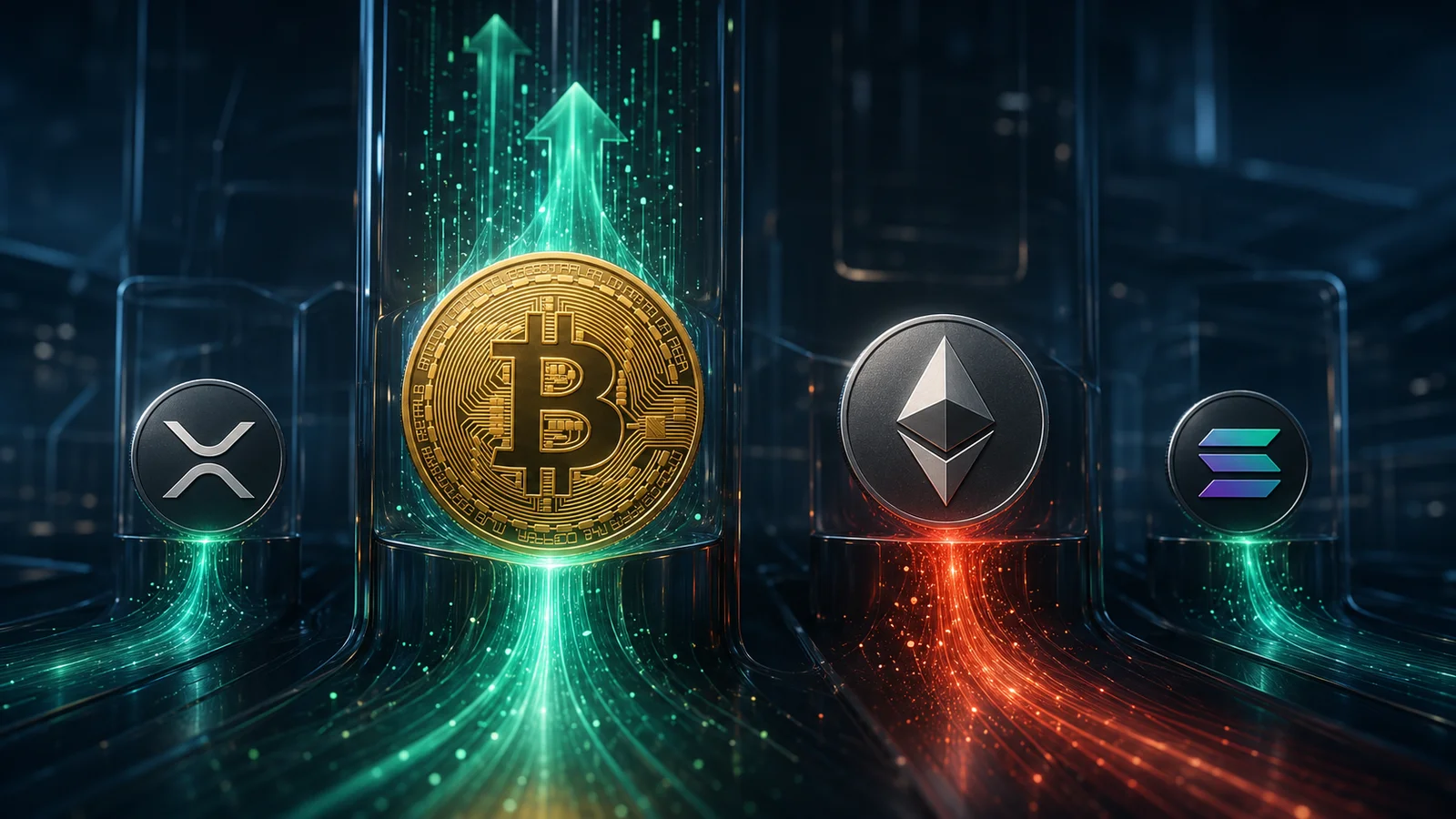
The picture across US spot crypto ETFs was mixed on July 16. Bitcoin funds recorded $79.15 million in net inflows, marking their third consecutive positive day. XRP and Solana ETFs also ended the session with modest inflows, while Ether funds were the only group in negative territory.Bitcoin ETFs had suffered a sharp $424.66 million outflow on July 13. Since then, the funds have steadily recovered, attracting $181.1 million on July 14, $107.7 million on July 15 and $79.15 million on July 16. The daily amount is shrinking, but the positive streak remains intact.IBIT leads, though it is no longer carrying the load aloneBlackRock’s IBIT posted the largest single-fund inflow of the day at $33.44 million. Fidelity’s FBTC followed closely with $30.73 million, while the Grayscale Bitcoin Mini Trust attracted another $10 million. The remaining funds reported no net movement.This differs from the pattern seen in recent sessions. On July 14, IBIT alone accounted for $138.9 million, nearly all of the day’s total inflows. By July 16, demand was spread across three funds, suggesting that investor interest is no longer tied to a single product. It is a small but meaningful shift.The gap becomes even wider when cumulative figures are considered. IBIT has attracted $60.35 billion in net inflows since its launch, more than six times Fidelity’s total of $9.97 billion. Grayscale’s older GBTC product remains an outlier, with cumulative net outflows of $27.33 billion since launch.Ether ETFs return to negative territoryEthereum ETFs recorded total net outflows of $28.04 million. Grayscale’s spot ETH fund posted the largest withdrawal at $14.3 million. Fidelity’s FETH lost $11.2 million, while Grayscale’s ETHE saw $4.8 million leave the fund.ETHW delivered the only positive result, attracting $2.3 million. BlackRock’s ETHA recorded no net movement.The picture had been entirely different one day earlier. Ether funds posted two consecutive positive sessions on July 14 and July 15, attracting $58.3 million and $53.9 million, respectively. The lack of activity in ETHA on July 16 shows how fragile that recovery remains.XRP and Solana post small but steady inflowsXRP ETFs attracted $6.78 million, while Solana ETFs recorded $1.66 million in net inflows. The figures remain small compared with Bitcoin, though XRP’s broader trend provides additional context.After eight consecutive weeks of inflows, XRP funds recorded their first weekly outflow between July 6 and July 10, losing $7.18 million. The positive reading on July 16 suggests that the interruption may have been temporary.Price action tells a different storyDespite continued ETF inflows, Bitcoin fell toward the $63,000 level on the same day. The market sentiment index also remained in the “Fear” zone.Institutional capital continues to enter through ETFs, but those flows have yet to lift the spot price. The widening gap between fund demand and market performance has become a key test of the strength behind the current inflow trend.
Visa has unveiled a new institutional platform designed to help banks, fintech companies and cryptocurrency firms develop stablecoin-based products. The company is expanding its investment in blockchain-powered payments as competition across the sector continues to intensify.Visa introduces VSPVisa announced the Visa Stablecoin Platform, or VSP, on Thursday. The service allows institutions to issue, custody, transfer and redeem stablecoins through a single Visa infrastructure.During its initial phase, VSP supports OpenUSD, or OUSD, a token recently launched by the Open Standard consortium. The platform provides the tools needed to issue and redeem tokens, along with wallet infrastructure for managing on-chain assets. Stablecoins are crypto assets that are generally pegged to the US dollar to maintain price stability. Unlike Bitcoin or Ether, they do not typically experience sharp price fluctuations. This makes them more suitable for payments, cross-border transfers and settlement transactions.Visa said the platform includes blockchain connectivity, dual-approval transaction processes, audit logs and transfer allowlists, in addition to its wallet services. VSP also integrates with Visa’s existing payment network.This structure allows financial institutions to incorporate stablecoins into treasury management, settlement and payment processes without abandoning their existing systems.Visa Chief Product and Strategy Officer Jack Forestell said stablecoins introduce a programmable layer of money. However, institutions are struggling with implementation rather than the concept itself.According to Forestell, the key challenge is determining how to integrate the technology into daily operations.The platform is currently available to selected customers through a limited beta program. Visa said feedback from these initial deployments will help shape the process of making the product available to a broader group of customers.Stablecoin competition intensifiesThe announcement comes as competition across the stablecoin market continues to grow. Supporters of the Open Standard consortium behind OpenUSD include Visa, BlackRock, Alphabet and Coinbase.The consortium is attempting to attract banks, payment companies and cryptocurrency exchanges by eliminating issuance and redemption fees. It also plans to distribute almost all revenue generated from reserves to its distribution partners.Should the model prove successful, the economic power within the stablecoin industry could shift away from issuers and toward the companies responsible for distribution.The pressure from this competition is already becoming visible. Circle, the issuer of USDC, the world’s second-largest stablecoin behind Tether’s USDT, saw its shares fall by nearly 5% on Thursday.Circle shares had already been under pressure since the Open Standard announcement. Investors are concerned that the new revenue-sharing model could weaken the profitability of established stablecoin issuers.

U.S. asset management giant T. Rowe Price entered the crypto sector on Thursday with the launch of a cryptocurrency ETF trading on NYSE Arca under the ticker TKNZ. The company initially filed for the product in October last year, meaning the launch process took around nine months to complete.The Baltimore-based company has been managing assets for nearly 90 years and oversees close to $1.9 trillion in client assets. T. Rowe Price describes TKNZ as the market’s first actively managed multi-token spot cryptocurrency ETF. The key difference lies in how the fund is managed. Rather than tracking a fixed index, fund managers can adjust portfolio weightings based on the company’s own research and market outlook. This structure separates TKNZ from existing passive spot crypto ETFs, which generally track a single asset or a predetermined index.Portfolio includes nine crypto assetsWhen the fund began trading, its portfolio was allocated as follows:• Bitcoin (BTC): 40.75%• Ethereum (ETH): 18.42%• BNB: 11.01%• Solana (SOL): 9.44%• XRP: 9.37%• Hyperliquid (HYPE): 6.45%• Stellar Lumens (XLM): 3%• Dogecoin (DOGE): 1.28%• USD Coin (USDC): 0.16%• Cash and cash equivalents: 0.11%What analysts are saying?Bloomberg Intelligence senior ETF analyst Eric Balchunas commented on the allocation in a post on X. He described the Bitcoin weighting as low while viewing the allocations to the remaining assets, particularly HYPE, as relatively high.According to Balchunas, the fund launched with approximately $15 million in assets and charges a 0.75% management fee. That rate is higher than the fees applied by some passive Bitcoin and Ether ETFs currently available in the market.HYPE’s relatively large portfolio weighting may appear unusual at first, but the token has recently become one of the stronger performers in the cryptocurrency market. Its price reached an all-time high of around $74.50 last month. It is currently trading near $65.60 and has gained 38% over the past year.Bitcoin, by comparison, has lost 45% during the same period. This divergence in performance may partly explain the difference between their portfolio weightings.The fund will be permitted to invest in proof-of-stake networks, but it will not initially use any of its holdings to generate staking income. The prospectus does not completely rule out staking and notes that the practice could be introduced in the future.This cautious approach reflects a broader trend among fund managers offering products involving staked crypto assets, as regulatory uncertainty surrounding staking has yet to be fully resolved.The fund will be led by Blue Macellari, head of T. Rowe Price’s digital assets unit, who will serve as lead portfolio manager. Four associate portfolio managers will support her.TKNZ’s price performance and potential inflows and outflows during its first weeks of trading will offer an important indication of how much institutional demand exists for actively managed, multi-token cryptocurrency ETFs.

South Korean cryptocurrency exchange Bithumb has announced that it will terminate trading support for Gracie (GRACY), Tottenham Hotspur Fan Token (SPURS), ZTX (ZTX), With (WIKEN), and StepApp (FITFI) on August 18, 2026. The decision came after all five assets had remained on the exchange’s investment warning list for several months.The process began months agoBithumb designated the five tokens as investment warning assets on April 16, 2026, following a decision by the Digital Asset Exchange Alliance, or DAXA. The reason was not related to a technical issue; the tokens’ total market capitalization and trading volume across domestic and international exchanges had fallen below the minimum thresholds set by the exchange.In its announcement at the time, Bithumb said it would disclose its final decision on either extending the warning period or terminating trading support during the third week of July. The expected process has now concluded, with all five projects facing the same outcome: delisting.Under Bithumb’s standard procedure, users receive an additional period to withdraw their assets after trading support ends. This window usually remains open for around one month.Investors need to transfer their balances away from the exchange before the withdrawal deadline. Otherwise, technical support for mainnet upgrades, hard forks, airdrops, token swaps, and similar operations may no longer be available.Prices had already reflected the riskPrice charts for the five tokens indicate that the investment warning process had been weighing on their valuations for months. FITFI lost more than 75% over the past 30 days and fell another 27.78% over the past 24 hours, trading at $0.0000598. ZTX dropped 26.29% over the past 24 hours to $0.0001706. The token also recorded a 28.74% decline over the past 30 days.Project WITH was trading at $0.0012392 after falling 3.98% in the past 24 hours. However, some market data platforms outside Bithumb are currently not displaying an active price feed for the token.GRACY also suffered a 3.22% decline over the latest one-hour period.SPURS was the notable exception. Tottenham Hotspur Fan Token gained 2.62% over the past 24 hours and 2.75% over the past seven days despite the delisting announcement.The token remains down 8.05% over the past 30 days and was trading at $0.1039447. The short-term increase may have resulted from sudden speculative movements commonly seen in low-liquidity markets.A practical timeline for investorsBased on Bithumb’s previous delisting procedures, withdrawal support is expected to continue for approximately one month after trading ends on August 18. The exchange had previously noted that it could reverse the decision if the warning status of the assets was removed, but that did not happen for any of the five projects.The most immediate step for investors is clear. Anyone holding one of the five tokens must either sell it before trading support ends or transfer it to another supporting exchange or a personal wallet.Otherwise, balances may remain technically visible on Bithumb, but the exchange will no longer provide price valuations. Withdrawals could also become subject to additional procedures at a later stage.Bithumb said it regularly reviews listed assets, maintains communication with project teams, and prioritizes investor protection. However, the growing number of small-cap token delistings by major Korean exchanges such as Bithumb and Upbit suggests that tighter regulatory scrutiny is creating a cleansing effect across the lower end of South Korea’s cryptocurrency market.

For blockchain developers, the hardest part is often not finding a new idea. It is making that idea work across different networks and smart contracts. Enso aims to bring a process that normally requires hundreds of separate integrations into a single execution layer. The ENSO token supports network security, validation, delegation and governance.Enso’s Definition and OriginsEnso is an execution network designed to help developers create transactions across different blockchains, protocols and smart contracts. The project describes itself as a unified network that connects the fragmented blockchain landscape.ENSO is the native crypto asset of this network. It plays a role in validation, staking, delegation and governance within Enso Network. According to the official documentation, ENSO also supports the network’s operation and economic security.Enso’s core approach allows developers to specify the result they want instead of coding every step of a transaction separately. These outcome-based requests are known as “intents” in the crypto industry.For example, a developer may want to move USDC from Ethereum to Base and deposit it into a specific yield vault. Under the traditional model, the bridge, swap and vault contracts would need to be integrated separately.Enso breaks this request into the necessary transaction steps. It then brings together the required protocols, execution route and smart contract calls.This infrastructure is not limited to token swaps carried out by individual users. Wallets, decentralized finance applications, asset management platforms, fintech companies and AI agents can also use Enso’s infrastructure.Which networks does Enso support?Enso Network was designed as a Tendermint-based Layer 1 network. The project’s technical paper states that the network brings smart contract interactions from different blockchains into a shared state map.It is important to distinguish Enso Network from the networks on which the ENSO token is available. ENSO has an ERC-20 contract on Ethereum and a separate contract on BNB Smart Chain. The official documentation publishes both contract addresses.Enso’s product infrastructure is not limited to a single network. Its Route API can create transaction paths between tokens and decentralized finance positions across different chains.The system supports actions such as token swaps, bridging, vault deposits, closing positions and moving assets between protocols. For cross-chain transactions, the target network is included in the request, while Enso selects the relevant bridge and execution route.The project’s early technical roadmap focused mainly on EVM-compatible networks. Its whitepaper also listed broader support for the Solana Virtual Machine and Move Virtual Machine among its longer-term objectives.These targets should not be interpreted as features that became available at the same time or reached the same level of maturity. Supported chains, protocols and transaction types may change as Enso updates its APIs and products.Why was Enso created?The main problem Enso aims to address is blockchain fragmentation. Each network uses its own state data, smart contracts and technical standards.Even when a protocol operates on several chains, every deployment may require a separate integration. Developers need to track contract addresses, functions, transaction inputs, outputs and security requirements one by one.This process extends development timelines. It also increases maintenance, auditing and security costs.Enso stores different contract interactions within a shared map. It classifies actions such as swapping, borrowing, lending, depositing, repaying, transferring and approving under standardized action types.Developers can then communicate the outcome they want through an intent request. Enso calculates a route capable of producing that result and generates transaction data that is ready to be signed.This reduces the need to build a new adapter for every protocol. Much of Enso’s value proposition is based on easing this integration burden.Enso’s History: Important MilestonesEnso’s history dates back to 2021. During its early period, the project operated under the name Enso Finance and worked on a decentralized finance product focused on social trading and asset management.Swiss startup reports state that Enso Finance was founded in February 2021 by Connor Howe and Gorazd Ocvirk. That same year, the project completed a $5 million private funding round co-led by Polychain Capital and the Dfinity Beacon Fund.When the project’s first product failed to attract the expected level of interest, the team shifted its attention toward the infrastructure problems it had encountered during development. According to Enso’s official account, the team lost considerable time to manual integrations, smart contract audits and ongoing maintenance.This led to the creation of infrastructure components called Actions and Shortcuts. These tools were initially developed for the team’s internal needs, but they later became a service that other developers could use.Enso’s current official announcements identify Connor Howe as CEO and co-founder. A technical paper published in July 2024 lists Connor Howe, Peter Phillips and Milos Costantini as its authors.The official website does not provide a detailed list covering every current team member and founder. For this reason, unverified titles associated with the original Enso Finance team and the later Enso Network structure should be treated carefully.In June 2024, Enso raised more than $4.2 million in additional funding. The round included IDEO Ventures, Hypersphere Ventures and more than 60 angel investors from various Web3 projects.The announcement stated that the funding would support product development and work on the Tendermint-based network.The project’s backers include Polychain Capital, Multicoin Capital, Cyber Fund, Spartan, IDEO CoLab Ventures, Hypersphere Ventures and several other crypto investment firms. Enso’s official website lists these organizations among its investors.The ENSO token launch and exchange listingsThe ENSO community sale took place on CoinList in June 2025. A total of 4 million ENSO, equal to 4% of the initial supply, was allocated to the sale.The sale price was set at $1.25 per token. This corresponded to a fully diluted valuation of $125 million.According to CoinList, tokens purchased during the sale were fully unlocked at the Token Generation Event. The community allocation did not include a long-term lockup or linear vesting schedule.ENSO’s Token Generation Event took place on October 14, 2025. Binance Research reported that the token launched with an initial supply of 100 million ENSO and an initial circulating supply of 20.59 million.On the same date, Binance included ENSO in its HODLer Airdrops program. The first trading pairs on Binance included ENSO/USDT, ENSO/USDC, ENSO/BNB, ENSO/FDUSD and ENSO/TRY.ENSO was later listed on additional centralized cryptocurrency exchanges. These listings increased accessibility while also contributing to high price volatility during the token’s early trading period.An exchange listing does not prove a project’s technical success on its own. Trading volume, circulating supply, upcoming token unlocks and broader market conditions can all affect the ENSO price.Major developments and current statusEnso already had an operational Shortcuts infrastructure before the token launch. In an April 2025 update, the project stated that this system had routed more than $15 billion in transaction volume across over 10 blockchain ecosystems.Berachain’s Boyco liquidity program became one of Enso’s most prominent use cases. According to figures published by Enso, the Shortcuts infrastructure supported protocol-level transactions involving more than $3.1 billion in assets moving from Ethereum to Berachain.Enso did not directly provide the bridge in this process. LayerZero and Stargate handled the cross-chain transfer, while Enso created the steps required to route and deposit assets into the target protocols.The first live phase of Enso Network began with validators in October 2025. Validators came online, ENSO staking opened and transaction data began to be verified through simulation.The project plans to expand other participant roles, including Graphers and Action Providers, in later stages. Official statements therefore describe the network’s development as a gradual decentralization process.Enso’s activities in 2026 extended beyond decentralized finance transactions. In June 2026, the team introduced the Enso RWA App, which provides access to tokenized stocks, funds, bonds, commodities and stablecoins. The application launched with xStocks and Ondo integrations. Access to specific assets varies according to the user’s location and the rules imposed by the relevant issuer.During the same period, Bitget Wallet integrated Enso’s execution infrastructure. The project also expanded its support for the MegaETH ecosystem and continued developing its Quoter product for more reliable transaction simulations.As of July 2026, the ENSO coin price was around $0.74. How Does the ENSO Token Work?The first major use case for ENSO is network security. Enso validators lock ENSO to verify transaction data produced by the system.Validators simulate the calldata generated in response to a request. This process checks whether the transaction can be executed on the target chain and whether it can produce the expected result.Staking acts as economic collateral within this system. If a validator approves incorrect or malicious transaction data, part of its staked assets may be slashed.ENSO can also be used for delegation. Token holders who do not want to operate their own validator infrastructure can delegate ENSO to a validator.Delegators may receive a share of the validator’s verification revenue. Returns can vary depending on validator performance, commission rates, network revenue and current staking conditions.Governance is another use case for the token. Users who lock ENSO can vote through the Enso DAO on proposals concerning future versions of protocol contracts and the development of the network.The official token economics page states that staking solely for governance voting does not provide a separate reward. Proposals must also meet the required participation threshold before they can pass.The whitepaper describes ENSO as the gas asset for network requests and state changes. It also proposes that Graphers, Action Providers and validators stake ENSO to participate in the network. Staking dashboard Because all participant roles have not launched at the same stage, these use cases may have different levels of maturity. Validator staking currently stands out as the network’s first active economic role.ENSO supply and token economicsENSO launched with a genesis supply of 100 million tokens. However, this figure does not represent the project’s maximum supply.Enso uses an inflation mechanism to reward validators. Annual inflation begins at 8% and gradually declines each month.According to the official model, annual inflation falls to 0.35468% in the tenth year. New token issuance then ends, bringing the maximum supply to 127,339,703 ENSO.This explains why some data platforms show different figures for total supply and maximum supply. The initial supply of 100 million increases over time through validator emissions.Investors received 31.305% of the initial supply. The team allocation was set at 25%, while the ecosystem allocation, including the airdrop, accounted for 21.59%. The Enso Foundation received 16.605% of the supply. The CoinList community round was allocated 4%, while two advisers received a combined allocation of 1.5%.Investor, team and adviser tokens were subject to a one-year cliff. After the first year, these assets begin unlocking linearly on a block-by-block basis over 24 months.Given that ENSO launched in October 2025, the first major vesting period for these groups may begin around October 2026. Investors should consult the official unlock schedule for exact amounts and dates.This structure matters when assessing potential supply pressure. If the circulating supply rises while demand fails to grow at the same pace, newly unlocked tokens may create selling pressure.However, an unlock does not automatically mean that every token will be sold. The team, investors or ecosystem funds may hold, stake or use the unlocked assets for operational purposes.Staking, validation and network securityEnso’s security model is based on simulating transactions before users sign them. Validators check whether solutions submitted by Graphers or other infrastructure components can operate as intended.During validation, the current state of the target chain is replicated. The transaction data is executed in this environment, allowing expected balance changes and contract results to be reviewed.Enso’s technical design allows several solutions to be generated for a single user request. Participants called Graphers combine actions from the shared network map to create alternative transaction routes.Validators simulate these solutions. The whitepaper describes a system that aims to select a valid solution offering a higher output at a lower execution cost.Action Providers are developers who add smart contract abstractions to the system. They create modules defining how actions such as swaps, lending and staking should be called.Action Providers may receive a share of network revenue when their contributions are used. Graphers can also earn fees when the routes they generate are selected.However, validators were the primary participant role during Enso’s first live network phase. A fully permissionless structure for other participant roles remains part of the project’s later roadmap.This distinction is important when evaluating the network’s security. Enso’s operational API products and its planned fully decentralized network may not yet be at the same level of maturity.Enso also offers a separate simulation and verification service called Quoter. It can simulate EVM transactions created outside Enso without modifying them, producing estimated outputs, gas usage and verification results.Simulation does not eliminate smart contract risk. The state of the blockchain may change between signing and execution, an integrated protocol may be exploited or bridge infrastructure may experience technical problems.Why Is Enso Important?The same transaction can require different contracts and tools across separate blockchain networks. This fragmentation may turn a process that appears to require only a few clicks into months of development work behind the scenes.Enso aims to shorten this process through shared transaction components. Its Route API automatically calculates a suitable path between an initial asset and a target asset or DeFi position.A simple swap may involve only one action. A more complex transaction may combine bridging, token conversion, approvals and a vault deposit.Where possible, Enso combines same-chain actions into a single atomic transaction bundle. Cross-chain steps require asynchronous tracking between the source and destination networks.This approach may allow developers to access more protocols with fewer custom integrations. It can also make it faster to expand a product to new networks and assets.Enso’s contribution to liquidity comes from its ability to route assets from different chains into specific applications. Even when a user does not hold the correct token on the target network, Enso may create a suitable cross-chain route.The Berachain Boyco program demonstrated this use case by moving liquidity from different networks into a new ecosystem. Enso prepared the transactions required to deposit assets into target DeFi protocols after they crossed the bridge.Integrations, community and governanceEnso’s ecosystem includes projects such as CoW Swap, Royco, Velvet, Glider, Wayfinder and Stargate. The official website also states that the network has more than 95 integrations or customers.Royco used Enso for multi-step DeFi transactions during the Boyco program. Benqi integrated Enso’s routing infrastructure to provide access from different networks to lending products on Avalanche through a single transaction flow.Contango used Enso to add new asset pairs with a lower integration burden. According to the project’s case study, the platform gained access to more than 300 trading pairs through this infrastructure.These examples show that Enso is positioned mainly as a background infrastructure provider rather than a direct consumer-facing brand. Users may interact with Enso technology through a wallet or DeFi application without realizing it.The community also matters for the ENSO token’s distribution and the future of governance. The CoinList round made 4% of the total supply available to individual participants.Under the governance model, users who lock ENSO can vote on protocol proposals. However, meaningful decentralization depends on more than allowing token holders to vote.Token distribution, voter participation and the combined share controlled by investors and the team also influence how widely governance power is distributed. The large allocation assigned to investors and the team remains an important factor to monitor.Who Founded and Developed Enso?Enso’s foundations were laid in 2021 by Connor Howe and Gorazd Ocvirk. Connor Howe currently stands out as the project’s co-founder and CEO. The team gradually transformed the product, which began as Enso Finance, into Enso Network, an execution and integration infrastructure for multichain applications. Technical contributors such as Peter Phillips and Milos Costantini have also supported the project’s development at different stages.Frequently Asked QuestionsBelow are answers to some of the most frequently asked questions about Enso.What is Enso and when was it launched?: Enso is an execution network that makes it easier to create transactions across different blockchains and smart contracts. The project’s first company and product development efforts began under the name Enso Finance in 2021. The intent-based technical architecture behind Enso Network was developed in the following years. The ENSO token and the network’s first validator phase launched on October 14, 2025.What is the ENSO token used for?: ENSO is used for validator staking, delegation, network security and governance. Its technical design also proposes using the token as gas for network requests and state changes. Graphers and Action Providers are also expected to stake ENSO as additional network roles become available. The maturity of these roles may vary according to the network’s development stage.Which network does Enso operate on?: Enso Network was designed as a Tendermint-based Layer 1 blockchain. It maps smart contract actions from different blockchains within a shared state structure. The ENSO token has contracts on Ethereum and BNB Smart Chain. Enso’s Route and Bundle infrastructure can also work with several EVM networks and DeFi protocols.Who founded Enso?: Enso’s current official announcements identify Connor Howe as CEO and co-founder. Reports published in 2021 state that Enso Finance was founded by Connor Howe and Gorazd Ocvirk. Connor Howe, Peter Phillips and Milos Costantini are listed as the authors of Enso’s July 2024 technical paper. Since the official website does not provide a detailed list of every current founder and team member, titles from different periods should be distinguished carefully.What is the ENSO supply?: ENSO launched with a genesis supply of 100 million tokens. The total supply increases over time through validator emissions.Inflation is expected to end after the tenth year, bringing the maximum supply to 127,339,703 ENSO. At the time this guide was prepared, the circulating supply was approximately 20.59 million tokens.How can ENSO be staked?: ENSO can be delegated to network validators or locked as validator collateral by participants who meet the technical requirements. Users should check Enso’s official staking interface and supported wallets before completing any transaction. Staking may involve lockup periods, validator commissions and slashing risk. Users should consider validator performance and technical history rather than focusing only on the offered return.For the latest information about Enso and emerging projects across the crypto ecosystem, follow the JR Crypto Guide series.

Earning revenue from transaction fees by providing liquidity is one of the oldest use cases in decentralized finance. However, as price movements become larger, impermanent loss can erase a significant portion of the fees earned. Yield Basis stands out as a DeFi protocol that approaches this problem through Curve infrastructure, crvUSD borrowing and a continuously adjusted 2x leveraged liquidity model.Definition and Origin of Yield BasisYield Basis is a decentralized protocol focused on allowing users to provide liquidity to automated market maker pools using Bitcoin- and Ethereum-linked assets. The project’s main goal is to reduce the impermanent loss seen in traditional liquidity pools while allowing users to continue earning revenue from transaction fees.The protocol is generally written as “YieldBasis” in its official documents. YB refers to the system’s ERC-20 governance token issued on Ethereum. The YB token became ready for distribution on September 15, 2025, and its maximum supply was capped at 1 billion tokens.It would be insufficient to describe Yield Basis solely as a yield platform. The protocol deposits volatile assets such as Bitcoin and Ethereum into Curve pools, borrows an equivalent amount of crvUSD and maintains the position at approximately 2x leverage.When users deposit a supported asset into the protocol, they receive tokens called yb-LP. These tokens represent the user’s share of a leveraged Curve liquidity position. Users can hold yb-LP assets in their wallets or deposit them into the relevant gauge contract to earn YB rewards.It is important to distinguish between YB and yb-LP tokens. YB is the protocol’s governance and incentive token. yb-LP functions as a position token representing a user’s share in a particular liquidity market.Ethereum, Curve and crvUSD InfrastructureYield Basis does not operate directly on the Bitcoin network. The system runs on Ethereum and uses tokenized Bitcoin assets such as cbBTC, WBTC and tBTC for Bitcoin positions. On the Ethereum side, the protocol also supports a WETH market.Because of this structure, users interact with an Ethereum-based representation of Bitcoin instead of depositing native BTC. Each wrapped Bitcoin asset depends on a different custody provider, issuer or bridge model, meaning each carries its own counterparty risks.Curve Finance infrastructure sits at the center of Yield Basis. The protocol uses Curve Cryptoswap and the updated FXSwap pools, which facilitate transactions between volatile assets and stablecoins. crvUSD serves as the borrowing instrument used to finance the stable-asset side of each position.The process can be explained with a simple example. When a user deposits a supported token worth 1 BTC, Yield Basis borrows an equivalent amount of crvUSD. The protocol then deposits both the Bitcoin representation and the borrowed crvUSD into a Curve pool.This creates a liquidity position worth approximately twice the value of the single asset deposited by the user. The Curve LP tokens are held inside LEVAMM, which manages the position’s leverage ratio.The leverage ratio is not maintained through a fixed debt position. When the price of BTC or ETH changes, the ratio of debt to the position’s value also moves. LEVAMM creates trading opportunities for arbitrageurs whenever a difference emerges between the market price and the target leverage ratio.Arbitrage transactions bring the position back toward its targeted 2x leverage level. The mechanism aims to rebalance positions through economic incentives rather than relying on automatically operated keeper transactions. However, extreme volatility, network congestion or insufficient arbitrage profitability can slow the process.Yield Basis’ Approach to Impermanent LossImpermanent loss occurs when the value of a liquidity provider’s position underperforms a strategy of simply holding the same assets in a wallet. The difference can grow as the market price moves further away from the level at which liquidity was initially provided.In a traditional BTC-stablecoin pool, the pool sells BTC and accumulates stablecoins through arbitrage transactions when the BTC price rises. When the price falls, the amount of BTC held in the pool increases. As a result, a liquidity provider may hold less BTC during an upward move and more BTC during a decline.Yield Basis attempts to change this curve by continuously maintaining the pool position at 2x compounding leverage. Under the protocol’s model, the value of the yb-LP position tracks the price of the supported volatile asset on an approximately one-to-one basis. Transaction fees are then added on top of this price exposure.Official documents describe this mechanism as a model that “eliminates impermanent loss.” However, this does not mean that the position is risk-free. Users remain fully exposed to changes in the price of the underlying BTC or ETH asset.Rebalancing costs, price oracles, the crvUSD dollar peg, Curve pool liquidity and the security of wrapped tokens can also affect the outcome of the position. Yield Basis therefore targets a particular mathematical form of impermanent loss; it does not eliminate the broader risk of losses in the cryptocurrency market.History of Yield Basis: Major MilestonesYield Basis was developed by Curve Finance founder Michael Egorov. Egorov incorporated his experience with Curve’s automated market maker models, crvUSD infrastructure and vote-escrow governance system into the design of the new protocol.Early development focused on a leverage model capable of mathematically offsetting impermanent loss. Before Yield Basis became publicly available, the project raised $5 million in February 2025 at a token valuation of $50 million.One of its first major introductions to the Curve ecosystem took place in June 2025. Egorov explained the project’s core mechanism at Curve’s event in Belgrade. In the following months, several security companies reviewed the protocol’s smart contracts.According to the official audit page, the core architecture was audited by Statemind, ChainSecurity, Quantstamp, MixBytes, Electisec and Pashov. A full-protocol security competition was also organized through Sherlock. The Hybrid Vault contracts underwent additional reviews by MixBytes and ChainSecurity in 2026.These reviews aim to reduce risk, but they do not provide an absolute guarantee of smart contract security. Yield Basis documentation also clearly states that audits may not identify every possible vulnerability and that users remain exposed to smart contract risks.Mainnet, Token Launch and Exchange ListingsOn September 24, 2025, Curve DAO approved an initial credit line of up to 60 million crvUSD for Yield Basis. The cbBTC, WBTC and tBTC markets were subsequently opened. Each initial pool launched with a capacity of approximately $1 million and reached its limit within a short period.As demand continued, the market limits were first increased to $10 million. Curve DAO later raised the credit line to 300 million crvUSD. This decision created the possibility of increasing individual pool capacities to as much as $100 million per market.The public sale of the YB token was conducted through Kraken Launch. A total of 25 million YB, equivalent to 2.5% of the maximum supply, was offered at a price of $0.20 per token. The sale provided the project with approximately $5 million in additional funding.YB trading began on Kraken on October 15, 2025. Binance also listed the token on the same day with USDT, USDC, BNB, FDUSD and TRY trading pairs. Binance announced YB as the 53rd project in its HODLer Airdrops program and allocated 10 million YB to the campaign.Token emissions also began on October 15. During the same period, the YB/crvUSD liquidity pool was launched, and an airdrop was distributed to veCRV holders who had supported certain Curve governance proposals.Current StatusAlthough Yield Basis initially launched with tokenized Bitcoin markets, it later added support for WETH. Official documentation currently lists cbBTC, WBTC, tBTC and WETH markets.The project launched its V3 architecture during May and June 2026. The V3 markets were among the first production implementations to use Curve’s updated FXSwap application. The update aimed to reduce the value lost to arbitrageurs during pool rebalancing and improve liquidity providers’ share of transaction fees.The Hybrid Vault system was also updated during the same period. Hybrid Vault allows users to create BTC or ETH positions above standard pool limits by holding a specified amount of crvUSD in scrvUSD.Under this structure, the crvUSD side follows the yield generated by scrvUSD. The cryptocurrency side tracks transaction fees from the Yield Basis pool or, depending on the user’s preference, YB emissions. Because the positions are kept separately, each section carries its own risks.With the V3 update, the crvUSD ratio required for Hybrid Vault positions was reduced from 55% to 45%. In other words, under normal conditions, $45 worth of crvUSD support is required for every $100 of Yield Basis position capacity. This ratio may change depending on governance decisions and pool conditions.The amount of locked YB exceeded 100 million tokens by the end of June 2026. According to DeFiLlama’s figures on July 14, 2026, the protocol had approximately $124 million in total value locked. Since this figure is variable, the latest value should be checked again through current data platforms.The YB coin price is around $0.07. How Does the YB Token Work?YB is the ERC-20 governance token of the Yield Basis protocol. However, the token’s main rights within the protocol do not become active when YB is simply held in a wallet.Users must lock YB to participate in governance, direct the distribution of liquidity incentives and receive a share of protocol fees. Locking YB creates a veYB position.veYB is represented as an NFT position under the ERC-721 standard. The voting power received by a user depends on the amount of YB locked and the selected lock duration. The maximum locking period is four years.Locking one YB for four years provides approximately 1 veYB in voting power. A two-year lock provides approximately 0.5 veYB, while a one-year lock provides around 0.25 veYB. Under normal locks, voting power declines linearly as the unlock date approaches.Users can also activate the “permalock” option. This model keeps the lock at the maximum four-year duration and prevents voting power from decreasing over time. Tokens cannot be withdrawn while permalock is active, although the option can be disabled under certain conditions.veYB holders can vote on protocol proposals. Under the official rules, at least 1 veYB is required to create a proposal. Proposals must meet a 30% quorum requirement and receive at least 55% support to pass. The voting period lasts seven days.Gauge voting represents another important part of governance. Each Yield Basis market has its own gauge contract. veYB holders can distribute their votes among these gauges, determining which liquidity markets receive YB emissions. When users deposit yb-LP tokens into a gauge, they give up the standard value appreciation linked to transaction fees and earn YB emissions instead. Therefore, the revenue models of staked and unstaked yb-LP positions are different.Supply and TokenomicsYB has a maximum supply of 1 billion tokens. This limit is established at the smart contract level. A total of 300 million YB was allocated for distribution over time through the gauge system as liquidity incentives.The second-largest allocation belongs to the team, with 250 million YB. The ecosystem reserve received 125 million tokens, while 121 million YB was allocated to investors. Another 75 million was reserved for Curve licensing, and 74 million YB was assigned to the protocol development reserve.The public sale covered 25 million YB. YB trading-pair rewards received 12.5 million, early liquidity providers received 11.25 million, Curve governance received 5 million and initial decentralized exchange liquidity received 1.25 million YB.Team and investor tokens begin vesting after a six-month waiting period and then unlock linearly over two years. Of the ecosystem reserve, 50 million YB was unlocked at the token generation event. The remaining 75 million tokens were placed on a two-year vesting schedule.The 75 million YB allocated to Curve unlocks in connection with liquidity incentives. When a certain percentage of the 300 million emission reserve enters the market, the same percentage of the allocation reserved for Curve DAO becomes claimable.This distribution shows that the entire YB supply is not available on the market at the same time. The circulating amount changes depending on emissions, vesting schedules, early-user distributions and the status of locked tokens. Transaction Fees, Emissions and Security StructureRevenue on Yield Basis comes from two main transaction-fee sources. The first is the fees collected by the underlying Curve Cryptoswap or FXSwap pools. The second comes from transactions on LEVAMM, most of which are performed by arbitrageurs rebalancing the positions.Holders of unstaked yb-LP earn revenue as transaction fees increase the position’s value per share. Holders who stake yb-LP do not receive this value appreciation. Instead, they earn a share of the YB emissions directed to the relevant gauge.veYB holders receive a share of the protocol’s administrative fee. Distributions take place every Thursday and are smoothed over a four-week period. Payments are not made directly in YB; they are distributed in yb-LP tokens representing active markets.The administrative fee rate depends on the proportion of yb-LP tokens staked in the market. Under the official model, the minimum administrative share is 10%. As the staking ratio rises, the proportion allocated to veYB holders also increases.Because the protocol operates on Ethereum, transactions are subject to Ethereum network fees. The mainnet contract for the YB token is also located on Ethereum. Even when an exchange offers deposits through different networks, users should separately verify the official contract address and supported network.The core contracts were designed to be immutable from a security perspective. Some fees, gauge weights and market parameters can be updated through the DAO. The protocol does not have a traditional system-wide emergency pause function, but a problematic market can be shut down and an emergency withdrawal route can be activated.Why Is Yield Basis Important?Automated market makers require liquidity for decentralized exchanges to operate. Liquidity providers meet this need but face impermanent loss when participating in pools containing volatile assets.This issue is particularly important for users who want to accumulate Bitcoin or Ethereum over the long term. Even when users earn transaction fees, their pool position may underperform a simple holding strategy during a strong price movement.Yield Basis aims to preserve users’ BTC or ETH price exposure while giving them access to pool transaction fees. Users deposit only the volatile asset; the protocol finances the required stablecoin side through crvUSD.When the model operates successfully, the liquidity provider’s position tracks the price of the underlying asset, while transaction fees generate additional revenue. This narrows the performance difference between providing liquidity and holding the asset directly.However, returns are not fixed. Fee revenue may decline when transaction volume falls. If rebalancing losses remain higher than the fees earned, value per share may grow more slowly or remain stagnant during certain periods.Yield Basis’ Position in the Curve and DeFi EcosystemAlthough Yield Basis is an independent protocol, it has strong technical and economic connections to Curve. Curve pools provide the liquidity infrastructure, crvUSD is used for leverage and Curve DAO provides the protocol with a credit line.In return, a total of 75 million YB was allocated to Curve DAO. These tokens are intended to attract incentives to crvUSD pools and strengthen stablecoin liquidity. Their final use depends on Curve governance decisions.Transactions in Yield Basis pools may also generate volume for other Curve pools. For example, a trade between a stablecoin and BTC may first be routed through crvUSD and then into the BTC market. This structure creates additional activity for Curve liquidity, PegKeeper operations and crvUSD demand.The Hybrid Vault model takes this connection further. Requiring users to deposit crvUSD into scrvUSD to obtain additional position capacity creates direct demand for crvUSD. The protocol aims to balance liquidity pressure on the stablecoin side as it grows.YB’s vote-escrow model is also inspired by Curve’s veCRV system. Users who lock their tokens for longer periods receive greater voting power, influence the direction of emissions and participate in fee sharing.This structure may encourage long-term participation. However, the concentration of voting power among a small number of large veYB holders could lead to centralized governance decisions. Yield Basis’ risk documentation also identifies voting concentration as a separate governance risk during the protocol’s early stages.Risks and VolatilityAlthough Yield Basis focuses on impermanent loss, it remains a complex DeFi protocol that uses leverage. Users are not protected against declines in the price of BTC or ETH. If the underlying asset falls by 30%, the value of the yb-LP position will generally also be affected by that price movement.The system depends on the assumption that crvUSD will maintain a value close to $1. A serious and lasting deviation in the price of crvUSD could disrupt the leverage ratio, the value of the debt and withdrawal outcomes.Arbitrage-based rebalancing does not guarantee immediate results. During periods of high Ethereum transaction fees, network congestion or rapid market movement, arbitrageurs may not act quickly enough. In this case, the position may temporarily move away from its targeted 2x leverage level.Although oracle systems use different price sources and moving averages, the risks of delay or manipulation are not completely eliminated. A difference between the actual market price and the price used by the protocol could cause transactions to occur at unexpected levels.Users may encounter a temporary reduction known as the Temporary Redemption Discount when withdrawing funds. This difference results from a pricing divergence between the Curve pool and LEVAMM and is expected to close through arbitrage activity. However, the withdrawal amount may change between blocks during volatile periods.Wrapped-asset risk is also important. WBTC and cbBTC depend on custodial organizations, while tBTC relies on bridge and decentralized signing infrastructure. If one of these tokens loses its peg to the Bitcoin price, users in the relevant Yield Basis market could be directly affected.Finally, the YB token carries its own market risk. Since the revenue of staked yb-LP positions depends on YB emissions, a decline in the token’s price can reduce the dollar value of earned rewards. New tokens entering circulation over time may also create selling pressure.Yield Basis Founder, Developers and EcosystemYield Basis was developed by Curve Finance founder Michael Egorov. Egorov is known for previously designing Curve’s automated market maker infrastructure, the crvUSD stablecoin and the vote-escrow governance model.Yield Basis’ operating model also uses technologies developed within the Curve ecosystem. The protocol combines Curve Cryptoswap and FXSwap pools, crvUSD borrowing and a veToken-based governance system within a single structure.Egorov’s role in the project is not limited to being its founder. He was also directly involved in the technical studies explaining Yield Basis’ leveraged liquidity model and the protocol’s initial public presentations.Development Team and Security WorkYield Basis’ official documents do not provide a detailed list of every developer working on the protocol. It is therefore not possible to confirm the exact size of the project team or the identities of all developers.However, several independent security firms have reviewed the protocol’s smart contracts. Statemind, ChainSecurity, Quantstamp, MixBytes, Electisec and Pashov conducted audits of different Yield Basis contracts and components.A security competition covering the protocol was also organized through Sherlock. The Hybrid Vault contracts underwent additional reviews by MixBytes and ChainSecurity in 2026.These audits help identify potential coding errors. However, security reviews do not mean that smart contracts are completely free from risk. The protocol also states in its official risk documents that users remain exposed to risks related to code, oracles, liquidity and leverage.Community, Governance and PartnershipsThe Yield Basis community participates in protocol governance through YB and veYB tokens. YB holders can lock their tokens to receive veYB and vote on protocol proposals. veYB holders also determine which liquidity pools receive YB emissions. This structure allows users to do more than simply hold the token; they can also shape the protocol’s incentive policy.Yield Basis’ strongest ecosystem connection is with Curve Finance. The protocol uses Curve pools, borrows crvUSD for leveraged positions and benefits from a credit line provided by Curve DAO.Curve DAO provided the protocol with credit capacity worth hundreds of millions of crvUSD during Yield Basis’ initial growth period. A total of 75 million tokens from the YB supply was also allocated to the Curve ecosystem and licensing model.The project conducted its token sale through Kraken Launch. YB was later listed on Kraken, Binance and several other centralized exchanges. These listings allowed the token to reach a wider group of users.Frequently Asked Questions (FAQ)Below are answers to some frequently asked questions about Yield Basis.What is Yield Basis and when was it launched?: Yield Basis is an Ethereum-based DeFi protocol that aims to create leveraged liquidity positions using BTC- and ETH-linked assets while reducing the effect of impermanent loss. Its first markets opened in September 2025. YB token trading and emissions began on October 15, 2025.What is the YB token used for?: YB is the protocol’s governance and incentive token. Users can lock YB to receive veYB. veYB gives holders the right to vote on protocol proposals, determine how YB emissions are distributed among pools and receive a share of administrative fees. Freely held YB does not provide direct protocol rights.Which network does Yield Basis operate on?: Yield Basis operates on Ethereum. In its Bitcoin markets, the protocol uses Ethereum-based Bitcoin representations such as WBTC, cbBTC and tBTC instead of native BTC. A WETH market is also supported.Who founded Yield Basis?: Yield Basis was developed by Curve Finance founder Michael Egorov. The project’s economic model is closely connected to Curve Cryptoswap pools, crvUSD and Curve’s vote-escrow governance approach.What is the YB supply?: YB has a maximum supply of 1 billion tokens. Of this amount, 30% was allocated to liquidity incentives, 25% to the team, 12.5% to the ecosystem reserve and 12.1% to investors. The circulating supply changes over time because of emissions and vesting schedules.Is Yield Basis suitable as an investment?: There is no single answer to this question. The price of YB may be affected by protocol adoption, token emissions, the locking ratio, governance demand, broader cryptocurrency market conditions and investor expectations. Providing liquidity to the protocol also carries different risks from purchasing YB. Smart contract vulnerabilities, leverage, deviations in the crvUSD price, wrapped BTC assets, limited liquidity and oracle failures may result in a loss of capital. Users should conduct their own research based on their risk tolerance and only use funds they can afford to lose.Follow the JR Crypto Guide series for the latest information about Yield Basis and new projects across the cryptocurrency ecosystem.

Binance periodically reviews the spot trading pairs listed on its platform. Following its latest review, the exchange announced that it will remove four pairs. Trading in GLM/BTC, KNC/BTC, ONT/BTC and XAI/USDC will end on July 17, 2026, at 03:00 UTC. The exchange cited user protection and market quality as the reasons behind the decision. Low liquidity and weak trading volume were identified as the main criteria used to determine which pairs would be removed. It is a familiar explanation, but the consequences still directly affect users.The tokens are not being delistedThe removal applies to the trading pairs rather than the tokens themselves. GLM, also known as Golem, KNC, or Kyber Network Crystal, ONT, or Ontology, and XAI will not be completely removed from Binance Spot.Users will still be able to buy and sell these four assets through other available pairs on the exchange. Only their direct pairings against BTC or USDC are being discontinued.Trading bot users should take actionBinance also issued a warning to users running Spot Trading Bots on the affected pairs. Bot services linked to these pairs will also stop operating on July 17 at 03:00 UTC.The exchange advised users to update or cancel their bots before the deadline to avoid potential losses. A grid bot or DCA bot left running could create unexpected risks as liquidity narrows around the delisting period.Binance regularly removes low-volume pairsBinance carries out similar trading pair cleanups throughout the year. Trading volume, liquidity depth, project development and communication with project teams are among the criteria the exchange has frequently highlighted in previous announcements.Small-cap tokens and assets with declining trading activity are generally more likely to be affected. Major pairs such as BTC/USDT or ETH/USDT are rarely included in these removal announcements.The four affected projects operate in different areas of the crypto industry. Golem is a network that allows users to rent distributed computing power. Kyber Network Crystal is the native asset of a decentralized liquidity protocol. Ontology focuses on digital identity and data infrastructure, while Xai is a gaming-focused Layer 2 network.Despite their different use cases, the projects share one common feature: relatively limited spot trading activity in the affected pairs.Users with open orders or exposure to any of the four pairs should review their accounts before July 17. Pending limit orders are generally cancelled automatically when a pair is removed, while token balances remain unaffected.Based on Binance’s previous practices, similar announcements are usually published several days before trading ends. This gives users a limited but generally sufficient period to close positions or move their assets to another available trading pair.
Japanese financial giant SBI Holdings has formed a strategic partnership with the Solana Foundation to build a Japan-based onchain financial market. Under the agreement, the Solana Foundation will acquire a stake in SBI’s blockchain subsidiary, SBI R3 Japan, directly aligning the interests of the two parties under the same structure.According to an announcement released by the company on Monday, SBI R3 Japan plans to change its name to SBI Solana Global. The new company will continue its growth strategy with SBI Holdings and Sumitomo Mitsui Financial Group as shareholders. The involvement of two major financial groups gives the initiative considerable weight in terms of both capital and institutional credibility.The company’s priorities include issuing and distributing stablecoins, particularly the group’s yen-denominated stablecoin JPYSC. It also plans to structure, tokenize and distribute assets such as corporate bonds, commercial paper, investment funds and real estate.The company will also work on cross-border payment infrastructure. This initiative stands out as an attempt to accelerate trade flows, particularly within Asia.The new venture will provide onchain financial services for institutional investors and develop payment infrastructure for artificial intelligence agents. The latter is especially notable. Building a system in which AI agents can independently make payments remains an area that only a small number of companies currently take seriously.All products will operate on the Solana blockchain.The second major move following JPYSCThe announcement came only a few weeks after SBI launched JPYSC, described as Japan’s first yen-denominated stablecoin backed by a trust bank.On the same day, the group announced that applications would open on July 16 for a 12-week product offering an annual return of 3% on JPYSC deposits through SBI VC Trade. The product indicates that SBI is attempting to position JPYSC as more than a payment instrument, turning it into an investment product capable of generating yield.SBI’s recent expansion has continued at a rapid pace. Last week, the company became the sole investor in Gauntlet’s $125 million Series C funding round. During the same week, it also single-handedly funded EDX Markets’ $76 million Series C round.The fact that both investments occurred within the same week, with SBI acting as the only investor in each deal, highlights both the group’s financial strength and its confidence in crypto infrastructure.In June, SBI also acquired Japanese cryptocurrency exchange Bitbank for approximately $289 million. The acquisition gave the group a direct presence in the retail crypto trading market.Taken together, SBI’s intentions are becoming clearer. The group does not want to remain an investor that simply provides capital to crypto companies. It aims to become a major operator controlling tokenization and stablecoin infrastructure.Bitbank covers the retail market, while Gauntlet and EDX Markets strengthen the infrastructure side. SBI Solana Global completes the picture by establishing a presence in institutional onchain finance.From the Solana Foundation’s perspective, the partnership provides a direct route into Japan, a market with a relatively mature regulatory framework, at an institutional level.Japan’s decision to move relatively early on cryptocurrency regulation also makes the partnership with an established financial group such as SBI a strategic gain for the broader Solana ecosystem.At the time of writing, Solana’s SOL token was trading at around $76.