Bitcoin
Cette page réunit les derniers contenus de la rubrique Bitcoin ainsi que nos analyses du marché. Parcourez les articles, les avis d’experts et les nouveautés de cette catégorie sur JrKripto. Restez informé grâce à notre couverture approfondie des tendances et des évolutions du monde des cryptomonnaies.
Actualités
Actualités Bitcoin
Actualités Bitcoin
Parcourez tous les articles et actualités sur Bitcoin. Les dernières infos, analyses et décryptages sur Bitcoin.
Binance Sets Aside $6.34 Billion to Cover Losses After Hack
Binance said it has allocated more than $6.34 billion in company funds to cover losses caused by the security breach. According to the exchange’s update on Friday, October 30, that amount excludes approximately $3 billion in assets frozen with help from industry partners.The company estimates the total impact of the October 29 attack at around $6.3 billion. While the funds set aside exceed that estimate, purchases of some of the tokens needed to cover the losses are still underway.Binance is buying the remaining tokensAccording to Binance, approximately $5 billion of the allocated funds is already held in the same tokens affected by the attack. The company is acquiring the remaining roughly $1.3 billion through market purchases and over-the-counter transactions.Low liquidity in some tokens could slow those purchases. Settlement times for over-the-counter trades could also cause delays.Setting aside sufficient funds therefore does not mean that Binance has finished acquiring all the necessary tokens. The exchange continues to make purchases to cover users’ holdings in the same assets.The $3 billion in frozen assets is being treated separatelyFollowing the attack, asset issuers and industry partners moved to freeze funds linked to suspicious transfers. Binance said these efforts resulted in approximately $3 billion in frozen assets.According to the statements shared, Tether froze more than $1.57 billion in USDT. Circle took similar action involving over $800 million in USDC.Binance Co-CEO Yi He said Ripple also acted quickly to freeze approximately $200 million in associated funds. World Liberty Financial said it worked with BitGo and other partners to freeze around $27 million in stablecoins and $2 million in its own tokens.Freezing restricts the movement of those assets, but it does not mean the recovery process is complete. Binance is excluding these funds from its allocated reserves while working with law enforcement and industry partners to trace and recover the assets.Initial findings pointed to a DevOps engineer’s laptopBinance Co-CEO Richard Teng said the initial investigation pointed to a compromised laptop belonging to a DevOps engineer. According to Teng, the attacker used that access to reach a service container and submit unauthorized withdrawal transactions.However, Teng stressed that the attack involved a more complex process than simply using one employee’s permissions. He also said the investigation had not attributed responsibility to any individual.In a subsequent update, the exchange said investigators had uncovered additional points of breach. The compromised laptop therefore remains an initial finding concerning how the attack may have started; the full technical causes have yet to be established.Teng also said investigators had so far found no evidence that wallet private keys had been leaked. The company plans to publish a detailed technical report once the investigation is complete and the findings have been verified.Withdrawals remain on holdAccording to Binance’s statements, deposits continue to operate, while withdrawals remain suspended during security work. The company is working on security improvements to its withdrawal service and related addresses.Assessments of who was behind the attack are also ongoing. Blockchain intelligence firm TRM Labs said the incident shares similarities with attacks linked to North Korea, while Binance has not attributed it to a specific group.The exchange said it would publicly verify user assets through its Proof of Reserves system. The funds allocated to cover losses, the completion of token purchases and the recovery of frozen assets remain key developments to track as the process continues.
Binance TR Temporarily Suspends Crypto Withdrawals
Binance TR has announced a temporary suspension of crypto asset withdrawals as a precautionary measure. In its October 30 update, the company said all user assets remained safe and Turkish lira deposits and withdrawals continued without interruption. Crypto trading and crypto asset deposits also remain available on the platform.The decision followed the security incident affecting Binance’s global platform. For users in Türkiye, the announcement clarified which transactions fall under the temporary restriction. Binance TR said it had suspended only crypto asset withdrawals, while other account functions remained available.Which services remain available on Binance TR?According to the company’s statement, users can continue buying and selling cryptocurrencies on Binance TR. Turkish lira deposits and withdrawals, along with crypto asset deposits, also remain operational.The decision therefore does not mean that all fund transfers on the platform have stopped. Users seeking to withdraw Turkish lira and those looking to transfer crypto assets to another wallet face different conditions under the temporary measure. The restriction announced by the company applies to withdrawing crypto assets from the platform.Addressing the status of user funds, Binance TR stated:“All user assets on Binance TR are safe.”The company emphasized that user security remained a priority. It said its teams were working around the clock to complete the necessary steps as safely and thoroughly as possible. No timeline announced for withdrawals to resumeBinance TR’s update did not specify a date or time for crypto asset withdrawals to resume. The company said it would share further developments through its official communication channels.While the statement describes the measure as temporary, it provides no details on how long the suspension will last. Binance TR’s subsequent announcements will therefore be key to establishing when withdrawals will reopen.The company also said its customer support team remained available around the clock to answer questions. In its public statement, it urged users to disregard information circulating outside its official updates.New update follows initial statementIn its initial statement following the emergence of security concerns, Binance TR said user assets were safe and platform services continued without interruption. The company also said it was maintaining its security procedures with diligence.The October 30 update announced the temporary restriction on crypto asset withdrawals. This changed the operating conditions outlined in the initial statement; trading, Turkish lira transfers and crypto asset deposits remained available, while crypto withdrawals were suspended.The latest statement contains no report of user asset losses on Binance TR. The company describes the withdrawal suspension as a precautionary measure and maintains that all user assets are safe.
What’s Happening in Crypto After Binance? $1.59 Billion in Liquidations
Selling pressure continues across the cryptocurrency market following the Binance attack. Bitcoin has slipped toward $77,400, while approximately $1.59 billion in leveraged positions have been liquidated over the past 24 hours. BNB’s daily decline exceeded 5%; reports of institutional investors moving assets off centralized exchanges suggest security concerns have spread across the sector.Following the overnight attack, attention shifted to how Binance would cover the losses and when withdrawals would resume. The exchange estimated the impact at approximately $6.3 billion, saying it had worked with partners to freeze roughly $3 billion of the affected assets.Why is Bitcoin falling, and where do altcoins stand?The security breach at Binance prompted investors to reassess the safety of assets held on exchanges. Suspended withdrawals and uncertainty over the scope of the attack weakened risk appetite.Market data reviewed at the time of writing showed Bitcoin trading at $77,414.99, down 3.30% over the past 24 hours. Ethereum fell 3.58% to $2,235.55, while BNB dropped 5.32% to $700.59.CryptocurrencyPrice24-hour changeBitcoin (BTC)$77,414.99−3.30%Ethereum (ETH)$2,235.55−3.58%BNB$700.59−5.32%XRP$1.2481−3.06%Solana (SOL)$96.59−3.39%Dogecoin (DOGE)$0.07543−3.19%Solana remained below $100, while BNB suffered a sharper decline than several other major cryptocurrencies. Selling pressure, however, varied across assets. Hyperliquid’s HYPE token rose 15.52% to $92.29. TRON gained 1.92%, while Zcash advanced 0.95%. HYPE’s divergence from the broader market came as investors assessed the partnership announced by NYSE owner ICE and Trade.xyz to develop markets using Hyperliquid infrastructure. Project-specific developments continued to support some assets despite widespread security concerns.Crypto liquidations reach $1.59 billionThe latest liquidation dashboard showed that positions worth $1,587,332,864 were forcibly closed over the past 24 hours. Long positions, which profit from rising prices, accounted for approximately $1.33 billion, while short positions accounted for $255.83 million.Longs represented 83.88% of total liquidations. The breakdown shows that the sell-off hit traders using leverage to bet on higher prices particularly hard.PeriodTotal liquidationsLast 24 hours$1.587 billionLast 12 hours$723.98 millionLast 4 hours$66.66 millionLast 1 hour$27.16 millionIn leveraged trading, platforms automatically close positions when adverse price moves leave traders with insufficient collateral. Liquidating long positions can generate additional selling pressure, allowing falling prices to trigger further liquidations. Long positions also accounted for approximately $22.79 million of the $27.16 million liquidated in the latest hour. The most recent data therefore showed continued pressure on bullish trades.The $1.59 billion figure represents the value of forcibly closed positions. Adding it to the $6.3 billion in assets affected by the attack would not provide an accurate measure of total losses.Binance accounted for a substantial share of liquidationsThe exchange-level table covers the latest 12 hours. During that period, Binance recorded approximately $344.87 million in liquidations, compared with $128.04 million on Hyperliquid and $89.13 million on Bybit.Long positions accounted for 90.16% of liquidations on Binance. That share reached 93.80% on Bybit and 76.48% on Hyperliquid.The figures show that price movements following the attack affected leveraged traders across multiple platforms. The 12-hour exchange figures should not be directly compared with the market-wide 24-hour total.Did the attack leave a gap in Binance’s reserves?Binance pledged to cover the losses using its SAFU security fund and company resources. Its commitment to honor customer balances and the condition of the reserves affected by the attack remain separate issues.“Binance 14,” one of the affected wallets, appeared among the addresses backing customer assets in the exchange’s October 1 proof-of-reserves report. This indicates that the attacker accessed reserves supporting customer liabilities.Calculations based on the early-October reserve figures suggest that the outflow of approximately 204,500 ETH could have reduced Ethereum backing from 100% to around 94%. However, that estimate relies on an earlier reserve snapshot rather than a current, comprehensive audit of post-attack assets.The calculation does not mean that users received a 6% haircut on their account balances. Replacing the missing assets and demonstrating that through an updated reserve report will be crucial to resolving uncertainty over customer funds.Has the frozen $3 billion been recovered?Binance said approximately $3 billion in assets had been frozen on-chain. Freezing can prevent the attacker from moving or cashing out those assets; it does not mean all the funds have returned to the exchange.Tether froze approximately $1.57 billion in assets, while Circle took action involving more than $800 million. Ripple also participated in efforts to freeze approximately $200 million.The roughly 18,270 BTC taken by the attacker is subject to a separate tracing effort. Bitcoin lacks the centralized freezing mechanism available to stablecoin issuers, creating different challenges for recovery.When will Binance withdrawals resume?According to Binance’s latest service update, deposits are operating normally. Withdrawals remain temporarily suspended while the exchange upgrades security across its withdrawal infrastructure and associated addresses.The exchange said it aims to begin restoring withdrawal services within 48 hours of its announcement. This is not a confirmed reopening time; restoration depends on the completion of security work.The company’s preliminary findings suggest that a compromised employee computer may have served as the entry point. Binance said it had found no evidence of leaked wallet private keys and would release a detailed technical report once the investigation was complete.Security concerns spread to other crypto exchangesReports following the attack indicated that institutional investors were moving assets off centralized exchanges and adjusting their trading portfolios. The total amount withdrawn and the destinations of those funds remain unclear.Withdrawing assets from an exchange does not necessarily mean selling them. Investors can move the same holdings to another custody arrangement; nevertheless, a reduction in funds available on trading platforms matters for liquidity.Operational effects have also emerged. India-based CoinDCX restricted the opening and expansion of futures positions because of a Binance-related liquidity disruption, while allowing users to reduce existing positions.The platform said customer funds, deposits and withdrawals were unaffected.Will selling pressure continue?Geoffrey Kendrick, Standard Chartered’s Global Head of Digital Assets Research, said crypto prices could remain under pressure until more details of the attack emerge and the status of frozen funds becomes clearer. His assessment highlights the risks posed by uncertainty rather than establishing that prices will inevitably fall further.The next concrete developments for the market will be Binance’s restoration of withdrawals, updated reserves and announcements on asset recovery. With longs accounting for approximately 84% of liquidations over the past 24 hours, bets on higher prices have already proved costly for leveraged traders.

Binance Faces $5.8 Billion Hack Allegations: CZ Responds
Reports of billions of dollars in suspicious outflows from Binance wallets have raised major security concerns across the crypto market. Initial estimates put the transfers at $2.77 billion, while subsequent assessments suggested the amount could reach $5.8 billion. Binance said it was investigating a potential security issue, while founder Changpeng Zhao (CZ) stated that user funds were safe.As the incident unfolded overnight on October 29–30, Tether and Circle reportedly froze stablecoins linked to the suspicious transfers. Tether CEO Paolo Ardoino said the company had frozen more than 1.567 billion USDT. However, Binance has yet to officially confirm a total loss figure.Binance: Our Security Teams Are InvestigatingBinance co-founder Yi He said in a statement on X that the company was aware of reports of a potential security issue and was actively investigating. According to the statement, security teams are urgently reviewing all relevant information. The company said it would share updates through official Binance channels as soon as verified information became available.Yi He also urged users to remain alert to scams. She warned against trusting unofficial links, messages, or requests for account information.The statement confirms that the exchange is investigating the suspicious activity. However, the company has yet to provide a detailed assessment of the cause, the systems affected, or the full financial impact.CZ: “User Funds Are Safe”Binance founder and former CEO Changpeng Zhao also addressed the incident in a post on X. Opening with “User funds are safe!”, CZ said Binance appeared to have suffered a cyberattack. CZ thanked Tether for quickly freezing approximately $971 million and Circle for freezing $823 million in the initial response. He then noted that he was no longer involved in Binance’s day-to-day management, adding:“I don't manage Binance (.com) anymore, but as a shareholder, I expect all user funds will be fully covered.”CZ’s statement offered reassurance about user assets. However, his comments about covering funds reflect his expectations as a shareholder; details of any potential compensation plan from Binance remain unknown.Estimates Put Suspicious Transfers at $5.8 BillionData flagged by onchain analyst Spreek shows approximately $3.55 billion in incoming transfers to an unlabeled wallet. Around $900 million of those assets was reportedly moved to other wallets afterward.Coinbase executive Conor Grogan said in his post that the amount had reached as much as $5.8 billion. Blockchain security firm Blockaid also said it was investigating approximately $3.3 billion in suspicious outflows from Binance hot wallets across Ethereum, Arbitrum, and Avalanche.The figures may reflect different scopes of analysis and reporting times. They therefore cannot be added together to calculate a total loss.Similarly, assets entering one wallet and subsequently moving to other addresses do not represent a separate loss. Establishing the final damage requires tracing the transfers together and clarifying the status of the frozen assets.Tether Updates Its Frozen USDT TotalInitial reports indicated that Tether had frozen approximately 971 million USDT, while Circle had frozen around 823 million USDC. That put the combined value of the two companies’ initial interventions at approximately $1.79 billion.Tether CEO Paolo Ardoino later said the frozen amount had exceeded 1.567 billion USDT. Ardoino stated that protecting the industry and the company’s partners was a priority.Combining Tether’s updated figure with the reported 823 million USDC frozen by Circle brings the total value of frozen stablecoins to more than approximately $2.39 billion. However, freezing assets does not mean they have been returned to Binance or that any potential losses have been fully covered.Attention now turns to further announcements from Binance regarding the scope of the incident, its impact on user accounts, and the asset recovery process. As the company’s investigation continues, the method behind the suspected attack and the exact loss remain unclear.

How to Create a Bitcoin Wallet: A Comprehensive Guide
Creating a Bitcoin wallet starts with choosing the type of wallet you want to use. Setup, backups, and verifying your receiving address come next. However, opening the application or seeing an address on the screen does not mean you have completed every step needed for safe use. Understanding how to create a Bitcoin wallet also means knowing who controls the keys and what you would do if you lost access.What Is a Bitcoin Wallet, and What Does It Do?A Bitcoin wallet is a tool that lets you receive and send BTC and track your balance. Bitcoin is not stored inside the application or physical device like a file; transaction records exist on the blockchain. A self-custody wallet manages the keys that allow you to spend the assets associated with those records. Wallet software also makes it easier to prepare, sign, and broadcast transactions.The role of private and public keysA private key is secret information used to create digital signatures that prove authorization to spend funds. A public key forms part of the cryptographic structure that allows those signatures to be verified. Depending on the address type, Bitcoin addresses are generated from information associated with keys or spending conditions. You can share your address to receive Bitcoin without sharing your private key or recovery phrase.Which Wallet Type Should You Choose?Your choice depends on how frequently you plan to use the wallet, the amount you intend to store, and your willingness to manage backups. A mobile application with convenient access may suit everyday transactions, while protecting keys offline may take priority for long-term storage. The hot-versus-cold distinction describes how keys relate to online environments, while the custody model describes who controls them. These two distinctions should not be used interchangeably.Wallet optionWho manages the keys?Important considerationSelf-custody mobile or desktop walletYouDevice security and backupsHardware walletYouDevice authenticity and recovery backupCentralized exchange accountService providerAccount security and provider riskPaper walletWhoever controls the paper containing the keySecure generation, physical protection, and spending difficultiesSelf-custody and exchange accountsUnder a self-custody model, you manage the keys and the necessary backups. With a centralized exchange account, the platform generally holds the keys on your behalf and processes your withdrawal requests. An exchange hack, shutdown, or withdrawal restriction can affect your access. When deciding how to store Bitcoin over the long term, consider your reliance on the provider alongside transaction convenience.Creating a Bitcoin Software Wallet Step by StepMobile and desktop wallets may have different setup screens, but the basic process is similar. You first obtain an application that supports the Bitcoin mainnet, then create a new wallet and complete the backup steps. Some products focus exclusively on Bitcoin, while others support multiple digital assets. Supporting more assets does not, by itself, make an application safer or more suitable for your needs.Downloading the application and creating a new walletAccess the application through links on the developer’s official website and check the publisher information in the app store. Do not assume that links in advertisements or private messages lead to the genuine application. During setup, distinguish between creating a new wallet and restoring an existing one. If you are starting from scratch, never use recovery words supplied by someone else.The general setup process follows these steps:Download and open the official application.Select the option to create a new wallet.Enable the Bitcoin account if necessary.Set an application password or PIN.Complete the wallet’s backup process.Verify the backup and open the Bitcoin receiving screen.Backing up the recovery phraseMany wallets generate a sequence of words called a recovery phrase or seed phrase during setup. Record these words in the correct order; taking screenshots or sending them through a messaging application can expose the backup to online risks. Follow the application’s official instructions, as the number of words and backup method vary between products. Do not assume that every Bitcoin wallet provides the same type of recovery phrase.The application password and recovery phrase serve different purposes. For example, if you forget your Electrum password, you can restore the wallet using its recovery phrase and set a new password. This requires a valid backup; the application’s support team cannot generate your missing recovery words for you. Learn how recovery works for your chosen product before transferring assets.Creating a Bitcoin Wallet with a Hardware DeviceA hardware wallet manages private keys on a device separate from your everyday phone or computer. This approach reduces some risks associated with online devices, while introducing a purchase cost and additional steps during use. Buy the product through an official sales channel or a verified authorized reseller. Do not use devices that are already configured or supplied with a ready-made recovery phrase.Initial setup and backup verificationInstall the manufacturer’s official application and perform the device’s authenticity checks. Create a new wallet on the device, set a PIN, and complete the backup steps provided. If a backup verification feature is available, use it before sending funds to the wallet. For example, Trezor’s backup check helps you test whether the information you recorded matches the wallet on the device.Restoring a recovery phrase previously used in a software wallet on the device does not eliminate the possibility that the old keys were already exposed. Creating a new wallet and sending BTC to its new address separates your funds from those old keys. Also, remember that an optional passphrase, if used, may be required during recovery. Enable this feature only after understanding how it works and the associated backup responsibilities.Using a Bitcoin Wallet Through a Centralized ExchangeTo use Bitcoin on an exchange, you generally need to create an account, complete the platform’s required identity verification, and configure your security settings. You can then obtain the address provided by the platform from its BTC deposit screen. This account does not have the same structure as an independent Bitcoin wallet whose keys you control. Withdrawal limits, processing delays, and account access depend on the platform’s terms.Create a unique password for your account and enable a strong supported two-factor authentication method. Protect your email account as well, since account recovery may take place through it. Separately consider where to store BTC that you do not plan to use for an extended period. Moving funds from an exchange to your own wallet can reduce provider risk, but transfers responsibility for key management to you.Checks to Make Before Your First Bitcoin TransferSelect BTC and the Bitcoin mainnet in your wallet’s receiving section. Verify that the network selected on the sending platform matches the receiving wallet; representations of BTC on other networks use different transfer arrangements. Receiving a Lightning payment also involves a different process from receiving funds at an on-chain Bitcoin address. For your first transfer, do not choose a network simply because its name includes “Bitcoin.”Before transferring, complete these checks:Verify the entire recipient address.If using a hardware wallet, compare the address with the device’s screen.Check the withdrawal fee and minimum amount.Send a small test transfer if practical.Track the confirmation status using the transaction ID.Your Bitcoin wallet may display a new address for each payment you receive; this does not, by itself, indicate an error. Using a new address can make separate payments harder to link together. Your hardware wallet also does not need to remain connected to receive funds at an address you have already verified. When an incoming transaction appears and receives confirmations depends on its progress through the network.How to Maintain Wallet SecurityAfter setting up your wallet, keep the operating system and application updated through official channels. Reject support messages asking for your recovery phrase, fake verification pages, and requests for remote access. Account-based 2FA does not automatically protect every wallet whose recovery phrase has been compromised. Consider device, account, and backup risks separately when assessing security.Using a secure wallet does not prevent Bitcoin’s market value from falling. An incorrect address, incomplete backup, or approval of a malicious transaction can also cause losses. If you lose your backup while you still have access to the wallet, establish a new, verified backup arrangement before you lose access entirely. This guide explains wallet use and does not promise investment returns.Frequently Asked QuestionsWhen creating your first Bitcoin wallet, you may have questions about costs, backups, and device security. The answers can vary depending on how your chosen wallet works. Clarifying the following points before setup can make the process easier.Does creating a Bitcoin wallet cost money?: Many software wallets can be created for free. Hardware devices, transaction fees, and certain additional services may involve separate costs.Should I use separate wallets for different cryptocurrencies?: Some applications support multiple assets. You need to use the correct account, address, and network for each asset.Can I retrieve a recovery phrase I have forgotten?: Some software wallets allow you to view the backup again if you still have access and know the password. If you have lost both access and the necessary backup, recovery may not be possible.How can I prevent my Bitcoin wallet from being hacked?: Use official software, keep your device updated, and protect your recovery information. No method eliminates every risk of attack or user error.Are mobile wallets secure?: Security depends on the application’s design and how well the phone is protected. Device locks, updates, and secure backups all matter.Does using a paper wallet still make sense?: Secure key generation and spending can require technical knowledge. Risks involving printers, physical damage, and incorrect use can make paper wallets impractical for beginners.Before using your first Bitcoin wallet, verify your backup, check the receiving address, and learn the process with a small transfer. Follow JrKripto’s guides for more information on Bitcoin storage and using cryptocurrency securely.
Bitcoin Gives Back Post-Fed Gains, Hovers Near $80,000
Bitcoin failed to hold its gains following the Fed’s decision and Chair Kevin Warsh’s remarks. After trading above $81,000 on the evening of October 28, the price fell below $80,000 on the morning of October 29. A subsequent recovery pushed it back above that level.The Fed’s decision to leave its policy rate unchanged at 3.75%–4%, alongside Warsh’s message that officials would wait for more data, initially offered modest support to markets. However, Bitcoin gave back its earlier gains as selling intensified in the morning.Bitcoin slipped below $80,000 in morning tradingBitcoin rose to approximately $81,100 during Warsh’s press conference. Meanwhile, the U.S. two-year Treasury yield declined from 4.78% to 4.73%. Bitcoin continued trading above $81,300 after the U.S. session.However, the price turned lower in the early hours of October 29. Morning data showed Bitcoin’s 24-hour trading range stretching from $79,636 to $81,698. The gap between the period’s highest and lowest prices therefore exceeded $2,000. At approximately noon Turkish time, Bitcoin was trading at $80,152. Its 24-hour decline reached 1.54%. Although the price reclaimed the $80,000 threshold, it remained below the previous evening’s levels.The chart also showed that the recovery following the sharp decline remained limited. Bitcoin approached $80,500 later in the morning before encountering renewed selling pressure. Trading subsequently concentrated around $80,000.Fed holds rates steady as two officials favor a hikeThe Federal Open Market Committee approved the rate decision in a 10–2 vote. Fed Governor Lisa Cook and Cleveland Fed President Beth Hammack favored a 25-basis-point increase.The policy statement emphasized that economic activity was expanding at a strong pace while inflation remained elevated. The committee said additional information would help it determine the appropriate policy stance to return inflation to its 2% target. The October meeting therefore ended with a pause following September’s rate increase.Warsh highlights changes in financial conditionsWarsh said financing conditions had tightened for some businesses and households since the September decision. He added that market participants had become more selective in allocating capital. However, he stopped short of describing overall financial conditions as “tight.”The Fed chair offered a positive assessment of employment conditions. However, he stressed the importance of preventing rising energy prices from spreading to other parts of the economy. He said inflation expectations needed to remain anchored and reiterated officials’ readiness to act when necessary.During the question-and-answer session, Warsh said the Fed’s policies were beginning to produce results. Still, he cautioned that officials had not yet reached firm conclusions. He said the data-rich period ahead would provide greater clarity for monetary policy.December rate expectations remain in focus for cryptoThe decision to hold rates steady did not signal a shift toward expectations of a rate cut. Immediately after the announcement, CME FedWatch data put the probability of a 25-basis-point increase in December at approximately 86%. That compared with around 78% a day earlier.For the crypto market, the picture points to a modest price recovery alongside expectations of persistently high interest rates. Warsh’s wait-for-data approach provided short-term relief. Meanwhile, rising oil prices and continued inflation pressures remained among the factors limiting investors’ appetite for risk.
Bithumb and Two Financial Firms Hit by Cyberattacks as Investigations Begin
Financial authorities have launched an on-site investigation following a data breach at South Korean cryptocurrency exchange Bithumb. The exchange shared findings indicating that employee information had been exposed and is continuing to investigate whether customer data was also affected.According to an October 28 statement from South Korea’s Financial Services Commission (FSC), the incident also involves employees of Bithumb’s subsidiaries and business partners. No leak of information that could be used in asset transfers, such as cryptocurrency wallet addresses, has yet been confirmed.Bithumb Detects Breach in Employee SystemBithumb identified unauthorized external access to its internal mobile work system on October 27. Employees use the system to communicate, share files and carry out daily tasks.The exchange reported the incident to the Korea Internet & Security Agency (KISA) and the Personal Information Protection Commission on the day it discovered the breach. It then began reviewing the affected records.According to local publication Digital Today, initial findings primarily pointed to employee information. Bithumb notified its employees about the incident while leaving open the possibility that customer records were also included in the leak.The attackers’ identities, their method of entry and the number of people affected remain unclear. The exchange is continuing to analyze the types and scope of the exposed information.Investigation Into Customer Data ContinuesBithumb said the compromised internal system operates separately from its cryptocurrency trading infrastructure. According to the exchange, attackers cannot access customers’ crypto assets through this system.No cryptocurrency losses have been reported. However, the exchange has not provided details on whether the incident affected deposit and withdrawal services.The status of customer information remains under separate review. Investigators are examining whether internal employee messages or shared work files may have contained customer details.Reports indicate that Bithumb is specifically reviewing files employees sent through the messaging system. The separation of its trading infrastructure therefore does not establish that customer data was unaffected.Financial Authorities Hold Emergency MeetingThe FSC held an emergency meeting on October 28 with Bithumb, the Financial Supervisory Service, the Financial Security Institute and the Digital Asset eXchange Alliance (DAXA). During the meeting, Bithumb briefed authorities on findings related to information leaks involving employees of the exchange, its subsidiaries and business partners.The commission said the relevant agencies had begun on-site inspections. Investigators are focusing on the cause and scope of the attack, along with its potential impact on customers.The FSC also said it would oversee consumer protection measures, including full compensation if losses occur. This statement does not mean that customer losses have been established or that Bithumb has launched a compensation program.Other South Korean Financial Firms Report AttacksThe Bithumb incident comes amid a series of security breaches across South Korea’s financial sector. According to Reuters, citing Yonhap, Daishin Securities and Mirae Asset Global Investments were also among the companies reporting attacks.Daishin Securities said personal and credit information belonging to 38,490 customers had been leaked. That figure refers to Daishin customers; Bithumb has not yet disclosed how many people were affected by its own breach.Mirae Asset Global Investments said it had blocked abnormal access to some of its web systems. The company stated that investor information was unaffected.The companies’ statements describe different systems and impacts. Publicly available information does not confirm that the same attackers were responsible for these incidents.Earlier this month, South Korean authorities said cyberattacks had affected 16 financial institutions, including banks. The next key development in the Bithumb investigation will be determining whether customer records were among the exposed data and establishing the number of people affected.

Bitcoin Ahead of the Fed Decision: What Does the Crypto Market Expect?
Bitcoin traded around $81,000 ahead of the Fed decision, while major altcoins also recovered. Crypto investors turned their attention to how the US central bank’s messaging could shape risk appetite for the rest of the year.In morning trading, Bitcoin rose approximately 2% to just below $82,000. At the time of writing, it is trading around $81,424. Ethereum gained around 2% to move above $2,350, while Solana posted a similar increase to reach approximately $102.Altcoins Recover Ahead of the Fed DecisionXRP and Dogecoin gained approximately 3%. Zcash climbed 8% to around $1,320, while Hyperliquid’s HYPE token rose roughly 5% to trade near $81.BNB gained around 1%, while TRX advanced less than 1%. The rebound, following Bitcoin’s weekend decline to approximately $79,000, showed buying spreading across crypto assets ahead of the decision.Following the Fed announcement, investors will watch whether Bitcoin holds its gains and whether Ethereum and other major altcoins sustain their momentum.Interest Rates Expected to Remain UnchangedThe Fed decision will be announced today at 9:00 p.m. Turkish time, followed by Chair Kevin Warsh’s press conference at 9:30 p.m. According to the official schedule, this meeting will not include new economic forecasts or interest rate projections.The central bank raised its policy rate by 25 basis points to a range of 3.75%–4.00% in September. The prevailing expectation for October is that rates will remain at this level.CME FedWatch data priced in a 93.9% probability of rates remaining unchanged.For crypto assets, one key consideration will be how long the current rate stays in place. Elevated borrowing costs can affect leverage and the capital investors allocate to risk assets, making the prospect of further tightening a closely watched issue.Liquidations Draw Attention in Leveraged TradingMeanwhile, market data showed approximately $175 million in crypto positions liquidated over the past 24 hours. Short positions accounted for most liquidations, while open interest in Bitcoin futures increased by 0.65%. The closure of positions betting on falling prices can create additional buying pressure during a rally. Assessing the strength of a price increase therefore requires looking at both spot demand and moves driven by the unwinding of leveraged positions.Coinbase Institutional also highlighted Bitcoin’s sensitivity to interest rate expectations in its October 16 assessment. The firm noted that Treasury yields rose following strong inflation data, while Bitcoin fell from approximately $83,800 to below $82,000.Which Signals Will Matter After the Decision?Following the Fed decision, the initial focus will be on how much room the policy statement leaves for further rate increases. Crypto markets could face selling pressure if Warsh describes inflation pressures as persistent and reinforces the prospect of additional tightening.A more cautious approach that emphasizes monitoring incoming data could soften investors’ rate expectations. These are potential scenarios that depend on the tone of the announcement; leaving rates unchanged alone does not guarantee a Bitcoin rally.Whether Ethereum and Solana follow Bitcoin’s moves around $81,000 will indicate how broadly the market is responding. Changes in trading volume and open interest will also help investors assess whether new positions or the closure of existing trades are driving the move.The statement released at 9:00 p.m. and the press conference half an hour later could trigger different price reactions. Investors will therefore watch whether the market’s initial direction holds as Warsh answers questions.

What Is Bitcoin Mining and How Does It Work?
Bitcoin mining relies on specialized hardware performing calculations to produce new blocks on the network. Miners help record transactions and support network security. In return, they can earn income from the block subsidy and transaction fees. However, purchasing a device alone does not ensure consistent earnings. Electricity costs, network competition, hardware efficiency, and the Bitcoin price all influence the outcome. This guide explores how mining works, equipment selection, rewards, and the requirements for a home setup.What Is Bitcoin Mining, and Why Is It Necessary?Bitcoin operates without a single institution managing its transaction records. Mining forms part of the mechanism that produces new blocks within this decentralized system.The network’s rules also explain how Bitcoin is created. Mining introduces new Bitcoin within the limits set by the protocol.Recording transactions, issuing new Bitcoin, and securing the networkMiners work on a candidate block containing transactions. A miner who finds a valid block can claim the reward permitted by the protocol.This reward comes from two sources: the block subsidy, which creates new Bitcoin, and transaction fees. Transaction fees transfer existing Bitcoin; they do not create new supply.While miners select transactions, full nodes independently enforce the network’s rules. A block containing invalid transactions or an excessive reward remains invalid, regardless of computing power.This distinction helps clarify mining’s role. Miners compete to produce blocks; full nodes check which blocks are valid.How Proof of Work and SHA-256 workProof of Work refers to a mechanism that demonstrates computational effort. In Bitcoin, it involves finding a hash that meets a specific target.A hash function produces a fixed-length output from its input data. Even a small change to the input substantially changes the result.Bitcoin mining applies the SHA-256 function twice to the block header. The miner attempts to produce a numerical result that does not exceed the network’s target.Because a valid result cannot be predicted, the hardware makes numerous attempts. Verifying the cryptographic proof supplied by a successful miner is comparatively straightforward. Source: Toby Chitty, “The Mathematics of Bitcoin — SHA-256,” Medium, May 25, 2020. Why blocks link together?Each block contains the previous block’s hash. This connection helps preserve the order of the transaction history.Changing an older block’s contents also changes its hash. Maintaining the links to subsequent blocks therefore requires repeating the computational work. Among valid chains, the network follows the one with the most accumulated work. As new blocks arrive, rewriting the history requires more computation.This explains why transaction confirmations matter. As additional blocks build on the block containing a transaction, the risk of reversal generally decreases.How Does Bitcoin Mining Work?Sending a Bitcoin transfer does not immediately place the transaction on the blockchain. It first spreads across the network and may then enter a block produced by a miner.From the mempool to a candidate blockNodes keep accepted transactions that have not yet entered a block in an area called the mempool. Each node’s mempool does not have to contain exactly the same transactions.A miner or pool selects transactions to prepare a candidate block. Since block capacity is limited, transaction fees play an important role in this selection. The total fee alone does not determine priority. The fee rate relative to the space a transaction occupies also matters.For example, a large transaction may pay a higher total fee. A smaller transaction, however, may offer more fees per unit of space.The block header and the search for a nonceDuring mining calculations, hardware works on the block header rather than the entire candidate block. The header contains these main fields:FieldPurposeVersionSpecifies the block’s versionPrevious block hashLinks the new block to the previous blockMerkle rootRepresents a cryptographic summary of the block’s transactionsTimestampProvides time information within the limits allowed by the rulesTarget informationEncodes the target a valid hash must meetNonceHolds a value that can change for new hashing attemptsThe hardware repeatedly calculates hashes while changing the nonce. However, its attempts are not limited to this field.Mining software can modify other data, such as the coinbase transaction, to create new search possibilities. Here, coinbase means the special transaction containing the mining reward; it does not refer to the exchange.What happens when a miner finds a valid block?The miner that finds a result meeting the target broadcasts the block. Nodes check its Proof of Work, transactions, and other validity requirements.Sometimes, two miners find different valid blocks at nearly the same time. The network may briefly work on different chain tips.Subsequent blocks determine which branch accumulates more work. The expected reward for a block on the other branch may never become lasting earnings.Finding a block and securing its reward therefore should not be treated as the same moment. Mining software and pools track these situations in their records.Equipment Required for Bitcoin MiningIn Bitcoin’s early years, people could mine using personal computers. As competition and total computing power increased, hardware requirements changed.Today, economically competitive Bitcoin mining largely relies on ASIC devices designed for SHA-256. Ordinary computers cannot match their efficiency.Differences between ASICs, GPUs, and CPUsAn ASIC is an integrated circuit designed for a specific task. Bitcoin ASIC devices aim for high performance and energy efficiency in mining calculations.A GPU is a graphics processing unit, while a CPU is a computer’s central processing unit. These components can perform more general-purpose tasks.HardwareRole in Bitcoin miningMain limitationCPUUsed during Bitcoin’s earliest yearsNo longer provides competitive computing powerGPUBecame prominent before the ASIC eraInefficient compared with ASICs for Bitcoin miningASICThe main hardware used in Bitcoin mining todayTied to a specific algorithm, with limited alternative usesGPU systems can mine on other suitable cryptocurrency networks. This flexibility does not make them economical for Bitcoin mining.Some services may also pay BTC for other computing activities. Receiving payment in Bitcoin does not mean the device is directly attempting to produce Bitcoin blocks.Energy efficiency matters alongside hash rateHash rate measures the number of calculations a device performs per second. Bitcoin ASIC specifications commonly use the unit TH/s.However, a higher TH/s figure alone does not mean greater profit. You also need to examine the electricity required to achieve that performance.J/TH measures the energy needed per terahash. Under the same conditions, a lower value indicates better energy efficiency.When comparing mining equipment, evaluate the following together:Hash rate and power consumption at the wall.Energy efficiency in J/TH.Electrical connection and power supply requirements.Cooling method and noise level.Warranty, servicing, and access to replacement parts.Purchase, shipping, and installation costs.The cheapest device may not offer the lowest costs over its operating life. An inefficient model can consume its upfront savings through higher electricity bills.Software selection and setup basicsCGMiner and BFGMiner are prominent open-source projects in mining software’s history. Their appearance in an older guide does not mean they support every current ASIC.Check BFGMiner’s documentation to confirm which devices it supports. Modern ASIC setups may use manufacturer-provided software or compatible alternative firmware.For example, Braiins OS provides alternative firmware for supported devices. Available features and compatibility can vary by device model and control board.The general setup process includes these steps:Check the device’s electrical and cooling requirements.Prepare connections according to the manufacturer’s instructions.Connect the device to a trusted local network.Change the management interface’s default login credentials.Enter the pool address and worker details.Configure the payout address according to the pool’s instructions.Monitor hash rate, temperatures, and error rates.A worker name identifies your device within the pool. Assigning separate names to multiple devices makes performance issues easier to locate.Mining Pools, Difficulty, and Block RewardsMining income depends on network conditions as well as device performance. The pool model, difficulty adjustment, and Bitcoin halving are central to this relationship.How a mining pool worksA mining pool brings participants’ computing power together under a shared operation. Participants demonstrate their work by submitting “shares” that meet the pool’s requirements.Not every share represents a valid block on the Bitcoin network. The pool uses these records to measure miners’ contributions.Pools may use different payout methods:Payout modelBasic approachPPSPays for accepted shares according to a defined calculationFPPSIncludes transaction fees alongside the block subsidy in its calculationPPLNSDistributes earnings from blocks found by the pool according to a defined window of shares Pools using the same model name may differ in their implementation. Review fees, transaction fee distribution, and payment conditions separately.Using a pool can reduce income variability compared with solo mining. However, it does not guarantee fixed earnings or profitability.When choosing a pool, compare fees, payout thresholds, connection stability, and support quality. Concentration in a few large pools can also create centralization risks in block production coordination.Why mining difficulty changesBitcoin targets an average block interval of approximately 10 minutes. Individual blocks do not need to arrive exactly 10 minutes apart.On the mainnet, difficulty adjusts every 2,016 blocks. The system calculates the new target using the previous period’s block production time.If blocks arrive faster than intended, mining generally becomes more difficult. If they arrive more slowly, difficulty may fall, helping the network adapt to changing computing power.The protocol does not directly measure total hash rate by counting every device. We estimate the network’s computing power from block production.When competing miners add more powerful devices, your device’s share of the network may shrink. Your expected BTC income can decline even if your performance remains unchanged.The block subsidy and Bitcoin halvingBitcoin’s block subsidy halves every 210,000 blocks. This approximately four-year cycle is known as the Bitcoin halving.PeriodBlock subsidyAt launch in 200950 BTCAfter the 2012 halving25 BTCAfter the 2016 halving12.5 BTCAfter the 2020 halving6.25 BTCAfter the 2024 halving3.125 BTCAfter the next halving, expected around 20281.5625 BTCAs of October 2026, the block subsidy stands at 3.125 BTC. Adding transaction fees gives the miner’s total block revenue.The next halving will occur at block 1,050,000. Its exact calendar date depends on how quickly blocks arrive.Halving does not remove existing Bitcoin; it slows the rate of new supply. Bitcoin’s limited supply contributes to its “digital gold” description, but it does not guarantee price increases.Is Bitcoin Mining Profitable?When evaluating mining income, distinguish the amount of BTC earned from net profit. Even if Bitcoin’s price rises, electricity and other expenses can consume the earnings.Calculating electricity costsConsider a hypothetical ASIC drawing an average of 3,000 watts from the wall. Running 24 hours a day, it consumes 72 kWh daily.For this example, assume a total electricity price of 4 Turkish lira per kWh:CalculationResultDaily consumption: 3 kW × 24 hours72 kWhDaily electricity cost: 72 × 4 lira288 liraConsumption over 30 days2,160 kWhElectricity cost over 30 days8,640 liraThis calculation does not represent a current electricity tariff or a particular device. External cooling, downtime, and variations in power consumption affect the actual result.Also account for tiered pricing or additional charges on your bill. Other household electricity use can influence your total bill.Expenses that affect net earningsA simplified operating calculation starts by subtracting electricity and other operating expenses from mining revenue. Track the upfront cost separately to determine whether you have recovered your hardware investment.Include the following items:Pool fees and any firmware fees.Cooling, maintenance, and replacement parts.Shipping, installation, and any import costs.Operating time lost to device failures.Financing costs and tax obligations associated with the activity.Hardware depreciation over time.Profitability calculators produce estimates based on the assumptions you enter. Comparing different scenarios is more useful than treating their results as a definite income forecast.For example, separately test scenarios involving a falling Bitcoin price, rising difficulty, and higher electricity costs. This helps avoid relying on an investment calculation that works only under favorable conditions.Energy Consumption and Home MiningCryptocurrency mining requires physical infrastructure. Electricity sources, ambient temperature, and hardware service life affect both costs and environmental impact.How much energy does Bitcoin mining consume?Cambridge’s April 2025 report estimated Bitcoin mining’s annual electricity consumption at approximately 138 TWh. The research drew on data representing roughly 48% of global mining activity.The report estimated annual network-wide greenhouse gas emissions at 39.8 million tonnes of CO₂ equivalent.Electricity consumption and carbon emissions are distinct measures. Two facilities consuming the same amount of electricity can produce different emissions because of their energy sources.Energy sources and hardware wasteIn the Cambridge study, renewables accounted for 42.6% of participants’ electricity mix. Including nuclear energy’s 9.8% share, sources classified as sustainable reached 52.4%.However, renewable energy use does not eliminate the impacts of hardware production and electronic waste. Maintenance, repairs, and device lifespan also matter.More efficient ASIC models can reduce the energy required for the same computational work. Yet total network consumption may still rise if the number of devices increases.A cold climate may reduce cooling requirements at appropriately designed facilities. Waste heat recovery is also possible; its benefits depend on local heating demand and installation costs.Is Bitcoin mining at home possible?With suitable hardware and infrastructure, mining Bitcoin at home is technically possible. However, powerful ASIC devices can generate considerable heat and noise in a residential setting.Answer the following questions before installation:Can the electrical circuit handle the device’s continuous load?Can hot air exit the space safely?Will the noise affect household members or neighbors?Is the internet connection stable?Is the device’s management interface protected against external access?Does the activity comply with local rules and applicable agreements?Have a qualified electrician assess the electrical infrastructure. Unsuitable cables and connections can create risks under a continuous high load.Small-scale devices may appeal to people who want to learn and gain experience. However, the probability of finding a block through solo mining with limited computing power can remain extremely low.A home setup lets you observe the system directly and develop technical experience. The financial outcome still depends on electricity tariffs, device efficiency, and network conditions.Frequently Asked Questions (FAQ)Below are answers to some frequently asked questions about Bitcoin mining:What is Bitcoin mining, and how do you do it?: Bitcoin mining is the process of producing new blocks through Proof of Work calculations. It requires compatible ASIC hardware, electrical infrastructure, an internet connection, and suitable software. Miners can operate solo or join a pool.What equipment do you need for Bitcoin mining?: The basic requirements include a SHA-256 ASIC, a suitable power supply, network connectivity, and cooling infrastructure. You also need a Bitcoin wallet to receive payouts.How much can I earn from mining?: There is no fixed amount. Your device’s hash rate, network difficulty, Bitcoin’s price, transaction fees, and operating expenses affect the outcome. Gross revenue does not equal net profit.What should I consider when choosing a mining pool?: Compare the payout model, fees, minimum payout amount, and connection stability. Also review account security and protections against unauthorized payout address changes.Does Bitcoin mining harm the environment?: Electricity generation, hardware manufacturing, and electronic waste can create environmental impacts. Their scale depends on the energy source, device efficiency, and equipment lifespan.What are the advantages of mining Bitcoin at home?: You can learn to manage hardware, understand the network, and monitor performance. There is also potential to earn income, although electricity, noise, and cooling requirements constrain the outcome.Explore JrKripto’s mining rig guide for a closer look at Bitcoin mining hardware. Our Proof of Work and Bitcoin halving guides also explain network security and the reward mechanism.

Strategy Pauses Buying as Strive and Bitmine Add to Crypto Holdings
Companies holding crypto assets started the week with different investment decisions. Strategy made no Bitcoin purchases last week, while Strive bought $511.4 million worth of Bitcoin.Meanwhile, Bitmine continued its weekly Ethereum purchases. The company added another 10,452 ETH to its portfolio.Strive’s purchase stood out among the updates released on Monday, October 26. The company increased its total Bitcoin holdings to 43,000 BTC. Bitmine’s Ethereum reserves exceeded 6.05 million ETH.Strive Buys $511.4 Million Worth of BitcoinStrive purchased 6,182 Bitcoin between October 17 and 23. The company spent approximately $511.4 million on the acquisitions. Its average purchase price reached $82,732 per Bitcoin, including fees and expenses.A filing with the U.S. Securities and Exchange Commission detailed the increase in reserves. Strive held 36,818 BTC on its balance sheet as of October 16. The latest purchases brought that figure to 43,000 BTC. Strive's SEC filing. The company’s Bitcoin reserves therefore grew by approximately 16.8% during the period. The transaction marked Strive’s largest Bitcoin purchase to date.Alongside its Bitcoin purchases, the company strengthened its cash position. Cash and cash equivalents rose from $317.5 million to $504.4 million. This represented an increase of $186.9 million.Strive also maintained its holdings of Strategy’s STRC preferred stock. The company’s position remained unchanged at 505,000 STRC shares. The fair value of those shares reached approximately $50.18 million.A New Financing Program Also Takes EffectStrive’s large purchase followed its SATS preferred stock offering. The company sold 7 million shares at $90 each, raising $630 million in gross proceeds.Strive also established a new at-the-market offering program for SATS shares. The program allows the company to sell up to $1 billion in shares over time.The company can use the proceeds for Bitcoin purchases and other corporate purposes. Potential uses also include income-generating assets, working capital, and share buybacks.However, the program’s size does not mean Strive has already raised $1 billion. Actual sales will depend on the company’s financing decisions and market conditions.Bitmine Lifts Ethereum Reserves Above 6.05 MillionBitmine announced that it purchased 10,452 ETH last week. The acquisitions brought its total Ethereum holdings to 6,051,933 ETH as of October 25.The company said this represented approximately 4.95% of Ethereum’s total supply. Bitmine aims to hold 5% of the total ETH supply over the long term.Chairman Tom Lee highlighted the company’s continued weekly purchases. According to Lee, Bitmine has bought ETH every week since launching its Ethereum treasury strategy on June 30, 2025.Bitmine also uses a substantial portion of its reserves for staking. The company’s staked Ethereum reached 5,227,037 ETH. That amount represents approximately 86% of its total Ethereum holdings.The company reported annualized staking revenue of $318 million based on its current staking position. This figure reflects an annualized calculation under current conditions, rather than realized revenue over a full year.Bitmine also repurchased its own shares during the same week. The company bought 2.04 million shares at an average price of $22.48. It therefore allocated funds to share buybacks while continuing to accumulate Ethereum.While Strategy ended the week without new Bitcoin purchases, the other two companies expanded their reserves. Strive’s update highlighted Bitcoin acquisitions and new financing options. Bitmine continued its Ethereum purchases, staking activities, and share buybacks.

Crypto This Week: 45 Events in Focus as the Fed Takes Center Stage Again
Bitcoin started the week of October 26–November 1 at around $80,100. Ether was trading near $2,320 at the time of writing. The Fed’s interest-rate decision and US inflation data are at the center of the market’s attention. Balancer’s transition to withdrawal mode, corporate earnings and network upgrades will also shape the week.Fed decision will arrive before the PCE reportThe Federal Reserve will hold its penultimate meeting of the year on October 27–28. Its official calendar shows the decision arriving on Wednesday, October 28, at 9:00 p.m. Türkiye time.Fed Chair Kevin Warsh’s press conference will begin at 9:30 p.m. Of the 100 economists surveyed by Reuters, 94 expect the target rate to remain at 3.75%–4%.The Fed raised rates by 25 basis points at its September meeting. Investors will now focus on any signals about the December meeting.The PCE report will arrive one day after the decision. According to the BEA calendar, the data will be released on Thursday, October 29, at 3:30 p.m. Türkiye time.Annual PCE inflation stood at 3.4% in August. The FactSet median forecast expects the September rate to climb to 3.7%.The forecast for core PCE inflation stands at 3.1%. A higher result could strengthen expectations for another rate increase in December.The first estimate of US third-quarter economic growth will be published at the same time. Personal income, spending and weekly jobless claims will also be released.The third-quarter Employment Cost Index will arrive on Friday, October 30, at 3:30 p.m. The report will show the latest level of wage-driven inflation pressure.Four other major central banks will announce decisionsThe Reserve Bank of New Zealand will publish its interest-rate decision on October 28 at 4:00 a.m. Türkiye time. Its current policy rate stands at 2.75%.Markets assign a probability of around 75% to an increase to 3%. The Bank of Canada will announce its decision later that day at 4:45 p.m.Governor Tiff Macklem’s press conference will begin at 5:30 p.m. Of the 34 economists surveyed by Reuters, 19 expect a 25-basis-point increase, which would lift the policy rate to 2.50%.The European Central Bank will announce its decision on Thursday, October 29, at 4:15 p.m. Christine Lagarde’s press conference will begin at 4:45 p.m.Most economists expect the deposit rate to remain at 2.50%. Expectations for a 25-basis-point increase in December are gaining prominence.The Bank of Japan will meet on October 29–30. Its decision is expected on the morning of October 30, followed by a press conference at 9:30 a.m. Türkiye time.Reuters surveys point to the rate remaining at 1.25%. Markets are pricing in the possibility of an increase to 1.50% in December.Oil prices keep inflation risks aliveBrent crude traded near $110 on the first day of the week. The price reached $116.72 on Friday, its highest level since June 2022.The war with Iran and disruptions to energy shipments continue to keep the risk premium elevated. Another rise in oil prices could influence the Fed, ECB and BOJ decisions.The UK government will present its Autumn Budget on October 28. Tax and borrowing decisions could move sterling and global bond yields.Now, let's move on to crypto developments. The crypto market also faces a busy week of protocol, exchange and token-related developments:Balancer will enter withdrawal modeThe Balancer community approved an orderly wind-down of the protocol in September. BIP-928 calls for eligible pools to enter withdrawal mode on October 30.The bug bounty program will end on the same date. The final pause of the V3 Vault is scheduled for November 30.The community is also voting on BIP-934, BIP-935 and BIP-936. The results are expected to become final on October 27.BIP-934 proposes burning the DAO’s holdings of 10 million BEETS. The tokens have a nominal value of approximately $39,000.BIP-936 defines the technical onchain steps required for the shutdown. The plan will close pool factories and reduce protocol fees to zero.Authorized parties will be able to pause eligible pools on October 30. Withdrawal functions will remain available to users.BNB Chain, Hedera and Unichain will undergo upgradesBNB Chain will activate its Jenner upgrade on the testnet on October 28. The mainnet date will be announced later.Jenner will reserve 5% of block capacity for eligible payments. The upgrade will also introduce millisecond timestamps and CAS20 support.Hedera will upgrade to version 0.78.2 at 8:00 p.m. Türkiye time on the same day. Its status page warns of a service interruption lasting approximately 40 minutes.The Unichain mainnet will migrate to OP Enterprise infrastructure on October 29. Chain ID, balances, applications and contracts will remain unchanged.Optimism will take over sequencer, RPC and incident-management operations under the new structure. The migration will prepare Unichain for native interoperability across OP Stack chains.Lisk Chain will cease operations on October 31. The project has asked users to withdraw all assets by that date.Bridge transactions can take seven days, creating a risk of delays. The warning covers LSK, ETH, stablecoins and DeFi positions.Binance, Bybit and Bitget will delist trading pairsBinance will end spot trading for EPIC and QUICK on October 28 at 6:00 a.m. Türkiye time. Open orders and trading bots will close at the same time.The exchange will stop crediting deposits made after October 29 at 6:00 a.m. Withdrawals will remain available until December 28 at 6:00 a.m.Bybit will close HFT deposits on October 27 at 11:00 a.m. HFT/USDT spot trading will end on October 28 at 11:00 a.m.Bitget will remove the ZENT, MOODENG and HEI pairs on October 30 at 1:00 p.m. The exchange will keep withdrawals open until January 30, 2027.CFTC will discuss AI-driven tradingThe CFTC will begin its Frontier Forum meeting on October 28 at 8:00 p.m. Türkiye time. The program will focus on superintelligence and autonomous trading systems.The second session will cover AI agents that conduct financial transactions. Participants will discuss how existing CFTC rules apply to these activities.The meeting does not mark the introduction of a new regulation. It could still provide a policy signal for autonomous financial applications linked to crypto.M, FF and EIGEN unlocks stand outMemeCore will conduct the week’s largest token unlock. The project will release 56.11 million M tokens on November 1.Based on the token’s price on the morning of October 26, the unlock is worth approximately $56 million. The amount represents around 2.8% of the circulating supply.Falcon Finance will unlock 75 million FF on October 29 at 2:52 p.m. The tokens are currently worth approximately $7.42 million.Some calendars show a second distribution of 128.06 million FF on the same day. Investors should therefore monitor the project’s final distribution figures.EigenCloud will release 36.82 million EIGEN on October 31 at 4:15 p.m. The tokens are worth approximately $7.29 million at the current price.The distribution covers investors and early contributors. The amount equals approximately 3.77% of the circulating supply.ZORA will unlock 166.67 million tokens on October 30 at 5:46 a.m. The distribution, worth approximately $1.03 million, will go to the team, investors and treasury.Another 271.06 million GUN will unlock on the same day at 2:52 p.m. The approximately $550,000 distribution equals close to 7% of the circulating supply.Tracking sources publish different figures for SUI. DefiLlama shows 2.07 million SUI unlocking on October 31 at 5:31 a.m.Another calendar calculates a total of 6.07 million SUI across two separate distributions. Approximately $1.9 million therefore represents a conservative lower estimate.ZetaChain will unlock 44.26 million ZETA on November 1 at 12:58 p.m. The tokens are currently worth approximately $1.73 million.All dollar values were calculated using spot prices on the morning of October 26 and are approximate.Four crypto companies will report earningsGalaxy Digital will publish its third-quarter results before the market opens on October 27. Its conference call will begin at 3:30 p.m. Türkiye time.Robinhood will report its results after US markets close on the same day. The management webcast will begin at midnight Türkiye time on October 28.Coinbase will publish its third-quarter results after the market closes on October 29. Its question-and-answer session will begin at midnight on October 30.Strategy will also report after the closing bell on October 29. Investors will follow the valuation of its Bitcoin holdings, tax effects and capital raises.The company’s webcast will begin at midnight Türkiye time on October 30.Events will begin in Buenos Aires and MumbaiLABITCONF will take place in Buenos Aires on October 30–31. The program will focus on Bitcoin, blockchain, artificial intelligence and Latin American markets.India Blockchain Week will begin in Mumbai on November 1. The two-day conference will cover DeFi, infrastructure, tokenization and institutional adoption.The DeFi Security Summit will also take place in Mumbai on November 1–2. Security researchers, auditors and protocol developers will attend the event.This week’s 45-event crypto calendarOctober 26, 10:11 a.m. Türkiye time: Approximately $1.11 million in WAL unlocks.October 26, 12:58 p.m.: Approximately $1.50 million in ALT unlocks.October 27, 3:30 p.m.: Galaxy Digital’s third-quarter earnings.October 27, 3:30 p.m.: US durable goods orders.October 27, 5:00 p.m.: US consumer confidence.October 27, 5:00 p.m.: US new home sales.October 27: Results of Balancer proposals BIP-934, BIP-935 and BIP-936.October 28, midnight: Robinhood’s third-quarter earnings webcast.October 28, 3:00 a.m.: Approximately $518,000 in IOTA unlocks.October 28, 4:00 a.m.: Reserve Bank of New Zealand interest-rate decision.October 28, 11:00 a.m.: Bybit ends HFT trading.October 28, 6:00 a.m.: Binance ends EPIC and QUICK trading.October 28: BNB Chain’s Jenner testnet upgrade.October 28, 3:30 p.m.: US goods trade and wholesale inventory data.October 28, 4:45 p.m.: Bank of Canada interest-rate decision.October 28, 8:00 p.m.: CFTC Frontier Forum meeting.October 28, 8:00 p.m.: Hedera v0.78.2 mainnet upgrade.October 28, 9:00 p.m.: Fed interest-rate decision.October 28, 9:30 p.m.: Fed Chair Kevin Warsh’s press conference.October 28: UK Autumn Budget.October 29, 2:52 p.m.: At least 75 million FF unlocks.October 29, 3:30 p.m.: First estimate of US third-quarter GDP growth.October 29, 3:30 p.m.: US September PCE inflation.October 29, 3:30 p.m.: US weekly jobless claims.October 29, 4:15 p.m.: ECB interest-rate decision.October 29: Unichain’s migration to OP Enterprise infrastructure.October 30, midnight: Coinbase’s third-quarter earnings webcast.October 30, midnight: Strategy’s third-quarter earnings webcast.October 30, 4:23 a.m.: Approximately $1.58 million in ASTER unlocks.October 30, 5:46 a.m.: Approximately $1.03 million in ZORA unlocks.Morning of October 30: Bank of Japan interest-rate decision.October 30, 1:00 p.m.: Bitget removes three spot trading pairs.October 30, 2:52 p.m.: Approximately $550,000 in GUN unlocks.October 30, 3:30 p.m.: US Employment Cost Index.October 30, 4:45 p.m.: Chicago PMI.October 30: Balancer pools enter withdrawal mode.October 30–31: LABITCONF Buenos Aires.October 31, 4:00 a.m.: Puffer Gauge vote concludes.Morning of October 31: SUI token unlock.October 31, 4:15 p.m.: Approximately $7.29 million in EIGEN unlocks.October 31: Final day to withdraw assets from Lisk Chain.November 1: Approximately $56 million in M unlocks.November 1, 12:58 p.m.: Approximately $1.73 million in ZETA unlocks.November 1: India Blockchain Week begins.November 1: DeFi Security Summit begins.
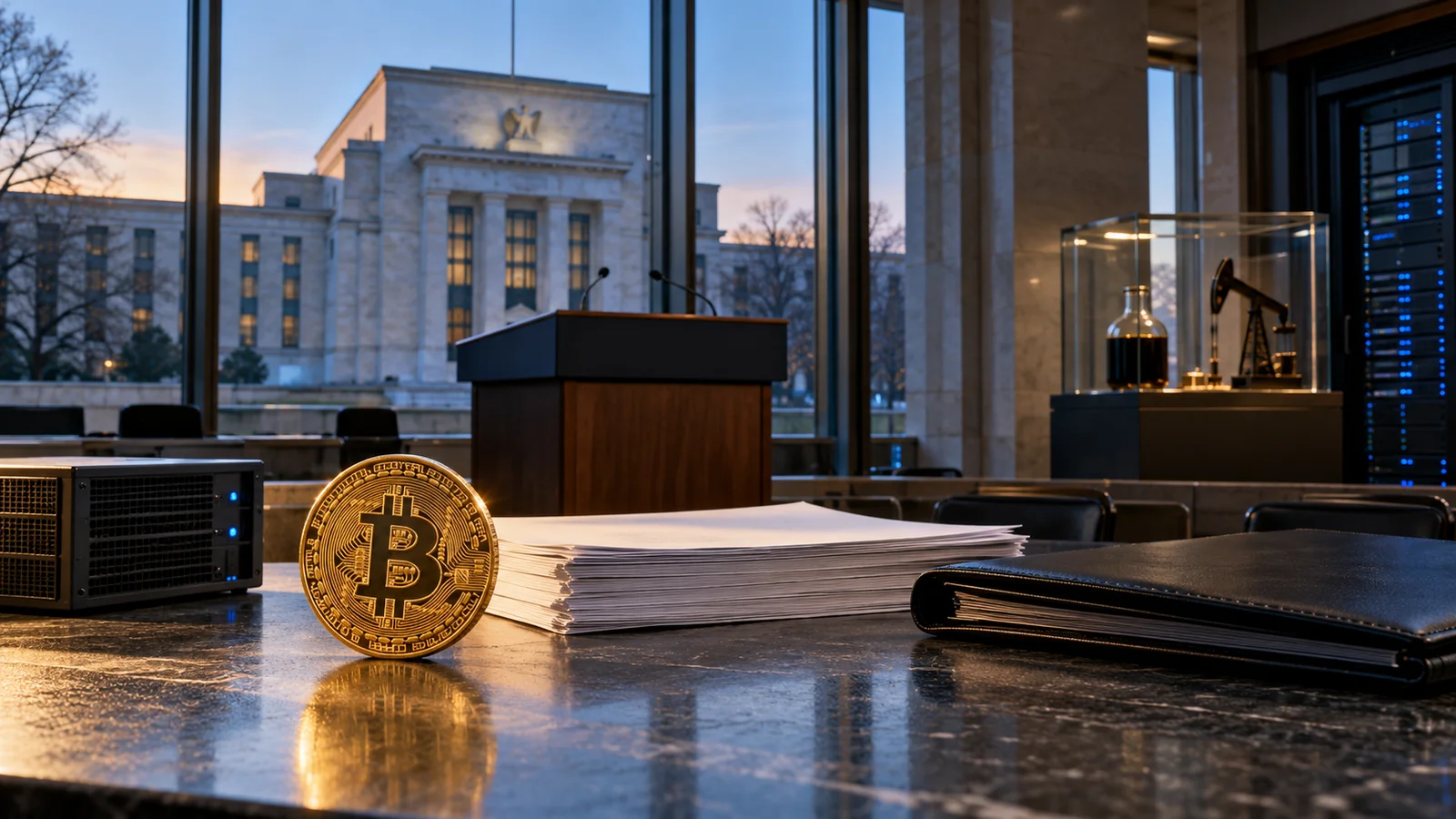
Bitcoin ETFs Shed $635 Million as Inflow Streak Ends
U.S. spot Bitcoin ETFs ended a three-day inflow streak with substantial withdrawals. The funds recorded $635.49 million in net outflows on Thursday, October 22. Ethereum, Solana, and Hyperliquid funds also saw withdrawals, while XRP products attracted fresh capital.Combined data for Bitcoin, Ethereum, XRP, Solana, and Hyperliquid show approximately $758.83 million in net outflows. This calculation covers only ETFs tracking those five assets. It therefore does not represent the entire U.S. crypto ETF market.Bitcoin funds recorded the largest withdrawals of the day. Ethereum ETFs followed with $110.50 million in net outflows. Together, funds tracking the two largest cryptocurrencies lost $745.99 million.BlackRock and Fidelity lead Bitcoin ETF outflowsMarket data show that BlackRock’s IBIT recorded $254.05 million in net outflows. Fidelity’s FBTC followed with withdrawals of $217.46 million. Together, the two funds accounted for approximately 74% of daily net Bitcoin ETF outflows.ARK Invest and 21Shares’ ARKB also recorded $109.43 million in withdrawals. Grayscale’s GBTC lost $29.53 million, while Bitwise’s BITB saw $27.35 million leave. Morgan Stanley’s MSBT moved in the opposite direction, attracting $2.33 million.Farside Investors’ table shows a similar distribution across the same funds. However, Farside puts total daily net outflows at $635.6 million. Although the two data providers report slightly different figures, both show the same direction.One day of withdrawals erased much of the three-day recoveryBitcoin ETFs had started the week strongly. According to Farside, the funds attracted $526.7 million in net inflows on October 19. They then added $23.2 million on October 20 and $524.8 million on October 21.Total inflows across those three sessions reached approximately $1.075 billion. Thursday’s withdrawals erased roughly 59% of that amount. Nevertheless, the first four trading days of the week still generated $439.1 million in net inflows.The comparison highlights the difference between daily flows and the weekly picture. Despite Thursday’s sharp reversal, earlier inflows have not disappeared entirely. Friday’s flows will determine where the weekly total ends.Ethereum’s brief recovery endsEthereum ETFs also returned to outflows on October 22. Daily figures sourced from SoSoValue show net withdrawals of $110.50 million. Farside’s calculation for the same session stands at $110.6 million.In Farside’s table, BlackRock’s ETHA led withdrawals with $75.5 million. ETHB recorded $17.2 million in outflows, while Grayscale’s ETHE lost $9.6 million. Grayscale’s ETH fund also saw withdrawals of $10.7 million.Meanwhile, Fidelity’s FETH attracted $2.4 million in net inflows. That amount was insufficient to offset withdrawals from the other products.Ethereum funds had attracted $14.9 million in net inflows during the previous session. The latest withdrawals brought total net outflows across the week’s first four days to $225.1 million. Ethereum therefore diverged from Bitcoin, which retained net inflows over the same period.XRP attracts inflows as Solana and Hyperliquid see withdrawalsXRP ETFs recorded $3.55 million in net inflows on October 22. Solana funds lost $8.51 million, while Hyperliquid funds saw withdrawals of $7.88 million. Among these five assets, XRP was the only category to finish with positive net flows.However, XRP’s inflows remained far below the withdrawals across the other four categories. Bitcoin and Ethereum accounted for the bulk of outflows within the group. The latest figures show that early-week Bitcoin ETF demand failed to persist on Thursday, while altcoin fund flows diverged.

Tesla Holds Onto Bitcoin as It Reports Third-Quarter Results
Tesla maintained its Bitcoin reserves in the third quarter of 2026. Its holdings remained at 11,509 BTC, while the balance sheet value of its digital assets increased. The electric vehicle maker continued to hold its Bitcoin position throughout the reporting period.The company released its financial results on Wednesday, October 21, after U.S. markets closed. Third-quarter revenue reached approximately $28.05 billion. Tesla reported roughly $28.10 billion in revenue during the same period last year.For the crypto market, the distinction between reserve size and valuation stood out. Tesla maintained its Bitcoin holdings as price movements increased their accounting value. This illustrates how corporate crypto portfolios can affect financial results without any trading activity.Tesla’s Digital Assets Reach $962 MillionThe carrying value of Tesla’s digital assets reached $962 million at the end of September. The same balance sheet item stood at $674 million at the end of June. That represents a quarterly increase of $288 million, or approximately 42.7%.The company recorded a $288 million pretax unrealized gain on digital assets during the third quarter. The after-tax figure totaled $224 million. These figures highlight the contribution of Tesla’s Bitcoin holdings to its financial results.An unrealized gain does not mean the company generated cash by selling Bitcoin. Instead, Tesla reflects changes in the quarter-end value of its holdings in its financial statements. Investors therefore need to distinguish between reserve size and its reported dollar value.The increase in digital assets also matches the reported unrealized gain. This suggests price movements drove the portfolio’s higher valuation. Current reports likewise indicate that Tesla’s Bitcoin holdings remained unchanged.The $962 million figure represents the balance sheet value as of September 30. Subsequent Bitcoin price movements can change the portfolio’s current market value. The reported figure therefore should not serve as a real-time valuation.Revenue Holds Steady as Net Income FallsTesla’s total third-quarter revenue declined approximately 0.2% year over year. The company reported revenue of $28.046 billion. Revenue stood at $28.095 billion during the same period last year.Profitability, however, showed a more pronounced decline. Net income fell from $1.373 billion a year earlier to $787 million. Operating income also dropped from $1.624 billion to $718 million.Tesla nevertheless ended the quarter with positive cash flow. The company generated approximately $6.26 billion in operating cash flow. After capital expenditures, free cash flow totaled around $1.53 billion.Bitcoin Holdings Remain Unchanged From the Previous QuarterTesla’s SEC report covering the period ended June provides an important reference point. In that report, the company stated that 11,509 Bitcoin represented most of its digital assets. It disclosed a total acquisition cost of $386 million for those holdings.Reports covering the third quarter show the same Bitcoin balance. The main change between the two periods therefore concerns the reserves’ dollar value. Tesla’s existing position continues to expose its balance sheet to Bitcoin price movements.Maintaining its reserves does not, by itself, represent a commitment to future purchases. The available figures describe Tesla’s position at the end of the third quarter. Both its Bitcoin balance and valuation gains will remain relevant in future earnings reports.

What Is Bitcoin Halving? A Comprehensive Guide
The Bitcoin network creates new BTC according to predefined rules. Halving is central to these rules, slowing new Bitcoin issuance roughly every four years. Understanding Bitcoin halving makes it easier to assess both its supply structure and mining economics. However, its effects extend beyond price movements; miner revenue, transaction fees, and market expectations also matter.What Is Bitcoin Halving, and What Does It Do?Bitcoin halving cuts the amount of new BTC miners can receive for a valid block in half. The event is also known as a reward halving. The Bitcoin network applies this reduction every 210,000 blocks. Since the network targets an average block time of ten minutes, halvings occur approximately every four years.Technically, the component that halves is new BTC issuance, known as the “block subsidy.” Transaction fees collected by miners do not halve under the same rule.Why is halving part of Bitcoin’s design?Bitcoin’s supply model creates new coins in progressively smaller amounts. When the network launched, the subsidy was 50 BTC per block. Each halving reduces the amount of new BTC available per block during the following period. This gradually slows the rate of new issuance. The structure allows Bitcoin to approach its supply limit of approximately 21 million coins. Under the current protocol rules, new BTC issuance is expected to end around 2140. Source: Bitcoin.org However, limited supply alone does not determine market value. Demand, liquidity, and users’ expectations also influence an asset’s price. For example, production of a product may decline while buyer interest also falls. A reduction in issuance should therefore not automatically be equated with a price increase.What does halving change, and what stays the same?Halving does not reduce the amount of Bitcoin in your wallet. If you hold 0.2 BTC before the event, your balance does not change solely because of halving.The protocol also does not require Bitcoin’s price to halve or double. Trading activity in the market determines its price.The main distinctions are:ComponentDirect effect of halvingNew BTC per blockFalls by halfExisting wallet balancesRemain unchangedTotal existing BTCDoes not halveBitcoin’s market priceNo automatic price adjustmentTransaction fees within a blockDo not automatically halveTarget average block timeRemains ten minutesBitcoin halving should therefore not be understood as an event that divides existing holdings. It changes the amount of new Bitcoin that subsequent blocks can create.How Does Bitcoin Halving Work?Bitcoin halving depends on block height. The network uses the number of blocks rather than a particular calendar date. Block height identifies a block’s position in the chain. When the network reaches a halving threshold, the permitted subsidy decreases.Block height and the halving scheduleThe first halving occurred at block 210,000. Subsequent halvings took effect at blocks 420,000, 630,000, and 840,000. Source: Bitcoin.org The next threshold is block 1,050,000. From that block onward, new BTC issuance per block will fall to half the current subsidy. Miners cannot create any amount of new BTC they choose. Full nodes validate blocks against the protocol rules and reject blocks that exceed the permitted reward. This mechanism shows that the supply schedule rests on more than an announcement. The rules operate within the software that checks block validity.Block subsidies and transaction feesA miner’s revenue from a block has two main components:The amount of new BTC permitted by the protocol.Fees from the transactions included in the block.Miners can operate independently or combine their computing power in a pool. Within pools, revenue distribution depends on the payment model. For a simplified example, suppose the block subsidy is 3.125 BTC. Assume the block also contains 0.2 BTC in transaction fees. The total reward associated with that block would be 3.325 BTC. At the next halving, the subsidy falls to 1.5625 BTC. If transaction fees remain at 0.2 BTC, the total becomes 1.7625 BTC. Total revenue therefore does not fall by exactly half in this example.Revenue componentExample before halvingExample after halvingBlock subsidy3.125 BTC1.5625 BTCTransaction fees0.2 BTC0.2 BTCTotal3.325 BTC1.7625 BTCThe transaction fee amount in the table is hypothetical. Actual total fees can differ from one block to another.How does halving affect daily Bitcoin issuance?A target average block time of ten minutes corresponds to approximately 144 blocks per day. This provides a calculation assumption for explaining daily issuance. At 3.125 BTC per block, daily new supply would be approximately 450 BTC. After the next halving, the same number of blocks would produce approximately 225 BTC. The calculation works as follows:Current period: 144 × 3.125 = 450 BTC.Next period: 144 × 1.5625 = 225 BTC.However, the network does not produce exactly 144 blocks every day. Block discovery times vary, so actual daily issuance also fluctuates. These figures do not represent the amount of Bitcoin that will be sold on exchanges each day. Miners may hold new BTC, sell part of it, or draw on earlier reserves.Bitcoin Halving Dates and the Next HalvingAs of October 2026, Bitcoin has undergone four halvings. The most recent occurred on April 20, 2024, at block 840,000. That event reduced the block subsidy from 6.25 BTC to 3.125 BTC. The next halving is expected around 2028.Historical Bitcoin halving datesThe table below shows previous Bitcoin halvings and the next threshold:HalvingDateBlock heightPrevious subsidyNew subsidyFirstNovember 28, 2012210,00050 BTC25 BTCSecondJuly 9, 2016420,00025 BTC12.5 BTCThirdMay 11, 2020630,00012.5 BTC6.25 BTCFourthApril 20, 2024840,0006.25 BTC3.125 BTCFifthApproximately 20281,050,0003.125 BTC1.5625 BTCThe historical dates refer to completed events, while 2028 is an estimated year.When is the next Bitcoin halving?The next Bitcoin halving will occur when the network reaches block 1,050,000. Although the expected year is 2028, the exact date and time are not fixed in advance. This is because blocks do not arrive at precisely ten-minute intervals. Some take less time to find, while others take longer.Countdown tools combine the remaining block count with an estimated block time. As the network progresses, the estimated date may change. For example, two countdown websites may display different dates. Differences in their average block time assumptions and update times can explain this. When an article gives a precise date, check when the estimate was calculated. Block height is the determining factor. At the time of writing, the figures were as follows: How to follow a halving countdownWhen reviewing a countdown, look beyond the number of days remaining. Examine the data behind the estimate as well. The following information can help:The network’s current block height.The block threshold for the next halving.The number of blocks remaining until that threshold.The average block time used in the calculation.The time of the latest data update.For example, suppose 10,000 blocks remain between the current height and the threshold. Using ten minutes per block produces an estimate of approximately 69.4 days. This is a hypothetical example explaining the method. The actual duration may change depending on how quickly subsequent blocks arrive.How Does Bitcoin Halving Affect Price and Miners?When people discuss Bitcoin halving’s effects, price often comes to mind first. However, the direct change occurs in new BTC issuance. The price response depends on other variables. For miners, revenue measured in Bitcoin and overall business profitability are also different measures.Does lower issuance guarantee a price increase?Halving reduces the flow of new BTC that can enter the market. If demand remains steady or increases, this may support the price. However, existing Bitcoin holders can also sell. Market selling pressure therefore extends beyond newly mined coins. Other factors that may influence the price include:Investor demand for Bitcoin.Global liquidity and interest rate conditions.Buying and selling by large investors.Flows into and out of funds and investment products.Regulatory developments and market news.Leveraged positions and liquidations.The halving schedule is also known in advance. Investors may reflect their expectations in prices before the event occurs. Therefore, a 50% reduction in issuance does not imply that the price must double.How should past halving cycles be interpreted?Market analyses frequently examine price movements surrounding previous halvings. However, a rally following an event does not establish that the event was its sole cause. Bitcoin’s investor base, market size, and economic conditions have changed across periods. These differences make direct comparisons between cycles difficult.The chosen start and end dates also affect the result. The month following a halving may present a different picture from the following year.For example, selecting only a period that ends with gains may conceal sharp declines along the way. Examine volatility alongside returns when reviewing a price chart. Past cycles provide context for research. They do not establish that future cycles will repeat the same timing, gains, or peaks.Miner revenue and cost pressuresAfter halving, miners receive less new BTC per block. Electricity, maintenance, and equipment expenses do not automatically fall by half. This can pressure businesses with particularly high operating costs. More efficient equipment and favorable energy costs can widen the differences between operators.For a simplified calculation, assume Bitcoin trades at $80,000. This is an illustrative figure, not a current market price.A 3.125 BTC subsidy would be worth $250,000. When the subsidy falls to 1.5625 BTC, its value at the same price drops to $125,000. However, these amounts do not represent net profit. Transaction fees, pool distributions, energy expenses, and other costs also enter the calculation.Changes in Bitcoin’s price affect dollar-denominated revenue as well. A decline in BTC production and a decline in a business’s total revenue may therefore occur at different rates.What to Monitor Around Halving and Common MisconceptionsA single countdown screen does not provide a complete understanding of halving. Reviewing the supply schedule, network data, and market conditions together offers a clearer picture.Do not confuse precise price targets or guaranteed return claims with the technical halving rule. The protocol specifies the subsidy amount; it does not determine investment outcomes.Which data can be useful?Different data points answer different questions in halving research. Block height helps explain timing, while miner revenue helps assess economic effects.DataWhat it helps assessBlock heightDistance to the halving thresholdAverage block timeWhy the estimated date changesHash rateThe network’s estimated total computing powerMining difficultyCompetitive conditions for block productionTransaction feesThe fee component of miner revenueTrading volume and liquidityMarket trading conditionsAvoid drawing major conclusions from a single day’s changes. For example, the measurement window can affect a short-term hash rate estimate. Similarly, high transaction fees do not necessarily mean persistently high miner revenue. Distinguish temporary congestion from longer-lasting demand when assessing fees.Transaction fees and long-term securityAs new BTC issuance declines, transaction fees become increasingly important to miner revenue. Once the subsidy ends, the current design allows miners to continue earning fees. However, future fee levels cannot be known with certainty today. Demand for block space and users’ payment preferences influence how this revenue develops.Bitcoin’s long-term security budget is therefore a subject of research. Academic studies examine the importance of sufficient miner revenue as the subsidy declines. Halving does not include a rule that directly doubles users’ transaction fees. Network congestion and competition for transaction priority affect fees separately.Do users need to take any action?Bitcoin holders do not need to move their coins or visit a special link for halving. The event takes place under the network’s existing rules. Messages such as “connect your wallet to claim your halving reward” do not reflect how the protocol works. Halving is not a campaign that automatically distributes additional coins to Bitcoin holders.You also do not need to share your wallet’s recovery phrase. A page requesting those words should not be trusted simply because it mentions halving. Common misconceptions include:Thinking the BTC balance in your wallet will halve.Assuming the price will automatically double.Believing every halving has a fixed calendar date.Thinking transaction fees also halve.Expecting previous price cycles to repeat exactly.Frequently Asked Questions (FAQ)Below are some frequently asked questions and answers about Bitcoin halving.How often does Bitcoin halving occur?: It occurs every 210,000 blocks. This corresponds to approximately four years, although the exact calendar interval depends on block production speed.When did the last Bitcoin halving take place?: The most recent halving occurred on April 20, 2024, at block 840,000. The block subsidy fell from 6.25 BTC to 3.125 BTC.When is the next Bitcoin halving?: It is expected around 2028, at block 1,050,000. The exact date and time may vary depending on the network’s progress.Will Bitcoin’s price definitely rise after halving?: No. Halving reduces new issuance, but it does not guarantee market demand. Economic conditions and investor behavior can affect the price.Does halving reduce the Bitcoin in my wallet?: No. Halving changes the amount of BTC that new blocks can create. Your existing wallet balance does not decrease solely because of halving.Will mining end once all bitcoins have been issued?: The end of new BTC issuance does not mean block production stops. Under the current design, miners can continue earning transaction fees by including transactions in blocks.Explore JrKripto’s Bitcoin mining, Proof of Work, and Lightning Network guides to better understand how Bitcoin and cryptocurrencies work.
Three Companies Add More Bitcoin and Ethereum to Holdings
Strategy, Strive and Bitmine announced new cryptocurrency purchases on Monday, October 19. Strategy bought 267 Bitcoin, Strive acquired 1,223 Bitcoin, and Bitmine purchased 12,535 Ethereum. All three companies continued expanding their crypto holdings through different capital management strategies.The announcements show that the companies are also focusing on cash management and financing. Strategy repurchased STRC shares while buying Bitcoin. Strive continued its financing efforts, while Bitmine supported its Ethereum accumulation with staking activities.Strategy buys Bitcoin and repurchases STRC sharesStrategy spent $22.1 million on 267 Bitcoin between October 12 and 18. Its average purchase price, including transaction expenses, was $82,900 per coin. The latest acquisition brought its total holdings to 848,517 BTC.The company has spent $64.02 billion on its Bitcoin holdings to date. Its average acquisition cost across the entire portfolio stands at $75,446 per Bitcoin. Strategy funded $22 million of its latest purchase through MSTR share sales. During the same period, the company repurchased approximately 1.94 million STRC preferred shares. It spent $193.1 million on these repurchases and paid another $45.5 million in preferred dividends.These expenditures reduced its total dollar assets by approximately $239 million to $5.28 billion. That figure includes a $4.83 billion payment reserve and $447.3 million in cash for general purposes.Strategy’s management also expanded its preferred securities repurchase program. The program’s total authorization increased from $2 billion to $3 billion. Following the latest transactions, approximately $1.16 billion remained available under the program.Strive’s latest purchase brings holdings to 36,818 BitcoinStrive CEO Matt Cole announced that the company purchased 1,223 Bitcoin between Wednesday and Friday. It paid an average of $81,734 per Bitcoin. The reported volume and average price imply a purchase worth approximately $100 million.The latest transaction increased Strive’s total Bitcoin holdings to 36,818 BTC. The company expanded its holdings again after announcing two earlier major purchases. These three acquisitions totaled 7,356 Bitcoin.However, the latest announcement of 1,223 BTC does not cover all of Strive’s purchases last week. The company previously disclosed buying another 2,822 Bitcoin on October 12 and 13. Its total purchases for October 12–16 therefore reached 4,045 Bitcoin.This distinction matters when comparing the companies’ weekly acquisition rates. Strategy’s reported purchase of 267 BTC covers October 12–18. Strive’s latest announcement covers only its Wednesday-to-Friday transactions during the same week.Cole also said he expected proceeds from the SATS preferred share offering to settle on Tuesday. Strive plans to maintain an 18-month dividend reserve. The company is therefore setting aside funds for future payment obligations while expanding its Bitcoin holdings.Bitmine’s Ethereum holdings exceed 6.04 millionOn the Ethereum side, Bitmine announced that it purchased 12,535 ETH over the past week. Its total Ethereum holdings reached 6,041,481 ETH as of October 18. Bitmine said this represented approximately 4.9% of the total ETH supply.The company continues to approach its target of accumulating 5% of Ethereum’s supply. Chairman Tom Lee said its weekly purchases have continued without interruption. According to Lee, Bitmine has bought ETH every week since launching its Ethereum treasury strategy on June 30, 2025.Bitmine also uses a substantial portion of its Ethereum holdings for staking. The company’s staked holdings reached 5,067,309 ETH. This represents approximately 84% of its total Ethereum holdings.Based on current staking data, the company estimates approximately $309 million in annualized revenue. However, this figure does not represent guaranteed future earnings. Ethereum’s price and staking yields could change the actual amount.Bitmine’s crypto assets, cash, marketable securities and other investments have a combined value of $15.1 billion. Its cash and marketable securities stand at $582 million.