Altcoin
Esta página reúne lo último de Altcoin y análisis del mercado. Explora artículos, opiniones de expertos y novedades de esta categoría en JrKripto. Mantente informado con una cobertura en profundidad de las tendencias y novedades del mundo cripto.
Noticias
Noticias de altcoins
Noticias de altcoins
Explora todos los artículos y noticias sobre altcoins. Las últimas noticias, análisis y opiniones sobre altcoins.
Binance to Carry Out Six New Listings
Binance is adding four new trading pairs to its Spot market under its tokenized stock product family, bStocks. The exchange announced that Advanced Micro Devices (AMDB), iShares MSCI South Korea ETF (EWYB), Intel (INTCB), and Strategy (MSTRB) bStocks will begin trading against USDT on June 23, 2026, at 4:30 p.m. Türkiye time. Spot Algo Trading Bots will also be enabled for the same pairs. bStocks are tokenized securities issued by BTech Holdings Limited, a subsidiary of the Binance group. These products are offered under a prospectus approved in Abu Dhabi Global Market (ADGM) and are not being offered in any other jurisdiction. There is one important detail: bStocks do not represent direct ownership of the underlying shares. They are classified as “certificates representing certain financial instruments” under paragraph 92 of Schedule 1 of the FSMR, meaning investors gain an entitlement to the underlying securities held with the issuer, but do not become shareholders of the company.For the four newly listed pairs, Binance will apply zero maker fees during a promotional period that will run until September 1 at 2:59 a.m. Türkiye time. This may create a cost advantage, especially for users relying on algorithmic and high-volume trading strategies.The conversion mechanism also stands out. Users will now be able to convert their real shares into bStocks at a 1:1 ratio with zero fees. Deposits and withdrawals for all four tokens will open on June 23, 2026, at 5:40 p.m. Türkiye time. All bStocks are managed through smart contracts on BNB Smart Chain; each token has a separate contract address, and these addresses can be verified through BscScan.Binance also highlighted several risk warnings in its announcement. bStocks investors are exposed to liquidity risk, issuer risk, custody risk, broker risk, operational and technological risks, regulatory risk, and tax risk. The exchange urges users to review the relevant prospectus, which is available only to users located in ADGM, as well as the risk disclosure statement, terms of use, and securities trading product terms before trading.The geographical restrictions are also clear. bStocks are not offered in the United States or for the account or benefit of U.S. persons. These products are not registered under the U.S. Securities Act of 1933 or any state securities law, and no public offering is being made outside ADGM. Binance also emphasized that users’ eligibility to trade may vary depending on their country or region, and that the list of restricted jurisdictions may be updated in line with applicable regulations. Users who want to trade these pairs must also complete account verification.On the Margin Side: Two New Pairs for XLMBinance also made a move on the Margin side on the same day. The exchange opened the XLM/U and XLM/USD1 pairs for Cross Margin trading on June 23, 2026, at 11:00 a.m. Türkiye time. Binance warned that newly listed pairs generally tend to show volatility and called on users to apply strict risk management. Details on margin data, collateral ratios, and current rates are available on Binance’s Margin Data page.

MoneyGram Announces Third Blockchain Partnership: Solana
Money transfer giant MoneyGram has taken another step forward in its crypto expansion. The company has started operating as a validator on the Solana blockchain and joined the Solana Developer Platform. This means MoneyGram now runs validators on three different networks at the same time.MoneyGram Chooses SolanaGlobal payments company MoneyGram has officially become a validator on the Solana blockchain and joined the Solana Developer Platform. This marks the company’s third validator operation after Tempo and Midnight Network.MoneyGram CEO and Chairman Anthony Soohoo explained the reasoning behind the move in a statement: “Blockchain infrastructure is becoming increasingly important for global payments. We believe institutions that rely on these networks should also contribute to their security and long-term development.”Becoming a validator gives MoneyGram the ability to stake SOL, validate transaction blocks and directly contribute to the security of the network. Membership in the Developer Platform also means access to financial product development tools on Solana, alongside institutions such as Mastercard.MoneyGram’s blockchain history is not new. The company’s MGUSD stablecoin was built in collaboration with Stripe’s Bridge, Crossmint, Fireblocks, M0 and Stellar. Soohoo recalled that since 2021, the company’s partnership with Stellar has introduced stablecoin cash-in and cash-out points, the MoneyGram Ramps API and in-app stablecoin balances. With its recent partnership with Kraken, MoneyGram has also expanded its off-ramp services.“We have been building real-world payment solutions with blockchain and stablecoins for more than five years,” Soohoo said. “We never saw blockchain as an end in itself; we saw it as a tool that makes money transfers faster and simpler.”The Ripple experience is also part of this story. MoneyGram signed an agreement with Ripple in 2019 and used RippleNet’s XRP-based On-Demand Liquidity product. According to Ripple, the two companies reached billions of dollars in transaction volume during this period. Ripple also paid MoneyGram millions of dollars in fees as part of its expansion into new markets.The partnership was suspended in 2021 after the SEC filed a lawsuit against Ripple. The SEC alleged that the company had conducted a $1.3 billion unregistered securities offering through its XRP sales. The case was finally closed last year. The 2023 ruling that XRP itself is not a security and that sales on public exchanges did not violate the law remained in place, but Ripple’s direct sales to institutional investors were found to have violated the law. Ripple had previously said both companies were open to working together again in the future. When Soohoo was asked about the possibility of a new partnership with Ripple, his answer was brief: “We cannot comment on potential future partnerships at this time.”At the time of writing, SOL price is around $74.34.

Wave of Attacks Hits Crypto Protocols as Three Platforms Face Pressure
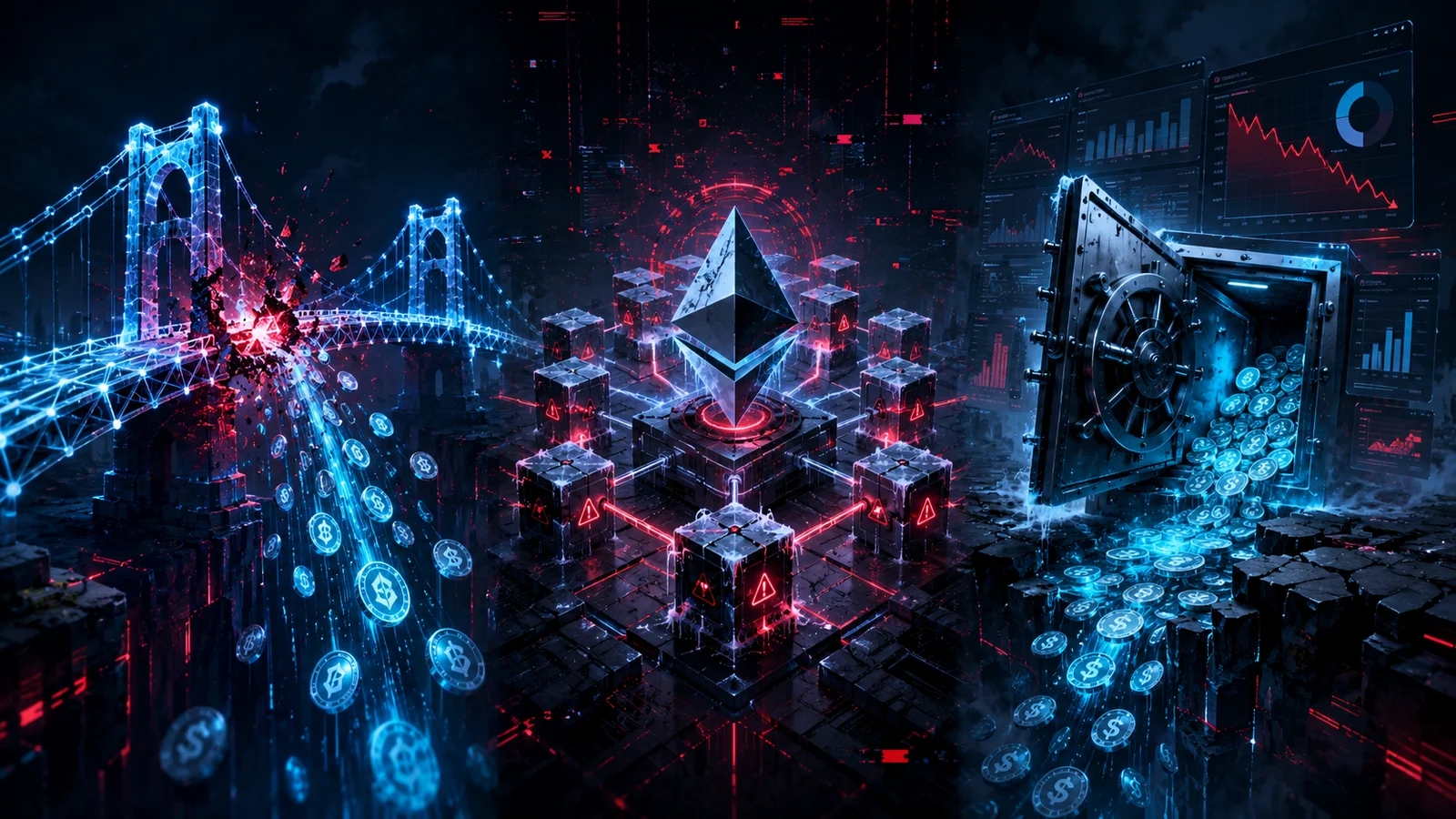
The crypto sector was shaken this weekend by a series of security incidents across three separate protocols. Secret Network’s Axelar bridge fell victim to a multimillion-dollar fake minting attack, Ethereum layer 2 network Taiko completely halted block production after an exploit, and DeFi protocol Altura was forced to liquidate its stablecoin vault following intense withdrawal demand.Secret Network’s Axelar Bridge Exploited for $4.67 MillionA vulnerability in the IBC bridge contract connecting Secret Network to Axelar allowed the attacker to mint unbacked Secret-wrapped tokens. According to an analysis by Common Prefix, the attacker drained around $4.67 million through this method. The attack took place on June 10 but was not detected until June 17, when a failed cross-chain transfer revealed that an escrow account had been emptied.Opening an IBC channel does not require permission, and the attacker used that feature to their advantage. They created a single-validator Cosmos chain, opened a channel to the bridge contract, and relayed fake packets that matched token definitions on the allowlist. Because the contract could not distinguish those packets from ones arriving through the real Axelar channel, it minted unbacked tokens. The flaw traces back to the contract’s original deployment in 2023, while a March 5 update carried over the same missing controls.Axelar disabled the Secret and Secret-SNIP connections and said its own protocol was not affected. Around $672,000 of the stolen assets still remain in the attacker’s wallet. Secret Network requested that these assets be frozen, but Axelar decided not to pursue that request.Taiko Halts Block Production After AttackEthereum-based rollup Taiko confirmed that its chain state validation mechanism had been compromised and told users to withdraw funds from all bridges on the network. All proposers suspended new block production during the investigation, and the team also asked exchanges to halt deposits for the native token. Security firm Blockaid traced the issue to a flaw in Taiko bridge’s source-signal proof verification. Fake message proofs were accepted as valid on Ethereum mainnet without a corresponding real event on the source chain. This allowed the attacker to register fake bridge messages and withdraw assets from the ERC20 vault without authorization.Blockaid estimated the loss at around $1 million, while PeckShield placed the figure closer to $1.7 million. The attacker also moved 1.99 million Taiko tokens, worth about $169,702, to an exchange.Altura Liquidates Vault After “Unprecedented” Withdrawal DemandDeFi protocol Altura announced that it had begun an orderly liquidation of its yield vault after a surge in withdrawal requests over the weekend. CEO Ranveer Arora said more than $8.5 million in instant redemptions had been processed over the past 24 hours. At its peak, the vault held $39 million in stablecoins allocated across strategies such as funding rate arbitrage, market making and real-world asset positions. Arora said the protocol had no direct exposure but was affected by unfounded market narratives. This was a reference to the collapse of Main Street’s yield-bearing msUSD stablecoin, which lost more than 70% of its value. Main Street’s token plunged after proof provider Accountable terminated its service agreement with the protocol.Accountable also provides a similar verification service to Altura. Although this partnership does not create a direct link between the two protocols, it fueled contagion fears across the market.
New DeFi Exploit Drains $2 Million in Assets
Aztec Labs, which develops privacy-focused scaling solutions on Ethereum, announced that it is investigating a security vulnerability in a discontinued payment product that resulted in losses of approximately $2 million.Blockchain security firm PeckShield estimates that the attack drained roughly $2.165 million worth of crypto assets. The stolen funds included 1,158 ETH, 150,000 DAI and 0.47 renBTC. According to the firm, the attack was funded with 0.134 ETH originating from HitBTC. Second Attack in Four DaysThe incident marked the second exploit targeting discontinued Aztec infrastructure within four days. Last Sunday, a separate attack targeted the immutable Aztec Connect smart contract, draining approximately $2.1 million in assets.Security research firm BlockSec said the latest attack appeared to be connected to the June 14 exploit, although it targeted a separate pool through a different entry point. The firm identified a verification flaw that allowed the attacker to withdraw assets while still passing onchain validation checks.According to BlockSec’s post on X, the vulnerability differed from the flaw used in the previous attack. However, both were associated with circuit public input binding issues and displayed similar execution traces.The Aztec Foundation stressed that there is no connection between the affected product and the smart contracts linked to its current network or the AZTEC ERC-20 token. The compromised product was described as an immutable Stage 2 rollup that had been discontinued four years ago.Aztec Labs also noted that its team has no administrative authority or control mechanism over the system. This is because the rollup, which was shut down in 2022, remains entirely immutable.A Difficult Period for DeFiThe latest incident adds to one of the most severe periods of security failures recently experienced by the DeFi sector. Amid advances in AI-assisted attack techniques, more than 30 protocols have suffered combined losses exceeding $600 million. The largest of these incidents was the Kelp DAO exploit, which caused an estimated $292 million in losses.The attack occurred while the market was already struggling with a growing number of security breaches targeting smart contract platforms, cross-chain bridges and decentralized finance protocols. It has generated further frustration across the crypto community.Cross-chain bridges and rollup systems remain attractive targets for attackers because of the substantial liquidity locked within them. The arrival of another incident shortly after the previous attack has increased concerns among users that these vulnerabilities may reflect a systemic problem rather than isolated failures.Repeated security breaches can cause significantly greater damage to user confidence than a single exploit. The latest attack has therefore dealt another blow to the reputation of the broader DeFi sector.

Binance Adds Four Altcoins to Monitoring Tag List
Binance has added four altcoins to its “Monitoring Tag” list. According to an announcement issued on June 18, the tag will apply to Act I: The AI Prophecy (ACT), Blur (BLUR), PIVX (PIVX), and QuarkChain (QKC). What Does the Monitoring Tag Mean?Binance applies this tag to tokens that meet certain risk or compliance criteria. According to the exchange, tagged tokens exhibit higher volatility and risk than other listed assets, so they are subject to regular reviews.The tag does not automatically mean delisting. A token may face removal from the platform if it no longer meets Binance’s listing criteria, but that would require a separate decision at a later date.Users who want to trade tagged tokens on Binance Spot and/or Margin must pass a quiz every 90 days and accept the terms of use. The measure aims to ensure that users understand the risks before trading.When adding or removing tags, Binance assesses several criteria, including the team’s commitment to the project, the level and quality of development activity, trading volume and liquidity, network resilience against attacks, smart contract stability, the level of public communication, responsiveness to the exchange’s periodic due diligence requests, signs of unethical or fraudulent conduct, and the project’s overall contribution to the ecosystem.Four Tokens, Four Different SectorsThe four projects operate in distinctly different areas. ACT is associated with artificial intelligence-driven narratives. BLUR is known for its role in the NFT marketplace sector. PIVX is a privacy-focused cryptocurrency, while QKC is a sharding-based blockchain project.A tagging decision by an exchange as large as Binance can affect how market participants view these assets. Some investors may reduce their positions, potentially causing liquidity to decline and market sentiment to turn cautious even before any concrete delisting action is taken.These types of reviews are not unique to Binance. Earlier this year, Bybit faced a similar issue after being placed on the Monetary Authority of Singapore’s (MAS) Investor Alert List. The development showed that exchange-level reviews and regulatory scrutiny can sometimes overlap.What Investors Should MonitorInvestors holding ACT, BLUR, PIVX, or QKC are advised to follow Binance’s official announcements page. The exchange generally uses this channel to notify users when tags are added or removed.In the past, tokens carrying the Monitoring Tag have experienced changes to leverage limits or spot trading rules. Investors should therefore monitor potential updates involving trading pairs, margin availability, and withdrawal conditions.Risk management becomes particularly important during the monitoring period. Declining liquidity can widen spreads and increase slippage, especially for large orders.
Fed’s Hawkish Stance Shakes Crypto Market as $111 Million Flows Out
The Federal Reserve kept interest rates unchanged at its first meeting chaired by Kevin Warsh, but delivered a more hawkish message than expected. The impact was immediate: Bitcoin declined for a third consecutive day, institutional money began flowing out of exchange-traded funds, and the relief rally triggered in equities by the peace agreement with Iran failed to reach the crypto market.Fed Decision and Warsh’s First TestThe Federal Open Market Committee unanimously voted on Wednesday to keep its policy rate unchanged within the 3.50%-3.75% range. Markets had already priced in the decision; the surprise came elsewhere.The committee raised its inflation forecasts and slowed the projected pace of interest rate cuts compared with its March outlook. Nine of the 18 members even raised the possibility of a rate hike this year. The median projection placed the policy rate at 3.8% by the end of 2026, a significant increase from the 3.4% forecast in March.Matt Mena, senior crypto research strategist at 21Shares, said the decision carried unusual weight despite being widely expected because it marked Warsh’s first meeting as Fed chair. Mena noted that the real signal came from the updated projections, which showed that policymakers remained concerned about inflation despite easing geopolitical tensions and falling energy prices.The meeting also provided the first clues about Warsh’s communication style. Unlike statements issued during the Jerome Powell era, the document was kept notably brief and excluded the forward-guidance language Powell used throughout his tenure. Warsh said the format was designed to present “the facts” rather than steer market expectations.Broad-Based Selling Hits the MarketThe crypto market’s reaction was swift and widespread. Bitcoin slipped below the $64,000 level following the decision and traded between $63,800 and $63,900. That range corresponds to the midpoint of the rally it had built over the previous 11 days. Ethereum declined by between 3% and 3.6%, falling as low as $1,733. XRP dropped nearly 4% to $1.17, while Solana lost between 3% and 3.6% and traded at around $71.Hyperliquid’s HYPE token, the week’s standout performer, recorded the sharpest decline. After reaching an all-time high the previous day, HYPE fell nearly 7% to the $69-$72 range. The token nevertheless remains up by around 28% on a weekly basis. Tron was the only major cryptocurrency to finish the session in positive territory.The GMCI 30 Index, which tracks the 30 largest cryptocurrencies, declined by 2.6%, bringing its year-to-date loss close to 36%. Selling pressure extended beyond crypto; gold fell by 2.2%, while silver declined by nearly 4%.Iran Agreement Lifted Stocks, but Not CryptoAnother major development announced on the same day directed market attention elsewhere. US President Donald Trump signed an interim agreement that ended the war with Iran and reopened the Strait of Hormuz.Equity markets welcomed the news. S&P 500 futures rose by 0.9%, while Nasdaq futures gained 1.5%. Brent crude fell toward $78.Crypto assets failed to benefit from the relief. The divergence suggests that the market is currently responding more strongly to the Fed’s policy stance than to geopolitical developments.ETF Outflows Signal Waning Institutional DemandThe institutional picture became even clearer. US spot Bitcoin and Ethereum ETFs returned to net outflows on Wednesday. According to SoSoValue data, Bitcoin funds recorded $82 million in net withdrawals, while Ethereum funds lost $29 million.The outflows were broad-based. BlackRock’s IBIT recorded $31 million in withdrawals, while ARKB lost $44 million. Every Ethereum ETF ended the day with net outflows.The move suggests that institutional buying, which helped fuel the recovery rally in recent weeks, has paused for now. The total cryptocurrency market capitalization has remained around $2.26 trillion since Tuesday’s close, while expectations for interest rate cuts, one of the rally’s main drivers, have largely faded.Gerry O’Shea, head of global market insights at Hashdex, said Bitcoin is likely to remain confined to a $60,000-$70,000 range in the coming weeks unless a major catalyst emerges. According to O’Shea, developments such as the signing of the CLARITY Act, which would regulate the structure of the crypto market, or a further easing of tensions between the US and Iran could provide the trigger needed to break that range.O’Shea also said that recent initial public offerings and artificial intelligence stocks have diverted attention away from the crypto market. However, he expects capital to return as institutional participation grows and regulatory rules become clearer.

US Congress Reaches Agreement on Fed CBDC Ban
US Senate and House leaders have reached an agreement to advance a sweeping housing bill that includes a ban on central bank digital currencies (CBDCs). Housing reform, which has remained before Congress for years, has now entered its final stage with a provision that directly concerns the cryptocurrency industry.Senator Tim Scott, Senator Elizabeth Warren, Representative French Hill and Representative Maxine Waters released an updated version of the “21st Century ROAD to Housing Act” on Tuesday. The text, jointly endorsed by all four lawmakers, indicates that an agreement has been reached across both chambers and between Republicans and Democrats. Such a four-way compromise is rare, particularly in a politically sensitive area such as housing policy.The legislative package aims to increase housing supply in the US and prevent institutional landlords from dominating the market. In recent years, large investment funds and corporate buyers have been accused of purchasing single-family homes in bulk and converting them into rental properties, contributing to rapidly rising home prices and rents. The bill seeks to curb this trend and make it easier to introduce measures that expand housing supply.To address objections in the House, lawmakers added a three-year sunset provision to a disaster relief program. This was one of the concessions that emerged during the final stages of negotiations. Reaching this point was far from easy, as reconciling a broad housing policy package between the two chambers typically requires months of negotiations and mutual concessions.Scott said the legislation was the result of years of work to lower costs, expand housing supply, reduce bureaucracy, protect taxpayers and help more Americans become homeowners. He stressed that it was now time to finalize the bill and deliver meaningful relief to the American public. Warren, Hill and Waters similarly highlighted the bipartisan nature of the legislation and its practical benefits for Americans.How Did the CBDC Ban Enter the Bill?The bill would prohibit the Federal Reserve from issuing a CBDC, or any digital asset “substantially similar” to one, until the end of 2030. Although the provision may initially appear unrelated to housing policy, it reflects a familiar tactic in Washington: attaching unrelated policies to must-pass legislation that is considered highly likely to become law.According to earlier reporting by journalist Eleanor Terrett, pressure to add the provision came from House Republicans. Opposition to CBDCs has gained increasing support within the Republican Party in recent years. The movement is largely driven by concerns that a central bank-issued digital currency could threaten individual privacy and give the government excessive control over financial transactions.The Trump administration’s opposition to CBDCs is also well established. Treasury Secretary Scott Bessent reiterated last month that CBDCs were “not on the table,” adding that the administration’s main focus was finalizing the digital asset-focused Clarity Act. His comments align with the administration’s broader crypto policy: opposition to CBDCs alongside greater openness toward privately issued digital assets and stablecoin regulation.Next StepsAccording to Politico, citing Senate Majority Leader John Thune, the updated bill will now proceed to an initial procedural vote in the Senate. The outcome will provide an important indication of how quickly the rest of the legislative process could move.If the bill passes the Senate, it will then move to the House. A vote is expected shortly after lawmakers return from recess around June 23. If the process is completed, the legislation will be sent to the president’s desk.Once signed into law, the bill would establish a multi-year framework covering both US housing policy and the country’s official position on central bank digital currencies.

Coinbase Adds a New Altcoin to its Listing Roadmap
Coinbase has added decentralized location infrastructure project GEODNET (GEOD) to its official listing roadmap. Coinbase Markets announced on X on June 16 that the newly added asset was GEODNET and shared the SPL token contract address for GEOD on the Solana network. The exchange’s listing roadmap is described as a process through which Coinbase publicly shares digital assets it is evaluating for future trading support. However, being added to the roadmap does not mean the token will necessarily be listed on Coinbase. Actual trading support will only be launched if liquidity conditions are met and technical requirements are satisfied. Coinbase said it would announce the trading launch separately once these conditions are fulfilled.At the time of writing, GEOD was trading around $0.2009, down 7.68% on the day. Over the past 30 days, however, the token has gained 47.87%, while its 24-hour trading range stood between $0.1993 and $0.2248.GEOD Price OutlookIn the short term, GEOD’s inclusion on Coinbase’s listing roadmap is increasing expectations of fresh buying interest. Still, the fact that the listing has not yet been confirmed remains a factor limiting upside potential. The token is currently trading around $0.209; while the MACD shows a rising structure, the RSI has reached 78, signaling overbought conditions. If GEOD manages to hold above $0.22, the next target could be $0.24. If it fails to stay above this level, $0.19 and then $0.17 could be tested. In the medium term, the expectation created by Coinbase’s roadmap could act as a catalyst supporting the liquidity premium. The price is trading above the MA20, MA50 and MA200, confirming the upward trend. If the $0.19 support level is preserved, the $0.24-$0.27 range could open up. A breakdown below this level, however, could point to a pullback toward the $0.15-$0.17 zone.For a long-term assessment, the roadmap alone is not enough. An actual listing, higher liquidity and sustained trading volume will be the key factors. Since the broader market remains driven largely by Bitcoin-centered trends, altcoin dynamics continue to be fragile. If GEOD holds above $0.15, the $0.27-$0.32 band may come into play; otherwise, a decline toward $0.12 remains possible.What Is GEODNET?GEODNET, short for Global Earth Observation Decentralized Network, is a decentralized physical infrastructure network, or DePIN, project. Its main goal is to correct standard GPS signals and provide centimeter-level location accuracy. Given that ordinary GPS can deviate by several meters, this level of precision is critically important for autonomous vehicles, agricultural machinery, drones and robotic systems.The network consists of hardware devices called “Space Weather mining stations.” These stations monitor and report in real time how solar winds from the Sun affect GNSS signals, then feed the correction data into the network. The corrected signals provide nanosecond-level timing accuracy and 1-2 centimeter positional precision.GEOD is the network’s native utility token. It has three main functions: users can use it as a payment method to access data streams, station operators receive rewards through the token, and token holders can participate in governance voting. In addition, 80% of the network’s revenue is automatically used to buy back and burn GEOD. This deflationary mechanism permanently reduces token supply as the network’s real-world usage grows.GEODNET primarily operates on the Solana blockchain, while also maintaining a presence on Polygon and IoTeX. The project serves various institutional customers, including the U.S. Department of Agriculture, and has built a global network of more than 7,000 GNSS stations. The token’s total supply is capped at 1 billion GEOD.

Grayscale and Standard Chartered Highlight Two Altcoins: TAO and UNI
Two major institutional players pointed to two different opportunities in the crypto market in the same week. Grayscale Research Director Zach Pandl highlighted decentralized artificial intelligence and Bittensor (TAO), while Standard Chartered Head of Digital Assets Research Geoffrey Kendrick published a report projecting a 40-fold increase for Uniswap (UNI) by the end of 2030. Both analysts share a common argument: capital moving away from the risks created by centralized structures will increasingly flow toward protocol-level infrastructure.TAO: Anthropic Crisis Draws Attention to BittensorThe timing of Pandl’s report was no coincidence. Anthropic faced two serious issues during the same period.The U.S. government issued an export control directive for Anthropic’s Fable 5 and Mythos 5 models on national security grounds. Although the directive applied only to foreign nationals, Anthropic had to disable the models globally for all customers in order to comply. The company objected to the directive, saying the jailbreak vulnerability cited as the reason was already present in other major publicly available large language models. At the same time, Anthropic also faced a class-action lawsuit over usage limits in its commercial Claude products. Plaintiffs claim that access under paid subscription plans was restricted in undisclosed ways.Pandl pointed to this exact backdrop as he presented Bittensor as a structural alternative. Bittensor is a protocol that distributes AI model training and inference across thousands of independent participants instead of relying on a central authority; the TAO token rewards the subnetworks that provide the most valuable contributions. Pandl said Bittensor aims to do for artificial intelligence what Bitcoin did for digital money, arguing that this model is structurally more resilient against regulatory shocks hitting centralized providers.The market reaction came quickly: TAO has gained around 28% over the past five days.UNI: A Winner of the Tokenized Asset WaveKendrick’s assessment of Uniswap rests on a longer-term thesis. He expects tokenized assets on-chain to grow from around $340 billion today to $4 trillion by the end of 2028, while the share of these assets used in DeFi could rise from 3.5% to 30% by 2030. Under this scenario, total value locked in DeFi would reach 37 times its current level, and Uniswap’s liquidity pools would directly benefit from that growth.Kendrick explains the difference between Uniswap and Coinbase through a YouTube-Netflix comparison: on YouTube, content is produced by users rather than the platform; similarly, Uniswap operates as open infrastructure where anyone can create liquidity pools. This structure lowers Uniswap’s capital requirements compared with Coinbase and gives it an advantage in swaps between closely linked assets such as stablecoins or staked Ethereum (ETH).With the UNIfication upgrade in December 2025, protocol fees went live and the programmatic UNI burn mechanism was activated. Since then, the protocol has generated around $21 million in fees; together with a one-time burn of 100 million UNI, circulating supply has fallen to 622 million.The staged price targets for UNI are as follows: $6.50 by the end of 2026, $20 by the end of 2027, $40 by the end of 2028, $65 by the end of 2029, and $100 by the end of 2030. With the token currently trading around $2.70, this would imply a 40-fold increase. Kendrick expects UNI to outperform both ETH and Bitcoin in terms of returns over the same period.

What Is Genius Terminal (GENIUS)?
Trading in the crypto market has become faster over the years, but the decentralized finance (DeFi) experience remains fragmented. Users may still need to use one platform for spot trading, another interface for perpetual futures, a separate protocol for bridging, and a different application for portfolio tracking.Genius Terminal is an on-chain trading terminal developed to reduce this fragmentation. The platform aims to give users trading in decentralized finance markets a more integrated experience, without requiring them to constantly switch between different networks, DEXs, wallets, and trading tools.GENIUS is the crypto asset connected to the Genius Terminal ecosystem. The token plays an important role in the platform’s growth, community participation, reward mechanisms, and ecosystem incentives.Definition and Origins of Genius TerminalGenius Terminal is a non-custodial DeFi trading terminal designed for professional users. A non-custodial structure means users can trade without handing over control of their assets to the platform. In this sense, Genius Terminal aims to combine the simple trading experience of centralized exchanges with the on-chain structure of DeFi. The platform’s core narrative is based on the usability problem in DeFi markets. Today, when a user wants to trade across different blockchain networks, they often need to change wallets, bridge assets, connect to different DEX interfaces, and manage gas fees separately. This process costs time and reduces trading efficiency, especially for active traders.Genius Terminal tries to solve this problem by building a structure that brings all trading tools into one place. The platform aims to offer spot trading, perpetual futures, yield products, early access to tokens that have not yet been widely listed on exchanges, and cross-chain transactions through the same interface. For this reason, describing Genius Terminal only as a DEX interface would be incomplete; the project aims to build a broader trading infrastructure for DeFi users.In its official documents, Genius Terminal is described as a “private and final onchain terminal.” This phrase shows that the platform is built around transaction privacy, fast execution, and a simplified cross-chain experience. Genius aims to abstract details such as which network the user is on, which bridge they need to use, or which protocol they are connected to in the background.This approach is especially important for users who trade frequently in DeFi. Speed and transaction privacy can provide serious advantages for professional traders, whale wallets, investors tracking arbitrage opportunities, narrative-based traders, and users running multi-chain strategies.In general, the project aims to make DeFi less technical, faster, and more professional as a trading environment. Offering users a single portfolio, one interface, and a simpler trading flow is one of the platform’s main goals.History of Genius Terminal: Key MilestonesGenius Terminal became more visible in the market at the beginning of 2026. The project started attracting wider attention after YZi Labs invested in it and Binance founder Changpeng Zhao, known as CZ, was mentioned as an adviser to the project.YZi Labs is known as a structure that supports notable Web3 projects, with an investment background linked to the former Binance Labs line. The investment in Genius Terminal helped position the project as more than a small-scale DeFi tool; it made it appear as a candidate for a larger on-chain trading infrastructure. In addition, BNB and Genius launched a $100,000 marketing campaign. Genius Terminal’s trading volume also drew attention in January 2026. Data showing that the platform reached billion-dollar levels in weekly volume increased interest in the project, especially alongside airdrop expectations and the Genius Points program. This period became one of the first major turning points in which Genius gained momentum on the community side.Another important milestone for the project was the CoinMarketCap Launch process. Genius Terminal was among the projects running a campaign through CMC Launch for the GENIUS token. Users were able to earn Genius Points by completing certain tasks, and it was announced that these points would be connected to the GENIUS distribution.The GENIUS token generation event, or TGE, took place on April 13, 2026. This date is considered the starting point of the GENIUS token’s market journey. As the token began trading, investors started watching its price movements, supply structure, exchange listings, and use cases within the ecosystem more closely.GENIUS gained more market visibility after the TGE. According to CoinGecko and CoinMarketCap data, the token was associated with the BNB Chain ecosystem and began trading on centralized exchanges. Listings on platforms such as Binance, Bitget, and MEXC were among the developments that increased the token’s liquidity and accessibility.On the price history side, GENIUS showed high volatility shortly after its TGE in April 2026. CoinGecko data shows that the token recorded its all-time low on April 13, 2026, and its all-time high on April 18, 2026. As of June 2026, the GENIUS coin price is around $0.46. Why Is Genius Terminal Important?To understand why Genius Terminal is important, it is necessary to look at the current structure of the DeFi market. DeFi gives users asset control, open market access, and on-chain transparency. However, the user experience is still complicated for many people.A user who wants to trade on Ethereum, BNB Chain, Solana, Arbitrum, and Base on the same day may face a serious operational burden. Each network has its own wallet connection, gas dynamics, DEX liquidity, and bridging process. Genius Terminal tries to reduce this complexity and allow the user to focus on the trading decision itself.One of the platform’s most important features is its cross-chain trading experience. Genius Bridge Protocol is the infrastructure used to make trading between different blockchain networks simpler. The project aims to let users access opportunities on different networks without manually bridging their assets.This structure can be especially valuable in fast-moving market conditions. In the crypto market, opportunities can appear and disappear in a short period of time. If a user has to deal with long bridging processes to move from one network to another, they may miss the trading opportunity. Genius Terminal aims to offer a faster and more integrated trading flow at this point.Another important feature is the privacy-focused trading structure known as Ghost Orders. Large trades can create pressure on the market because of their visibility on-chain, or they can be tracked by other traders. Genius Terminal’s Ghost Orders approach focuses on increasing transaction privacy and allowing large position movements to be executed in a more controlled way. This feature is especially important for users trading with large volumes. Whale wallets, funds, or professional traders may not want their trading strategies to be openly tracked. DeFi’s transparent structure provides advantages, but it also creates certain risks around transaction privacy. Genius Terminal is one of the projects trying to reduce this tension.The platform’s non-custodial structure is also important. On centralized exchanges, users often deposit their assets into platform wallets. Genius Terminal aims to offer users a simpler trading experience without requiring them to give up control of their assets. This structure is in line with self-custody, one of DeFi’s core principles.The user group targeted by Genius Terminal also sets the project apart. The platform appeals less to casual swap users and more to professional traders, high-volume users, DeFi-native investors, and institutional-scale trading entities. For this reason, speed, analysis, portfolio management, and execution quality stand out on the interface side.Technical Features of Genius TerminalSeveral key elements stand out in the technical structure of Genius Terminal. Multi-chain support is one of the most important. The platform aims to offer a trading experience across networks such as Solana, Ethereum, Base, Avalanche, Arbitrum, Optimism, BNB Chain, Polygon, and Sonic.This network diversity gives users access to broader liquidity. Liquidity in the crypto market is not concentrated on a single network. Some tokens are more active on Solana, some DeFi products are deeper on Ethereum or Arbitrum, and some opportunities emerge on networks such as BNB Chain or Base.Genius Terminal tries to bring this fragmented structure together in a single interface. Accessing trading opportunities across different chains through the same terminal can provide advantages in terms of both time and operational efficiency.Another technical component of the platform is Genius Bridge Protocol. This protocol is one of the core parts of the Genius ecosystem for cross-chain execution. The goal is to allow users to access trades on different networks without constantly relying on manual bridging.Genius Terminal also aims to bring spot trading and perpetual futures markets into the same experience. This matters for traders because market strategies are often not limited to spot buying and selling. Users may want to hedge, open leveraged positions, or take short-term directional trades.Yield is also part of the Genius Terminal narrative. The platform aims to allow users to evaluate idle assets through different DeFi strategies. This structure expands portfolio management beyond trading and into yield generation.Pre-launch token access is another notable area for users who follow early-stage market opportunities. Early access to new tokens carries high risk, but it has become an important field for DeFi traders. Genius Terminal aims to make this category part of the terminal experience as well.What Does the GENIUS Token Do?GENIUS is positioned as the native token connected to the Genius Terminal ecosystem. The token’s main function is shaped around the platform’s community, reward, and ecosystem incentive mechanisms.The Genius Points program is one of the early examples of this structure. Users were able to earn Genius Points by trading on the platform. Since these points were connected to the GENIUS token distribution, they attracted significant interest from the community.The token’s use cases may expand over time depending on the development of the platform. GENIUS may be associated with governance, staking, trading benefits, reward distributions, or premium in-platform features. However, official documents and current announcements should be followed for these areas.On the supply side, the maximum supply of GENIUS is listed as 1 billion tokens. CoinMarketCap data shows the circulating supply at around 335 million GENIUS. This structure means investors need to consider the difference between circulating supply and fully diluted valuation when evaluating the token.Early price movements in newly launched tokens can often be sharp. GENIUS also saw strong upward moves and corrections shortly after its TGE. For this reason, when evaluating the token, it is necessary to look beyond the price chart and consider platform usage, real trading volume, user count, exchange liquidity, and ecosystem growth.Which Problems Does Genius Terminal Aim to Solve?The first problem Genius Terminal aims to solve is the fragmented user experience in DeFi. Users need many different tools to trade across different chains. This is tiring for new users and inefficient for professional users.The second problem is liquidity fragmentation. DeFi liquidity is spread across different networks, protocols, and DEXs. Genius Terminal tries to provide access to this fragmented liquidity through a single interface.The third problem is transaction privacy. Since on-chain transactions can be tracked, large-volume movements can easily be monitored. This can create a strategic disadvantage for some traders. Features such as Ghost Orders aim to respond to this problem with a more private trading experience.The fourth problem is the bridging process. Transferring assets between networks is one of the riskiest and most inconvenient areas of DeFi. During manual bridging, users can lose time, pay high fees, or make mistakes. Genius Bridge Protocol aims to simplify this experience.The fifth problem is portfolio management. Users trading across multiple networks may struggle to track their assets. Genius Terminal tries to reduce this burden by bringing positions and trading opportunities across different networks into a single terminal.Developers and Community of Genius TerminalBehind Genius Terminal are the Genius team and the Genius Foundation structure. In publicly available sources, Armaan Kalsi stands out as the CEO of Genius. Kalsi is one of the names positioning the project as a terminal that offers a solution to the fragmented trading experience in DeFi.On the investor side, YZi Labs draws attention. YZi Labs’ investment became one of the developments that strengthened the market perception of Genius Terminal. The fact that Binance founder CZ was mentioned as an adviser to the project also increased this interest.However, investor and adviser information alone does not guarantee a project’s success. Many projects in the crypto market that receive strong backing may fail to meet expectations over time. For Genius Terminal, the real determining factors will be the platform’s actual user base, trading volume, security performance, and product quality.On the community side, the Genius Points system played an important role. Users collecting points by trading, referral rewards, trading competitions, and various campaigns were among the project’s early user acquisition strategies.Genius Terminal also communicates with users through X, Telegram, Discord, and CoinMarketCap community channels. These channels can be followed for project announcements, campaigns, listing news, and product updates.Frequently Asked Questions (FAQ)Below are some frequently asked questions and answers about Genius Terminal (GENIUS):What is Genius Terminal, and when did it launch?: Genius Terminal is a non-custodial on-chain trading terminal that aims to bring DeFi transactions into a single interface. The TGE date for the GENIUS token was announced as April 13, 2026.Who developed Genius Terminal?: The project is developed around the Genius team and the Genius Foundation structure. In publicly available sources, Armaan Kalsi stands out as CEO. YZi Labs is mentioned as an investor, while CZ is mentioned as an adviser.What does the GENIUS token do?: GENIUS is the native crypto asset connected to the Genius Terminal ecosystem. The token may be associated with reward mechanisms, community participation, ecosystem incentives, and potential governance processes.Which problems does Genius Terminal aim to solve?: Genius Terminal aims to reduce DeFi’s fragmented trading experience, multi-chain complexity, bridging challenges, liquidity fragmentation, and transaction privacy problems.Is Genius Terminal suitable for investment?: GENIUS is a new-generation crypto asset with high volatility. Before making an investment decision, token supply, unlock schedules, trading volume, platform usage, market capitalization, and broader crypto market conditions should be examined.Which network does Genius Terminal run on?: The GENIUS token is associated with the BNB Chain ecosystem. Genius Terminal, on the other hand, aims to offer a trading experience across different networks such as Solana, Ethereum, Base, Avalanche, Arbitrum, Optimism, BNB Chain, Polygon, and Sonic.What is Genius Bridge Protocol?: Genius Bridge Protocol is the cross-chain infrastructure used by Genius Terminal to simplify the trading experience between different blockchain networks.What are Ghost Orders?: Ghost Orders are one of Genius Terminal’s privacy-focused features. They aim to allow large or strategic trades to be executed on-chain in a more controlled and less visible way.Follow the JR Kripto Guide series for the latest information on Genius Terminal and next-generation DeFi trading platforms.

The US-Iran Peace Deal Pushes Bitcoin to $65,700
Bitcoin climbed above $65,000 late Sunday. As the geopolitical risk premium that markets had been pricing in for months suddenly unwound, a broad wave of buying also spread across crypto assets.At the time of writing, Bitcoin was trading at $65,605, up 1.90% over the past 24 hours. Its intraday low was $63,663, while its high stood at $65,935. Ethereum rose 2.8% to $1,720, XRP gained 3.5% to $1.19, and Solana advanced 4.2% to $71.11. The surprise performer of the day was Hyperliquid’s HYPE token, which climbed 7.5% to around $65. Peace deal and the Strait of HormuzCNN reported Sunday that the United States and Iran had reached a ceasefire agreement set to take effect on Friday. President Donald Trump said the U.S. would lift its naval blockade and reopen the Strait of Hormuz as soon as the agreement was signed. The first announcement came from Pakistani Prime Minister Shehbaz Sharif, and Trump and Iranian state media confirmed it shortly afterward.The Strait of Hormuz is a narrow waterway through which roughly one-fifth of global oil trade passes. The possibility of its closure had been one of the main factors keeping oil prices elevated in recent months. As that risk faded, crude oil prices saw one of their sharpest daily declines in three months. WTI futures fell 4.84% to $80.77 per barrel, while Brent crude dropped 4.33% to trade at $83.53.Analysts: Crypto move was macro-drivenZeus Research analyst Dominick John said markets were repricing risk after the U.S.-Iran agreement and the reopening of the Strait of Hormuz, triggering a broad risk appetite move. John described the rally as a positioning and risk rotation move rather than a change in underlying fundamentals.Min Jung of Presto Research painted a similar picture. She said Bitcoin and Ether benefited from improving risk appetite as the peace deal reduced concerns over further geopolitical escalation.Rick Maeda, markets director at crypto derivatives analytics platform Laevitas, described the move as “not a crypto-specific story, but macro relief beta amplified by thin weekend liquidity.” According to Maeda, the selling pressure began to ease after Trump’s remarks on the U.S.-Iran framework, which removed the risk premium from crude oil and lifted pressure from crypto.CoinEx chief analyst Jeff Ko offered the same framework: “The recovery in crypto was largely driven by a compression in the macro risk premium triggered by Trump’s latest signal that a deal was close. It pulled oil lower while lifting Asian markets at the same time.”Asian markets turned greenWith geopolitical risk receding, equities also started the day on strong footing. The Nikkei 225 was up about 4.89% around midday, nearing a record close. The Kospi jumped 5.63%. The Hang Seng rose 0.45%, while the Shenzhen Composite Index was up 2.53%. S&P 500 futures gained 1.2%, while the dollar weakened against major currencies.Fed week and institutional flowsAnother source of uncertainty is on the agenda this week: the Federal Reserve will hold its first meeting under new Chair Kevin Warsh. BTSE COO Jeff Mei said Warsh’s remarks would offer “the first clues about how interest rate policy will take shape for the rest of the year.” Maeda listed the key factors to watch as confirmation of the deal and the terms around Hormuz, the risk of renewed escalation, and the direction of oil prices. He added that all of this coincides with a busy central bank week.The peace deal removed an important source of pressure, but it did not answer every question. Strategy’s disclosure earlier this month that it sold 32 Bitcoin to make a preferred stock dividend payment exposed the presence of demand built around the assumption that Saylor would never sell. ETF outflows are also keeping pressure on the market; neither the Strategy issue nor the institutional demand dynamic is the kind of problem that can be solved by a peace agreement. Whether institutional flows return alongside this wave of risk appetite will become clearer in the coming days.

What is Allora (ALLO)?
Artificial intelligence is no longer a field developing only inside the closed systems of major technology companies. The crypto world is trying to offer a more open and participatory alternative to this technology. Allora stands out at this point as a decentralized intelligence network. The project aims to coordinate many machine learning models within the same network instead of relying on a single AI model.Allora’s native token, ALLO, plays a fundamental role in the network’s economic structure. ALLO is used for access to AI inferences, in-network payments, staking, reward distribution, governance and participant coordination. For this reason, seeing Allora only as an AI token would be incomplete.The project’s main difference comes from its “collective intelligence” approach. In Allora, different models work on the same problem, the network evaluates the performance of these models and tries to produce a stronger collective inference. As a result, AI outputs come not from the closed infrastructure of a company, but from an open and incentive-driven network.DeFi protocols, AI agents, prediction markets, liquidity management and on-chain data analysis are among Allora’s target use cases. In this guide, let’s take a closer look at what Allora is, how it emerged, what the ALLO token does and where the project stands in the Web3 ecosystem.Allora’s Definition and EmergenceAllora is a self-improving decentralized AI network that uses community-built machine learning models. The project’s main goal is to combine inferences from different AI and ML models within the same network to produce more accurate, more context-aware and more useful results.This structure tries to answer an important problem in the field of artificial intelligence. Today, most advanced AI systems are controlled by centralized companies. Models operate within closed infrastructures, users often cannot see how a model makes decisions and developers can usually join these systems only through limited access layers. Allora, on the other hand, wants to move AI production into a more open, more participatory and economically incentivized model.The project was introduced more broadly by Allora Labs in 2024. The team behind Allora used the experience it gained from the structure previously known as Upshot and shifted its focus to decentralized artificial intelligence. This transition strengthened the project’s goal of building a more general intelligence infrastructure, rather than remaining limited to narrow fields such as data or NFT valuation.Allora’s purpose is to make AI inferences accessible for on-chain applications. A DeFi protocol may want to obtain a better forecast for future price movements. An AI agent may need to evaluate market conditions before executing a transaction. A developer may want to add real-time and more accurate data inference to an application. Allora tries to respond to these needs through a decentralized network.Allora’s role in the Web3 ecosystem becomes clearer at this point. The project does not use blockchain only for payments or token transfers. Blockchain is used to incentivize participants in the network, measure their performance, distribute rewards and connect inference demand to an economic system. In this way, AI outputs become a product that works together with the network’s internal value flow.Allora’s History: Key MilestonesAllora’s history goes back to the Upshot era. Upshot was known as one of the early projects working at the intersection of AI and crypto. Later, the team focused on developing a broader decentralized AI network under Allora Labs. This transformation also changed the direction of the project. The goal was no longer to produce a solution for a specific data field, but to build a general-purpose intelligence network that coordinates different machine learning models.One of Allora’s first important milestones was the announcement of the edgenet launch in March 2024. Edgenet was one of the first working environments prepared before the public testnet, allowing partner projects and early participants to test the network. This stage showed that Allora was not only a theoretical model, but had started building a working network architecture.In May 2024, the first phase of the Allora Points Program began. This program was important for enabling the community to interact with the network and for including early contributors in the process. Then, in June 2024, the Allora Network whitepaper was published. The whitepaper made the project’s technical logic, incentive mechanism and model coordination system more detailed.Throughout 2024, Allora announced many partnerships and integrations. AI-powered prediction markets with PancakeSwap, blockchain data and machine learning models with Chainbase, real-time data flow with Masa and dApp development areas with networks such as Eclipse and Mantle stood out. These partnerships showed that Allora was especially focused on DeFi and on-chain AI use cases.2025 became a more application-focused period for Allora. The project announced new use cases in areas such as AI agents, automated trading strategies, liquidity management and prediction signals. Work with ElizaOS, Solana Agent Kit, Virtuals Protocol, Grix, Mantis, Cod3x, RoboNet and various DeFi-focused projects showed that Allora was trying to integrate decentralized AI into more applications.In February 2025, Allora’s mainnet beta developer launch phase was announced. This was a critical development, as the network was opened to developers and selected participants in a mainnet environment for the first time. This process, which included workers, reputers, validators and strategic partners, allowed the network to be tested for security, scalability and performance before the full public mainnet.On November 11, 2025, the Allora Foundation officially announced the launch of the Allora mainnet and the ALLO token. With this announcement, Allora activated its decentralized Model Coordination Network structure on mainnet. In the same period, the ALLO token was launched as the network’s native asset and became accessible on exchanges such as Binance, OKX, Bitget and Kraken.The main framework of ALLO tokenomics was also announced before mainnet. The maximum supply was set at 1 billion ALLO. The initial circulating supply ratio started at 20.05 percent. The token’s use cases included inference payments, topic creation, staking, reward distribution and governance.As of June 2026, the ALLO coin price is trading at around $0.37. The token remains below its all-time high of around $1.60, which it reached on November 11, 2025. Why Is Allora Important?Allora’s importance comes from the fact that it offers an alternative to the centralized structure in artificial intelligence. Today, most powerful AI models operate inside closed systems. Although these systems provide high performance, they can remain limited in terms of transparency, access and participation. Allora approaches this problem with an open and economically incentivized network model.The project’s most striking aspect is its claim to reduce single-model risk. An AI model may perform well in a specific task, but it may not show the same performance under different conditions. Allora tries to run multiple models within the same network and produce a stronger collective result from their outputs. The network measures the performance of models and aims to reach better results over time.This structure is especially important for DeFi. In crypto markets, price, volatility, liquidity and risk conditions change very quickly. A protocol or investment strategy needs not only historical data, but also context-aware predictions to make accurate decisions. Allora is trying to build an infrastructure that can provide these kinds of signals to DeFi applications.Another important aspect of Allora is related to AI agents. AI agents are systems that can execute transactions, make decisions and carry out various tasks automatically. These agents need reliable data inference to make healthier decisions. Allora aims to provide a usable intelligence layer for agents in this field.The project also creates a new economic field for model developers. In Allora, models that perform well can be rewarded. Reputers evaluate the quality of model outputs. Validators secure the network. Users pay for the inferences they need. As a result, the production, consumption and evaluation of artificial intelligence come together within the same economic cycle.How Does Allora Work?Allora’s operating structure is built on the “topic” system. A topic refers to a specific prediction or inference task on the network. For example, one topic may focus on predicting the price movement of a certain asset. Another topic may be dedicated to a different task such as volatility measurement or market sentiment. Each topic works with its own rules and performance metrics. This allows the network to coordinate different groups of models for different tasks instead of producing a single type of AI output. Allora’s flexibility comes from this structure. The network can create intelligence markets optimized separately for many different use cases.Workers are the participants that produce inferences in the Allora network. These participants run AI or ML models and submit predictions to the network. A worker may produce an inference directly related to the target topic or provide supporting signals about the performance of other models. Workers’ rewards are determined according to the quality of the inferences they provide.Reputers are the participants that evaluate the quality of inferences in the network. This role is critical for Allora’s self-improving structure. Reputers compare the results produced by workers with real data whenever possible and measure which inferences contribute more to the network-wide result. This evaluation system helps rewards to be distributed more fairly and model quality to improve over time.Validators are the participants that secure the Allora appchain. The network operates with a delegated proof-of-stake structure. Validators run the chain, contribute to consensus and protect the network’s core infrastructure. Users can also contribute to network security by delegating their ALLO tokens to validators or reputers.Consumers are users, developers or applications that request inferences from the network. A DeFi protocol can use Allora to obtain price predictions. An AI agent can pull signals from the network before executing a transaction. A developer can add a context-aware prediction layer to an application. These inferences are paid for with ALLO.Allora’s technical value proposition is that these different participant roles work within the same economic system. A worker produces inference, a reputer evaluates quality, a validator secures the network and a consumer uses this intelligence. The ALLO token is the payment and incentive tool of this flow.What Is the ALLO Token?ALLO is the native token of Allora Network. The token is designed to enable value exchange within the network. Users can buy inferences with ALLO, create topics, participate in network tasks, stake and earn rewards.The first main function of ALLO is inference payments. Users who want to receive AI predictions or data inferences from Allora pay ALLO in return. This structure turns AI into a service that can be priced on the network.The second function is topic creation and participation. Creating a topic for a specific task on the network or joining existing topics as a worker or reputer is an economic process. ALLO works as the shared value unit of these processes.The third important function is staking. Users can delegate their ALLO tokens to validators or reputers. More technical users can also run their own validator or reputer structures. Staking supports the security and economic integrity of the network.ALLO is also used in reward distribution. Workers, reputers and validators earn ALLO according to their contributions to the network. This model tries to encourage not only joining the network, but also providing high-quality contributions. Rewards are distributed according to the measurable impact of participants. On the tokenomics side, the maximum supply is limited to 1 billion ALLO. The initial circulating supply was announced as 20.05 percent. The emission model aims to build a decreasing and more sustainable reward structure over time. As network usage increases, inference fees are expected to contribute more to the reward cycle. The emission model can also be seen in the chart below: Allora’s Use CasesOne of Allora’s strongest use cases is DeFi. DeFi protocols need more accurate market signals. Price predictions, volatility forecasts, liquidity strategies and risk analysis are critical areas for decentralized finance. Allora aims to provide AI-powered prediction infrastructure for these areas.Another important area is AI agents. AI agents are systems that perform certain tasks automatically. For these agents to work better, they need accurate data, up-to-date signals and context-aware inference. Allora is positioned as one of the infrastructures that can provide this decision support layer to agents.Prediction markets are also a suitable use case for Allora. In prediction markets, users take positions on future events or price movements. For these markets to function properly, strong data and prediction systems are needed. Allora’s model coordination structure can be used to produce more dynamic signals in such markets.On-chain data analysis is also among the areas targeted by the project. Blockchain data is large, fragmented and fast-changing. Allora can allow models that process this data to contribute within the network and enable applications to use these inferences.There are also potential scenarios on the institutional use side. Financial institutions, data providers, risk management systems and automated decision mechanisms can benefit from inference networks like Allora. However, the growth of this field depends on the project’s real usage volume and developer adoption.Allora’s Developers and CommunityAllora Labs and Allora Foundation stand out in the development of Allora. Allora Labs is one of the core contributors to the network. Allora Foundation plays a role in the ecosystem, tokenomics, community programs and the broader development of the network.One of the most visible names behind the project is Nick Emmons. Emmons appears in different official announcements as the founder and co-founder/CEO of Allora Labs. Allora’s early introductory articles and the vision of a model coordination network were also shaped through Emmons’ narrative.Allora Labs’ total funding reached $35 million in 2024. The project’s investors included well-known names in the crypto sector such as Polychain, Framework Ventures, CoinFund, Blockchain Capital, Archetype, Slow Ventures, Mechanism Capital and Delphi Digital. This investor interest showed that Allora was one of the projects taken seriously in the decentralized AI field.On the community side, testnet, the points program, airdrop, staking and developer tools played important roles. Allora is trying to attract not only end users, but also data scientists, machine learning developers, node operators, DeFi teams and AI agent developers to its network.Frequently Asked Questions (FAQ)Below, you can find some frequently asked questions and answers about Allora (ALLO):What is Allora, and when was it launched?: Allora is a decentralized AI network that aims to coordinate many machine learning models within the same network to produce stronger AI inferences. The project was introduced more broadly in 2024, while the mainnet and ALLO token launch took place on November 11, 2025.Who developed Allora?: Allora Labs and Allora Foundation stand out in the development of Allora. The most visible name on the founding side of the project is Nick Emmons.What does the ALLO token do?: ALLO is used for inference payments, topic creation, in-network participation, staking, reward distribution and governance. The token is at the center of Allora Network’s economic structure.What problems does Allora aim to solve?: Allora aims to reduce the access, transparency and single-model dependency problems in centralized AI systems. The project tries to coordinate different models to produce stronger and more context-aware inferences.Why is Allora important in the decentralized AI field?: Allora aims to coordinate AI models inside an open network with economic incentives. This approach can help move AI out of closed services and turn it into a usable infrastructure layer for Web3 applications.Which network does Allora run on?: Allora has its own appchain structure. In addition, the ALLO token has also been made accessible on networks such as Ethereum, Base and BNB Chain. The project has built a structure that supports multichain access.Can ALLO be used for staking?: Yes. ALLO holders can run a validator or reputer, or they can delegate their tokens to active validators and reputers. Staking has an important function in terms of network security and the reward mechanism.Is Allora suitable for investment?: There is no definitive answer to this question. Allora has a strong narrative in the decentralized AI field and notable partnerships. However, the ALLO price is affected by many factors such as market conditions, token supply, unlocks and real network usage. For this reason, current data and risks should be evaluated together before making an investment decision.Follow the JR Kripto Guide series for the latest insights on Allora and decentralized AI projects.

Tether Freezes $72 Million Linked to Suspicious Monero (XMR) Purchases
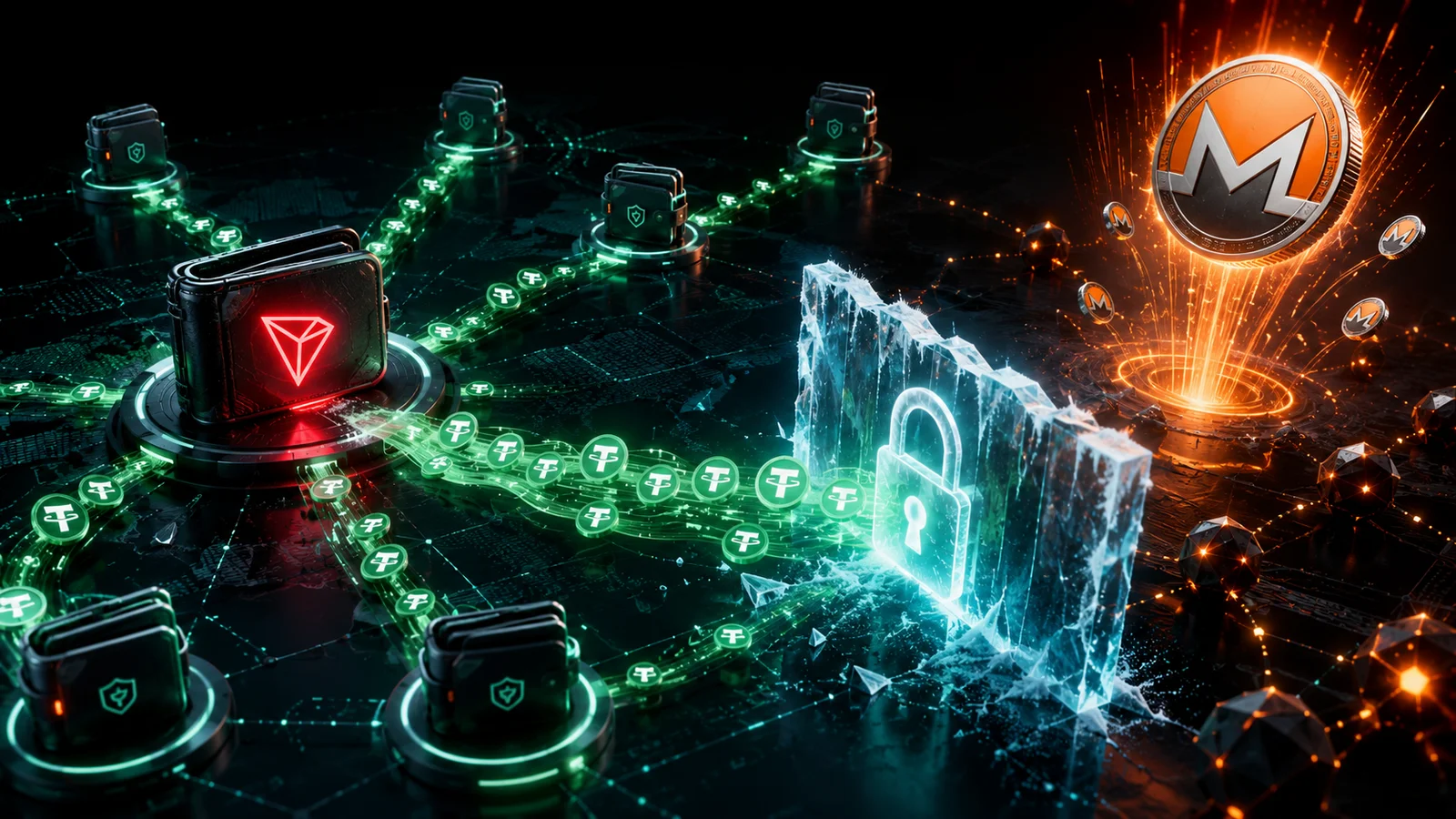
A $120.2 million USDT transfer that began from a single wallet on the Tron network and later spread across multiple blockchains pushed Monero’s price up 46% within hours. On-chain investigator ZachXBT detected the movement and shared it publicly, while Tether froze $72 million in USDT held at an address connected to the transactions.How the Movement StartedZachXBT reported the incident on his Telegram channel on June 12. According to his post, the wallet in question received 120.2 million USDT on the Tron network on June 11. The funds did not remain there for long; shortly after, they began moving in different directions. A significant portion of the transfers went into Monero (XMR) purchases. Monero is a privacy coin designed to conceal transaction history; sender and receiver information is not visible on-chain. The purchases were large enough to move the market. XMR jumped from around $300 to $438, marking a 46% increase. By Friday morning in European hours, it was trading around $382, still up roughly 8% on the day. Since Monero’s trading volume remains low compared with other major coins, a single large buy order can quickly push the price higher.The rest of the funds were distributed through different channels. According to ZachXBT’s tracking, more than $12 million was sent to deposit addresses on the KuCoin exchange. Around $8 million moved to instant swap services, platforms that allow users to convert one coin into another without requiring identity verification. Another $8 million was transferred from Tron to the Bitcoin and Ethereum networks through a cross-chain bridge called Near Intents. Spreading funds across different coins, exchanges and blockchains is one of the known methods used to obscure transaction trails.Tether Steps InWithin hours of the suspicious transfers, Tether intervened. The company has the ability to freeze USDT at specific addresses; through this mechanism, the tokens can no longer be moved or redeemed. According to information shared by ZachXBT, Tether blacklisted a Tron address directly connected to the wallet under investigation, rendering roughly $72 million in USDT unusable.Neither Tether nor any law enforcement agency has issued an official statement on the move so far. The company has previously frozen wallets linked to hacks, sanctions violations or ongoing investigations; this case appears to reflect a similar assessment.What the Picture ShowsThe source of the $120 million remains unclear. However, the structure of the fund movement stands out: a rapid entry into a privacy coin, the use of instant swap services with weak identity checks, and distribution across multiple networks. This is a combination often seen in on-chain cases linked to money laundering.Tether’s freezing decision suggests the company reached a similar conclusion. While $72 million has been immobilized, a large portion of the transfers had already spread through the system. It is not yet known whether KuCoin or any other institution has taken similar action regarding the $12 million sent to the exchange or the $8 million that flowed into swap services.
LG Electronics Partners With Arbitrum
LG Electronics is moving its digital advertising operations onto blockchain infrastructure. The South Korean consumer electronics giant has partnered with Arbitrum to develop its own private layer-2 network. The platform enables digital ads to be automatically placed, bought, sold and managed without intermediaries.According to Fortune, LG is positioning this Arbitrum-based network as a shared inventory database for advertisers and publishers. The system also tracks how consumers interact with ads. The company has completed a pilot test of the platform with an unnamed Japanese advertising agency and is considering launching the product later this year.Samuel Byungsun Park, head of blockchain research at LG Electronics, said, “We are evaluating whether this approach can create meaningful value for advertisers, publishers and users.”Arbitrum co-founder Steven Goldfeder said the technology removes the need for manual intervention in advertising transactions. Goldfeder said the platform can automate the ad sales process from end to end through software.ARB Price JumpsFollowing the partnership news, Arbitrum’s native token ARB recorded a notable increase. According to chart data, ARB is trading at $0.0843986, with a 24-hour gain of 3.61%. Its daily trading range stood between $0.079838 and $0.084876. On a weekly basis, the token is also up 3.07%; however, the 30-day picture remains negative, with a decline of 39.10%. LG Had Already Been Experimenting With BlockchainThis initiative is not LG’s first step into blockchain. The company’s IT services arm, LG CNS, launched an enterprise blockchain platform called Monachain in 2018. However, LG shut down its Art Lab NFT marketplace on smart TVs last year. The new platform, meanwhile, is being built on LG Ad Solutions, the company’s advertising unit. That division has a global smart TV user base of 216 million devices, including 49 million in the United States alone.At the same time, major companies are increasingly building their own blockchain infrastructure. Samsung’s supply chain ledger, JPMorgan’s JPM Coin deposit token and Mastercard’s stablecoin payment infrastructure are among the most prominent examples. Corporate players are also showing a growing tendency to move toward layer-2 chains instead of private permissioned networks.The fact that blockchain was overshadowed by artificial intelligence at CES 2026 may have created the impression that the technology was being left behind. Yet behind the scenes, companies are systematically building infrastructure. LG’s move shows exactly that. By connecting a massive media network with direct consumer reach to blockchain, activity in this field continues without slowing down.

Avalanche Treasury’s Nasdaq Journey Starts With a Sharp Drop
Avalanche Treasury Co., a digital asset treasury company focused on AVAX, began trading on Nasdaq on Thursday. Its first-day performance was harsh: the stock closed down 38.1% at $1.85.Avalanche Treasury stumbles into Nasdaq debutAvalanche Treasury Co. started trading on Nasdaq under the ticker “AVAT” on Thursday after completing a $675 million SPAC merger. The stock opened the session at $2.99, fell as low as $1.75 during the day and closed at $1.85. This marked a 38.1% decline compared with its pre-merger price. In after-hours trading, the stock recovered slightly to around $1.90.The company became publicly listed after closing its merger agreement with Mountain Lake Acquisition Corp., which was signed in October 2025. The deal included $460 million in treasury financing and a $200 million discounted AVAX purchase allocation provided through the Avalanche Foundation.CEO Bart Smith compared the company’s strategy to a “corporate treasury” model. In a statement, he said: “AVAT aims to deploy capital deliberately to compound the value of the Avalanche ecosystem over time. This is not a price bet; it is an investment in Avalanche, which we believe has significant potential in the repositioning of corporate finance.”The company aims to offer investors exposure to the Avalanche ecosystem without requiring them to directly hold or manage AVAX. Under this framework, capital will also be allocated to areas such as protocol investments, institutional partnerships and validator infrastructure. Avalanche Treasury currently holds about 15 million AVAX, representing roughly 3.5% of the token’s circulating supply.Its leadership team includes names from both Wall Street and the crypto industry. Smith has more than two decades of experience at Susquehanna and AllianceBernstein. COO Laine Litman helped scale Hidden Road Partners through its acquisition by Ripple. The board and advisory group include Ava Labs founder Emin Gün Sirer, Dragonfly General Partner Rob Hadick, Blockworks CEO Jason Yanowitz and Aave founder Stani Kulechov.The investor base is also notable. Dragonfly, ParaFi Capital, VanEck, FalconX, Galaxy Digital, Pantera Capital and Kraken are among the institutions backing the company.Dragonfly’s Hadick said in the statement: “Avalanche has solidified its position as the blockchain of choice for institutions. A publicly listed treasury vehicle offers the entry point institutions have been waiting for.”According to the company, Avalanche has attracted more than $1.02 billion in institutional funds and facilitated the tokenization of over $1.65 billion in real-world assets. More than 550 projects are active across the ecosystem.The AVAX side of the picture is not particularly encouraging either. The token was trading around $6.62 after rising 1.27% over the past 24 hours, but it has lost more than 50% of its value over the past six months. Avalanche Treasury joins the growing list of digital asset treasury companies built around the Avalanche Layer 1 blockchain. That list also includes Anthony Scaramucci-backed AVAX One Technology Ltd.


