XRP Technical Analysis
The first spot XRP ETFs have launched in the U.S., and inflows are gaining momentum. Institutional interest is growing, and these ETF investments are increasing XRP’s liquidity while also strengthening the possibility of XRP becoming a regular financial asset in institutional portfolios. This means XRP is no longer just a crypto investor’s asset — it’s now on the radar of traditional investors as well.
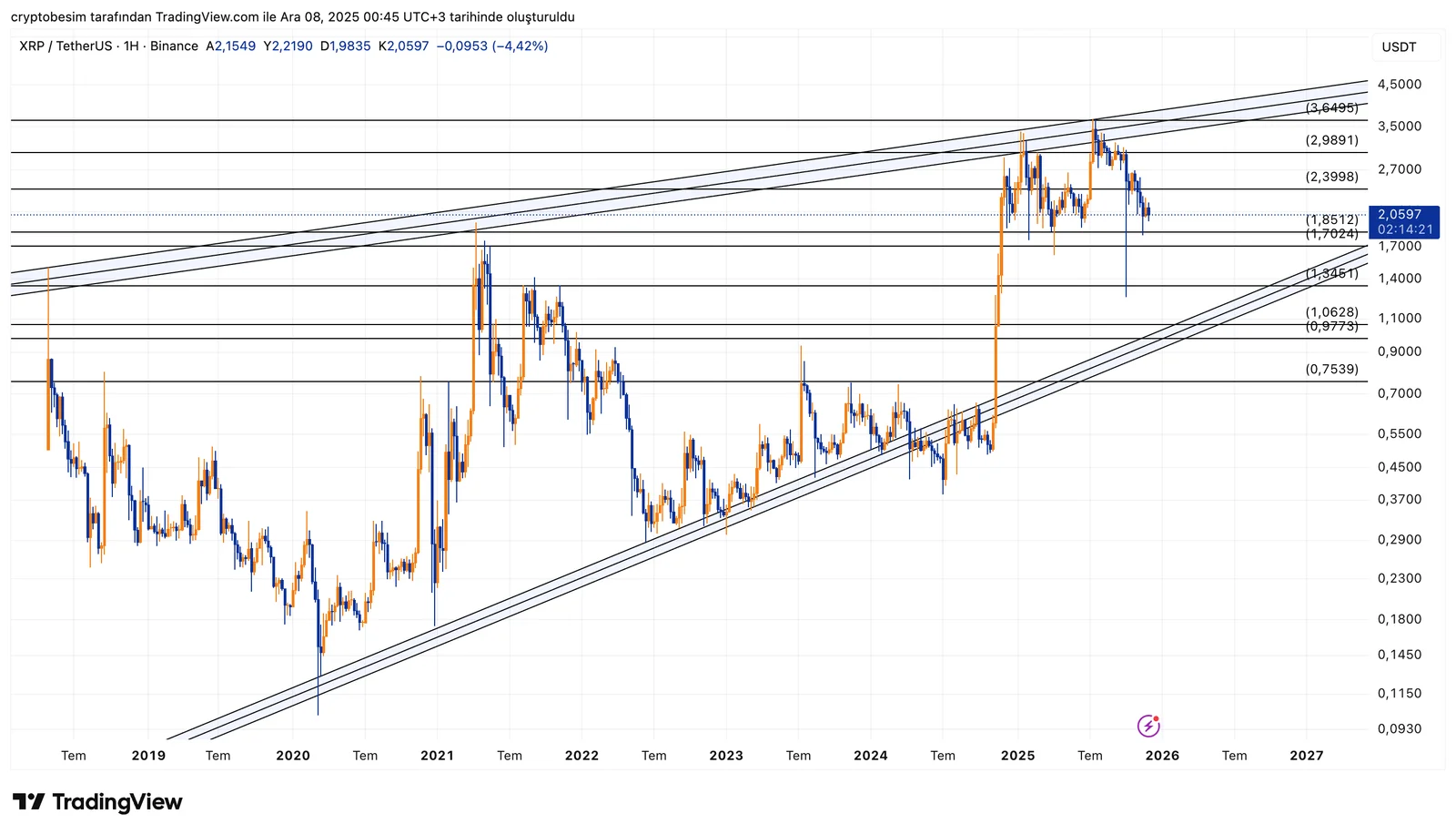
Analyzing the chart on the weekly time frame, we see that $1.70–1.85$ range is the most important zone for XRP . This area has historically acted as strong resistance, but in the recent cycle it has turned into support. In other words, it has become a key “pivot level” that defines the long-term trend direction.
Holding above this zone is essential for XRP to move back toward the upper side of its long-term channel. The top of this channel sits around $2.90–$3.50. So as long as XRP stays above $1.70–$1.85, it has the potential to climb toward that upper trend area over time, supported by renewed buying interest.
If the $1.70–$1.85 zone breaks down, it signals weakness in the trend and opens the door for a move toward the lower channel region. In that case, the next major long-term support sits in the $0.75–$1.00 range. This area is the final strong support that keeps the overall structure intact. Falling into this region could trigger a long consolidation phase again.
Summary;
The $1.70–1.85 zone isn’t just a price level — it’s the key threshold that will decide whether XRP continues its long-term trend. Staying above it opens the path toward the $2.90–3.50 range, while losing it brings the risk of a deeper move toward the lower trend and long-term support.
These analyses, not offering any kind of investment advice, focus on support and resistance levels considered to offer trading opportunities in the short and medium term according to the market conditions. However, the user is responsible for their own actions and risk management. Morover, it is highly recommended to use stop loss (SL) during the transactions.