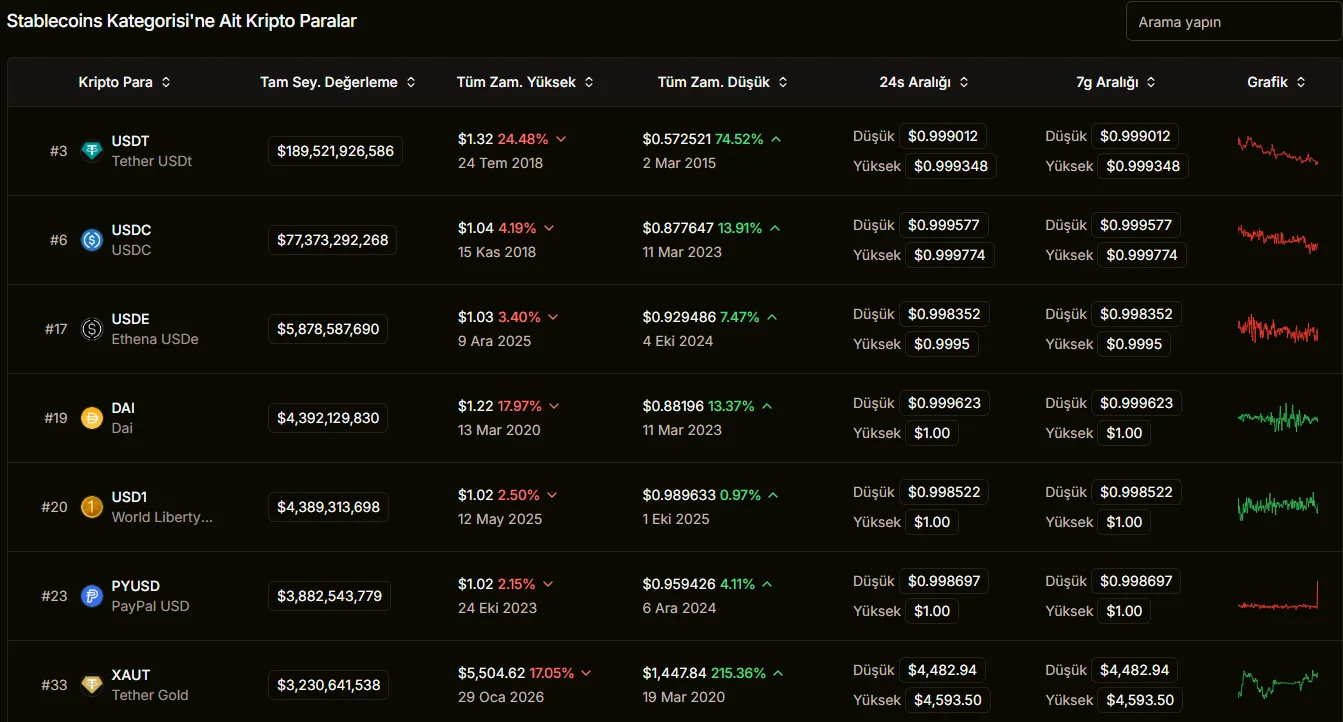
The stablecoin market is attracting attention. According to Standard Chartered analysts, the circulation velocity of stablecoins has increased significantly recently. This development calls into question a key assumption in the bank's long-term growth forecasts and raises new questions about how the market will evolve. According to a recent report published by Geoffrey Kendrick, the bank's global head of digital asset research, the metric called stablecoin velocity, which measures how frequently tokens change hands, has shown a significant increase in recent months. This metric is considered a critical indicator for understanding the growth of the stablecoin ecosystem. According to Kendrick, this change is particularly important for Standard Chartered's frequently cited estimate of a $2 trillion stablecoin supply by 2028. This is because faster stablecoin circulation means fewer new tokens will be minted for the same transaction volume. In other words, even if transaction volume continues to grow, the supply increase may not be as strong as expected.
New use cases drive acceleration
According to the data in the report, the circulation velocity of stablecoins has nearly doubled in the last two years. Today, an average stablecoin changes hands approximately six times a month. One of the most important driving forces behind this increase is USDC, issued by Circle.
The increasing use of USDC on different blockchains is considered one of the main factors pushing the overall velocity level upwards. However, this increase is not just a technical development. It is also directly linked to the expansion of stablecoin use cases.
According to analysts, stablecoins are no longer used only for cryptocurrency trading or as a means of saving in developing countries. Instead, they are beginning to position themselves as a payment instrument replacing traditional financial infrastructure. Even more remarkable is the increasing use of stablecoins in AI-powered payment systems.
These new use cases cause stablecoins to change hands more frequently, leading to the formation of a "faster but less supply-requiring" structure in the market.
On the other hand, the same trend is not observed in all stablecoins. This change is more limited, especially in assets used for savings purposes and with low circulation velocity. At this point, Tether's USDT still maintains its dominant position in emerging markets.
$2 trillion target remains intact
Despite all these changes, Standard Chartered is not backing down on its long-term projections. The bank continues to predict that the stablecoin supply will reach $2 trillion by 2028. It is stated that this growth could also create approximately $1 trillion in additional demand for US Treasury bonds.
However, in the new era, not only the supply size but also the circulation velocity has become an equally critical metric. According to Kendrick, if stablecoin velocity remains constant, the increasing transaction volume will support the new supply. But if velocity continues to rise, the same growth can be achieved with a lower supply. Therefore, the bank continues to closely monitor developments in the stablecoin market. The increase in the use of stablecoins, especially in areas such as payment systems, capital markets, and machine-driven transactions, could shape the next growth phase of the sector. The data also supports this picture; The fact that the prices of stablecoins, especially USDT and USDC, have remained stable while transaction volumes have increased indicates that velocity of circulation is becoming more important than supply.