Altcoin
تعرض هذه الصفحة آخر Altcoin وتحليلات السوق. تصفح المقالات وآراء الخبراء والمستجدات في هذه الفئة على JrKripto، وابقَ على اطلاع عبر تغطية معمقة لاتجاهات العملات الرقمية وتطوراتها.


© 2026 JrKripto. جميع الحقوق محفوظة
تعرض هذه الصفحة آخر Altcoin وتحليلات السوق. تصفح المقالات وآراء الخبراء والمستجدات في هذه الفئة على JrKripto، وابقَ على اطلاع عبر تغطية معمقة لاتجاهات العملات الرقمية وتطوراتها.
الأخبار
أخبار Altcoin
تصفح كل المقالات والأخبار المتعلقة بـ Altcoin: آخر الأخبار والتحليلات والآراء.
XLM Technical Analysis: Downtrend BreakoutLooking at Stellar Lumens (XLM) daily chart, it is clearly seen that the long-term downtrend has been broken out upwards. Falling Channel Structure The descending channel pattern obvious on the chart put pressure on the price of the coin for almost eight months, but this channel has been broken above recently thanks to the great trade volume. The breakout of the level of $0.2758, in particular, triggered the rally. The price is currently trading around $0.4731. The strongest resistance ahead is the level of $0.4981, which is also the level of previous peaks. If broken above, the price target could be the level of $0.60 or above in the middle term.On the other hand, the first support the price will meet in case of a possible pullback could be the level of $0.3578. Moreover, $0.3109 - $0.2966, $0.2794 - $0.2610, and $0.24 respectively should be followed in case of deeper corrections.These analyses, not offering any kind of investment advice, focus on support and resistance levels considered to offer trading opportunities in the short and medium term according to the market conditions. However, the user is responsible for their own actions and risk management. Moreover, it is highly recommended to use stop loss (SL) during trades.

As crypto markets reach all-time highs, large-scale purchases of Ethereum and Bitcoin are attracting attention. Sharplink, a gaming company led by Ethereum co-founder Joseph Lubin, and Japan-based investment firm Metaplanet not only observed this rise but also reinforced their crypto strategies with significant acquisitions.Sharplink Makes Strategic Ethereum PurchaseSharplink Gaming, a company operating in the decentralized finance (DeFi) and gaming software space, added to its Ethereum treasury, purchasing approximately $49 million worth of ETH. According to Arkham Intelligence data, the company transferred 16,374 ETH to its wallet on Sunday afternoon. It was determined that these ETH were recently purchased from Galaxy Digital's over-the-counter (OTC) market. While Sharplink hasn't made an official statement, on-chain analytics platforms like EmberCN suggest the company has reached a total holding of approximately 270,000 ETH. This move comes on the heels of a purchase of 21,487 ETH, or $63.7 million, just days earlier.How did the Ethereum treasury strategy begin?Originally operating as a Minneapolis-based affiliate marketing and iGaming software company, Sharplink launched an Ethereum-centric treasury strategy at the end of May. This strategy was supported by a $425 million private equity sale led by Consensys, a company led by Ethereum co-founder Joseph Lubin. Lubin also serves as Sharplink's chairman of the board.The company positions ETH holdings not only as a financial instrument but also as a means of supporting the long-term strength and decentralization of the Ethereum ecosystem. CEO Rob Phythian clarified this in a statement, saying, "Ethereum is now Sharplink's core treasury asset."Last week, Lubin told CNBC that the company is "buying tens of millions of dollars of ETH every day," emphasizing the continued nature of this strategy. Share price on the riseSBET, the company's Nasdaq-listed stock, closed at $21.65 last week, a 17% increase following the announcement of a previous purchase of 10,000 ETH. This rise was also supported by the fact that ETH reached its highest levels since early February, approaching $2,981 in the market. However, the stock is still 74% below its all-time high of $82. In particular, the false news that Lubin and Consensys had sold shares on June 12 caused a significant collapse in SBET's value.Meanwhile, the Ethereum Foundation is facing investor backlash due to increased sales. Under the new treasury policy announced in June, the annual ETH sales rate was reduced from 15% to 5%. It was also stated that the sales would be conducted with greater transparency and in accordance with "DeFiPunk" principles. Metaplanet Expands Its Bitcoin StrategyWhile these developments are unfolding on the Ethereum front, Japanese investment giant Metaplanet made a major move on the Bitcoin front. The company purchased an additional 800 BTC for approximately $94 million, bringing its total Bitcoin holdings to over 16,000. This latest purchase was made at an average of $117,000 per BTC. The current value of its total BTC holdings is $1.64 billion, and the company's 2025 performance has already yielded a 435% return.Metaplanet, which added 7,400 BTC to its balance sheet in the last month alone, is positioning crypto as a strategic reserve asset, following in the footsteps of institutional players like MicroStrategy. These aggressive purchases reflect the heavy inflows into spot ETFs and institutional interest. In fact, in the last seven days alone, the inflow into spot Bitcoin ETFs has exceeded $2.7 billion. While Metaplanet shares haven't fully reacted to Bitcoin's meteoric rise yet, analysts say the share price has strong upside potential. Its decreasing mNAV (market capitalization/net asset value) makes it attractive to long-term investors.
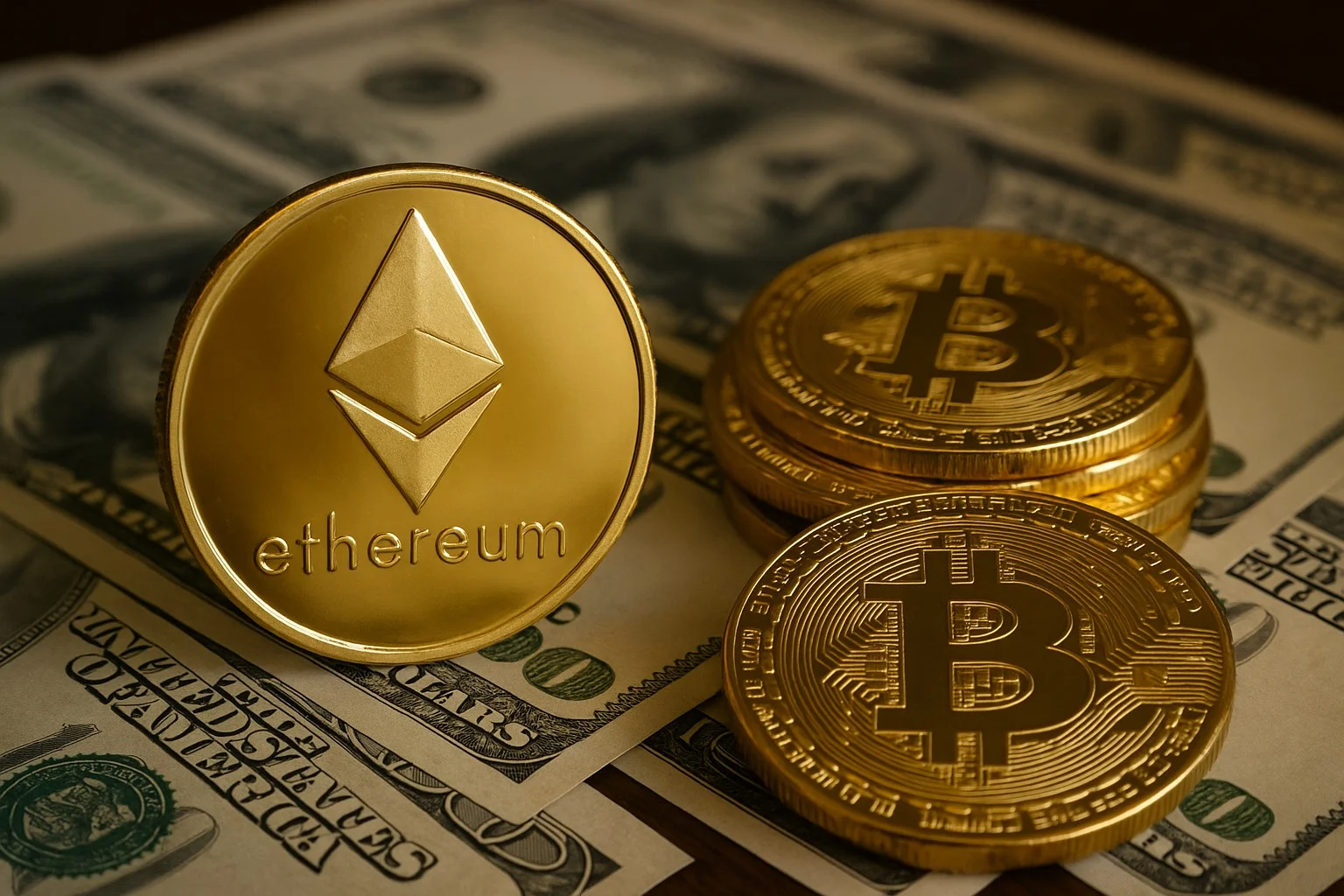
A historic turning point is underway in the cryptocurrency markets. Bitcoin (BTC) surpassed $120,000 late Sunday night, reaching an all-time high. Increasing interest from institutional investors and regulatory changes to be addressed during "Crypto Week" in the US are among the key factors driving this surge.Bitcoin Reaches $123,000Bitcoin surged above $120,000 around 11:40 PM Sunday night, boosting the market. As of writing, it is trading at $123,036, a 3.32% increase. The daily inflow of more than $1 billion into Bitcoin ETFs is noteworthy. Currently, more than 6% of Bitcoin's market capitalization is held through ETFs. Furthermore, one of the most significant developments driving this surge is the CLARITY and GENIUS bills, which will be debated in the US Congress as part of "Crypto Week," which begins today. The CLARITY Act aims to clarify the jurisdiction of institutions such as the SEC and CFTC over crypto assets, while the GENIUS Act aims to establish the legal framework for dollar-denominated stablecoins. Furthermore, signals of a potential interest rate cut from the US Federal Reserve are among the other macro factors supporting the rise.Liquidations Break RecordBitcoin's rapid rise has also had a significant impact on futures markets. In the last 24 hours, $680 million worth of positions were liquidated in the crypto market. According to JrKripto data, $614 million of this came from short positions. The largest single liquidation was a $92.5 million BTC short position on the HTX exchange. This wave of liquidations wasn't limited to Bitcoin. Ethereum experienced a $68 million forced closure, XRP a $17 million closure, while altcoins such as XLM, PEPE, DOGE, and SUI also saw heavy trading volume. Bitcoin is now the world's fifth most valuable asset.Bitcoin's market capitalization has surpassed $2.4 trillion, surpassing Amazon, Google, and silver. Currently, only gold, NVIDIA, Microsoft, and Apple have a larger market capitalization than BTC. Vincent Liu of Kronos Research describes this rally as an "infrastructure-driven" rally, adding: "ETFs, policy momentum, and abundant liquidity combined to create this picture."According to Liu, BTC could test the $130,000 to $150,000 range by the end of the year. However, reaching these levels will depend on whether retail investors re-enter the market.Altcoins are also on the riseThe Bitcoin-fueled rally led Ethereum to rise above $3,000, while XRP rose 4.82 percent to $2.91, and Solana rose 3.21 percent to $165.9. According to market analysts, this rally is likely to strengthen further in the coming weeks if ETF inflows continue and crypto-friendly regulations come from the US.
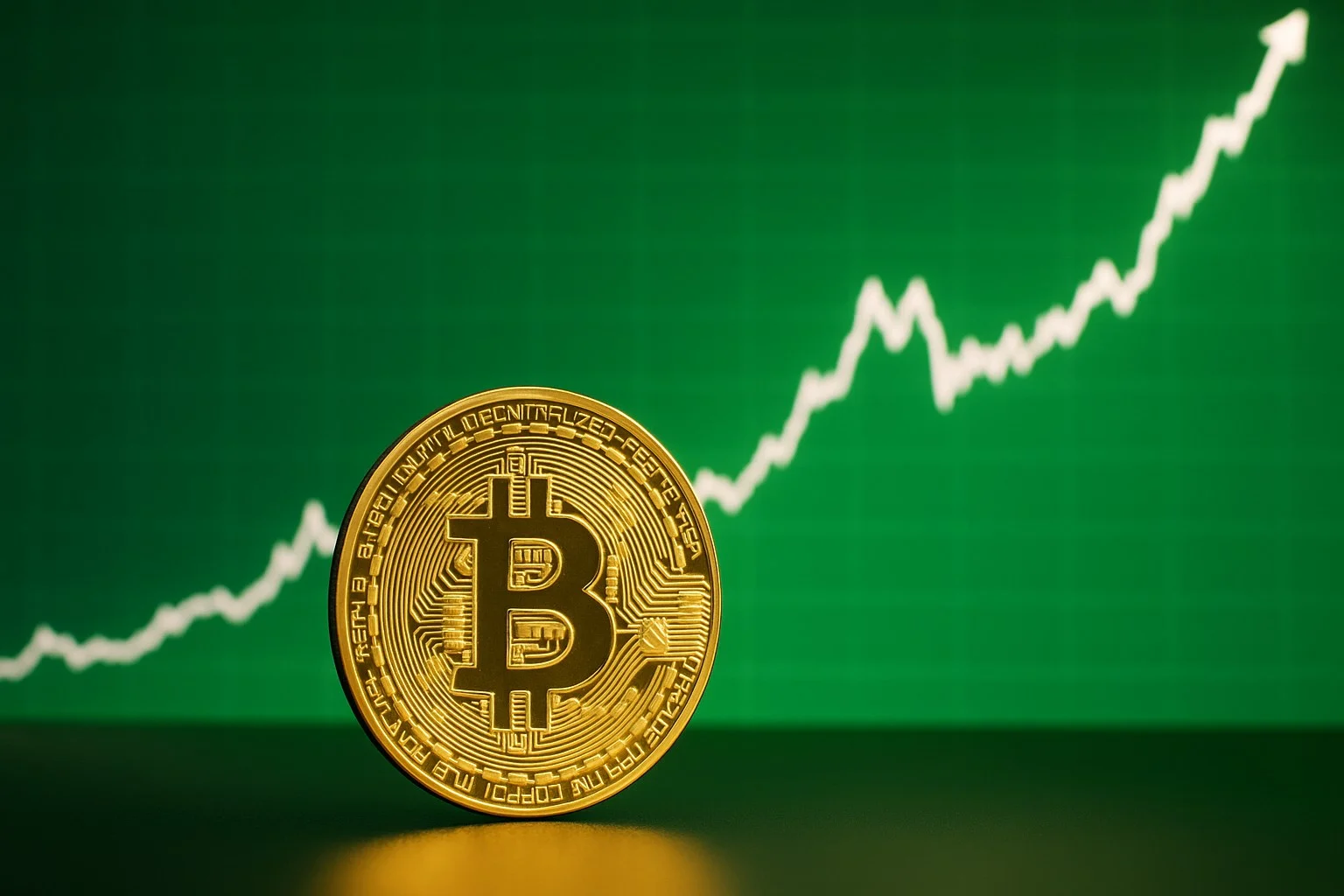
TIA Technical AnalysisTIA is clearly having difficulty breaking the level of $1.88, which is horizontal resistance and the area where previous Fibonacci levels are concentrated. If the price can hold above this key level, the first target will be the range between $2.38 - $2.45, which marks the downtrend line at the same time. In other words, the price will see some pressure here as the horizontal level and the trend will actively work. If the price can hold above $1.88, the way to the higher levels until $2.50 will be open. However, if TIA gets rejected from this level, the range between $1.87 - $1.72 and $1.60 should be followed. Falling Trend Structure Summary:$1.88 seems to be a strong resistance.The first target will be $2.38 - $2.45 if the price can hold above $1.88.The level $1.88 coincides with the trendline.Above $2.45, the next target will be $2.50.If it gets rejected, $1.87, $1.72, and $1.60 should be followed respectively.These analyses, not offering any kind of investment advice, focus on support and resistance levels considered to offer trading opportunities in the short and medium term according to the market conditions. However, the user is responsible for their own actions and risk management. Moreover, it is highly recommended to use stop loss (SL) during trades.

SUI Technical AnalysisLooking at the SUI chart on daily timeframe, we can clearly see that the price has been recovering well since the strong momentum started around the support level of $2.80 - $2.60. Together with this momentum, the price has jumped to $3.50 again. Symmetrical Triangle Formation The price of the coin seems to have been stuck between the ascending trendline and the major resistance pushing from above. This structure has been forming a symmetrical triangle pattern, and we know that such a pattern usually results in a strong breakout.$3.70 - $3.75 price range stands out as the main breakout zone. If the price can hold above this price range, it can first climb up to the range between $4.10 - $4.50 and then to $5.00. This price range is a key area as it will mark the breakout point of the long-term downtrend. In case the price retreats, the first strong support level will be $3.00 - $2.85. If this support breaks down, the price might test $2.24 and the OB (Order Block) below it. This area previously worked as an area where buyers are strong and they pushed the price upwards.These analyses, not offering any kind of investment advice, focus on support and resistance levels considered to offer trading opportunities in the short and medium term according to the market conditions. However, the user is responsible for their own actions and risk management. Moreover, it is highly recommended to use stop loss (SL) during trades.

PEPE/USDT Technical OutlookThe pattern we have seen in the ADA and DOGE charts we analyzed today also appears in the PEPE chart. The downtrend, which started towards the end of 2024, is still in progress. The price of the coin has tested both the upper border of this descending channel and a key horizontal resistance area at $0.00001238. The price zone of $0.00001051 – $0.00001238 has worked as a strong resistance, which has been tested many times before. If this area gets broken upwards, the levels of $0.00001312 and $0.00001572 could be the next price targets on the chart.$0.00001051 will be the first support the price might test in case of a possible pullback unless the mentioned breakout occurs. The liquidity area of $0.00000892 – $0.00000842 could hold the price if the first support level of $0.00001051 gets broken downwards. The current pattern may signal a trend reversal if it breaks out of the downtrend. Falling Trend Structure Summary:Downtrend starting at the end of 2024 is in progress.The price is both at the upper border of the trend and at horizontal resistance.If the price closes daily above $0.00001238, resistance levels of $0.00001312 and $0.00001572 will be the next targets.In case of a pullback, $0.00001051 and $0.00000892 will be the support levels.These analyses, not offering any kind of investment advice, focus on support and resistance levels considered to offer trading opportunities in the short and medium term according to the market conditions. However, the user is responsible for their own actions and risk management. Moreover, it is highly recommended to use stop loss (SL) during the transactions.

ADA Technical AnalysisLooking at the ADA chart, we see that a falling trend has persisted since the end of 2024, just as we have seen in the DOGE chart. The price of the coin is currently testing this downtrend. ADA will possibly try to test and break above this area as it is currently testing both horizontal and trend resistance. A possible breakout of this zone could increase the momentum to a great extent, potentially propelling the price towards $0.81, $0.91, and $1.08. On the other hand, it is possible that the price might retreat to the price zone of $0.61–$0.64 unless it holds above the level of $0.70 in case of a rejection from this level. Falling Channel Structure In short:The price is testing the upper border of the descending channel.The key resistance level is $0.73.If the price closes above $0.73, new targets could be $0.81, $0.91, and $1.08 respectively.In the event of a pullback, it will be considered risky to stay below $0.70.These analyses, not offering any kind of investment advice, focus on support and resistance levels considered to offer trading opportunities in the short and medium term according to the market conditions. However, the user is responsible for their own actions and risk management. Moreover, it is highly recommended to use stop loss (SL) during the transactions.

DOGE/USDT Technical AnalysisWe can see that there is a major descending trend as of the end of 2024, and the coin is trading around the resistance of this falling trend. It is true that this price zone is technically very strong. In terms of support and resistance levels, everything is working properly. We should be following $0.238, $0.256, $0.322, $0.391, and finally the level of $0.466 following the trend breakout if we can see daily closings above the mentioned area.Support levels $0.193 and $0.157 are of great importance for the continuation of the rise in case of a possible pullback. Possible buys from these areas may trigger a new rise in the scenario we mentioned. Falling Trend In short:The price is testing the downtrend coming from the end of 2024.The price is at a strong resistance level.In the event of a breakout of the trend, resistances in the upper area will be possible targets.$0.193 and $0.157 are important levels in case of a pullback.The price might continue to rise if it doesn’t retreat much and finds support.These analyses, not offering any kind of investment advice, focus on support and resistance levels considered to offer trading opportunities in the short and medium term according to the market conditions. However, the user is responsible for their own actions and risk management. Moreover, it is highly recommended to use stop loss (SL) during the transactions.
STRK/USDT Technical Outlook STRK At A Wide Angle Looking at the STRK chart, we see a similar pattern and a similar scenario to what we saw on the ZK chart. The key difference observed between the formations on the two charts is that the pattern on the STRK chart occurred over a longer timeframe. The medium-term price target for STRK is $0.75 after the breakout.On a closer look, it can be seen that the price is trading at a strong resistance level. Short-Term Overview $0.150 – $0.155 is an area where sellers are intense. If we see some pullback from here, they can be considered as a retest. Support levels to follow are $0.138 followed by the $0.123 – $0.126 range. In case of a breakout of this current level, the short-term target might be $0.19.These analyses, not offering any kind of investment advice, focus on support and resistance levels considered to offer trading opportunities in the short and medium term according to the market conditions. However, the user is responsible for their own actions and risk management. Moreover, it is highly recommended to use stop loss (SL) during the transactions.

BCH Technical AnalysisLooking at the BCH/USDT pair, it is clear that there is an ascending channel pattern and an ascending wedge formation mixed together.This medium-term formation seems to be a continuation of the HH and HL movement. It is worth noting that the formation is trading close to the upper border of the channel. The current price zone of $520–$525 – both an uptrend and a horizontal level – is an important resistance intersection. A possible breakout of this area with strong volume could propel the price to $571, which is a decision point. A breakout or a pullback? It should be monitored closely. Rising Wedge Formation In summary:BCH is trading within an ascending channel.$520–$525 zone is a strong resistance.$464 and $446 can work as support in case of possible pullbacks.So long as the channel formation is intact, the technical outlook is positive.These analyses, not offering any kind of investment advice, focus on support and resistance levels considered to offer trading opportunities in the short and medium term according to the market conditions. However, the user is responsible for their own actions and risk management. Moreover, it is highly recommended to use stop loss (SL) during the transactions.
ZK Technical Analysis and Breakout of the Falling WedgeThe ZK chart has been printing a clear falling wedge pattern. In line with technical expectations, the upward breakout of this falling wedge continues the positive atmosphere. The retest following the breakout demonstrated that the formation worked healthily and triggered a strong upward movement from this area. Falling Wedge Fracture Currently, ZK is trading around $0.060 – $0.062, but it can meet short-term profit realization and see some pullbacks. On the other hand, the pullbacks mentioned here are healthy corrections in the uptrend. $0.054 and $0.050 seem to be support levels, and price reactions from these levels will indicate that the positive outlook might continue.In short:Falling wedge formation broke out upward.Retest done following the breakout.$0.060 – $0.062 zone is strong resistance.$0.054 and $0.050 should be monitored as support in case of pullbacks.These analyses, not offering any kind of investment advice, focus on support and resistance levels considered to offer trading opportunities in the short and medium term according to the market conditions. However, the user is responsible for their own actions and risk management. Moreover, it is highly recommended to use stop loss (SL) during the transactions.

Optimism is a Layer-2 blockchain protocol developed to address Ethereum's scalability issues. Essentially, it reduces the load on the main network by rolling up transactions from Ethereum onto its own sidechain (using a rollup method). This allows transactions to be completed much faster and more cost-effectively. The Optimism network uses a technology called "Optimistic Rollup." This method assumes transactions are correct and is processed off-chain, with only errors occurring. This allows users to maintain the security and decentralization advantages offered by Ethereum while also benefiting from faster transaction times and lower gas fees.The Optimism project is run by the non-profit Optimism Foundation. The project emerged in 2019 as a product of scalability research conducted in the Ethereum community and launched its mainnet in 2021. The team, founded by Jinglan Wang, Ben Jones, and Kevin Ho, has succeeded in developing a second-layer platform that is fully compatible with Ethereum (EVM-compatible). The project's native cryptocurrency, the OP token, was distributed to the community in the first airdrop in May 2022. The OP token stands out as a governance token that provides a voice in the network's management and has attracted the attention of Ethereum users since its launch.In this article, we'll explore questions like what OP coin is, how Optimism works, and more. We'll also touch on topics like the Optimism Ethereum connection and the Optimism Layer 2 solution.Definition and Origin of OptimismOptimism is a scaling solution developed to address Ethereum's problems such as high transaction fees and slow speed. Technically, it uses an "optimistic rollup" model, which processes transactions outside of Ethereum and then sends a summary to the main chain. This approach reduces congestion on Ethereum, increases transaction capacity, and allows users to process transactions at a much lower cost. Furthermore, Optimism is designed to be fully compatible with smart contracts on Ethereum. This means that applications running on the Ethereum Virtual Machine (EVM) can be ported to the Optimism network with virtually no modifications. This EVM compatibility offers an advantage that significantly simplifies the migration process for developers and projects. The project's foundations are rooted in research originating within the Ethereum community. In 2019, the nonprofit Plasma Group team began working on a next-generation scaling solution for Ethereum. Inspired by Vitalik Buterin's rollup ideas, the team put this vision into practice and developed the Optimistic Rollup model. Later, Ethereum developers such as Jinglan Wang, Ben Jones, and Kevin Ho founded a public benefit company called Optimism PBC to bring these ideas to life. After conducting experiments on various testnets throughout 2020, Optimism officially launched the mainnet in 2021. As of December 2021, the Optimism mainnet went live, and the first Ethereum-based applications began migrating to the Optimism Layer-2 network. The primary motivation for this project was to reduce transaction fees, which rise with increasing density on Ethereum, and to provide a more accessible blockchain experience for everyone. Optimism's History: Major MilestonesOptimism's development process, as well as its technical foundations, is of great importance to the Ethereum ecosystem. Founded in 2019, the project launched its mainnet in 2021, taking on a leading role among Layer-2 solutions. Over time, it has evolved from a technology offering only scaling to a more comprehensive ecosystem with governance mechanisms, community structure, and technical infrastructure. Below, you can find the major milestones in Optimism's journey in chronological order.2021: After extensive testing, the Optimism network officially launched with its mainnet. Specifically, on December 16, 2021, the whitelisting was lifted, allowing everyone to access Optimism's L2 network. This development is considered the launch of one of the first major scaling solutions on Ethereum.2022: Optimism launched its native token. In April 2022, the Optimism Collective, aiming to hand over the project's governance to the community, was announced, and the Optimism Foundation was established. The OP token was subsequently introduced, and the first OP token airdrop was held in May 2022. In this first airdrop, 214 million OP, approximately 5% of the total OP supply, was distributed to approximately 250,000 wallets, including early adopters. With the OP token, users had the opportunity to participate in the network's governance and have a say in the protocol's future.2023: The Optimism team announced its "Superchain" vision, which aims to further enhance the network's scalability. With this vision, Optimism's infrastructure, the OP Stack, enabled different institutions and projects to build their own L2 networks. As part of this effort, a collaboration with Coinbase was established, and a Layer-2 network called Base, developed on the OP Stack, was launched. Base joined the ecosystem as the second major L2 network using the OP Stack after the Optimism mainnet, creating a shared structure by transferring a portion of transaction fees to the Optimism network. 2023 also saw increased competition for Optimism. While competitors like Arbitrum in the Layer-2 market dominated metrics such as TVL (Total Locked Value) and active user count, Optimism continued to demonstrate steady growth. While Arbitrum saw declines in daily transaction count and active address count throughout the year, Optimism saw steady increases in these metrics.2024: Technical updates such as "Fjord" and "Granite" were implemented, improving gas optimization and data availability, while permissionless fault proofs were reactivated. The "Ecotone" update introduced Ethereum's EIP-4844 blob support, reducing transaction fees by approximately 90%. Large bounties were distributed to Superchain developers with RetroPGF 4. Total value locked (TVL) reached approximately $682 million, with daily transaction volume remaining stable at 597,000. Developer and community events (SuperFest, Superhack, Sunnys) intensified. Airdrop 5 also took place, with 10.37 million OP distributed to over 54,000 addresses. More than 30 OP stacks became active on the Superchain, representing 60% of the total transaction volume in the Ethereum L2 market. Airdrop 5 announcement on Optimism. Source: Optimism 2025: Isthmus hardfork: Ethereum's Pectra update was integrated into the OP Stack, and the first implementation was made on Optimism L2s. Additionally, the new DAO budget for Seasons 8–9 was approved (4.44 million OPs). The Bedrock2.0 update increased rollup efficiency by 50%. Coinbase partnership announced: With Superchain integration, daily OP transaction volume through the retail wallet reached $1.3 billion. Work on the Superchain is still ongoing.Why Is Optimism Valuable?Overall, Optimism stands out as a strong infrastructure project poised to shape the future of the Ethereum ecosystem. It offers users a faster, cheaper, and more accessible blockchain experience, while providing developers with a flexible environment into which they can easily integrate their existing applications. This structure, which increases Ethereum's transaction capacity without compromising its security, makes Optimism highly attractive for both individual users and projects. Below, you can take a closer look at the key features that make Optimism valuable. Low-fee transactions on EthereumOptimism offers an effective alternative to the high gas fees on the Ethereum mainnet. Thanks to its rollup structure, which processes transactions outside of Ethereum and sends a summary to the mainnet, transactions can be completed in seconds and at a much lower cost. This feature is a significant advantage for users, especially in high-interaction applications like DeFi and NFTs. Optimism's rollup architecture EVM compatibility and developer-friendly infrastructureOptimism is designed to be 100% compatible with the Ethereum Virtual Machine (EVM). This allows smart contracts and dApps on Ethereum to run seamlessly on the Optimism network with virtually no modifications. This portability offers developers the opportunity to easily port their existing projects to Optimism. In this respect, Optimism is a second-layer solution that can be integrated into projects within the Ethereum ecosystem without requiring a learning curve. The differences between Ethereum and the Optimism network can be shared in the table below:CategoryEthereum (Layer-1)Optimism (Layer-2)PurposeProvides a secure, decentralized base layer for dAppsScales Ethereum by enabling faster and cheaper transactionsTransaction Speed~12–15 seconds block timeNear-instant confirmations via centralized sequencerTransaction Cost (Gas)High – can range from $10 to $50+ depending on network congestionLow – usually a few cents to under $1Security ModelSecured directly by Ethereum mainnetInherits Ethereum’s security through fraud-proof mechanismsGovernanceLed by Ethereum Foundation & global communityGoverned by OP token holders & the Optimism CollectiveCompatibilityNative Ethereum Virtual Machine (EVM)Full EVM compatibility – seamless dApp migrationData StorageAll transaction data is stored on-chainOff-chain computation, with transaction summaries posted to EthereumUpgrade & DevelopmentSlow and conservative – may require hard forksMore flexible – OP Stack allows modular upgradesFund Transfer (To L2)Direct wallet transfersL1 → L2 via bridges – fast and low-costFund Withdrawal (From L2)Immediate~7-day “challenge period” for fraud detectionDecentralizationHigh – maintained by thousands of nodesMedium – currently uses a centralized sequencer (decentralization is planned)Developer ExperienceRich infrastructure but expensive testing environmentUses same EVM tools – affordable for experimentationEcosystem MaturityMost mature and extensive blockchain ecosystemRapidly growing – key projects include Velodrome, Base, LyraScalabilityLimited – ~15 transactions per second (TPS)Significantly higher – theoretically thousands of TPSCore TechnologyProof of Stake, zk-SNARKs integrationOptimistic Rollup, OP Stack, Sequencer, Fraud ProofsA Balance of Speed and SecurityOptimism offers significantly faster transaction confirmations compared to the Ethereum mainnet. A central "sequencer" node connected to the network instantly queues transactions and includes them in blocks. This makes the user experience remarkably smooth. Security-wise, Optimism is based on Ethereum's main chain; final confirmation and records of all transactions are guaranteed on the Ethereum blockchain. This architecture allows users to enjoy high-performance without compromising security. (Note: Due to the Optimistic rollup structure, there is a one-week objection period for transactions made on the network; this is a mechanism that supports system security.)A Multi-Chain Ecosystem with a "Superchain" VisionOne of Optimism's long-term goals is to implement the "Superchain" concept, which combines multiple Layer-2 networks under a single umbrella. In line with this vision, different projects can launch their own Optimism-compatible L2 chains with the OP Stack infrastructure, and these chains can share a common security and communication layer. Once fully implemented, the Superchain will increase interoperability across networks, providing a unified experience for users and developers as if it were a single, larger chain. This approach transforms Optimism from a pure Layer-2 solution into a centralized platform that scales across the entire Ethereum ecosystem. How does Superchain work? Source: Optimism Who is the Founder of Optimism?The Optimism project was launched by the Optimism Foundation, a non-profit organization. The project's founding team includes well-known figures in the Ethereum community: Jinglan Wang, Ben Jones, and Kevin Ho, known as the co-founders who laid the foundations for Optimism. This team consists of experienced developers who previously worked on Ethereum's Plasma and Rollup solutions. Optimism has been developed as an open-source project since its inception and continues to thrive, open to contributions from the Ethereum community. The Foundation's vision is to grow the project as a non-profit, public benefit project, and to add long-term value to the Ethereum ecosystem. To this end, the Optimism Foundation adopts a community-driven governance approach that redistributes a portion of the protocol's revenues to public goods and developers within the ecosystem through programs like RetroPGF.Frequently Asked Questions (FAQ)In this section, we've compiled some frequently asked questions about Optimism. Below, you can find concise and clear answers to key questions that both beginners and users familiar with the Ethereum ecosystem may have.What is Optimism and what does it do?: Optimism is a Layer-2 solution designed to scale the Ethereum blockchain. This network processes transactions on its own second layer instead of Ethereum's main chain, offering significantly lower fees and higher speeds. In short, it increases Ethereum's capacity and reduces its costs, enabling decentralized applications to run more efficiently. Thus, it provides an effective solution to the problems of congestion-related slowdowns and high gas fees on the Ethereum network.When was the OP token released, and what does it do?: OP, Optimism's native token, was released with the first airdrop in May 2022 and distributed to early adopters and project contributors. The OP token is essentially the project's governance token; token holders can vote on proposals affecting Optimism's future and participate in decision-making processes. In addition, the OP token can be used to pay transaction fees on the network and offers the opportunity to contribute to network security and earn rewards through staking. In short, OP plays a critical role in both the governance and economic incentive mechanisms of the Optimism ecosystem.What is the difference between Optimism and Arbitrum?: Optimism and Arbitrum are both Layer-2 optimistic rollup solutions developed for Ethereum, and their primary purpose is to increase Ethereum's scalability. While they share similar technology, there are some differences. The most significant difference is the fraud proof mechanism used to protect against fraudulent transactions: Optimism uses a single-round challenge mechanism, while Arbitrum employs a multi-round challenge process. As a result of this technical difference, Optimism can finalize transactions faster but may incur slightly higher gas fees compared to Arbitrum during busy Ethereum network periods. Furthermore, in terms of ecosystem size, Arbitrum initially had a higher total value locked (TVL) and more protocols; however, recent data indicates that the Optimism network is growing rapidly. While daily transaction numbers and active user metrics on Optimism began to increase in 2023, some stagnation was observed on Arbitrum's side. This suggests that the balance of power in the Optimism-Arbitrum competition may shift over time.What is Superchain, and why is it important?: Superchain is a vision put forward by Optimism and is still in development. According to this concept, multiple Layer-2 networks will be brought together using Optimism's underlying OP Stack technology, creating a massive, interconnected Layer-2 ecosystem. Once the Superchain is implemented, all OP Stack-based L2s, such as the Optimism mainnet and Coinbase's Base network, will share a common security and communication layer. This will enable seamless and secure asset transfers and messaging between different chains, and developers will be able to easily adapt code written for one chain to another. The importance of Superchain lies in its ability to horizontally extend Ethereum's scalability and lay the foundation for a multi-chain future. If successfully implemented, it will create a unified network structure where different projects can work together in the blockchain world, which could improve the user experience and accelerate adoption. Is trading on the Optimism network safe? Yes, trading on the Optimism network is considered safe. This is primarily because Optimism bases its security on the Ethereum mainnet. Even if transactions are executed on the second layer, all transaction data and updates are periodically sent to the Ethereum main chain and verified there. This means that transactions on Optimism are protected by Ethereum's proven security. The Optimistic Rollup structure works by assuming transactions are correct, but a challenge mechanism is in place in case of an erroneous or fraudulent transaction. In this context, withdrawals from Optimism to Ethereum are subject to a challenge period of approximately 7 days, during which anyone can challenge the transactions and verify their validity. This procedure ensures the safety of user funds and the prevention of fraudulent transactions. Ultimately, Optimism is designed to be as secure as Ethereum and provides a reliable second-layer environment for users as long as it operates properly. How is the future of the OP token assessed?: The future of the OP token will depend on the development of the Optimism network and the overall role of Layer-2 solutions within the crypto ecosystem. Many analysts and experts emphasize that if Ethereum maintains its central position in the coming years and the need for scalability continues to increase, the importance of L2 solutions like Optimism will grow. Optimistic scenarios predict that the Optimism ecosystem could expand significantly by 2025, and the OP token value could increase accordingly. For example, some market forecasts even suggest that the OP price could reach double-digit levels under a general bull market. However, the competitive landscape is a determining factor in the future of the OP token. The success of other Layer-2 and scaling projects, such as Arbitrum, zkSync, and Polygon zkEVM, could impact OP's market share. Optimism's growth rate could be limited, particularly if zk-rollup-based projects mature and become widespread. As a result, many experts argue that the OP token holds long-term potential, but for this to happen, the Optimism network must successfully implement its innovations (such as Superchain) and continue to attract users. Therefore, the OP token's fate is closely tied to the success of Ethereum's scalability solutions in general.For more information on Optimism and Layer-2 projects contributing to the Ethereum ecosystem, follow the JR Kripto guide.

Grayscale, a pioneer in crypto asset management, has announced new coins that can be included in its investment products. According to the company's update dated July 10, 2025, many new cryptocurrencies, categorized by different use cases, have been added to its "Assets Under Consideration" list.Grayscale's updated list is based on the company's "Crypto Sectors" framework, which classifies digital assets under six sectoral headings: currencies, smart contract platforms, financial services, consumer and cultural projects, AI-based assets, and infrastructure and utility tokens.Which new tokens have been added?Grayscale has added 11 altcoins to its updated list. These are Celo, DeepBook, Euler, Kamino Finance, Morpho, Playtron, Virtuals Protocol, Layer Zero, Wormhole, and MegaETH. Among the new projects considered in the smart contract platform category, Aptos (APT), Arbitrum (ARB), Celo (CELO), Mantle (MNT), Monad, and Toncoin (TON) stand out. These projects aim to establish Ethereum-like infrastructures, paving the way for DeFi and Web3 applications. PENDLE and JUP draw attention in the financial sectorIn the financial products category, protocols such as Binance Coin (BNB), Jupiter (JUP), Pendle (PENDLE), Ethena (ENA), Kamino Finance (KMNO), Morpho (MORPHO), and Maple Finance (SYRUP) stand out among projects on Grayscale's radar. These projects offer innovative solutions in areas such as lending, yield generation, and derivatives trading.The update also highlights the growing interest in AI-based projects. In addition to projects already in its product portfolio, such as Bittensor (TAO), Render (RENDER), and Near (NEAR), new AI assets under evaluation include Aixbt (AIXBT), Grass (GRASS), Prime Intellect, and Virtual Protocol.In the infrastructure and services category, projects like Solana-based Jito (JTO), LayerZero (ZRO), Wormhole (W), and Walrus (WAL) stand out. These projects offer cross-chain interoperability, oracle services, and liquidity solutions.Tokens in existing products are stableGrayscale's current investment offerings include Bitcoin (BTC), Ethereum (ETH), Solana (SOL), Cardano (ADA), Chainlink (LINK), Uniswap (UNI), Dogecoin (DOGE), and more.Grayscale aims to prioritize transparency by updating these lists at the end of each quarter or every 15 days. However, it is emphasized that not all assets under evaluation may qualify as investment products. Some assets can enter the product portfolio directly without being listed.
The Ethereum Foundation announced its plan to integrate zero-knowledge proofs (ZK) into the network's foundational layer, sending the ETH price soaring. According to the statement, Ethereum's new goal is to launch a Layer-1 zkEVM (zero-knowledge Ethereum Virtual Machine) within a year.A New Era with Real-Time ZK ProofsThe plan, shared in the Ethereum Foundation's official blog post, envisions validators checking cryptographic proofs generated by three independent zkVMs instead of rerunning blocks. This is expected to provide significant efficiency and scalability improvements to the system. According to information provided by researcher Sophia Gold, this system, based on the concept of "real-time proof," will launch with latency below 10 seconds, proof sizes below 300 KiB, and a minimum security requirement of 128-bit. ZkVM teams that meet these standards will be able to gain a significant foothold in the Ethereum ecosystem.In the first phase of the plan, only a limited number of validators are expected to run new clients. However, as the system undergoes audits, bug bounties, and formal verifications, the aim is for these proofs to become standardized across the network.This plan, reflecting Vitalik Buterin's long-held vision of a "ZK-friendly Ethereum," aims to usher in new eras for the network in privacy, scalability, and censorship resistance. Furthermore, with the help of technologies like SP1, validators running on home hardware will also be possible. This is a critical step for preserving the network's decentralized structure. Following these developments, the ETH price increased by over 5%, surpassing $3,000. A New Era for Layer-2 Rollups and ZK StartupsEthereum's decision to integrate ZK technology into Layer-1 creates a complex landscape for rollup projects and ZK-focused startups currently offering Layer-2 solutions. Ethereum's rise to a standards-setting position may lead smaller ZK startups to question their role in the market. On the other hand, Ethereum portrays this process as a call for collaboration, not competition. The Foundation invites all zkVM teams to work together toward the goal of "real-time proof," arguing that these collaborations will create a stronger ZK infrastructure across the industry. For ZK startups, developing tools and systems compatible with Ethereum could offer an opportunity for collaborative growth rather than competition.Strong Interest in ETFsAdditionally, the recent surge in Bitcoin and ETH is driven by ETF inflows. Spot Ethereum ETFs also saw strong interest, recording the second-highest daily inflow in history with $383.1 million in net inflows. BlackRock's iShares Ethereum Trust ETF (ETHA) was the standout product, generating a record net inflow of $300.9 million in just one day.
ALT/USDT Upward Breakout Technical AnalysisALT has broken above the triangle formation, and the upper boundary of the triangle formation ($0.034) got broken with great volume. This level should be followed as a retest support area in case of possible pullbacks. If the price goes down for a retest, it will be really positive if it can hold above $0.0347. If the price climbs, then the first resistance zone will be $0.043 – $0.047. If the price goes beyond this resistance level, then $0.083 and $0.092 could be short and medium-term targets. ALT Current View In short:Narrowing triangle formation got broken upwards.Breakout level $0.034 is the first support area.First resistance area: $0.043 – $0.047Middle short-term target is $0.09These analyses, not offering any kind of investment advice, focus on support and resistance levels considered to offer trading opportunities in the short and medium term according to the market conditions. However, the user is responsible for their own actions and risk management. Moreover, it is highly recommended to use stop loss (SL) during the transactions.