
Trust Wallet Token (TWT) is a utility token at the heart of Trust Wallet, the official crypto wallet of the Binance ecosystem. While it might seem like just a "wallet token" at first glance, TWT is actually a crucial part of Trust Wallet's growth strategy and community-focused approach. Launched by Trust Wallet in 2020, this token aims to create a more interactive ecosystem where users can participate in governance and gain additional benefits, rather than a passive wallet experience where they simply store assets. Issued on the BNB Smart Chain under the BEP-20 standard, TWT has a total supply limited to 1 billion units. A BEP-2 version previously used on the BNB Beacon Chain also exists. The fixed supply structure ensures a more predictable token economy in the long term. As the Trust Wallet ecosystem grows, TWT is intended to gain more use cases in parallel with this growth. Therefore, TWT is not just a crypto asset for buying and selling; it's a tool that shapes the in-wallet experience. TWT holders gain governance rights within the Trust Wallet ecosystem. This means users can have a say in new features added to the wallet, networks supported, or functions improved. In addition, TWT encourages active participation by offering advantages such as discounted transaction fees, access to exclusive campaigns, and planned future loyalty programs. Trust Wallet's "user owning their own wallet" approach finds tangible expression through TWT. Understanding why the Trust Wallet ecosystem has been adopted so quickly by both beginners and experienced crypto users depends on correctly understanding TWT's role. So, what is TWT, what is Trust Wallet, and why have these two become so important? Let's look at all the details together.
Definition and Origins of TWT
TWT emerged as a utility token designed to support Trust Wallet's growth and increase user engagement. In Trust Wallet's official statements, TWT is described as "the utility layer at the heart of the Trust Wallet ecosystem." This definition shows that the token is not only a technical asset but also offers a structure aimed at more actively engaging users in the wallet ecosystem.
The token's founding process was shaped by a community-centric approach from the beginning. TWT was launched in 2020 without any fundraising, and the initial distribution was carried out through a widely participated airdrop model. This choice revealed that a user-centric approach was adopted in the early stages, rather than an investor, and provided a start consistent with Trust Wallet's decentralized stance. On the technical side, TWT's journey progressed in two phases. First, it was released on Binance Chain with the BEP-2 standard. Then, in October 2020, it was migrated to BNB Smart Chain and relaunched with the BEP-20 standard. With this transition, the total supply was limited to 1 billion tokens. Simultaneously, a large-scale token burn established a clearer and more sustainable supply structure. The burning of approximately 88.9 billion tokens was one of the most critical steps in laying the foundation for the current TWT economy.
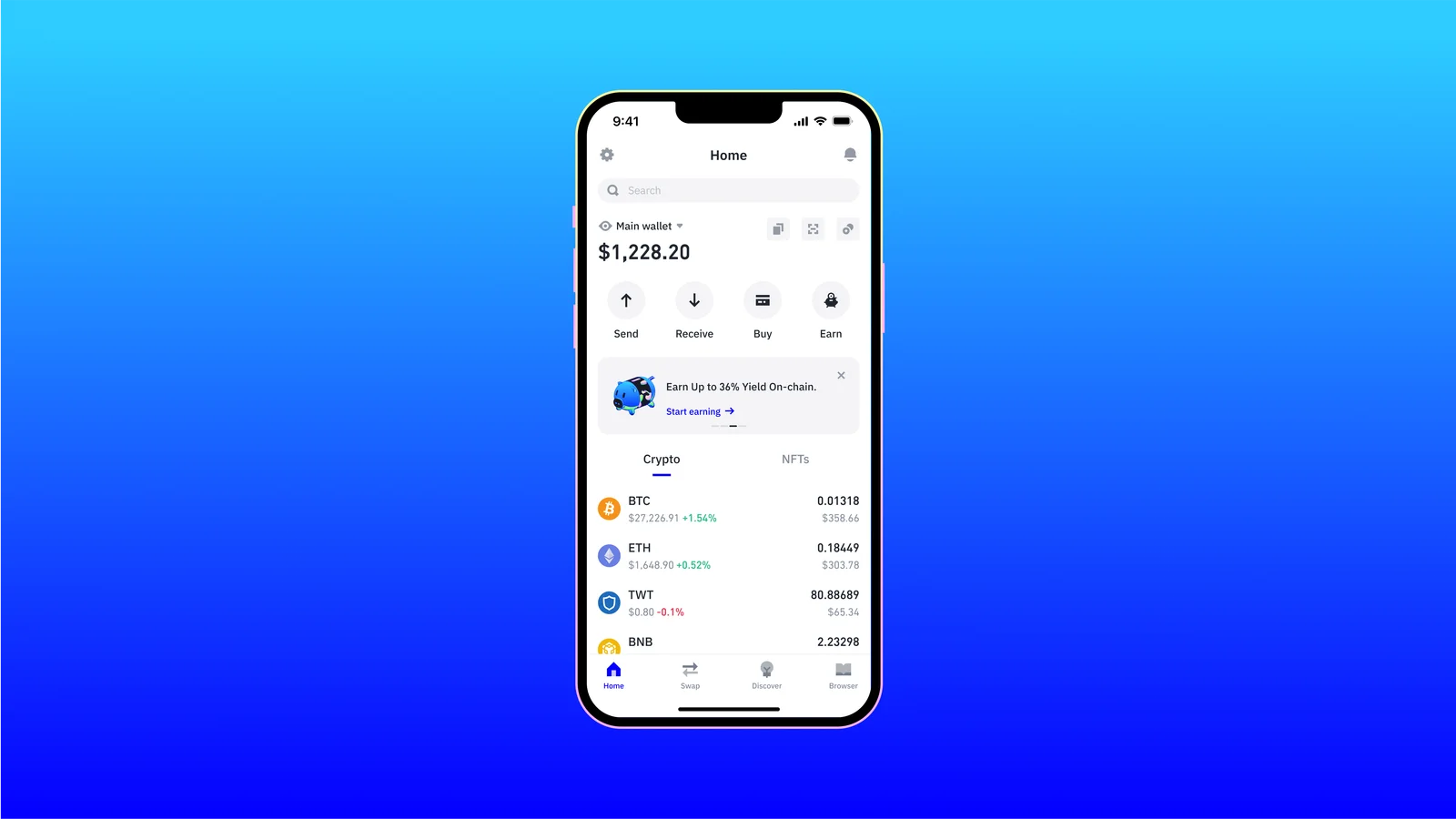
Following this process, TWT was positioned as the official utility token of the Trust Wallet ecosystem. The acquisition of Trust Wallet by Binance allowed TWT to forge strong ties with the Binance ecosystem. However, the token's focus was not on direct exchange use, but rather on enhancing the Trust Wallet user experience. From its inception, TWT played a significant role in both the growth of Trust Wallet and the widespread adoption of decentralized wallets.
History of TWT: Key Milestones
The history of the Trust Wallet Token consists of key milestones that illustrate both the development process of Trust Wallet and how TWT's role within the ecosystem was shaped. In broad strokes, this process unfolded as follows:
- 2017: Trust Wallet was founded by Viktor Radchenko in November 2017. The project quickly gained attention and was acquired by Binance in July 2018. Following this acquisition, Trust Wallet became the official decentralized wallet positioned within the Binance ecosystem. Despite this, the wallet maintained its non-custodial structure, allowing users to retain full control over their private keys.
- 2020: Trust Wallet Token (TWT) was launched in March 2020 with a community-focused fair launch model. The initial distribution was done via airdrop, and no fundraising took place during this process. In October 2020, TWT was upgraded from the BEP-2 standard to the BEP-20 standard. Following a large token burn that same month, the total supply was set at 1 billion TWT. This step was one of the most important developments that clarified the current framework of the token economy.
- 2021 - 2022: Trust Wallet underwent management changes. Founder Viktor Radchenko stepped down as CEO in March 2022. He was succeeded by Eowyn Chen, formerly Vice President of Marketing at Binance. Some sources also note that Chen effectively began her leadership role in early 2021. This period stood out as a transition phase during which Trust Wallet accelerated its product-focused growth.
- 2022: Trust Wallet continued to prioritize security improvements. In November 2022, a security vulnerability discovered in a browser extension resulted in some users losing funds (approximately $170,000). The Trust Wallet team quickly patched the vulnerability and announced that affected users would receive refunds.
- 2025 - May/June: Trust Wallet continued to expand its ecosystem with new features. In May 2025, FlexGas technology was announced, allowing TWT to be used as a gas bill payment tool. This development offered a significant convenience, especially for users transacting across multiple networks. In November of the same year, the Trust Premium loyalty program was launched. Through this program, users began earning XP through in-wallet activities and accessing exclusive benefits by locking TWT.
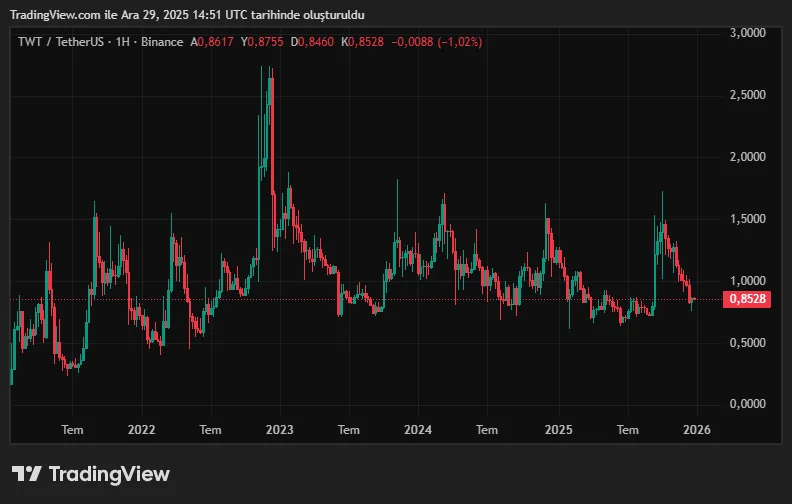
- December 2025: A serious security vulnerability was discovered in version 2.68 of Trust Wallet's Chrome browser extension. As a result of this vulnerability, approximately $7 million worth of crypto assets were stolen. The company advised users of the affected version to immediately disable the extension and update to version 2.69. Trust Wallet management and Binance CEO Changpeng Zhao (CZ) announced that all losses would be covered and affected users would receive full refunds. CZ also noted that the attack may have originated internally. As of December 2025, the TWT coin price is trading around $0.8.
Why is TWT Important?
The importance of the Trust Wallet Token stems from both the tangible advantages it offers within the Trust Wallet ecosystem and its strong position in the global crypto wallet market. TWT goes beyond being merely a passively held token; it offers a structure that directly involves the user in the wallet's operation and encourages active participation. In this respect, TWT is at the heart of the Trust Wallet experience.
Use Cases
- Governance and voting: Users holding TWT gain the right to participate in important decisions within the Trust Wallet application. They can have a say in community votes about new network supports, wallet features, or functional improvements. As stated in Binance Academy, TWT enables users to directly participate in the wallet's decision-making process. This structure makes Trust Wallet a platform shaped by the community, rather than a product that progresses with unilateral decisions.
- Fee discounts: TWT holders can benefit from various fee discounts on crypto trading and swap transactions. Holding TWT in fiat trading within the application offers the opportunity to trade with lower commissions. In addition, Trust Wallet's discounts on swaps and some DeFi transactions are among the factors that encourage TWT usage.
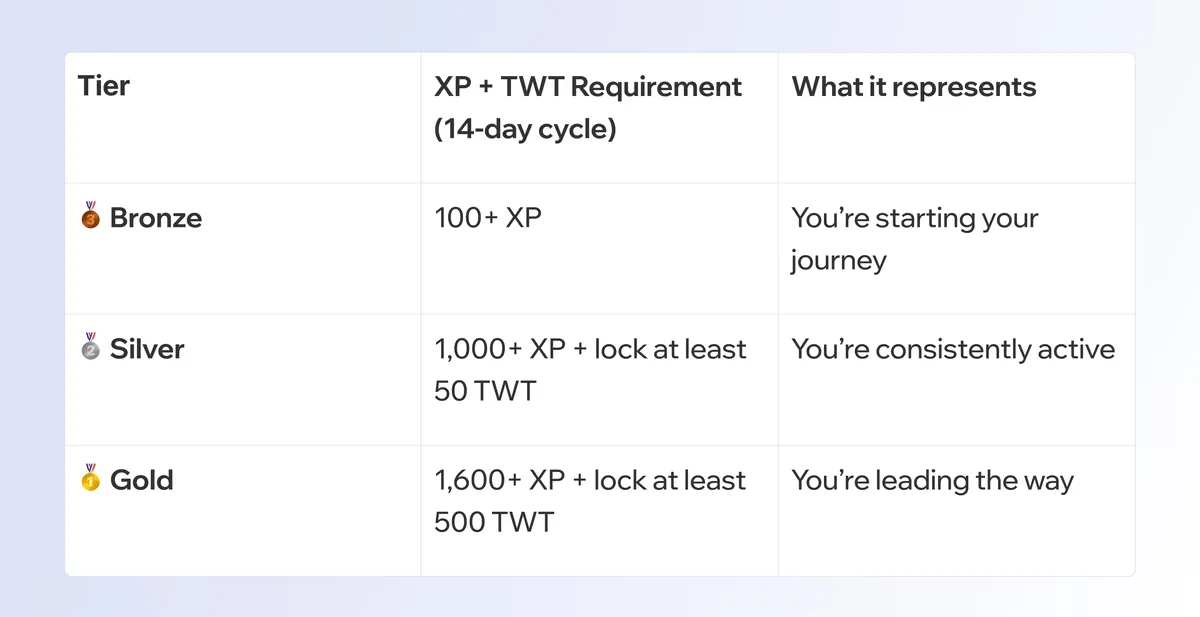
- Loyalty program (Trust Premium): The Trust Wallet Premium loyalty program stands out as one of the areas where TWT directly contributes to the user experience. Within this program, users earn "XP" through daily activities within the wallet. Users who lock TWT can level up and access deeper fee discounts, special campaigns, and different privileges. The "XP" requirement for users at different tiers is as follows:
- Transaction Fee Payment (FlexGas): Trust Wallet has launched the FlexGas feature, supporting the EIP-7702 standard. This feature allows users to pay gas fees for network transactions not only with native tokens but also with selected tokens like TWT. This eliminates the need to hold network tokens like ETH and BNB in the wallet. FlexGas provides significant ease of use, especially for users who transact on multiple blockchains.
- DeFi and Staking Opportunities: TWT also plays a role in decentralized finance (DeFi) tools within the Trust Wallet ecosystem. According to the official roadmap, users holding TWT will have access to increased return opportunities in areas such as staking and lending. As part of Trust Wallet's planned "Tier 3" strategy, the goal is to offer TWT holders exclusive staking and lending options. Additionally, TWT can be used for advantages such as early access to new product launches or priority in project airdrops.
Token Economy
TWT's token economy is structured with a transparent and limited supply logic. The total supply is limited to 1 billion TWT. The majority of this supply was clarified during the restructuring process in 2020. Approximately 99% of the old BEP-2 tokens were burned, leaving only 1 billion TWT. This step ensured that the token economy had a simpler and more understandable structure. The supply distribution offers a user-centric framework. Approximately 40% of the TWT supply is allocated to user acquisition, 15% to community activities, 30% to the reserve fund, and 15% to the development team. According to current data, the amount of TWT in circulation is approximately 420 million. This rate is subject to change over time depending on user activity and potential token burning mechanisms.
From an economic perspective, TWT is positioned as a token directly linked to the growth of Trust Wallet. As highlighted in the Litepaper, TWT functions as an ecosystem layer that incentivizes users as activity on the platform increases. As swap, staking, payment solutions, and new product layers expand, the goal is to increase demand for TWT. This will transform TWT from an asset valued solely on price fluctuations into a tangible asset that enhances the in-wallet experience and generates tangible benefits.
Who Founded TWT?
Behind TWT and Trust Wallet is an experienced and strong team in the industry. Trust Wallet was founded in 2017 by Viktor Radchenko. The project, which quickly attracted attention, was acquired by Binance in 2018, and with this development, Trust Wallet's growth process began to progress in an integrated manner with the Binance ecosystem. Despite this, the wallet maintained its decentralized (non-custodial) structure and adopted full control of users' private keys as a fundamental principle.
Viktor Radchenko, who served as CEO of Trust Wallet for a long time, left his position in March 2022. The management position was taken over by Eowyn Chen, who previously served as Vice President of Marketing at Binance. Under Eowyn Chen's leadership, Trust Wallet began to pursue a more aggressive growth strategy in terms of product development, user experience, and security. In particular, multi-chain support, new wallet features, and user-centric updates gained momentum during this period. Binance founder Changpeng Zhao (CZ) continued to closely monitor the development of Trust Wallet. Following a security vulnerability in the Chrome browser extension in December 2025, CZ publicly announced that all losses incurred by Trust Wallet users would be compensated. This announcement highlighted both Binance's connection to Trust Wallet and the importance placed on user trust. On the technical side, Trust Wallet's development wasn't limited to the core team. The project was supported by a broad community and an open-source ecosystem. Some of the code was publicly shared on GitHub, allowing developers worldwide to review it. In addition, the Trust Wallet team underwent regular independent security audits. Audits by firms such as CertiK, Halborn, and Kudelski Security aimed to detect and address vulnerabilities at an early stage. All these processes were part of a continuous effort to ensure the security of user funds.
Frequently Asked Questions (FAQ)
Below, you can find some frequently asked questions and answers about Trust Wallet Token (TWT):
- What is TWT and what is it used for?: Trust Wallet Token (TWT) is used as the utility token of the Trust Wallet ecosystem. TWT offers the opportunity to participate in in-wallet governance processes and provides various advantages aimed at increasing user loyalty. Users holding TWT can vote on new features to be added to the wallet; in addition, they can benefit from opportunities such as discounts on transaction fees and access to special campaigns.
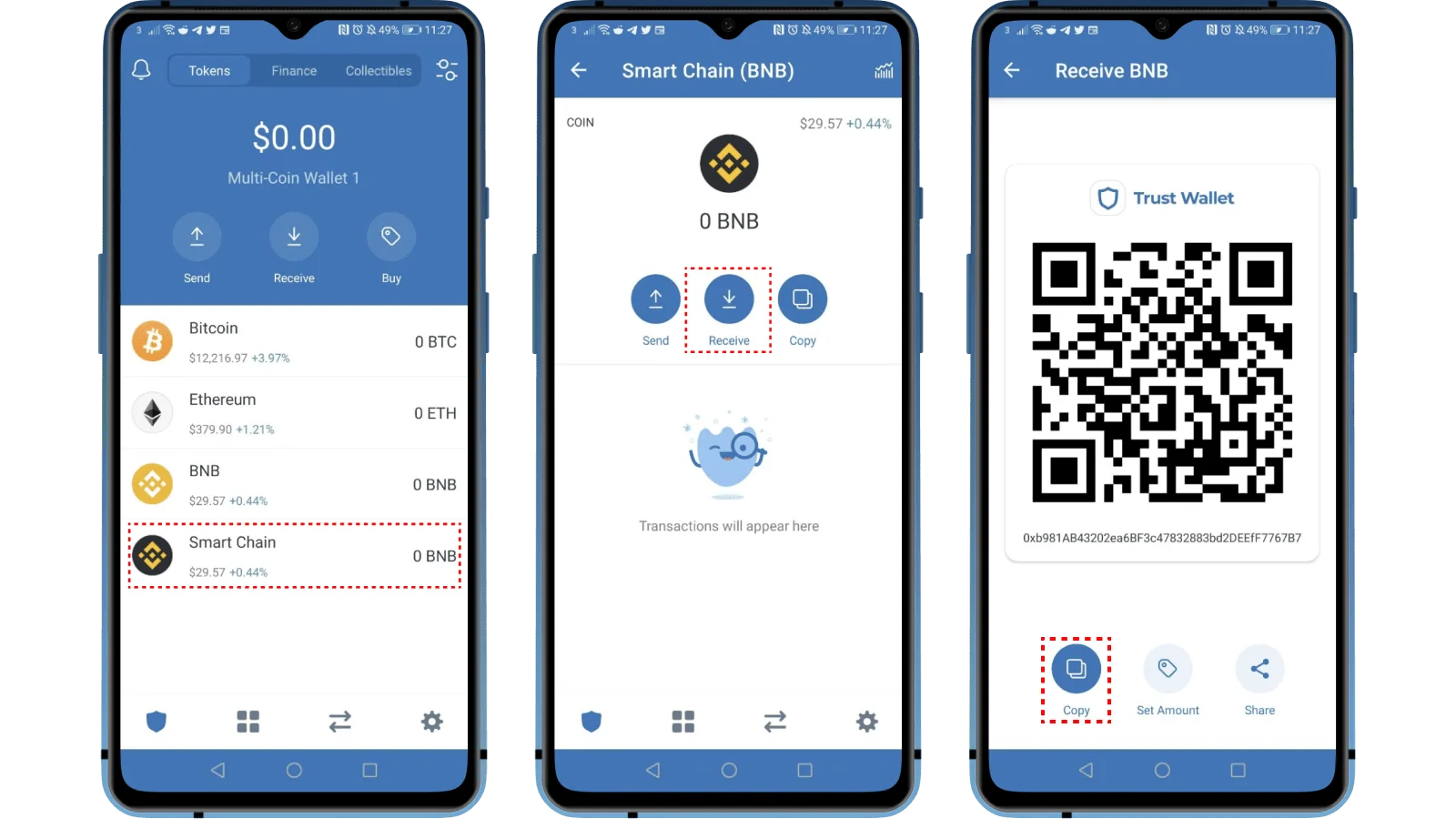
- On which network does TWT operate?: TWT operates on the BNB Smart Chain with the BEP-20 standard. With the technical update made in 2020, the token was moved from the BEP-2 standard to BEP-20. The old BEP-2 version can still be held on the BNB Beacon Chain; however, current transactions and ecosystem usage mainly proceed through the BNB Smart Chain.
- How to buy TWT?: TWT is listed on many centralized cryptocurrency exchanges. TWT can be bought and sold on various major exchanges, primarily Binance. It's also possible to buy TWT on decentralized exchanges (DEXs) like PancakeSwap through pairs such as TWT/BNB or TWT/BUSD. Users can connect their wallets and trade directly through DEXs.
- Is TWT staked?: Currently, Trust Wallet doesn't have a built-in staking feature specifically for TWT. However, Trust Wallet's roadmap plans to offer additional advantages in staking and lending opportunities to users holding TWT. Additionally, TWT can be staked on some third-party DeFi platforms or staking pools to generate returns. Users should also consider platform risks when trading on such platforms.
- What is TWT's security status?: Trust Wallet is generally known as a secure and non-custodial wallet. Users' private keys are kept only on their own devices and are not shared with third parties. The project has undergone audits by security firms such as CertiK, Halborn, and Kudelski. However, in December 2025, a security vulnerability discovered in a Chrome browser extension resulted in the loss of approximately $7 million worth of crypto assets. The Trust Wallet team announced that affected users would be reimbursed. This incident once again demonstrated the importance of users following official updates and regularly checking security measures.
- What is known about the future of TWT?: The future of the Trust Wallet Token is directly linked to the growth strategy of the Trust Wallet application. Trust Wallet has set a vision to reach 1 billion users by 2030 in the long term. In line with this, TWT is planned to be used more actively in areas such as advanced swap features, payment solutions, staking integrations, and launch pools. However, it should be remembered that price fluctuations can be high due to the nature of crypto markets; it is important for users to consider the risks when evaluating TWT.
Explore the JR Kripto Guide series for up-to-date analyses, clear explanations, and in-depth guides on Trust Wallet, TWT, and the broader crypto ecosystem.

