
Futures trading in the crypto market remained largely the stronghold of centralized exchanges for a long time. When users wanted to trade with leverage, take positions against price declines, or try more active strategies, they mostly turned to platforms such as Binance, Bybit, or OKX. SynFutures is one of the projects that aims to bring this habit onchain. The protocol allows users to open perpetual futures contracts, meaning futures products with no expiry date, on different assets, create new markets, and provide liquidity, meaning they can add capital to trading pools and help those markets function.
The F token aims to ensure that this structure does not remain limited to trading alone and gradually evolves into a more community-focused model. In this guide, we will look at what SynFutures is, what the F token does, how the project works, and why it stands out in the decentralized derivatives market.
Definition and Origin of SynFutures
SynFutures is a DeFi protocol developed for decentralized derivatives trading. DeFi refers to financial applications that operate without the need for a central intermediary. SynFutures focuses on perpetual futures. These products differ from traditional futures contracts because they do not have a fixed expiry date. A user’s position can remain open as long as they do not close it, maintain enough collateral, and avoid liquidation.
Thanks to this structure, users can take long or short positions on the price of an asset. A long position refers to a trade opened with the expectation that the price will rise. A short position represents the expectation that the price will fall. Since leverage can also be used, the trading experience is different from spot trading, meaning instant buying and selling, and carries higher risk. Leverage can increase potential gains, but it can also amplify losses at the same pace.
SynFutures’ main claim is that it can open trading markets not only for major coins such as Bitcoin or Ethereum, but also for many assets that have price data. These assets may include altcoins, indices, real-world assets, or tokenized financial products. In this respect, the project highlights the idea of a “futures market for every asset.” This allows users to trade more niche assets onchain, including assets that are not always listed on centralized exchanges.
At this point, it would be incomplete to think of SynFutures as a simple DEX. DEX stands for decentralized exchange and generally allows users to swap tokens with their wallets. SynFutures expands this experience with derivatives, leveraged trading, an order book, liquidity provision, and new market creation. The user is not only the trading side; they can also contribute to the functioning of certain markets by providing liquidity.
On the technical side of SynFutures, the Oyster AMM model stands out. AMM stands for automated market maker, and instead of directly matching buyers and sellers, it allows trades to take place through liquidity pools. Oyster AMM also uses order book logic in addition to this classic model. An order book refers to a system where buy and sell orders are arranged according to price levels. In this way, SynFutures tries to combine the continuously available liquidity of an AMM with the more targeted trading experience of an order book.
Another important topic in the perpetual futures structure is the funding mechanism. Since perpetual futures do not have an expiry date, the system uses funding payments to balance the difference between the trading price and the spot market price. This mechanism helps prevent the futures price from drifting too far away from the underlying asset price. SynFutures documents state that Oyster AMM uses a continuous funding mechanism for perpetual futures markets.
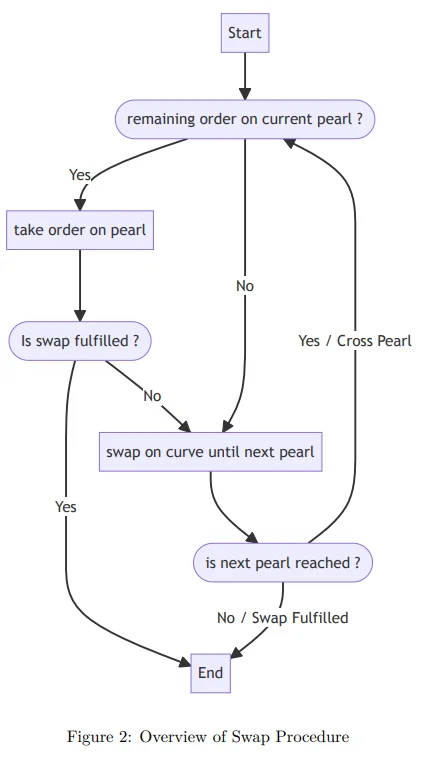
The strongest side of this model is user control. On centralized exchanges, users deposit their funds into the platform account, and trades proceed through the exchange’s internal system. On SynFutures, users trade through their wallets, positions are managed by smart contracts, and much of the data can be tracked onchain. This structure offers a more transparent experience, but it is not completely risk-free.
Users also need to consider wallet security, smart contract risk, liquidation risk, and network costs. Collateral levels become especially critical in leveraged trading. If the market moves sharply in the opposite direction, the position may be forcibly closed. For this reason, protocols such as SynFutures offer decentralized trading freedom, but they also require users to manage risk more consciously.
The Role of the F Token in the Ecosystem
F is the native token of the SynFutures ecosystem. The token was designed to increase community participation during the project’s decentralization process. F token holders can take part in governance processes. In addition, use cases such as trading fee discounts, staking rewards, and future airdrop advantages strengthen the token’s position within the ecosystem.
The short answer to the question “What is the F token?” is this: it is the ecosystem token used for governance, incentives, and community participation in the SynFutures protocol. For this reason, the F token should not be evaluated only through its price movements. SynFutures’ trading volume, number of users, liquidity quality, and position in the DeFi derivatives market also play an important role in the token’s story.
History of SynFutures: Key Milestones
SynFutures’ public story gained momentum in 2021. The project raised $14 million in a Series A funding round led by Polychain Capital in June 2021.
Framework, Pantera Capital, Bybit, Wintermute, CMS, Kronos, and IOSG Ventures also participated in this round. Even at that stage, SynFutures was highlighting the idea of “a derivatives market for every asset with price data.”
On the founding side, Rachel Lin stands out. Before SynFutures, Lin was among the co-founders of Matrixport and worked in structured derivatives at Deutsche Bank.
This background makes it easier to understand why the project focuses directly on derivatives markets. SynFutures is trying to grow not only with a crypto developer reflex, but also by using derivatives knowledge from the traditional finance side.
V1, V2, and V3 Process
The SynFutures V1 beta version was launched in October 2021. In this first phase, the project focused on allowing users to create futures markets across a broader range of assets.
On the V2 side, the user experience was made simpler. Trading processes for liquidity providers and traders were moved into a more understandable structure.
The real turning point came with V3. SynFutures V3 introduced the Oyster AMM model and tried to bring both AMM and order book logic together under the same roof in the perpetual futures market.
This model helped SynFutures position itself as a more serious player in the DeFi derivatives market. The project was no longer highlighting only the idea of permissionless market creation, but also more efficient liquidity and a more professional trading experience.
F Token Launch Date
The F coin launch date is one of the most searched topics about SynFutures. The SynFutures Foundation and F token announcement came in November 2024, while the airdrop claim process began on December 6, 2024. In its first phase, the F token stood out with an airdrop structure designed to reward early users and community contributions. A total of 7.5% of the supply was allocated for the Season 1 airdrop.
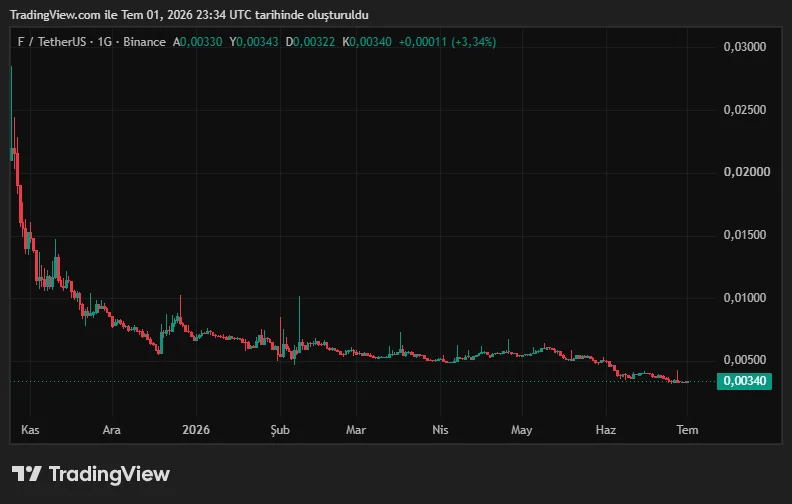
The token’s first listings included Bybit, Bitget, Gate.io, and KuCoin. Later, Binance also announced spot trading support for F. Like other new crypto assets, the F token price can experience sharp fluctuations. For this reason, when tracking the F coin price, it is important to look not only at the current chart, but also at circulating supply, total supply, the token unlock schedule, and trading volume.
At the time of writing, the F coin price is around $0.003.
How Does SynFutures Work?
The most prominent concept in SynFutures’ technical structure is Oyster AMM. This model brings the automated market maker system and the order book structure together within a single liquidity model.
In classic AMM models, liquidity is generally spread across the pool. This structure may be useful for spot trading, but capital efficiency and risk management become more complex in derivatives markets.
Oyster AMM allows liquidity to be concentrated within certain price ranges. In this way, the goal is to provide deeper liquidity with the same amount of capital.
Another difference in the model is that it allows liquidity to be provided with a single token. The user can provide liquidity in certain markets without having to supply both assets as in the classic two-sided liquidity model.
Onchain Order Book
SynFutures V3 also uses an onchain order book structure. An order book refers to a system where buy and sell orders are arranged according to price levels. This structure has been used by centralized exchanges for years. A user enters a limit order, the system keeps that order waiting, and the trade is executed when a suitable matching order appears.
SynFutures focuses on running this logic onchain. This allows orders, matches, and trades to be tracked within a more transparent structure. The onchain order book reduces the need for a central intermediary. However, transaction costs, network speed, and user experience become more important in this area.
Liquidity and Market Creation
One of the most notable sides of SynFutures is that users can create new trading markets. The project centers on the idea of opening derivatives markets for assets that have price data. This feature is especially important for long-tail assets. Large centralized exchanges may not open futures markets for every token. Liquidity, risk management, and listing policies limit this process.
SynFutures builds a more open model. Users or market participants can create new trading pairs for certain assets. This flexibility fits the spirit of DeFi. Still, not every open market is necessarily safe or liquid enough. Especially in smaller assets, price volatility, manipulation risk, and liquidation risk can appear more sharply.
Why Is SynFutures Important?
Derivatives trading creates a large volume in the crypto market. Despite this, a significant part of this volume remained on centralized exchanges for a long time. Centralized exchanges offer fast execution, deep liquidity, and easy interfaces. However, users entrust their funds to the exchange and take on platform risk.
On the DeFi side, the user acts through their own wallet. Transparency increases as trades are carried out through smart contracts, but liquidity and trading experience may not always reach the same level as centralized exchanges.
SynFutures is among the projects trying to close this gap. With V3 and Oyster AMM, the goal is to make decentralized derivatives trading more usable and more efficient.
The Idea of a Market for Every Asset
SynFutures’ distinguishing feature is its “market for every asset” approach. The project aims to make it easier to create new futures markets for assets with price feeds. This approach also softens the boundaries between traditional finance and crypto. In theory, the subject of this model can include not only crypto assets, but also indices, commodities, and real-world assets.
This structure gives users a wider trading area. It also creates new opportunities for liquidity providers and market makers. The risk side grows at the same scale. In newly opened markets, the quality of the price feed, liquidity depth, and market security must be examined carefully.
Trader and LP Side
SynFutures offers traders a decentralized leveraged trading area. Users can take positions on price direction, open long or short trades, and try to benefit from market movements. This structure may look attractive for active traders. However, leveraged trading can lead to very fast losses when risk management is poor.
For liquidity providers, SynFutures offers a different use case. Users can aim to earn income from trading fees by providing liquidity within certain price ranges.
For professional market makers, the onchain order book opens the door to more advanced strategies. This shows that SynFutures is trying to appeal not only to individual users, but also to more experienced market participants.
F Token Supply
The total supply of the F token was set at 10 billion. The token distribution includes community, foundation treasury, backers and advisors, core contributors, protocol development, and liquidity categories. The community allocation is 28.5%. Of this, 7.5% was allocated for the Season 1 airdrop, with 750 million F tokens planned for distribution to early users.
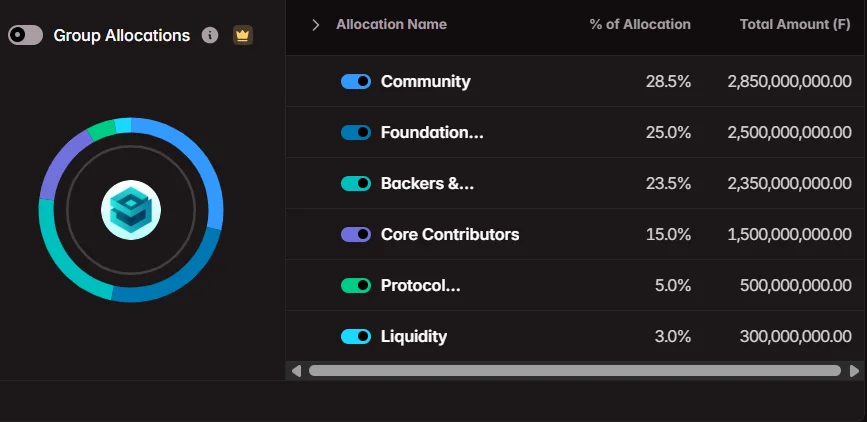
This distribution focused on rewarding addresses that used the protocol during SynFutures’ V1, V2, and V3 periods. Airdrop criteria included trading activity, liquidity provision, onchain activity, and community contribution. The token unlock schedule is important in the F token economy. Since the full total supply did not enter circulation on the first day, new supply entries can create pressure on the price.
Use Cases
The use cases of the F token include governance, staking, trading fee discounts, and future airdrop advantages.
On the governance side, the goal is for SynFutures to become more community-focused over time. Token holders are expected to gain more say in protocol decisions.
Staking stands out in terms of ecosystem incentives. Users can stake their F tokens to gain advantages in certain campaigns or reward programs.
Trading fee discounts are also one of the token’s practical use cases. This feature becomes more meaningful especially for traders who actively use the protocol.
SynFutures’ Developers and Community
Rachel Lin and Matthew Liu stand out on the founding side of SynFutures. Before the project, Rachel Lin worked in derivatives at Deutsche Bank and was among the co-founders of Matrixport. This background makes it easier to understand why SynFutures was built directly around futures trading and derivatives markets.
Matthew Liu is one of the names that stands out on the project’s strategy and growth side. Liu’s experience in traditional finance, banking markets, and blockchain contributes to SynFutures’ positioning not only as a technical DeFi product, but also as a broader financial infrastructure project.
SynFutures has been among the projects that received strong investor support from an early stage. The project raised $14 million in a Series A round led by Polychain Capital in 2021. Pantera Capital, Framework Ventures, Bybit, Wintermute, CMS, Kronos, and IOSG Ventures also participated in this round.
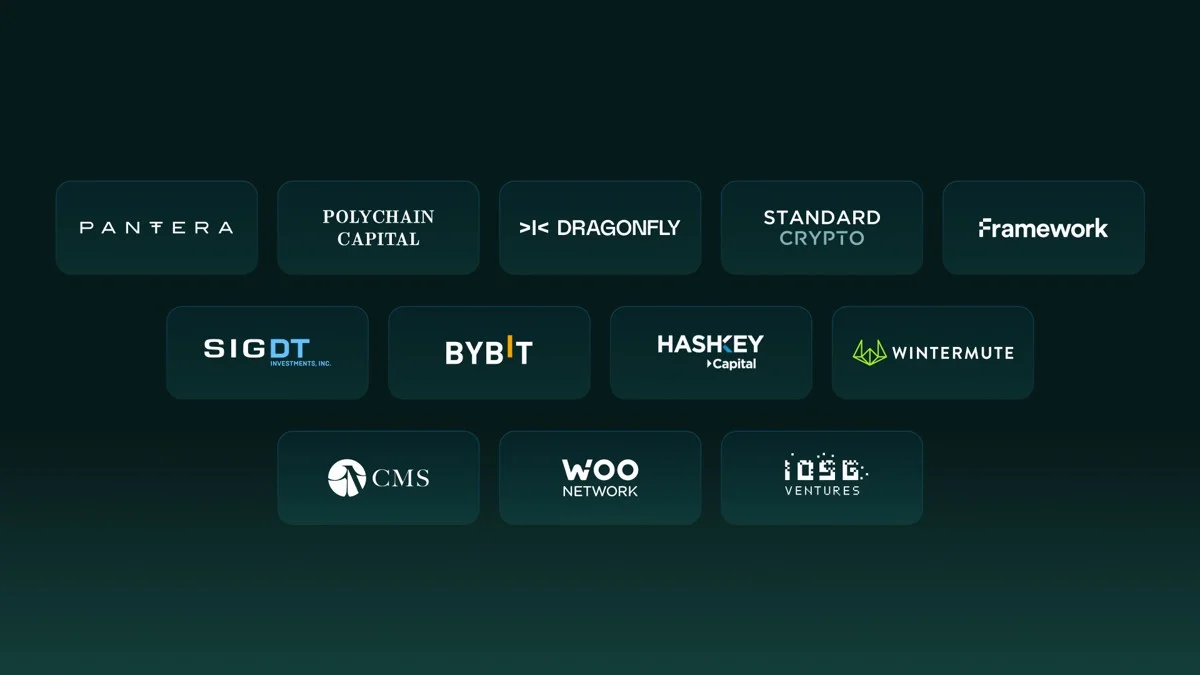
The Series B round in 2023 became a larger turning point for SynFutures. The $22 million investment round led by Pantera Capital included participation from SIG DT Investments and HashKey Capital. This financing provided important resources for SynFutures V3, the Oyster AMM model, multi-chain expansion, and new product development.
With the F token, SynFutures Foundation also took on a more visible role in the project’s decentralization process. The foundation is positioned around ecosystem growth, community initiatives, developer support, partnerships, and governance processes.
On the community side, airdrop campaigns, trading rewards, staking incentives, and ecosystem programs play an important role. Use cases such as governance rights, trading fee discounts, staking rewards, and future airdrop advantages were planned for F token holders.
The SynFutures community played a role in the project’s growth especially through early user activity. Users who traded, provided liquidity, and participated in campaigns during the V1, V2, and V3 periods were rewarded in the F token airdrop process.
Frequently Asked Questions (FAQ)
Below, you can find some frequently asked questions and answers about SynFutures:
- What is SynFutures, and when did it launch?: SynFutures is a decentralized perpetual futures and derivatives trading protocol. The project became more visible during its V1 beta phase in 2021. The F token entered the market on December 6, 2024, through the airdrop and initial listings.
- Who developed SynFutures?: Rachel Lin stands out on the founding side of SynFutures. Lin previously served as one of the co-founders of Matrixport and worked in structured derivatives at Deutsche Bank. The project team includes people with backgrounds in traditional finance, fintech, and blockchain.
- What does the F token do?: The F token is the governance and utility token of the SynFutures ecosystem. The token can be used for governance, staking, trading fee discounts, and future ecosystem incentives.
- What problems does SynFutures aim to solve?: SynFutures focuses on the problem that derivatives trading remains largely dependent on centralized exchanges. The protocol allows users to trade with leverage onchain through their wallets, create new markets, and provide liquidity.
- Is SynFutures suitable for investment?: There is no clear answer that applies to everyone. SynFutures has strong investor support, a notable technical model, and an active DeFi derivatives vision. On the other hand, the F token price can be affected by market conditions, token unlocks, competition, and protocol usage. Before making an investment decision, current price, circulating supply, total supply, trading volume, and the unlock schedule should be examined together.
- Which network does SynFutures operate on?: The Base network stands out on the SynFutures V3 side. The F token is supported on Ethereum Mainnet and Base. Some exchanges support deposits and withdrawals through these networks.
- What is the difference between SynFutures and centralized exchanges?: On centralized exchanges, users deposit their funds into a platform account. On SynFutures, trades proceed through wallets and smart contracts. This structure provides more transparency and user control, but it also increases responsibilities such as wallet security and smart contract risk.
Follow the JR Kripto Guide series for the latest explainers on SynFutures and DeFi derivatives markets.

