
A resource capable of supporting the power grid may be as close as a home air conditioner or an electric vehicle. Starpower aims to bring these scattered devices together within a single energy network and reward contributing users with STAR tokens. The project applies the DePIN model, which combines physical infrastructure with blockchain-based incentives, to virtual power plants.
Starpower’s Definition and History
Starpower is a decentralized energy network that connects devices capable of consuming, producing or storing electricity. Distributed energy resources such as air conditioners, water heaters, home batteries, solar panels and electric vehicles can join the network through hardware or software.
The system collects data from these devices and seeks to coordinate energy use according to specific requirements. Users can earn STAR rewards based on their devices’ connectivity, capacity and response to grid signals.
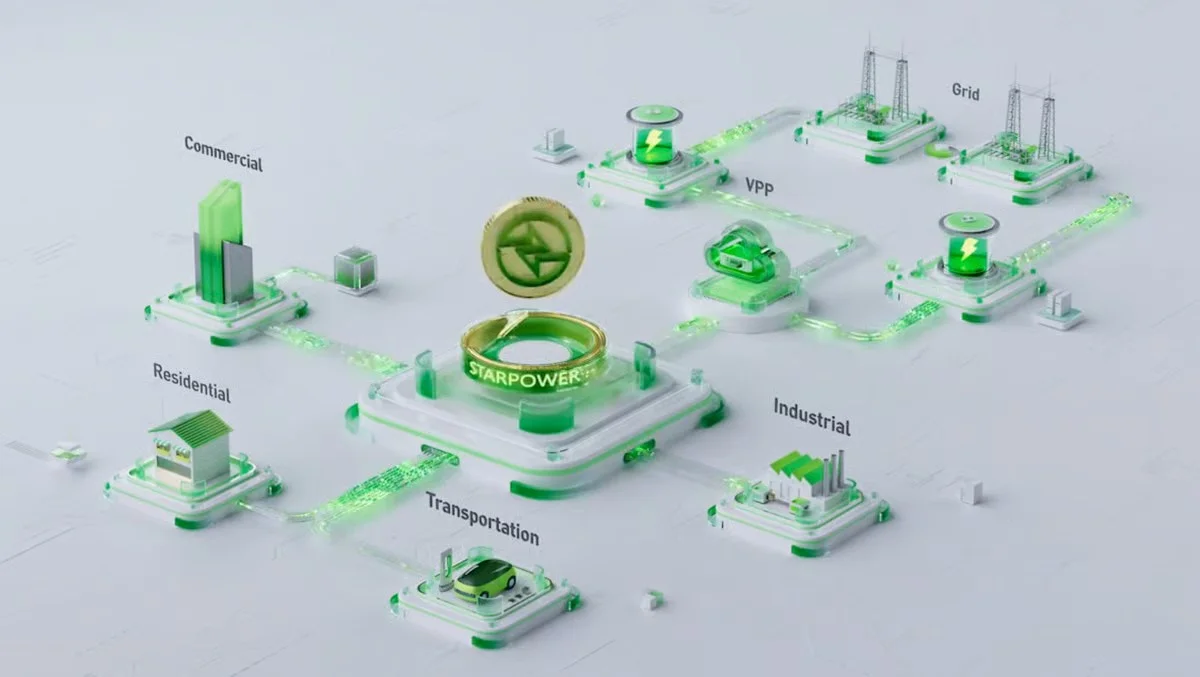
The project is built around the Virtual Power Plant, or VPP, model. Instead of relying on a single physical facility, a VPP uses software to manage smaller energy resources located in different places as one coordinated system.
Starpower aims to provide a global communication and coordination layer within this model. Local energy companies or VPP service providers may use the devices aggregated by the network to address regional grid requirements.
Why was the project created?
Renewable sources such as solar and wind do not produce the same amount of electricity every hour. Periods of high generation can create excess supply, while lower output can leave an energy shortfall. This variability makes it more difficult for power grids to maintain a constant balance between supply and demand.
Starpower seeks to combine unused battery capacity and flexible electricity consumption within a shared pool. For example, charging thousands of electric vehicles or home batteries at suitable times can reduce pressure during peak hours. Returning stored electricity to the system may also provide additional grid support.
The project’s documents identify the rising electricity demand of artificial intelligence infrastructure as a second major challenge. Starpower therefore describes itself as an “Energy DePIN for AI” and is also working on fast-response battery systems.
This approach extends beyond token rewards. The project aims to measure energy data, connect devices from different manufacturers through common standards and expand demand-side participation. Its success will depend on the scale of real device integrations and connections to local energy markets.
Major developments and current status
Starpower’s product roadmap places its initial hardware development phase between 2023 and 2025. This phase focused on products such as smart plugs, home energy storage systems and electric vehicle chargers. The 2024-2026 period is allocated to direct API integrations with manufacturers.
The project raised $2.5 million in a funding round led by Framework Ventures in January 2025. Solana Ventures and Bitscale Capital also participated. Together with an earlier $1.5 million round led by Alliance DAO, the disclosed funding reached $4 million.
According to market records, the STAR token generation event took place on September 6, 2025, through Binance Wallet and PancakeSwap. Binance later made STAR available through its Alpha service and held a trading and deposit campaign for the token in December 2025.
Binance Futures launched the STARUSDT perpetual contract with leverage of up to 3x on May 14, 2026. The Binance announcement specifically noted that futures and spot listings are separate. The launch therefore did not mean that STAR had been listed on Binance Spot.
KuCoin opened STAR/USDT spot trading on May 27, 2026, and supported deposits through the Solana SPL network. The KuCoin listing announcement also confirmed that Alliance, Framework Ventures and Solana Ventures participated in the project’s previous funding rounds.
Starpower’s website states that the project has reached more than one million users and generated over $2 million in revenue. These figures were disclosed by Starpower; a detailed and independently verified current audit of its active users, connected devices and revenue calculation methodology has not been published.
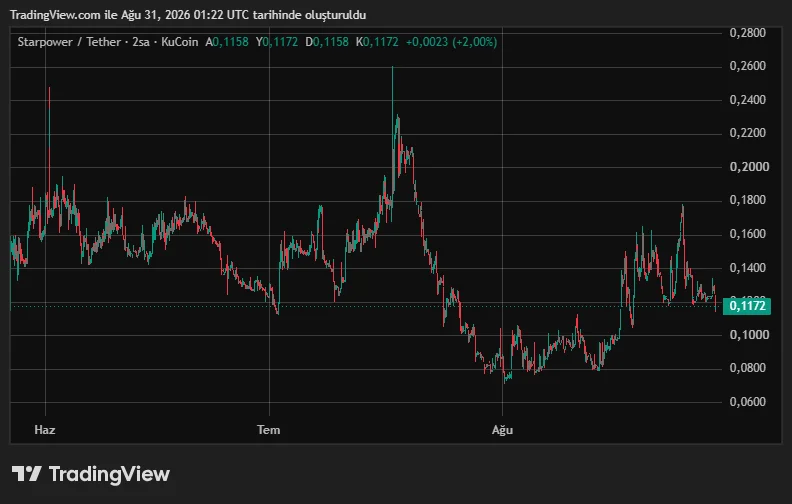
As of August 2026, the STAR coin price was trading at around $0.11.
How Does the STAR Token Work?
STAR is described as the utility token of the Starpower network. Its main intended function is to purchase dispatch and coordination services involving the distributed energy resources aggregated by the network. Energy companies or VPP providers may request that certain devices reduce their consumption or make stored electricity available.
The token also underpins the incentives offered to device owners. During the first stage, the system uses a Proof of Connectivity model that rewards devices for remaining connected to the network. Proof of Capacity is introduced in later stages to measure electricity generation, consumption or storage capacity.
The final stage is called Proof of Response. Under this model, rewards depend on whether a device responds to a VPP signal in a timely and verifiable way. These “proof” mechanisms do not replace Solana’s consensus system; they describe how contributions and rewards are calculated within Starpower.
Connected devices report data every five minutes. Under the reward model, verified connectivity and electricity usage data are calculated over weekly periods. Weekly measurement is intended to reduce the effect of daily fluctuations and differences between weekday and weekend consumption.
STAR supply and tokenomics
The Starpower lite paper limits the total supply to one billion STAR. A 70% share is allocated to “network builders,” referring to device owners and other network participants rather than solely the founders of the company. Investors receive 15%, while another 15% is allocated to the team.
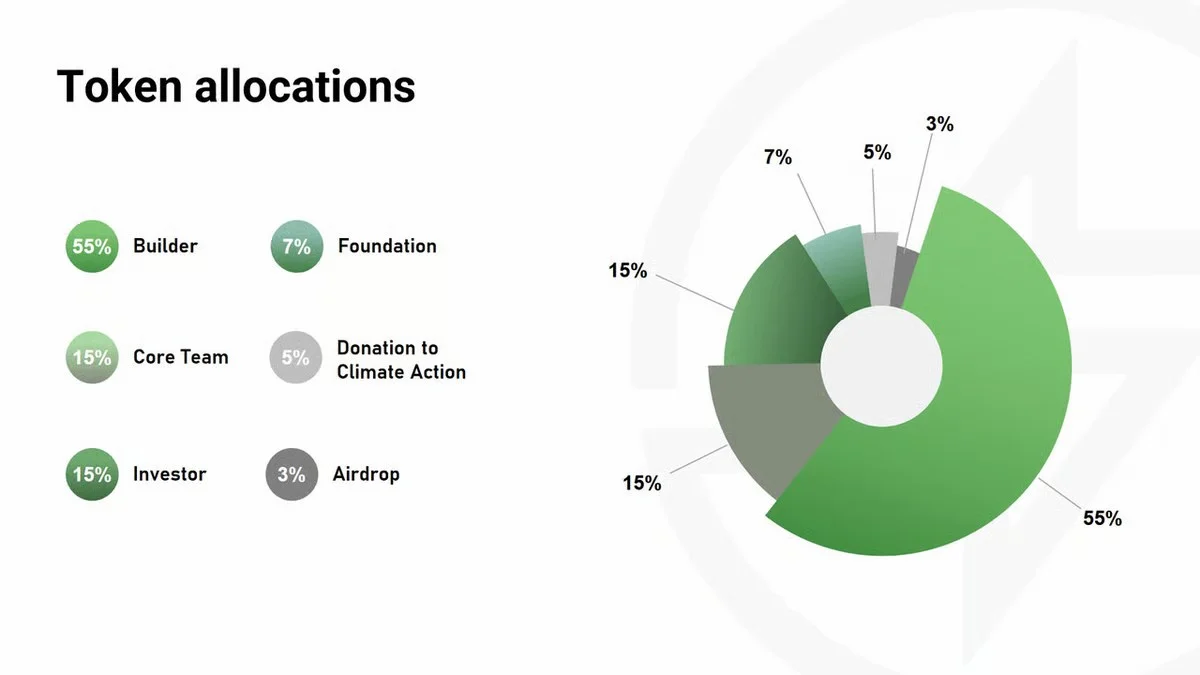
Investor tokens remain locked for the first 12 months after the TGE. They are then released linearly over 36 months. The team allocation has a 24-month lock, followed by a 36-month linear vesting schedule.
This schedule means that the number of tokens entering the market can increase over time. Market data showed approximately 186.2 million STAR in circulation when this guide was prepared, compared with a maximum supply of one billion.
The project’s documents also outline a buyback and burn model. A portion of the revenue from electricity bill payments, device sales, network licences and SaaS services is intended to fund STAR buybacks. However, while the burn mechanism describes the proposed structure, it does not provide a regular and verifiable total for completed burns.
Network, transactions and security
Starpower uses Solana infrastructure for its energy device network. The official website and KuCoin announcement identify STARqri3xhy6Pyv1EpgdjkPDVcs9FncKcaEP6527krs as the STAR contract on Solana. The project’s BNB Smart Chain contract is 0x8fce7206E3043DD360F115AFa956EE31b90B787C.
STAR can therefore be found across both the Solana and BNB Chain ecosystems. Users should verify the selected network and contract address through the project’s official channels before making a transaction. Unrelated tokens using the same ticker could otherwise be mistaken for the correct asset.
Solana provides the token transfer and on-chain record layer. Starpower’s primary technical task is to obtain reliable data from physical devices, verify it and connect it to reward calculations. Smart contracts can protect on-chain transactions, but they cannot independently resolve real-world risks such as faulty sensors, interrupted connections or manipulated device data.
The project is working on direct manufacturer integrations and a trusted-chip approach that assigns a unique Solana identity to each device. The integration plan aims to reduce latency and improve data reliability.
Why Is Starpower Important?
Power grids must keep electricity generation and consumption balanced in real time. As the share of renewable energy grows, weather-dependent production fluctuations become more visible. At the same time, data centres, electric vehicles and electric heating systems are increasing demand.
Distributed energy resources can help address part of this problem. Managing small devices across different brands and regions one by one remains costly, however. Starpower seeks to bring large numbers of devices together through a shared communication layer.
If the network reaches sufficient scale, home batteries, air conditioners and charging devices could respond collectively to grid requirements. Users may shift consumption to cheaper hours, while VPP operators could access scattered capacity through a single system.
Its place in the energy and DePIN ecosystem
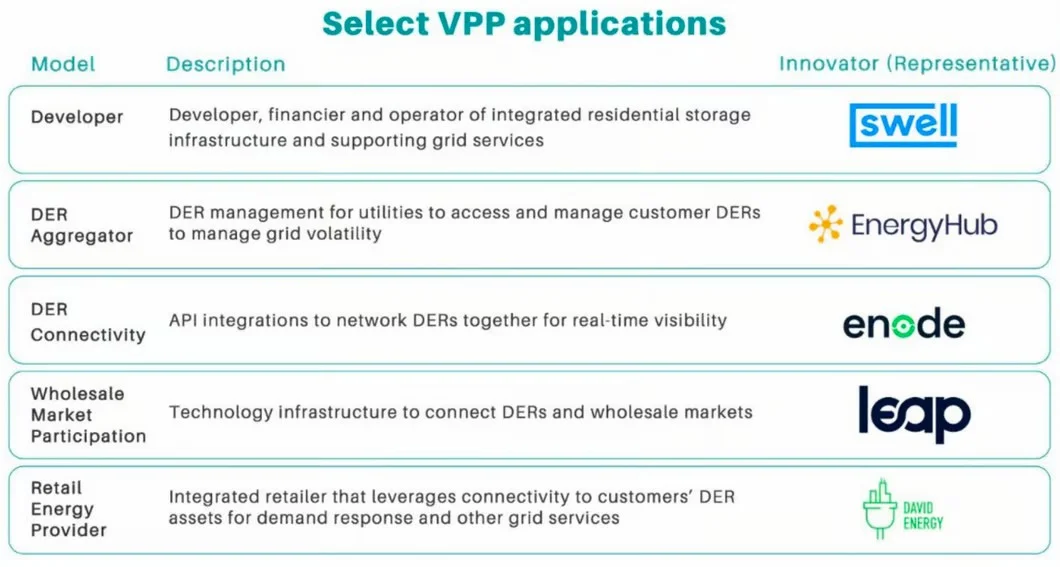
DePIN projects use token incentives to develop physical infrastructure. While some networks focus on wireless connectivity, mapping or data collection, Starpower directly targets energy devices. This field involves local regulations and physical hardware, making it more complex than crypto projects built entirely around software.
Starpower’s product range includes the Starplug smart plug, Starbattery storage system, Starcharger electric vehicle charging solution and a dApp for managing connected devices. The product documents highlight functions such as real-time consumption monitoring, remote control and scheduling around off-peak hours.
The project also plans to offer consumer energy SaaS products and demand-response services for power grids. Its revenue model is therefore intended to draw from device sales, software and energy services instead of relying solely on demand for the token.
Starpower’s proposed distinction lies in aggregating devices globally while working with regional VPP companies. Energy trading and grid services remain subject to local rules, meaning a global network is unlikely to replace local operations on its own.
Risks and volatility
As an early-stage infrastructure project, Starpower carries considerable execution risk. Scaling the manufacturer integrations, device network and commercial connections with energy companies outlined in its roadmap may take time. The company’s user and revenue figures are not regularly verified through independent reports.
Token unlocks also require close attention. Investor and team allocations entering circulation over time may create selling pressure. Planned buybacks and burns can provide a counterweight only if the project generates real revenue and documents implementation transparently.
STAR has more limited market depth than major crypto assets. When this guide was prepared, CoinGecko showed that most spot volume was concentrated in a single decentralized trading pair on BNB Chain. Limited liquidity can allow orders to move the price more quickly and contribute to sharp fluctuations.
Derivatives may add further volatility. The availability of a STARUSDT contract on Binance does not mean that the token is listed on Binance Spot. Investors should distinguish between Alpha, spot and futures products.
Technical risks include smart contracts, bridges, device security and data accuracy. Energy data may reveal sensitive information about users’ consumption habits. Privacy, access controls and hardware security will therefore play an important role in the network’s long-term reliability.
Starpower’s Development Team and Community
Public sources identify Laser Ding as Starpower’s CEO and co-founder. Darcy Jia is presented as the project’s other co-founder. During a Solana DePIN discussion in 2024, Ding said he had previously worked at HashKey and that the team had been developing Starpower for around two years.
The official lite paper divides the organization into two entities. The Starpower Foundation is responsible for network governance and rewards. Starpower Network Ltd. handles the network’s initial development and subsequent operations.
The project says it works with manufacturers’ technical teams on battery research. Its documents name WEIHENG/ECACTUS as a research and battery partner. The work focuses on solid-state batteries, lithium-silicon anodes and battery management systems capable of responding within milliseconds. Solid-state batteries and lithium-silicon anodes aim to store more energy in less space while improving safety. A millisecond-response battery management system can quickly detect sudden changes in load and temperature, supporting more balanced energy use in power grids and data centres.
Public information about the wider development team, division of responsibilities and open-source contributions remains limited. Alongside the founders, technical team visibility, code updates and completed hardware integrations are important points to monitor when assessing an infrastructure project.
Community and governance
Starpower positions users as participants who connect devices to the network, rather than solely as token holders. Its intended audience includes individuals as well as hotels, shopping centres, universities, industrial facilities and large property operators.
According to the community and governance plan, technical development and daily operations are intended to become more decentralized as the network matures. This remains a forward-looking objective and does not mean that Starpower is currently governed entirely by its community.
One existing participation channel is the Zero Carbon Ambassador program. Local ambassadors conduct community activities related to renewable energy and energy efficiency. The project also plans to provide financial support for eligible initiatives.
The governance section does not yet present a detailed system explaining which decisions STAR holders can change or how voting would work. STAR is therefore more accurately described primarily as an incentive and service token, rather than as a fully operational governance token.
Partnerships and use cases
Starpower’s growth model depends on integrations with hardware manufacturers, VPP operators and energy companies. The project plans to connect third-party devices through APIs and later embed trusted chips directly into hardware.
The lite paper lists Tesla, BYD, SolarEdge and FranklinWH as examples of widely used manufacturers the network aims to support. Their inclusion in the document does not mean that completed commercial partnerships exist with each company.
Practical use cases begin with household energy monitoring. Commercial buildings may connect lighting and climate-control systems, industrial facilities may add high-power equipment, while electric vehicles and charging stations can participate through the transport sector.
At a more advanced stage, these resources may participate in demand-response programs. Reducing consumption for a short period or supplying electricity from a battery during grid congestion can create economic value. STAR aims to distribute this value among device owners, the network and service buyers.
Frequently Asked Questions (FAQ)
Below are answers to some frequently asked questions about Starpower (STAR):
- What is Starpower and when was it launched?: Starpower is a DePIN project that brings distributed energy devices together for virtual power plants. Its development roadmap points to a hardware phase beginning in 2023, while the STAR token generation event took place on September 6, 2025.
- What is the STAR token used for?: STAR rewards users who connect energy devices and make verified contributions to the network. It is also intended to support payments for dispatch and coordination services involving the distributed energy resources aggregated by Starpower.
- Which network does Starpower use?: Starpower’s core blockchain infrastructure is built around Solana. Alongside the Solana SPL version, STAR also has a verified contract on BNB Smart Chain.
- Who founded Starpower?: Public sources identify Laser Ding as CEO and co-founder, with Darcy Jia as the other co-founder. The Starpower Foundation and Starpower Network Ltd. hold separate responsibilities in the project’s operations.
- What is the STAR supply?: The official lite paper sets the total and maximum supply at one billion STAR. Data showed approximately 186.2 million tokens in circulation when this guide was prepared, although the circulating amount may change through unlocks and other distributions.
- Is Starpower suitable as an investment?: The answer depends on an investor’s risk tolerance, portfolio and independent research. STAR may experience high volatility due to early-stage project risk, limited liquidity, token unlocks, hardware execution and energy-sector regulations. Current supply, contract addresses, liquidity and project developments should be reviewed separately before any transaction.
Follow the JR Kripto Guide series to track Starpower’s decentralized energy network, virtual power plant model and the latest STAR token developments.

