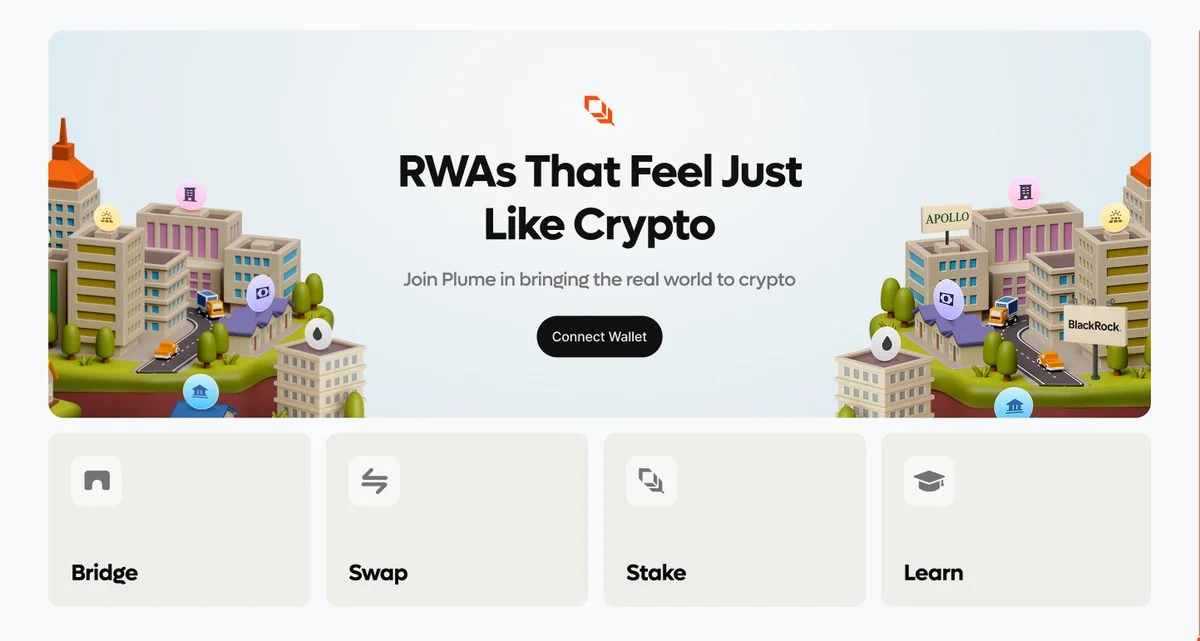
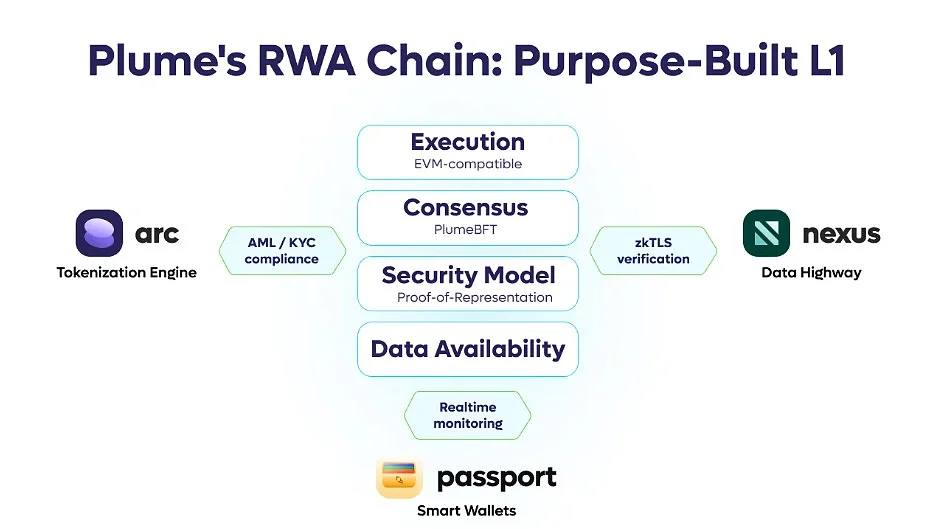
Plume (PLUME) is an EVM-compatible network that aims to bring real-world assets (RWA) onto the blockchain and connect them with the DeFi world. In short, traditional assets such as real estate, private loans, and commodities can be tokenized on Plume, making them easier to buy, sell, and use as collateral in the crypto ecosystem. The project emphasizes the trust and compliance needed, especially on the institutional side; by considering controls like KYC/AML at the infrastructure level, it strives to offer both regulatory compliance and the 24/7 operational nature of the blockchain. Thanks to EVM compatibility, smart contracts and DeFi tools from Ethereum can be more easily migrated to the Plume ecosystem. Let's take a look at what PLUME is and what the PLUME coin is used for.
Definition and Origins of PLUME
In its simplest form, you can think of Plume as "a bridge between real assets and the crypto world." But it's not just about digitizing assets; Plume's main goal is to convert real-world financial instruments into tokens, giving them crypto-specific flexibility. So these assets become programmable; they can be bought and sold, transferred between wallets, used in DeFi protocols, and even used as collateral to borrow money. This is where Plume's "RWAfi" claim comes in: integrating real assets into the flow of DeFi.
The project's starting point stems from this need. In 2024, seeing the growing interest in RWAs and the gap in the market, the team embarked on a journey to combine the transparency and 24/7 transaction advantages of blockchain with the massive asset classes of traditional finance. Plume Network's co-founders, Chris Yin (CEO) and Teddy Pornprinya (CBO), began developing an infrastructure where RWAs would be integrated into the crypto world in a "demand-driven" manner. Chris Yin's experience in technology startups and venture capital, and Teddy Pornprinya's background in business development at large structures like Binance and Coinbase, ensured the project had a strong sense of direction from the very beginning. During its establishment, the Plume team quickly attracted investor interest. In a Series A round in late 2024, they received a total of $20 million in investment from prominent institutions in both traditional and crypto finance, such as Brevan Howard, Galaxy Digital, and Apollo Global Management. This support provided a crucial foundation for infrastructure development and regulatory preparation. It is noteworthy that Plume has been focused on "compliance" from the very beginning; the team aimed to prepare a white paper compliant with the MiCA regulation and complete the ESMA registration process in mid-2025, thus moving forward with a clearer framework on the European side. In this way, Plume positioned itself as a "prepared" RWA blockchain both technologically and regulatoryly.
PLUME's History: Key Milestones
Although Plume is still a relatively young project, it has managed to attract attention with the steps it has taken and the momentum it has gained in a short time. Below, we have summarized Plume's journey to date in a more fluent way, along with its prominent milestones:
2024 - Establishment and first investment: Plume Network was officially established in 2024. According to information shared in December 2024, the project completed its first investment round of $20 million with the goal of building a real asset finance (RWAfi) focused ecosystem. The participation of institutions with significant weight in both traditional and crypto finance, such as Apollo Global Management, Brevan Howard, and Galaxy Digital, in this funding round demonstrated that Plume had already gained considerable institutional trust from the outset.
January 2025 - Testnet “Season 1” and community engagement: At the beginning of 2025, Plume launched a comprehensive testnet process called “Season 1,” directly engaging the community. During this process, over 18 million wallets were created and over 280 million transactions were processed. These figures, quite high for a new network, clearly demonstrated the interest in the project. Early users who participated in the testnet were rewarded with the first PLUME token airdrops, and the community foundation was laid during this period.
February 2025 - Strategic partnerships (Mercado Bitcoin & Superstate): In February, Plume partnered with Mercado Bitcoin, one of the largest crypto platforms in Latin America, to launch a project in Brazil aimed at tokenizing $40 million worth of assets. During the same period, Superstate, which offers regulated bond funds in the US, selected Plume as its multi-chain expansion partner. This enabled Superstate's short-term US Treasury bond-backed tokens to be integrated into the Plume network, allowing users on-chain access to these products.
April 2025 - Strategic investment from Apollo: In April 2025, Apollo Global Management announced a strategic investment in Plume. This move by Apollo, one of the strongest players in the private equity sector, was a significant indicator of institutional confidence in Plume's RWA vision. With this investment, Plume gained significant momentum in strengthening its infrastructure and bringing corporate finance products to the on-chain world. During this period, the Plume ecosystem had incorporated over 200 protocols and applications following the testnet phase.
June 2025 - Plume Genesis Mainnet launch: Plume's mainnet, Genesis, officially launched on June 5, 2025. On launch day, over $150 million in tokenized real assets were already active on the network. Integrations with financial giants like Blackstone and Invesco were completed from day one, ensuring Plume's strong start. On the DeFi side, well-known protocols like Curve and Morpho were integrated into the Plume network. In the same month, Plume's MiCA-compliant white paper was approved by EU regulatory authorities, ESMA registration was completed, and the PLUME token became legally listable in Europe.
Summer 2025 - Rapid Growth Period: In the months following its mainnet launch, the Plume network experienced significant growth momentum. By September 2025, the total value locked (TVL) on the network exceeded $577 million. During this period, Plume surpassed Ethereum to become the blockchain with the highest number of addresses holding RWA tokens; just weeks after launch, over 100,000 addresses held RWA tokens on Plume. Between July and September 2025, Credbull launched a private loan fund of up to $500 million on Plume. In August, Plume announced that it had successfully tokenized over $1 billion in real assets, bringing them to the on-chain environment. During the same period, carbon credits and environmental assets began to be integrated into the Plume ecosystem through climate-focused partnerships such as Bioeconomy.
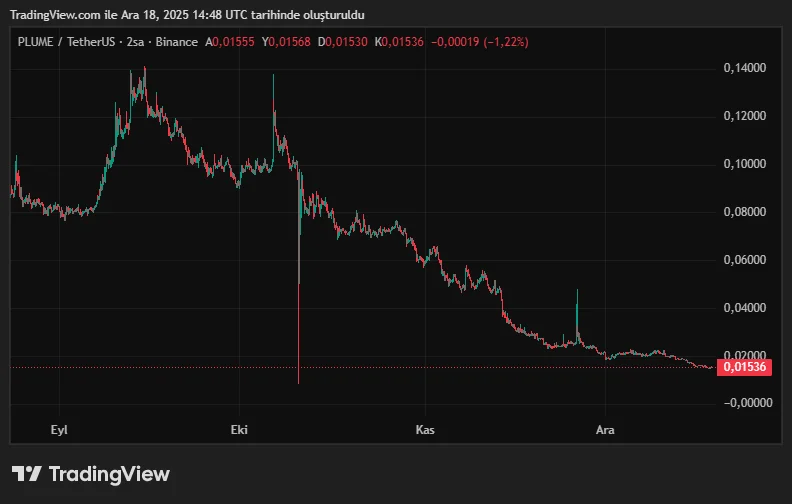
Autumn 2025 - Corporate Expansion: In October 2025, Plume surpassed a significant milestone in on-chain securities transactions by obtaining a registered transfer agent license from the U.S. Securities and Exchange Commission (SEC). This license paved the way for future areas such as regulated equity issuance, digital funds, and tokenization of publicly traded company shares. During the same period, USDC was natively integrated into the Plume network in collaboration with Circle, and cross-chain stablecoin transfers became smoother thanks to CCTP. Furthermore, Plume was selected for the Mastercard Start Path fintech program, gaining the opportunity to work closely with the global payment ecosystem. As of December 2025, the PLUME token price is hovering around $0.015.
Why is PLUME Important?
What makes Plume important is not just that it brings RWAs to the blockchain; it does so by centering the speed, flexibility, and efficiency of DeFi. While DeFi largely revolves around crypto assets today, trillions of dollars worth of real-world assets are still held in illiquid, slow, and fragmented structures.
Use Cases
The infrastructure offered by Plume creates a very broad use case for both institutional and individual users.
Tokenization of Real Assets: Thanks to its tokenization engine called Arc, Plume enables the issuance of real estate, private loan funds, commodities, and alternative assets as digital tokens. These tokens represent ownership or yield of the related asset and are managed by smart contracts. Issuance processes that can take months or even years in the traditional financial world can be completed much faster and at a lower cost on Plume. This provides asset issuers with access to global investors.
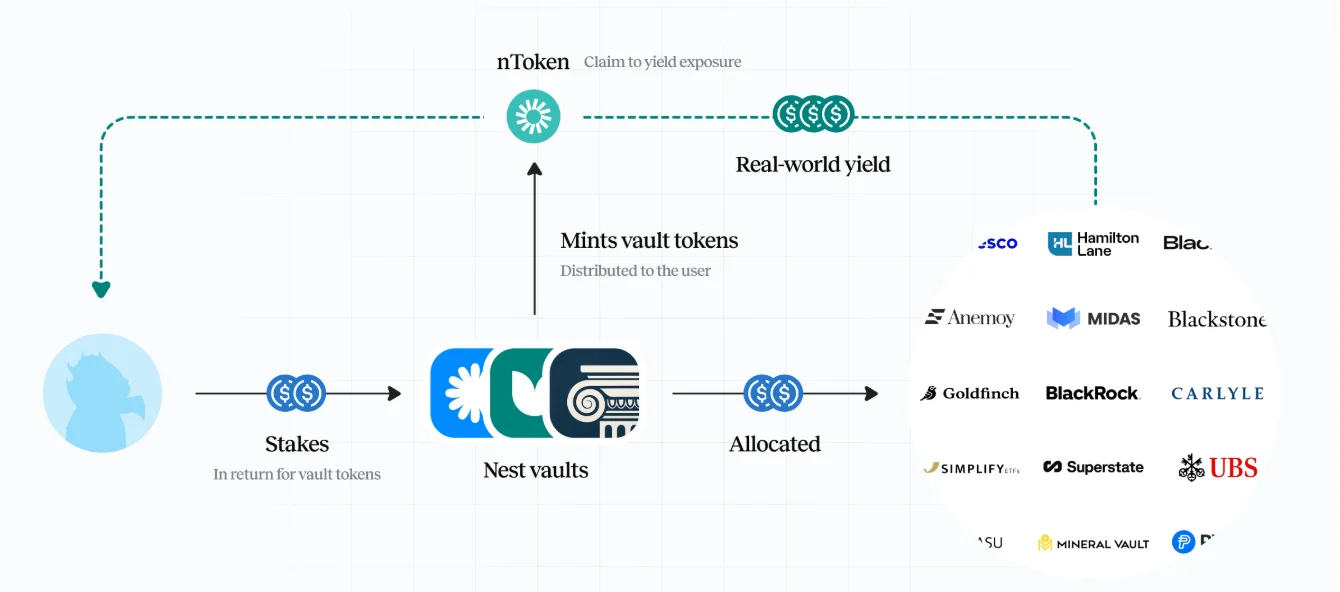
DeFi Integration and Yield Generation: Plume directly connects tokenized assets with DeFi. Through the Nest protocol, users can deposit stablecoins like pUSD or USDC into RWA vaults and receive nTokens in return. These tokens can be bought and sold within the Plume ecosystem, used for lending, or transferred to other protocols. This allows assets like Treasury bonds, private loans, or carbon credits to generate returns using a DeFi-like staking and farming model.
Lending and Trading: RWA-backed borrowing is possible through protocols like Morpho in the Plume ecosystem. Users can borrow stablecoins by using their tokenized assets as collateral. RWA-focused DEXs like Rooster offer liquidity for the buying and selling of various tokenized assets. All these transactions take place transparently on the blockchain, while compliance layers ensure compliance with legal requirements.
Access to Institutional Finance: Plume also offers a strong infrastructure for institutional players. Large asset managers such as Apollo, Blackstone, and Invesco can reach a wider investor base by tokenizing their funds through Plume. While custody solutions like Anchorage Digital support the security of institutional assets, the Plume Passport wallet makes it possible to manage identity verification and compliance processes on the blockchain. Thus, institutions can use blockchain technology without compromising regulations.
Token Economy
PLUME, at the heart of the Plume ecosystem, is the core token that powers the network and sustains incentive mechanisms. The token economy is designed to both encourage long-term participation and support network security.
Maximum supply and distribution: The maximum supply of the PLUME token is limited to 10 billion units. Approximately 20% of this supply was released into circulation with the TGE in January 2025. The remaining tokens are being released gradually with a vesting schedule spread over the long term. 59% of the total supply is allocated to community, ecosystem, and foundation work; this share is used for airdrops, incentive programs, developer grants, and validator rewards. 21% of the supply is allocated to early investors, and 20% to the founding team and core contributors. The fact that team and investor tokens are locked aims to limit early-stage selling pressure.
What is the PLUME token used for? PLUME is designed as a versatile utility token on the Plume network. Its primary use is for gas fees paid for transactions and smart contract interactions on the network. In addition, PLUME plays a significant role in governance; in the future, token holders are planned to gain voting rights on protocol updates and network-related decisions. This structure aims for Plume to gradually transition to a more community-oriented governance model.
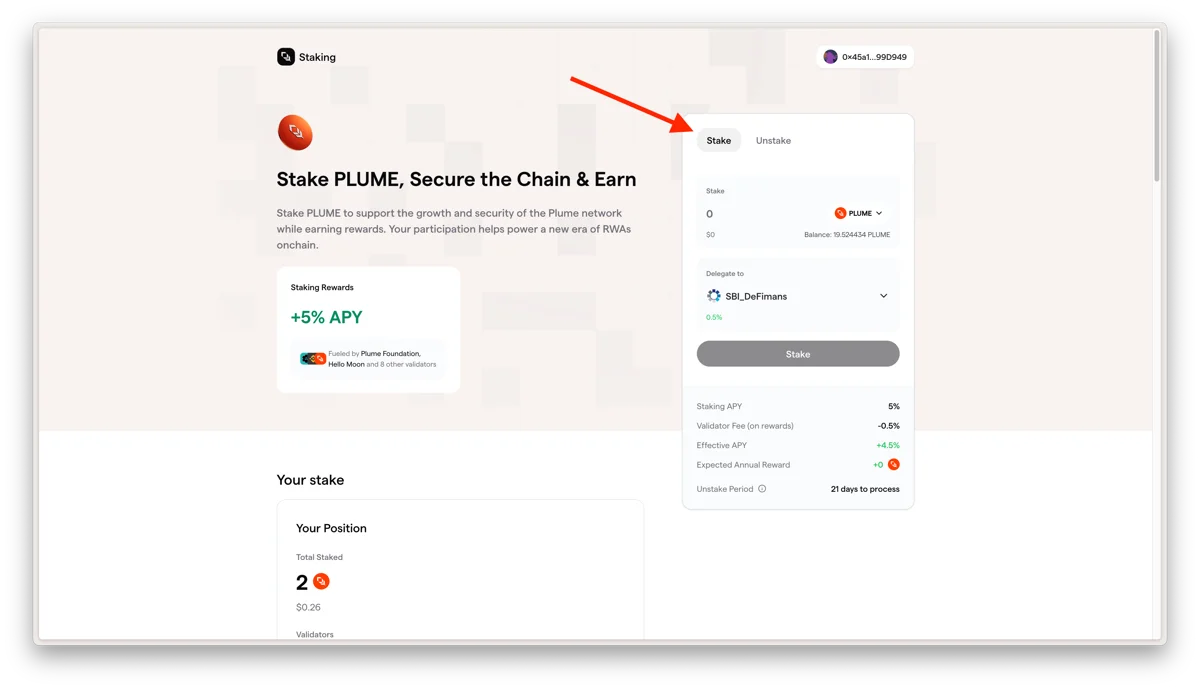
Staking and network security: Plume is a Layer-1 network operating with a Proof-of-Stake mechanism. Validators secure the network by staking PLUME, while users can earn staking rewards by delegating their tokens to validators. With the staking infrastructure expected to be operational by mid-2025, additional reward programs encouraging validator participation have also been launched. This system both strengthens network security and makes long-term PLUME holding attractive.
Incentives and Airdrops: Plume used strong incentive programs to accelerate early adoption. During the Season 1 testnet, millions of wallets received PLUME, creating a broad community base. In the Season 2 program, launched after the mainnet, 150 million PLUME were allocated as rewards to participants who used the protocols on the network and provided liquidity. These programs aim to encourage long-term use and ecosystem engagement rather than short-term gains.
PLUME Model (Economy, Reserve, and Issuance Mechanics)
One of the most important elements that distinguishes Plume from similar projects is its holistic economic model. This structure addresses not only the PLUME token economy but also stablecoins, the issuance process of real assets, and cross-chain liquidity.
Network Economy and Consensus: As a Layer-1 blockchain, Plume uses a Proof-of-Stake based structure. Validators secure the network by staking PLUME. While the maximum supply is fixed at 10 billion, instead of issuing new tokens, the majority of incentives are distributed from pre-allocated ecosystem funds. This keeps inflation under control while continuing to incentivize validators and liquidity providers. For example, the 150 million PLUME distributed under Season 2 is part of this model.
pUSD stablecoin and reserve structure: pUSD is one of the fundamental building blocks of the Plume ecosystem. Pegged 1:1 to the US dollar, pUSD is fully backed by USDC reserves. Users can mint pUSD by depositing USDC, and can burn pUSD and return to USDC whenever they wish. Thanks to Circle's CCTP integration, cross-chain USDC transfers are fast and seamless. Reserves are managed through the Nucleus infrastructure, and 1 USDC is held in the system as a counterpart for every pUSD. This structure offers a transparent and reliable stablecoin model, free from algorithmic risks.
Tokenization of real assets: At the heart of Plume is the RWA issuance process. Institutions wishing to issue tokens go through Plume's compliance layers. Thanks to MiCA compliance and a SEC-registered transfer agent license, even securities can be tokenized within a legal framework. While physical assets are securely held through custodians such as Anchorage Digital and Fireblocks, tokens represent these assets on-chain. The Nexus oracle layer securely transfers real-world data to smart contracts. The portal interface simplifies the issuance process from a technical standpoint as much as possible.
PLUME's Developers and Leadership
Behind Plume is an experienced team with deep knowledge of both blockchain and traditional finance. Chris Yin, the project's founder and CEO, established software startups in Silicon Valley before launching Plume, held product management positions at companies like Coupa Software, and then served as an investor in a venture capital fund. Recognizing the potential of DeFi and crypto early on, Yin defines Plume's strategic direction with a vision to innovate, particularly in the area of tokenization of real-world assets. His technology and investment background ensures the project's balanced progress in both product and growth. Teddy Pornprinya, Plume's Co-Founder and Chief Business Officer (CBO), is responsible for business development and strategic partnerships. Having previously worked at leading crypto companies like Coinbase and Binance, Teddy has also gained experience in decentralized exchange projects. This gives him a thorough understanding of both the dynamics of the crypto ecosystem and how to build bridges with traditional financial actors. The influence of Teddy's business development team is clearly visible in deals with major institutions like Apollo and in the acceptance process for programs like Mastercard Start Path. The Plume team isn't limited to the founders. On the legal side, there's B. Salman Banaei (General Counsel), experienced in crypto regulation. On the technical and operational side, Dan Levine (Director of Engineering) and James Friel (Ecosystem Leader) stand out; this team works on scaling the Plume network and growing its developer community. The engineering team includes developers with experience in Ethereum and DeFi. For example, Alp Güneysel, as a Senior Smart Contract Engineer at Plume, plays an active role in the development of EVM-based protocols. On the governance side, the Plume Foundation holds a significant position. The foundation coordinates the network's R&D efforts, long-term growth, and gradual decentralization process. In terms of strategy and global expansion, Shukyee Ma, as Chief Strategy Officer, plays an influential role in both the foundation and the overall direction of the ecosystem. This structure has significantly contributed to Plume's leading position, particularly in initiatives like the Global RWA Alliance. Plume also presents a strong picture in terms of supporters. In addition to investors such as Apollo and Galaxy Digital, experienced advisors from the corporate finance world contribute to the project. Christine Moy, Apollo's Head of Digital Assets, openly supports Plume's vision, and joint projects developed with institutions such as EY and Mastercard strengthen the corporate confidence behind the team.
Frequently Asked Questions (FAQ)
Below, you can find some frequently asked questions and answers about PLUME:
What exactly is Plume (PLUME) and what does it do?: Plume is a blockchain platform that brings real-world assets such as real estate, bonds, and loans to the DeFi ecosystem by tokenizing them. These assets can be bought and sold on Plume, used as collateral, or valued to generate returns. In short, Plume creates a functional bridge between traditional finance and the crypto world.
How does the Plume network work?: Plume is an EVM-compatible Layer-1 blockchain and ensures its security with the PLUME staking mechanism. Thanks to modules such as Arc, Nest, Nexus, and Skylink, tokenization, yield, data verification, and cross-chain transfers take place within a single ecosystem. This structure makes Plume a fully-fledged RWA chain.
What are the use cases of the PLUME token?: PLUME is used as a gas fee for transactions on the network and contributes to network security through staking. It also offers voting rights in future protocol decisions as a governance token. It can also be considered as a collateral and liquidity tool within the ecosystem.
Where and how can I buy Plume (PLUME) tokens?: PLUME is listed on major cryptocurrency exchanges such as Binance and Bybit. Users can buy and sell PLUME on these platforms using pairs like USDT. Access is also possible through decentralized exchanges and wallets thanks to EVM compatibility.
How are real-world assets secured on Plume?: Every asset tokenized on Plume is backed by real-world collateral or legal rights and protected by regulated custodians. Regulatory steps such as MiCA compliance and SEC licensing put this process on a legal footing. The KYC-based Plume Passport system also ensures that transactions are carried out in a compliant manner.
What do “RWA” and “RWAfi” mean?: RWA refers to the tokenized form of real-world assets. RWAfi, on the other hand, defines a financial model where these assets are bought, sold, staked, and generate returns using DeFi protocols. Plume aims to build an RWAfi infrastructure that offers this approach end-to-end.
What differentiates Plume from other projects?: Plume combines a permissionless blockchain structure with regulation-compliant KYC/AML layers. It offers tokenization, stablecoin, liquidity, and cross-chain solutions in a single ecosystem. Furthermore, its strong institutional support and EVM compatibility set Plume apart from similar projects.
Discover the latest analyses, use cases, and detailed guides on Plume (PLUME) and other next-generation RWA-focused blockchain projects in the JR Crypto Guide series.
#what is plume#what is plume coin#plume token price#what does plume do#what is plume blockchain#how does plume network work#plume rwa project#plume defi ecosystem#plume
Do you have any questions?Feel free to send us your questions or request a free consultation.