
Bringing real-world assets onchain requires more than simply turning an asset into a token. Pharos Network aims to combine the speed, compliance tools, and liquidity infrastructure required by institutional finance on a high-performance Layer 1 network.
Definition and Origins of Pharos
Pharos is a Layer 1 blockchain network developed for real-world assets, cross-border payments, and institutional finance applications. The project focuses on closing the technical and operational gap between traditional finance and decentralized finance.
PROS is the native coin of the Pharos network. Transaction fees on the network are paid in PROS, while the coin also plays a role in staking, validator participation, governance, and ecosystem incentives.
It is important to note that the current ticker symbol of the Pharos coin is PROS. PHRS, which was used during the testnet phase, was distributed solely for testing and had no economic value.
Other tokens using the PHAROS ticker have been created on different networks. These should not be confused with PROS, the native coin of Pharos Network.
The project describes itself as an “inclusive financial Layer 1 for RealFi.” RealFi refers to blockchain infrastructure connecting with real economic activity, institutional assets, and verifiable revenue streams.
What network architecture does Pharos use?
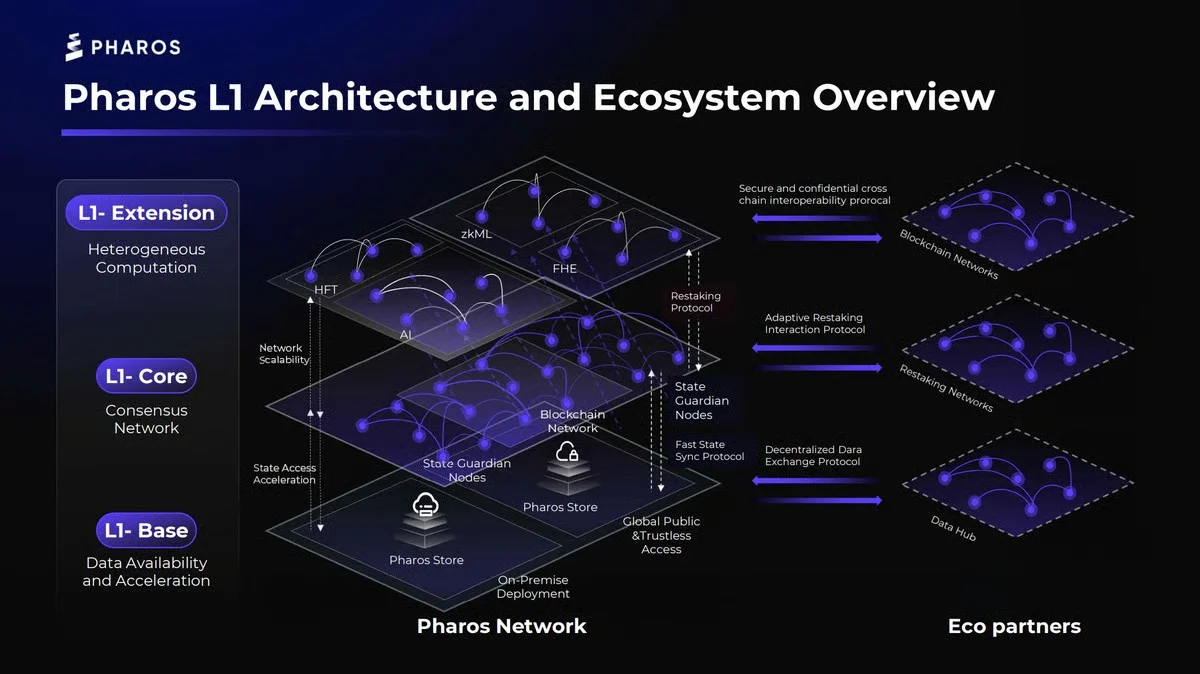
Pharos operates as an independent Layer 1 network. Its Ethereum Virtual Machine support allows smart contracts and decentralized applications developed for Ethereum to move to Pharos with relatively limited modifications.
The network is not limited to EVM support. Pharos uses a dual virtual machine architecture that aims to support WebAssembly-based applications alongside the EVM.
This structure allows Ethereum developers using Solidity to retain their existing tools. It also provides a broader development environment for applications written in languages such as Rust, C++, and Go.
Pharos is designed to execute transactions in parallel. The network identifies independent transactions and processes them simultaneously, reducing the bottlenecks found in blockchain architectures that wait for each transaction to finish sequentially.
According to technical data shared by the project, the network can reach a capacity of up to 30,000 transactions per second. Pharos targets block times below one second and processing capacity of 2 Gigagas per second.
These are performance figures reported by Pharos. Results under real-world conditions may vary depending on the number of validators, network activity, application structure, and hardware conditions.
Why Pharos was created: its RWA and RealFi focus
One of Pharos’s main goals is to make it easier to issue real-world assets on a blockchain and use them across different financial applications. These assets may include bonds, private credit, commodities, energy projects, real estate, or regulated investment products.
RWA tokenization often stops at recording an asset onchain. Additional infrastructure is needed for pricing, legal ownership, revenue distribution, investor eligibility, and secondary-market liquidity.
Pharos is working to bring these components together around a single programmable network. Its design includes compliance tools such as digital identity, KYC processes based on zero-knowledge proofs, and programmable anti-money laundering controls.
This approach allows users to prove that they meet specific requirements without placing all their personal information publicly onchain. However, these controls do not automatically make every financial product legally compliant.
Issuers and application developers must also follow the rules of the countries in which they operate. Pharos provides technical tools for this process, while legal responsibility varies depending on the product and jurisdiction.
History of Pharos: Key Milestones
Pharos was established in 2024 by former blockchain executives and engineers from Ant Group and AntChain. Alex Zhang and Wish Wu are among the project’s prominent founders.
Alex Zhang previously served as a technology executive in Ant Group’s blockchain division and as CEO of ZAN. Wish Wu is a co-founder and CEO of Pharos, leading the project’s strategy of combining institutional finance with blockchain infrastructure.
The team also includes people with backgrounds at Ant Financial, Microsoft Research, and PayPal. Its technical staff works on blockchain infrastructure, digital payments, formal verification, and zero-knowledge systems.
Pharos completed an $8 million seed funding round in November 2024. Lightspeed Faction and Hack VC led the round, while investors such as SNZ Capital, Reforge, Dispersion Capital, Hash Global, and Chorus One Ventures also participated.
During the same period, the project partnered with ZAN, the Web3 brand of Ant Digital Technologies. The partnership was designed to focus on node services, security, hardware acceleration, and blockchain infrastructure.
Testnet, mainnet, and the launch of PROS
The Pharos testnet went live in May 2025. Developers deployed applications in this environment, while users tested swaps, liquidity provision, asset transfers, and ecosystem tasks.
A test coin called PHRS was used for testnet transactions. PHRS was created only to simulate gas fees and activity in the testing environment; it is not the same asset as PROS.
The project entered its AtlanticOcean testnet phase in October 2025. Chainlink CCIP and Chainlink Data Streams integrations were also announced during this period.
CCIP supports data and asset transfers between different blockchain networks. Data Streams aims to deliver the low-latency price data required by RWA markets to smart contracts.
The genesis mint of PROS took place on December 12, 2025, when Pharos launched its private mainnet. The public Pacific Ocean mainnet went live on April 28, 2026.
Pharos distributed PROS and held its token generation event on the same day. Native USDC issued by Circle and Cross-Chain Transfer Protocol support also became active on Pharos with the mainnet launch.
CCTP allows USDC to move between supported networks through a burn-and-mint model. The system aims to reduce the need for representative assets held in third-party bridges.
Following the mainnet launch, PROS began trading on OKX, Bitget, KuCoin, and several international platforms. Upbit and Bithumb also introduced South Korean won trading pairs for PROS in May 2026.
The coin was later added to the market listings of platforms such as Coinbase, Kraken, and HTX. Trading pairs and regional access requirements vary between exchanges.
Listings and the current state of the ecosystem
Pharos announced a $44 million Series A funding round in April 2026. Together with its seed round, the project’s total funding reached $52 million.
Sumitomo Corporation’s investment arm, SNZ Capital, and Flow Traders were among the participants. The names of some financial institutions involved in the round were not disclosed.
Pharos also launched a $10 million RealFi incubator program. The program aims to support teams building products on Pharos in the areas of RWAs, payments, DeFi, and blockchain infrastructure.
Projects such as Centrifuge, Morpho, TermMax, Faroo, AquaFlux, Asseto, and Bitverse are part of the network’s ecosystem. These applications focus on areas including private credit, tokenized funds, institutional lending, and yield products.
The RealFi Alliance is working to develop shared standards for issuing, pricing, verifying, and distributing RWA products across different networks. Organizations such as Circle, Chainlink, Centrifuge, Amber Group, LI.FI, Avalon, and Binance Wallet have participated in partnerships surrounding the initiative.
Pharos’s scope is not limited to RWAs. The network also aims to support applications in which artificial intelligence agents can make payments, execute financial strategies, and interact with onchain data.
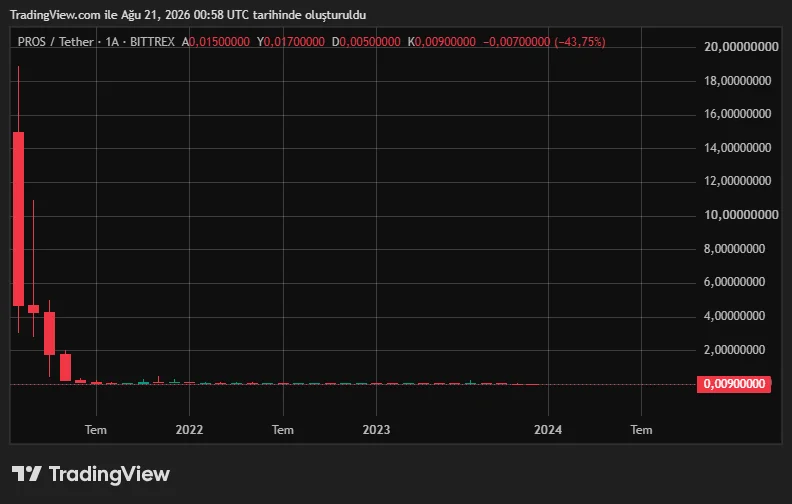
At the time of writing, the PROS coin price was around $0.395. The coin had a market capitalization of $53.6 million and a circulating supply of approximately 135.6 million PROS.
How Does the PROS Coin Work?
PROS is the primary payment asset for transactions on the Pharos network. Users pay the required gas fees in PROS when transferring coins, interacting with smart contracts, or running applications.
The collected transaction fees are expected to contribute to validator incentives and the network economy. The project states that part of these fees may be burned as adoption increases, although the scope of this mechanism will depend on future network decisions.
Pharos uses a Proof-of-Stake-based security model. Validators stake PROS to participate in block production and transaction validation.
Users who do not operate validators directly can delegate their coins to eligible validators. Staking returns vary depending on factors such as the network participation rate, issuance policy, and validator commissions.
PROS holders are expected to participate in governance processes concerning network upgrades, technical parameters, and ecosystem initiatives. The rules for submitting proposals and voting may change as the network’s governance structure develops.
The coin is also used for ecosystem incentives. PROS may fund developer grants, liquidity programs, rewards for bringing RWA assets to the network, and user campaigns.
The project also states that PROS may gain additional RWA-related functions in the future. Possible uses include stablecoin collateral, priority access to financial products, and the use of RWAs in network security; these functions have not yet been finalized.
PROS supply, allocation, and unlocks
According to the tokenomics framework published by Pharos, the genesis supply was set at 1 billion PROS. This amount represents the initial distribution.
A total of 35% of the genesis supply was allocated to community and network incentives. This section includes 15% for the ecosystem, 14% for node and liquidity incentives, and 6% for the community airdrop.
Another 25% of the supply was allocated to the foundation and project treasuries. The foundation treasury received 16%, while the Pharos Labs-related treasury received 9%.
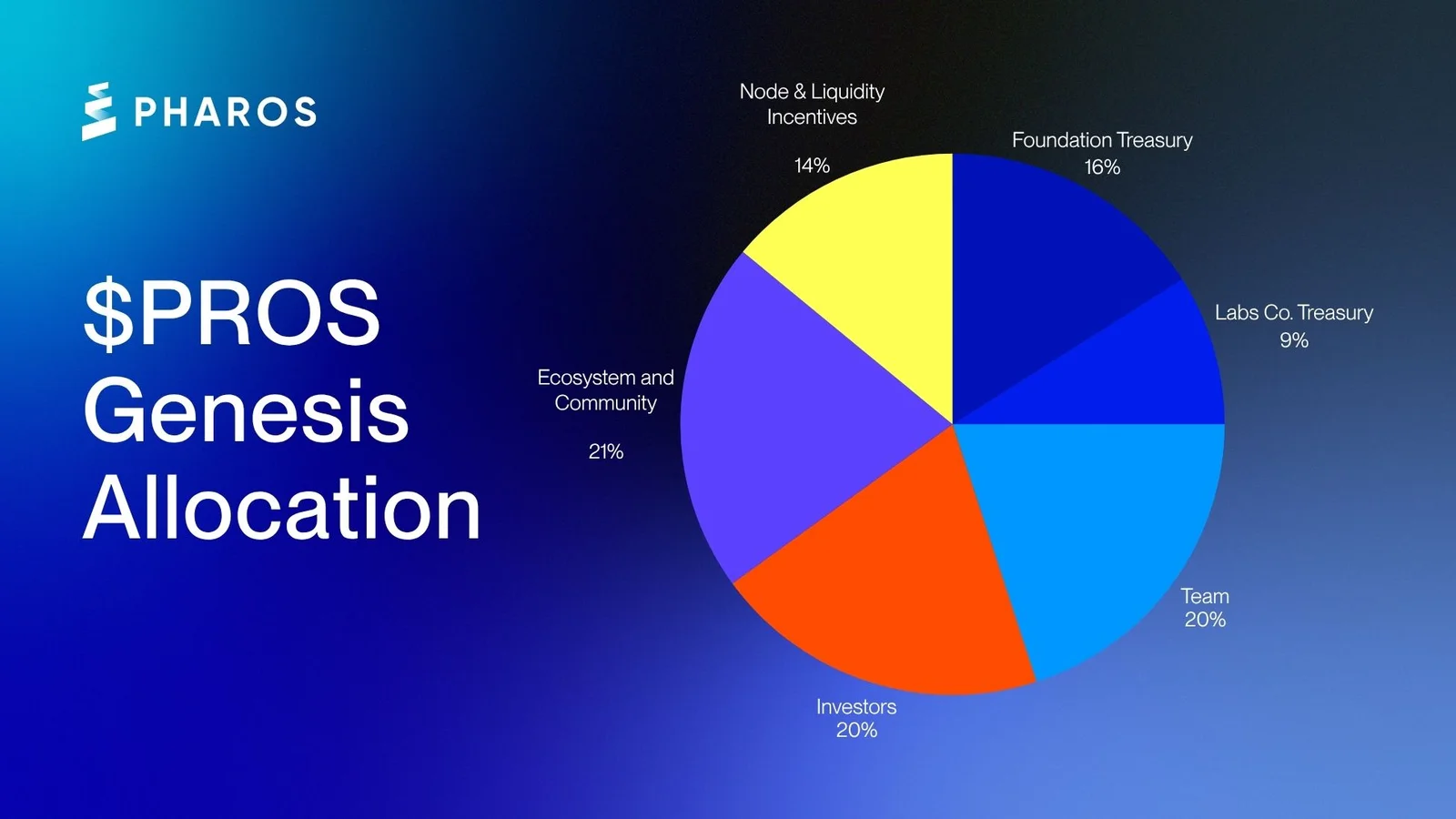
Private investors received 20%, while another 20% was allocated to the core team. The combined share of the team and investors therefore amounts to 40% of the genesis supply.
Team and private investor allocations are subject to a 12-month lock-up period. The coins then unlock linearly over 36 months.
Some treasury and incentive allocations follow schedules extending from 48 to 60 months. The circulating supply therefore increases gradually over time.
Only a limited portion of the total supply entered circulation during the network launch. As of August 2026, approximately 135.6 million PROS was in circulation, representing 13.6% of the genesis supply.
The low circulation ratio creates a significant difference between the coin’s market capitalization and fully diluted valuation. Future unlocks may increase selling pressure if market demand does not grow at the same pace.
No absolute maximum supply limit has been announced for PROS. This is because new coins may be issued in the future to support network security.
According to the official plan, staking inflation remains at 0% for the first six months following the network launch. Annual coin issuance of 5% is expected to begin in the seventh month.
The foundation may later adjust this rate based on staking participation, validator incentives, and security requirements. The 1 billion PROS figure therefore represents the genesis supply rather than a fixed maximum supply.
AsyncBFT, parallel execution, and the SPN structure
Pharos combines Proof-of-Stake with an asynchronous Byzantine fault-tolerant consensus approach called AsyncBFT. The system aims to allow validators to reach agreement on transactions even if some network participants behave incorrectly or maliciously.
The asynchronous structure relies less on the assumption that messages will always reach every participant within the same amount of time. This feature is important for a global network with validators located across different regions.
Pharos’s execution layer uses a scheduler that examines dependencies between transactions. Transactions that do not affect each other can run simultaneously, while transactions accessing the same data are placed in a controlled sequence.
Static analysis attempts to predict which data a transaction will access in advance. Speculative execution begins processing transactions believed to be independent in parallel and reruns the required transaction if a conflict emerges.
The network also divides block processing into different stages. Consensus ordering, database preparation, transaction execution, Merkle tree updates, and storage writes can progress through different sections of the same pipeline.
A storage structure called Pharos Store focuses on reducing the burden of growing blockchain data on nodes. It combines a delta-encoded multi-version Merkle tree with a log-structured page storage system.
The project states that this approach can reduce storage overhead by up to 80%. This figure is based on Pharos’s technical measurements, and results may differ under independent network conditions.
The Pharos network includes different types of participants, including validators, full nodes, and relayer nodes. Validators participate in consensus, full nodes store blockchain data, and relayers facilitate high-frequency communication between applications and the network.
Special Processing Networks, or SPNs, form Pharos’s modular scaling model. These are specialized networks that can be created for a particular payment system, RWA market, privacy application, or computationally intensive task.
Each SPN can have its own execution engine, validator group, and governance structure. At the same time, it maintains its data and liquidity connection with the Pharos mainnet.
Validators can reuse their staked assets to secure SPNs. The restaking model may improve capital efficiency, although using the same collateral for multiple security obligations can introduce additional slashing and contagion risks.
Why Is Pharos Important?
The RWA market cannot grow through asset issuance alone. Assets must also be verified, transferred between networks, matched with eligible investors, and used in secondary markets.
A significant portion of existing RWA products is held in a limited number of wallets. These assets may have lower transaction velocity than native crypto assets, while liquidity remains fragmented across different networks.
Pharos aims to combine asset issuance and circulation within the same financial infrastructure. Native USDC support, Chainlink price data, and CCTP connectivity are among the core components of this model.
The network’s sub-second finality target is particularly relevant for payments and real-time finance applications. Slow transaction finality can create a poor user experience in cross-border payments or high-frequency market applications.
Protocol-level compliance tools are another feature Pharos uses to distinguish itself from general-purpose Layer 1 networks. Digital identity, zk-KYC, and programmable AML rules may allow only addresses that meet specific conditions to interact with certain assets.
This model seeks to establish a balance between open DeFi and regulated finance. The extent to which an application requires permission depends on the rules set by the asset issuer and the regulations of the relevant country.
Team, investors, and ecosystem partnerships
The Pharos team’s background at Ant Group and AntChain gives the project experience with large-scale payment systems. Some members of the team previously worked on Alipay infrastructure and enterprise blockchain services in Asia.
This background may make it easier for Pharos to communicate with institutional companies. Previous experience alone, however, does not guarantee network adoption or economic success.
Investors including Hack VC, Lightspeed Faction, Sumitomo Corporation, SNZ Capital, and Flow Traders have provided funding to the project. The presence of traditional companies and crypto investors within the same structure is consistent with Pharos’s RealFi approach.
The Chainlink integration supports the transfer of RWA price data and cross-chain messages. The Circle integration provides access to native USDC liquidity on the network.
Centrifuge is working on the distribution and tokenization of institutional assets on Pharos. Protocols such as Morpho and TermMax provide infrastructure for lending and fixed-yield products.
Energy, private credit, and AI-related applications are also being developed within the ecosystem. Pharos’s long-term position will depend on whether these projects can attract real users and capital.
Competition, centralization, and volatility risks
Pharos is an emerging Layer 1 network. Since the mainnet became publicly available in April 2026, there is limited long-term data on security, uninterrupted operation, and performance under heavy usage.
The project’s high throughput and low-latency figures are based on controlled tests and technical measurements. The network must maintain this performance across a larger application ecosystem and during periods of high economic activity.
Competition in RWA infrastructure is strong. Alongside Ethereum and its Layer 2 networks, platforms such as Avalanche, Solana, Stellar, Plume, and MANTRA also focus on institutional assets and payments.
Institutional blockchain selection does not depend solely on transaction speed. Liquidity, developer activity, security history, legal infrastructure, and connections with existing financial systems also influence the decision.
Tokenomics creates a separate area of risk. As of August 2026, around 13.6% of the genesis supply was in circulation; team, investor, treasury, and incentive coins will enter the market in the coming years.
The introduction of annual staking inflation may also increase the total supply. PROS may face pressure if demand generated by network usage falls behind new issuance and token unlocks.
PROS traded around 65% below the peak recorded during the mainnet launch. This movement illustrates the price discovery, limited circulation, and post-listing volatility risks often seen in newly launched coins.
Stake distribution should also be monitored on Proof-of-Stake networks. If a small number of validators control a large amount of PROS, the network may become more centralized in its decision-making and block production processes.
RWA applications carry real-world counterparty risk in addition to smart contract risk. The value of a tokenized private credit or energy asset may depend on the borrower’s ability to repay, the asset’s legal structure, and its custody arrangements.
Rapid transaction finality on a blockchain does not mean the underlying asset is legally sound. Users need to assess the market risk of PROS separately from the specific conditions attached to each RWA product on Pharos.
Frequently Asked Questions
Below are some frequently asked questions and answers about Pharos (PROS).
- What is Pharos, and when was it launched? Pharos is an EVM-compatible Layer 1 network developed for real-world assets, payments, and institutional finance applications. The project was founded in 2024, and its testnet went live in May 2025. The private mainnet launched in December 2025, followed by the public Pacific Ocean mainnet on April 28, 2026. PROS entered the market with the public mainnet launch.
- What is the PROS coin used for? PROS is used to pay transaction fees on the Pharos network. The coin also plays a role in staking, validator participation, delegation, governance, and ecosystem incentives. It may be used as collateral or an access asset in certain RWA products in the future. These additional uses depend on governance decisions and product development.
- What network does Pharos operate on? Pharos is not a token project built on another blockchain; it is an independent Layer 1 network. Its EVM compatibility allows it to support Ethereum tools and Solidity-based smart contracts. The network also provides WebAssembly support, parallel transaction execution, and application-specific SPNs. PROS transactions take place on the Pharos mainnet.
- Who founded Pharos? Pharos was founded by former Ant Group and AntChain executives and engineers. Alex Zhang and Wish Wu are among the project’s prominent co-founders. Alex Zhang previously served as CTO of Ant Group’s blockchain division and CEO of ZAN. Wish Wu serves as a co-founder and CEO of Pharos.
- What is the PROS supply? PROS has a genesis supply of 1 billion coins. This amount is not a fixed maximum supply, as new coins may be issued through staking to support network security. According to the official policy, staking inflation remains at 0% during the first six months. Annual issuance of 5% is planned from the seventh month, although the rate may change depending on network conditions.
- Is Pharos suitable for investment? Pharos’s RWA focus, experienced team, and institutional partnerships may support interest in the project. However, the network has a short mainnet history, and most of the PROS supply has not yet entered circulation. Investors should monitor the unlock schedule, staking inflation, validator distribution, network usage, and actual liquidity within RWA applications. PROS is a highly volatile crypto asset, so each investor should assess it according to their own risk tolerance.
Follow the JR Kripto Guide series for the latest information about Pharos, which is developing RWA and RealFi infrastructure on a high-performance Layer 1, and other emerging projects across the crypto ecosystem.

