
The cryptocurrency world is growing with new solutions every day. However, fundamental issues such as scalability, speed, and cost still stand as major obstacles for many networks. Established blockchains like Ethereum struggle to achieve high transaction capacity without compromising decentralization. This is where next-generation Layer 1 projects come into play, and Monad (MON) is at the forefront of these projects. Monad aims to make a difference with its strong engineering background, high transaction capacity, and developer-friendly structure. Its full compatibility with Ethereum means that thousands of applications and tools built on it can be migrated to this new network without extra effort. With 10,000 transactions per second (TPS), 0.8-second transaction finality, near-zero transaction fees, and parallel transaction execution capability, Monad is redefining the definition of a "high-performance blockchain." With its developer-friendly approach, decentralized architecture, and impressive investment support, Monad is on the radar of both individual users and institutional actors by 2025. But how robust is the technology behind this rise? Why are investors turning to MON coin? Let's start with the most basic questions: What is Monad, what is MON coin, and what is it used for? Let's examine all the details in this guide.
Definition and Origins of Monad
Monad is a blockchain network designed for running smart contracts, fully compatible with the Ethereum Virtual Machine (EVM). Thanks to this compatibility, applications and tools developed in the Ethereum ecosystem can be directly migrated to the Monad network without requiring code changes. Contracts written in Solidity work the same way; popular tools such as Metamask, Foundry, and Hardhat are supported. This allows developers to migrate to the network without going through an extra learning process.
The project was founded in 2022. Behind it is an experienced team of engineers who have designed high-frequency trading (HFT) systems within Jump Trading for many years. They wanted to bring their accumulated knowledge about financial infrastructures to the blockchain world. They closely observed that transaction limits, network congestion, and high gas fees on Ethereum were challenging DeFi projects. This situation created a need for an infrastructure with higher performance that wouldn't be overwhelmed by transaction volume. Monad was developed to address this need. Many projects in the blockchain space are trying to gain speed by compromising either security or decentralization. Monad chose a third way in this equation. It aims to achieve high performance through technical solutions such as transaction capacity, database optimization, and parallel execution. The goal is to offer a faster and lower-cost experience for both developers and users on a robust infrastructure. Ethereum compatibility simplifies the transition process, while Monad's technical strength lays the groundwork for a more scalable ecosystem.
MONAD's History: Key Milestones
Monad's journey began in 2022. In the same year, Monad Labs was officially established, and the project development process began. During this period, the focus was on idea development and building the core team. The technical vision was clarified; the goal was to build a high-performance, Ethereum-compatible Layer-1 network.
The first major financial step was taken in February 2023. In a seed funding round led by Dragonfly Capital, Monad Labs secured $19 million in funding. This support significantly accelerated testnet preparations and the early development process. At this stage, the project team reached a larger engineering staff.
In April 2024, a milestone occurred. A massive $225 million in funding was secured in a Series A funding round led by Paradigm. This round was not only one of the largest crypto investments of the year; it also revealed Monad's significant valuation and growth potential. Leading investors in the sector such as Electric Capital, Greenoaks, and Coinbase Ventures also participated in the round. The company's valuation was estimated at approximately $3 billion after this funding round.
In the third quarter of 2024, the testnet was launched publicly. This phase was not only a technical testing phase but also a community-building initiative. A retroactive "airdrop" plan was announced for early users who participated in the testnet. A portion of the MON tokens was distributed to users who actively participated in this process. Thus, the project began building a loyal community even before the mainnet launched.
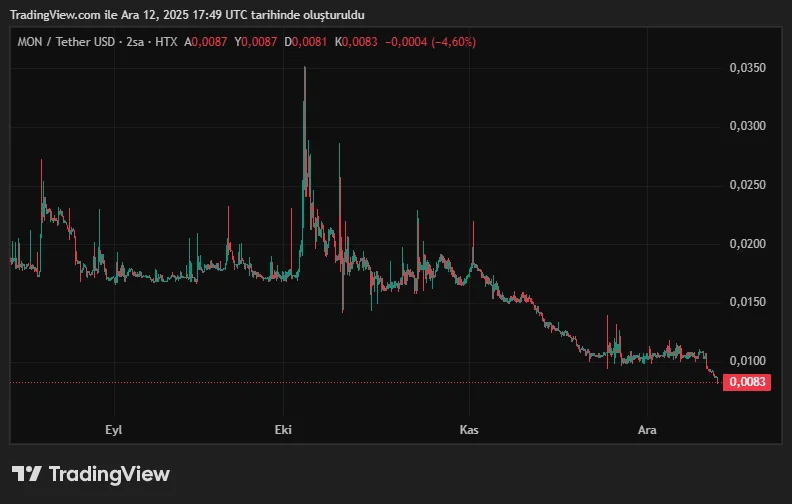
And finally, on November 24, 2025, Monad mainnet went live. Immediately before the mainnet launch, a public sale (ICO) was held on Coinbase's token sale platform through a subsidiary of the Monad Foundation. Approximately 7.5 billion MON were sold at a fixed price of $0.025, raising a total of $187.5 million in funds. With the activation of the mainnet, more than 200 validator nodes began operating. This demonstrated that the goal of a high level of decentralization was achieved from day one. As of December 2025, the MON coin price is trading at around $0.02.
Why is Monad Important?
In the blockchain world, most networks try to strike a balance between security, decentralization, and scalability. However, there are very few examples that can offer all three fundamental features simultaneously. Monad focuses on this problem. The network's architecture is designed to increase transaction throughput while simultaneously maintaining security and a distributed structure. While most Layer-1 chains can only succeed in two of these, Monad claims to carry all three together.
The limited transaction capacity, high fees, and slow confirmation times seen in large networks like Ethereum hinder truly scalable applications. Monad solves these problems by addressing the fundamentals of the system. Both the infrastructure code was written from scratch, and high-frequency system experience was directly reflected in this design.
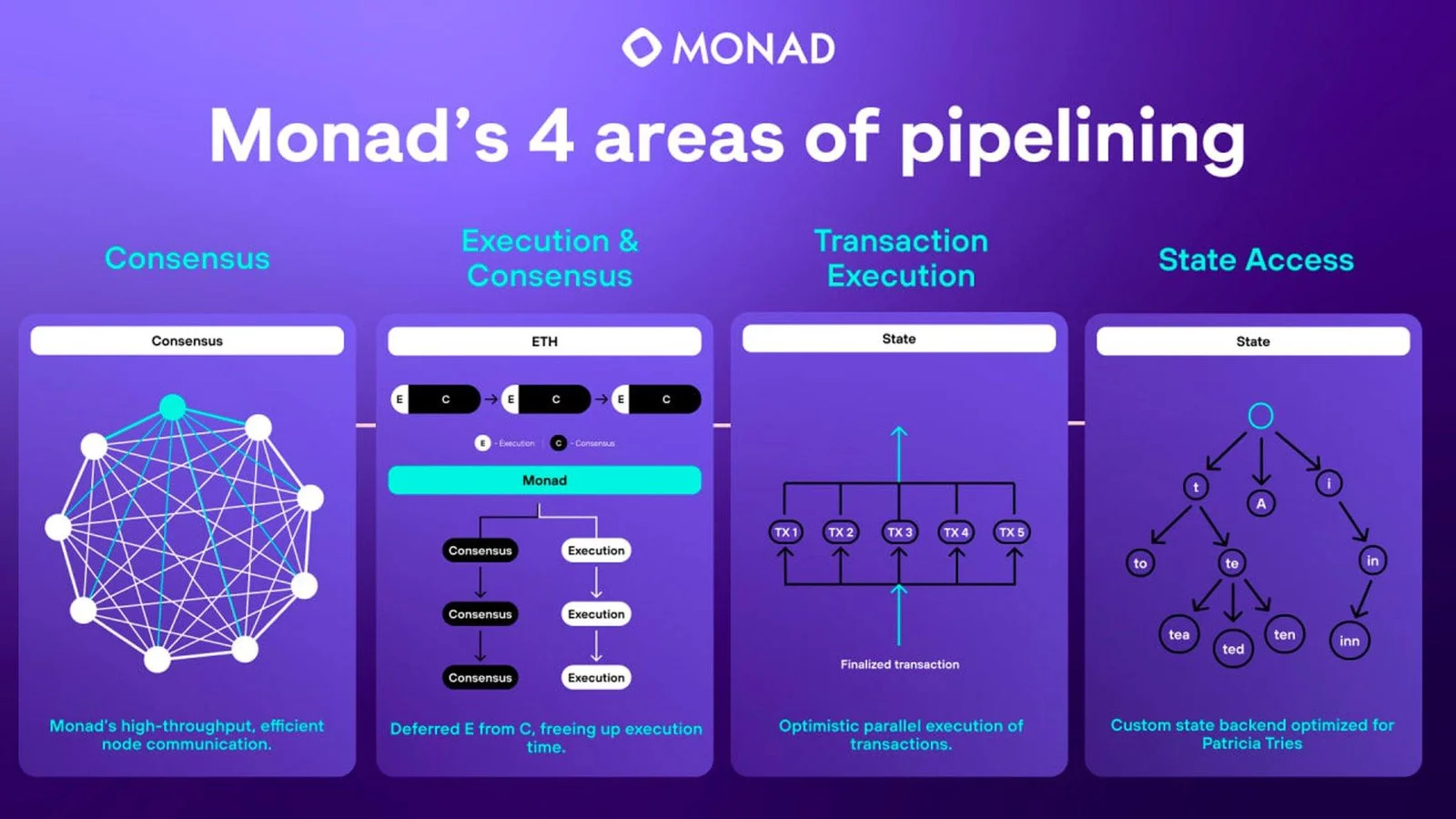
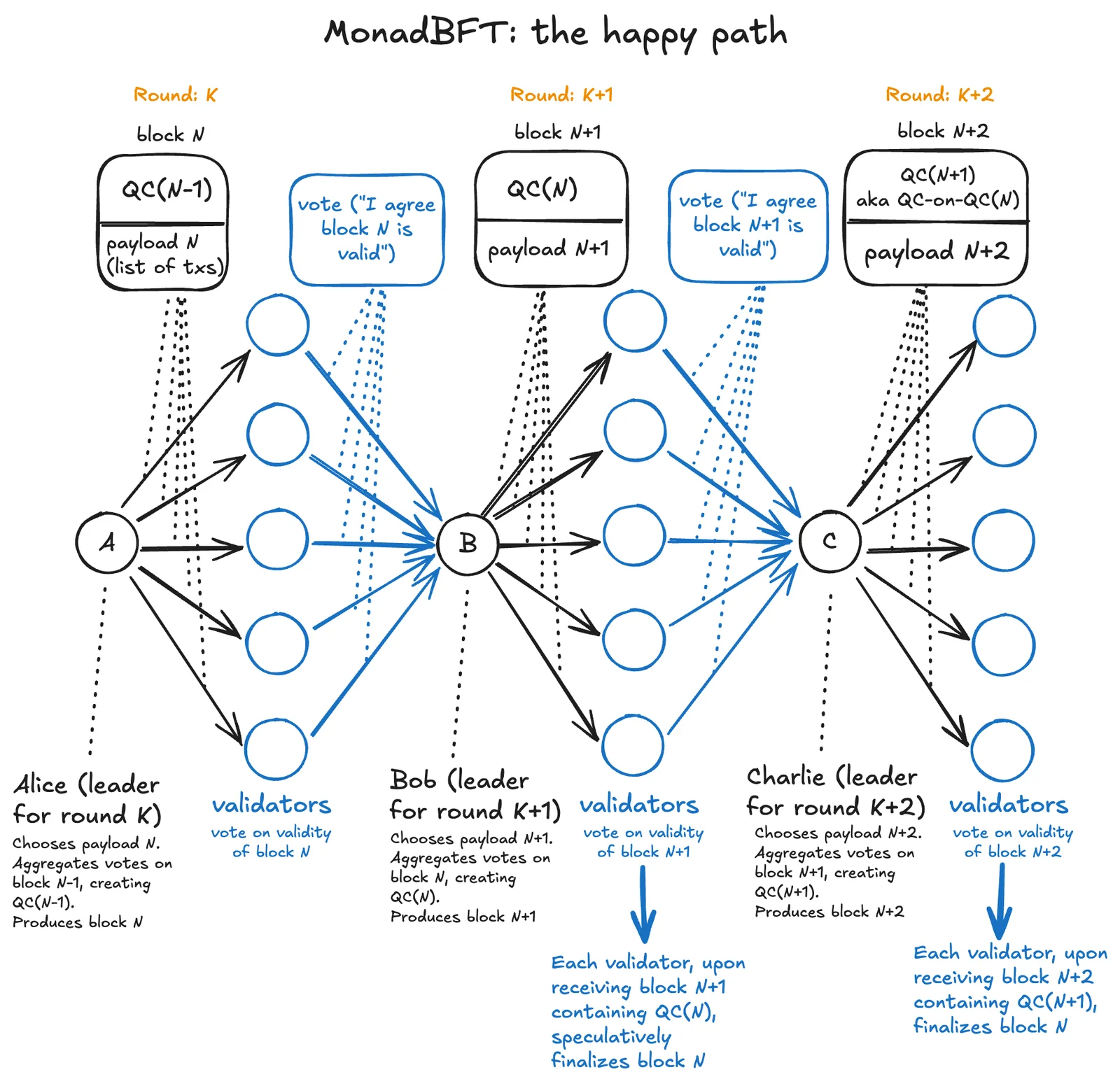
The most significant difference of Monad is its parallel transaction execution feature. In traditional EVM-based chains, transactions are processed one by one and sequentially. Monad, on the other hand, can execute these transactions simultaneously. This increases both transaction throughput and shortens block time. The average block time is approximately 0.4 seconds. The finalization time is reduced to as little as 0.8 seconds. Transactions are finalized instantly. The network uses a specially developed MonadBFT algorithm at its consensus layer. This structure is a Proof of Stake-based Byzantine Fault Tolerant (BFT) system. This means that validators running the network participate in block production and confirmation in exchange for the MON tokens they stake. This structure is both energy-efficient and resistant to attacks.
Monad is also strong in database and state management. It uses a proprietary data system called MonadDB. Thanks to this structure, the network can efficiently store hundreds of thousands of transactions and perform retrospective read/write operations without delay. This layer, which is one of the points where performance bottlenecks in traditional EVM chains, does not create a bottleneck in Monad because it has been redesigned from the ground up. Another prominent feature of the network is its minimum transaction costs. Thanks to high capacity and low latency, the network does not experience congestion. This ensures that transaction fees remain stable and low. This feature is of great importance in applications such as micro-payments, in-game transfers, and fast trading transactions. Monad stands out not only technically but also in terms of developer experience. Thanks to EVM compatibility, Ethereum developers can easily migrate their projects to this network. It can work directly with familiar tools such as Hardhat, Foundry, and Metamask. This both lowers the barrier to entry and allows the network's ecosystem to grow rapidly.
Use Cases
The high speed and efficiency offered by the Monad network provide significant advantages in various use cases:
- High-frequency transactions: Monad's transaction capacity of approximately 10,000 TPS enables high-frequency transactions on-chain in large-scale trading platforms and decentralized exchanges. For example, on-chain exchange applications can handle volumes close to traditional markets such as Nasdaq or CME on Monad.
- Gaming and real-time applications: Low block time and almost zero transaction fees create a suitable environment for blockchain-based games and interactive applications. Since transactions on Monad achieve instant finality, real-time multiplayer games or applications requiring instant data can run smoothly on this network.
- DeFi and complex DApps: High throughput and low latency improve the user experience in decentralized finance (DeFi) protocols. Complex DApps requiring intensive transactions, such as lending, derivatives trading, or on-chain social networks, can become scalable thanks to Monad; users can use these services without experiencing lag or high fee issues.
- Migrating Ethereum applications: Applications developed for Ethereum or other EVM-based networks can be easily migrated without additional adaptation thanks to Monad's EVM compatibility. Developers can deploy existing Solidity smart contracts to the Monad network, benefiting from higher performance while continuing to use all the tools in the Ethereum ecosystem.
Token Economy
The MON token, the native cryptocurrency of the Monad network, plays a central role in both the operation of the network and the incentive mechanisms of the ecosystem:
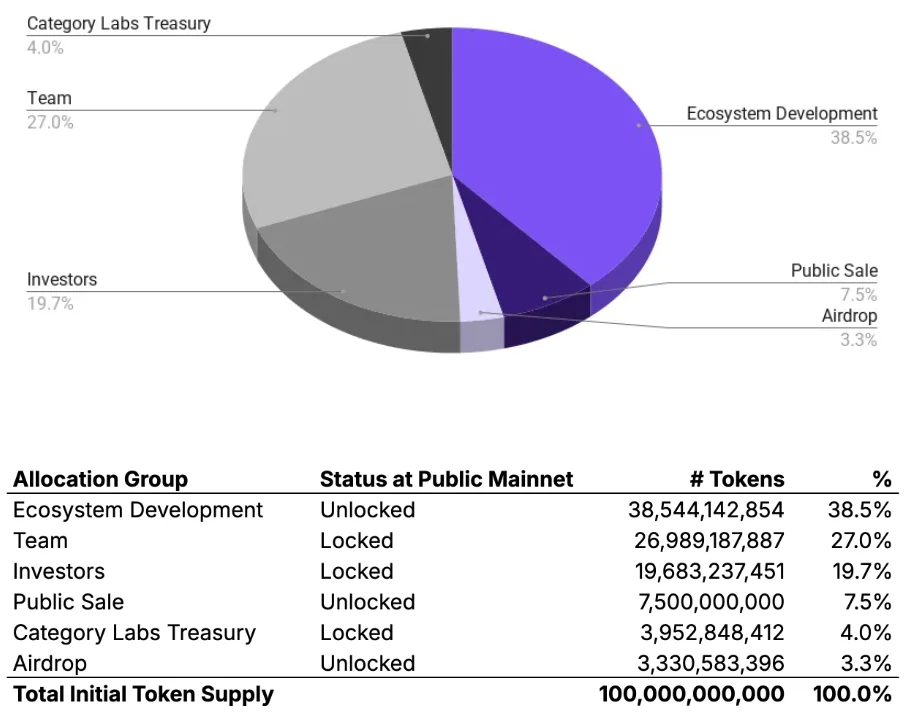
- Total Supply: The total supply of MON tokens is fixed at 100 billion units. The distribution of this supply is planned to be broad-based in favor of the community through early airdrop programs (the project distributed tokens to users via an airdrop before the mainnet).
- Gas Fees: MON is used to pay gas fees for transactions on Monad. Thanks to the network's high transaction capacity, transactions can be processed with extremely low fees, which is a great advantage for micro-payments or applications requiring frequent transactions.
- Staking and Security: The Monad network uses the Proof of Stake (PoS) based MonadBFT consensus algorithm. Validators participate in block production and transaction confirmation by staking MON tokens, thus securing the network. This staking mechanism protects the network against attacks while also allowing token holders to earn rewards from the network's transaction fees.
- Governance and Incentives: The MON token can also be used to provide incentives to ecosystem participants who support the network's growth and to enable community governance in the future. MON is an important tool for aligning interests between developers, validators, and users. Indeed, the MON airdrop to active participants during the testnet period is an example of this incentive mechanism.
Who Founded Monad?
There is a strong engineering team behind the Monad project. The team consists of individuals with years of experience in finance and technology, specializing in high-performance systems. Keone Hon, CEO and co-founder of the project, spent approximately eight years developing high-frequency trading systems at Jump Trading. He then conducted blockchain research under the umbrella of Jump Crypto. With his software engineering expertise, he has built a strong bridge between traditional finance and decentralized technologies. James Hunsaker, CTO and co-founder, leads the technical architecture. Like Hon, he also has a background at Jump Trading, and they designed Monad's core infrastructure together. The third co-founder, Eunice Giarta, is a researcher from MIT Media Lab and also has experience in financial product management. Bringing together different disciplines such as finance, software, and research, the team founded Monad Labs in 2022. The project's starting point is clear: to demonstrate that high-speed systems used in traditional markets can be applied to blockchain. They leveraged the technical skills gained at Jump Trading to offer an alternative to existing networks that suffer from scalability problems. The technical development process is carried out by the engineering team called Category Labs. The Monad client was written from scratch in C++ and Rust. All the code is open source and available to the community via GitHub. Both the consensus algorithm (MonadBFT) and the execution engine are open to public review. This transparency not only builds trust but also opens the door to contributions from the community. The overall coordination of the network is handled by the Monad Foundation, which organizes the project's sustainable development and decentralized governance processes. Strong financial backing is also present, with leading investors such as Paradigm, Dragonfly Capital, Electric Capital, and Coinbase Ventures providing both financial and strategic support to grow the project.
Frequently Asked Questions (FAQ)
Below, you can find some frequently asked questions and answers about Monad (MON):
- Is the Monad network compatible with Ethereum?: Yes, the Monad network works in full compatibility with the EVM (Ethereum Virtual Machine). This means that smart contracts, wallets, and developer tools developed on Ethereum can be used directly on Monad without the need for extra adaptation. Tools such as Metamask, Foundry, and Hardhat are supported. Thanks to this compatibility, developers can easily migrate their existing projects to the Monad network.
- How fast and scalable is Monad?: Monad has the capacity to process approximately 10,000 transactions per second (TPS). The average block production time is around 0.4 seconds. The finality time of transactions on the network does not exceed 0.8 seconds. This represents a very significant increase compared to Ethereum's approximately 15 TPS performance. This speed makes a big difference, especially in areas such as DeFi, gaming, and on-chain trading.
- What is the main function of the MON token?: MON is the network's native cryptocurrency. It is used to pay transaction fees and for validators to participate in the network. Users who stake MON tokens can become validators, ensure the security of the network, and earn rewards in return. MON also plays an important role in governance processes and incentive programs.
- How can MON tokens be purchased?: MON tokens are listed on major cryptocurrency exchanges. They can be bought and sold on platforms such as Bybit, Gate.io, and Coinbase. They are generally traded against USDT or similar stablecoin pairs. The token may also become available on decentralized exchanges.
- How secure is the Monad network?: The network's security is provided by MonadBFT, a customized Byzantine Fault Tolerant algorithm. This algorithm operates on a Proof of Stake basis. Hundreds of independent validators operate on the network. Thanks to its distributed structure, it provides strong resistance to attacks. In addition, network congestion and technical vulnerabilities are minimized with special solutions such as parallel execution and MonadDB.
- What does Monad offer developers?: Developers can use all the tools they are used to on Ethereum on Monad as well. Smart contracts written in Solidity can be directly integrated. In addition, thanks to open-source client software, a flexible environment is provided for those who want to contribute to the codebase, fork, or develop their own solution.
- What types of projects can be developed with Monad?: DeFi applications, NFT platforms, games, on-chain data services, social applications, and much more can be run on Monad. The network's high transaction capacity and low cost offer an ideal infrastructure, especially for projects with high transaction volume.
- What happened to those who participated in the testnet?: A "retrodrop" program was implemented for users who actively participated in the testnet period in 2024. As part of this program, a certain portion of MON tokens were distributed to the community for free. In this way, users who provided early support were rewarded. Similar community incentives may be introduced again in the future.
You can find the most up-to-date analyses, tools, and guides about MONAD (MON) and layer-1 chains in the JR Kripto Guide series.

