
Lorenzo Protocol operates as a protocol that brings Bitcoin liquidity and on-chain asset management into the DeFi ecosystem. The project focuses especially on enabling long-held assets such as Bitcoin to be used more efficiently on-chain.
BANK is the native token of the Lorenzo Protocol ecosystem. Users can use BANK in protocol-level processes through governance, incentive mechanisms, ecosystem participation, and the veBANK model.
Lorenzo’s core idea is based on an issue that has long been discussed in the crypto market. Although Bitcoin is the largest and oldest asset in the market, it has not been used as flexibly in DeFi as assets on Ethereum, BNB Chain, or other smart contract networks.
For this reason, Lorenzo aims to make Bitcoin liquidity more active through staking, restaking, tokenized yield products, and on-chain fund structures. The project provides infrastructure so that BTC holders can use their assets in different yield and liquidity strategies instead of only holding them.
Lorenzo Protocol’s current narrative is not limited to Bitcoin staking. The project also positions itself as an institutional-grade on-chain asset management platform.
Within this structure, BTC, BNB, USD1, and yield strategies linked to real-world assets can take place. Lorenzo aims to make these products more accessible through an on-chain traded fund model.
Lorenzo Protocol’s Definition and Emergence
Lorenzo Protocol first stood out with the Bitcoin liquidity finance narrative. This narrative refers to Bitcoin moving beyond being only a store of value and becoming more involved in areas such as lending, liquidity provision, yield generation, and collateral use within DeFi.
The project aims to allow Bitcoin holders to access staking and yield mechanisms without fully giving up liquidity. At this point, tokenized structures such as stBTC, LPT, and YAT play an important role in Lorenzo’s early technical architecture.
stBTC can be considered a liquid asset representing staked Bitcoin. When a user puts BTC into use through a specific mechanism, they receive a token representing this position, and this token can be used within DeFi.
YAT, on the other hand, is associated with the structure representing the yield right. In this model, the principal asset and the yield right can be separated; this allows users to take different positions depending on their market expectations.
LPT is described as the structure representing the principal side. This separation follows a logic similar to the division of principal and interest components in fixed-income products in traditional financial markets.
For this reason, Lorenzo’s purpose was not only to launch a new token. The project tried to build a layer that would allow Bitcoin capital to be used more productively in the on-chain economy.
This approach drew attention during the period when the Bitcoin DeFi narrative gained strength. While infrastructures focused on Bitcoin staking, such as Babylon, helped BTC find more use cases in security and yield, Lorenzo tried to complete this area on the liquidity and productization side.
Over time, Lorenzo Protocol moved its product range toward a broader on-chain asset management structure. At this stage, the OTF, or On-Chain Traded Fund, model became more prominent.
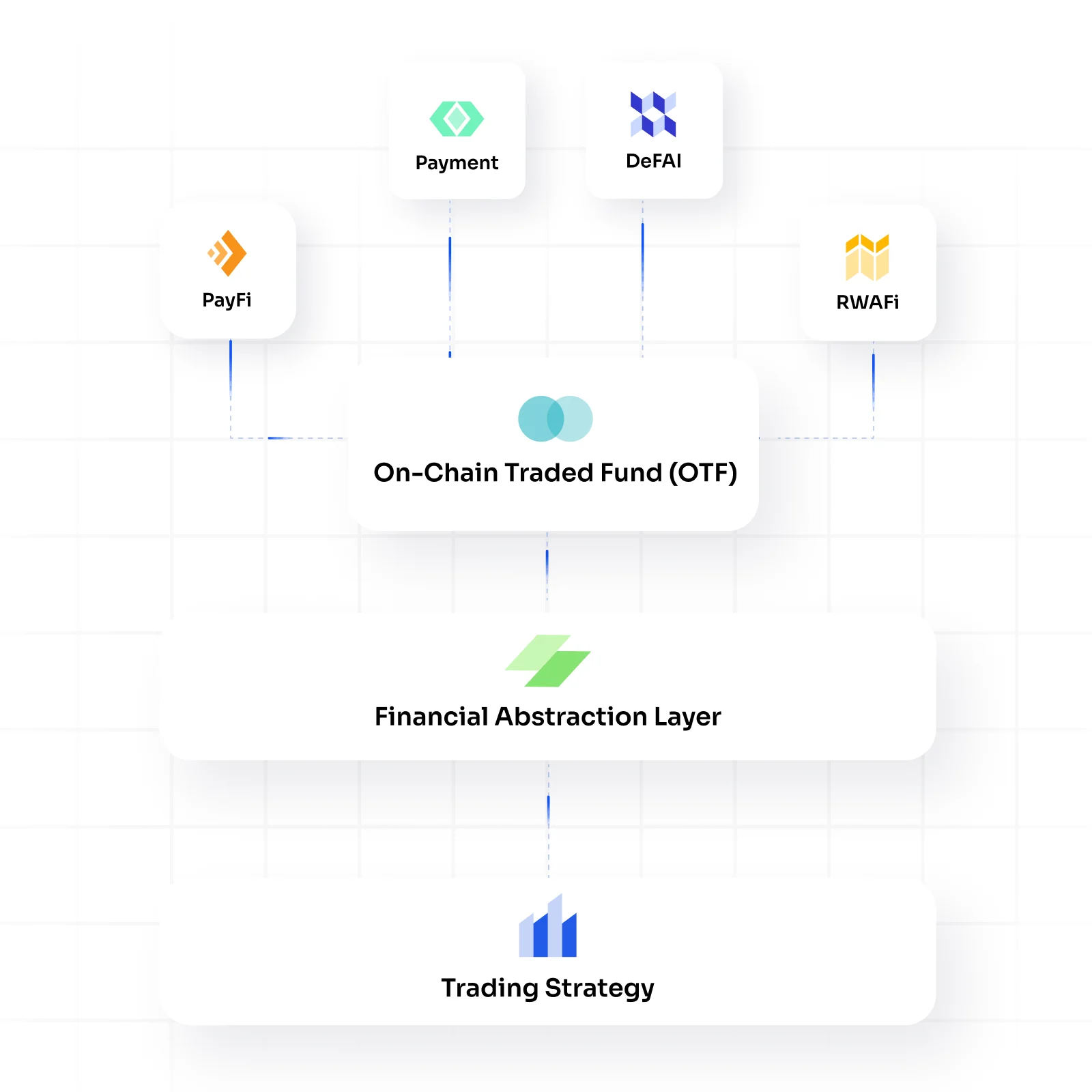
OTF can be explained as an on-chain traded fund. This structure allows different yield strategies to be offered under a single tokenized product.
Thanks to this model, users can access a fund-like product without having to manage complex yield strategies one by one. For Lorenzo, this structure serves as an important bridge for both individual users and more professional capital managers.
Lorenzo Protocol’s History: Key Milestones
The development of Lorenzo Protocol is closely connected to the period when the Bitcoin DeFi narrative gained strength. The project was shaped around the goal of making Bitcoin liquidity more active in DeFi through a development process that began in 2022.
In its early period, Lorenzo’s focus was to offer liquid staking and restaking products to BTC holders. This structure aimed to overcome Bitcoin’s limited direct use in the smart contract world.
In Lorenzo’s technical approach, the Babylon-linked Bitcoin staking narrative played an important role. Babylon is seen as one of the projects that stands out with the goal of carrying Bitcoin’s security model to different networks and applications.
Lorenzo, in turn, tried to make the staking positions arising from this infrastructure more liquid and usable. For this reason, token structures such as stBTC and YAT were frequently mentioned in the project’s early narrative.
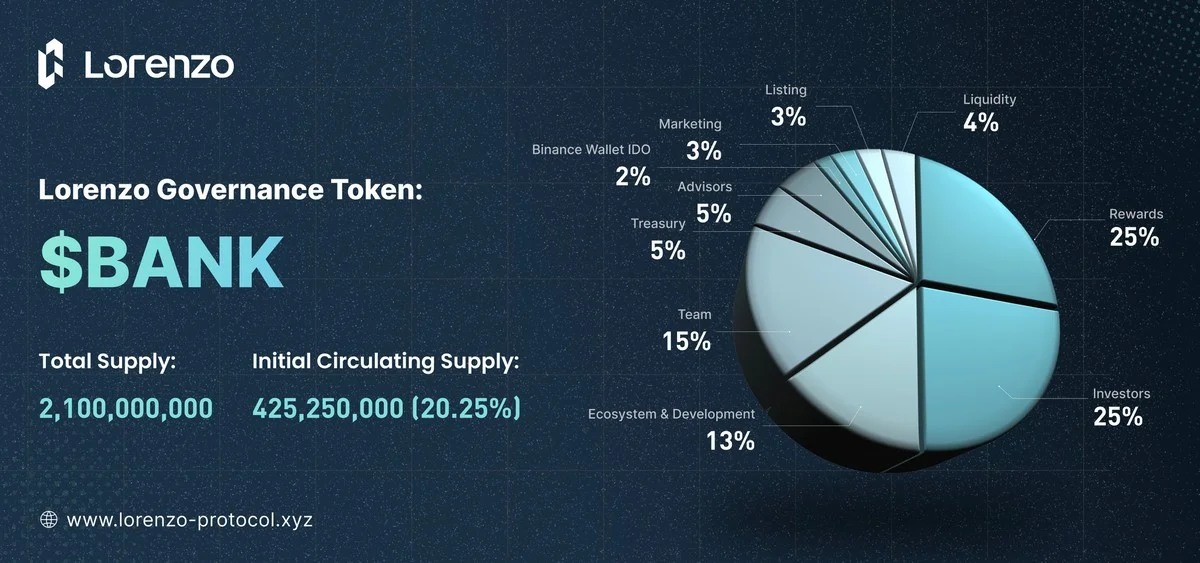
On the BANK token side, one of the most important early milestones was the token generation event held on April 18, 2025. During the event held in cooperation with Binance Wallet and PancakeSwap, BANK became accessible to users on BNB Smart Chain.
In this event, 42 million BANK tokens were offered for sale. This amount corresponded to 2 percent of the total supply, and the token price was announced as $0.0048.
BANK gained broader visibility on November 13, 2025. Binance listed Lorenzo Protocol on the Spot market and opened BANK/USDT, BANK/USDC, and BANK/TRY trading pairs.
This listing allowed BANK to reach a broader user base not only on the decentralized exchange side but also in the centralized exchange market. The BNB Smart Chain contract address of BANK was also shared in the same announcement.
On the price history side, BANK’s all-time high was seen in the last quarter of 2025. According to CoinMarketCap data, the token reached its peak on October 18, 2025, at around $0.233.
This price movement can be evaluated together with early investor interest, exchange listings, the Bitcoin DeFi narrative, and Lorenzo’s product launches. However, since the BANK coin price is open to sharp volatility in the broader crypto market, current data should always be followed through live charts.
By 2026, Lorenzo’s product narrative expanded more around the OTF model. Products such as USD1+ OTF, sUSD1+, and BNB+ OTF showed that the project was no longer limited only to Bitcoin liquidity.
This period marked a stage in which a more institutional on-chain asset management narrative came to the forefront for Lorenzo. The project aimed to provide users with access to yield strategies linked to different asset classes through tokenized products.
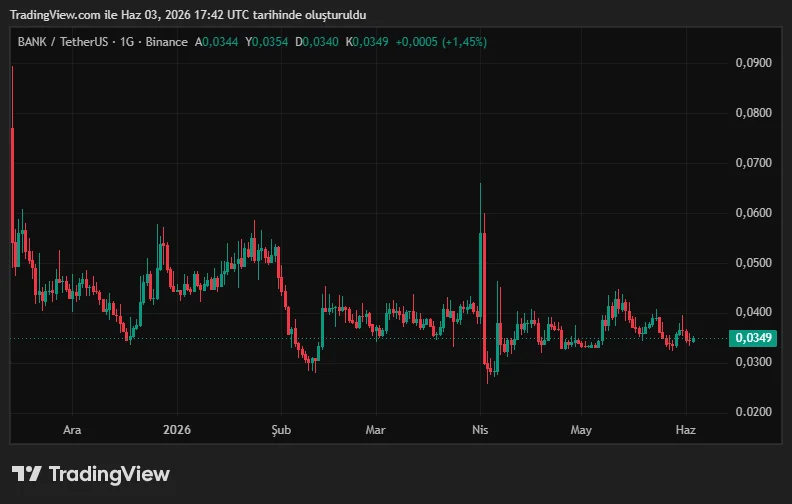
As of June 2026, the BANK coin price is changing hands at $0.034.
Why Is Lorenzo Protocol Important?
The first factor that makes Lorenzo Protocol important is its focus on Bitcoin’s position within DeFi. Although Bitcoin has one of the strongest brand values in the market, it remained limited for a long time in smart contract-based financial applications. While DeFi products developed on networks such as Ethereum, BNB Chain, and Solana, Bitcoin often remained a passive store-of-value asset. Lorenzo stands out as one of the projects trying to change this picture.
The protocol aims to give BTC holders the opportunity to participate in yield mechanisms without fully losing liquidity. This approach is especially important for long-term Bitcoin investors. Lorenzo’s structures such as stBTC and YAT are based on the idea of separating the principal asset from the yield right. This model allows Bitcoin positions to be used more flexibly. For example, one user can use the token representing staked Bitcoin within DeFi. Another user may be interested only in a strategy based on the yield right.
This separation enables more advanced products to emerge in the DeFi market. It also helps Bitcoin-based assets find more room in credit, liquidity pools, collateral, and yield strategies. Lorenzo’s importance does not end with Bitcoin. The project expands into a broader asset management area through its on-chain traded fund structure.
The OTF model allows DeFi users to access complex strategies through a simpler product. This structure brings the fund logic of traditional financial markets on-chain. In the on-chain fund model, users buy a token linked to a specific strategy. This token represents the share or position of the relevant fund.
In this way, the user does not have to carry out each step of the strategy one by one. They deposit an asset, receive a tokenized share in return, and can use this share when needed. Lorenzo’s emphasis on institutional-grade asset management comes from this point. The project wants to offer suitable products not only to individual DeFi users but also to more professional capital holders.
In this respect, Lorenzo tries to build a connection between Bitcoin DeFi, real-world assets, stable crypto yields, and on-chain fund management. This connection draws attention in terms of the development of more mature financial products in the Web3 ecosystem.
How Does Lorenzo Protocol Work?
The working structure of Lorenzo Protocol changes depending on the product used. On the Bitcoin liquidity finance side, the process is mostly based on BTC staking, receiving a liquid token, and using these tokens within DeFi. When a user stakes BTC through a supported structure, they can receive a token representing this position. This token carries the user’s right linked to the staked asset on-chain.
stBTC is one of the most basic examples of this logic. With stBTC, which represents a staked Bitcoin position, the user can transact within the DeFi ecosystem without fully losing liquidity. At this point, one of Lorenzo’s important differences is that it handles the principal asset and the yield right through separate token structures. YAT represents the yield right in this structure.
Such a separation opens different strategy areas for different user profiles. Some users may want to remain on the lower-risk principal side, while others may focus on the yield side. In the OTF model, the process turns into a fund-like structure. The user deposits an asset into one of the on-chain traded fund products offered by Lorenzo.
This deposited asset is evaluated according to a specific strategy. The user receives the token representing their share in this strategy. For example, products such as USD1+ OTF can represent stablecoin-focused yield strategies. sUSD1+ can be considered the token structure representing this fund share.
Products such as BNB+ OTF aim to bring yield opportunities in the BNB ecosystem under a single product. This structure allows users to access a more organized yield strategy without constantly moving between different protocols.
Lorenzo’s Financial Abstraction Layer also comes into play here. This layer aims to establish a more organized connection between different assets, vaults, strategies, and yield sources. From the user’s perspective, the goal is to make complex DeFi steps simpler. From the protocol’s perspective, the goal is to direct liquidity more efficiently, tokenize products, and make yield processes more trackable on-chain.
What Is BANK Token and What Does It Do?
BANK token is the native asset of the Lorenzo Protocol ecosystem. The token is used for protocol-level governance, incentives, staking mechanisms, and ecosystem participation.
One of BANK’s main use cases is governance. Users can stake BANK to obtain veBANK and have a say in protocol decisions through this structure.
The veBANK model is based on a structure that encourages long-term participation. Users can lock or stake their tokens to gain more governance power and certain protocol-level rights.
These rights can be used in areas such as yield distribution, protocol parameters, system updates, or incentive processes. In this way, BANK moves beyond being only a market asset that is bought and sold and becomes connected to the decision-making mechanism of the Lorenzo ecosystem.
Another use case of BANK is incentive programs. Lorenzo can use BANK rewards to attract liquidity to its products or increase user participation. These incentives can target users who provide liquidity to specific vaults, participate in fund products, or remain active within the ecosystem. In this way, the token becomes directly connected to protocol growth.
In BANK tokenomics, the maximum supply is stated as 2.1 billion tokens. Circulating supply can change over time depending on unlocks, incentives, investor distributions, and ecosystem programs. Therefore, when examining the BANK coin price, looking only at the current price is not enough. Market capitalization, fully diluted valuation, circulating supply, unlock schedule, and product usage rate should be evaluated together.
BANK token’s listing on Binance Spot gave the token broader market access. BANK/USDT, BANK/USDC, and BANK/TRY pairs made it easier for different user groups to access the token. However, BANK can show high volatility as an early-stage project token. For this reason, the information in this guide should be seen not as investment advice, but as a basic resource for understanding the project structure.
Lorenzo Protocol’s Products and Ecosystem
The Lorenzo Protocol ecosystem consists of different asset and yield products. Some of these products focus on Bitcoin liquidity, while others focus on on-chain fund management. stBTC is one of Lorenzo’s best-known products on the Bitcoin side. This token, which represents a staked BTC position, allows the user to move within DeFi without fully losing liquidity.
YAT stands out as the structure representing the yield right. This model allows the yield generated from the staked asset to be priced and traded separately. LPT is described as the structure connected to the principal asset side. In this way, Lorenzo handles a Bitcoin staking position not as a single whole, but by separating its principal and yield components.
This separation contributes to the emergence of more flexible products in the DeFi market. Users may want to gain exposure only to BTC, only to the yield side, or combine these two areas through different strategies.
OTF products represent Lorenzo’s newer and expanding side. USD1+ OTF stands out as a product designed for stablecoin-focused yield strategies. In this structure, users participate in a fund-like product by depositing supported assets such as USD1. In return, they can receive a token such as sUSD1+, which represents the fund share.
BNB+ OTF aims to make yield opportunities in the BNB ecosystem more accessible. This structure tries to gather BNB-based strategies within a single on-chain fund product. Lorenzo’s products do not target only individual users. They can also create infrastructure for wallets, exchanges, payment finance applications, real-world asset platforms, and DeFi protocols.
For this reason, the Lorenzo ecosystem can be read as a structure trying to build a bridge between Bitcoin DeFi and institutional asset management. The project’s long-term success will also depend on how much these products are used, how much liquidity they attract, and how reliably they operate.
Lorenzo Protocol’s Developers and Community
On Lorenzo Protocol’s official team page, names such as Matt Ye, Fan Sang, Toby Yu, Tad Tobar, Lith Li, and Rug appear. Matt Ye stands out as the project’s co-founder and CEO. Fan Sang serves as co-founder and CTO. Toby Yu is also part of the team as co-founder and CFO. Tad Tobar appears as COO, Lith Li as marketing lead, and Rug as product lead. This team structure shows that Lorenzo brings together different areas of expertise on both the technical development and product growth sides.
Lorenzo’s vision appears to be built around developing on-chain financial products that make Bitcoin and other major crypto assets more productive. The project assumes that the DeFi market needs more complex but more professional products. For this reason, Lorenzo positions itself not only as a technical staking protocol, but also as an asset management-focused financial infrastructure. This positioning becomes more visible especially through OTF products.
On the community side, Lorenzo communicates through channels such as X, Telegram, Discord, Medium, Reddit, YouTube, and LinkedIn. These channels are used for product announcements, campaigns, governance processes, and technical updates. The role of BANK holders within the community becomes more visible through the veBANK model. Users can stake BANK to participate in protocol decisions and gain additional rights in some products.
Frequently Asked Questions (FAQ)
Below, you can find some frequently asked questions and answers about Lorenzo Protocol:
- What is Lorenzo Protocol, and when did it launch?: Lorenzo Protocol is a protocol that brings Bitcoin liquidity and on-chain asset management into the DeFi ecosystem. The project’s development process dates back to 2022; BANK token became visible in the market through the token generation event held on BNB Smart Chain on April 18, 2025.
- Who developed Lorenzo Protocol?: The official core team of Lorenzo Protocol includes Matt Ye, Fan Sang, Toby Yu, Tad Tobar, Lith Li, and Rug. Matt Ye stands out as co-founder and CEO, Fan Sang as co-founder and CTO, and Toby Yu as co-founder and CFO.
- What does BANK token do?: BANK token is the native token of the Lorenzo Protocol ecosystem. It is used in governance, staking, the veBANK model, incentive programs, ecosystem rewards, and protocol-level participation processes.
- Which problems does Lorenzo Protocol aim to solve?: Lorenzo Protocol aims to solve Bitcoin’s limited role within DeFi. The project aims to allow BTC holders to access staking, restaking, and tokenized yield products without fully giving up liquidity.
- Which network does Lorenzo Protocol operate on?: BANK token operates on BNB Smart Chain. Lorenzo’s products, on the other hand, have a broader structure that aims to build connections between Bitcoin liquidity, BNB Chain, OTF products, and different DeFi ecosystems.
- What is stBTC?: stBTC is the liquid token model that represents a staked Bitcoin position in the Lorenzo ecosystem. Through this structure, users can use their BTC-linked positions more flexibly within DeFi.
- What is YAT?: YAT is associated with Lorenzo’s token structure that represents the yield right. This model allows the principal asset and yield components to be separated.
- What is OTF?: OTF stands for On-Chain Traded Fund. It can be explained in Turkish as a fund traded on-chain. Lorenzo aims to make different yield strategies more accessible by tokenizing them through the OTF model.
- How can the BANK coin price be tracked?: The BANK coin price can be tracked through live data platforms such as Binance, CoinMarketCap, and CoinGecko. The price is affected by market conditions, liquidity, supply structure, unlocks, product usage, and broader crypto market trends.
- Is BANK suitable for investment?: Whether BANK is suitable for investment depends on the user’s risk profile, market expectations, and how they evaluate the project. This guide does not provide investment advice; it only aims to explain how Lorenzo Protocol and BANK token work.
Follow the JR Kripto Guide series for the latest information about Lorenzo Protocol, BANK token, and Bitcoin liquidity finance.

