
AI is no longer seen as just a tool that writes text on a screen. In the next stage, these systems are expected to buy services on our behalf, make payments, use data and complete small digital tasks on their own. Kite AI is built exactly around this idea: an infrastructure where AI agents can have an identity, operate under defined rules and send payments on the blockchain. KITE token stands out as the main asset used within this structure for staking, governance, ecosystem access and network incentives. In this guide, let’s take a closer look at how Kite AI works, what KITE token is used for and why the project has attracted attention in the Web3 ecosystem.
Kite AI’s Definition and Origins
Kite AI is a Layer-1 blockchain project that aims to help AI agents have an identity on the blockchain, carry out transactions and send payments. The project positions itself as an “agentic payments” infrastructure, meaning a payment system designed specifically for AI agents.
The word “agent” here refers to software systems that can complete a task given by a user on their own. For example, an AI agent can buy data on behalf of a user, access an API service, complete a transaction or interact with another digital service.
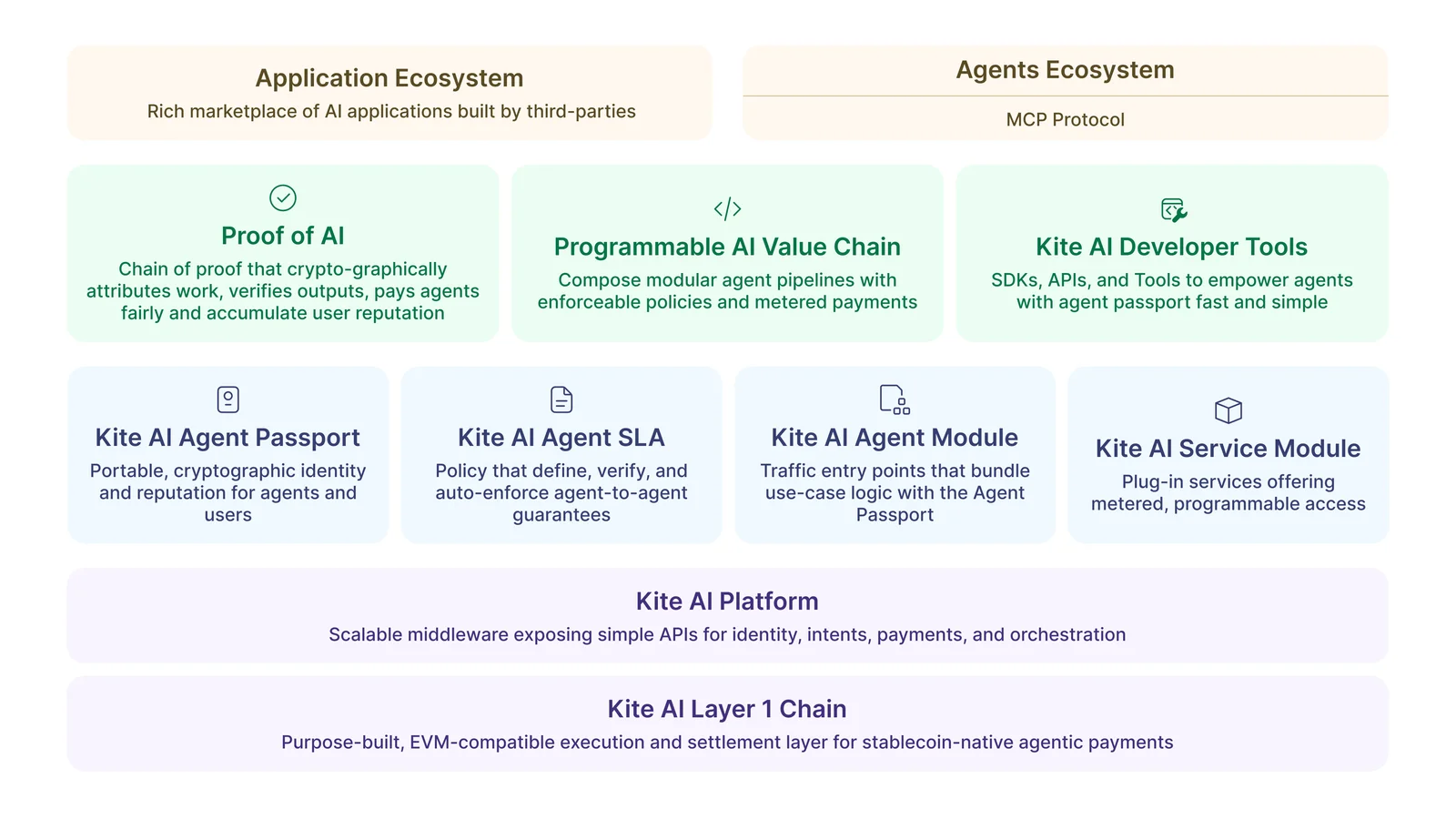
In the traditional internet structure, these processes usually move forward with human approval. The user adds an item to a cart, reaches the payment screen, enters card details and confirms the transaction. Kite AI, on the other hand, is trying to build an infrastructure where this process can be carried out by software agents under certain rules.
That is why it would be incomplete to think of Kite AI as a standard payment project. The project focuses not only on payments, but also on identity, authorization, control and transaction history. If an agent is going to make a payment, the system first needs to know who that agent is, on whose behalf it is acting and within which limits it can operate.
One of Kite AI’s key components is Kite Agent Passport. Agent Passport provides cryptographic identity, funded wallets, spending rules and transaction records for AI agents. A user can assign a certain budget, time period or task area to an agent, and the agent can operate within those limits.
The basic idea behind this model is simple: the user gains automation without losing control. The agent, meanwhile, can act within pre-defined rules without waiting for manual approval for every single transaction.
The Project’s Main Purpose
Kite AI’s main purpose is to build the infrastructure that AI agents need to function as economic actors. Today’s internet was mostly designed for humans. Steps such as opening an account, making a payment, verifying identity and approving a transaction were shaped around human behavior.
However, AI agents do not fully fit into this structure. An agent may want to make very small and frequent transactions. It may buy access to a service for only a few seconds. It may quickly move between multiple APIs, models, data providers or applications.
At this point, traditional payment systems can be slow, costly or too centralized. Card payment systems carry chargeback risk. Banking infrastructure is not always suitable for instant micro-payments. Proving which transaction an agent is authorized to make also creates a separate problem.
Kite AI aims to offer a blockchain-based solution to these issues. The project wants to build a faster and more auditable structure through stablecoin-based payments, programmable spending rules and on-chain transaction records.
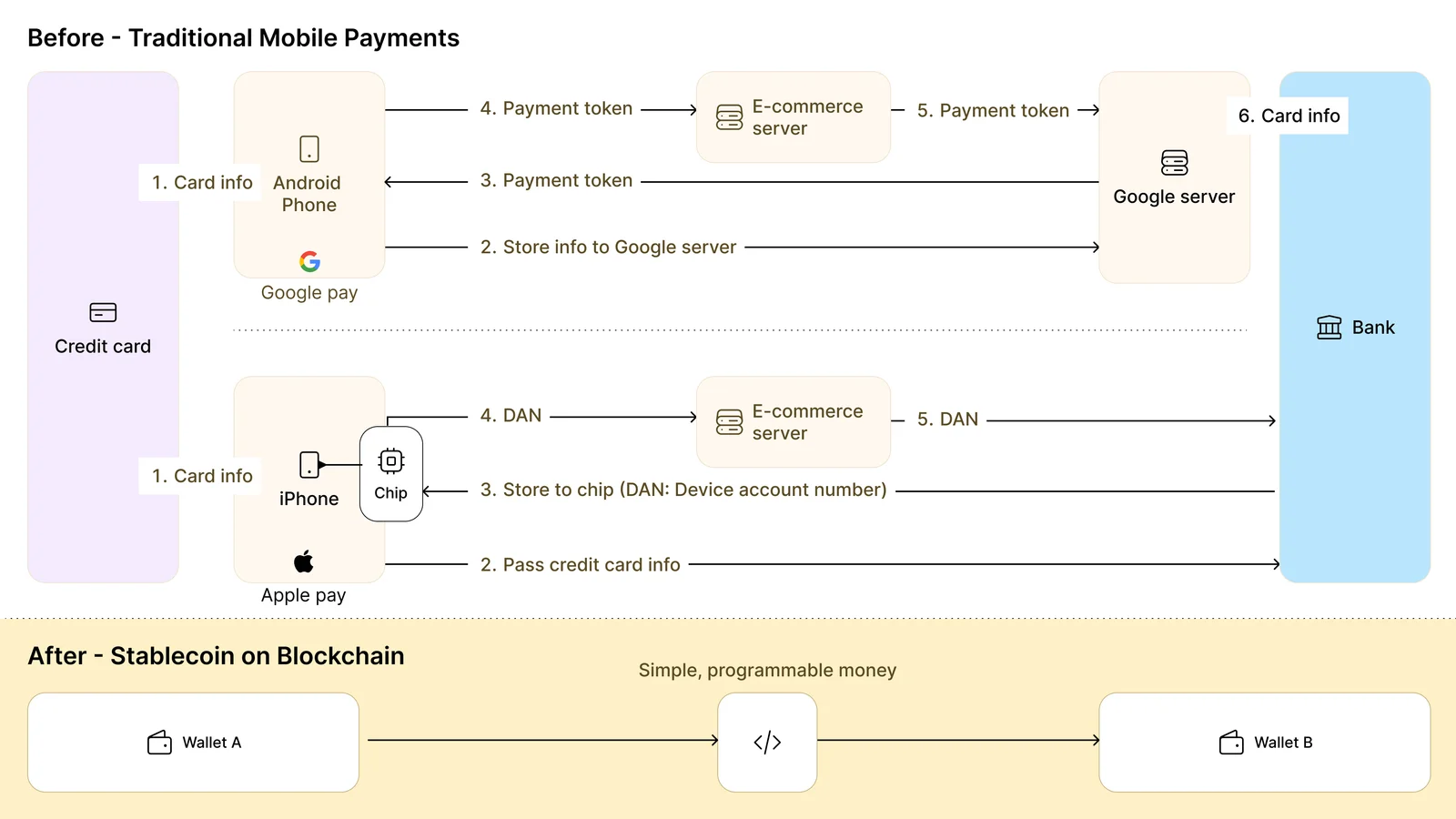
The most critical point here is that the AI agent does not have unlimited authority. The user can give the agent a certain budget, set a per-transaction limit, narrow the scope of the service and revoke access when needed. This creates a more balanced structure between automation and control.
Kite AI’s origin story is also closely tied to data infrastructure. The project comes from the experience of Zettablock, a former data infrastructure platform. This background helps Kite approach data, identity and payment infrastructure together.
Its Place in Web3 and AI
Kite AI focuses on the question of how AI agents can carry out transactions on the blockchain. The main issue here is not simply that an agent can act on its own, but under which authority, within which limits and on whose behalf it acts.
When an AI agent makes a transaction on behalf of a user, the system needs to know several things at once. Is the agent actually authorized? Does the transaction comply with the limits set by the user? Which service was the payment made for? If something goes wrong, is there a record that can be checked later?
This is where blockchain comes into play on the auditability and ownership side. Transactions can be tracked on-chain. Permissions can be limited through smart contracts. Payments can be made with stablecoins. Identity and transaction history can become more portable without being tied to a single closed platform.
Agent Passport is important in Kite AI’s narrative for this reason. Passport works like a layer that defines an agent’s identity and permission limits. The user remains the owner of the main account, while the agent operates through limited sessions for a specific period.
This structure becomes especially meaningful for micro-payments and service access. An agent can make a paid data request, get output from a model, access a digital service for a short time or complete a payment in an e-commerce transaction. When all of this happens within pre-defined rules, risk becomes easier to manage.
On the Web3 side, this model can open up a new use case for decentralized applications. In areas such as DeFi, data markets, AI model markets, the API economy and digital commerce, agents being able to make transactions creates a new type of demand.
Kite AI’s History: Key Milestones
In Kite AI’s early period, the project was mostly described as a structure built around data, model and agent coordination. During this phase, testnet activity allowed users and developers to try the network.
The testnet process was also important for building the project’s community. Users joined the network through various tasks, created activity and followed eligibility processes for future token distribution. In new Layer-1 projects, these types of testnet campaigns usually serve both as technical trials and as a way to build an early user base.
Kite’s testnet process highlighted high transaction and interaction numbers. These figures were used to show whether the network could support intense and small-scale transaction traffic. This matters because in Kite AI’s target use case, transactions may often take the form of repeated small payments and service calls rather than large individual transfers.
The project’s narrative also changed during this process. At first, data, models and agent coordination were emphasized more heavily. Over time, payment and transaction infrastructure became more visible. The idea that AI agents should not only produce information but also carry out economic transactions moved to the center of the project.
The technical background of the team also stood out in Kite AI’s early development process. The founding team includes people with experience at organizations such as Databricks, Uber, Salesforce and UC Berkeley. This pulls the project’s narrative slightly more toward infrastructure rather than standard Web3 marketing.
Kite AI’s co-founders include Chi Zhang and Scott Shi. Chi Zhang is known as the project’s co-founder and CEO. Scott Shi serves as co-founder and CTO. The team’s background revolves around data infrastructure, machine learning, product development and large-scale systems.
KITE Token Launch
KITE token is used as the native crypto asset of the Kite AI ecosystem. The token is linked to staking, governance, ecosystem access, incentives and, in later stages, economic flows generated by network usage.
KITE has a total supply of 10 billion tokens. In the initial token allocation, the ecosystem and community side received the largest share. This portion was allocated for user acquisition, developer incentives, liquidity programs, airdrops and growth activities.
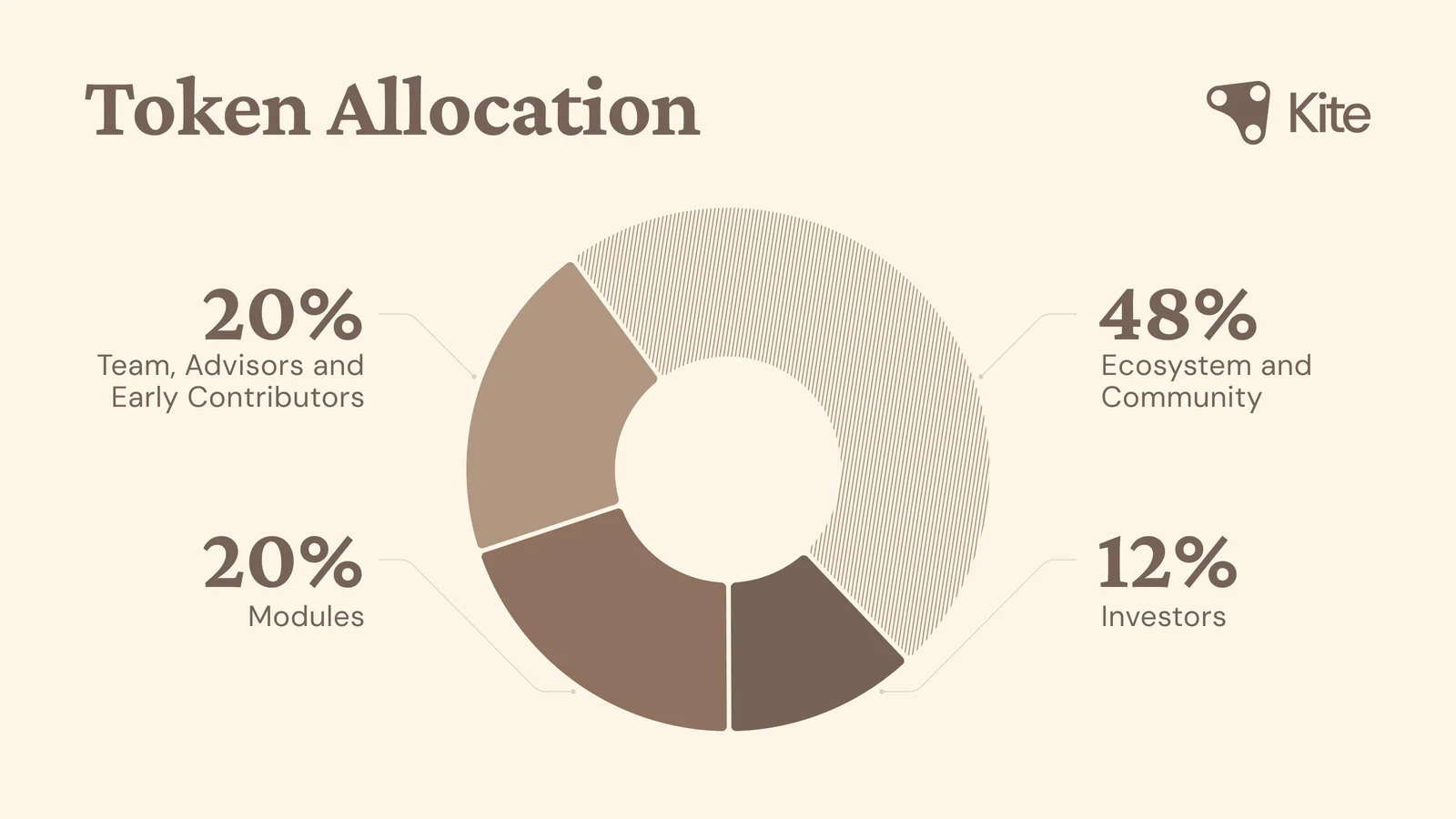
In the token distribution, 48 percent was allocated to ecosystem and community, 20 percent to modules, 20 percent to the team, advisors and early contributors, and 12 percent to investors. This distribution is important because it shows the model the project has built around long-term network usage and developer participation.
Among KITE token’s early use cases are ecosystem access and module liquidity requirements. When a module owner creates a structure with its own token, they may need to lock KITE in liquidity pools.
KITE is also positioned as an ecosystem participation tool for developers and AI service providers. In other words, the token can move beyond being only a tradable asset and also be used to access certain roles within the network.
At later stages, KITE’s staking and governance functions become more prominent. The validator and delegator structure is built around users staking KITE to contribute to network security. Token holders can also take part in governance processes on issues such as protocol updates, incentive models and module requirements.
Binance Listing and Ecosystem Steps
One of the most important milestones for KITE token was the Binance Launchpool process. Binance announced KITE as its 71st Launchpool project. Users were able to earn KITE rewards by locking BNB, FDUSD and USDC.
The Launchpool farming process for KITE started on November 1, 2025. Binance later listed KITE on November 3, 2025, and opened KITE/USDT, KITE/USDC, KITE/BNB and KITE/TRY trading pairs. This listing made the token accessible to a wider investor base.
In its announcement, Binance stated that the initial circulating supply was 1.8 billion KITE. This corresponded to 18 percent of the total supply. Since KITE’s total supply is 10 billion, the circulating supply ratio and unlock schedule became important topics for investors following the token price.
As of July 2026, KITE coin price is around $0.10.
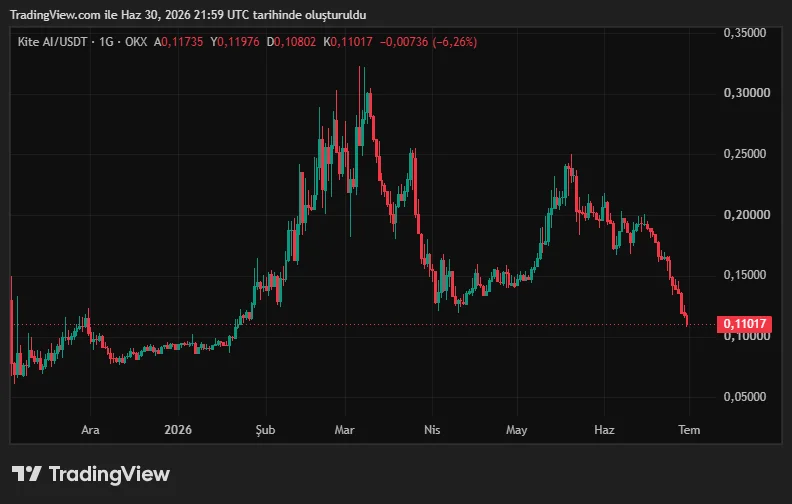
KITE’s ability to be traded across different networks also drew attention during the listing period. On the token side, the supported structure across networks such as BNB Smart Chain, Ethereum and Avalanche helped users gain access through different ecosystems.
In 2026, the mainnet process became more prominent for Kite AI. The Avalanche ecosystem announced Kite’s mainnet launch as an Avalanche L1. This step was important because it marked the project’s move from the testnet and token listing period to a production environment.
With the mainnet, the Kite Chain and Kite Passport narrative became more concrete. Kite Chain is positioned as the chain layer that targets fast, low-cost and programmable payments between agents and digital services. Kite Passport stands out as the component that gives users more control over identity, authorization and payments.
What Is KITE Token Used For?
KITE token is the native token of Kite AI Network. According to the project documents, KITE supports network incentives, the staking mechanism and the governance process.
One of KITE’s first use cases is ecosystem access. For developers, AI service providers or module owners who want to take part in the Kite AI ecosystem, the token can play a role in certain eligibility processes. This shows that the token is designed not only as a speculative trading asset, but also as a tool for participation within the network.
KITE is also connected to the module economy. Modules in the Kite ecosystem can be seen as semi-independent areas that cover data, models, agents or different AI services. These modules interact with the network through settlement and attribution, meaning payment, reconciliation and contribution tracking.
The requirement for module owners to lock KITE ties into the network’s liquidity and incentive structure. Through this model, the project aims to encourage active modules to build a longer-term relationship with the network instead of acting only in the short term. The success of this model depends on real usage increasing.
Another role of KITE token is ecosystem incentives. Users, developers, service providers and network participants can benefit from different incentives depending on their contributions to the project. For these incentives to remain sustainable, real transaction volume needs to form on the network.
So KITE’s value narrative does not directly follow a simple line such as “more users arrive, the price rises.” The real key point is whether paid service calls, agent payments, module usage and transaction revenues actually emerge within the Kite ecosystem.
Staking and Validator Structure
Kite AI is described as an EVM-compatible Layer-1 network with a Proof-of-Stake structure. This structure connects validator and delegator roles to KITE token.
Validators stake KITE to secure the network and take part in the consensus process. As in classic PoS networks, the validator structure plays an important role in keeping the network running properly and confirming transactions securely.
In the Kite AI model, validators having a relationship with specific modules also stands out. Each validator choosing a particular module helps connect incentives more closely with module performance. This attempts to create a link between network security and service quality within the ecosystem.
Delegators can also participate in the network by staking KITE without directly running a validator. These users can support the modules they choose and indirectly contribute to network security. The delegation model makes it easier for token holders without technical knowledge to take part in the staking process.
The “piggy bank”-like continuous reward mechanism in Kite’s token economy also draws attention. In this model, modules, validators and delegators can accumulate rewards over time. However, if a participant claims and sells the tokens they have accumulated, they may lose certain future emission rights tied to the same address.
This design aims to reduce short-term selling pressure. Participants have to choose between liquidity and future reward rights. Still, how such models work in practice depends on market conditions and user behavior.
Governance and Ecosystem Incentives
Another use case for KITE token is governance. Token holders can vote on issues such as protocol updates, incentive structure and module performance requirements during the network’s development process.
Governance often looks strong on paper in Web3 projects. Its real impact depends on community participation, token distribution and how transparently voting processes are managed. The same applies to Kite AI.
If many modules, service providers and users emerge on the network, governance can become more meaningful. In that case, decisions are no longer limited to technical updates; more concrete topics such as which services will be supported, which incentives will be prioritized and how network revenues will be directed can come to the agenda.
KITE is also used in ecosystem incentives. The token allocation reserved for the community, developers and businesses can be used in airdrops, liquidity programs, developer support and growth campaigns.
The positive side of these incentives is that they can accelerate network usage in the early stages. The downside is the risk that incentive-driven growth may not last. In many crypto projects, users remain active during the reward period, but network activity falls once rewards decrease.
For this reason, the main indicator to watch for KITE is not only the price. Developer count, active module count, real transaction volume on the network, Agent Passport usage and stablecoin-based payment flows can provide healthier signals.
Why Is Kite AI Important?
To understand why Kite AI matters, it is useful to first look at the identity problem of AI agents. On today’s internet, there is usually a human account behind a transaction. The user logs in with an email, enters card details, approves the transaction and takes responsibility for it.
AI agents challenge this model. Is an agent acting through the user’s account, or does it have its own identity? Did the user really request a transaction, or did the agent interpret something incorrectly? Where does the agent’s authority begin and where does it end?
These questions are not only technical. They also matter for financial risk, data security and legal responsibility. If an agent buys the wrong service, spends too much or carries out an unauthorized transaction, the system needs to detect it.
Kite Agent Passport comes into play at this point. Passport gives an agent a separate identity and a limited permission area. The user controls the main account, while the agent operates within the rules set for it.
This structure may be especially important for businesses. Companies may want to use AI agents in customer service, data analysis, financial operations or supply processes. However, this usage remains limited if they cannot control what the agent can access and how much it can spend.
Kite AI’s claim is to build this trust layer on the blockchain. Transactions are recorded, permissions become programmable and every payment can be tied to a specific identity or session chain.
Automatic Payments and Transaction Security
The second important side of Kite AI is automatic payments. For AI agents to be useful in the real world, they often need access to paid services. Buying data, using a model, making an API call or purchasing a digital product can be given as examples.
These transactions can happen at software speed, not human speed. An agent can make dozens of small transactions within seconds. Traditional payment infrastructure is not always suitable for payments that are this small and frequent.
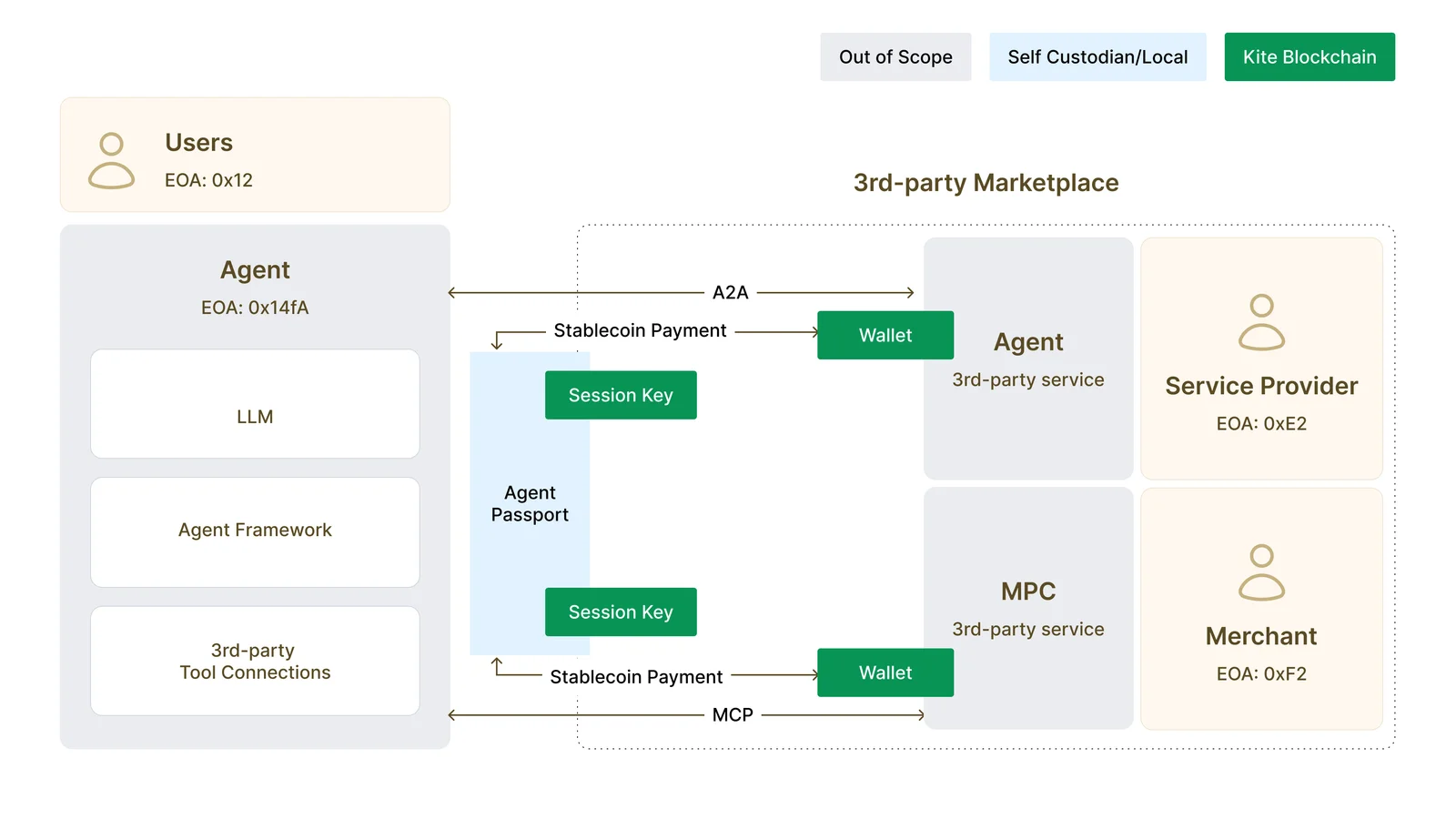
Stablecoin-based blockchain payments can offer an advantage here. Transactions can be completed faster, costs can be kept low and payment history can be tracked on-chain. Kite AI is trying to make this model specific to AI agents.
Spending limits are critical for transaction security. A user does not want to give an agent unlimited wallet access. Instead, the user may want to define a per-transaction limit, daily budget, service scope or time limit.
The programmable rules offered by Kite Passport are used at this point. The agent can make payments only within approved limits. When its authorization ends, it cannot carry out transactions. The user can revoke access whenever needed.
The strength of this system is that it does not leave automation alone. The agent acts, but control does not fully disappear. Transactions can be monitored, records can be reviewed and permissions can be withdrawn when necessary.
Of course, risks do not disappear completely. Smart contract bugs, misconfigured permissions, weak user experience or security vulnerabilities can create risks for Kite AI, as they can for any blockchain project. For this reason, security audits and real user experience are just as important as the project’s technical development.
User Control and Web3 Infrastructure
The third important side of Kite AI is user control. As AI agents begin to carry out more transactions, users need clear answers to the question: “What happened on my behalf?”
In the model targeted by Kite, the user can track the agent’s full history. Information such as which service was used, how much was paid, which session the transaction took place under and which rule allowed it can be connected to records.
This structure fits with Web3’s transparency side. Transactions made on the blockchain can be monitored, payment flows can be tracked and identity/session links can be verified. However, careful design is needed on the privacy side. While each transaction becomes traceable, the user’s personal information should not be exposed.
One of Kite AI’s important claims is EVM compatibility. Being an EVM-compatible Layer-1 means easier integration with Ethereum developer tools. This can help developers face less friction when moving into a new ecosystem.
The Avalanche L1 structure stands out on the performance and customization side. Kite wants to build a fee structure, transaction speed and settlement model suited to its own use case. In an environment where agents carry out frequent and small transactions, predictable transaction costs become highly important.
Frequently Asked Questions (FAQ)
Below, you can find some frequently asked questions and answers about Kite AI:
- What is Kite AI, and when did it launch?: Kite AI is a Layer-1 project that aims to help AI agents have an identity on the blockchain, operate within permission limits and make payments. KITE token was listed on Binance on November 3, 2025, following the Binance Launchpool process.
- Who developed Kite AI?: Kite AI’s co-founders include Chi Zhang and Scott Shi. Chi Zhang serves as CEO, while Scott Shi stands out as CTO.
- What is KITE token used for?: KITE token is used for staking, governance, ecosystem access, the validator/delegator structure and network incentives. The token works as the native asset of the Kite AI ecosystem.
- Which problems does Kite AI aim to solve?: Kite AI aims to solve the identity, authorization, payment and transaction tracking problems of AI agents. Agent Passport, Kite Chain and stablecoin-based payment infrastructure stand out in this process.
- Is KITE suitable for investment?: KITE is a token that has attracted attention with its AI, Web3 and payment infrastructure narrative. However, before making an investment decision, the current price, circulating supply, token unlock schedule and project usage data should be reviewed separately.
- Which network does Kite AI run on?: Kite AI is positioned as an EVM-compatible Layer-1 blockchain. On the mainnet side, the Avalanche L1 structure stands out, while KITE token was supported on BNB Smart Chain, Ethereum and Avalanche during the listing period.
Follow the JR Kripto Guide series for the latest information on Kite AI and Web3-based AI projects.

