
Trading in the crypto market has become faster over the years, but the decentralized finance (DeFi) experience remains fragmented. Users may still need to use one platform for spot trading, another interface for perpetual futures, a separate protocol for bridging, and a different application for portfolio tracking.
Genius Terminal is an on-chain trading terminal developed to reduce this fragmentation. The platform aims to give users trading in decentralized finance markets a more integrated experience, without requiring them to constantly switch between different networks, DEXs, wallets, and trading tools.
GENIUS is the crypto asset connected to the Genius Terminal ecosystem. The token plays an important role in the platform’s growth, community participation, reward mechanisms, and ecosystem incentives.
Definition and Origins of Genius Terminal
Genius Terminal is a non-custodial DeFi trading terminal designed for professional users. A non-custodial structure means users can trade without handing over control of their assets to the platform. In this sense, Genius Terminal aims to combine the simple trading experience of centralized exchanges with the on-chain structure of DeFi.
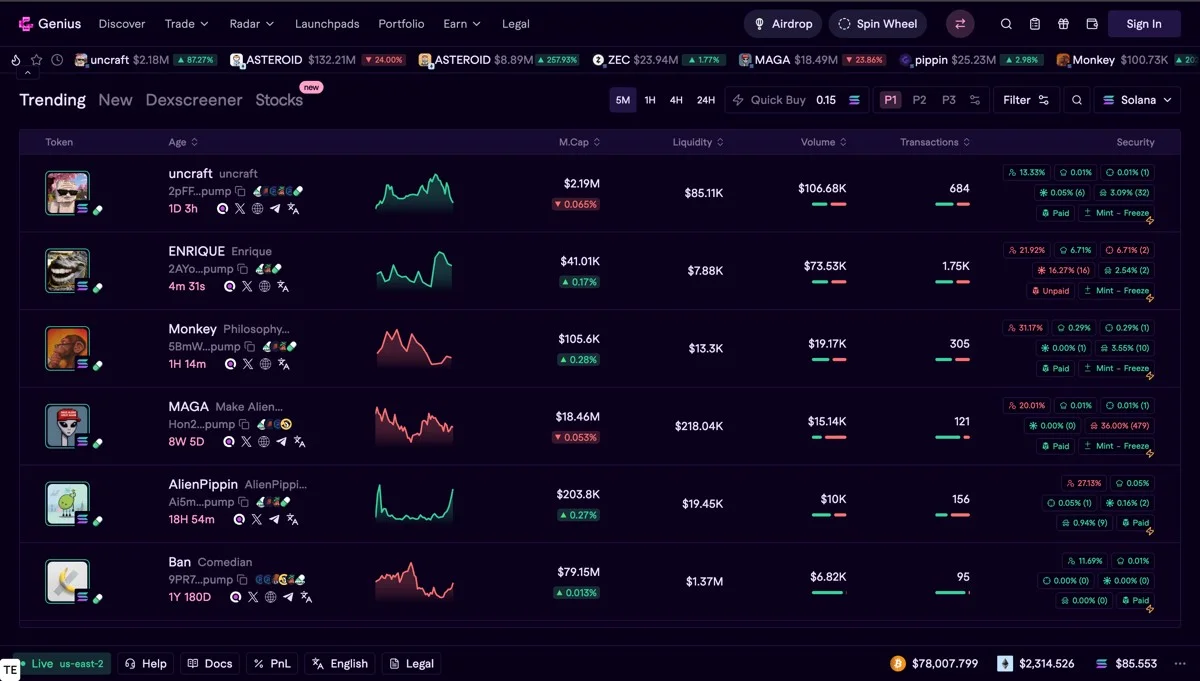
The platform’s core narrative is based on the usability problem in DeFi markets. Today, when a user wants to trade across different blockchain networks, they often need to change wallets, bridge assets, connect to different DEX interfaces, and manage gas fees separately. This process costs time and reduces trading efficiency, especially for active traders.
Genius Terminal tries to solve this problem by building a structure that brings all trading tools into one place. The platform aims to offer spot trading, perpetual futures, yield products, early access to tokens that have not yet been widely listed on exchanges, and cross-chain transactions through the same interface. For this reason, describing Genius Terminal only as a DEX interface would be incomplete; the project aims to build a broader trading infrastructure for DeFi users.
In its official documents, Genius Terminal is described as a “private and final onchain terminal.” This phrase shows that the platform is built around transaction privacy, fast execution, and a simplified cross-chain experience. Genius aims to abstract details such as which network the user is on, which bridge they need to use, or which protocol they are connected to in the background.
This approach is especially important for users who trade frequently in DeFi. Speed and transaction privacy can provide serious advantages for professional traders, whale wallets, investors tracking arbitrage opportunities, narrative-based traders, and users running multi-chain strategies.
In general, the project aims to make DeFi less technical, faster, and more professional as a trading environment. Offering users a single portfolio, one interface, and a simpler trading flow is one of the platform’s main goals.
History of Genius Terminal: Key Milestones
Genius Terminal became more visible in the market at the beginning of 2026. The project started attracting wider attention after YZi Labs invested in it and Binance founder Changpeng Zhao, known as CZ, was mentioned as an adviser to the project.
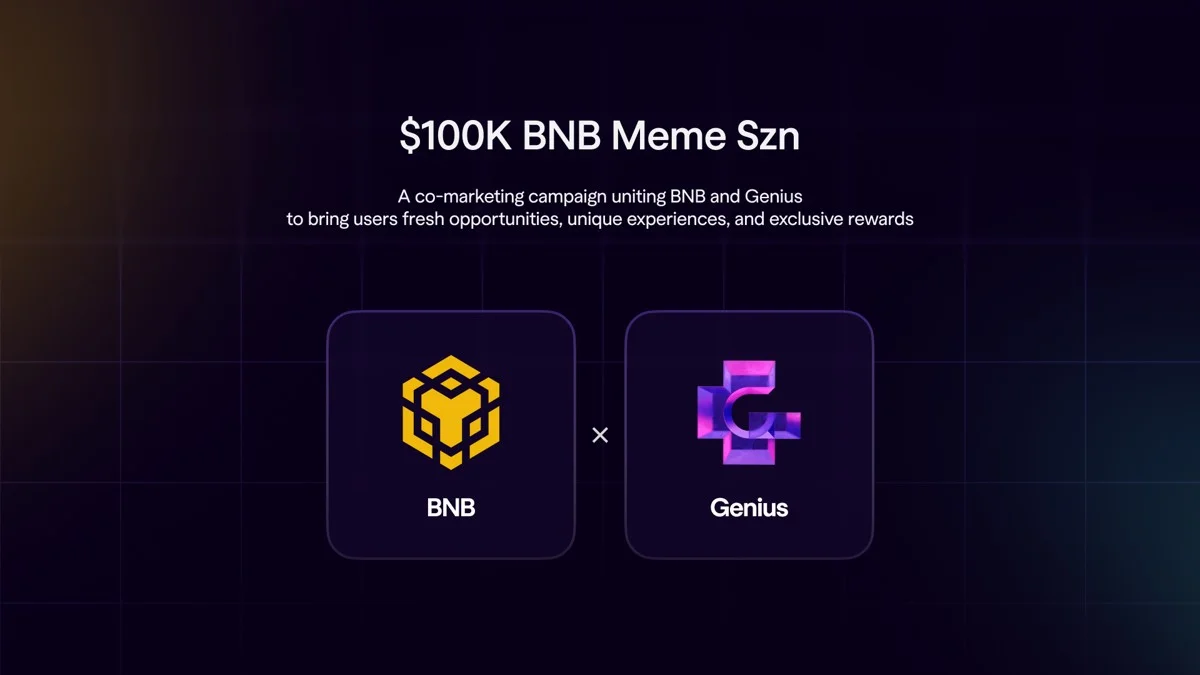
YZi Labs is known as a structure that supports notable Web3 projects, with an investment background linked to the former Binance Labs line. The investment in Genius Terminal helped position the project as more than a small-scale DeFi tool; it made it appear as a candidate for a larger on-chain trading infrastructure. In addition, BNB and Genius launched a $100,000 marketing campaign.
Genius Terminal’s trading volume also drew attention in January 2026. Data showing that the platform reached billion-dollar levels in weekly volume increased interest in the project, especially alongside airdrop expectations and the Genius Points program. This period became one of the first major turning points in which Genius gained momentum on the community side.
Another important milestone for the project was the CoinMarketCap Launch process. Genius Terminal was among the projects running a campaign through CMC Launch for the GENIUS token. Users were able to earn Genius Points by completing certain tasks, and it was announced that these points would be connected to the GENIUS distribution.
The GENIUS token generation event, or TGE, took place on April 13, 2026. This date is considered the starting point of the GENIUS token’s market journey. As the token began trading, investors started watching its price movements, supply structure, exchange listings, and use cases within the ecosystem more closely.
GENIUS gained more market visibility after the TGE. According to CoinGecko and CoinMarketCap data, the token was associated with the BNB Chain ecosystem and began trading on centralized exchanges. Listings on platforms such as Binance, Bitget, and MEXC were among the developments that increased the token’s liquidity and accessibility.
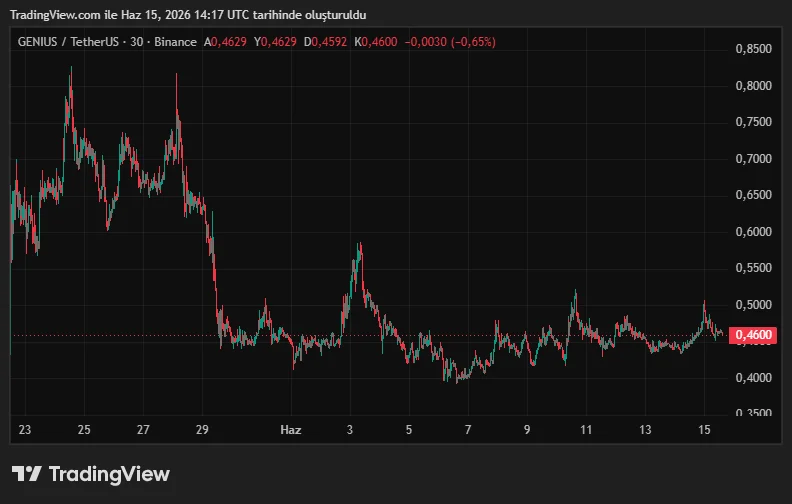
On the price history side, GENIUS showed high volatility shortly after its TGE in April 2026. CoinGecko data shows that the token recorded its all-time low on April 13, 2026, and its all-time high on April 18, 2026. As of June 2026, the GENIUS coin price is around $0.46.
Why Is Genius Terminal Important?
To understand why Genius Terminal is important, it is necessary to look at the current structure of the DeFi market. DeFi gives users asset control, open market access, and on-chain transparency. However, the user experience is still complicated for many people.
A user who wants to trade on Ethereum, BNB Chain, Solana, Arbitrum, and Base on the same day may face a serious operational burden. Each network has its own wallet connection, gas dynamics, DEX liquidity, and bridging process. Genius Terminal tries to reduce this complexity and allow the user to focus on the trading decision itself.
One of the platform’s most important features is its cross-chain trading experience. Genius Bridge Protocol is the infrastructure used to make trading between different blockchain networks simpler. The project aims to let users access opportunities on different networks without manually bridging their assets.
This structure can be especially valuable in fast-moving market conditions. In the crypto market, opportunities can appear and disappear in a short period of time. If a user has to deal with long bridging processes to move from one network to another, they may miss the trading opportunity. Genius Terminal aims to offer a faster and more integrated trading flow at this point.
Another important feature is the privacy-focused trading structure known as Ghost Orders. Large trades can create pressure on the market because of their visibility on-chain, or they can be tracked by other traders. Genius Terminal’s Ghost Orders approach focuses on increasing transaction privacy and allowing large position movements to be executed in a more controlled way.
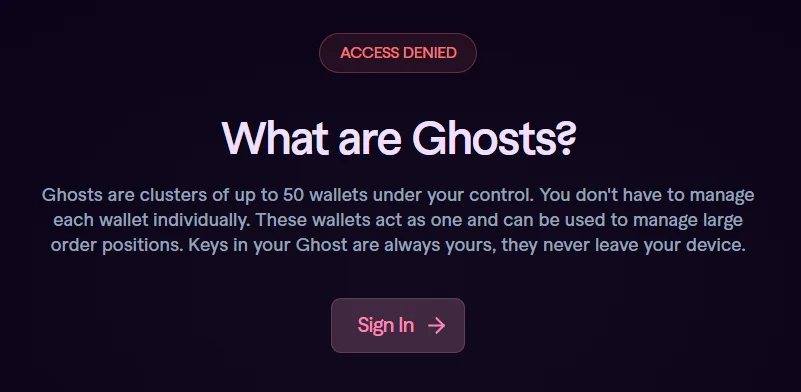
This feature is especially important for users trading with large volumes. Whale wallets, funds, or professional traders may not want their trading strategies to be openly tracked. DeFi’s transparent structure provides advantages, but it also creates certain risks around transaction privacy. Genius Terminal is one of the projects trying to reduce this tension.
The platform’s non-custodial structure is also important. On centralized exchanges, users often deposit their assets into platform wallets. Genius Terminal aims to offer users a simpler trading experience without requiring them to give up control of their assets. This structure is in line with self-custody, one of DeFi’s core principles.
The user group targeted by Genius Terminal also sets the project apart. The platform appeals less to casual swap users and more to professional traders, high-volume users, DeFi-native investors, and institutional-scale trading entities. For this reason, speed, analysis, portfolio management, and execution quality stand out on the interface side.
Technical Features of Genius Terminal
Several key elements stand out in the technical structure of Genius Terminal. Multi-chain support is one of the most important. The platform aims to offer a trading experience across networks such as Solana, Ethereum, Base, Avalanche, Arbitrum, Optimism, BNB Chain, Polygon, and Sonic.
This network diversity gives users access to broader liquidity. Liquidity in the crypto market is not concentrated on a single network. Some tokens are more active on Solana, some DeFi products are deeper on Ethereum or Arbitrum, and some opportunities emerge on networks such as BNB Chain or Base.
Genius Terminal tries to bring this fragmented structure together in a single interface. Accessing trading opportunities across different chains through the same terminal can provide advantages in terms of both time and operational efficiency.
Another technical component of the platform is Genius Bridge Protocol. This protocol is one of the core parts of the Genius ecosystem for cross-chain execution. The goal is to allow users to access trades on different networks without constantly relying on manual bridging.
Genius Terminal also aims to bring spot trading and perpetual futures markets into the same experience. This matters for traders because market strategies are often not limited to spot buying and selling. Users may want to hedge, open leveraged positions, or take short-term directional trades.
Yield is also part of the Genius Terminal narrative. The platform aims to allow users to evaluate idle assets through different DeFi strategies. This structure expands portfolio management beyond trading and into yield generation.
Pre-launch token access is another notable area for users who follow early-stage market opportunities. Early access to new tokens carries high risk, but it has become an important field for DeFi traders. Genius Terminal aims to make this category part of the terminal experience as well.
What Does the GENIUS Token Do?
GENIUS is positioned as the native token connected to the Genius Terminal ecosystem. The token’s main function is shaped around the platform’s community, reward, and ecosystem incentive mechanisms.
The Genius Points program is one of the early examples of this structure. Users were able to earn Genius Points by trading on the platform. Since these points were connected to the GENIUS token distribution, they attracted significant interest from the community.
The token’s use cases may expand over time depending on the development of the platform. GENIUS may be associated with governance, staking, trading benefits, reward distributions, or premium in-platform features. However, official documents and current announcements should be followed for these areas.
On the supply side, the maximum supply of GENIUS is listed as 1 billion tokens. CoinMarketCap data shows the circulating supply at around 335 million GENIUS. This structure means investors need to consider the difference between circulating supply and fully diluted valuation when evaluating the token.
Early price movements in newly launched tokens can often be sharp. GENIUS also saw strong upward moves and corrections shortly after its TGE. For this reason, when evaluating the token, it is necessary to look beyond the price chart and consider platform usage, real trading volume, user count, exchange liquidity, and ecosystem growth.
Which Problems Does Genius Terminal Aim to Solve?
The first problem Genius Terminal aims to solve is the fragmented user experience in DeFi. Users need many different tools to trade across different chains. This is tiring for new users and inefficient for professional users.
The second problem is liquidity fragmentation. DeFi liquidity is spread across different networks, protocols, and DEXs. Genius Terminal tries to provide access to this fragmented liquidity through a single interface.
The third problem is transaction privacy. Since on-chain transactions can be tracked, large-volume movements can easily be monitored. This can create a strategic disadvantage for some traders. Features such as Ghost Orders aim to respond to this problem with a more private trading experience.
The fourth problem is the bridging process. Transferring assets between networks is one of the riskiest and most inconvenient areas of DeFi. During manual bridging, users can lose time, pay high fees, or make mistakes. Genius Bridge Protocol aims to simplify this experience.
The fifth problem is portfolio management. Users trading across multiple networks may struggle to track their assets. Genius Terminal tries to reduce this burden by bringing positions and trading opportunities across different networks into a single terminal.
Developers and Community of Genius Terminal
Behind Genius Terminal are the Genius team and the Genius Foundation structure. In publicly available sources, Armaan Kalsi stands out as the CEO of Genius. Kalsi is one of the names positioning the project as a terminal that offers a solution to the fragmented trading experience in DeFi.
On the investor side, YZi Labs draws attention. YZi Labs’ investment became one of the developments that strengthened the market perception of Genius Terminal. The fact that Binance founder CZ was mentioned as an adviser to the project also increased this interest.
However, investor and adviser information alone does not guarantee a project’s success. Many projects in the crypto market that receive strong backing may fail to meet expectations over time. For Genius Terminal, the real determining factors will be the platform’s actual user base, trading volume, security performance, and product quality.
On the community side, the Genius Points system played an important role. Users collecting points by trading, referral rewards, trading competitions, and various campaigns were among the project’s early user acquisition strategies.
Genius Terminal also communicates with users through X, Telegram, Discord, and CoinMarketCap community channels. These channels can be followed for project announcements, campaigns, listing news, and product updates.
Frequently Asked Questions (FAQ)
Below are some frequently asked questions and answers about Genius Terminal (GENIUS):
- What is Genius Terminal, and when did it launch?: Genius Terminal is a non-custodial on-chain trading terminal that aims to bring DeFi transactions into a single interface. The TGE date for the GENIUS token was announced as April 13, 2026.
- Who developed Genius Terminal?: The project is developed around the Genius team and the Genius Foundation structure. In publicly available sources, Armaan Kalsi stands out as CEO. YZi Labs is mentioned as an investor, while CZ is mentioned as an adviser.
- What does the GENIUS token do?: GENIUS is the native crypto asset connected to the Genius Terminal ecosystem. The token may be associated with reward mechanisms, community participation, ecosystem incentives, and potential governance processes.
- Which problems does Genius Terminal aim to solve?: Genius Terminal aims to reduce DeFi’s fragmented trading experience, multi-chain complexity, bridging challenges, liquidity fragmentation, and transaction privacy problems.
- Is Genius Terminal suitable for investment?: GENIUS is a new-generation crypto asset with high volatility. Before making an investment decision, token supply, unlock schedules, trading volume, platform usage, market capitalization, and broader crypto market conditions should be examined.
- Which network does Genius Terminal run on?: The GENIUS token is associated with the BNB Chain ecosystem. Genius Terminal, on the other hand, aims to offer a trading experience across different networks such as Solana, Ethereum, Base, Avalanche, Arbitrum, Optimism, BNB Chain, Polygon, and Sonic.
- What is Genius Bridge Protocol?: Genius Bridge Protocol is the cross-chain infrastructure used by Genius Terminal to simplify the trading experience between different blockchain networks.
- What are Ghost Orders?: Ghost Orders are one of Genius Terminal’s privacy-focused features. They aim to allow large or strategic trades to be executed on-chain in a more controlled and less visible way.
Follow the JR Kripto Guide series for the latest information on Genius Terminal and next-generation DeFi trading platforms.

