As the cryptocurrency world grows rapidly, some projects shine like stars and quickly become the center of attention. FTX Token (FTT) was one of them. Launched in 2019 as the native token of the FTX exchange, FTT first became a favorite among investors, then became the center of controversy following the crash. In this guide, we take a step-by-step look at what FTT is, how it emerged, why it became so important, and its current status.
Definition and Origins of the FTT Token
What is FTX Token? FTT (FTX Token) is an ERC-20 token developed on the Ethereum blockchain, launched by the FTX cryptocurrency exchange in May 2019. FTT is designed as a native cryptocurrency within the FTX ecosystem, allowing users to benefit from various advantages. These benefits include discounts on transaction fees, staking rewards, collateral, and participation in on-platform decision-making processes. FTT's origins were based on addressing the shortcomings and complex user experience inherent in traditional crypto derivatives platforms. The FTX founders aimed to create a more robust, institutional-grade product, specifically addressing the liquidity issues, poorly designed leveraged positions, and user-unfriendly interfaces common in futures markets.
FTT was central to this vision. The token was positioned as a central financial instrument within the exchange. Users earned a certain percentage discount on trading fees for holding FTT, and the token could also be used as collateral for leveraged products. Users who staked FTT enjoyed benefits such as increased rewards, higher returns, and access to special promotions.
FTT was also an integral part of FTX's innovative leveraged token system. For example, by shorting 3x or long Bitcoin tokens, users could take leveraged positions without margin trading. This system enabled leveraged trading directly in the spot market without the hassle of opening a margin account. Within this structure, FTT played a role both in the pricing mechanism of products and supported the platform's overall economic model.
In short, as the platform grew, FTT also gained value, gained popularity among users, and succeeded in becoming one of the leading tokens in the crypto world. However, this rise ended dramatically, as everything was directly linked to FTX itself. The token's value and reliability were directly tied to the platform's reputation, and this link ultimately led FTT to one of the steepest declines in history.
The History of the FTT Token: Key Milestones
FTT's story began with its launch on May 8, 2019, as the token of the FTX exchange. Shortly after its launch, FTT gained trading volume as the exchange's user base grew. During this period, FTX began to stand out in the market with its innovative products: it offered a wide variety of trading types, including futures, leveraged tokens, and spot trading. FTT was at the heart of this ecosystem, allowing users to use the token to both pay lower transaction fees and benefit from the platform's growth through rewards programs.
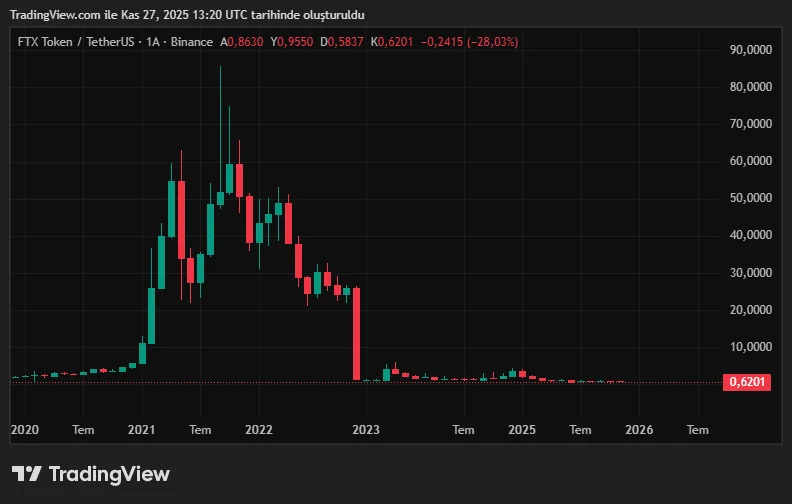
By mid-2020, FTX had become a rapidly growing platform. 2021, in particular, was a peak year for both FTX and FTT. With the cryptocurrency bull run, the price of FTT was breaking new records almost daily. On September 9, 2021, the price of FTT reached an all-time high of $84.18, according to CoinGecko data. Its market capitalization increased to approximately $9.7 billion during this period, and FTT managed to enter the top 30 cryptocurrencies in the CoinMarketCap ranking.
Price action since FTT launch.
This success was also supported by FTX's aggressive marketing strategies. The company acquired the naming rights for the Miami Heat basketball team's stadium and sponsored popular sectors like Formula 1 and esports. Founder Sam Bankman-Fried began appearing frequently in the media and became one of the crypto industry's most powerful figures.
However, everything changed abruptly in the fall of 2022. In early November, CoinDesk published a report on Alameda Research's financial statements. According to the report, Alameda's balance sheet was largely built on the FTT token. This indicated that FTX and Alameda were not independent of each other and, in fact, were directly linked to FTT's value.
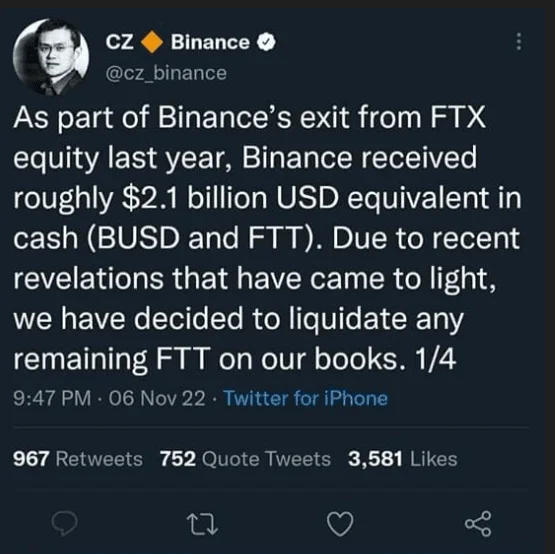
Following this news, on November 6, 2022, Binance CEO Changpeng Zhao (CZ) announced that Binance would sell all its FTT token holdings.
This announcement ignited a firestorm. Investors began selling FTT in panic, and mass withdrawals from the platform began. Within just a few days, FTX faced a major liquidity crisis.
On November 11, 2022, FTX officially filed for bankruptcy. This event became one of the largest stock market crashes in crypto history. Just a few weeks prior, FTT, valued at billions of dollars, fell from around $22 a week before the bankruptcy announcement to just over $2 on November 13. By the end of November, it had fallen to $1.26. In just a few weeks, FTT had lost more than 95% of its value, and investors had suffered billions of dollars in losses.
Following the bankruptcy, FTT's status became a subject of debate. CoinMarketCap and other data providers stated that FTT was no longer a "utility token" but rather an "asset" that could be used by the bankruptcy estate to pay off creditors. This means that the possibility of FTT providing any further economic benefit or being usable within the FTX ecosystem has virtually disappeared.
However, interestingly, FTT remained listed on some exchanges. While its price fell below $1, it occasionally exhibited minor fluctuations due to speculative buying. Developments such as the emergence of FTX's restructuring plans or the introduction of new management during the bankruptcy process created brief waves of speculation for the token. However, none of these increases proved sustainable.
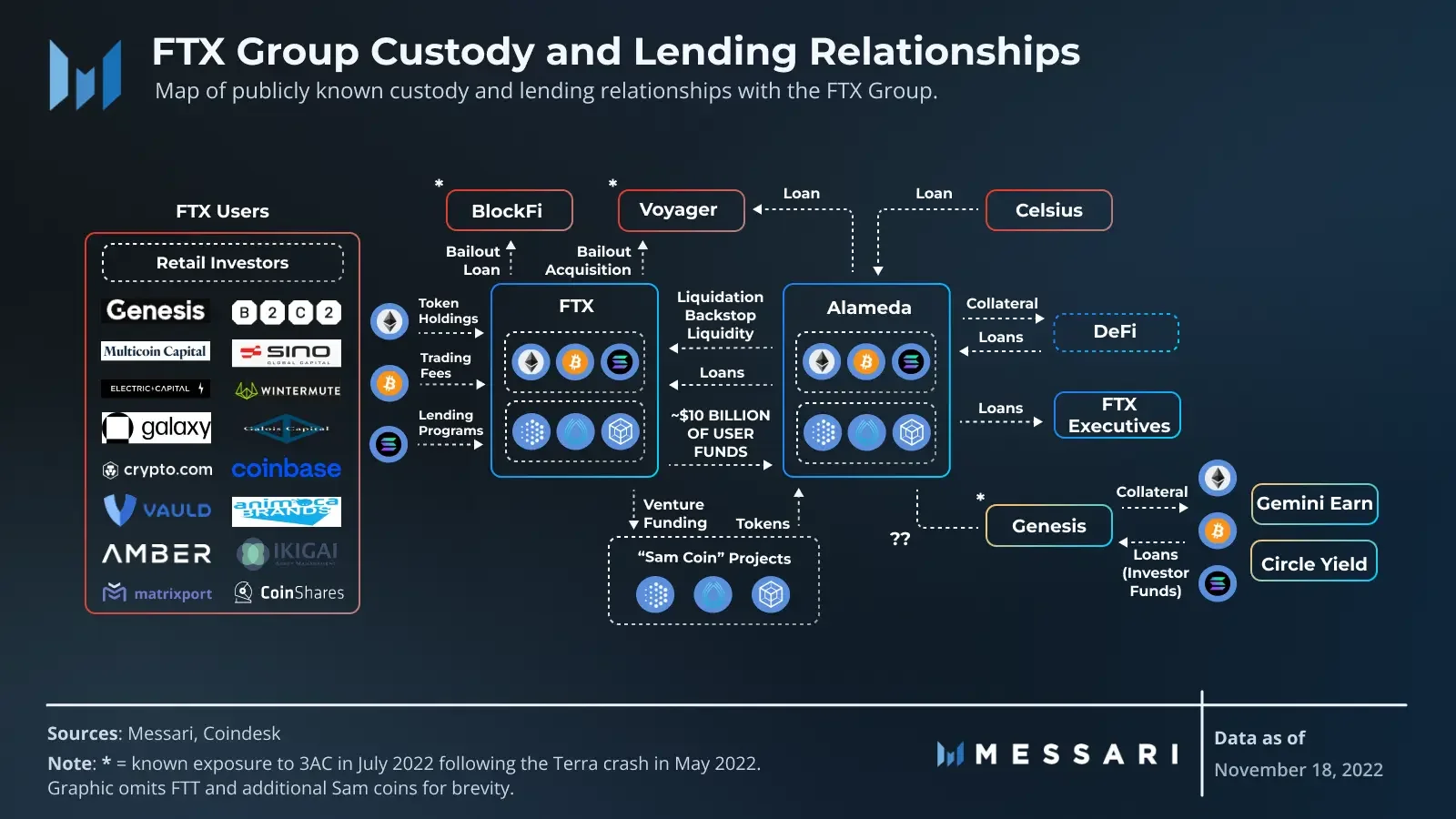
The collapse of FTX profoundly impacted not only FTT and the exchange's own users but also other major players in the crypto ecosystem. Platforms such as BlockFi and Voyager Digital, in particular, were involved in the bankruptcy chain due to their financial relationships with FTX. BlockFi had received a $400 million credit line from FTX and became dependent on FTX under this loan agreement. With the collapse of FTX, this credit line also became ineffective, and BlockFi, unable to meet its payment obligations, filed for bankruptcy in November 2022. Similarly, Voyager had previously signed an agreement to be acquired by FTX US as it attempted to recover from the bankruptcy of Three Arrows Capital. However, the collapse of FTX also scuttled that rescue plan.
FTX's relationship with companies like Voyager and BlockFi. Source: Messari
Why is FTT Important?
What made the FTT Token valuable was not only its status as an exchange token, but also its position at the very core of the FTX platform's economic architecture. This token offered various financial incentives for users and activated specific mechanisms to ensure the platform's sustainable growth. FTX's aggressive expansion strategy and global success were largely made possible by the benefits offered by FTT.
FTT was positioned as a tool to increase user engagement, foster loyalty, and redistribute FTX's revenue models in favor of users. In this respect, it was not merely an on-exchange discount token; it was also a cornerstone representing the broader vision of the crypto economy.
Usage Areas
FTT's use cases appealed to a wide range of users, from individual investors trading on the FTX exchange to institutional players. While providing a cost advantage for investors, the token had functionality that supported critical factors such as liquidity, loyalty, and token demand for FTX.
Transaction Fee Discount and Reward Mechanism
FTT holders enjoyed gradually increasing discounts on transaction fees when trading on FTX. For example, users who held a certain amount of FTT could receive commission discounts ranging from 5% to 60%, with those holding more tokens receiving more advantageous rates. At the same time, users who held FTT earned a higher commission share on the income generated by the exchange's referral system. This structure made the token not only an investment tool but also a loyalty tool that encouraged continued participation on the platform.
Usage as Collateral and Staking
FTT was accepted as collateral for futures contracts on the FTX platform. This allowed users to participate in leveraged trading with FTT without having to acquire additional stablecoins or Bitcoin for their positions. Furthermore, users who locked FTT on the platform through the staking feature earned various rewards: increased withdrawal limits, the right to participate in pre-sales, and liquidity rewards were offered to active users through staking.
Use in on-platform services
FTT could be used not only for transaction discounts and collateral, but also to pay various on-platform fees. The token was actively used for payments for projects applying for listings, as a reward in trading competitions, for early access to certain products, and for on-platform events. Furthermore, FTT holders were given priority in token sales conducted through Launchpad.
These versatile use cases made FTT an indispensable cornerstone of the FTX ecosystem, both economically and technically. For users, these advantages meant not only trading profits but also long-term platform loyalty and contribution to liquidity.
Token Economy
FTT's token economy relied not only on supply-demand dynamics but also on deliberately structured deflationary policies. This model aimed to maintain the token's sustainable value and encourage long-term ownership among users.
Total Supply and Circulating Amount
FTT's maximum supply was set at approximately 345 million tokens. However, this entire supply was not released at once. The token's distribution was carried out according to specific schedules and lock-up plans. As of February 2021, the circulating supply stood at approximately 94 million tokens. The majority of the remaining tokens were reserved for the team, advisors, and future development funds. This structure aimed to control the increase in token supply and reduce market volatility.
Burn Program and Deflation Mechanism
Perhaps one of the most striking aspects of FTT was its weekly token burn program. FTX used one-third (approximately 33%) of the transaction fees it earned on the platform to buy back FTT from the markets and then permanently remove these tokens from circulation. This program theoretically reduced the FTT supply, creating upward pressure on the price when demand remained stable.
According to FTX's official statements, the long-term goal was to eliminate 50% of the total token supply through this burn mechanism. Burning tokens was viewed as a value-preservation mechanism for users, as the relative value of existing tokens would increase as the circulating supply decreased. This model was welcomed by many investors, comparing it to Ethereum's "ultrasound money" approach.
Token Distribution and Allocation to Usage Areas
The initial distribution of FTT tokens was carried out in a planned and phased manner. Tokens allocated to the development team and advisors were generally locked for a period of 3 to 5 years. Additionally, tokens were sold to strategic investors and business partners at certain discounts. FTX also distributed a portion of its tokens through user campaigns, trading competitions, and liquidity incentive programs.
This structuring of the token economy ensured both long-term price stability and the balanced operation of internal platform dynamics. However, unfortunately, the FTX crash in November 2022 undermined the sustainability of this model. As of today, the functionality of the FTT token economy has come to a standstill.
In conclusion, FTT historically had a complex but well-structured economic model. This structure, notable for both its user incentive systems and burn programs, largely lost its relevance with the collapse of FTX. However, it remains a lesson in the fragility and intertwined interests that can be detrimental to a decentralized structure.
FTT's Founders and Development Team
The foundations of the FTT token were laid by two once-star figures in the crypto world: Sam Bankman-Fried (SBF) and Gary Wang. These two were the direct creators and architects of not only FTX but also FTT. FTT's design, functionality, and integration into the ecosystem were shaped by their vision.
Sam Bankman-Fried was an entrepreneur and former quantitative trader born in 1992. A graduate of the Massachusetts Institute of Technology (MIT), Bankman-Fried gained his first experience in the traditional financial world by working at Jane Street Capital after graduating. However, after recognizing the opportunities presented by the cryptocurrency markets, he founded Alameda Research in 2017. This company operated as a hedge fund that engaged in high-frequency crypto trading and profited from arbitrage opportunities. With Alameda's success, a larger vision began to take shape in Bankman-Fried's mind: to establish a crypto exchange that would offer user-friendly, innovative products and address the shortcomings of traditional derivatives markets. This idea came to life in 2019 as the FTX exchange. And with FTX, the FTT token was born. FTT was part of this vision; it was at the center of the economic structure that would enable FTX to offer not just an exchange but a holistic crypto-financial infrastructure.
Gary Wang, FTX's other co-founder, was recognized as the technical genius of this project. A computer engineer and graduate of MIT, Wang previously served as a software engineer at Google and developed the infrastructure for the Google Flights project. Wang's engineering expertise enabled the rapid, reliable, and scalable establishment of FTX's technical infrastructure. The integration of the FTT token with smart contracts, the operation of the staking systems, and the overall performance of the FTX platform were largely driven by his technical leadership. While Sam Bankman-Fried led the way in FTT's creation and development with his visionary business model, Gary Wang became the quiet force building the system's technical architecture. However, over time, serious problems accumulated behind this seemingly harmonious partnership. The financial fluidity between FTX and Alameda, the opaque structures of the token economy, and risky leverage policies paved the way for the demise of both the company and FTT.
However, these two individuals were not the only ones involved in FTT's development. The FTX team comprised engineers, lawyers, product managers, and business development experts from around the world with experience in the crypto and financial sectors. Prominent figures included Caroline Ellison (CEO of Alameda Research) and Nishad Singh (Director of Engineering at FTX). Each played a critical role in the token's launch, structuring its functionality, and marketing it to investors.
However, with the collapse of FTX in November 2022, this entire team faced investigations and intense public criticism. Sam Bankman-Fried was tried on charges of fraud, embezzlement, and investor misleading and was found guilty at the end of 2023. Gary Wang, on the other hand, cooperated with the prosecution and presented critical information to the court.
Frequently Asked Questions (FAQ)
Below are some frequently asked questions and answers about FTT:
What is FTT?: FTT is the native cryptocurrency of the FTX exchange. Launched in May 2019, this utility token was developed to offer FTX users discounts on transaction fees and various platform advantages. It is also a key tool supporting the exchange's liquidity structure and revenue model.
What are the uses of FTT?: FTT offers functions such as discounts on transaction fees, collateral for futures transactions, and staking rewards. Users can also benefit from increased commission income and promotions through referral programs.
What is the FTT token economy?: FTT is a token designed with a deflationary structure. Its total supply is approximately 345 million, and as of February 2021, its circulating supply was approximately 94 million. FTX has conducted weekly FTT burns using 33% of its transaction revenues, aiming to maintain value by reducing the supply.
How did the FTX collapse affect FTT?: The FTX bankruptcy in November 2022 led to a dramatic drop in the price of FTT. The panic that began after the Binance CEO announced that he would sell his FTT holdings caused the token to lose approximately 90% of its value within a week. FTT lost significant trust in this process.
What will be the future of FTT?: The future of FTT remains uncertain. According to CoinMarketCap data, the token no longer has any active use and could be used as a means of payment to creditors during the bankruptcy process. FTT's fate largely depends on FTX's legal proceedings and general market conditions.
To follow developments in FTT and the cryptocurrency world, check out the JR Crypto Guide series.
#what is ftt token#what is ftx token#ftx crash#ftt future#ftt staking#ftt use cases#ftx and ftt token relation#ftx token
Do you have any questions?Feel free to send us your questions or request a free consultation.