
Completing a crypto transaction sometimes takes more preparation than the transaction itself: choosing the right network, funding a wallet for gas fees, and switching between applications. DAPPOS is combining its work on reducing this complexity with AI products. By letting users describe their desired outcome in plain language, the project aims to connect research, software creation, and Web3 transactions through the DOS token and xBubble.
DAPPOS: Definition and Origins
DAPPOS focuses on reducing the technical knowledge users need to navigate Web3. Its current introduction describes a project developing accessible AI products. Its flagship product, xBubble, is presented as an AI agent designed to turn short requests into usable results.
The approach addresses an everyday problem. Users may know what they want to achieve without knowing which tools to use or in what order. In crypto, that gap can lead to unfinished transactions or choosing the wrong network.
For example, someone who wants to use an application on another network first checks where their assets are held. They then investigate transfer methods, transaction fees, and the assets the destination application accepts. A seemingly simple request becomes a series of separate decisions.
The intent-based approach DAPPOS has worked on frames a transaction around the outcome the user wants to achieve. Unified accounts and cross-chain application interactions feature prominently in the project’s history, which dates back to 2022. Its current product direction also covers AI-assisted research and task completion.
The distinction between DAPPOS and DOS matters here. DAPPOS is the name of the project and its product ecosystem; DOS is the ticker of the associated token. Growth in product usage does not automatically translate into token demand growing at the same pace.
Early Development and Key Milestones
DAPPOS began development before the DOS token became available on exchanges. CoinDesk’s project profile lists 2022 as its starting year. The same source reports that the project was selected for the fifth season of the Binance Labs incubation program in November 2022.
This distinction helps when assessing the project’s age. A token’s first trading date does not show when the team behind it began working. Product development, funding rounds, and token distribution can take place at different times.
DAPPOS’s current official website presents it as a developer of AI products connected to Web3. Its earlier focus on transaction infrastructure therefore needs to be considered alongside its current AI focus.
The expansion in product direction also changes how the project should be assessed. Transaction completion is a central measure for a project simplifying cross-chain activity, while output quality also matters for an AI product. Understanding a user’s request correctly and identifying an incorrect result become just as important as the technical connections.
This change alone does not establish success or failure. What matters is the need the new products address and whether users return to them. Broad roadmap goals should be assessed separately from features that are already available.
Listings and Current Status
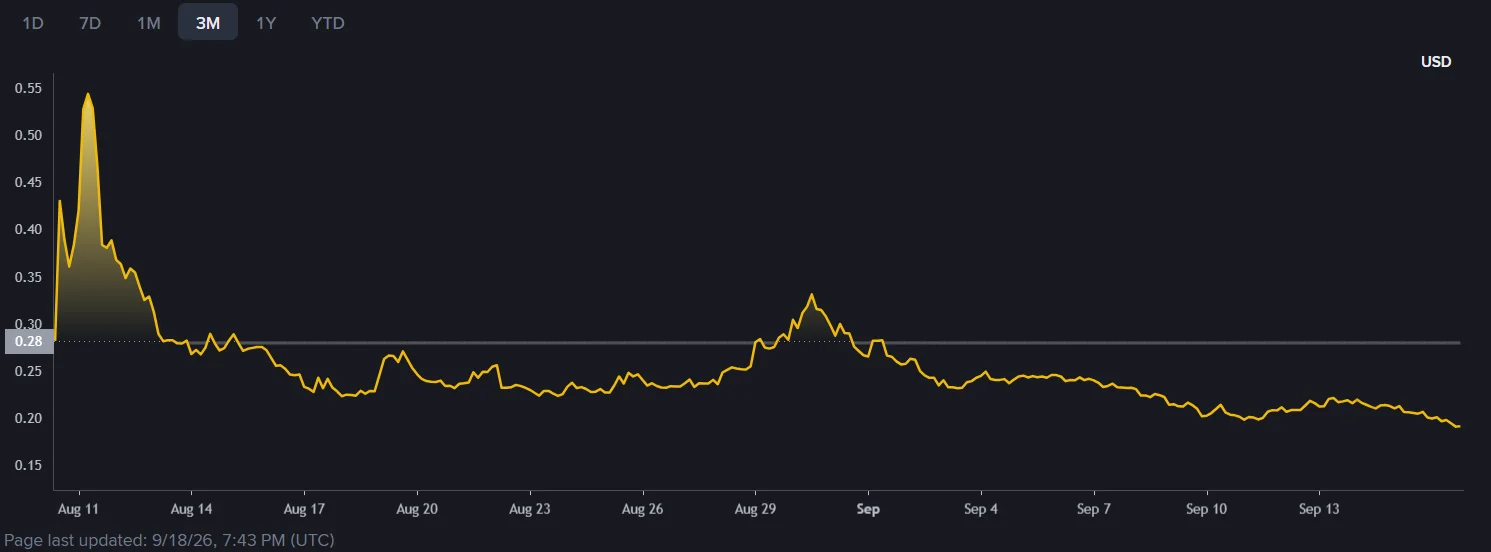
According to MEXC’s own guide, DOS was listed in the exchange’s Innovation Zone on August 10, 2026. The platform announced DOS/USDT and DOS/USDC trading pairs. Also, Binance has DOS coin in its Alpha platform.
The product type matters alongside the exchange’s name. Spot trading involves buying and selling the token, while a perpetual contract offers a derivative based on price movements. Alpha access, spot listings, and futures announcements refer to different services.
A platform launching a DOS derivative therefore does not establish that it also offers spot trading. When assessing listing news, the trading pair, launch date, and product category should be checked together.
At the time of writing, DOS coin price is around $0.21
How Does the DOS Token Work?
The DAPPOS whitepaper outlines functions for DOS including access to premium services, transaction fee payments, service-provider staking, and governance. It also describes delegation to eligible participants and additional AI usage credits under certain conditions. These describe the token’s intended uses.
Understanding a utility token requires looking at the service a payment provides. Access to a paid feature, for example, means the user is consuming a particular service. Its usefulness should be assessed alongside the quality and cost of the result.
Staking creates a different relationship. Requiring a service provider to take on an economic commitment can encourage them to perform their duties according to the rules. The effectiveness of that design depends on the collateral requirements and the rules applied when a participant breaches their obligations.
The number of token use cases alone does not establish strong demand. The number of people using a service, how payments actually work, and whether users prefer alternatives also matter. That is why promised utility should be distinguished from measurable usage.
Supply, Allocation, and Tokenomics
The whitepaper states a total supply of 1 billion DOS. The allocation plan is divided into six categories.
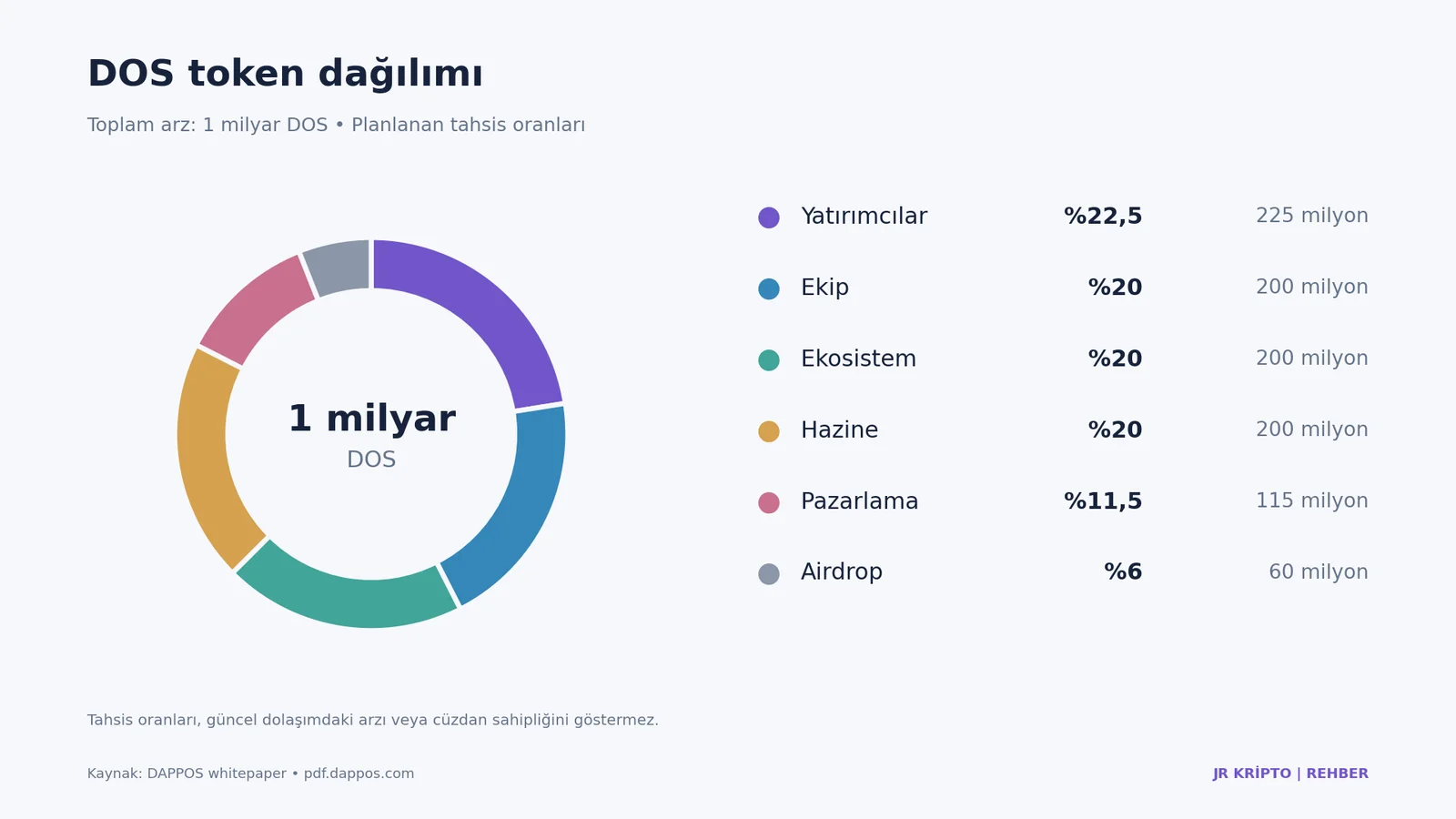
According to the document, team and investor allocations unlock linearly over 48 months after an initial 12-month lockup. It provides for 20% of the total supply to unlock at the token generation event.
At the time of the check, market data showed a circulating supply of 200 million DOS, with total and maximum supply both at 1 billion DOS. The platform’s reported circulating share therefore stood at 20%.
The difference between circulating and total supply matters when interpreting market capitalization. Market capitalization uses the circulating amount, while fully diluted valuation uses a broader supply figure. Treating the two measures as interchangeable can lead to a mistaken view of a token’s valuation.
An unlock does not automatically mean a sale. Unlocked tokens may enter circulation, remain in holders’ wallets, or be used in specific programs. Even so, an increase in the amount of tokens available relative to existing demand is a supply change worth monitoring.
The shares in the allocation table show the purposes for which tokens are reserved. Understanding whose wallets hold those tokens today requires a separate on-chain analysis. The allocation plan and current ownership distribution answer different questions.
Which Network Does It Use, and How Is Security Addressed?
DOS is listed as a token on Ethereum. MEXC’s project guide also states that the token is deployed on Ethereum. DAPPOS’s product goals involving different networks have a broader scope than the network used to transfer DOS.
This distinction is particularly important during transfers. An application supporting multiple networks does not mean an exchange accepts deposits of the same token from every network. The network used by the sending wallet must match one supported by the receiving platform.
Security assessment also involves several layers. The token contract, the application being used, wallet permissions, and other protocols involved in a transaction can each carry different risks. Security at one layer does not establish that every part of a transaction is equally secure.
When reviewing a smart contract audit, the report’s date and scope matter. An audit of an older product version does not automatically cover every feature added later. Whether the findings were addressed and whether the contract being used matches the audited version should also be assessed.
Clear transaction approval is another part of user security. Users should be able to see which asset will be used, how much will be used, where it will be sent, and which permissions they are granting.
Why Does DAPPOS Matter?
The problem DAPPOS addresses concerns friction in everyday crypto use. A transaction being technically possible does not make it easy for the user. Having to work with numerous separate tools can cause users, particularly newcomers, to abandon the process.
For example, someone transferring assets to a particular application may want to see the total cost in advance. Decision-making becomes harder when transfer fees, waiting times, and the balance required for the final step appear on separate screens. Presenting that information together can make the experience easier to understand.
Convenience, however, is measured by more than the number of clicks. Users also need to understand the transaction, stop an incorrect step, and see whether the result matches their expectations. A fast interface that produces unclear results can create a new problem.
Transaction costs, success rates, and transparency should therefore be considered together when assessing DAPPOS’s approach. Showing what happens when a task cannot be completed matters as much as completing it. The options available after a failure form part of the actual user experience.
xBubble and AI-Focused Products
DAPPOS documentation introduces xBubble as an AI agent that can be used with few prompts. According to the description, the product aims to automate the coding, testing, and deployment of workflows tailored to specific tasks. The goal is to reduce the need for users to manage every technical step themselves.
A sample task helps explain the product concept. A user might describe a simple tracking dashboard that displays data for several selected projects on a single page. Such a task involves separate elements, including choosing data sources, designing the page, and updating the information.
This example illustrates the product’s approach; it does not establish that a particular request will be completed without errors in every situation. The resulting dashboard still needs to be checked to ensure it retrieves data from the right sources and handles dates correctly. A page that works visually may still contain inaccurate information.
A similar distinction applies to AI-assisted crypto research. A statement citing a source does not by itself provide sufficient assurance that the source is current or has been interpreted correctly. Dates are particularly important for information such as supply figures, token unlocks, and listings.
DAPPOS’s AI focus should therefore be assessed through output quality. Important measures include whether users receive consistent results when repeating a task, can make corrections when necessary, and can examine the data used. Product descriptions cannot replace independent measurement of that performance.
Project Risks and Price Volatility
The DOS price may be affected by the wider crypto market as well as project developments. Sharp Bitcoin price movements, changes in market liquidity, or interest in AI-themed tokens can influence pricing. Short-term price movements do not provide a sound basis for firm conclusions about product success.
Liquidity is another factor to assess separately. The latest price shown on a screen does not mean a large order will be filled entirely at that level. The bid-ask spread and the depth of the order book affect the actual cost of a trade.
Within tokenomics, demand from usage and supply growth should be monitored together. New feature announcements may attract interest, while the number of tokens entering circulation may also change. The effect of these developments on price depends on market conditions.
On the product side, AI output may be incorrect, or an integration may fail to work as expected. An automatically generated transaction proposal looking reasonable does not establish that every risk has been accounted for. User approval and transaction limits therefore matter.
Competitive pressure should also be considered. Users may meet the same needs through wallet applications, research tools, or other automation services. Building lasting usage depends on whether users prefer the convenience DAPPOS offers when weighing cost and reliability.
DAPPOS Developers and Community
Ty Shen is identified as DAPPOS’s founder and CEO, and Isabella Yang as its co-founder. Shen is reported to have previously co-founded Alchemy Pay and served as its CTO.
A team’s previous experience provides context about the areas in which it has worked. However, a role at an earlier project does not independently demonstrate the technical quality of a new product. Current development activity and released products also need to be assessed.
Release notes and technical explanations can offer useful indicators. Relevant factors include responses to user-reported bugs, how regularly features are updated, and whether changes are communicated clearly.
Community and Governance
The DAPPOS whitepaper envisages DOS holders participating in protocol decisions through proposals and voting. The governance goals described in the document should, however, be assessed separately from the voting mechanisms currently available.
A token having a governance function does not mean the community makes every decision. Proposal requirements, voting weights, and the way approved decisions are implemented all affect the outcome. These rules help establish the actual scope of participation.
Community size alone is also an insufficient measure. Social media followers may include product users, reward campaign participants, and people who only track the price. These groups have different relationships with the project.
A more meaningful assessment examines whether product feedback informs development. Channels that allow users to report problems and receive responses strengthen the community’s role. Participation outside campaign periods can also offer insight into sustained interest.
Investors, Partnerships, and the Ecosystem
DAPPOS’s history includes participation in the Binance Labs incubation program, Polychain Capital, OKX Ventures, Hashkey and so on. Programs of this kind help provide context for the institutional support behind a project’s development. Participation does not guarantee a token’s future price or the security of every product.
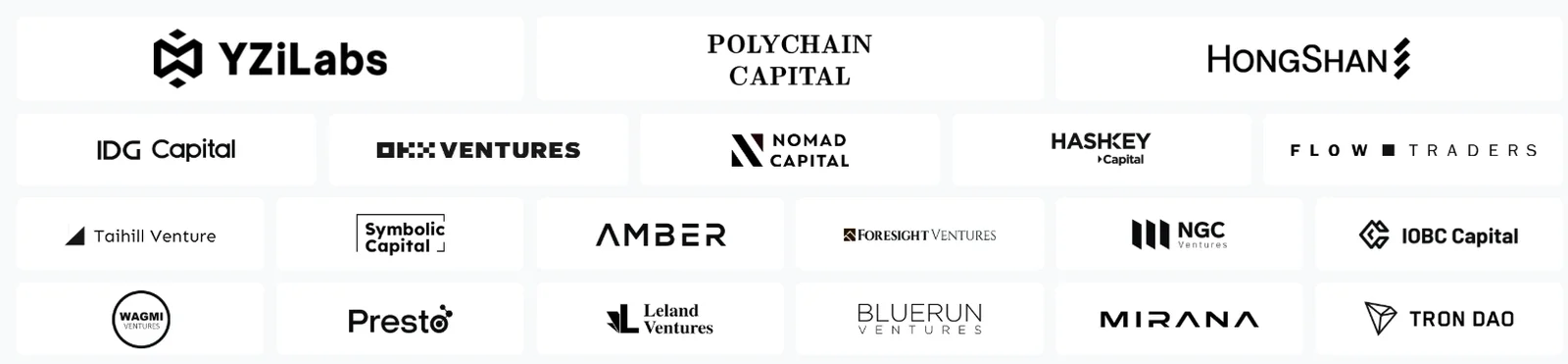
Investment relationships should also be distinguished from technical partnerships. An organization providing funding does not mean the product is integrated with all of that organization’s services. Similarly, trading on an exchange does not establish that the project and exchange are developing a product together.
When assessing the scope of the DAPPOS ecosystem, the focus should be on what each connection provides. Data sharing, application integrations, access to liquidity, and marketing campaigns produce different outcomes. Examining the actual feature made available to users is more informative than focusing first on the organizations named in an announcement.
Frequently Asked Questions
Below are some frequently asked questions about DAPPOS and their answers:
- What is DAPPOS, and when did it launch?: DAPPOS began as a project aimed at simplifying Web3 usage and now also focuses on AI products. Its history dates back to 2022; DOS spot trading on MEXC began on August 10, 2026. The project’s origins and the token’s exchange trading date refer to different periods.
- What is the DOS token used for?: DOS has defined functions involving service access, transaction payments, staking, and governance. Available features and conditions should be checked against the current product version. Holding the token is not equivalent to owning shares in a company.
- Which network does DAPPOS use?: The DOS token is deployed on Ethereum. The networks supported by DAPPOS’s applications and transaction services are a separate matter. Before transferring tokens, users should check the deposit network supported by the receiving platform.
- Who founded DAPPOS?: The public project profile identifies Ty Shen as founder and CEO and Isabella Yang as co-founder. Assessing the team also requires examining current product development activity.
- What is the DOS token supply?: Total supply is 1 billion DOS. At the September 18, 2026 check, CoinMarketCap showed 200 million DOS in circulation. Circulating supply may change as further distributions take place.
- Is DAPPOS a suitable investment?: There is no single answer that applies to everyone. Product usage, token demand, supply unlocks, and liquidity should be examined together when assessing DOS. A project addressing an interesting problem does not establish that its token price will rise. DAPPOS is expanding its goal of reducing complexity in Web3 transactions through an AI-assisted approach to task completion. Assessing the project requires monitoring actual product usage, the role DOS plays in that usage, and the supply structure together. Separating future promises from currently available features supports a more balanced assessment.
Follow the JR Kripto Guide series for the latest information on DAPPOS and emerging projects across the crypto ecosystem.

