
In the crypto market, real-world assets have become one of the strongest narratives of recent years. Treasury bills, private credit products, funds, real estate-linked assets and institutional financing instruments are now represented not only in traditional markets, but also on blockchain infrastructure.
Centrifuge (CFG) is a project operating in this field. The project aims to bring real-world assets onto the blockchain and make these assets more compatible with the DeFi ecosystem. In this respect, Centrifuge is viewed not merely as a cryptocurrency project, but as an infrastructure developed for on-chain asset management and RWA tokenization.
Centrifuge’s main goal is to make assets that are difficult to access, operationally slow or limited in liquidity in traditional financial markets more transparent, programmable and usable on-chain. The project offers institutional-grade tokenization infrastructure for asset managers, fintech companies, credit providers and DeFi protocols. In Centrifuge’s documentation, the project is described as one of the tokenization platforms that connect traditional capital markets with on-chain infrastructure.
Centrifuge’s Definition and Origin
Centrifuge is a tokenization protocol that makes real-world assets, or RWAs, representable on the blockchain. The concept of RWA refers to the digital representation of physical or off-chain financial assets on a blockchain. This category may include bonds, real estate-linked assets, private credit portfolios, invoice financing products and similar financial instruments.
The project’s starting point is based on the idea of reducing inefficiencies in the traditional financial system through blockchain technology. In traditional financial markets, many types of assets struggle to reach a broad investor base because of high intermediary costs, closed data structures, limited access and lengthy operational processes. Centrifuge aims to make this process more automated, traceable and compatible with DeFi.
Centrifuge was founded in 2017. In its early period, the project stood out with Tinlake, a platform developed on Ethereum. Tinlake allowed real-world assets to be financed through pools and enabled these pools to connect with DeFi capital. According to project documents, Tinlake became one of the first RWA initiatives in DeFi to use early examples of multi-tranche asset pools and revolving pool structures.
This structure made Centrifuge one of the early RWA projects in the crypto market. Rather than building an ecosystem centered only on token price, the project focused on how real-world financial assets could be managed on the blockchain.
Centrifuge’s approach involves three main parties: institutions issuing assets, parties managing or structuring these assets, and investors. Asset issuers bring real-world assets on-chain. Investors can access products linked to these assets through DeFi.
For this reason, Centrifuge operates as both a technical and financial infrastructure project in the RWA market. On one side, there are smart contracts, vault structures and multichain architecture. On the other side, there are compliance controls, asset management, portfolio tracking and institutional financing needs.
What Does RWA Mean?
RWA stands for “Real World Asset.” The concept refers to the digital representation of an asset that has economic value outside the blockchain.
For example, a treasury bill, private credit portfolio, real estate income, fund share or trade receivable can be tokenized after certain legal and technical processes. Through tokenization, these assets become easier to track, divide, program and use in DeFi applications.
Centrifuge’s difference is that it does not treat RWA tokenization as a process of simply writing an asset onto the blockchain. The project covers a wider area, including asset management, investor access, permission structures, pricing, yield distribution and DeFi integration.
Centrifuge’s History: Key Milestones
Centrifuge’s history progressed alongside the gradual maturation of the RWA sector in the crypto market. The project was founded in 2017 and focused in its early years on how real-world assets could be used within DeFi. Tinlake was the most important product of this period.
Tinlake made it possible to turn assets into pools and provide financing through these pools. This structure attempted to bring the securitization logic of traditional finance into the DeFi environment. Assets were pooled, investor capital was directed into these pools and repayments could be tracked on-chain.
One of the key milestones for Centrifuge was its 2021 integration with MakerDAO. According to project documents, Centrifuge integrated the first real-world asset pool with MakerDAO in mid-2021. In the same year, the RWA Market, which used the Aave protocol, was also launched.
In 2022, BlockTower Credit bringing its credit operations on-chain through Centrifuge became another important stage in the project’s history. Centrifuge documents state that BlockTower financed $220 million worth of real-world assets through Centrifuge, while MakerDAO provided $150 million in senior capital to these pools.
Over time, Centrifuge moved from a Tinlake-centered structure toward a broader on-chain asset management infrastructure. Centrifuge App, RWA Launchpad, vault structures and multichain architecture became parts of this transformation.
2025 was an important transition year for the project. With Centrifuge V3, the protocol moved to an EVM-based and multichain architecture. With the V3 transition completed in July 2025, Centrifuge began operating on Ethereum, Plume, Base, Arbitrum, Avalanche and BNB Chain. During this process, Wormhole became one of the important components of the multichain infrastructure.
In 2026, Centrifuge’s connection with the Base ecosystem became more visible. In March 2026, a product called deSPXA was announced on Base. This product was introduced as a structure designed to offer tokenized access to the Anemoy S&P 500 Index Fund for eligible non-U.S. users.
In May 2026, Coinbase announced that it had selected Centrifuge as its Preferred Tokenization Infrastructure platform and made a strategic investment in the project.
Tinlake Period
Tinlake represents the first major application phase of Centrifuge. This structure was based on financing real-world assets through pools. Asset originators included certain receivables or financial assets in the system, while investors could provide capital to these pools.
During the Tinlake period, the aim was to bring traditional credit and securitization processes closer to DeFi. For this reason, the project established connections with major DeFi protocols such as MakerDAO and Aave at an early stage.
This period shaped Centrifuge’s current RWA identity. The project’s current vault, pool, investor access and institutional asset management structures were built largely on the experience gained through Tinlake.
Centrifuge V3 and the Multichain Transition
Centrifuge V3 refers to the project’s transition to a more scalable and multichain RWA infrastructure. With V3, Centrifuge moved from the old Centrifuge Chain-centered structure toward an EVM-based architecture.
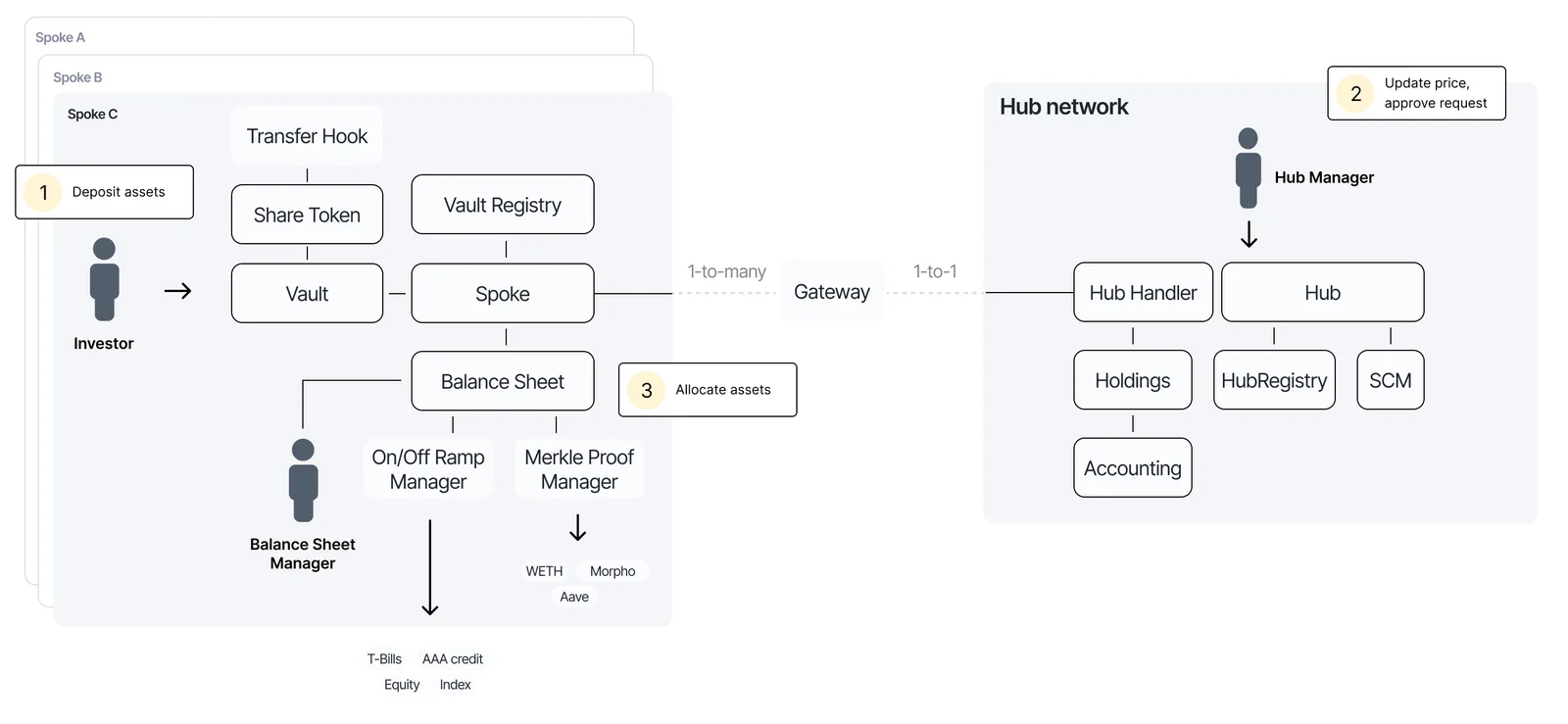
In the Centrifuge glossary, V3 is defined as the third version of the protocol, designed for scalable, permissionless and multichain asset tokenization. The hub-and-spoke model stands out in this version. The hub chain manages central coordination functions such as pool accounting, permissions and share prices, while spoke chains operate as networks where investors carry out actions such as depositing and withdrawing assets.
This structure aims to reduce the limitation of RWA products being confined to a single chain. Asset managers and investors can interact on different networks, while the protocol coordinates these transactions in the background. This allows RWA products to be moved more easily into different ecosystems where DeFi liquidity is available.
Why Is Centrifuge Important?
Centrifuge’s importance comes from the role of RWA tokenization in the crypto market. In the early years of DeFi, the market mostly grew around crypto assets, stablecoins, yield farming and decentralized exchanges. However, this structure had limited contact with the real economy.
RWA projects aim to fill this gap. The traditional finance world contains massive pools of assets. When some of these assets are brought onto blockchain infrastructure, DeFi may become less dependent on capital cycles within crypto alone.
In this way, Centrifuge builds a bridge between DeFi and traditional finance. The project helps asset managers bring their funds on-chain, DeFi protocols access real-world yields and investors use tokenized assets.
This structure is especially important for institutional adoption. For institutions, tokenization is not just a technological innovation. It also offers an opportunity to reduce operational costs, achieve faster settlement, create more transparent reporting and reach new distribution channels.
Centrifuge emphasizes that tokenization can reduce costs through automation and blockchain-based efficiency. In the long term, the project aims to build a more comprehensive infrastructure that provides access, liquidity and interoperability for digital assets.
The Importance of Centrifuge for DeFi and TradFi
For DeFi protocols, the most important contribution Centrifuge offers is access to real-world yields. Traditional DeFi yields are often tied to crypto asset demand, leverage cycles or liquidity incentives. RWA products, however, can bring cash flows from external markets such as credit, bonds and funds on-chain.
This can create more diverse yield sources in DeFi. For example, a protocol may work not only with ETH or stablecoin liquidity, but also with tokenized credit products or funds. This expands the areas of collateral, lending and portfolio management.
Centrifuge’s use in structures connected to the DeFi ecosystem, such as MakerDAO, Aave, Sky and Morpho, is notable in this respect. The project aims for RWAs not only to be held passively within DeFi, but also to be used across different protocols.
On the traditional finance side, Centrifuge offers a more programmable infrastructure for asset managers and institutions. Processes such as fund creation, investor access, distribution, reporting and portfolio management can become more traceable on the blockchain.
This structure is especially important for asset managers who want to reach different markets. Tokenized products can access a wider investor base within the framework of compliance rules. At the same time, when products become usable in DeFi protocols, new liquidity and collateral scenarios may emerge.
Centrifuge being associated with major names such as Janus Henderson, S&P Dow Jones Indices and Coinbase strengthens the project’s claim on the institutional tokenization side. For example, in 2025, Janus Henderson’s AAA CLO strategy being brought on-chain through Centrifuge and supported by Grove with a $1 billion allocation became one of the project’s important developments in institutional credit products.
How Does Centrifuge Work?
Centrifuge’s operating logic is based on converting real-world assets into on-chain financial products. The first step in this process is for the asset issuer to include a specific asset or asset portfolio in the system. These assets may be credit products, funds, treasury products or other financial instruments.
These assets are then managed within specific pools or vault structures. A vault refers to a structure where investors deposit capital under certain rules and become linked to the yield generated by the asset. Centrifuge’s user documents state that issuers can tokenize real-world assets through configurable on-chain vaults via RWA Launchpad.
In this structure, investors can access tokenized products depending on compliance requirements. Each product may have different access conditions, risk levels and yield structures. This is important in the RWA market because not all products may be open to everyone.
In Centrifuge’s older V2 structure, real-world assets were tokenized as NFTs, linked to off-chain data and then securitized within pools. It was possible to track on-chain which pool the assets were in, how much had been borrowed, whether repayments had been made and whether there were any delays.
On the V3 side, the structure is shaped more around vaults, hub-and-spoke architecture and multichain access. This allows investors to interact on different networks, while pool accounting and coordination are managed at the protocol level.
Asset Tokenization
Asset tokenization means converting an off-chain asset into a digital representation on the blockchain. This representation can be used to track investor rights, income flows, repayment processes or asset performance.
For Centrifuge, tokenization is not merely the act of creating a token. The legal structure of the asset, compliance conditions, investor access, pricing data and DeFi usage are also part of the process.
For this reason, Centrifuge approaches RWA tokenization within a more institutional framework. The project offers infrastructure that allows asset managers to launch, manage and distribute their own products on-chain.
Pool and Vault Logic
Pools and vaults sit at the core of Centrifuge. Multiple assets can be gathered under a single structure. Investors can then provide capital to this structure and gain exposure to the relevant asset portfolio.
This model resembles the securitization logic used in traditional finance. However, blockchain infrastructure allows transactions to be tracked more transparently. Repayments, borrowing status and portfolio data can become more visible on-chain.
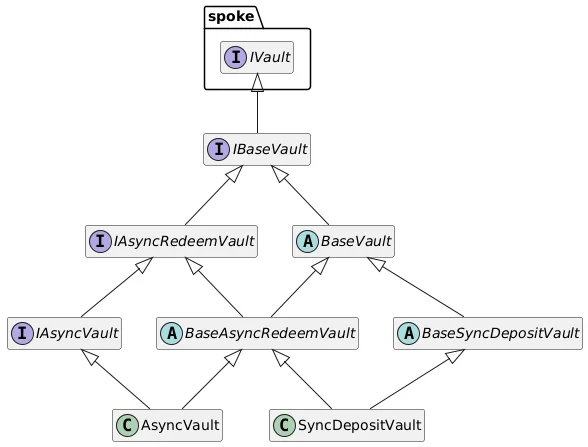
V2 documents state that Centrifuge pools had a revolving pool structure. This allowed assets to be financed, repayments to be received and investor entries and exits to be managed over specific periods.
Compliance and Risk Management
Compliance and risk management are critically important in RWA projects. This area involves not only smart contract risk, but also legal structure, asset quality, credit risk, liquidity risk and investor suitability.
For this reason, Centrifuge aims to build a more controlled bridge between DeFi and traditional finance. Asset managers can create their products within certain permission mechanisms and compliance rules.
This separates Centrifuge from purely permissionless DeFi projects. The project’s goal is to make institutional-grade assets more usable on the blockchain and allow them to work in a way that is compatible with DeFi infrastructure.
What Is the CFG Token Used For?
CFG is the native token of the Centrifuge ecosystem. Historically, the token has been associated with governance, network fees and internal protocol participation processes. During the old Centrifuge Chain period, CFG was a core part of the on-chain governance mechanism and transaction fees.
With the V3 transition, the CFG token structure was also updated. According to Centrifuge documents, the V3 CFG migration process took place between May 20, 2025 and December 3, 2025. During this process, legacy CFG and wCFG tokens on Ethereum were converted into V3 CFG at a 1:1 ratio. After the transition was completed, the bridge between Ethereum and the old Centrifuge Chain was fully disabled.
For this reason, it is important to distinguish between the old token structure and the new V3 CFG when researching CFG. Especially when examining price history, circulating supply and exchange data, users should check which token version is being referenced. As of May 7, 2026, the CFG token price is trading around $0.2946151.
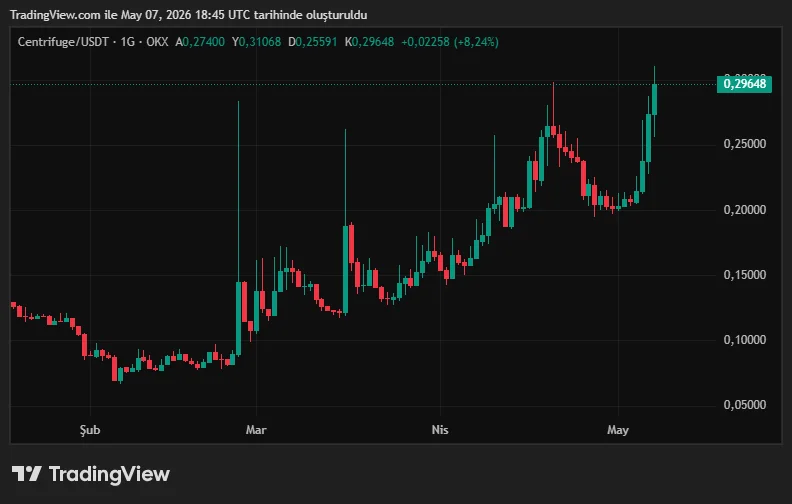
One of CFG’s main use cases is governance. Token holders can have a say in the development of the protocol, token economics and ecosystem decisions. Centrifuge DAO represents the community side of this governance process.
However, governance also went through updates after the V3 transition in 2025. According to Centrifuge documents, a proposal called CP 171 was approved by the DAO on November 3, 2025. After this proposal, the Centrifuge Network Foundation took over governance and oversight responsibilities, while the DAO retained the right to reassume governance operations in the future.
For investors, CFG is also followed as a crypto asset linked to the RWA narrative. When interest in the RWA market increases, projects such as Centrifuge, which have early positioning and institutional integrations, may attract more attention. Still, this does not mean that the token price will automatically increase.
CFG price changes depending on general market conditions, interest in the RWA sector, exchange liquidity, token supply, protocol revenues, institutional integrations and investor expectations. For this reason, when evaluating CFG coin price, it is necessary to look not only at the project narrative, but also at token economics and market data.
Legacy CFG and V3 CFG Difference
In the Centrifuge ecosystem, legacy CFG refers to the token used on Centrifuge Chain. wCFG was the wrapped CFG version on Ethereum. With the V3 transition, these two structures were combined under the new EVM-based CFG.
This transition aimed to simplify the user experience and make Centrifuge more compatible with the Ethereum ecosystem. Disabling the old bridge structure was also part of this transformation.
For this reason, Centrifuge guides should include a separate section on the migration process when explaining the token. Older sources about CFG coin may not fully reflect the post-V3 structure.
CFG Token and Governance
One of CFG’s most important functions is protocol governance. In the Centrifuge ecosystem, governance covers protocol upgrades, ecosystem decisions and processes related to token economics.
The governance structure helps preserve the decentralized character of the project. However, in an area as regulation-sensitive as RWA, governance is not limited to community votes. The foundation, the team, asset managers and institutional partners also play important roles in the development of the ecosystem.
For this reason, Centrifuge governance has a more complex framework than classic DeFi DAO structures. The project tries to manage both community participation and the operational trust required by the institutional tokenization market.
Centrifuge’s Developers and Community
Behind Centrifuge is a team that has long worked in the fields of RWA and on-chain finance. On the project’s official page, Bhaji Illuminati is listed as CEO and co-founder, Anil Sood as Chief Strategy Officer and co-founder, Jeroen Offerijns as Chief Technology Officer and co-founder, and Martin Quensel as President and co-founder. Lucas Vogelsang is also among Centrifuge’s co-founders.
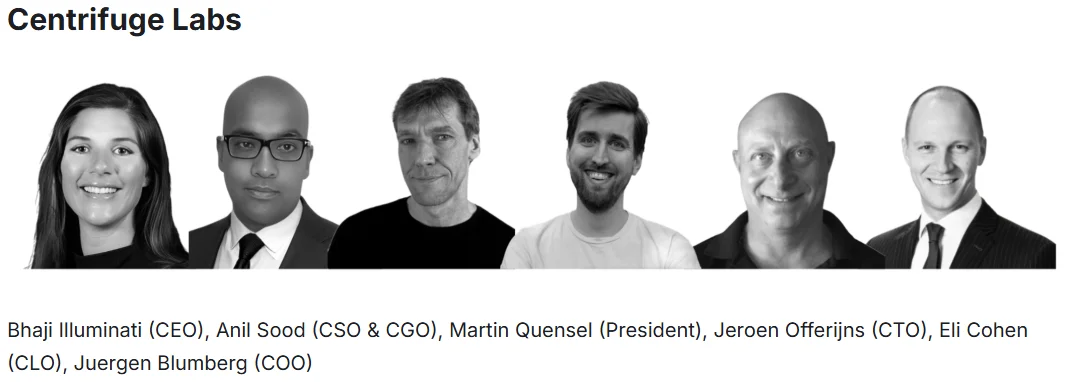
In 2025, the project went through an important leadership change. Bhaji Illuminati took over as CEO after Lucas Vogelsang. Lucas Vogelsang moved into a strategic board position. In the same announcement, the roles of Martin Quensel, Anil Sood, Jeroen Offerijns and Eli Cohen in the executive team were also shared.
Centrifuge’s community does not consist only of individual token holders. The ecosystem includes Centrifuge Network Foundation, Centrifuge Labs, Anemoy, DeFi protocols, asset managers, investors and developers.
In recent years, Centrifuge has stood out through news connected to major institutions such as Apollo, Janus Henderson, S&P Dow Jones Indices and Coinbase. In May 2026, Coinbase selecting Centrifuge as its preferred tokenization infrastructure and making a strategic investment became one of the latest developments showing that the project has become more visible on the institutional side.
Frequently Asked Questions (FAQ)
Below, you can find answers to frequently asked questions about Centrifuge (CFG):
- What is Centrifuge (CFG)?: Centrifuge is an RWA tokenization protocol focused on bringing real-world assets onto the blockchain. The project helps asset managers, fintech companies and DeFi protocols create tokenized financial products.
- What is CFG coin?: CFG is the native token of the Centrifuge ecosystem. The token is used in areas such as governance and protocol participation. After the V3 transition, legacy CFG and wCFG were combined under the new EVM-based CFG.
- When was Centrifuge launched?: Centrifuge was founded in 2017. The project’s first major product was Tinlake. Tinlake was one of the early RWA platforms that aimed to connect real-world assets with DeFi capital.
- Who founded Centrifuge?: Lucas Vogelsang, Martin Quensel, Anil Sood and Jeroen Offerijns are among the names that stand out in Centrifuge’s founding team. In 2025, Bhaji Illuminati took over as CEO, while Lucas Vogelsang moved into a strategic board position.
- How does Centrifuge work?: Centrifuge brings real-world assets on-chain through tokenized pools or vault structures. Issuers include assets in the system, while investors can access these assets depending on compliance conditions. Smart contracts play a role in accounting, permissions, investment and repayment processes.
- What is Tinlake?: Tinlake is Centrifuge’s early RWA platform. It made it possible to turn real-world assets into pools and provide capital to these pools through DeFi. The foundations of today’s Centrifuge infrastructure were largely built during the Tinlake period.
- What is Centrifuge V3?: Centrifuge V3 is the protocol’s new multichain and EVM-based version. It was designed to operate on networks such as Ethereum, Base, Arbitrum, Avalanche, BNB Chain and Plume. With V3, Centrifuge aims to make RWA products easier to use across different chains.
- What does CFG token migration mean?: CFG token migration refers to the process of converting old CFG and wCFG tokens into the new V3 CFG. This transition took place between May 20, 2025 and December 3, 2025. Tokens were converted at a 1:1 ratio, and the old Centrifuge Chain bridge was disabled.
- Which networks does Centrifuge operate on?: Centrifuge V3 was launched on Ethereum, Plume, Base, Arbitrum, Avalanche and BNB Chain. The project uses a multichain structure to allow RWA products to be used across different networks.
- Is Centrifuge suitable for investment?: Centrifuge is one of the projects in the RWA sector with a strong narrative and institutional connections. However, CFG coin price depends on market conditions, token supply, liquidity, regulatory risk and developments in the RWA sector. For this reason, it is important to conduct personal research and pay attention to risk management before making a decision about CFG or similar assets.
Follow the JR Kripto Guide series for the latest insights on Centrifuge and RWA-focused crypto projects.

