
Brevis (BREV) is a verifiable computing infrastructure powered by zero-knowledge proofs. The project allows blockchain applications to perform complex computations off-chain and then verify the results securely on-chain.
This definition may sound technical at first. Put more simply, Brevis handles heavy data processing tasks that smart contracts cannot efficiently perform on their own. The computations are carried out off-chain, while the accuracy of the results is proven on-chain through zero-knowledge proofs.
This approach is especially important for decentralized finance, cross-chain data usage, user rewards, volume-based fee discounts and privacy-focused verification processes. Smart contracts have limited capacity when it comes to processing past transactions and large datasets directly. Brevis is one of the projects developed to overcome this limitation.
BREV is the native crypto asset of the Brevis ecosystem. It is used for payments, staking, delegation and governance within the proof generation network called ProverNet. For this reason, the answer to the question “What is BREV token?” is not limited to a simple trading asset. BREV is one of the core tools in Brevis’ verifiable computing economy.
Brevis’ Definition and Origins
Brevis positions itself as an “infinite compute layer.” The goal here is to move computations that are expensive, slow or technically difficult to perform directly on a blockchain to an off-chain environment. However, this process does not rely on blind trust in a centralized server. The correctness of the computation is proven through zero-knowledge proofs.
On blockchain networks, smart contracts automatically enforce specific rules. However, their data processing capacity is limited. For example, calculating a user’s trading volume over the past year, their activity across different networks or their contribution to a specific protocol can be quite costly on-chain.
This is where Brevis comes in. The project reads historical blockchain data, performs the required computation off-chain and carries the result back on-chain together with a cryptographic proof. This allows an application to receive a reliable answer to a question such as, “Does this user really meet this condition?”
This structure opens up new design possibilities for Web3 applications. Decentralized exchanges can offer personalized fee discounts based on trading volume. Reward campaigns can be calculated more fairly. Users can prove that they have completed a specific action without revealing their entire wallet history.
Brevis was created to meet this need. The project aims to make blockchain applications more flexible in terms of data, computation and verification. It allows smart contracts to securely access not only the current state of a blockchain, but also historical data and complex computation results.
Brevis also stands out through its connection to Celer Network. Celer is known for its work in cross-chain communication and scaling. Brevis carries this technical background into the fields of zero-knowledge proofs and verifiable computing.
Brevis History: Key Milestones
Brevis’ development coincides with the period in which zero-knowledge technologies moved from an experimental research field into real-world applications. The project began to gain visibility in 2023 as a multi-chain data verification and computing infrastructure. In its early phase, the focus was on enabling decentralized applications to securely access historical on-chain data.
In the final quarter of 2024, Brevis launched ZK Data Coprocessor V1, which can be described as a zero-knowledge-powered data coprocessor. This structure allowed smart contracts to perform computations on historical transactions, event logs and data from different blockchains.
In November 2024, Brevis completed a $7.5 million seed funding round. The participation of major investors such as Polychain Capital and Binance Labs increased the project’s visibility in the Web3 infrastructure space. During the same period, Brevis also strengthened its relationship with decentralized finance applications.
In January 2025, ZK Data Coprocessor V2 improved the project’s data processing capacity. This update paved the way for more complex queries and broader use cases. In February 2025, Pico zkVM was introduced. Pico zkVM is a modular virtual machine infrastructure that allows developers to run general-purpose programs with zero-knowledge proofs.
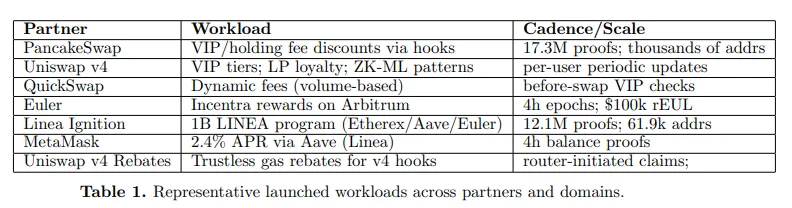
In May 2025, the use of Brevis-powered personalized fee mechanisms on PancakeSwap Infinity became one of the project’s real-world examples. Users could receive different fee structures based on their historical trading volume or whether they met certain conditions.
In June 2025, the launch of Incentra with Euler campaigns strengthened Brevis’ position in the rewards and incentives infrastructure field. Since fair calculation of user contributions is important in these types of campaigns, the verifiable computing model stood out.
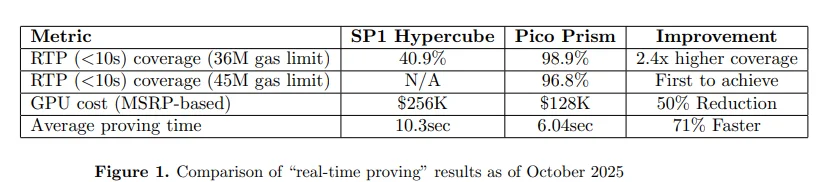
In October 2025, significant results were announced for real-time proof generation for Ethereum blocks through Pico Prism. In November 2025, the Brevis ProverNet technical document was published. In December 2025, the BREV token structure was announced and the free token distribution process began.
In January 2026, the ProverNet mainnet and BREV token utility went live. Around the same time, BREV token began to be listed on centralized exchanges.
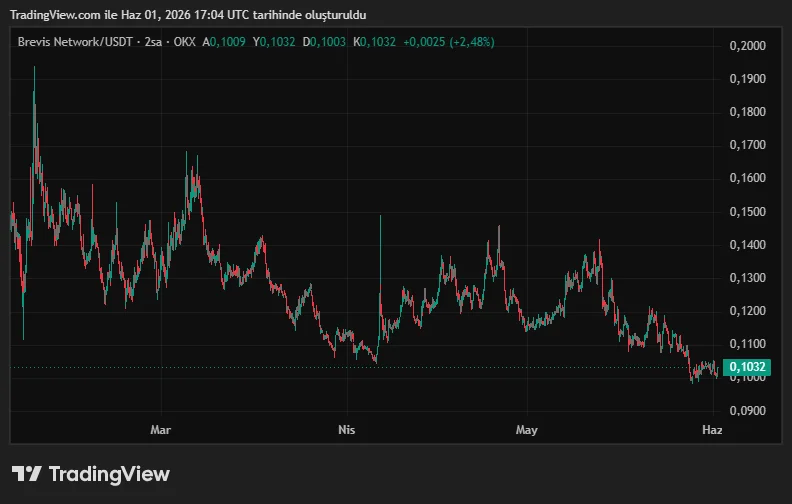
As of June 2026, the BREV coin price is around $0.10.
How Does Brevis Work?
The working logic of Brevis can be summarized in three basic steps: receive the data, compute off-chain and prove on-chain. This structure aims to reduce costs while also lowering the need for centralized trust.
In the first step, an application creates a specific data or computation request. This request may involve calculating a user’s historical trading volume. In another example, it may measure how much liquidity a user provided to a decentralized finance protocol.
In the second step, the computation is performed off-chain. This significantly reduces transaction costs. Instead of paying gas for every small computation on a blockchain, the heavy work is completed outside the chain.
In the third step, the correctness of the computation result is verified on-chain through a zero-knowledge proof. At this point, the application does not have to trust the party that performed the computation. The result is backed by a cryptographic proof.
Pico zkVM plays an important role in this structure. zkVM stands for “zero-knowledge virtual machine.” Developers can use this structure to run certain programs with zero-knowledge proofs. The goal of Pico zkVM is to help developers build more flexible and general-purpose verifiable computing processes.
ZK Data Coprocessor is the main component on Brevis’ data processing side. It can be thought of as a coprocessor for smart contracts. A smart contract cannot efficiently process large amounts of historical data on its own, but Brevis can perform the computation and prove the result.
ProverNet is Brevis’ proof generation marketplace. Developers create proof generation requests, while provers take on these tasks. Provers provide the technical infrastructure needed for computation and proof generation.
Payments in this marketplace are made with BREV. Provers stake BREV to be able to receive jobs. Token holders can also delegate their BREV assets to provers. This creates an economic incentive structure inside ProverNet.
Why Is Brevis Important?
Brevis is important because it addresses one of the core limitations of blockchain applications. Smart contracts are powerful tools, but they cannot perform every task efficiently. Cost and performance problems arise especially when historical data scanning, complex computation and cross-chain information are involved.
Brevis approaches this problem through an off-chain computation and on-chain verification model. This allows applications to access more data, run more advanced rules and do so without relying on a centralized system.
In decentralized finance, this structure can create concrete results. An exchange can offer different fee levels based on historical trading volume instead of applying the same fee rate to every user. A lending protocol can analyze user behavior in more detail and calculate reward campaigns more accurately.
Reward programs offer another similar advantage. In the crypto ecosystem, campaigns often depend on user activity. However, measuring that activity fairly is not always easy. Brevis can process historical on-chain data through verifiable computations and support a more transparent reward distribution process.
There is also an important use case on the privacy side. A user may want to prove that they meet a certain condition, but they may not want to share their entire wallet history. Zero-knowledge proofs help show that the user meets the required condition without revealing unnecessary information.
Brevis can also make zero-knowledge technologies more accessible to a broader audience. Developers do not have to deal with cryptographic details every time. The project aims to turn this complex infrastructure into a more understandable layer that applications can use.
What Is BREV Token and What Does It Do?
BREV token is the native crypto asset of the Brevis ecosystem. It is used for payments, staking, delegation and governance inside ProverNet. For this reason, the answer to the question “What does BREV token do?” is directly connected to Brevis’ proof generation economy.
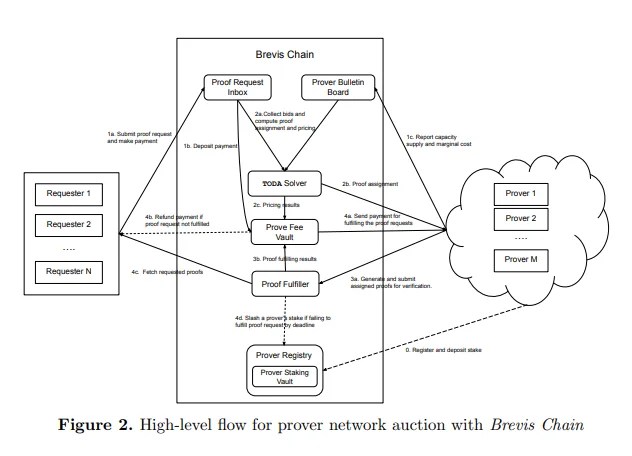
When a developer requests proof generation on ProverNet, the payment is made in BREV. This payment covers computation, verification and the use of results on-chain. Provers earn BREV when they complete these tasks.
BREV is also used in the staking mechanism. Provers must stake a certain amount of BREV to join the network and take on jobs. This structure provides an economic guarantee designed to protect service quality.
Token holders do not have to operate as provers directly. Instead, they can delegate their BREV assets to professional provers. This creates a way to participate in the ProverNet economy without running technical infrastructure.
Another use case for BREV is governance. Token holders may have a say in some of the network’s economic and technical parameters. Topics such as proof size, security level, marketplace fee and slashing rate may be shaped through community governance over time.
The total supply of BREV is set at 1 billion tokens. The token distribution includes categories such as ecosystem development, community incentives, team, investors and free token distribution. The circulating supply at launch is also an important figure for investors to follow.
One point needs attention here: the BREV price is related not only to supply, but also to the real usage volume on ProverNet. If developers use the Brevis infrastructure more, BREV demand may take shape accordingly. However, crypto asset prices are also affected by market conditions, token unlocks and general investor appetite.
Brevis Use Cases
One of Brevis’ strongest use cases is in decentralized finance. Decentralized exchanges can offer personalized fees based on users’ historical trading volume. This allows active users to pay lower transaction fees, while the platform can make its loyalty programs more efficient.
Liquidity incentives are also an important area for Brevis. A protocol can verify how long users provided liquidity, which pools they interacted with or whether they met certain conditions. This helps create a fairer structure for reward distribution.
Cross-chain data verification is another use case. A user may have made transactions on one network, held assets on another network or shown activity across different protocols. Brevis can help make this information usable in a reliable way.
Privacy-focused participation proofs also stand out. A user can prove that they belong to a certain community, passed a specific transaction threshold or met the requirements of a campaign. They can do this without revealing their entire wallet history to everyone.
Real-world assets and stablecoin campaigns are also suitable areas for Brevis. Verifiable computing becomes important in processes such as yield distribution, participation measurement and user behavior analysis.
There is similar potential for artificial intelligence and data-focused applications. Making model outputs, data queries or user behavior verifiable can pave the way for more reliable services in Web3 applications.
Brevis also has use cases in media verification. Verifying the history of images, content or media has become more important in a period when AI-generated content is increasing. Zero-knowledge proofs can offer a reliable verification layer in this field as well.
Brevis Developers and Community
Behind Brevis is a technical team connected to Celer Network. Michael Dong, also known as Mo Dong, stands out among the project’s founding names. Dong is known for his academic background in distributed systems and computer networks. His role as one of the co-founders of Celer Network is also important for understanding the technical side of Brevis.
The Brevis team focuses on fields such as zero-knowledge systems, distributed networks, cryptography and blockchain infrastructure. For this reason, the project aims to build an infrastructure layer rather than only a single application.
On the investor side, support from names such as Polychain Capital, Binance Labs/YZi Labs, IOSG, Nomad Capital, Bankless Ventures and HashKey has brought visibility to the project. This type of backing does not guarantee success, but it matters for early-stage infrastructure projects in terms of resources and ecosystem connections.
On the community side, free token distribution, staking, delegation and developer contributions stand out. Brevis’ long-term growth depends not only on investors, but also on application developers and the prover network.
ProverNet allows the community to take a more active role. Provers provide technical infrastructure, developers create proof requests, and token holders can participate in delegation and governance processes. In this way, Brevis is trying to build not just a software product, but a network structure based on economic incentives.
Brevis’ future is closely tied to how widely zero-knowledge technologies are used in the blockchain ecosystem. Today, many applications have to rely on centralized servers while processing data off-chain. Brevis aims to make this process more transparent and verifiable.
The growth of ProverNet is critical in this respect. If more developers use Brevis for proof generation, economic activity within ProverNet may also increase. This could directly affect BREV token utility.
Technical components such as Pico zkVM and Pico Prism also play an important role in the project’s future. Real-time proof generation for Ethereum blocks is one of the most ambitious areas in zero-knowledge technology. If Brevis can provide performance and cost advantages in this field, it may reach broader use cases.
Brevis’ plan to move toward its own rollup model in the future is also notable. Such a structure could allow payment, staking and proof generation processes to be managed on a more specialized infrastructure. However, such transitions need to be carried out carefully from a technical perspective.
Frequently Asked Questions (FAQ)
Below are some frequently asked questions and answers about Brevis:
- What is Brevis and when did it launch?: Brevis is a verifiable computing infrastructure powered by zero-knowledge proofs. The project began to gain visibility in 2023 in the field of multi-chain data verification and computation. Its main goal is to allow smart contracts to reliably use complex computations performed off-chain.
- Who developed Brevis?: Behind Brevis is a technical team connected to Celer Network. Michael Dong, also known as Mo Dong, stands out among the project’s founding names. Dong is known for his academic background in distributed systems and computer networks.
- What does BREV token do?: BREV token is used for payments, staking, delegation and governance in the Brevis ecosystem. Developers requesting proof generation on ProverNet make payments, while provers earn BREV when they complete these tasks.
- When was BREV coin listed?: BREV began trading on centralized exchanges in January 2026. Binance opened trading pairs for BREV with USDT, USDC, BNB and TRY. This listing also became one of the starting points for BREV’s price history.
- What problems does Brevis aim to solve?: Brevis aims to address the limited data access and high computation cost problems of smart contracts. It makes off-chain computations verifiable on-chain through zero-knowledge proofs. This allows applications to use more complex operations at a lower cost.
- How does Brevis work?: Brevis first processes the required data, then performs the computation off-chain. The correctness of the result is proven with a zero-knowledge proof, and this proof is verified on-chain. This model is based on the logic of “compute off-chain, prove on-chain.”
- What is ProverNet?: ProverNet is Brevis’ proof generation network. Developers create proof requests there, while provers fulfill these requests. Payments are made in BREV, and provers need to stake BREV to join the network.
- What is Pico zkVM?: Pico zkVM is the zero-knowledge virtual machine infrastructure used in the Brevis ecosystem. It helps developers run general-purpose programs with zero-knowledge proofs. This structure enables the development of more flexible verifiable computing applications.
- What does ZK Data Coprocessor do?: ZK Data Coprocessor can be explained as a zero-knowledge-powered data coprocessor. It allows smart contracts to access historical blockchain data and complex computation results without requiring trust.
- Which networks is BREV available on?: Contract information has been shared for BREV on Ethereum, BNB Smart Chain and Base. Users should check the official contract addresses before making any transactions.
- Is BREV suitable for investment?: BREV is the crypto asset of an infrastructure project focused on zero-knowledge and verifiable computing. However, it is not enough to look only at the project narrative when making an investment decision. Circulating supply, token unlocks, ProverNet usage, market conditions and personal expectations should be evaluated together.
- Who are Brevis’ competitors?: Brevis operates in the field of zero-knowledge-powered coprocessors and verifiable computing. Projects such as Axiom, Succinct, RISC Zero and similar names can be evaluated within the same general category. Each project has a different architecture, target market and developer experience.
Follow the JR Kripto Guide series for the latest information on Brevis and zero-knowledge-based verifiable computing projects.

