
What Is Bitway (BTW)?
A large share of Bitcoin has limited on-chain financial utility unless its owner decides to sell. Bitway aims to connect this idle liquidity with payments, lending and yield strategies. The project is building its infrastructure around a Bitcoin-compatible Layer 1 network, a stablecoin-focused Earn product and the BTW token.
Definition and Origins of Bitway
Bitway is a blockchain and financial infrastructure project that seeks to create a gateway between on-chain capital and global financial markets. The team describes the project as an “internet capital gateway.”
The structure has three main components. Bitway Ledger serves as the project’s independent, Bitcoin-compatible network, while Bitway Earn gives stablecoin holders access to different yield strategies. BTCT and Bitcoin lending products focus on using BTC for transfers and collateral.
BTW is the native utility and governance token of the ecosystem. It is used to pay network fees, support validator staking, delegate tokens, participate in governance and fund certain product incentives. Bitway’s official documentation states that BTW connects network security with the ecosystem’s economic incentives.
The term “BTW coin” is also widely used in the market. However, the version traded on exchanges exists as a BEP-20 token, while Bitway’s documents position BTW as the native economic asset of Bitway Ledger. Users should therefore verify both the network and contract address before making a transaction.
What infrastructure does Bitway Chain use?
The project’s independent network is called Bitway Ledger in its official documentation. Some exchange announcements refer to it as Bitway Chain. It is designed as a Bitcoin-compatible Layer 1 network using Proof of Stake consensus.
According to Bitway’s open-source repository, the network uses an architecture based on Cosmos SDK and Tendermint. Validators stake BTW to participate in consensus, while token holders can delegate their assets to a validator.
The Bitcoin compatibility layer aims to support existing Bitcoin address formats, including Native SegWit and Taproot. Bitway is trying to make its payment and financing products accessible to BTC holders without requiring them to learn an entirely different address structure.
The version of BTW most commonly used in the market is available on BNB Smart Chain. Bitget’s initial listing announcement identified its BEP-20 contract address as 0x444045B0EE1ee319A660a5E3d604CA0ffA35ACaA. Verifying the contract is important because unrelated assets can use the same ticker on different networks.
Why was Bitway created?
Bitway focuses on the fragmentation of on-chain liquidity across different networks and financial products. Bitcoin has a large market value, yet it cannot be used in smart contract-based financial transactions as flexibly as assets on Ethereum and similar networks.
The project wants to bring BTC and stablecoin liquidity into lending, collateralized financing, payments and yield strategies. Bitway Earn supports the stablecoin side of this model, while Bitway Ledger and BTCT focus on Bitcoin.
Bitway also combines traditional financial strategies with DeFi infrastructure. On-chain records provide transparency, while some yield strategies may use off-chain markets and centralized trading platforms. This hybrid structure can improve efficiency, although it introduces custody, counterparty and strategy risks.
History of Bitway: Major Milestones
Bitway’s history goes back to the work of Side Protocol and Side Labs. One of its earliest clearly documented milestones was Side Labs’ $1.5 million pre-seed funding round in July 2023. Participants included HashKey Capital, KR1, Continue Capital, Symbolic Capital and Informal Systems.
Side Protocol initially focused on the fragmentation of liquidity across blockchains. The project gradually shifted its direction toward Bitcoin-based payment and financing infrastructure. The team introduced the Bitway brand in August 2025 and linked its new identity to a broader on-chain finance vision.
YZi Labs provided strategic support through its EASY Residency program during the same month. At this stage, Bitway positioned itself as a Layer 1 network working on Bitcoin address compatibility, gasless BTC transfers and decentralized Bitcoin lending.
Another funding round followed in January 2026. Bitway raised $4.444 million in a round led by TRON DAO, with participation from HTX Ventures. Combined with the earlier pre-seed round, its publicly disclosed pre-seed and seed funding reached approximately $5.9 million.
BTW launch and exchange listings
The BTW token generation event took place on March 2, 2026. Around 2.2 billion BTW, equal to 22% of the total supply, entered circulation at the TGE.
The token started trading on several platforms on the same day. Bitget opened BTW/USDT spot trading at 09:00 UTC on March 2. MEXC listed the BTW/USDT and BTW/USDC pairs, while HTX introduced BTW/USDT trading.
BitMart also opened BTW/USDT trading on March 2. The token received early access and campaign support through Binance Alpha. Binance Wallet also organized a BTW Booster program before the TGE.
Exchange support continued to expand during the year. Gate first introduced a derivatives product and later opened BTW/USDT spot trading on August 24, 2026. New markets can improve access, while leveraged products may also amplify short-term price movements.
Integrations and current status
Throughout 2026, Bitway focused on bringing its Earn product to different wallet and trading interfaces. Bitway Absolute Return vaults were integrated into OneKey Wallet in August. Users could then direct supported stablecoins into Bitway strategies through the OneKey application.
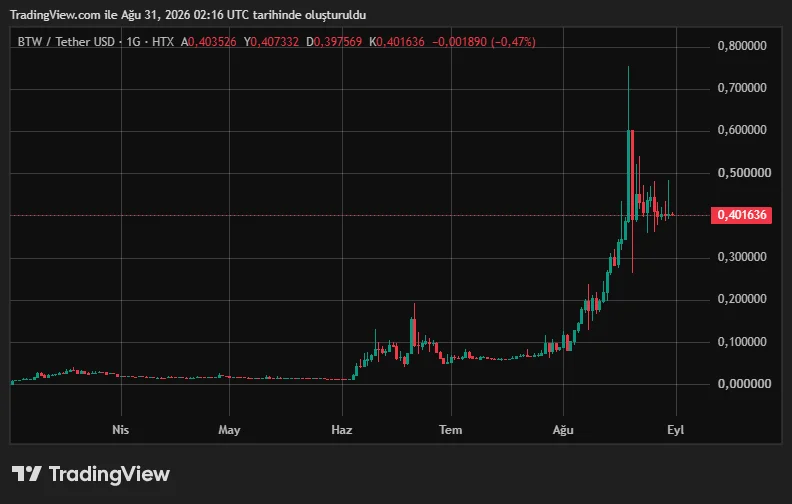
Market data shows that BTW experienced sharp price movements within a short period. The token reached an all-time low of $0.009118 on March 3, 2026. It later climbed to an all-time high of $0.7453 on August 19.
Data from August 2026 showed that approximately 2.708 billion BTW were in circulation. Its maximum supply is capped at 10 billion BTW. Future token unlocks will therefore continue to increase the circulating supply.
As of August 2026, the BTW price was trading around $0.40.
How Does the BTW Token Work?
BTW’s first function is to support the security of Bitway Ledger. Validators stake the token to produce blocks and confirm transactions. Users can also delegate their BTW to validators and participate indirectly in the consensus process.
The token is used to pay transaction fees on the network. This function seeks to connect demand for applications and transfers on Bitway Ledger with demand for BTW. If network usage remains low, demand generated by transaction fees may also stay limited.
Governance is another major use case. BTW holders can participate in proposals concerning network upgrades, economic parameters and the allocation of ecosystem resources. The distribution of voting power depends on token ownership and delegation.
Bitway’s documents also state that staking may give users access to certain products, incentive programs or fee benefits. These utilities are not fixed, and the conditions are announced separately for each campaign. Temporary high rewards do not necessarily create lasting demand for the token.
Supply distribution and tokenomics
BTW has a total and maximum supply of 10 billion tokens. According to its allocation model, 26.67% of the supply went to the community, 20% to ecosystem development and 20% to the team. Backers received 16.33%, partners received 12% and the liquidity allocation accounted for 5%.
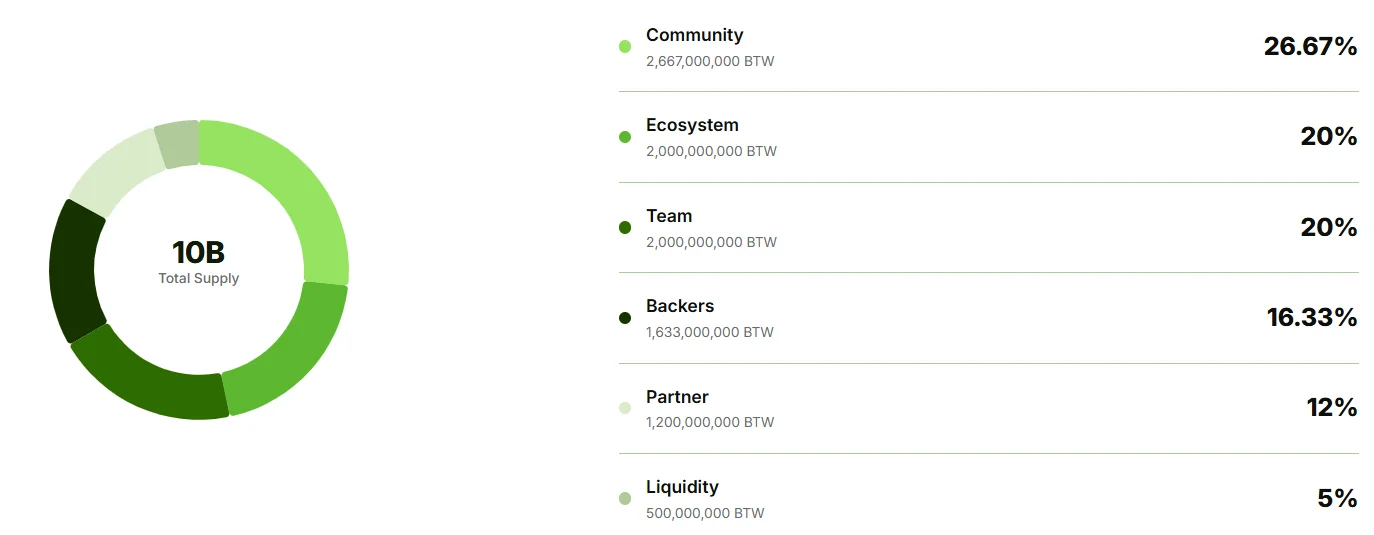
At the TGE, 22% of the total supply entered circulation. Unlocked partner and liquidity allocations represented 17% of the total supply. Another 2% came from the community allocation, while 3% came from the ecosystem allocation.
The remaining community and ecosystem tokens are unlocking linearly over 41 months. This schedule prevents the entire supply from entering the market at once. It also creates a steady increase in circulating supply over several years.
The team allocation has a 12-month lockup followed by 36 months of linear vesting. Backer tokens also have a 12-month lockup, followed by a 24-month linear schedule. March 2027, when team and investor tokens are expected to begin unlocking, will therefore be an important period for supply dynamics.
The increase in circulating supply from 2.2 billion to approximately 2.708 billion BTW shows that the community and ecosystem schedules are already progressing. Newly unlocked tokens do not automatically enter the market for sale. However, unlocks can create price pressure if demand fails to grow at a similar pace.
Staking, transactions and network security
Bitway Ledger operates through PoS validators. Network security depends on the amount of BTW staked and the distribution of power across the validator set. A small number of validators controlling a large share of voting power could create centralization risks.
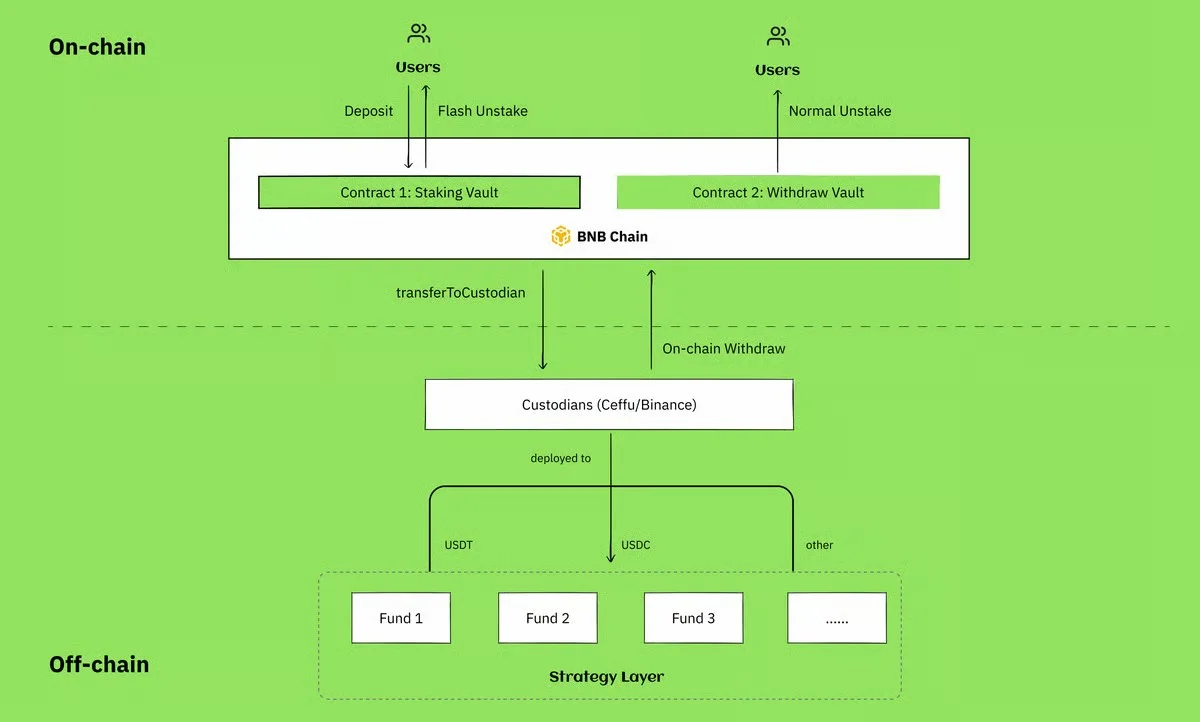
BTCT, which enables Bitcoin to be used inside the network, relies on a FROST-based bridge operated by validators. FROST is a threshold-signature technique that distributes signing authority among several participants. When a user deposits Bitcoin, the system produces BTCT on Bitway, with the asset designed to maintain a one-to-one peg with BTC.
This model makes it easier to use BTC in payment and financing applications. However, the stability of the BTCT peg depends on honest signers, properly functioning code and the bridge’s ability to withstand attacks.
Bitway Lending uses Discreet Log Contracts, commonly known as DLCs. These contracts apply predetermined conditions and price data to BTC-backed loans. Users can therefore access stablecoin liquidity without selling their Bitcoin.
The project has published BlockSec and Salus audit reports for different components. Its official audit page includes reports covering Bitway Chain, FROST, Shuttler, Earn and the token contract. Audits can reduce risks in specific versions of the code, but they do not guarantee protection against economic losses, counterparty failures or future code changes.
Why Is Bitway Important?
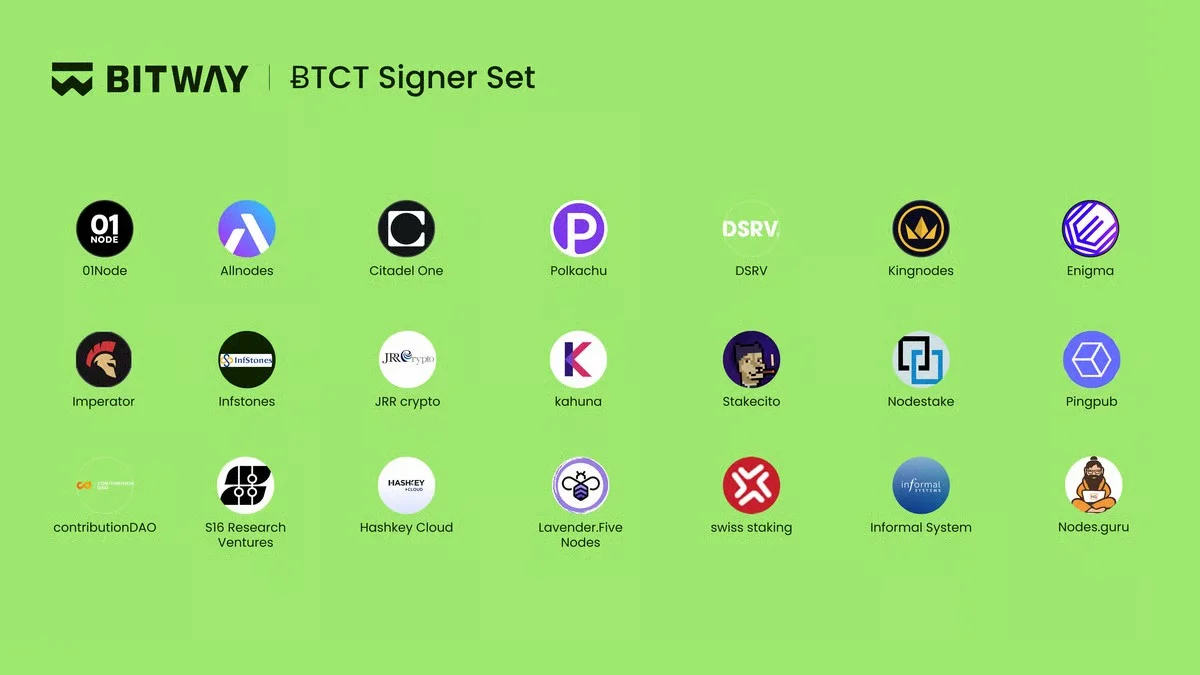
Bitway Earn is an on-chain vault product that connects stablecoin holders with market-neutral yield strategies. Users deposit supported stablecoins and receive yield-bearing tokens representing their share of the vault. The strategies can use methods such as funding-rate arbitrage and differences between spot and futures prices.
The product reduces the need for users to manage individual positions. Some returns may be generated through centralized trading platforms or off-chain financial channels. Smart contract security is therefore only one part of the risk profile; exchange, custody, liquidity and operational risks can also affect results.
BTCT provides the technical connection that moves Bitcoin liquidity into Bitway Ledger. Bitcoin Lending aims to let users borrow stablecoins against BTC collateral. When these products work together, users can access different financial services without selling their Bitcoin positions.
The problem it addresses and its place in the ecosystem
Bitcoin-focused DeFi often depends on custodians, wrapped tokens or external bridges. Bitway combines Bitcoin address compatibility, FROST-based BTCT and DLC-powered loans within the same infrastructure. The project wants to create a simpler experience for BTC holders.
Its approach sits at the intersection of BTCFi, DeFi and real-world financial strategies. This is a broad market where projects such as Babylon, Stacks and Rootstock use different technical architectures. Bitway’s position will depend on its ability to attract real users and liquidity alongside developing its technology.
Bitway Earn provides an entry point for users who do not hold Bitcoin. Stablecoin holders can first enter the ecosystem through yield products. As the network develops, Bitway plans to connect this liquidity with payment and lending markets.
This structure remains at an early stage. Its ability to scale needs to be measured through product usage and on-chain data.
Competition, technical risks and volatility
Bitway combines several complex layers in one system. Its PoS network, BTC bridge, price oracles, lending contracts and off-chain yield strategies create different attack surfaces. A problem in one component could affect liquidity across other products.
FROST-based threshold signatures reduce reliance on a single custodian. Validator concentration or coordinated action by enough signers could still weaken bridge security. A stablecoin losing its peg could also produce additional losses in Earn and lending pools.
Tokenomics creates another risk. Around 27% of the maximum supply was in circulation as of August 2026. The market will need to absorb a larger supply as team, backer, community and ecosystem allocations continue to unlock.
The wide gap between BTW’s March low and August high shows how its low starting price and campaign activity have increased volatility. Derivatives listings and reward programs can generate short-term trading volume. Sustainable value will depend on network usage, demand for loans, assets held in vaults and consistent developer activity.
The regulatory environment also requires attention. Bitcoin-backed loans, stablecoin yields and real-world financial strategies may face different rules across jurisdictions. Technical access to a product does not mean it is offered under the same legal conditions in every country.
Bitway’s Development Team and Community
The core organization behind Bitway is referred to as Side Labs and Bitway Labs across different sources. Shane Qiu’s public profile identifies him as the founder of Bitway. Messari and CryptoRank list Qiu as the project’s co-founder and CEO.
Qiu previously worked on research and investments at Binance Labs. CTO Dave Hrycyszyn leads the project’s technical development. Hrycyszyn’s background includes privacy and distributed systems projects such as Nym and Chainspace.
The team has an open-source history extending back to Side Protocol. Bitway’s GitHub repository makes its network, Bitcoin, lending and API modules publicly available. However, public documents do not provide a detailed list of every team member, their responsibilities or the full corporate structure.
Community and governance
The Bitway community is growing around X, Telegram, wallet campaigns and staking programs. Binance Wallet Booster events and temporary yield campaigns played a significant role in reaching the token’s early user base.
Incentives can attract participants quickly. Organic community strength is better measured through users who remain after campaigns end, governance participation and consistent on-chain activity. Follower numbers alone do not provide a complete picture.
Under the PoS structure, BTW holders can influence validator selection through delegation. Governance proposals also allow the community to participate in changes to network parameters. If voting power becomes concentrated among large token holders, the influence of smaller participants may remain limited.
Partnerships and integrations
Bitway’s network of backers expanded over different funding rounds. Side Labs’ 2023 round included HashKey Capital, KR1, Symbolic Capital and Informal Systems. YZi Labs provided strategic support during the Bitway era, while TRON DAO and HTX Ventures participated in the 2026 seed round.
Binance Wallet supported BTW’s pre-TGE distribution and campaign process. Bitget, MEXC, HTX and BitMart were among its first trading platforms. The Gate spot listing and OneKey Vault integration expanded access in August 2026.
The OneKey integration allows users to access Bitway Absolute Return vaults directly through the wallet. The long-term effect of these integrations will depend on lasting deposits and active users rather than temporary campaign volume.
Frequently Asked Questions
Below are answers to some of the most frequently asked questions about Bitway.
- What is Bitway and when was it launched?: Bitway is a Layer 1 and financial infrastructure project that seeks to connect on-chain liquidity with Bitcoin financing and global yield strategies. Its origins go back to Side Protocol, which raised funding in 2023. The Bitway brand was introduced in August 2025, while the BTW token entered circulation on March 2, 2026.
- What is the BTW token used for?: BTW is used for gas payments, validator staking, delegation and governance on Bitway Ledger. The token may also support temporary rewards, product access and ecosystem incentives. The conditions for these additional utilities vary by campaign.
- Which network does Bitway use?: Bitway operates an independent Proof of Stake Layer 1 called Bitway Ledger. The network is based on Cosmos SDK and aims to support Bitcoin-compatible addresses. The most widely used exchange version of BTW is available as a BEP-20 token on BNB Smart Chain, while market data platforms also list an Ethereum contract.
- Who founded Bitway?: Public profiles identify Shane Qiu as Bitway’s co-founder and CEO. Qiu previously worked at Binance Labs. Dave Hrycyszyn leads technical development as CTO, although official documents do not provide a complete team list.
- What is the BTW supply?: BTW has a total and maximum supply of 10 billion tokens. Around 2.2 billion BTW entered circulation at the TGE. Data showed a circulating supply of approximately 2.708 billion BTW as of August 31, 2026.
- Is Bitway suitable for investment?: Whether Bitway is suitable depends on an individual’s risk tolerance and research. The project has operating products, open-source code, audit reports and known backers. Its early-stage network usage, bridge and counterparty risks, high price volatility and future token unlocks require careful consideration.
Follow the JR Kripto Guide series for the latest information about Bitway and emerging projects across the crypto ecosystem.

